-
-
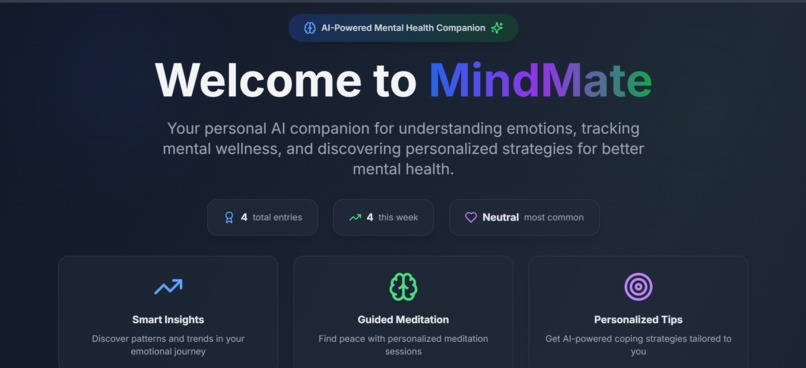
Landing
-
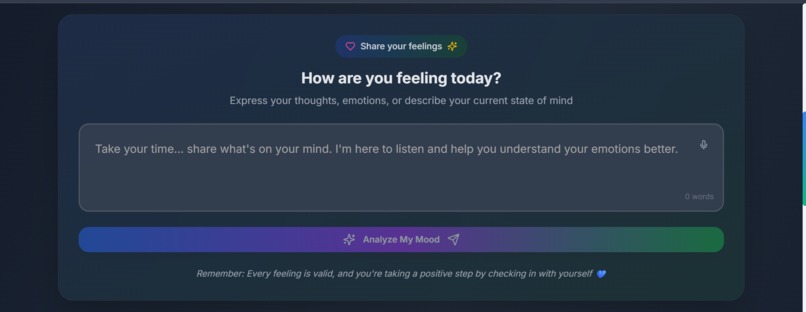
Analysis
-
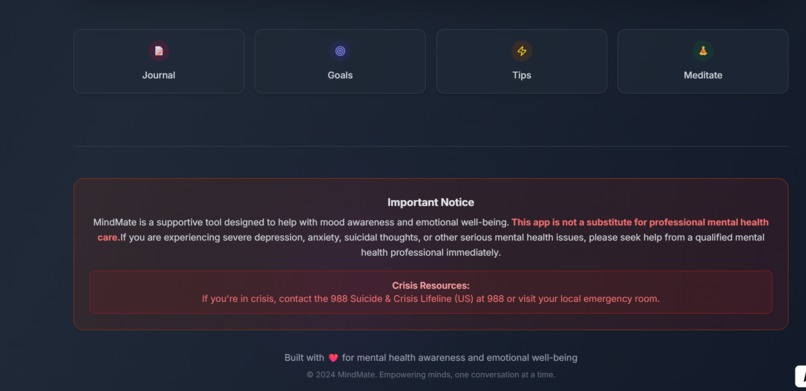
Disclaimer
-
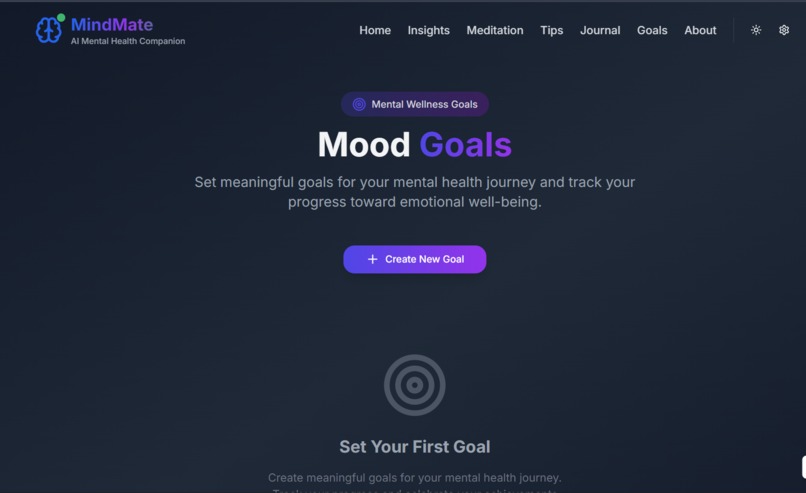
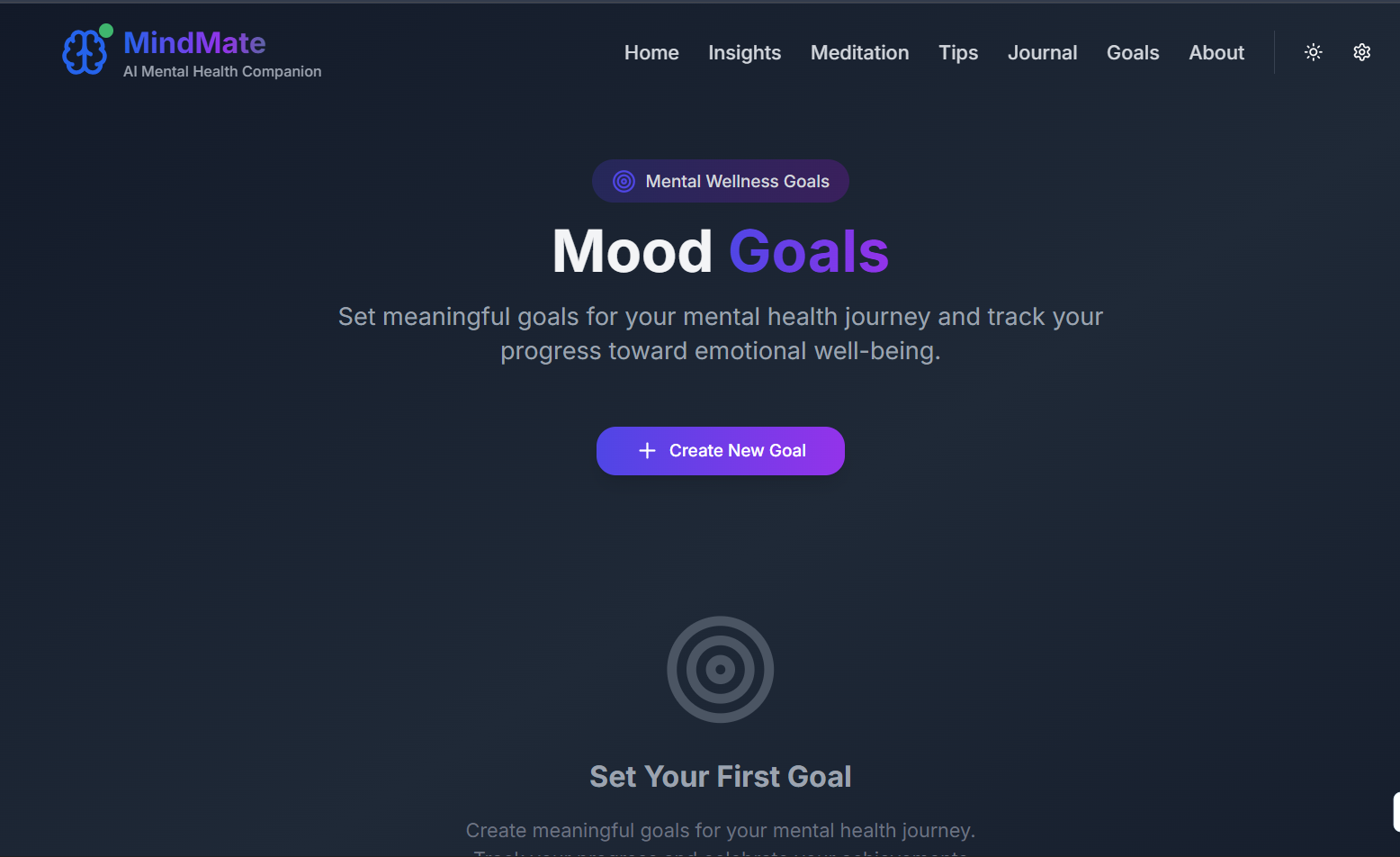
Goals
-
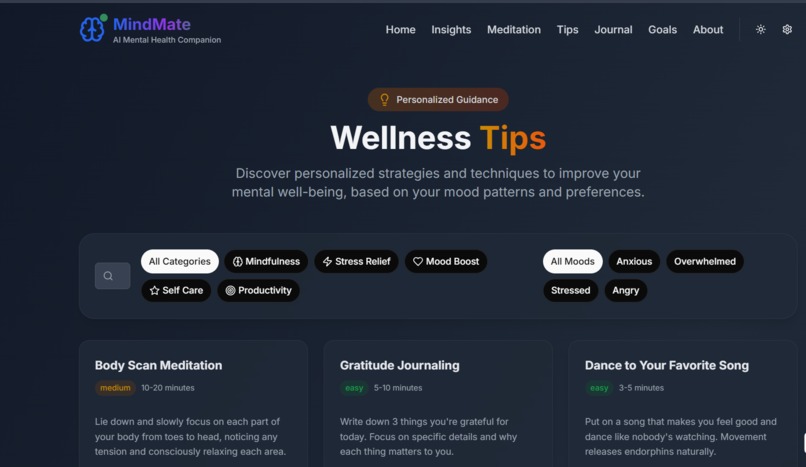
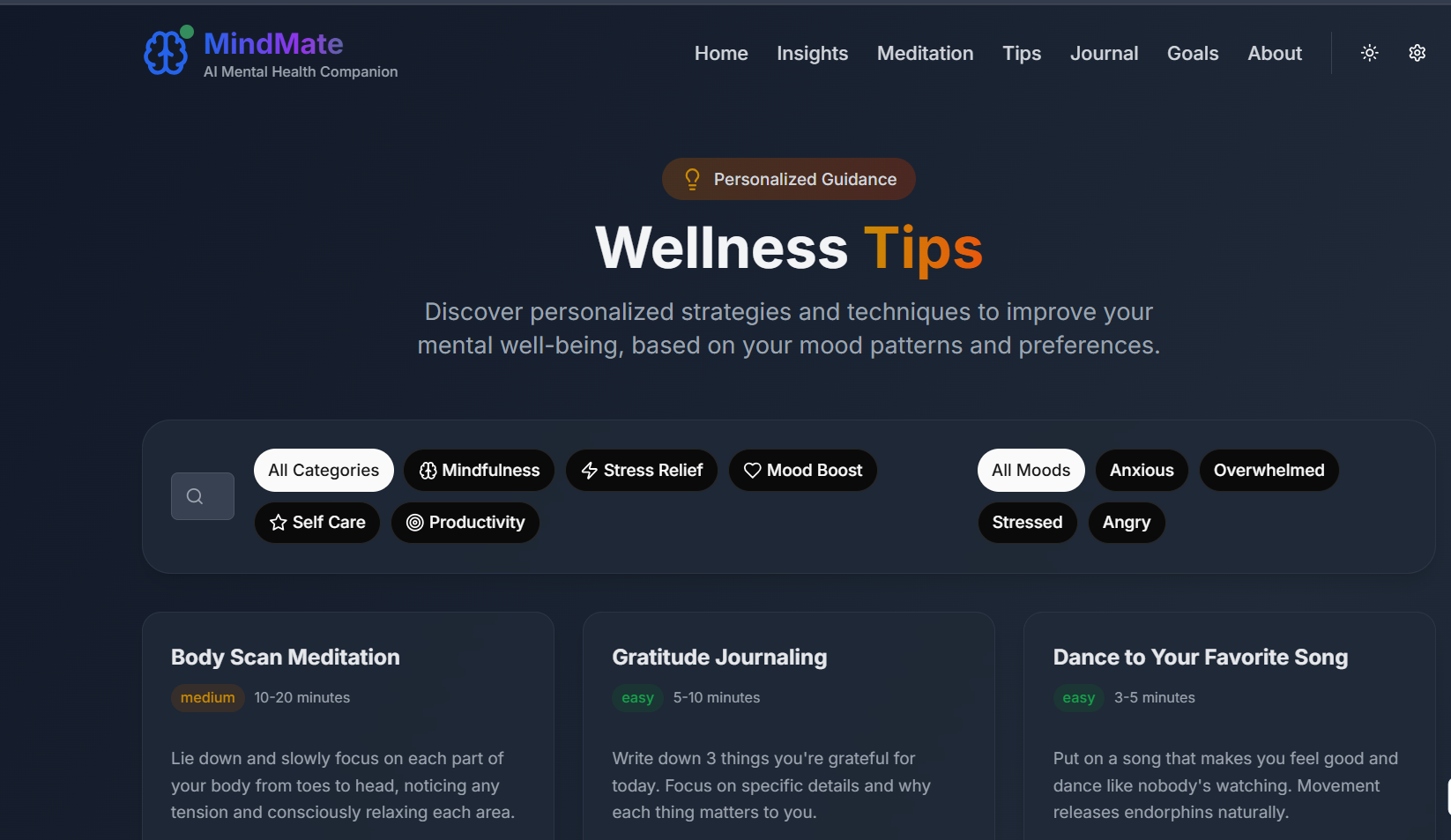
Wellness Tips
-
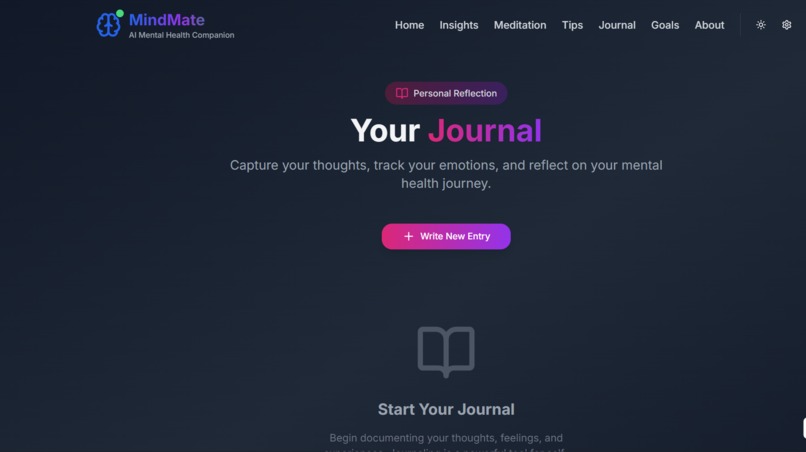
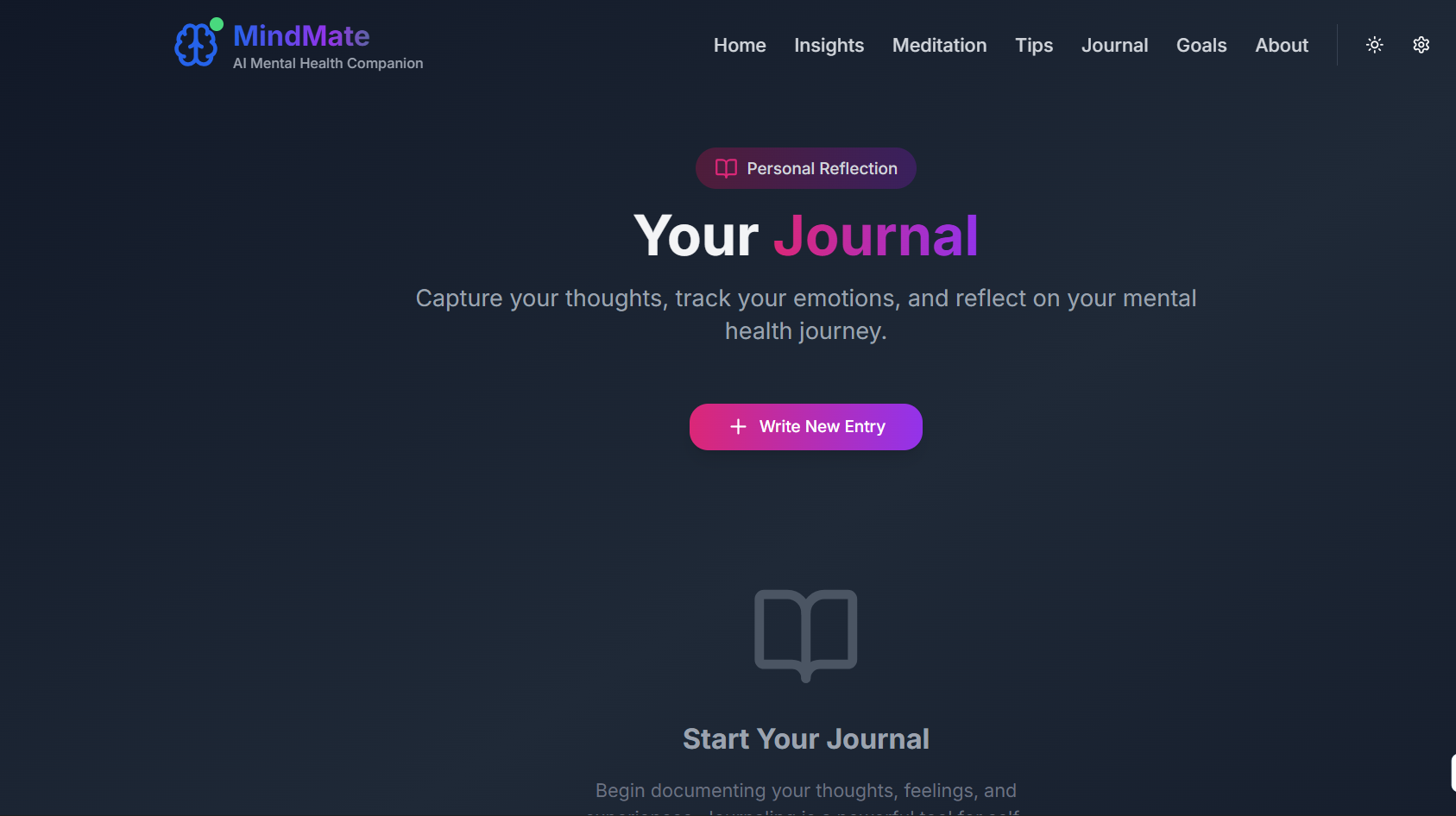
Journal
-
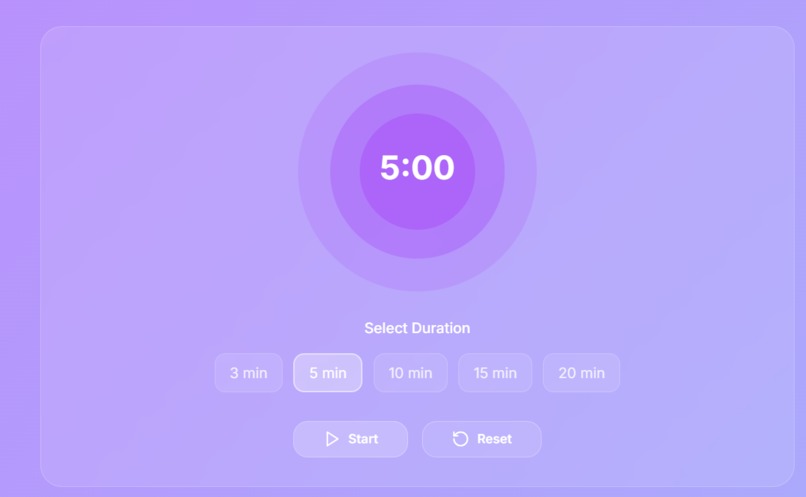
-
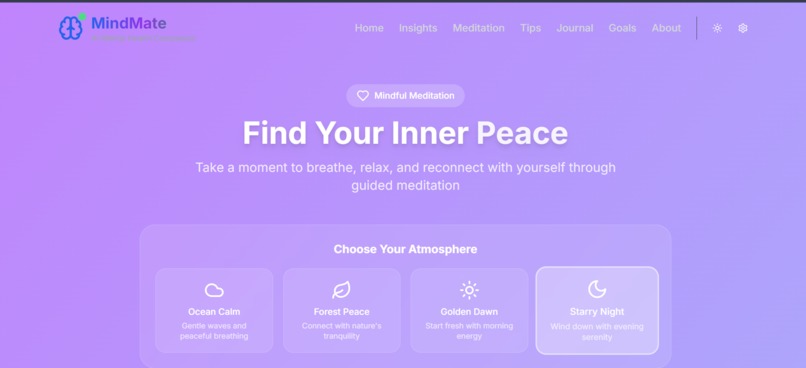
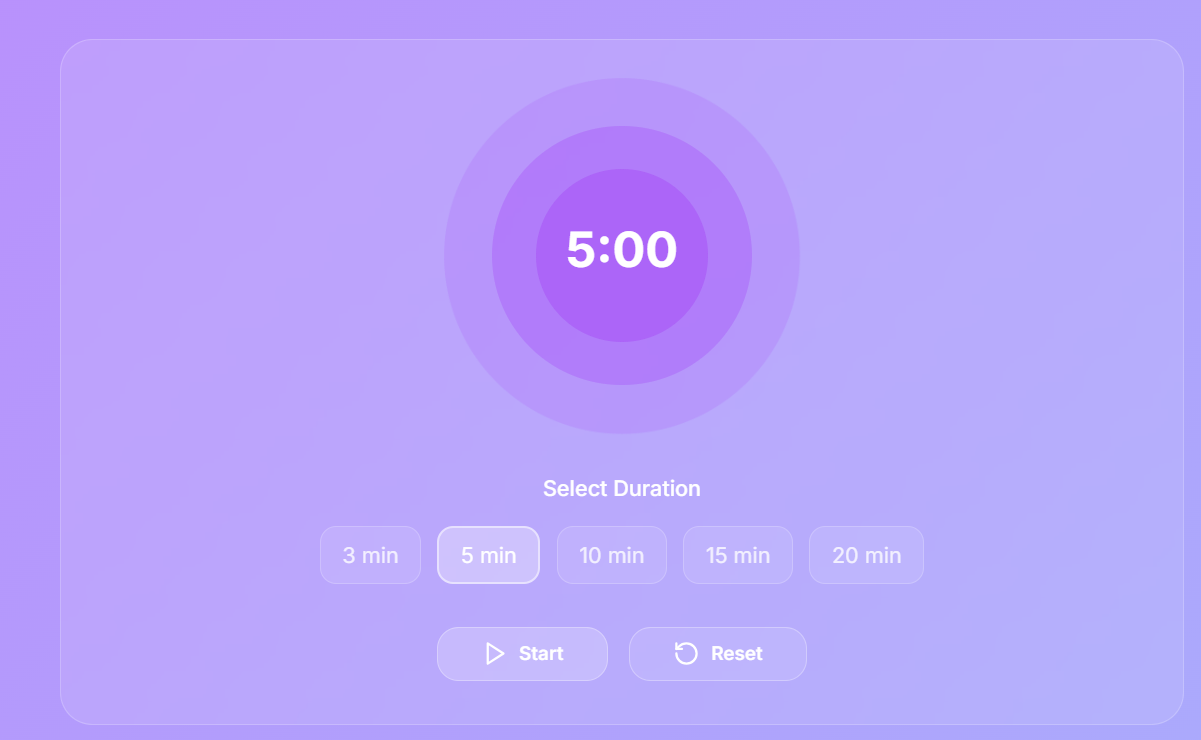
Meditation
-
Insights
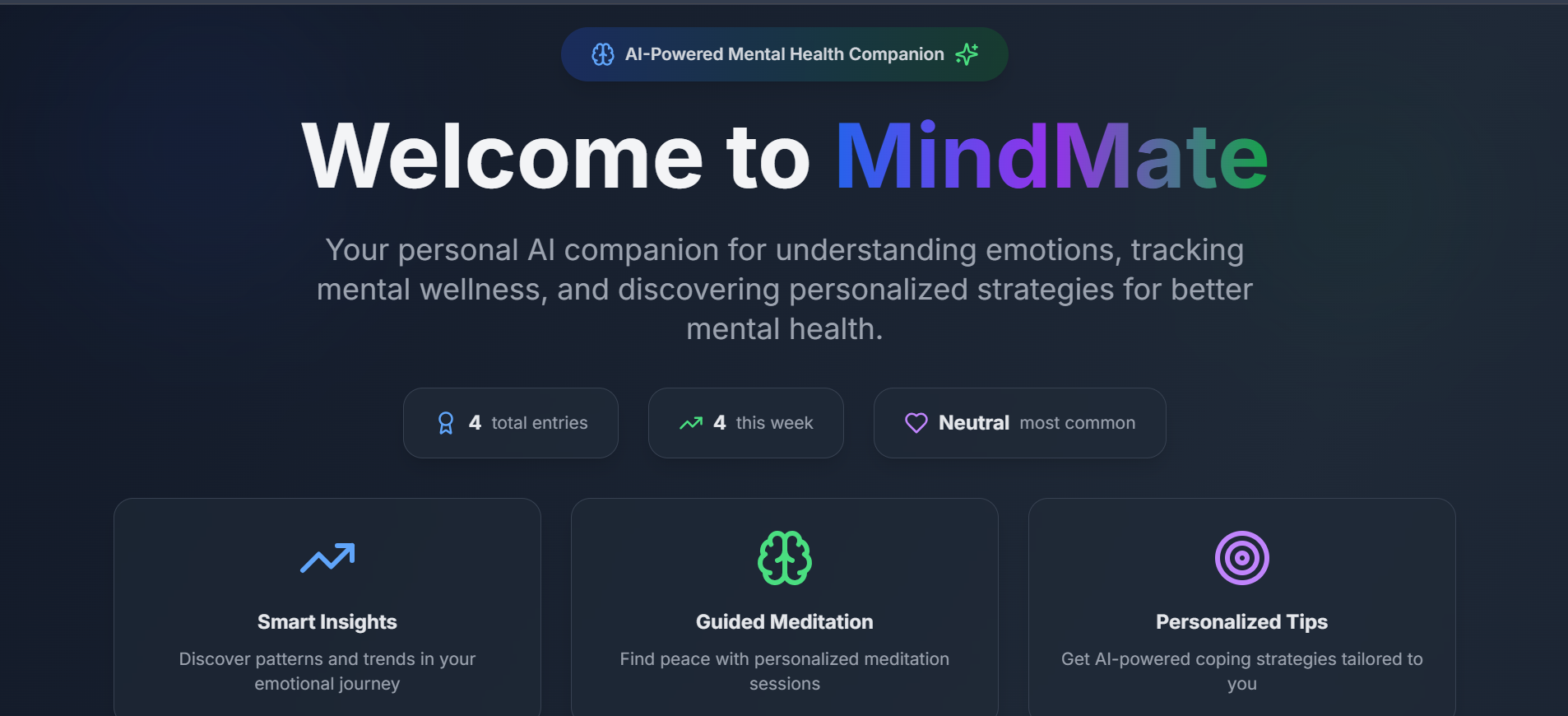
MindMate – Your Pocket-Sized AI for Emotional Clarity
Inspiration
Mental health challenges are growing worldwide, but access to quick, personalized emotional support is still limited. We wanted to create something that anyone could use in seconds—no sign-ups, no stigma, just an honest way to track your emotions and receive instant guidance. Our inspiration came from how journaling improves mental clarity, combined with the latest advances in AI sentiment analysis.
What it does
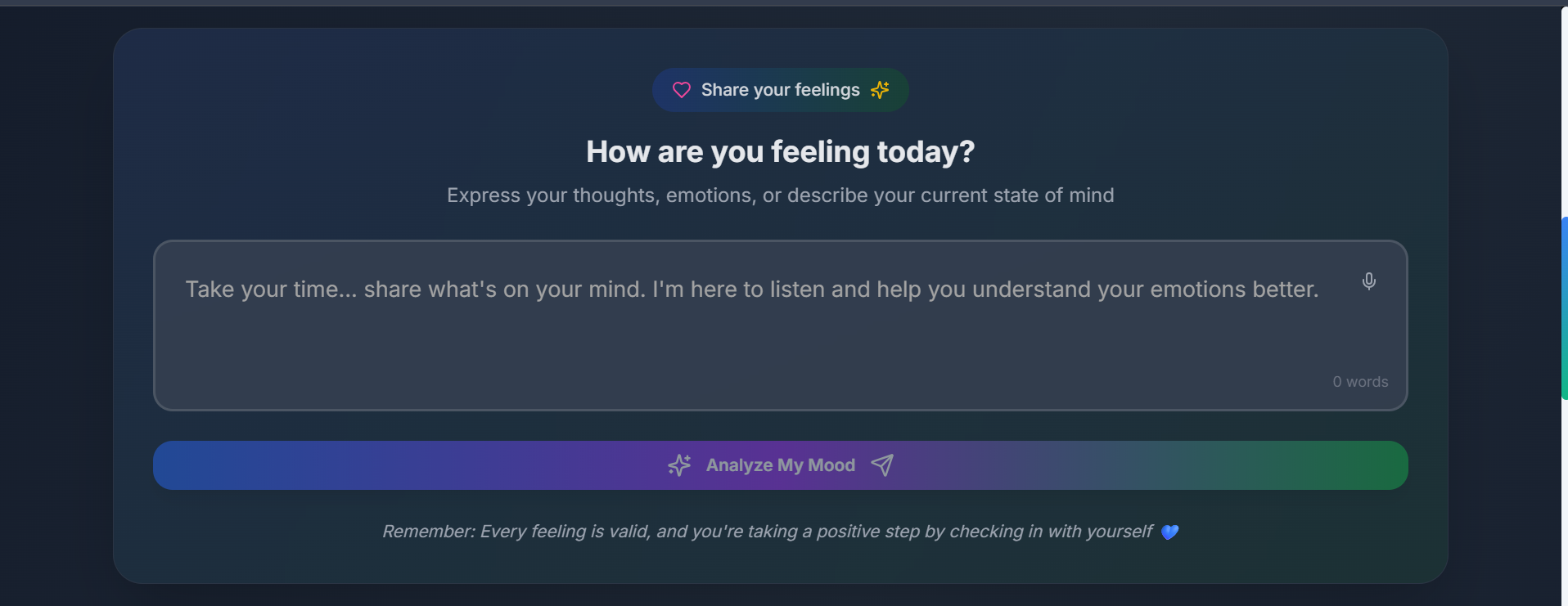
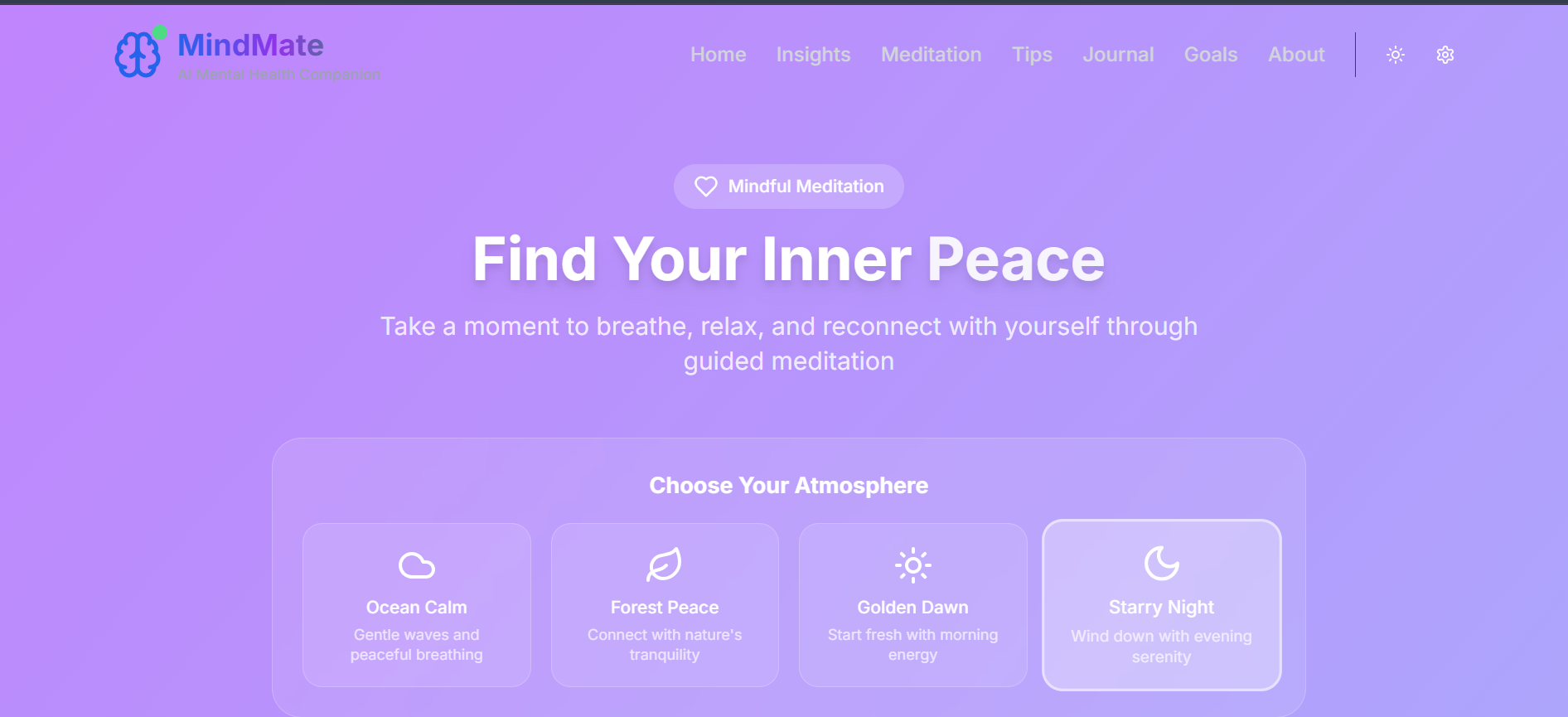
MindMate allows users to type or speak about their mood, analyzes their emotions using Google Gemini via the OpenRouter API, and instantly provides:
- Mood classification (e.g., happy, stressed, anxious)
- Confidence score indicating how certain the AI is
- Personalized coping tips tailored to their emotional state
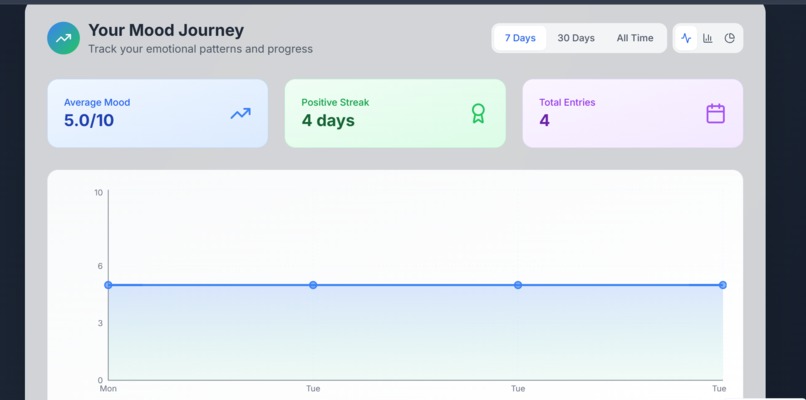
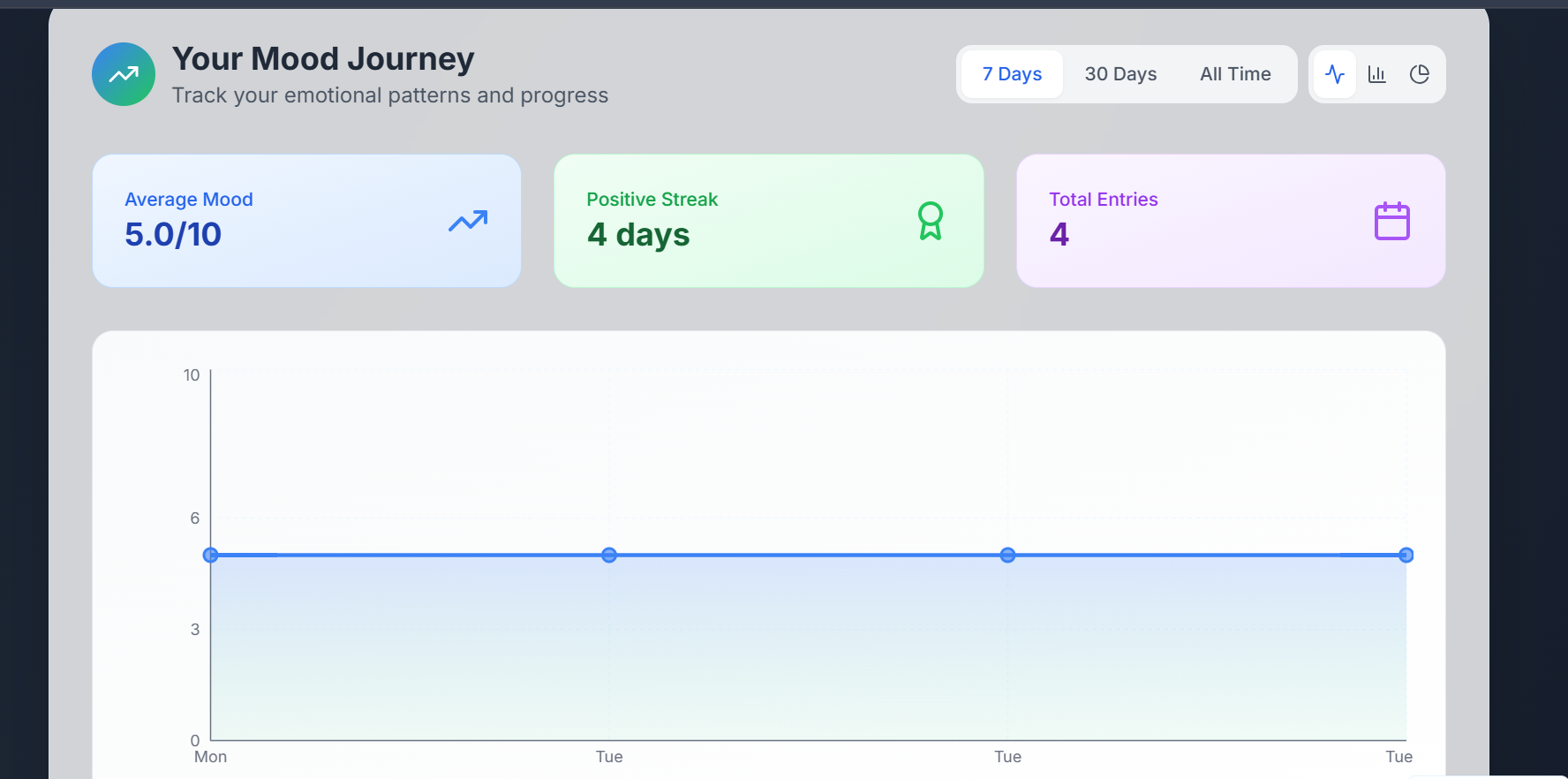
- A trend chart that shows how their mood evolves over time
All data is stored locally on the user’s device, ensuring privacy.
How we built it
- Frontend: Next.js with TypeScript and Tailwind CSS for a clean, responsive design.
- AI Engine: Google Gemini (via OpenRouter) to perform sentiment and emotion analysis.
- Data Handling: LocalStorage for mood history; Recharts for mood trend visualization.
- Deployment: Built and tested entirely on Bolt.new for rapid development.
Challenges we ran into
- Ensuring JSON compliance from the AI for consistent mood analysis.
- Balancing accuracy vs speed of sentiment detection for a smooth user experience.
- Designing a UI that feels comforting, not clinical.
Accomplishments that we're proud of
- Built a functional MVP within hackathon constraints (less than 2 days).
- Created a privacy-first design: no accounts, no cloud data by default.
- Seamlessly integrated free-tier APIs to make the app accessible to everyone.
What we learned
- How to leverage AI APIs effectively under strict time and budget constraints.
- The importance of human-centered design in mental health applications.
- That simplicity wins—a lightweight, approachable interface increases usability.
What's next
- Add voice journaling and emotional tone detection.
- Offer optional Google sign-in to sync data across devices.
- Introduce guided micro-therapy sessions powered by AI.
This opens the door for predictive mood analytics in future iterations.
Built With
- bolt.new
- google-gemini-(via-openrouter-api)
- javascript
- localstorage
- netlify
- next.js
- react
- recharts
- tailwind-css
- typescript

Log in or sign up for Devpost to join the conversation.