-
-

Official MindMesh AI logo: a minimalist synaptic mesh symbol representing connected thought and on-device intelligence
-
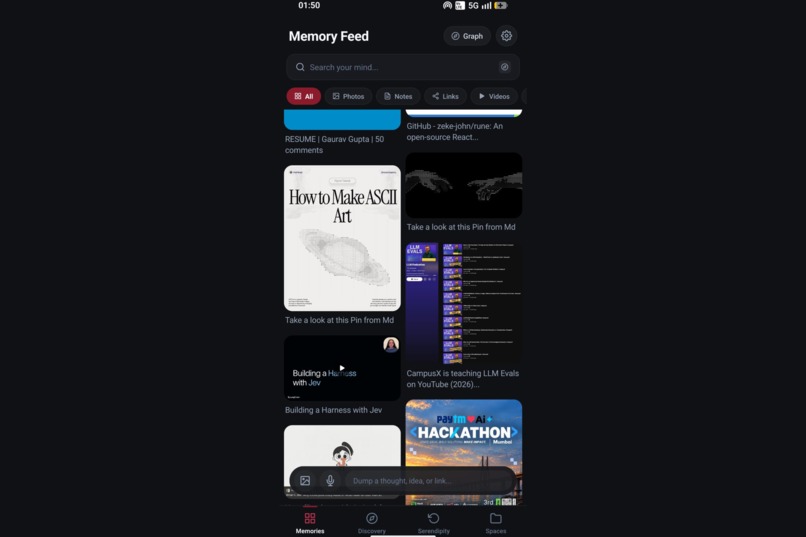
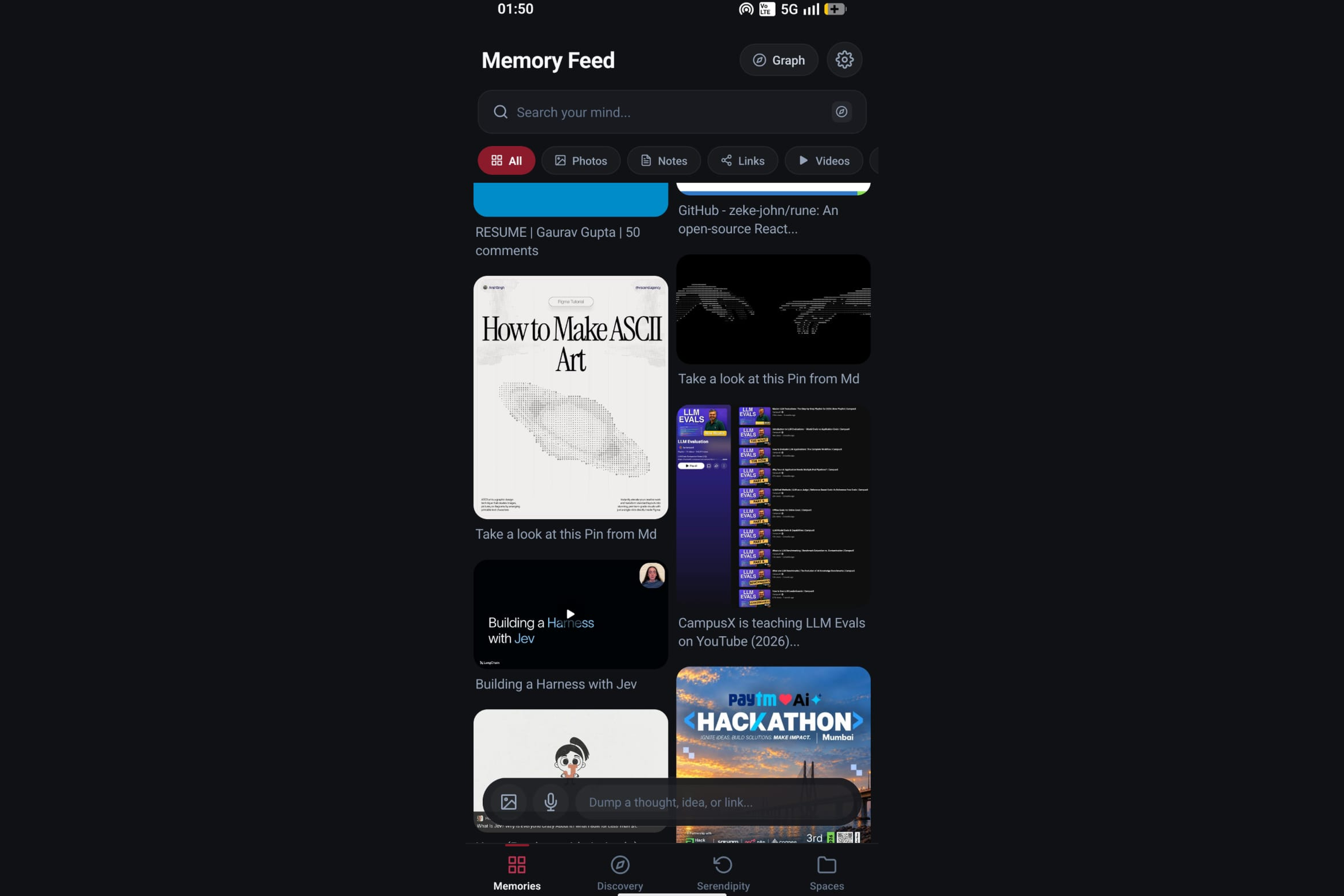
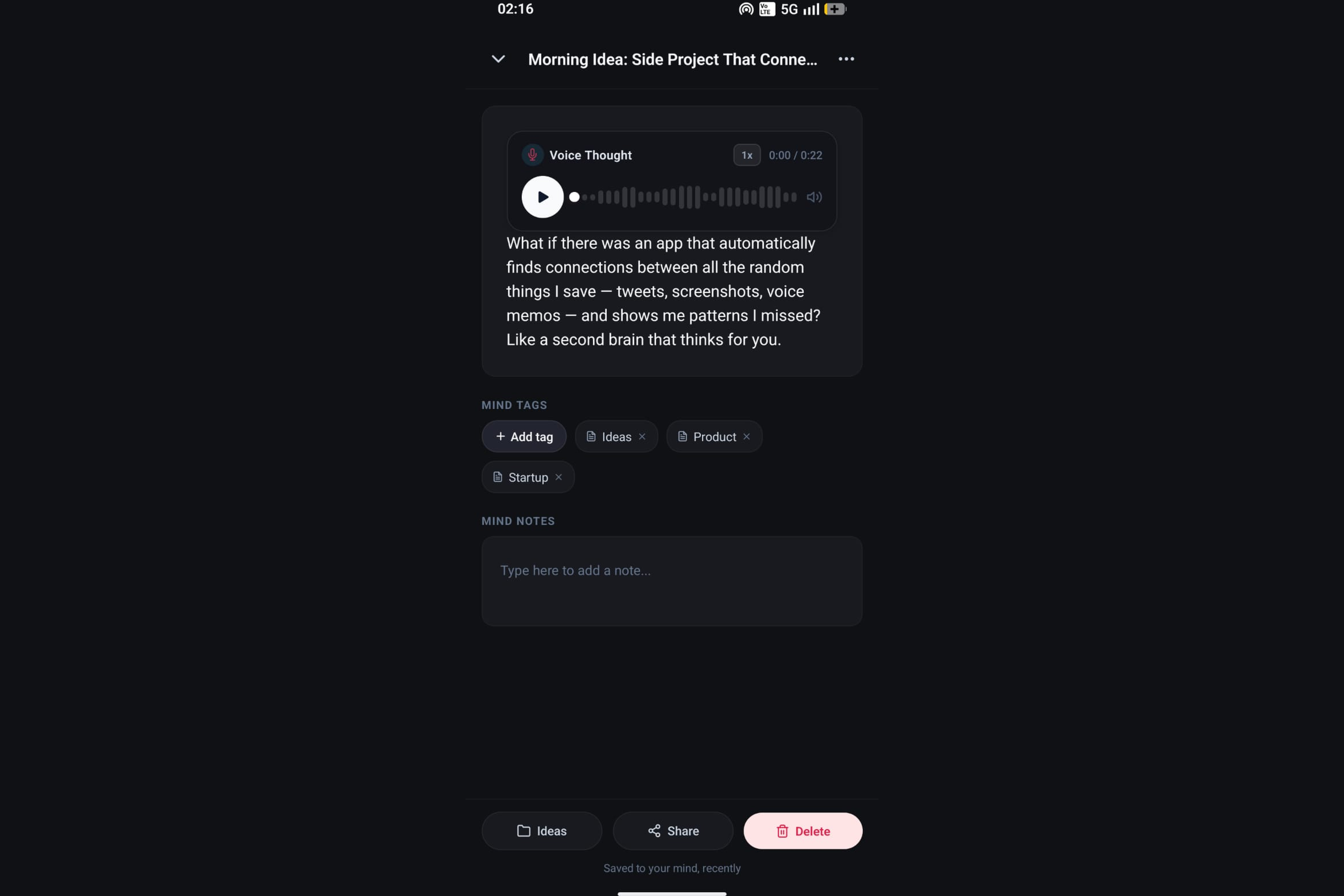
Ambient memory feed displaying multi-modal thought cards, smart search filters, and the Pro RevenueCat subscription access point
-
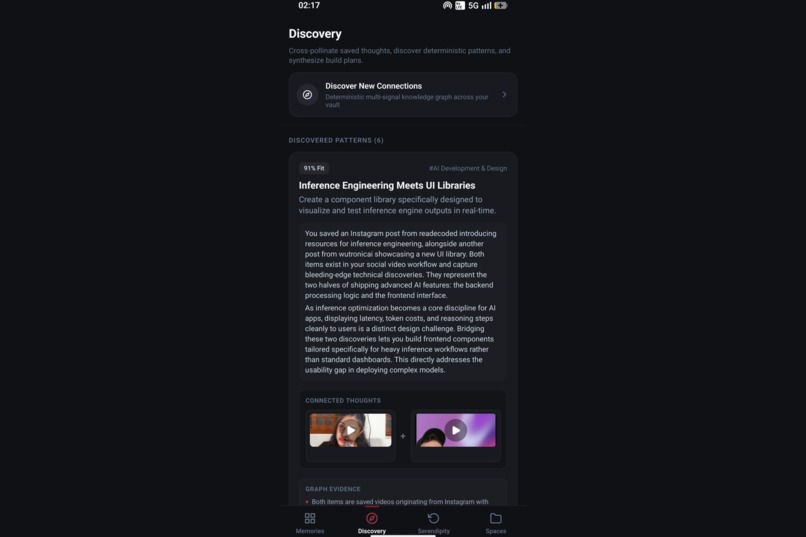
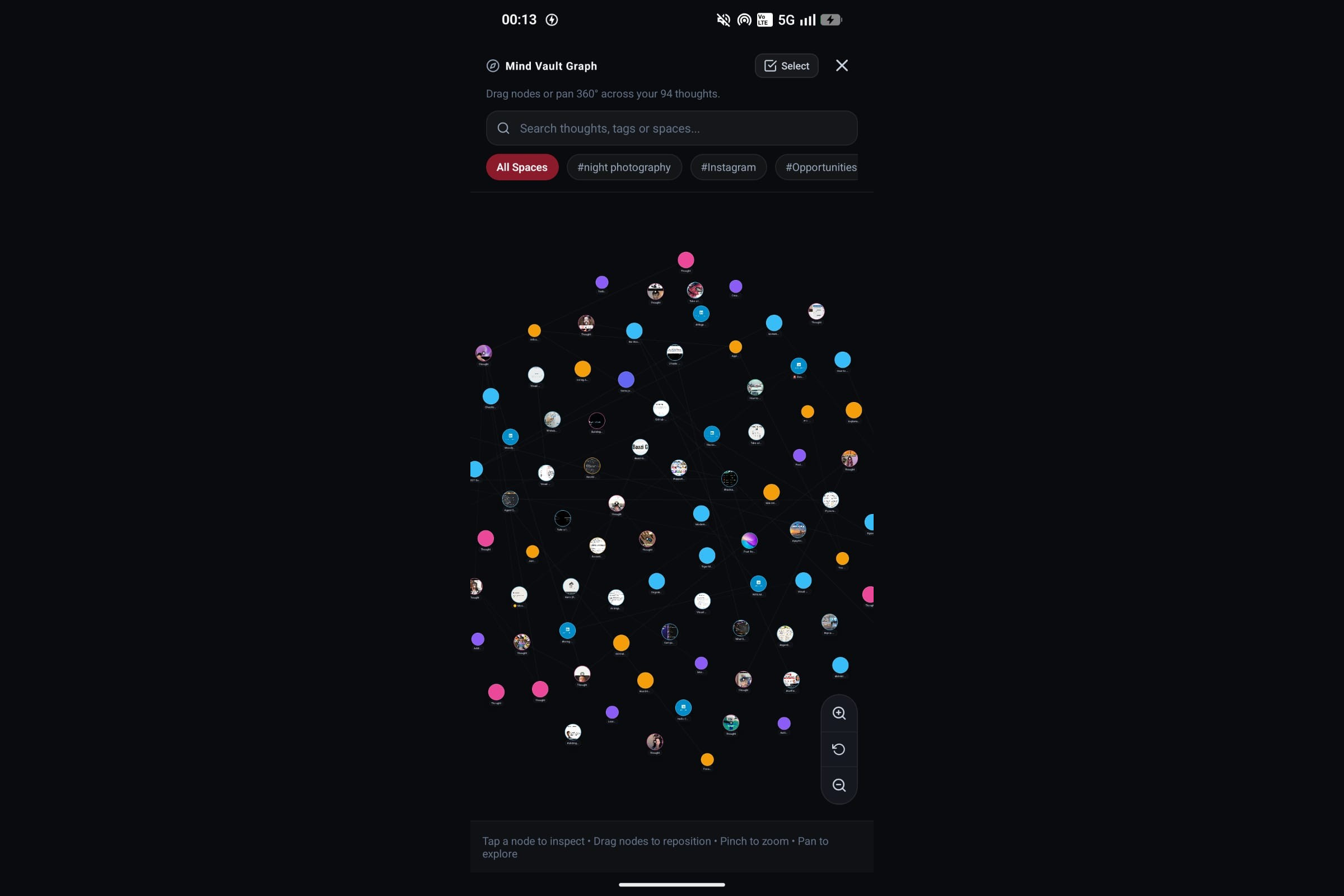
Interactive synaptic graph modal mapping semantic connections and thematic clusters across your private memory vault
-
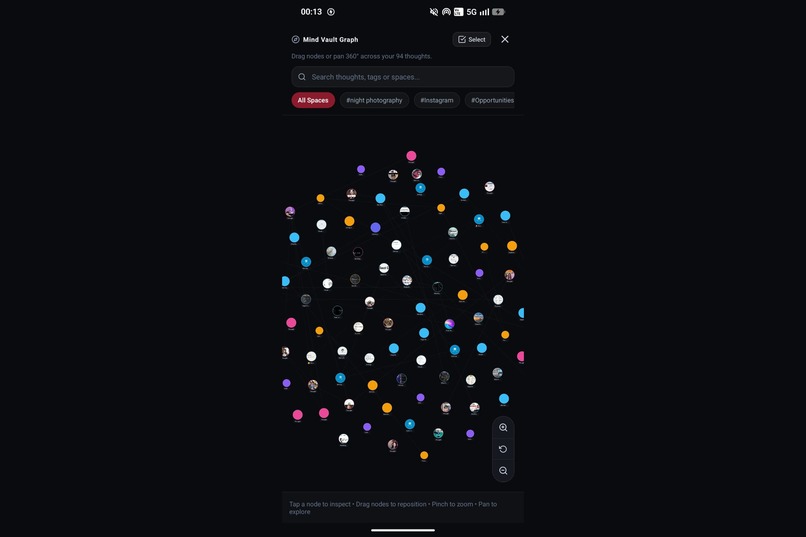
Mind Vault Graph: 360-degree interactive 2D physics network showing 94 interconnected thoughts, space filters, and node inspector
-
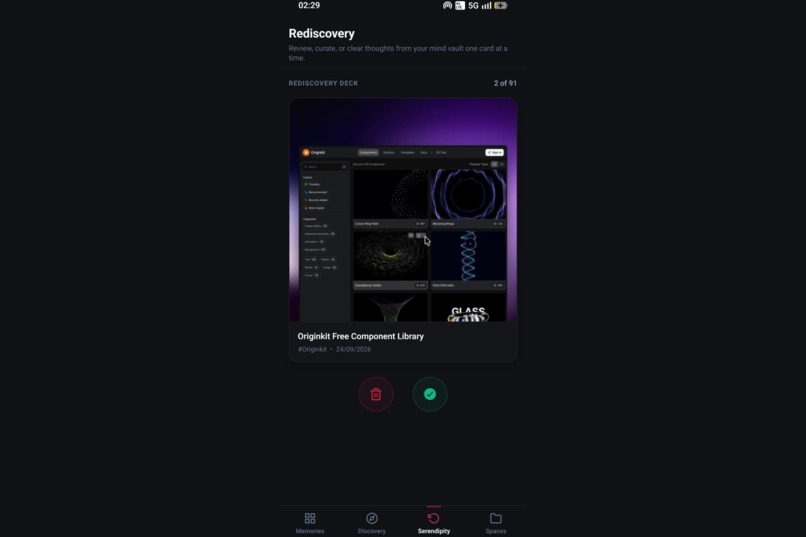
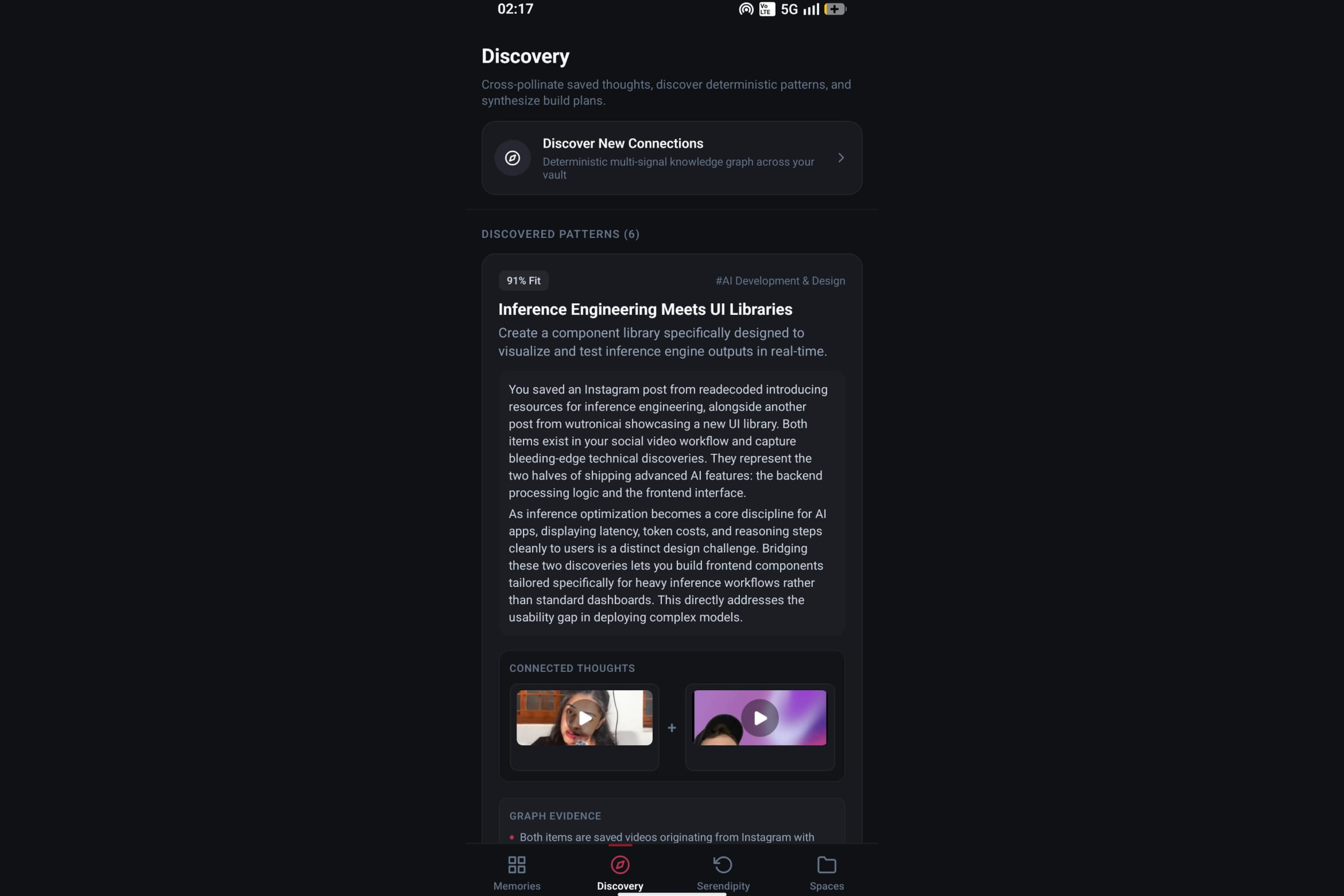
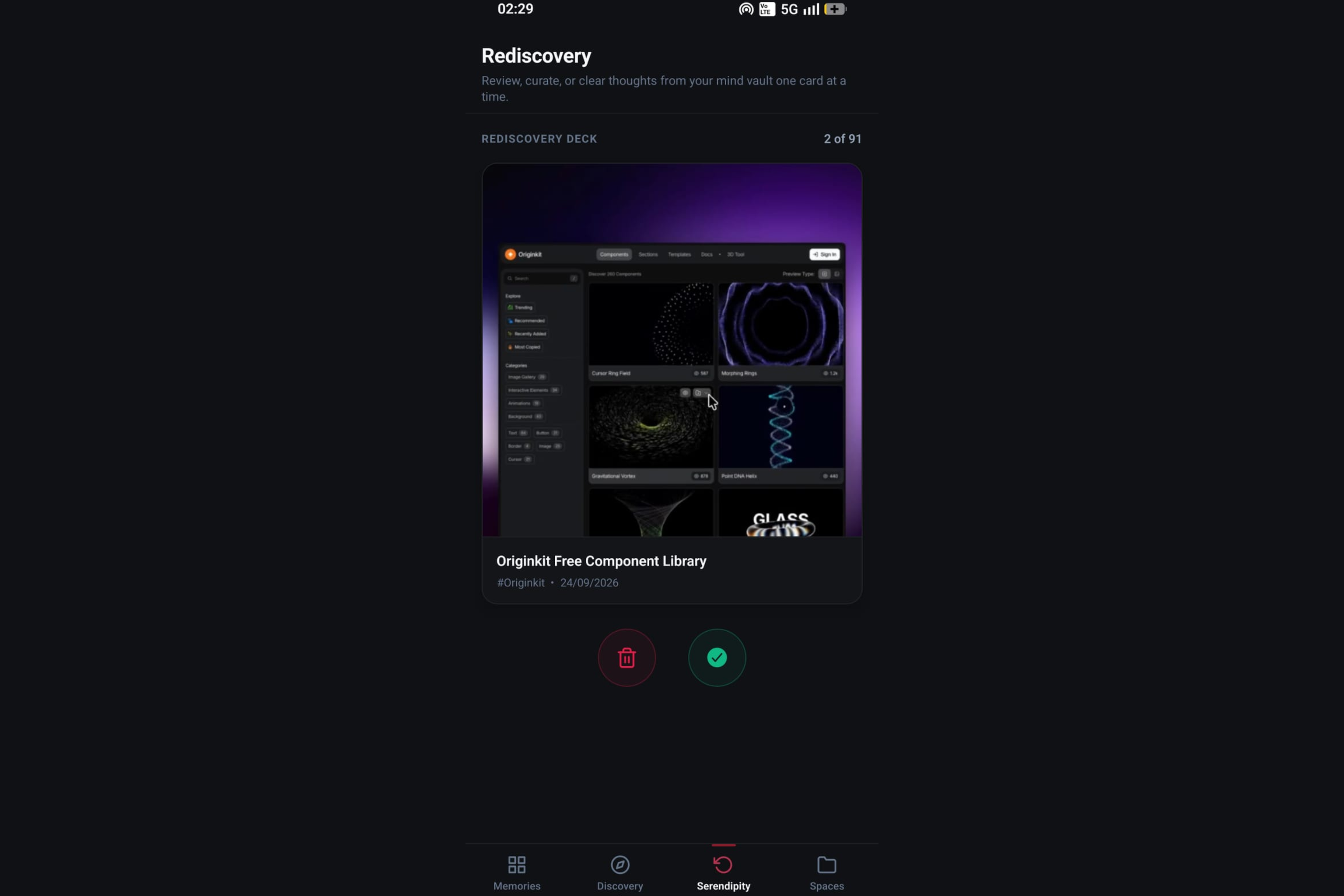
Rediscovery swipe deck surfacing forgotten notes and synthesizing disparate fragments into actionable engineering build plans
-
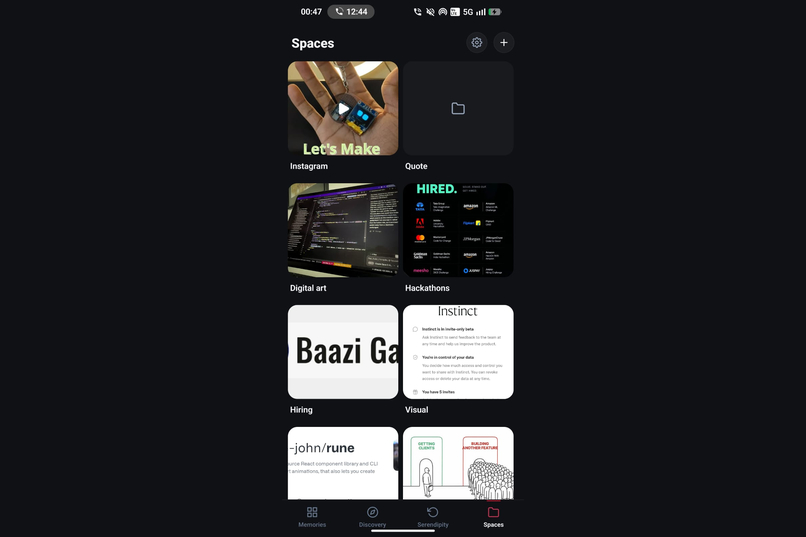
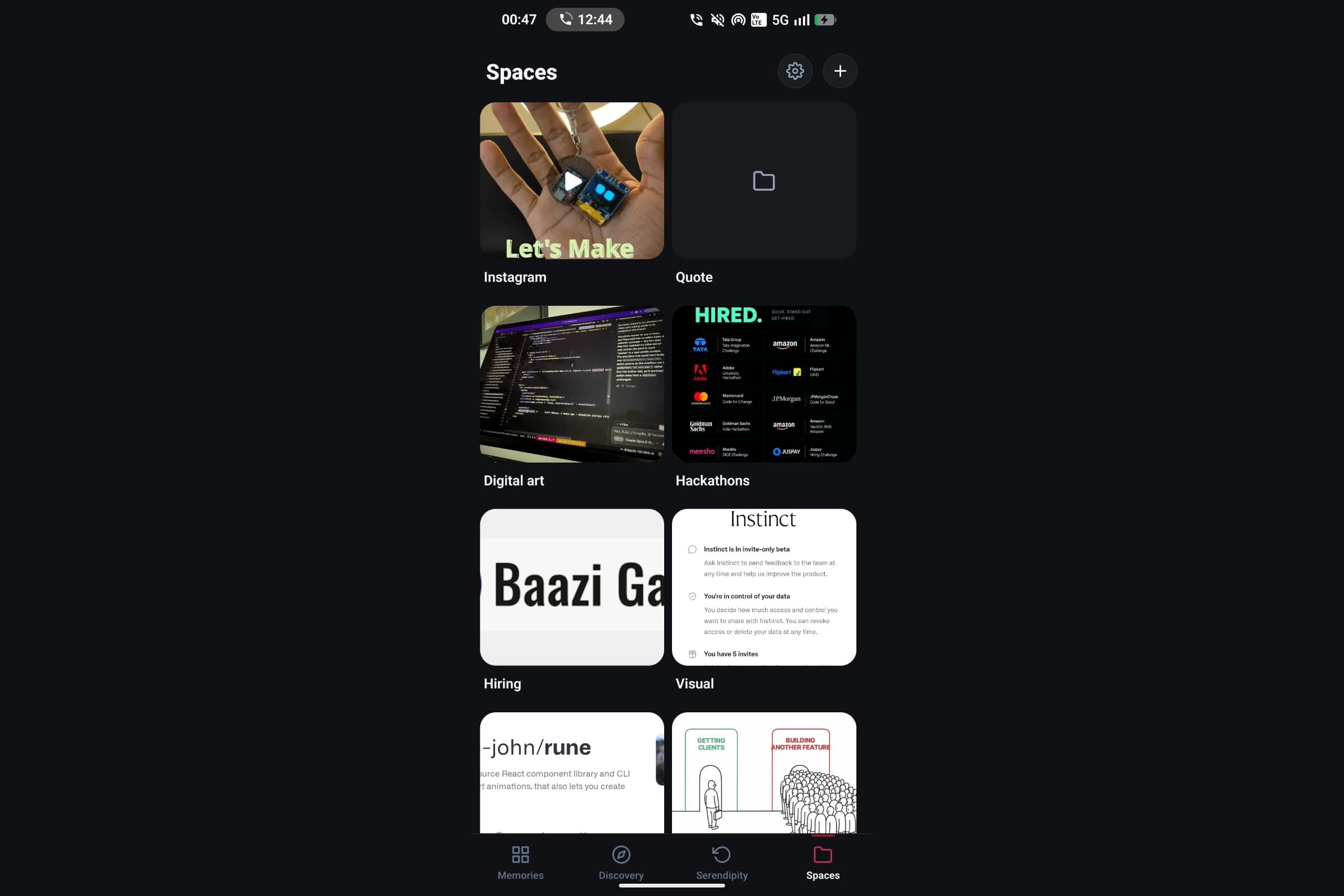
Spaces tab displaying contextual visual folders (Instagram, Hackathons, Hiring) for clustered knowledge organization.
-
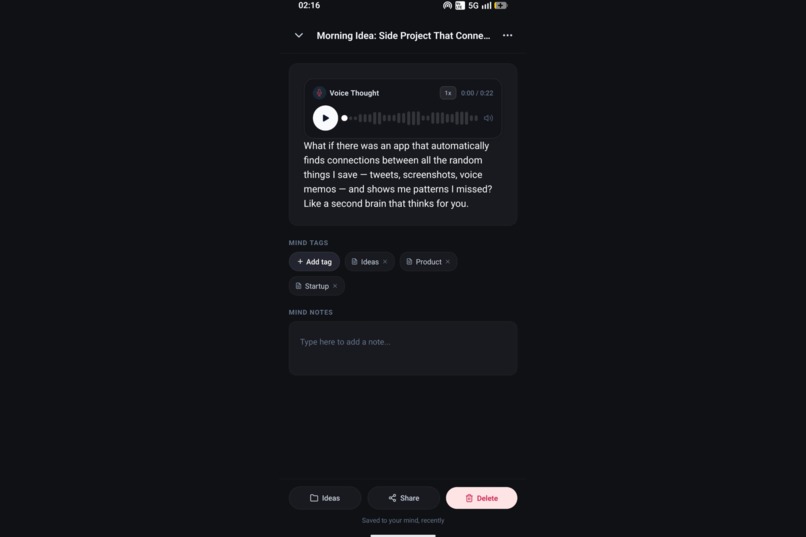
Spaces tab displaying contextual visual folders (Instagram, Hackathons, Hiring) for clustered knowledge organization.
-
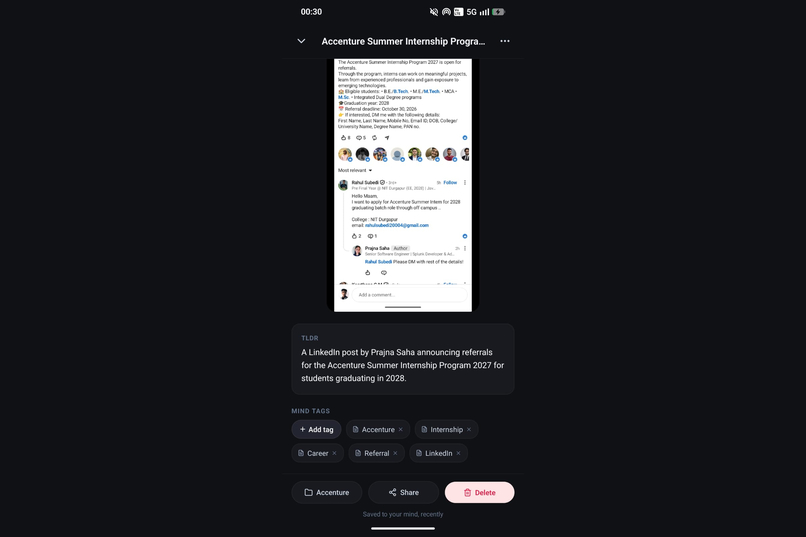
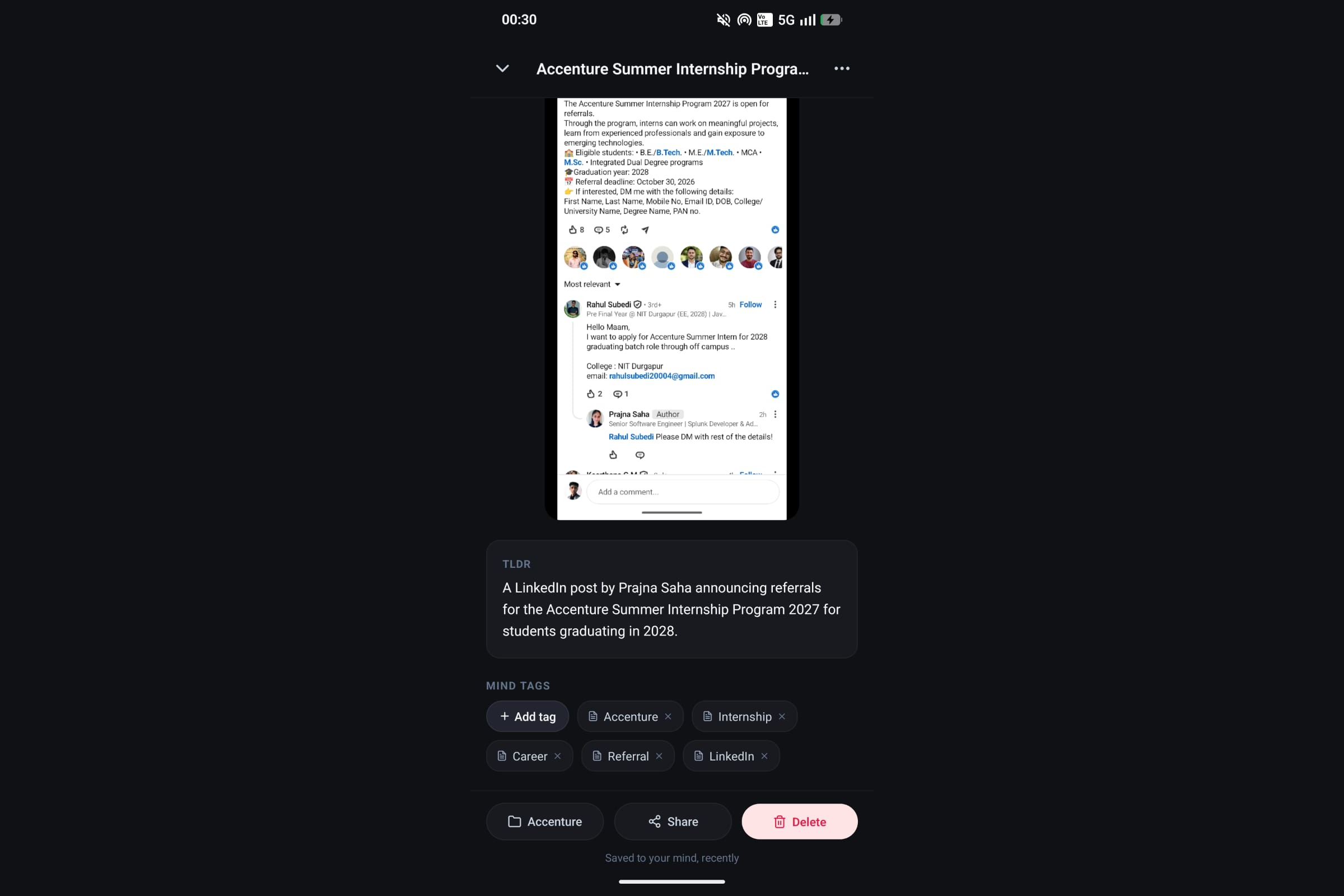
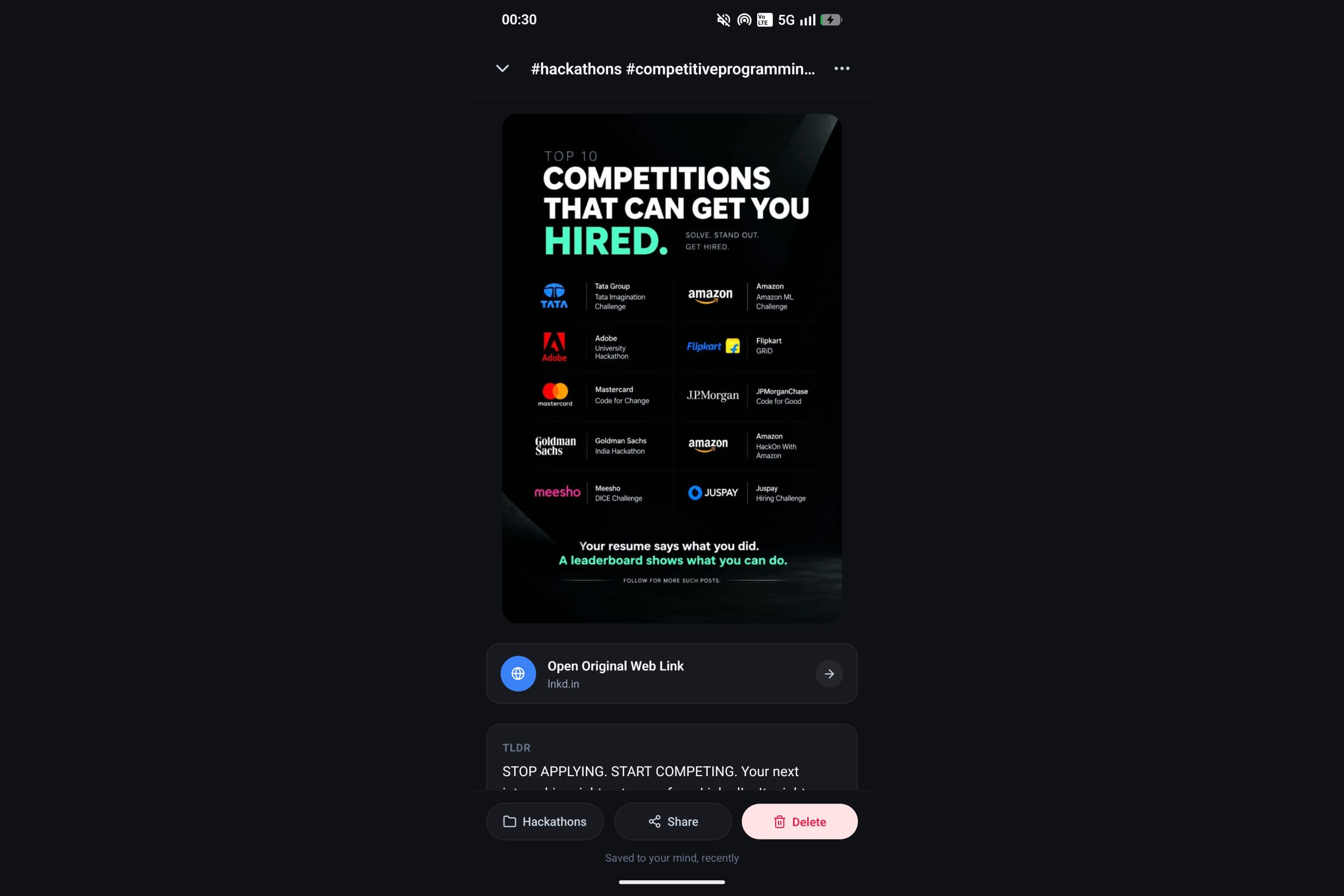
Ingested screenshot detail modal displaying visual preview, automated AI TLDR summary, and extracted mind tags
-
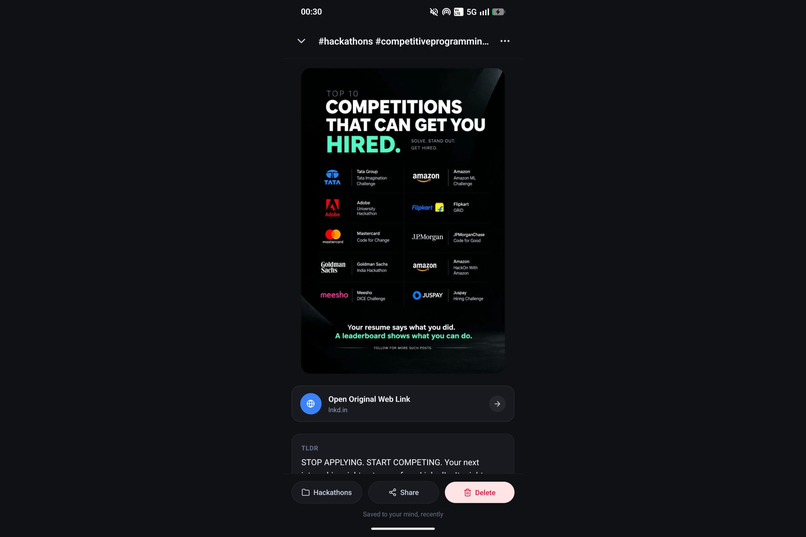
Enriched social media post card showing scraped web media, original link resolver, AI summary, and smart folder tagging
-
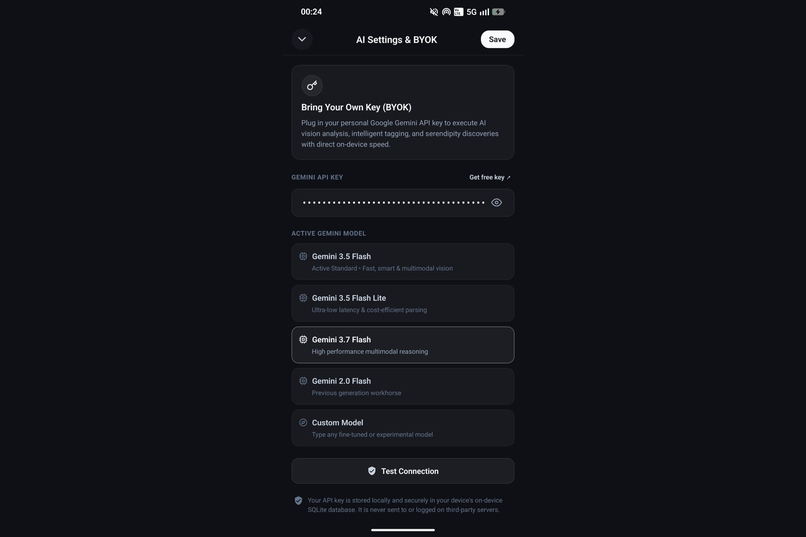
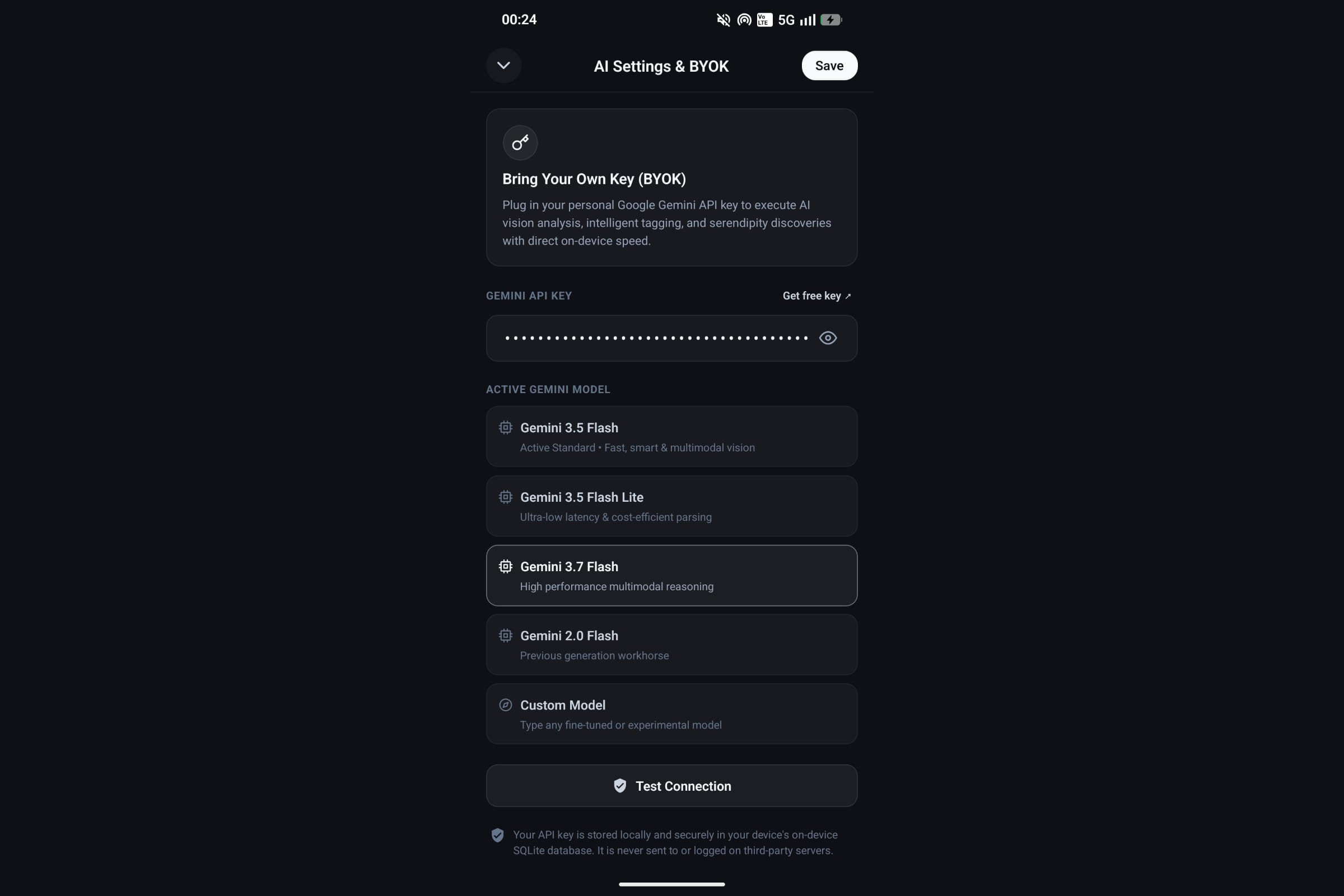
AI Settings & BYOK: Bring Your Own Key configuration for Gemini models with private on-device SQLite key storage

Inspiration
Every software engineer, researcher, and creative builder shares an unspoken frustration: the "save later" cemetery.
Throughout our day, creative epiphanies strike unpredictably. We record hurried voice memos while walking, snap screenshots of elegant architecture diagrams, and bookmark technical discussions across Twitter/X, GitHub, and browser tabs. But days later, these insights sit disconnected in camera rolls and notes apps, rotting away. The friction between chaotic creative inspiration and disciplined engineering execution is massive: scattered thoughts almost never turn into shipped products.
Existing note-taking tools are passive silos. They force users into tedious manual filing, tagging, and folder hierarchies. We asked ourselves:
What if your second brain wasn’t just a digital filing cabinet, but an active, privacy-preserving thinking partner that works in the background to weave scattered research fragments into structured, executable build plans?
This question gave birth to MindMesh AI: a local-first, privacy-native cognitive copilot engineered to eliminate capture friction and automatically synthesize disparate research fragments into production-ready PRDs, database schemas, and engineering blueprints.
What it does
MindMesh AI transforms chaotic, multi-modal research into actionable, structured engineering plans through four core capabilities:
- Zero-Friction Multi-Modal Capture: Ingests thoughts from any source in seconds—Whisper voice memos, camera viewfinder captures, screenshots, text snippets, and native Android Share Sheet intents from Twitter/X, Instagram, and Chrome.
- Local-First SQLite Vault: Stores every note, memory, and embedding inside an encrypted on-device SQLite database. MindMesh guarantees complete data sovereignty with zero tracking, zero telemetry, and a Bring-Your-Own-Key (BYOK) architecture for Gemini and Groq APIs.
- The Serendipity Engine: Periodically scans your vector memory graph in the background to detect hidden semantic relationships between memories created weeks or months apart. When strong thematic correlations are detected, it proactively drafts an end-to-end Product Requirements Document (PRD) with architecture schemas and implementation task lists.
- Universal Markdown & Obsidian Bridge: Generates deterministic Markdown files (
YYYY-MM-DD-[topic-slug].md) with bidirectional[[wikilinks]]that mirror automatically to your desktop for use in Obsidian, Notion, and VS Code. - Native RevenueCat Monetization: Features a quiet, transparent subscription model offering a 7-day free trial, flexible monthly/annual tiers, single-tap cross-device entitlement restoration, and zero hard-paywall lockout.
How we built it
MindMesh AI is engineered with a hybrid edge-first topology: an on-device React Native client coupled with encrypted local storage, client-side vector search, a secure serverless AI proxy, and native RevenueCat monetization.
1. Client & Ingestion Pipeline
- Framework: React Native 0.86 with Expo 57 and Expo Router.
- Audio Pipeline:
expo-audiorecords high-fidelity voice notes, processed via local transcription and fast serverless Whisper pipelines. - Vision & Media Pipeline: Full-screen camera viewfinder (
expo-camera) and asset picker (expo-image-picker) feeding an OCR and visual feature extraction engine. - Android Share Sheet Integration: Native Android intent filters capturing
SENDandSEND_MULTIPLEintents across text, images, and URLs (*/*). - Storage Engine: High-performance local database via
expo-sqlite, storing memories, metadata, tags, and embeddings entirely on the user's hardware.
2. The Serendipity Engine & Mathematical Formulation
Rather than relying on basic keyword searches, MindMesh implements a vector clustering model to uncover latent connections between chronologically distant memories.
The similarity between memory vectors u and v is evaluated using cosine similarity:
Sim(u, v) = (u · v) / (‖u‖₂ ‖v‖₂)
Equivalently:
Sim(u, v) = Σᵢ₌₁ᵈ uᵢvᵢ / (√(Σᵢ₌₁ᵈ uᵢ²) × √(Σᵢ₌₁ᵈ vᵢ²))
To balance semantic relevance with unexpected discovery (preventing redundant clustering), we define our Serendipity Convergence Score S(u, v, Δt) as a function of semantic proximity and temporal distance:
Δt = |tᵤ − tᵥ|
S(u, v, Δt) = Sim(u, v) × [1 + λ ln(1 + Δt / τ)]
where τ is a temporal scaling baseline (e.g., 7 days) and λ ∈ [0.1, 0.3] rewards serendipitous cross-pollination between older memories and fresh ideas.
When candidate clusters exceed a convergence threshold θ₍conv₎, MindMesh triggers the synthesis pipeline to compile the connected memories into an actionable engineering PRD.
3. RevenueCat Subscription Monetization
We integrated RevenueCat (react-native-purchases) to establish a clean indie software business model:
- Two-Tier Architecture:
- Community Tier ($0/forever): Full local SQLite autonomy, offline access, standard Markdown export, BYOK keys, and 3 weekly synthesis scans.
- MindMesh Pro ($4.16/mo billed annually or $9.99/mo): Unlimited continuous background Serendipity convergence, automated multi-device vault synchronization, priority multi-modal synthesis, and restorable cross-device entitlements.
- Entitlement State Verification: Entitlement states are cached locally and verified asynchronously:
AccessState =
- PRO_UNLOCKED, if
entitlements["pro"].isActive = true - COMMUNITY, otherwise
- Aesthetics: Styled with a quiet obsidian canvas (
#030308) and signature Burgundy pop accent (#8B1A2B/#B8334F), completely free of emojis and distracting visual noise.
- Aesthetics: Styled with a quiet obsidian canvas (
4. Companion Web Platform
- Deployed live on Vercel at https://mindsmeshai.vercel.app using Next.js 16 (Turbopack), Tailwind CSS, and GSAP ScrollTrigger for interactive landing showcase and APK distribution.
Challenges we ran into
Local-First Performance vs. Mobile Battery: Executing semantic comparisons across hundreds of stored memory fragments without introducing UI lag or battery drain required disciplined optimization. We solved this by precomputing dense vector embeddings during initial capture and executing similarity scans in batched background workers during device idle states.
Handling Dynamic Android Share Sheet Data: Social media apps pass wildly inconsistent data through Android Share Intents. Some apps send raw bitmaps, others pass nested text bundles with tracking parameters, and others send raw HTML. We engineered an enrichment pipeline with headless scraper fallbacks to reliably extract clean metadata, OpenGraph tags, and media URLs.
Purging Visual Fluff & Unifying Aesthetics: Early iterations suffered from fragmented style tokens, which caused blinding white modal flashes in dark environments. We audited and purged all legacy styles, refactoring both the React Native paywall and Next.js web application to a unified dark design system with Burgundy accents and zero circular artifacts.
Designing a Non-Hostile Monetization UX: We refused to implement predatory paywalls that hold user data hostage. Designing an ethical monetization UX meant keeping all stored notes, SQLite databases, and standard exports 100% free and offline forever, while reserving continuous background synthesis and multi-device sync for RevenueCat Pro subscribers.
Accomplishments that we're proud of
- Complete Edge Autonomy: Built an AI-powered cognitive second brain that operates entirely offline on local SQLite storage without forcing users to upload their private notes to third-party databases.
- Production-Grade RevenueCat Integration: Shipped a seamless subscription system with 7-day trials, restorable entitlements, and offline entitlement caching on native Android.
- Deterministic PRD Synthesis: Successfully demonstrated an AI pipeline that doesn't just summarize notes, but transforms disconnected voice memos and UI screenshots into structured engineering blueprints with database schemas and actionable checklists.
- Minimalist Design Discipline: Created an obsidian-dark luxury aesthetic with a signature Burgundy accent, strictly adhering to high-contrast typography, zero emojis, and zero visual clutter.
- Full Stack Ship: Completed the native Android APK (
v0.1.5,versionCode: 3), the companion Next.js web application live on Vercel, and the Express AI proxy backend.
What we learned
- Local-First is the Future of Personal AI: Users are deeply protective of their raw thoughts, unreleased project ideas, and personal research. By keeping storage on-device in SQLite and enabling BYOK, users feel safe entrusting MindMesh with their most ambitious plans.
- RevenueCat Accelerates Developer Velocity: Integrating in-app purchases natively on Android can take weeks of boilerplate handling billing client states, receipt validation, and edge-case network recovery. RevenueCat abstracted this into concise SDK calls (
Purchases.purchasePackage(),Purchases.restorePurchases()), allowing us to focus on building the core Serendipity Engine. - Serendipity Beats Hoarding: The true value of an AI second brain isn't in saving more content—it's in synthesizing what you've already captured into something you can actually build and ship.
What's next for Mind Mesh AI
- Local On-Device SLM Ingestion: Integrate quantized on-device small language models (such as Gemma 2B or Llama 3.2 1B via ExecuTorch / ONNX Runtime) to perform synthesis without needing any cloud API calls.
- Bidirectional Obsidian Vault Sync: Release an official MindMesh Obsidian Community Plugin to allow live two-way sync between your mobile SQLite vault and desktop Obsidian workspaces.
- Voice-First Interactive Brainstorming: Expand voice memo capture into conversational voice threads, allowing builders to interrogate their synthesized PRDs while driving or commuting.
- Cross-Platform iOS & Desktop Release: Bring MindMesh's RevenueCat subscription architecture and local SQLite vault to iOS and macOS with synchronized universal purchases.
Built With
- android
- artificial-intelligence
- byok
- expo-router
- expo.io
- express.js
- gemini-api
- groq
- gsap
- in-app-purchases
- local-first
- markdown
- mobile-app
- next.js
- node.js
- obsidian
- ocr
- react-native
- revenuecat
- sqlite
- tailwind-css
- typescript
- vector-embeddings
- vercel
- whisper


Log in or sign up for Devpost to join the conversation.