Inspiration
This project was inspired by one of our friends who struggles with depression. She explained that it was initially daunting for her to reach out to a doctor and do a mental health assessment because of the stigma surrounding mental health issues as well as how serious it felt. Moreover, according to the WHO, about 280 million people suffer from depression. Depression is prevalent globally, and yet, most go unnoticed. Compared to diseases with overt symptoms, the symptoms of depression could be much more subtle and indistinct, although the consequences could be deadly.
It is recommended that people regularly take mental health assessments like how they regularly get health check-ups. However, even those with depression often do not reach out for professional help because either they are unaware, or because of the social stigma surrounding depression. Hence, our gamified assessment, Mind Galaxy, aims to increase accessibility to mental health assessments, and encourage regular testing for depression. It is not the goal of the game to accurately detect depression–players should use the game as an initial screening (or to track mental wellbeing), and consult a doctor afterward. The purpose of the game is to make people more aware of their mental states, as well as be more comfortable with psychological assessments by making a depression assessment more fun and interactive.
What it does
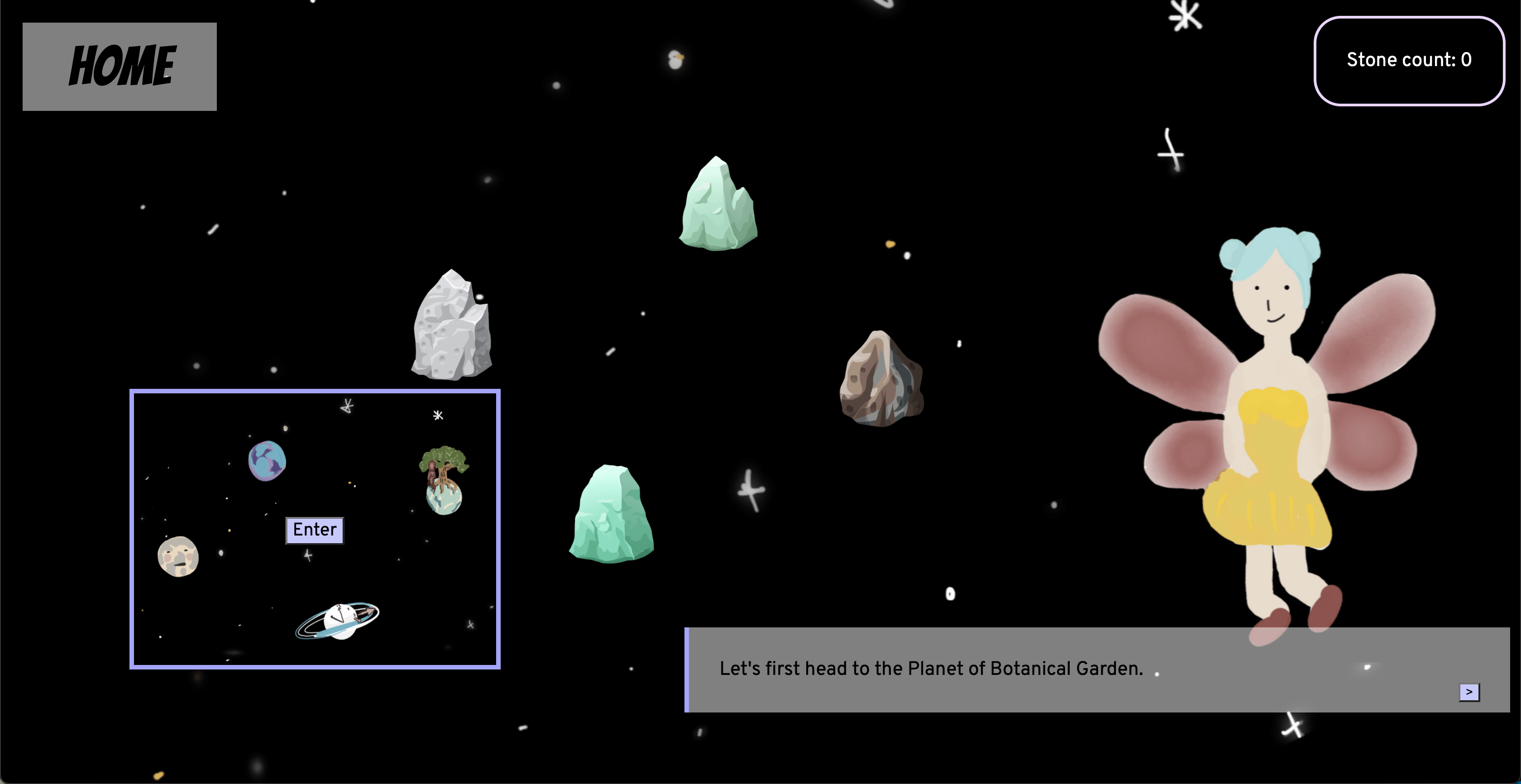
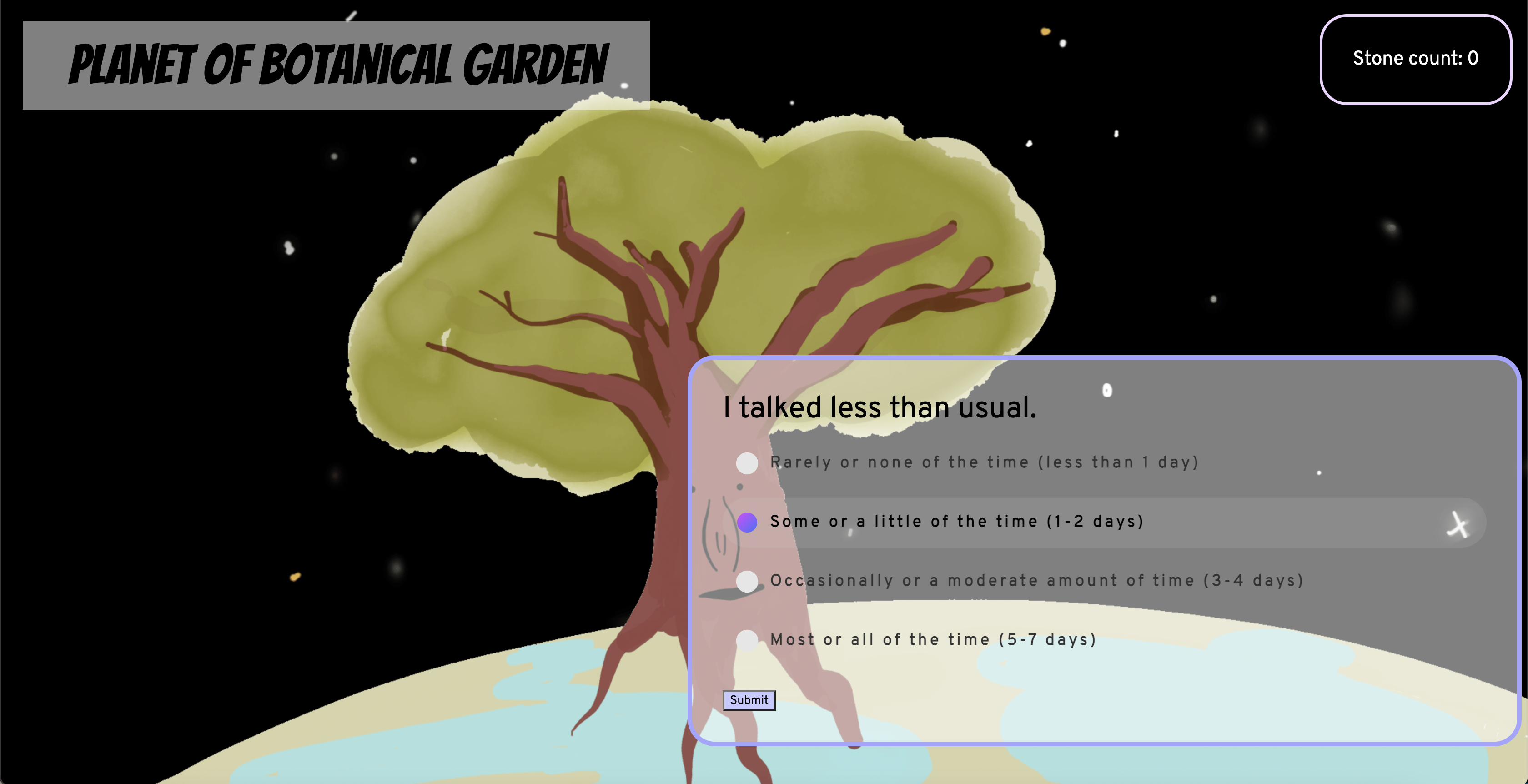
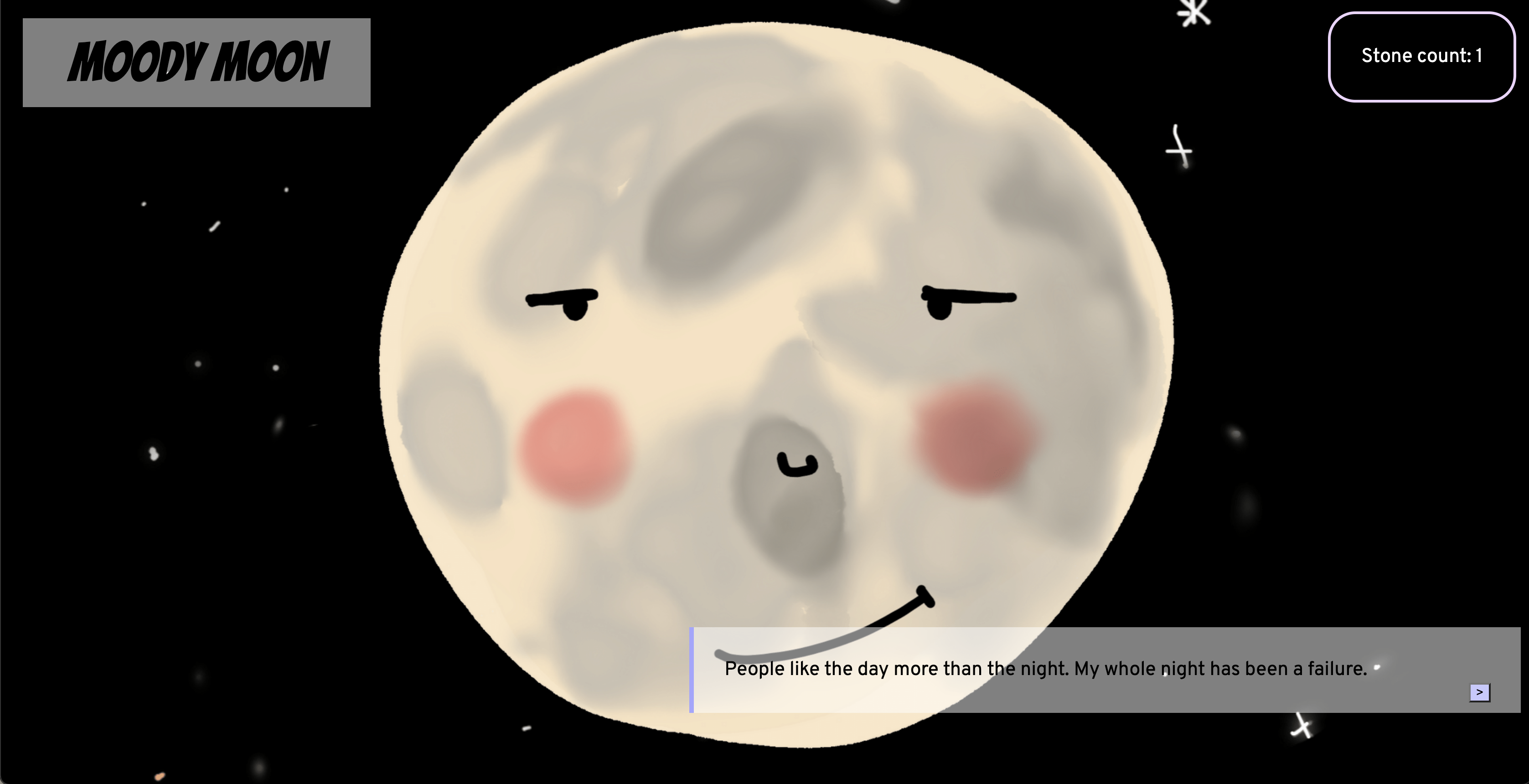
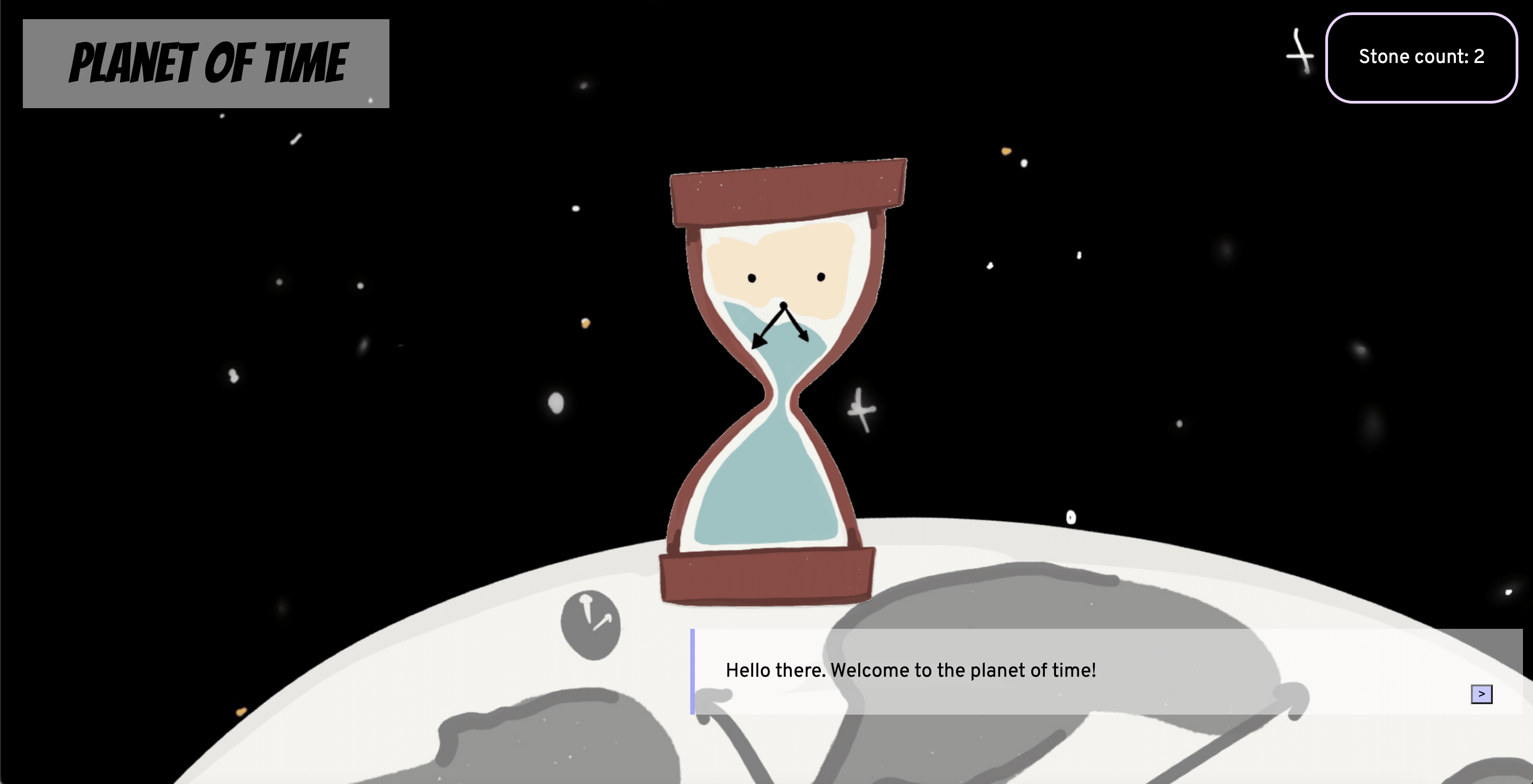
The program gamifies the mental health assessment Center for Epidemiologic Studies-Depression Scale (CES-D), which is an instrument that allows patients to evaluate their feelings, behavior, and outlook from their previous week. We integrated the CES-D questionnaire into the storyline of the game and included interactive mini-games to keep the players engaged. At the end of the game, the program measures the level of depression according to the CES-D results.
How we built it
Our team used HTML, CSS, and JavaScript to build our website collaboratively with Visual Studio Code and GitHub. We created a JSON file that contains all the information for each of the stages, including assets, dialogues, and question statuses. This information is fed into JavaScript files that load that information onto the main HTML page.
Challenges we ran into
One of the challenges we encountered was finding a way to integrate the survey questions into the game and its storyline. Another learning curve that we faced was resizing elements and making them responsive in JavaScript. Since different functional pages are loaded onto a single HTML file, it was a little challenging to consult the unique features of certain pages to fit.
Accomplishments that we're proud of
Creatica is the first hackathon for two of our team members, so we are proud of building a functional prototype of Mind Galaxy! Our teammates divided and conquered different aspects of Mind Galaxy, such as the navigation through the questions and the map functionality, so it was a lot of fun to watch each piece fall into place and connect at the end of our hackathon work time. Our page is also scalable in that making another page is as easy as putting 8 new lines on the data file. We are also proud that we hand drew almost all of the elements on the page!
What we learned
We learned about collaborative software development using HTML, CSS, and JavaScript. Our team also feels more familiar with the stigma surrounding mental illnesses and how assessment tools can be improved to ethically diagnose patients in a fun and interactive way.
What's next for Mind Galaxy
- Make a game that does not rely on the story. Due to time constraints, we decided to make the story linear. However, to make sure the game is not repetitive, in the future we can make it more of an exploration type of game where the character freely moves around the world and there are more interactive minigames.
- We would also like to continue integrating other types of depression assessments into the game in the form of mini-games, such as cognitive assessments.
- We are considering making the assessment trackable – users can take it every week and track how they're doing.


Log in or sign up for Devpost to join the conversation.