-
-
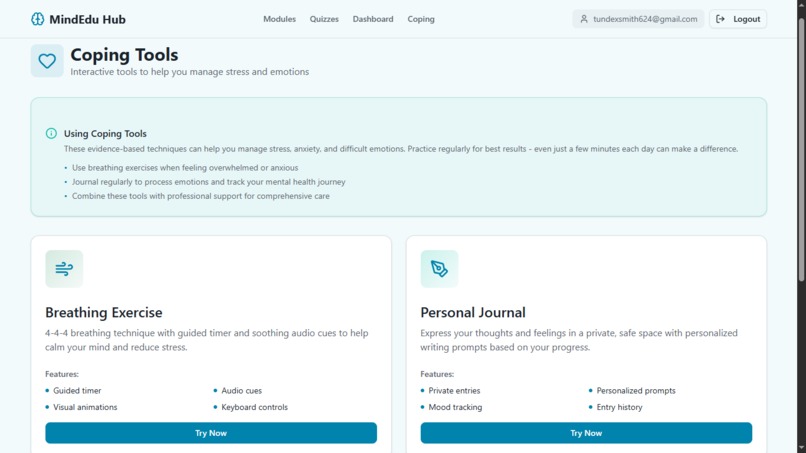
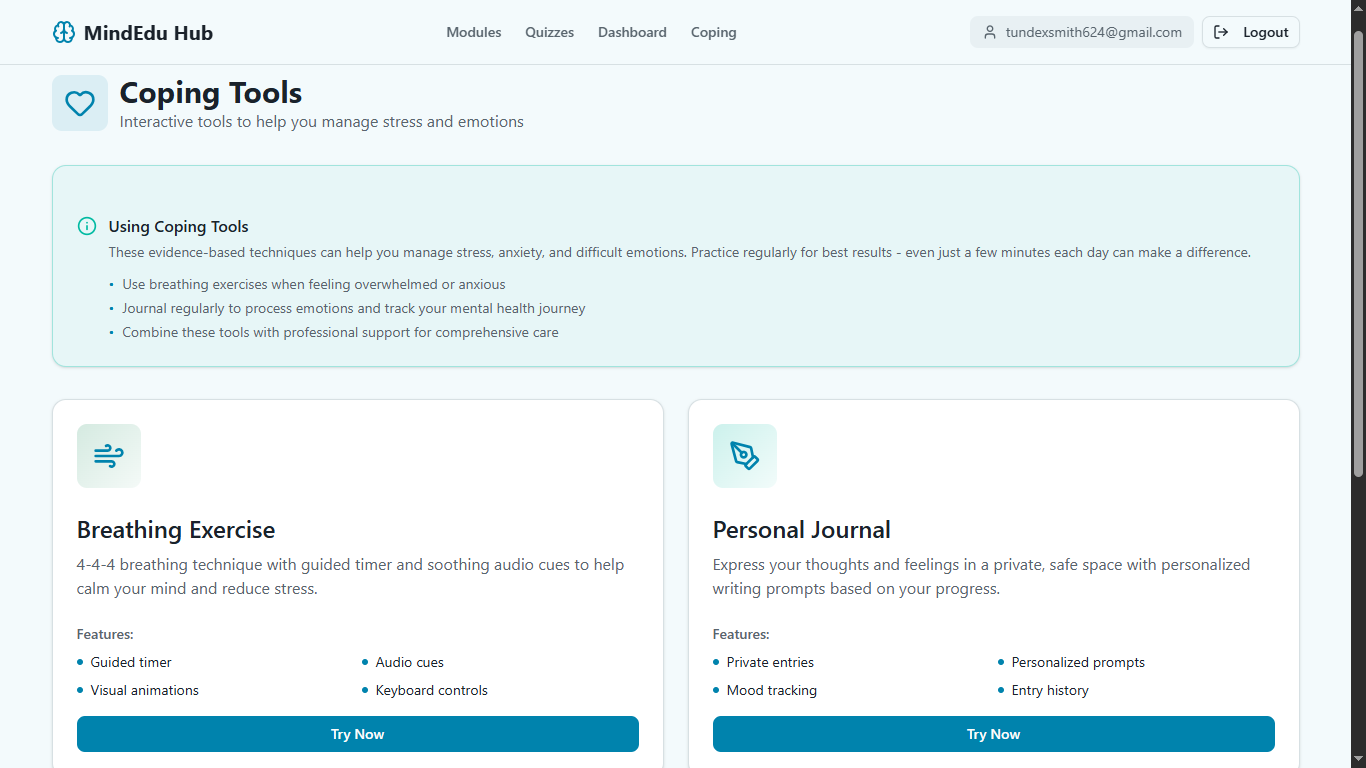
Coping page
-
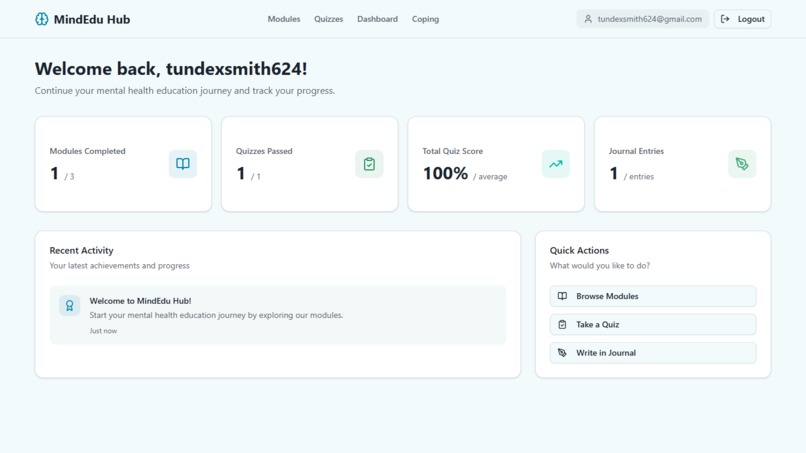
Dashboard page
-
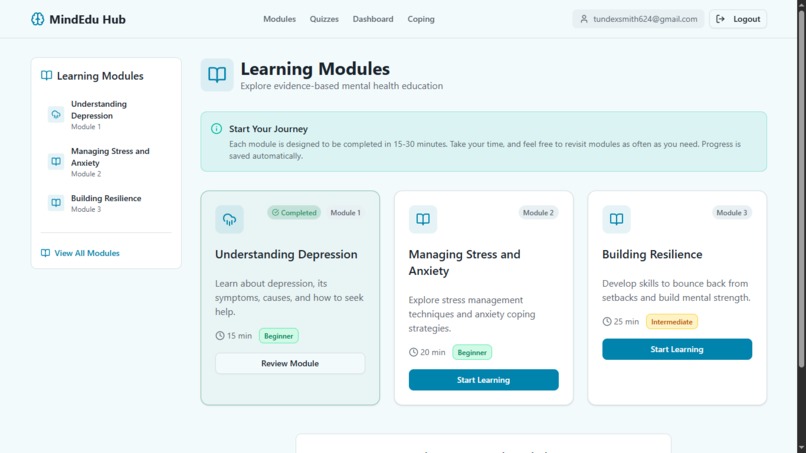
Modules page
-
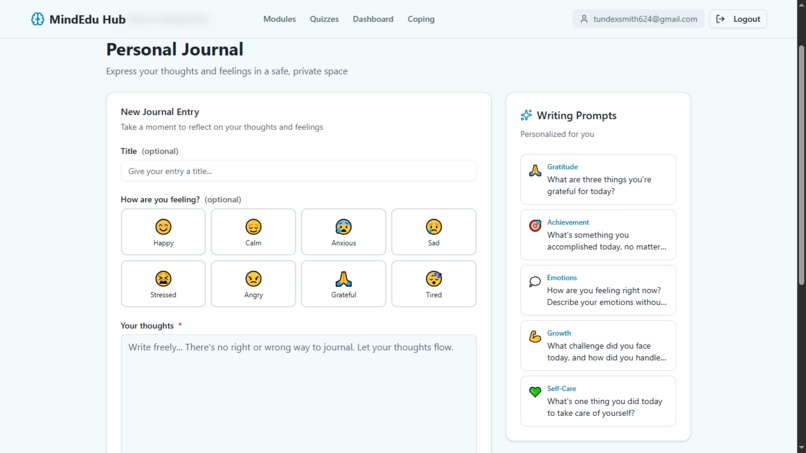
Journal page
-
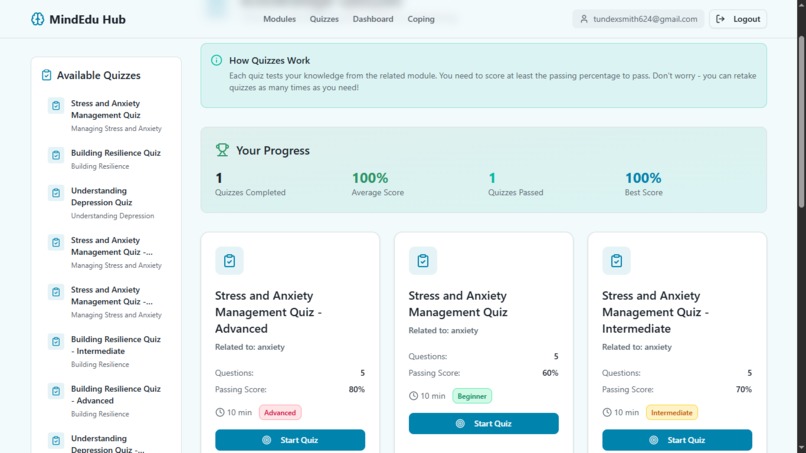
Quizzes page
-
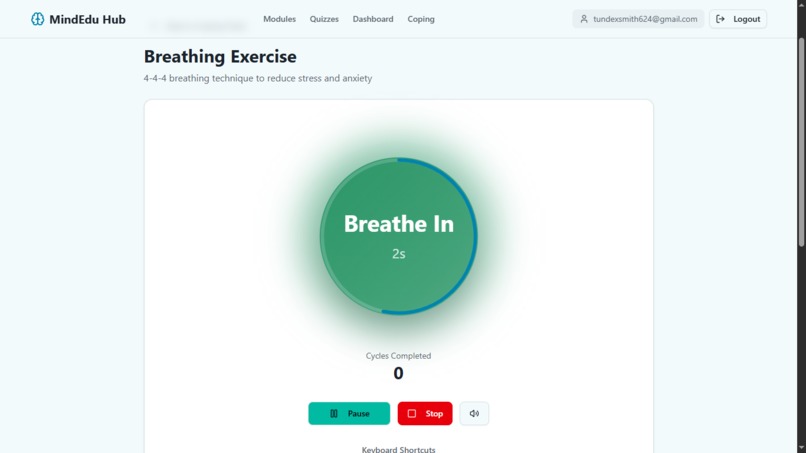
Breathing page
-
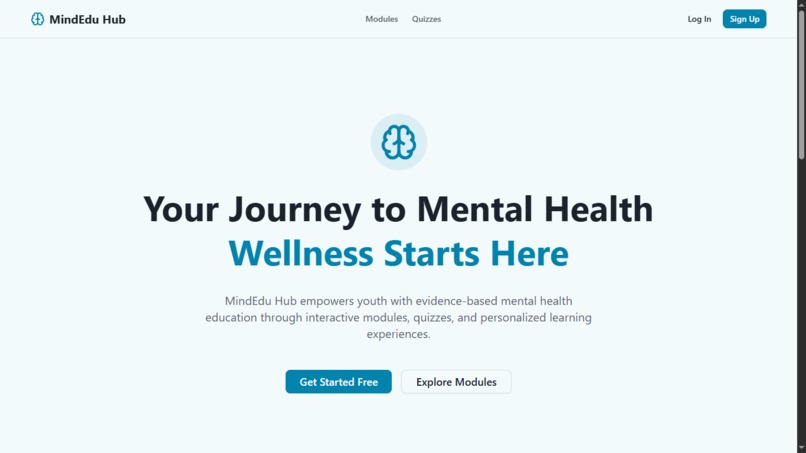
Landing page
MindEdu Hub - Project Description
About the Project
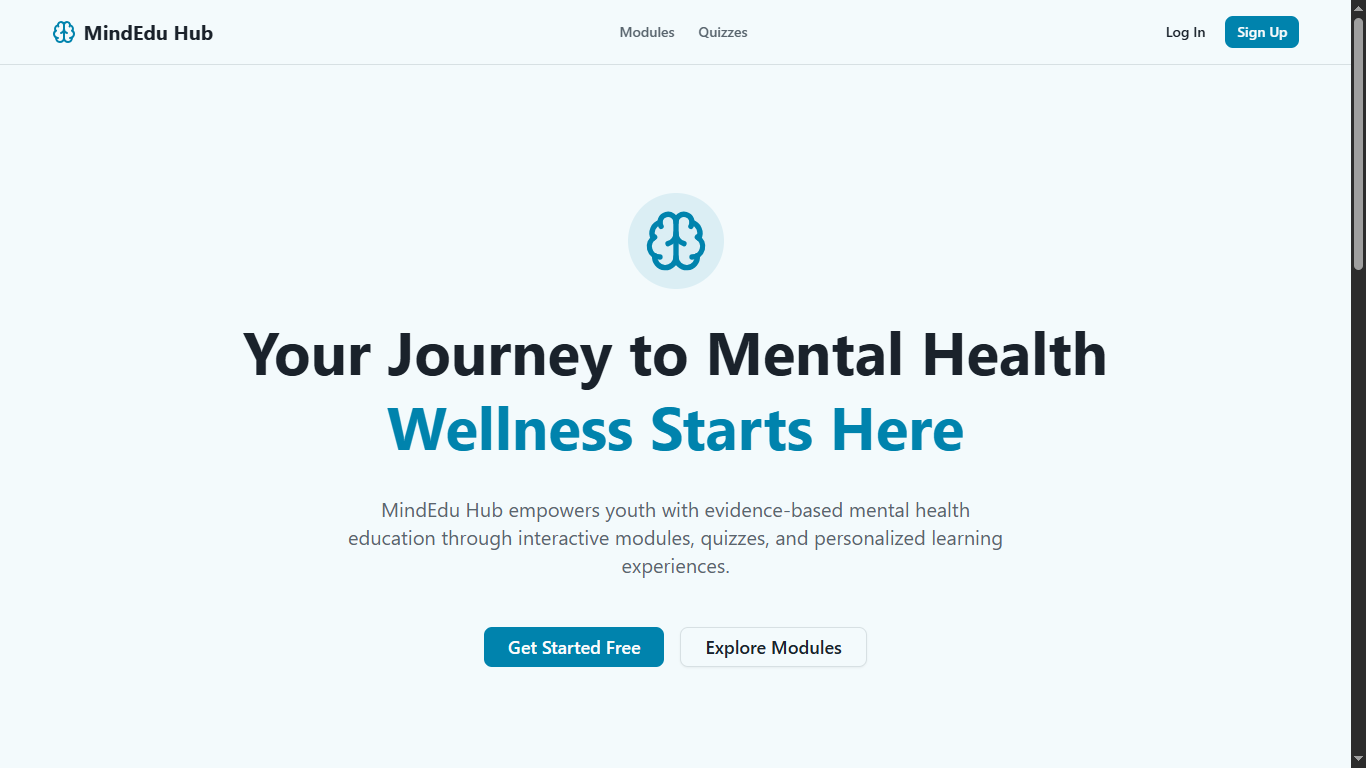
MindEdu Hub is a comprehensive, web-based mental health education platform designed specifically for youth (ages 13-24). The platform addresses the critical gap in accessible, engaging mental health education by providing evidence-based learning modules, interactive knowledge assessments, and practical coping tools in a safe, private, and judgment-free environment.
Purpose: Why Does This Tool Exist?
The Problem
Mental health challenges among youth have reached crisis levels globally:
- 1 in 5 youth experience a mental health disorder annually
- Stigma and lack of education prevent many from seeking help
- Limited access to quality mental health resources, especially in underserved communities
- Increasing rates of anxiety, depression, and stress among students
- Cultural barriers and shame prevent open discussions about mental health
- Knowledge gap between awareness of mental health issues and understanding how to manage them
The Solution
MindEdu Hub exists to democratize mental health education by:
Breaking Down Barriers: Providing free, 24/7 access to evidence-based mental health education without requiring insurance, appointments, or referrals
Reducing Stigma: Creating a private, anonymous learning environment where youth can explore mental health topics without judgment or social pressure
Empowering Through Knowledge: Teaching practical, actionable strategies that young people can implement immediately in their daily lives
Bridging the Gap: Serving as an educational bridge between general awareness and professional mental health care
Preventing Escalation: Equipping youth with early intervention tools and self-awareness skills that can prevent minor challenges from becoming major crises
Building Resilience: Fostering emotional intelligence and coping skills that support long-term mental wellness
Impact on Users
- Accessible Learning: Youth can learn about mental health at their own pace, on their own terms, without financial barriers
- Private & Safe: Complete anonymity option removes fear of judgment or exposure
- Practical Skills: Real coping strategies (breathing exercises, journaling) they can use immediately
- Progress Tracking: Personal dashboard shows growth and achievement, building confidence
- Crisis Awareness: Information about when and how to seek professional help
Features: How the Solution Works
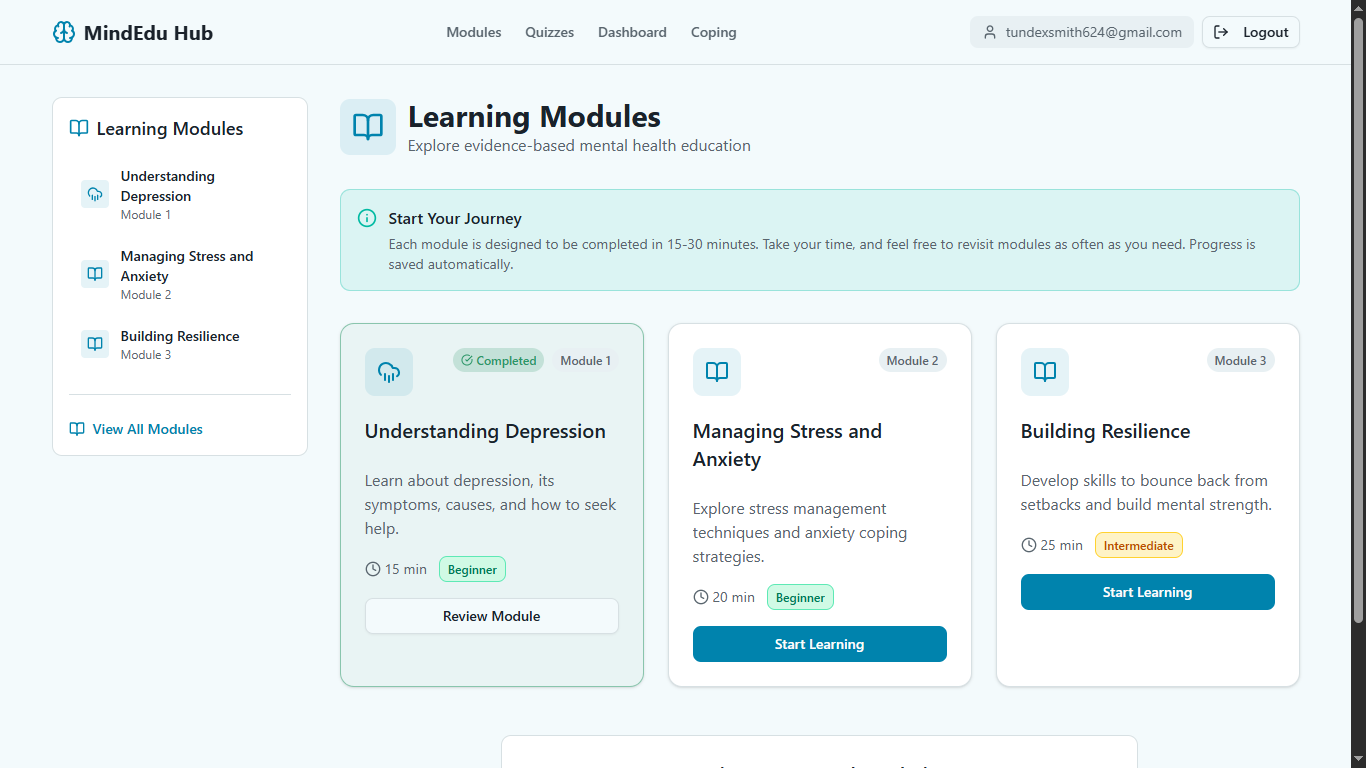
1. Interactive Learning Modules
What It Is: Structured educational content covering core mental health topics
How It Works:
- Multi-section content organized in digestible chunks (15-25 minutes per module)
- Rich media integration including text, embedded videos, and images
- Evidence-based curriculum covering:
- Understanding Depression
- Managing Stress and Anxiety
- Building Resilience
- Coping with Change
- And more...
Features:
- Sequential learning path with recommended progression
- Progress tracking with completion badges
- Difficulty indicators (Beginner, Intermediate, Advanced) with color-coded badges
- Markdown support for rich text formatting
- Mobile-responsive design for learning anywhere
- Sidebar navigation showing all available modules
User Experience:
- User browses available modules on the modules page
- Clicks on a module to start learning
- Reads through sections at their own pace
- Marks module as complete when finished
- System tracks completion and updates dashboard
- Recommended next module appears automatically
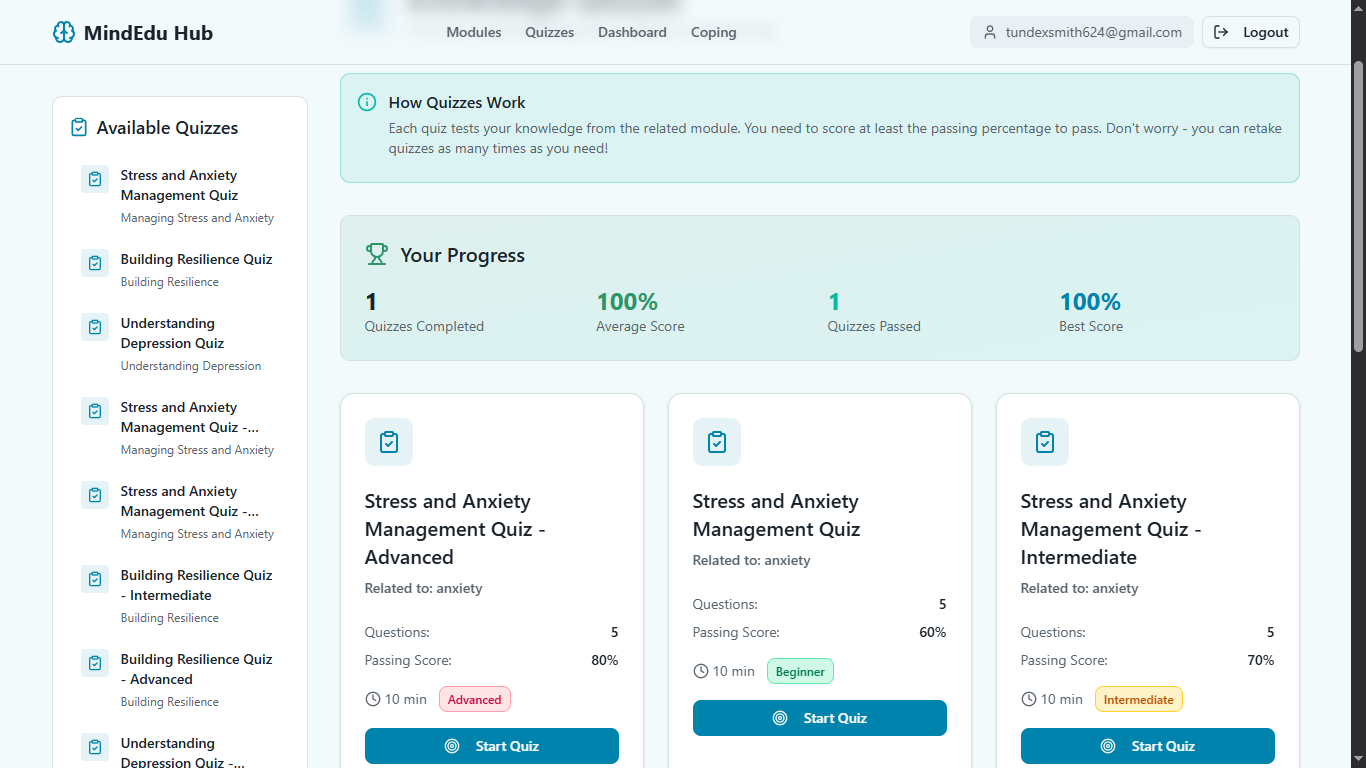
2. Knowledge Assessment Quizzes 📝
What It Is: Interactive quizzes linked to learning modules that test understanding and reinforce key concepts
How It Works:
- Multiple-choice questions with 4 answer options each
- Immediate feedback with detailed explanations after each answer
- Scoring system with passing thresholds (typically 60%)
- Results tracking stored in user profile
Features:
- Quick-jump navigation to any question
- Progress indicator showing completion percentage
- Detailed results page with:
- Visual score display (color-coded: green for pass, red for fail)
- Percentage score
- Pass/fail status
- Personalized feedback messages
- Option to retake quiz or continue learning
- Unlimited retake attempts for improvement
- Quiz history tracking on personal dashboard
- Guest mode with prompt to save results
User Experience:
- User completes a learning module
- Navigates to related quiz
- Answers questions one by one with instant feedback
- Reviews comprehensive results at the end
- Can retake to improve score
- Progress is tracked on dashboard (if logged in)
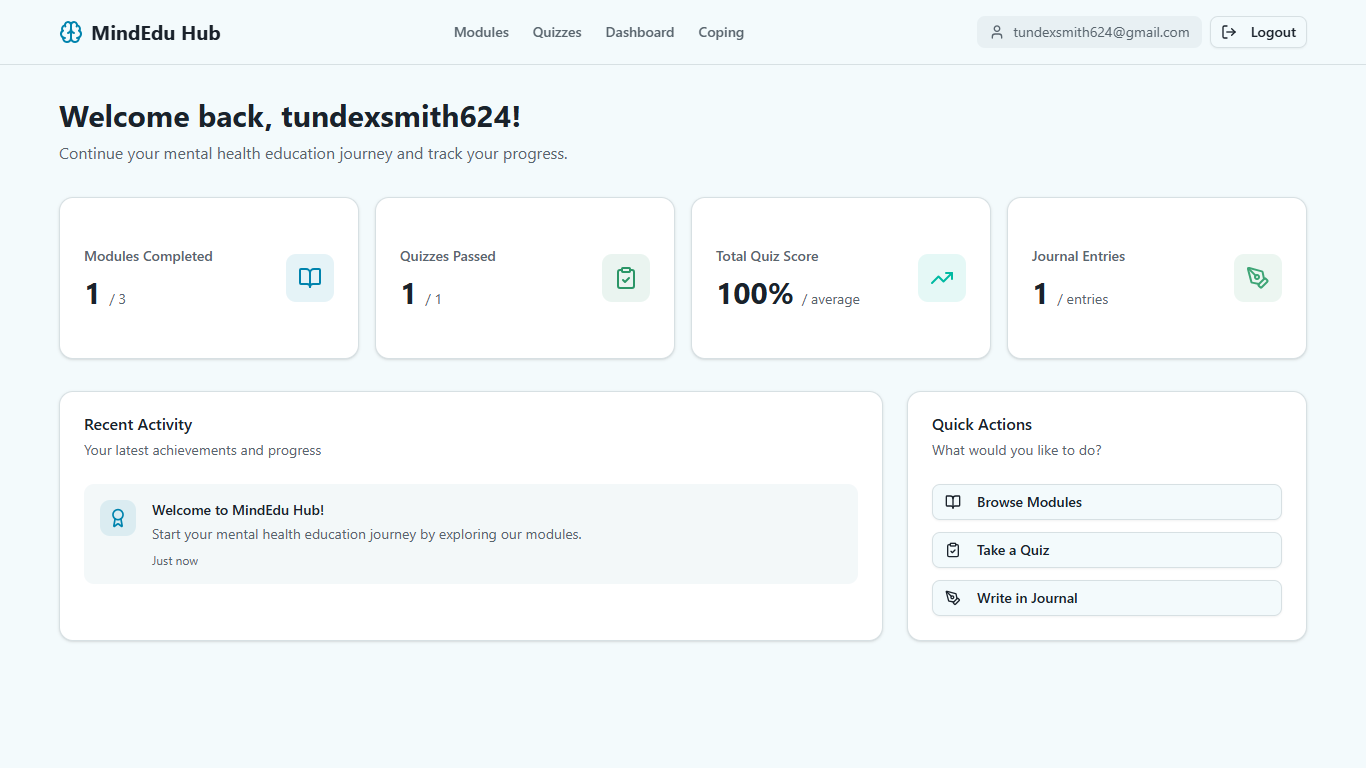
3. Personal Dashboard
What It Is: A personalized hub showing learning progress, achievements, and quick actions
How It Works:
- Real-time data aggregation from database
- Dynamic activity feed based on user actions
- Statistical calculations for performance metrics
Features:
Four stat cards showing:
- Modules completed (X out of total available)
- Quizzes passed (with total taken)
- Average quiz score (percentage)
- Total journal entries
Recent Activity Feed displaying:
- Recently completed modules (with module title)
- Recent quiz completions (with score)
- New journal entries
- Time-based timestamps ("11 hours ago", "3 days ago", etc.)
- Dynamic icons for each activity type
Quick Action Buttons:
- Browse Modules
- Take a Quiz
- Write in Journal
- Each button navigates directly to the relevant section
User Experience:
- User logs in and lands on dashboard
- Sees personalized welcome message with their username
- Reviews statistics showing their progress
- Checks recent activity to see latest achievements
- Uses quick action buttons for easy navigation
- Dashboard updates in real-time as they complete activities
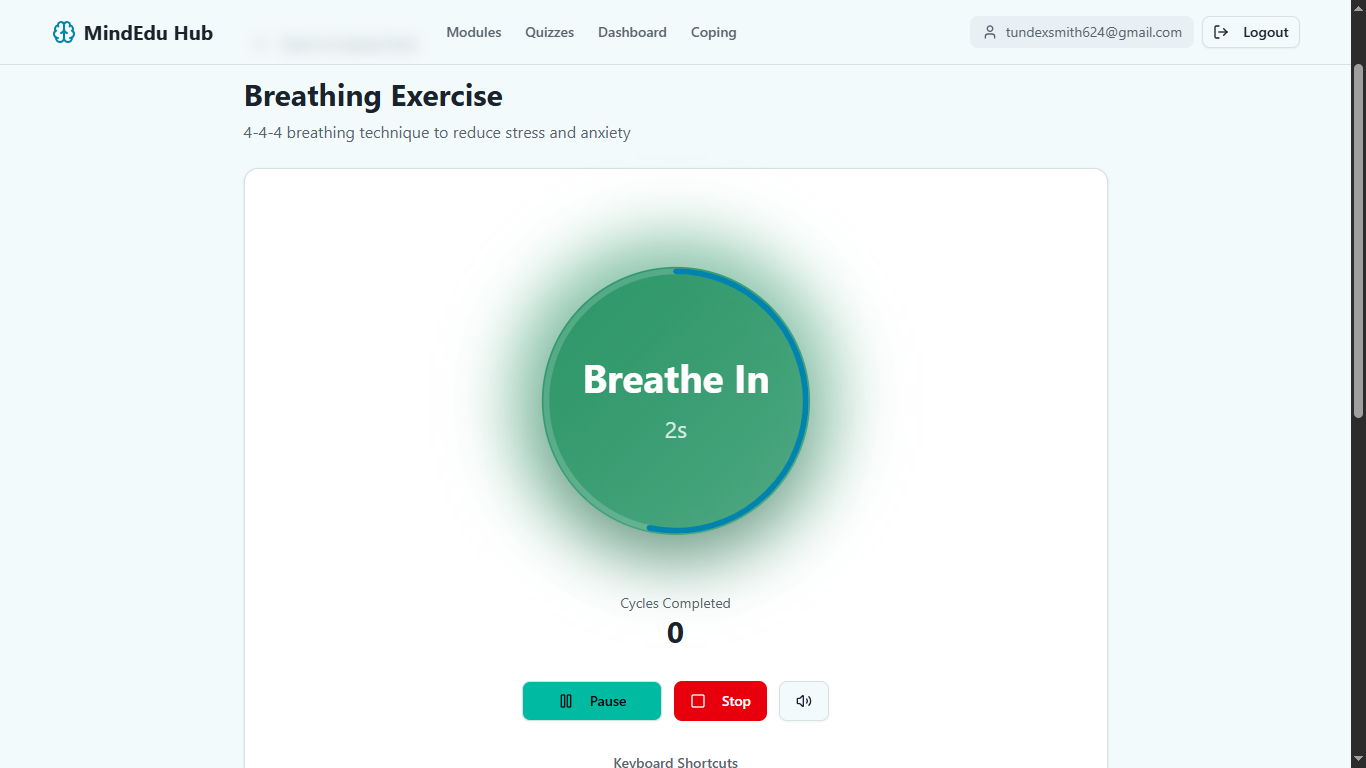
4. Guided Breathing Exercise
What It Is: An interactive 4-4-4 breathing technique tool designed for immediate stress relief
How It Works:
- 4-Second Cycles:
- Inhale for 4 seconds
- Hold for 4 seconds
- Exhale for 4 seconds
- Visual Animation: Circle expands/contracts in sync with breathing phases
- Audio Cues: Gentle sound at each phase transition
- Progress Ring: Visual indicator showing position in current phase
Features:
- Start/pause functionality with space bar or click
- Reset button to restart session
- Mute/unmute audio cues
- Cycle counter tracking sessions
- Keyboard shortcuts (Space, R, M)
- Instructions modal explaining benefits
- Responsive design works on all devices
User Experience:
- User feels stressed or anxious
- Navigates to Coping > Breathing Exercise
- Reads brief instructions (optional)
- Clicks start or presses space bar
- Follows animated visual guide
- Completes multiple cycles as needed
- Feels calmer and more centered
Scientific Basis: Based on box breathing/tactical breathing, proven to:
- Activate parasympathetic nervous system
- Reduce cortisol levels
- Lower heart rate and blood pressure
- Improve focus and emotional regulation
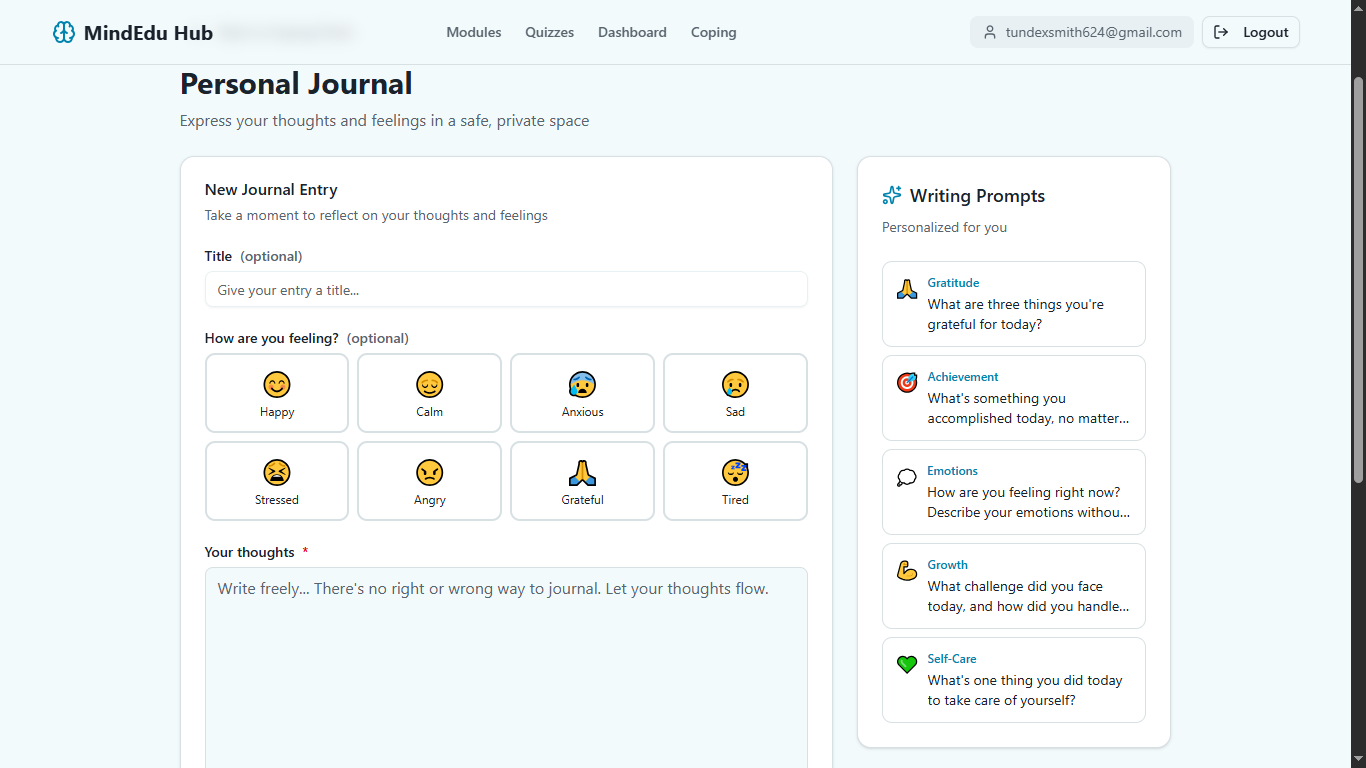
5. Personal Journal
What It Is: A private, secure digital journaling space with personalized writing prompts
How It Works:
Prompt Generation System:
- Analyzes recent quiz performance
- Identifies topics user might be struggling with
- Suggests relevant writing prompts
- Categories: Stress, Anxiety, Depression, Resilience, Self-Care, Growth, Gratitude, Achievement, Emotions
Data Storage: All entries encrypted and private to user (Row Level Security in database)
Features:
- Optional title field for organizing entries
Mood tracking with 8 emoji options:
- Happy 😊
- Sad 😢
- Anxious 😰
- Calm 😌
- Excited 🤗
- Frustrated 😤
- Tired 😴
- Grateful 🙏
Writing interface:
- Large textarea for comfortable writing
- Character counter showing entry length
- Autosave draft to localStorage (guest mode)
Recent entries sidebar:
- Shows last 5 entries
- Displays title, mood, and date
- One-click access to past entries
- Delete functionality with confirmation
Personalized prompts such as:
- "What are three things that brought you joy today?"
- "Describe a challenge you overcame this week."
- "What would you say to a friend feeling the way you feel right now?"
- Topic-specific prompts based on quiz performance
User Experience:
- User navigates to Coping > Journal
- Sees personalized writing prompt suggestion
- Selects mood (optional)
- Writes entry at their own pace
- Saves entry to private journal
- Can review past entries in sidebar
- Reflects on growth over time
Privacy: All journal entries are:
- Visible only to the user who created them
- Stored with Row Level Security (RLS) policies
- Never shared or analyzed by the platform
- Can be deleted at any time
6. Authentication System
What It Is: Flexible authentication allowing both registered users and guest access
How It Works:
- Supabase Auth providing secure JWT-based authentication
- Email/Password registration with validation
- Session management with automatic refresh
- Middleware protection for private routes
Features:
Guest Mode:
- Full access to learning content
- Can take quizzes (results not saved)
- Can use coping tools
- Periodic prompts to save progress
Registered User Benefits:
- Progress tracking across devices
- Quiz results history
- Personal dashboard with statistics
- Private journaling with saved entries
- Achievement tracking
- Recent activity feed
Security Features:
- Passwords hashed using Supabase Auth
- HTTP-only cookies for session tokens
- Row Level Security (RLS) on all user data
- CSRF protection
- Automatic session refresh
User Experience:
New User:
- Browses as guest initially
- Decides to save progress
- Clicks "Sign Up"
- Creates account (email + password)
- Immediately sees personalized dashboard
Returning User:
- Clicks "Log In"
- Enters credentials
- Lands on dashboard with saved progress
- Continues learning journey
Technologies Used
Frontend Technologies
Core Framework & Library:
Next.js 16.0.6 (App Router)
- Server-side rendering for better SEO and performance
- File-based routing system
- API routes for backend functionality
- Middleware for authentication
- Image optimization
React 19.2.0
- Component-based architecture
- Hooks for state management (useState, useEffect, useContext)
- Context API for global auth state
- Server Components where appropriate
- Client Components for interactivity
Language:
- TypeScript 5
- Full type safety across application
- Generated types from Supabase schema
- Custom interfaces for complex data structures
- IDE autocomplete and error detection
- Better code maintainability
Styling & UI:
Tailwind CSS v4
- Utility-first CSS framework
- Custom color palette for mental health theme
- Responsive design utilities
- Dark mode support (infrastructure ready)
- Efficient production builds with PurgeCSS
Radix UI
- Unstyled, accessible component primitives
- ARIA-compliant components
- Keyboard navigation support
- Focus management
shadcn/ui
- Pre-built component library
- Customizable with Tailwind CSS
- Components: Button, Card, Input, Label, Textarea, etc.
- Modern design system
Animation & Interaction:
Framer Motion 12.23.25
- Smooth page transitions
- Card animations on module/quiz pages
- Breathing exercise animations
- Progress indicators
- Gesture support
Howler.js 2.2.4
- Audio cues for breathing exercise
- Cross-browser audio support
- Volume control
- Sprite support for multiple sounds
Form Handling:
- React Hook Form 7.67.0
- Form validation
- Error handling
- Performance optimization (minimal re-renders)
- Easy integration with UI components
Icons:
- Lucide React 0.555.0
- 1000+ clean, consistent icons
- Tree-shakeable for optimal bundle size
- Customizable size and color
Backend Technologies
Database & Authentication:
Supabase (PostgreSQL)
- Database: Full-featured PostgreSQL database
- JSONB columns for flexible content storage
- Foreign key relationships
- Automatic timestamps
- Full-text search ready
- Authentication: Supabase Auth
- Email/password authentication
- JWT tokens with automatic refresh
- Session management
- Password reset functionality
- Anonymous user support
- Row Level Security (RLS):
- User-specific data access control
- Policy-based security at database level
- Prevents unauthorized data access
- Separate policies for SELECT, INSERT, UPDATE, DELETE
- Real-time (ready for future):
- WebSocket connections for live updates
- Can add real-time features like activity feed
- Storage (ready for future):
- File upload capability
- Can add profile pictures, certificates, etc.
API Layer:
- Next.js API Routes
- RESTful API endpoints
- Server-side logic
- Database operations
- Authentication validation
- Error handling
ORM/Database Client:
- @supabase/supabase-js 2.86.0
- TypeScript-first Supabase client
- Auto-generated types from schema
- Client-side and server-side support
- Query builder
- Real-time subscriptions
Development Tools
Build & Development:
- npm - Package manager
- ESLint - Code linting and style enforcement
- TypeScript Compiler - Type checking
- PostCSS - CSS processing for Tailwind
Version Control:
- Git - Source control
- GitHub - Code hosting and collaboration
Cultural & Psychological Impact
Mental Wellness Improvements
1. Accessible Mental Health Education
- Removes financial barriers: Free platform accessible to anyone with internet
- Available 24/7: Learn at any time that works for the user
- Self-paced learning: No pressure, no deadlines, no judgment
- Reduces stigma: Private learning removes fear of exposure
- Empowers through knowledge: Understanding mental health reduces fear and shame
2. Early Intervention & Prevention
- Recognition of symptoms: Helps youth identify mental health challenges early
- Self-awareness: Quizzes and modules build understanding of personal mental health
- Coping strategies: Practical tools prevent minor issues from escalating
- When to seek help: Clear guidance on professional support options
- Crisis resources: Integrated hotline information for emergencies
3. Skill Building
- Emotional regulation: Breathing exercises provide immediate relief
- Self-reflection: Journaling promotes emotional processing
- Problem-solving: Modules teach practical coping strategies
- Resilience: Building blocks for handling future challenges
- Growth mindset: Quiz retakes normalize learning from mistakes
4. Reducing Mental Health Stigma
- Normalization: Treating mental health as part of overall wellness
- Education: Understanding reduces fear and misconceptions
- Safe space: Private platform removes judgment
- Inclusive language: Content avoids shame-based messaging
- Help-seeking as strength: Emphasizes courage in asking for support
Cultural Considerations
Universal Approach:
- Evidence-based content: Rooted in psychological research applicable across cultures
- Avoids cultural assumptions: No specific religious, ethnic, or regional references
- Inclusive imagery: Diverse representation (ready for addition)
- Translatable content: Text-based with clear structure for localization
- Universal emotions: Focus on human experiences common to all
Youth-Centered Design:
- Age-appropriate content: Language and examples relatable to 13-24 age group
- Digital native interface: Modern design youth are comfortable with
- Mobile-first approach: Recognizing youth primarily use phones
- Visual engagement: Animations and interactivity maintain attention
- Bite-sized learning: 15-25 minute modules fit student schedules
Privacy & Safety:
- Complete anonymity option: Guest mode for users needing privacy
- No social comparison: Private progress, no public profiles
- Data ownership: Users control their journal entries
- Safe content: Trigger warnings, appropriate for all ages
- Crisis resources: Immediate access to professional help
Accessibility Considerations:
- Keyboard navigation: Full site accessible without mouse
- ARIA labels: Screen reader support
- High contrast: Readable text for visual impairments
- Responsive design: Works on any device (phone, tablet, computer)
- Simple language: Clear, jargon-free explanations
Target Demographics
Primary Audience: Youth (13-24 years)
High school students (13-18):
- Managing academic pressure
- Navigating social challenges
- Developing emotional intelligence
- Early mental health education
College students (18-22):
- Transition stress
- Academic anxiety
- First time away from home
- Identity development
Young adults (22-24):
- Career stress
- Relationship challenges
- Building independence
- Life transitions
Secondary Beneficiaries:
- Educators: Resource for teaching mental health in schools
- Parents: Understanding what their children are learning
- Counselors: Supplement to therapy (homework assignments)
- Community organizations: Resource for mental health programs
Geographic Reach:
- Global accessibility: Web-based, no geographic restrictions
- Underserved communities: Fills gaps where mental health services are scarce
- Rural areas: Access to quality education without travel
- Developing regions: Free resource where paid services aren't available
Long-Term Impact Goals
Individual Level:
- Increased mental health literacy among youth
- Reduced rates of untreated mental health challenges
- Earlier intervention and help-seeking behaviors
- Better coping skills leading to improved life outcomes
- Reduced stigma and shame around mental health
Community Level:
- More open conversations about mental health
- Educated generation advocating for mental health support
- Reduced burden on crisis services through prevention
- Healthier communities with better emotional intelligence
Systemic Level:
- Complement to school-based mental health programs
- Scalable solution addressing shortage of mental health professionals
- Data insights into youth mental health needs (anonymized analytics)
- Model for mental health education platforms worldwide
Measurable Outcomes
User Engagement Metrics
- Number of modules completed
- Quiz completion and retake rates
- Average quiz scores and improvement over time
- Journal entry frequency
- Breathing exercise usage patterns
- Return user rate
Learning Outcomes
- Knowledge gain (pre/post quiz scores)
- Confidence in managing mental health (future survey)
- Application of coping strategies in daily life
- Reduced self-reported stress/anxiety symptoms
Platform Health
- User retention rates
- Feature usage statistics
- Error rates and resolution times
- Performance metrics (page load times)
- User feedback and satisfaction scores
Future Enhancements
Near-Term (3-6 months):
- Dark mode toggle for user preference
- Achievement badge system for motivation
- Daily check-in feature with mood tracking over time
- More modules covering additional topics
- Video content integration in modules
Medium-Term (6-12 months):
- Community forum (moderated for safety)
- Peer support connections (optional)
- Personalized learning paths based on interests
- Integration with school counseling services
- Therapist directory for professional help
Long-Term (12+ months):
- Mobile app (React Native) for iOS and Android
- Multi-language support (Spanish, French, Mandarin, etc.)
- AI-powered personalized recommendations
- Integration with wearables for stress tracking
- Virtual support groups with trained facilitators
Conclusion
MindEdu Hub represents a comprehensive, culturally sensitive, and technologically robust solution to the youth mental health education crisis. By combining evidence-based content with engaging interactivity, practical coping tools, and a privacy-first design, the platform empowers young people to take charge of their mental wellness.
The use of modern web technologies ensures the platform is scalable, maintainable, and ready for future enhancements. The focus on accessibility, privacy, and user experience creates a safe space where youth can learn, grow, and develop the emotional intelligence needed to thrive.
Most importantly, MindEdu Hub doesn't just provide information—it creates real behavioral change through practical tools like guided breathing and journaling, immediate application through quizzes, and long-term tracking through the personal dashboard. This holistic approach addresses mental health education not as a one-time event, but as an ongoing journey of self-discovery and growth.
By reducing stigma, increasing access, and building skills, MindEdu Hub contributes to a generation of young people who are better equipped to understand, manage, and advocate for their mental health—creating ripple effects that extend far beyond individual users to families, communities, and society as a whole.
Built With
- framer
- git
- github
- howler
- nextjs
- react
- shadcn
- supabase
- tailwind
- typescript
- vercel

Log in or sign up for Devpost to join the conversation.