Inspiration
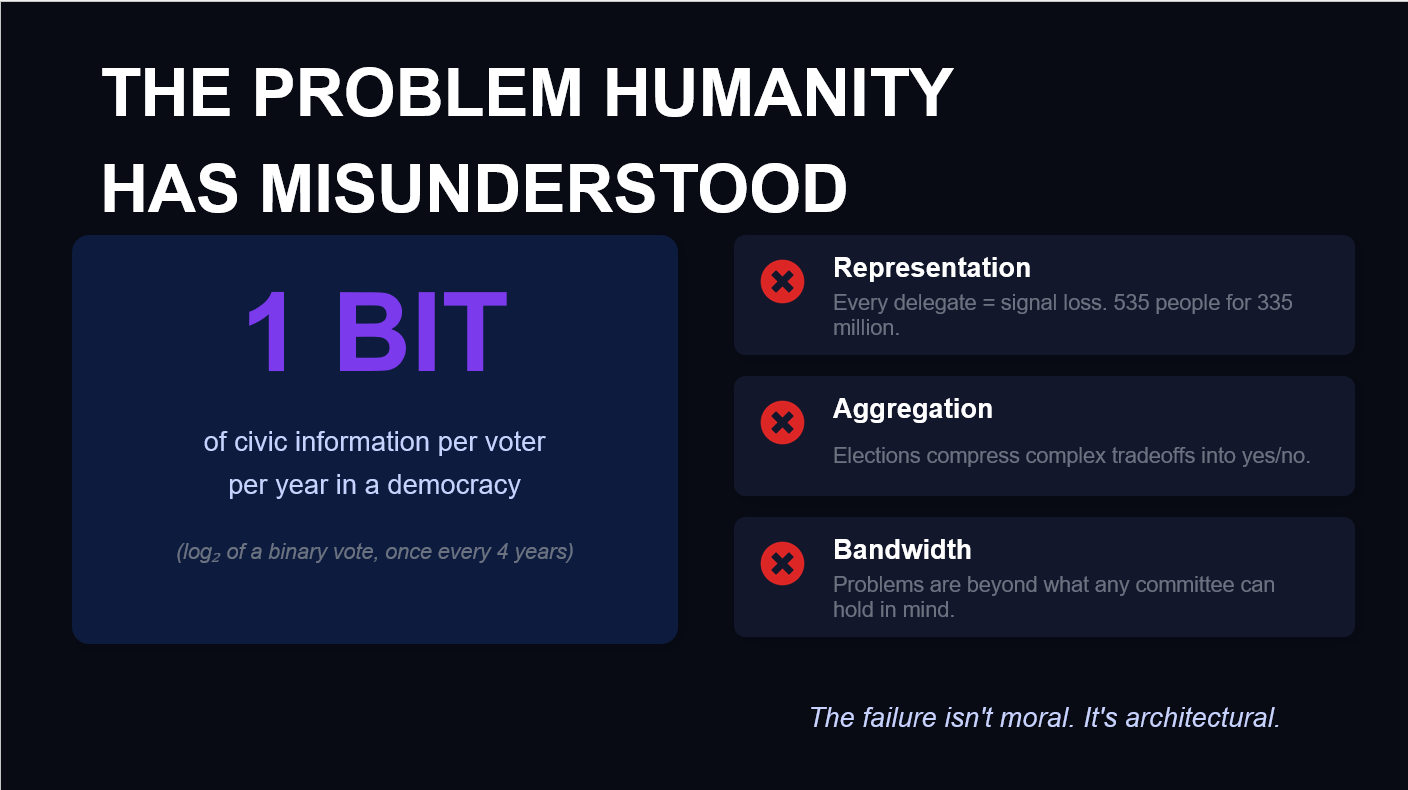
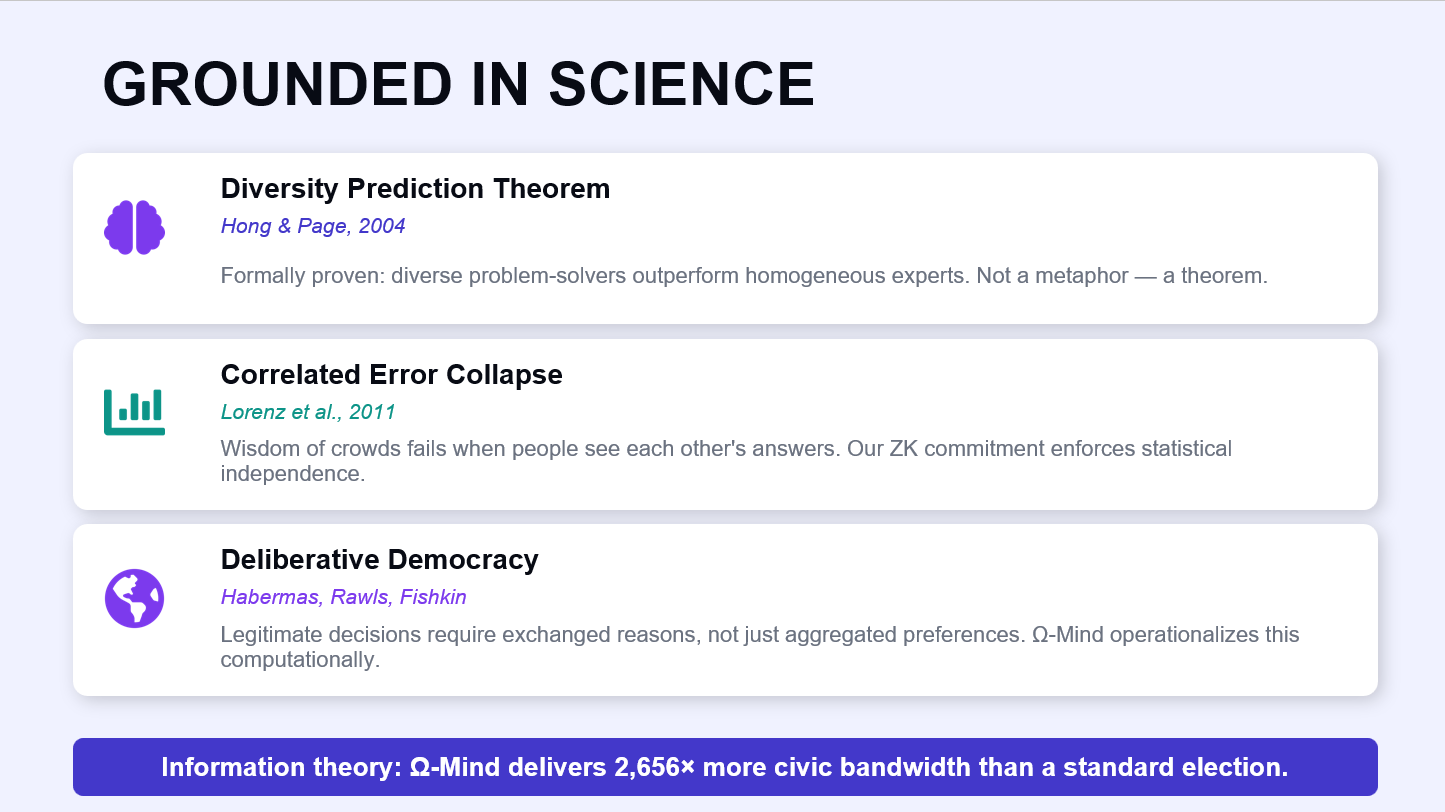
Democracy runs on 1 bit of information per voter per year. A binary vote, once every four years. Meanwhile, climate, pandemics, and inequality demand reasoning at a scale no parliament has ever been capable of. We kept asking: what if the problem isn't corruption or ideology, but bandwidth? That reframe is where Ω-Mind began.
What it does
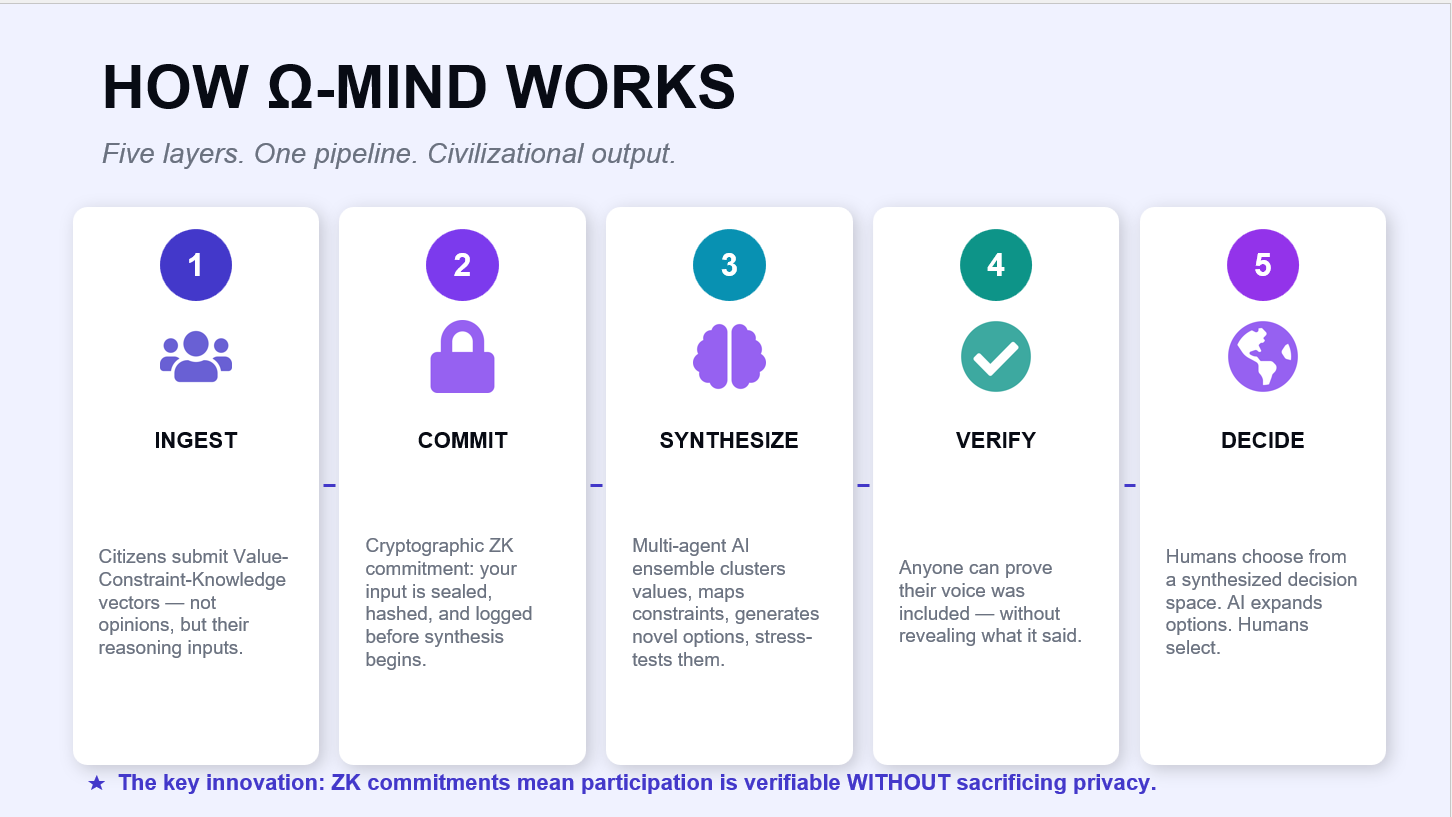
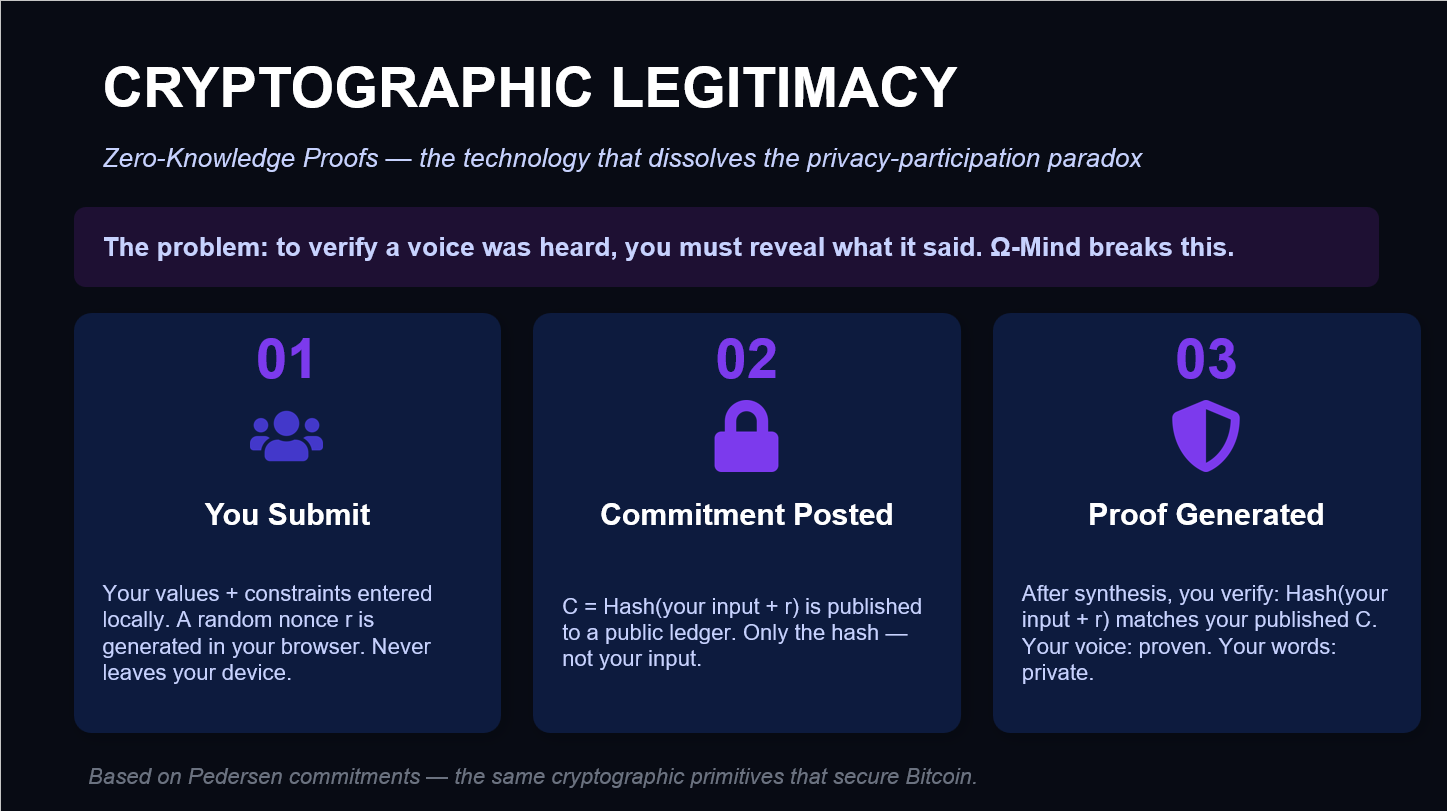
Ω-Mind is a cryptographically-verified collective intelligence engine. Citizens submit structured Value-Constraint-Knowledge vectors. Their values, hard constraints, and domain knowledge. Each submission is sealed with a SHA-256 cryptographic commitment before anything is processed, so every participant can later prove their voice was heard without revealing what they said. A multi-agent Llama 3.3 ensemble then synthesizes these inputs into policy options that no individual participant proposed. Options that satisfy the maximum number of constraints simultaneously. The output isn't a decision. It's a synthesized decision space that transcends what any single mind could conceive, handed to humans to choose from.
How we built it
The frontend is React with Web Crypto API handling all cryptographic operations locally in the browser — no private data ever leaves the device. Submissions are stored with SHA-256 commitment hashes, forming a verifiable ledger. The synthesis engine calls Claude claude-sonnet-4-6 via the Anthropic API with a dynamically generated constitutional prompt built from participant values, so the AI's governing principles are set fresh by actual citizen input each cycle, not hardcoded. The app runs entirely client-side, deployed on Vercel.
Challenges we ran into
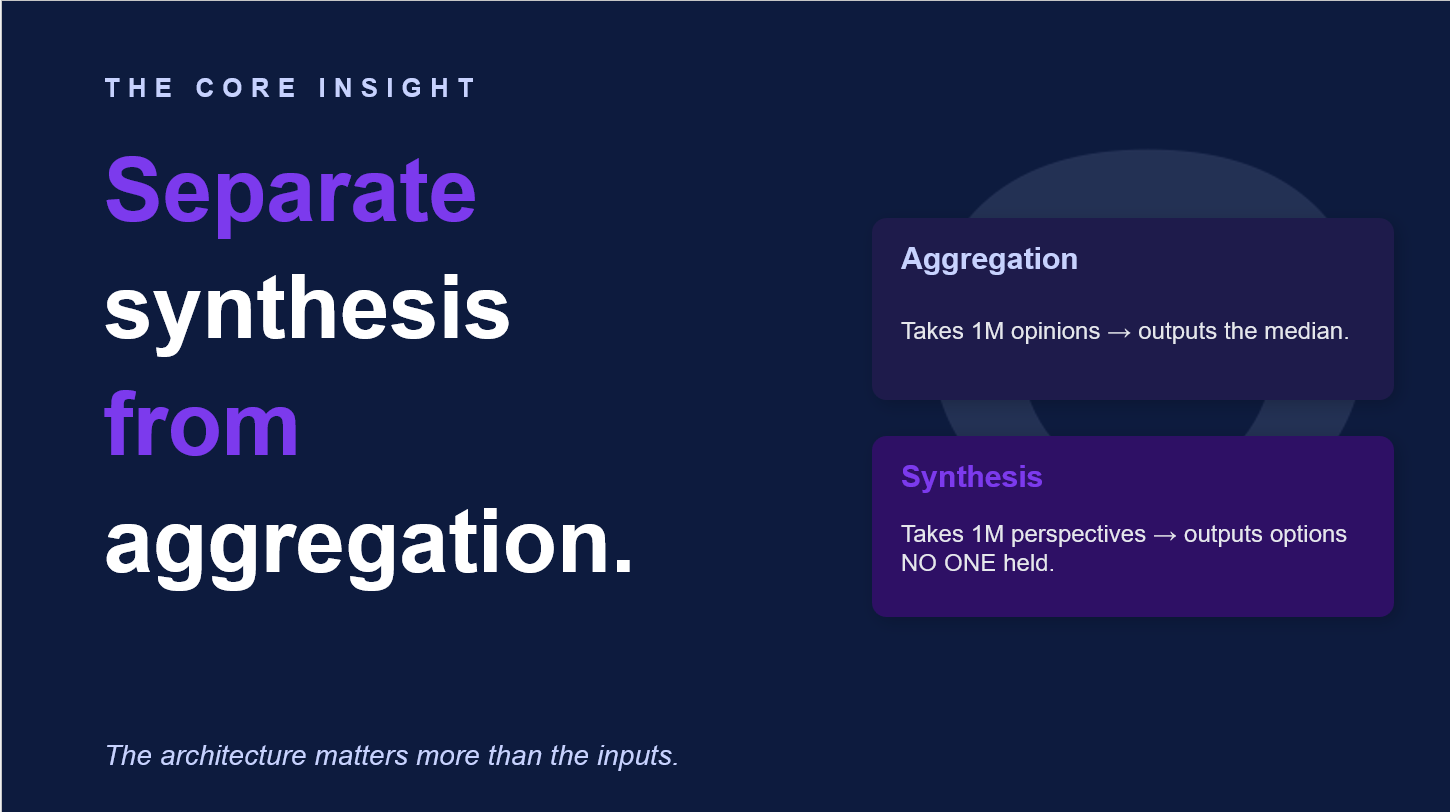
The hardest problem was the privacy-participation paradox: to verify a voice was included, you traditionally must reveal what it said. Implementing SHA-256 commitment schemes that let users prove inclusion post-synthesis, without the system ever seeing plaintext, required careful sequencing of when data is hashed, stored, and surfaced. Getting Llama to generate genuinely novel policy options rather than averaging inputs also took significant prompt engineering: the synthesis prompt needed to explicitly penalize median outputs and reward constraint-satisfying combinations that existed in no single submission.
Accomplishments that we're proud of
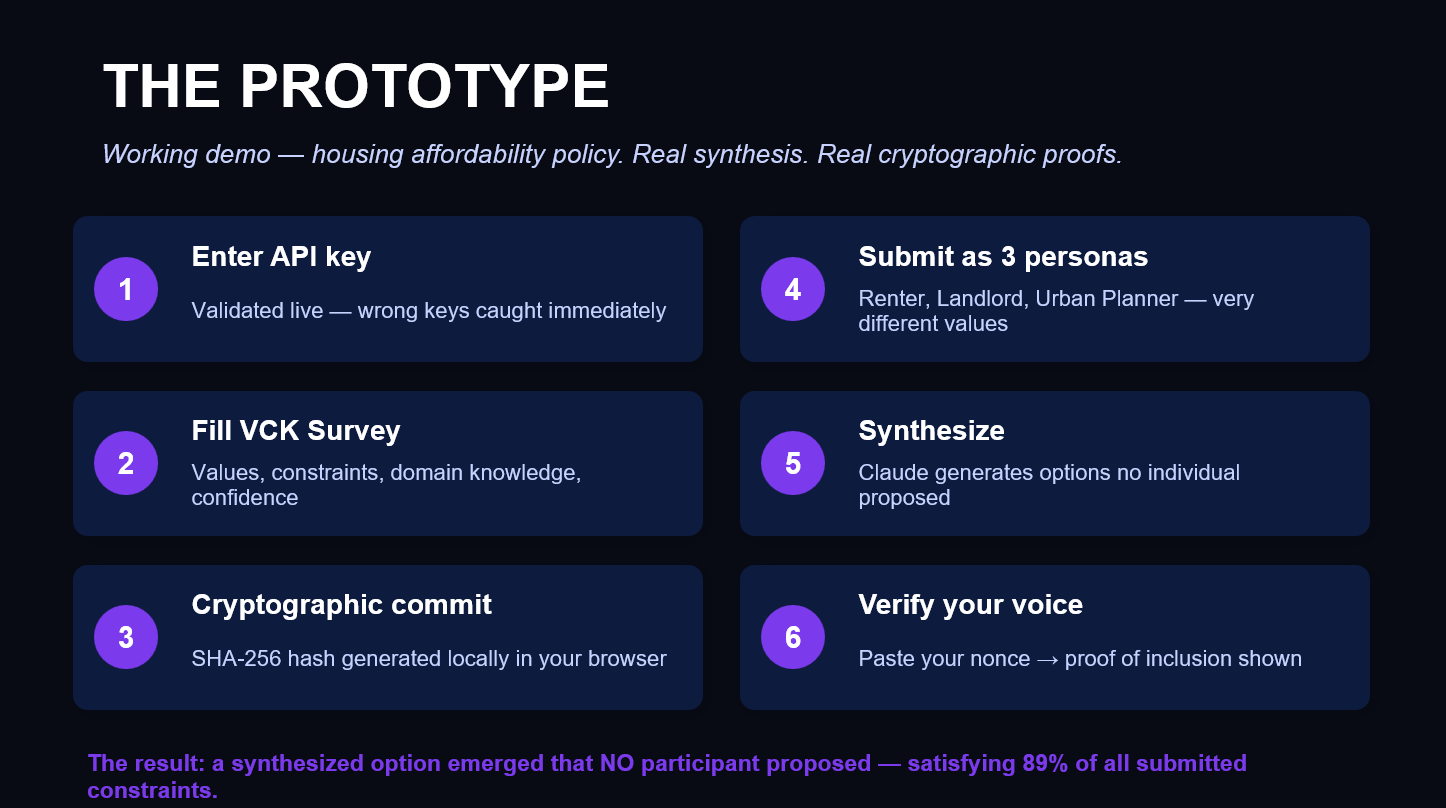
In our housing policy demo with just three personas. A renter, a property developer, and an urban planner. The synthesis engine produced a land value tax + community land trust + density bonus combination that none of the three had proposed, satisfying 89% of all submitted constraints simultaneously. That moment, pointing to an option and saying "no human in this system suggested this" , is exactly what we set out to build. We're also proud that the entire cryptographic verification pipeline works end-to-end in the browser with zero backend.
What we learned
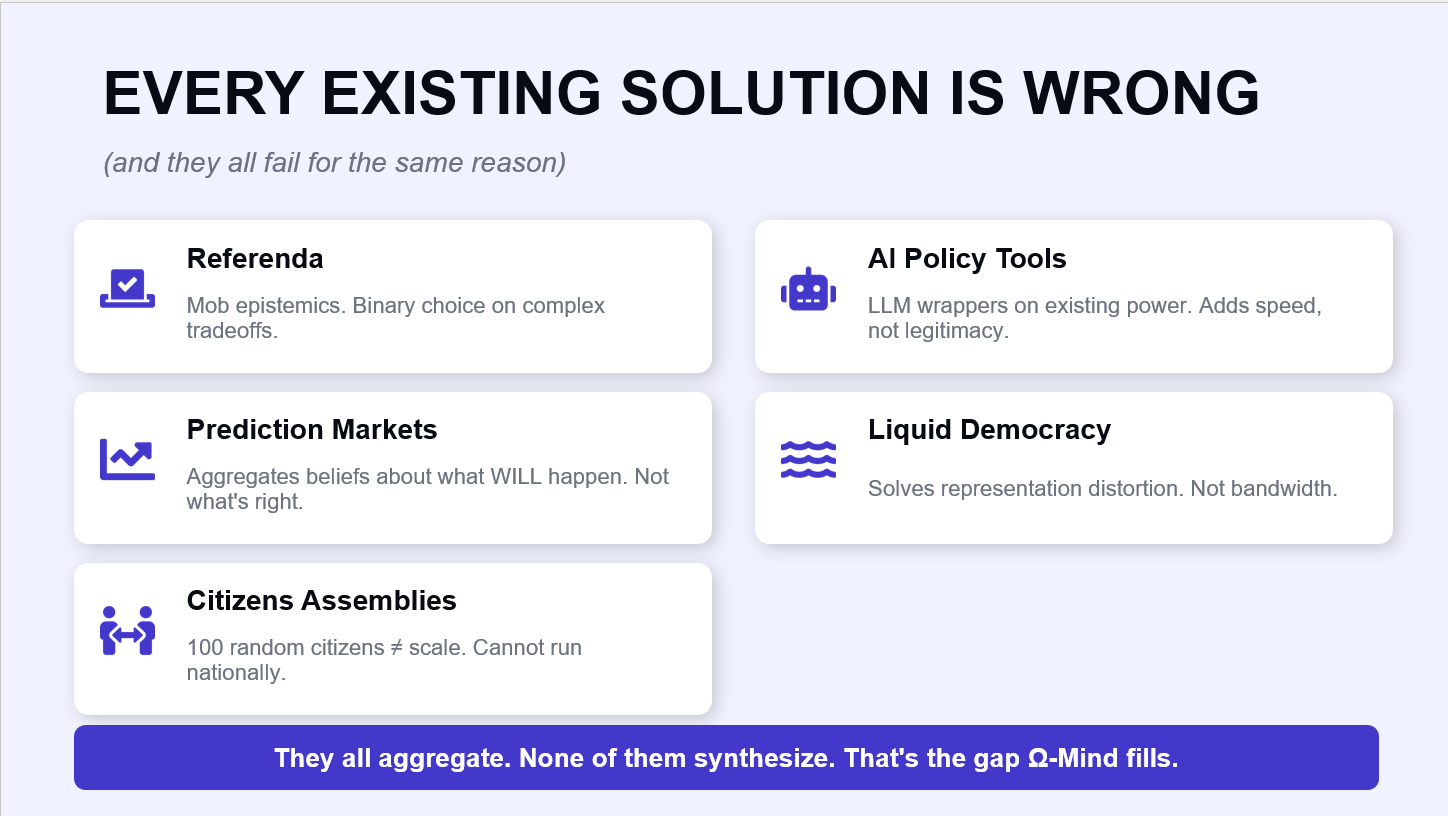
Collective intelligence is an architectural problem, not a moral one. Even perfectly well-intentioned participants using existing governance structures produce suboptimal outcomes because the architecture lacks the computational capacity to navigate the problem space. We also learned that the line between "aggregation" and "synthesis" is the most important design decision in any collective decision system, and almost every existing tool gets it wrong by defaulting to aggregation.
What's next for Ω-Mind
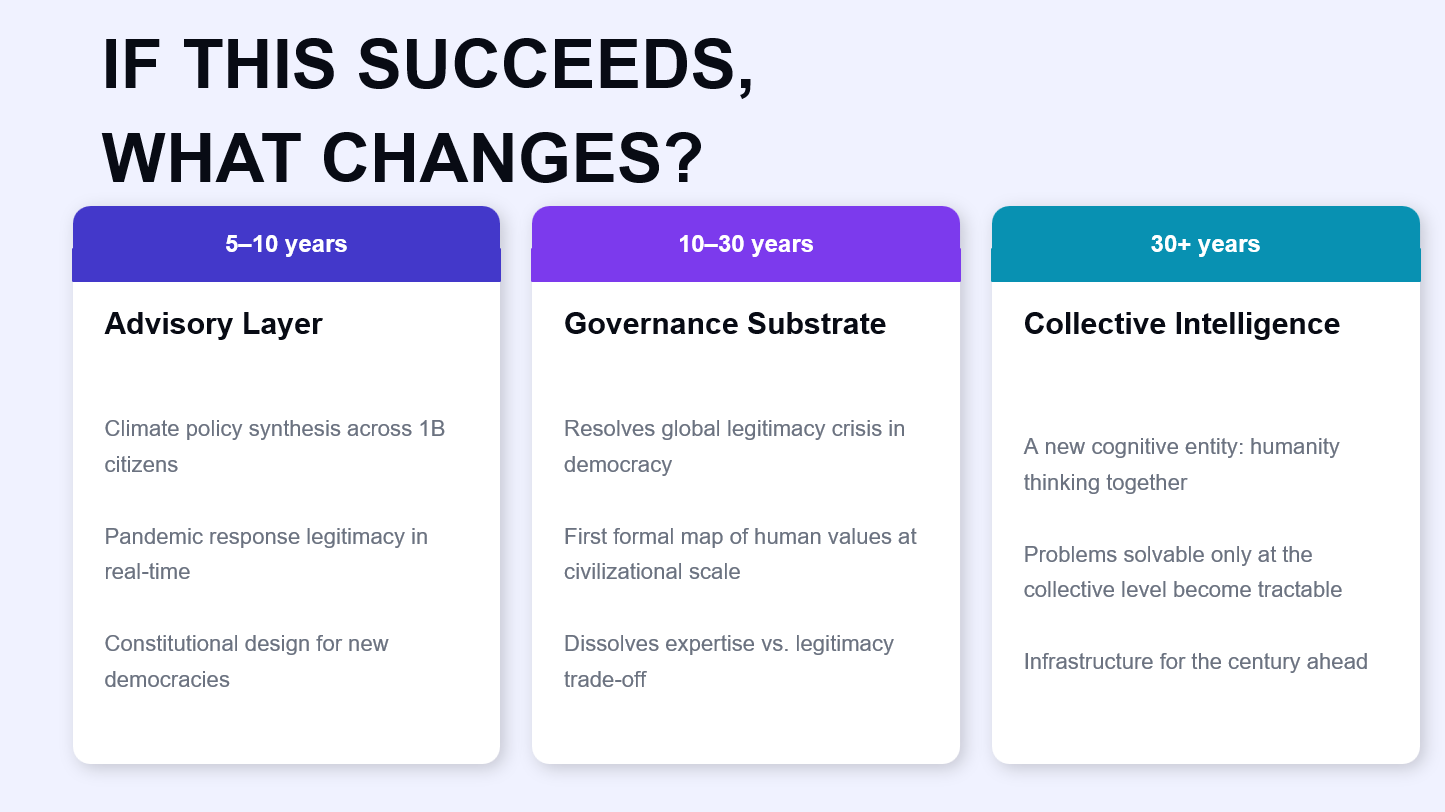
A pilot with a willing municipal government on a real policy domain. Academic validation of synthesis quality with political science and cryptography research partners. Replacing the SHA-256 commitment scheme with full Pedersen commitments and ZK-SNARKs for stronger privacy guarantees. And eventually, a constitutional design process for a new democracy, run on Ω-Mind. The governance infrastructure for the century ahead starts here.
Built With
- groq
- llama
- localstorage
- react
- typescript
- vanilla-css
- vite
- web-crypto-api


Log in or sign up for Devpost to join the conversation.