-
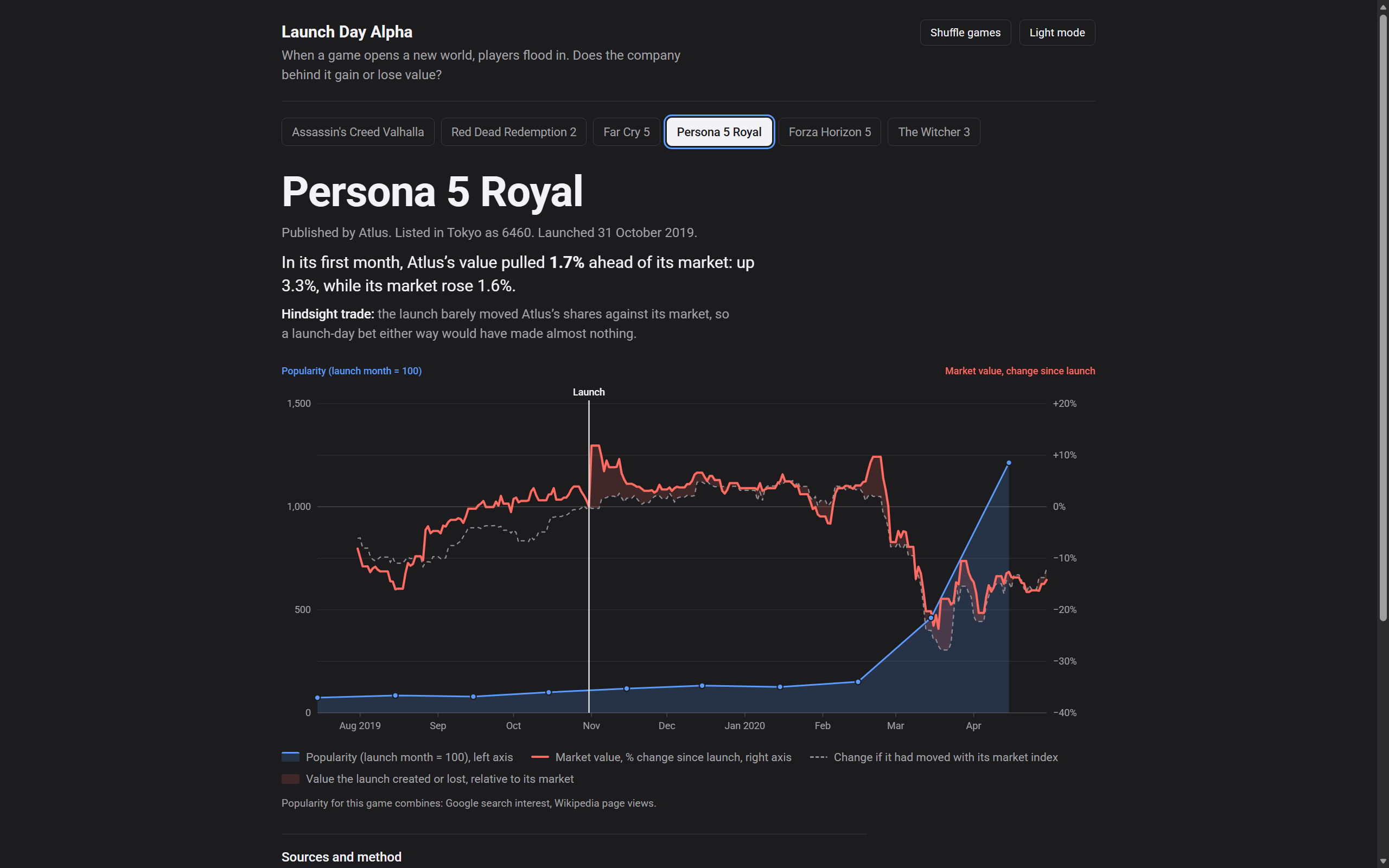
Persona 5 Royal Dark Mode
-
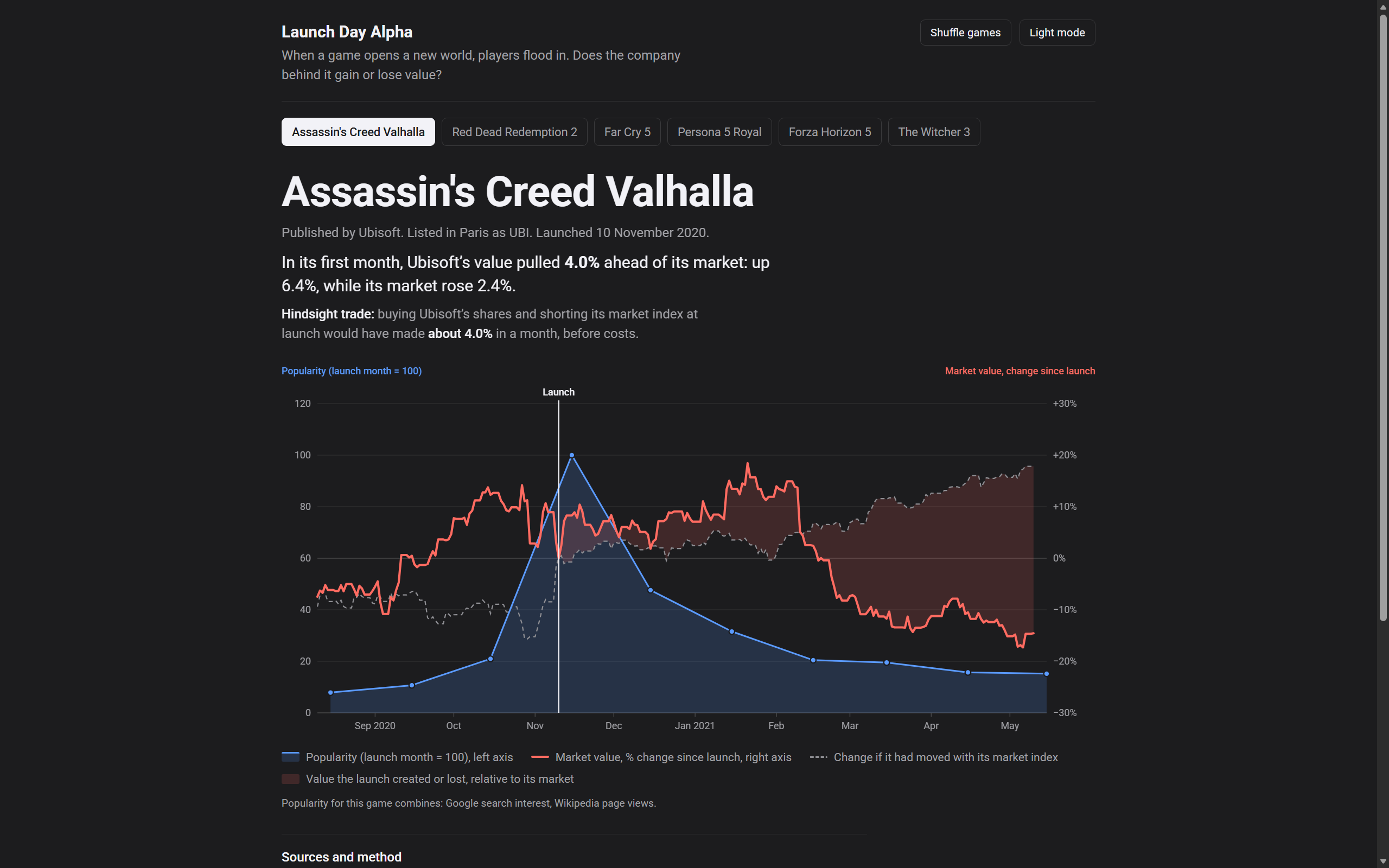
Assassin's Creed Valhalla Dark Mode
-
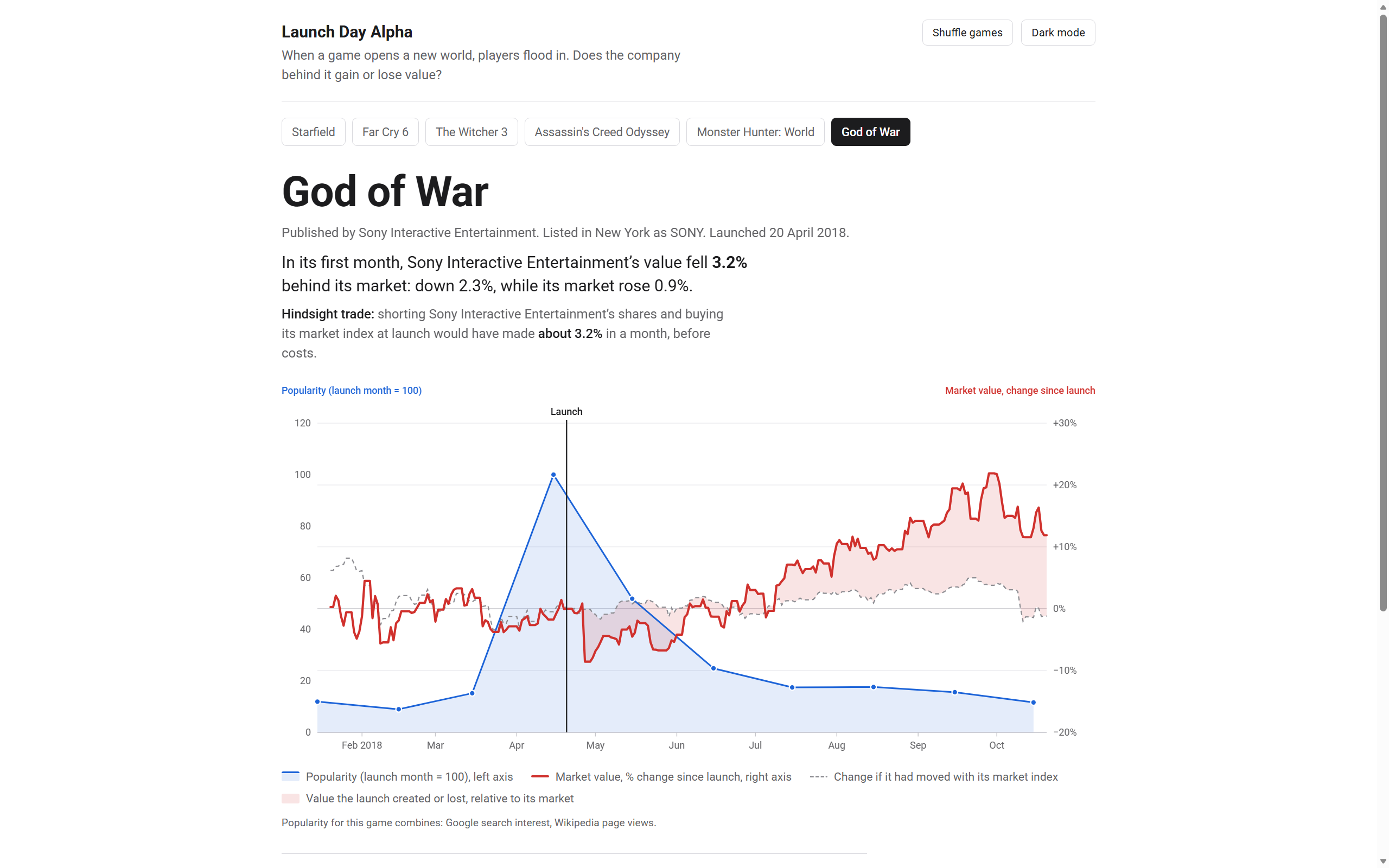
God of War Light Mode
-
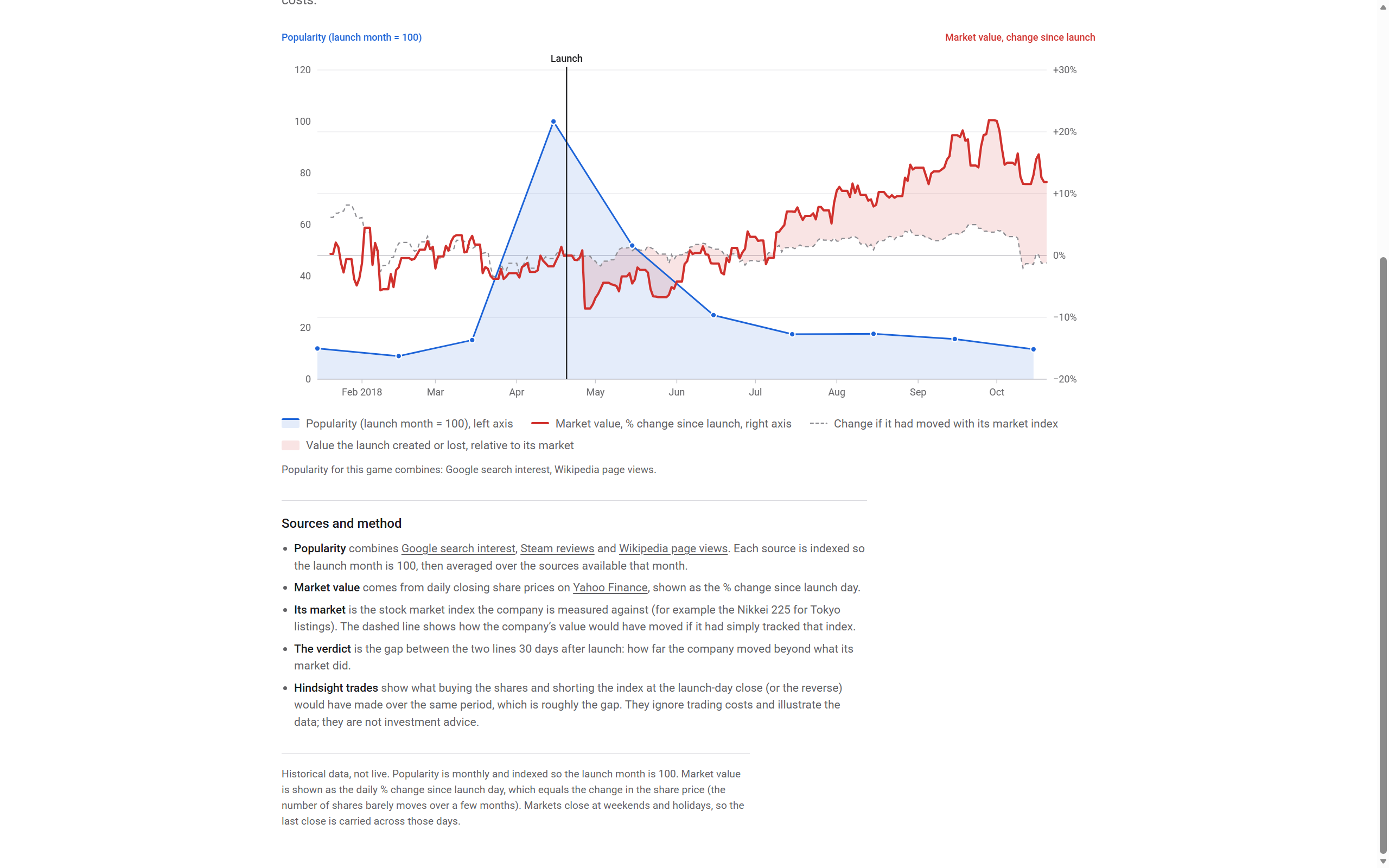
Sources
Inspiration
When we heard the words "New Worlds", the first picture that came to mind was the "Create New World" button in Minecraft. A button to spawn yourself and replay Minecraft through a different perspective, giving new opportunities to create, explore and do whatever you do best, however you like ... the ultimate expression of creativity and freedom. So the door is open to Minecraft, we can open doors all the way to calling each game its own "world". After some back-and-forth about different games, we though it would be interesting to create a tool for people to use to know whether to short sell or invest in company for bullish divergence entry strategy.
What it does
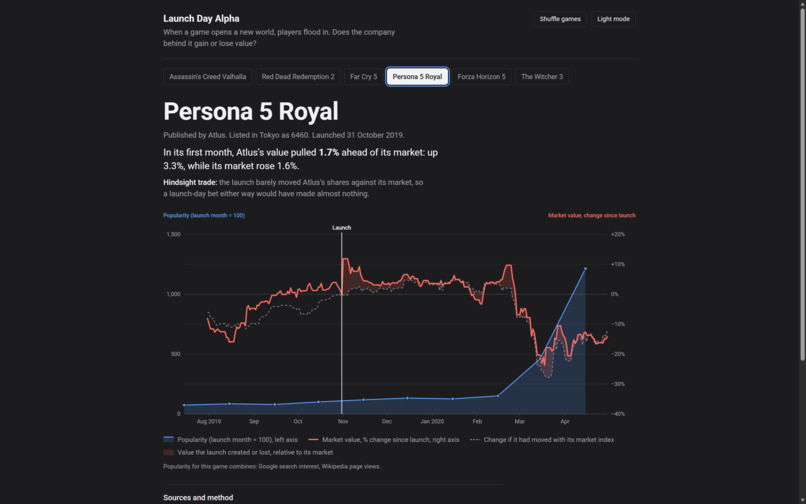
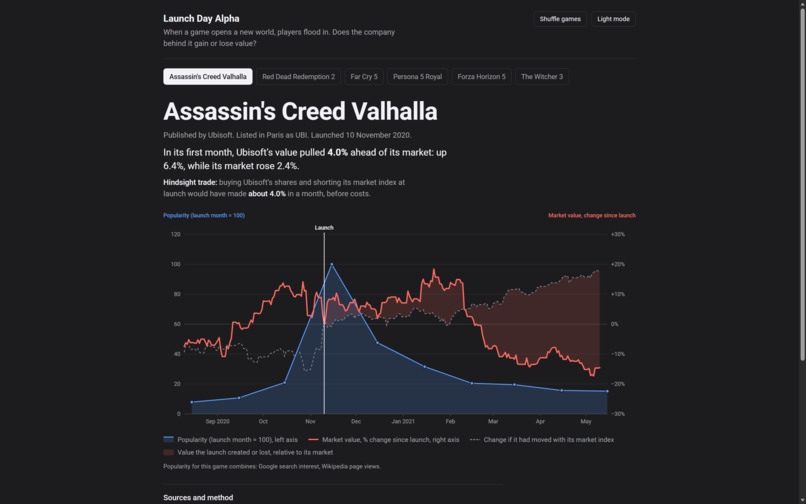
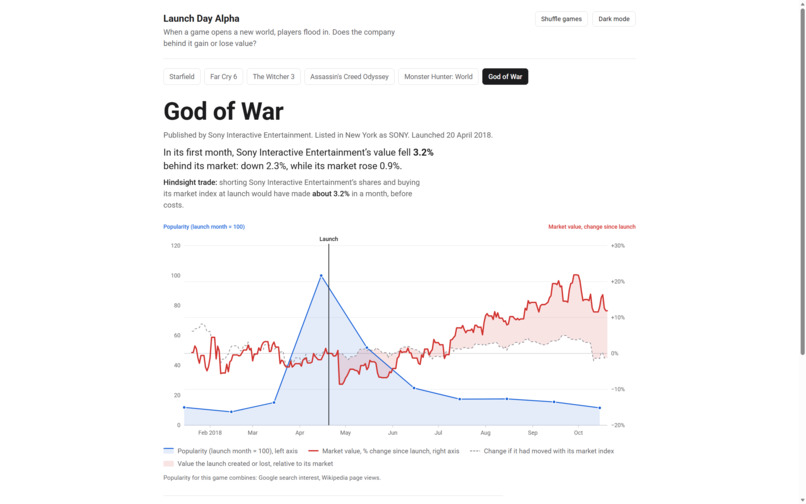
Our project is a tool that displays the divergences between consumer popularity and publishers market valuation, measured using historical gaming and financial data.
How we built it
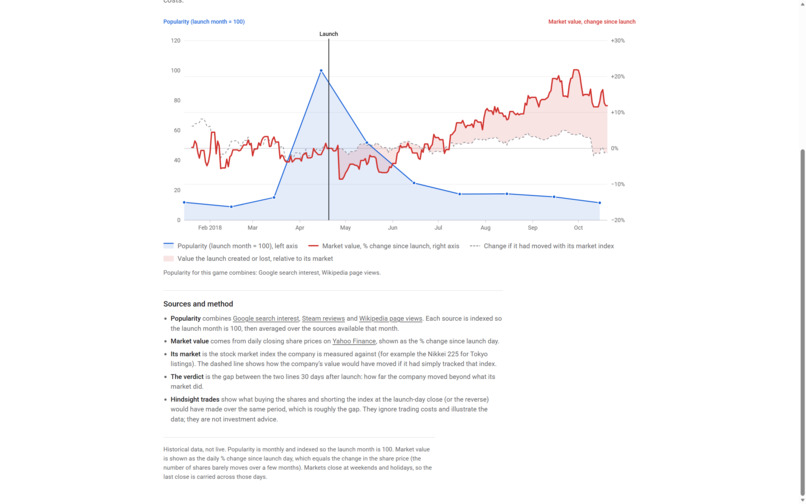
We built a Python data pipeline that pulls Google Trends, Steam reviews, Wikipedia page views and Yahoo Finance data and indexes popularity around the initial alpha launch. It then benchmarks each publisher's market capitalisation to measure the launch's effectiveness. The user interface is a site with automatically generated SVG charts, dark mode and a mobile-friendly layouts.
Challenges we ran into
Linking different streams of data pulled from APIs. Later we then pivoted to publicly available databases.
Accomplishments that we're proud of
Dark mode and light mode!! As well as animations in graphs and the cleanness of the User interfaces.
What we learned
Several companies have generated less profit from their games than we initially expected. This may be due to the high expectations surrounding these titles, which ultimately failed to materialise.
What's next for MinceRaft
Having the project calculate a quantitative measure of divergence and improve the reliability of popularity metrics by incorporating data from a wider range of sources.
