-
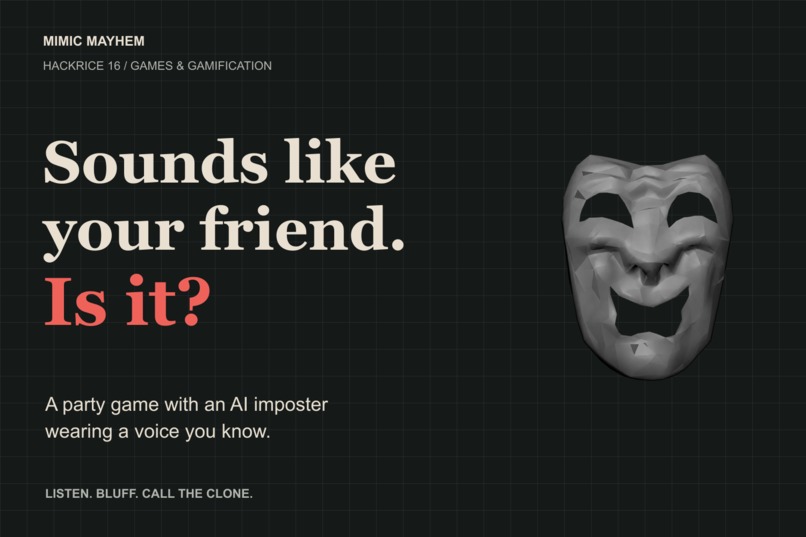
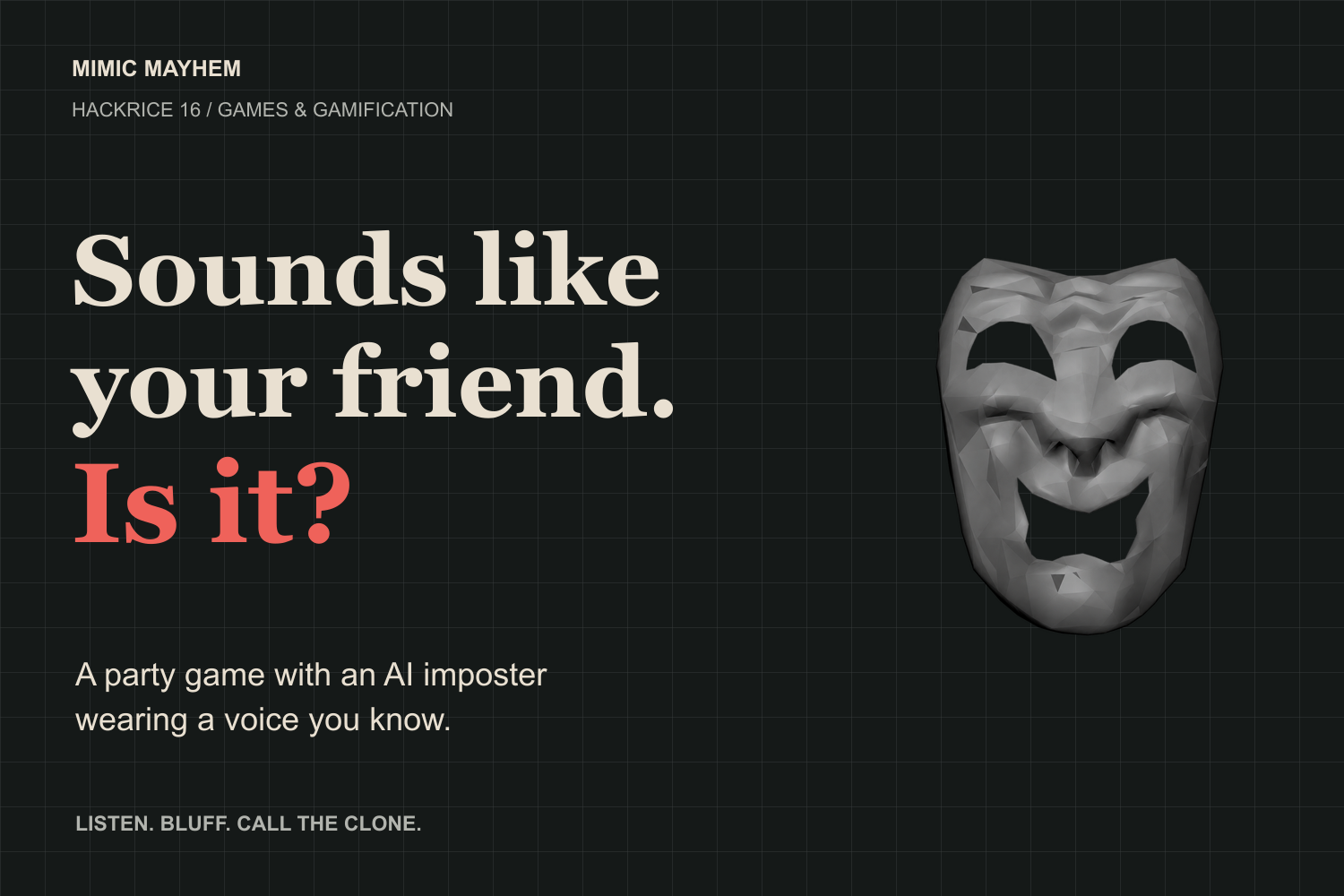
Sounds like your friend. Is it?
-
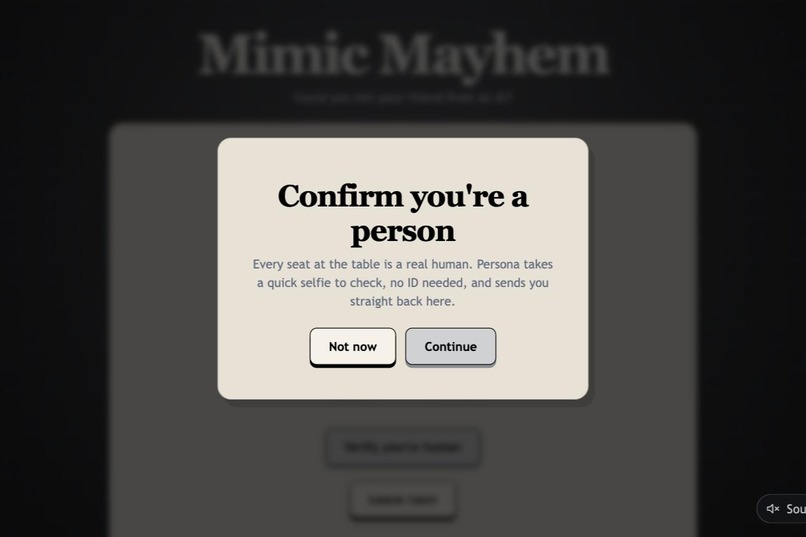
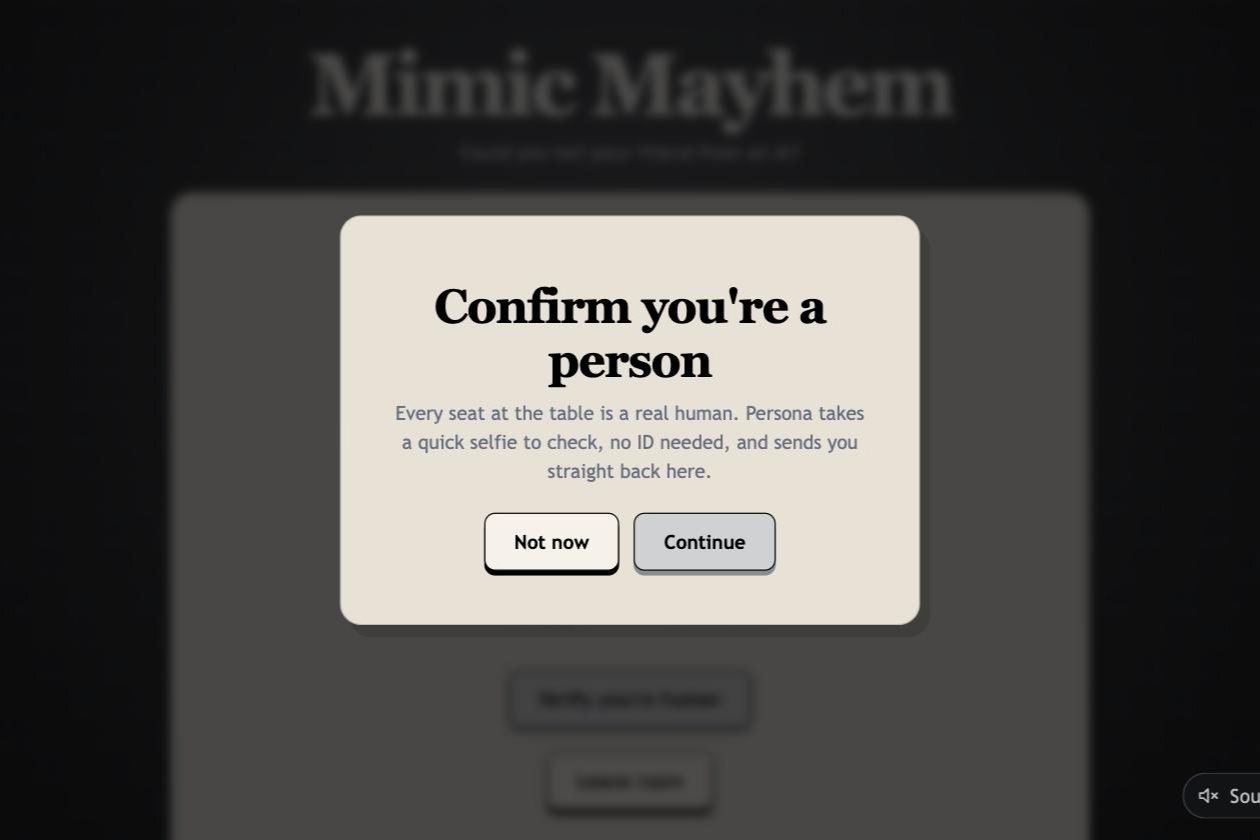
Persona verification during onboarding, using the sandbox integration for this hackathon prototype.
-
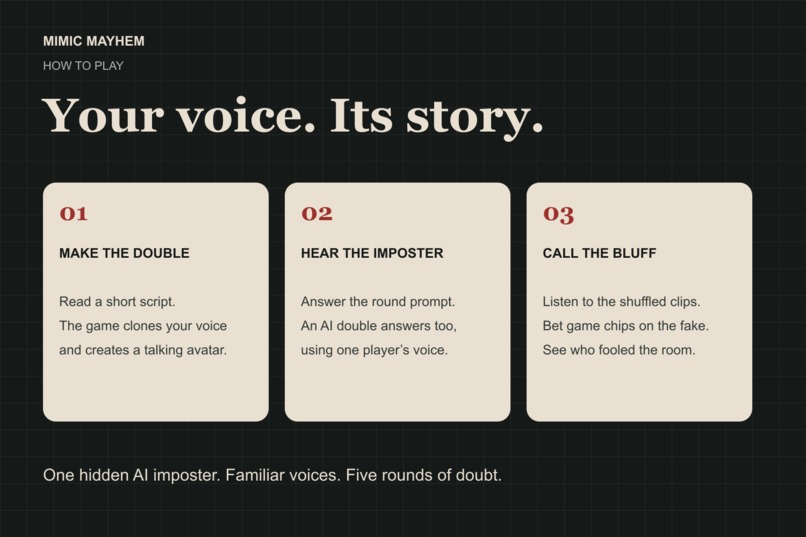
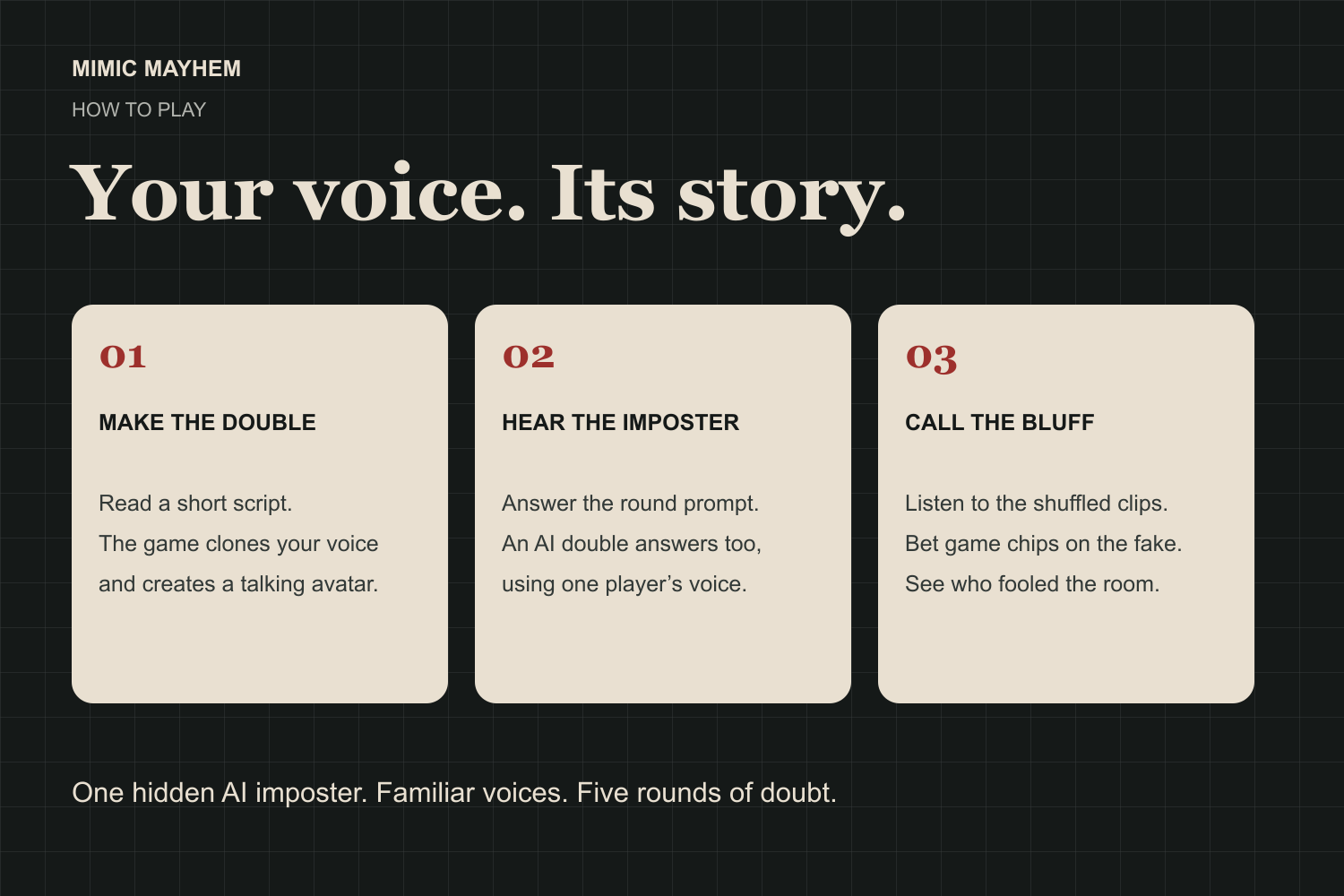
How a game plays out.
-
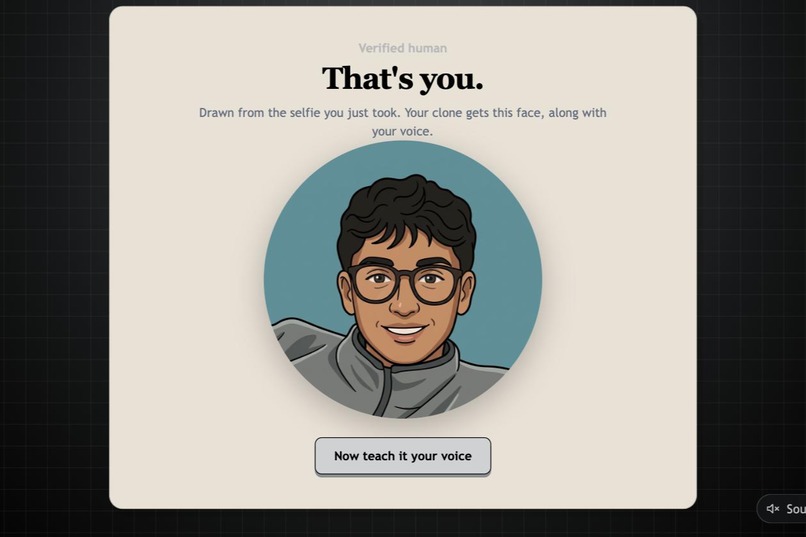
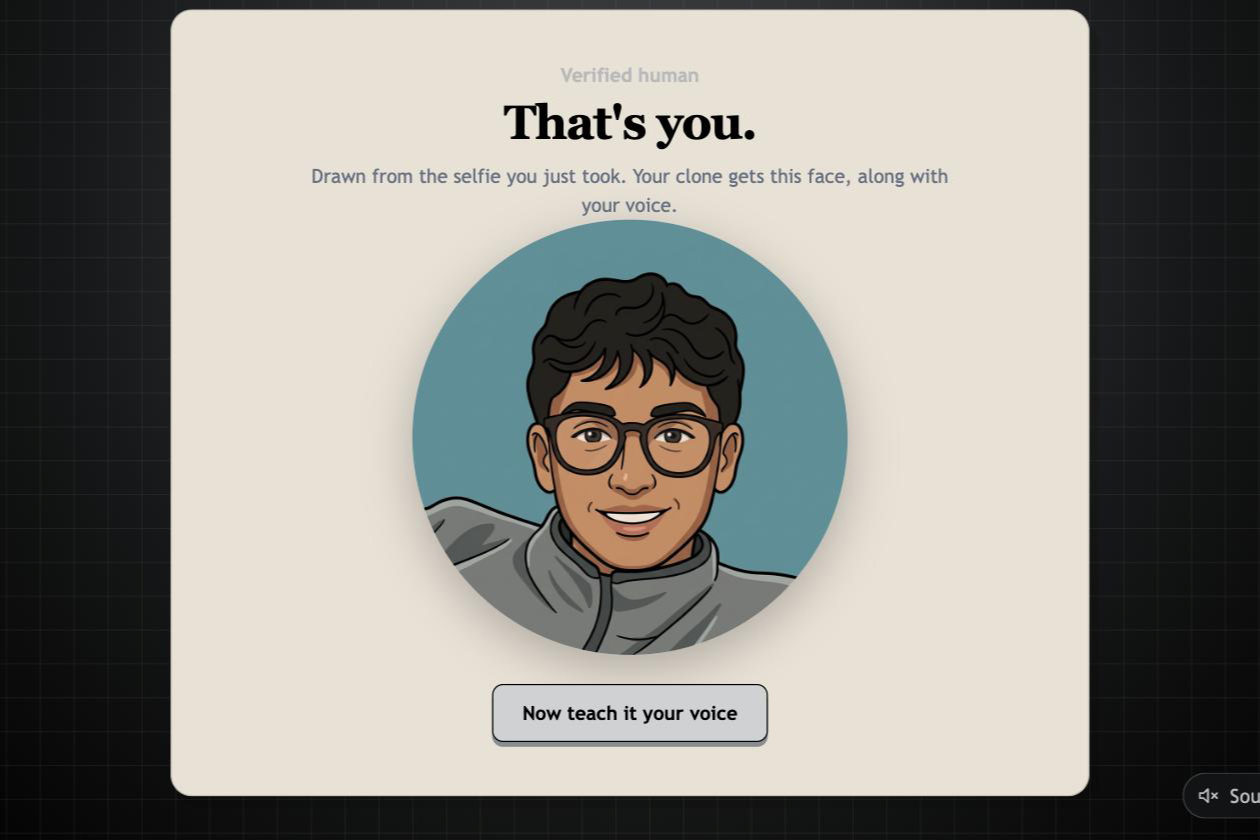
Your selfie becomes a cartoon avatar. Your clone wears the same face.
-
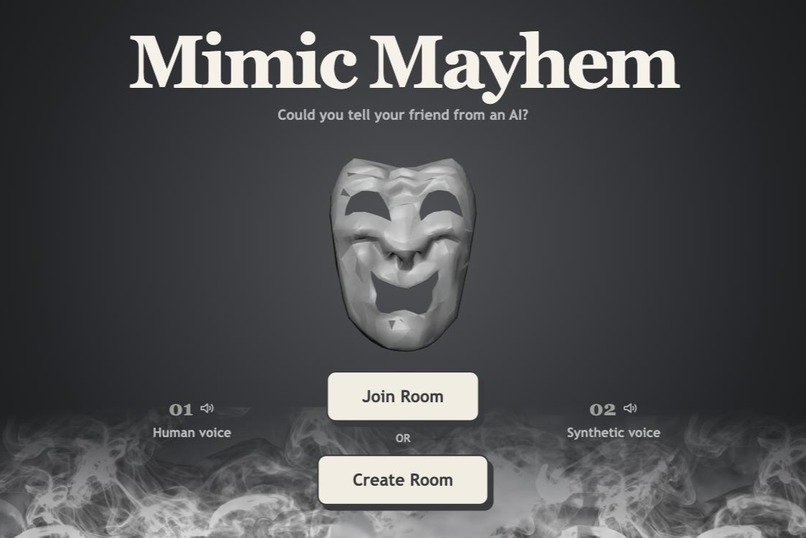
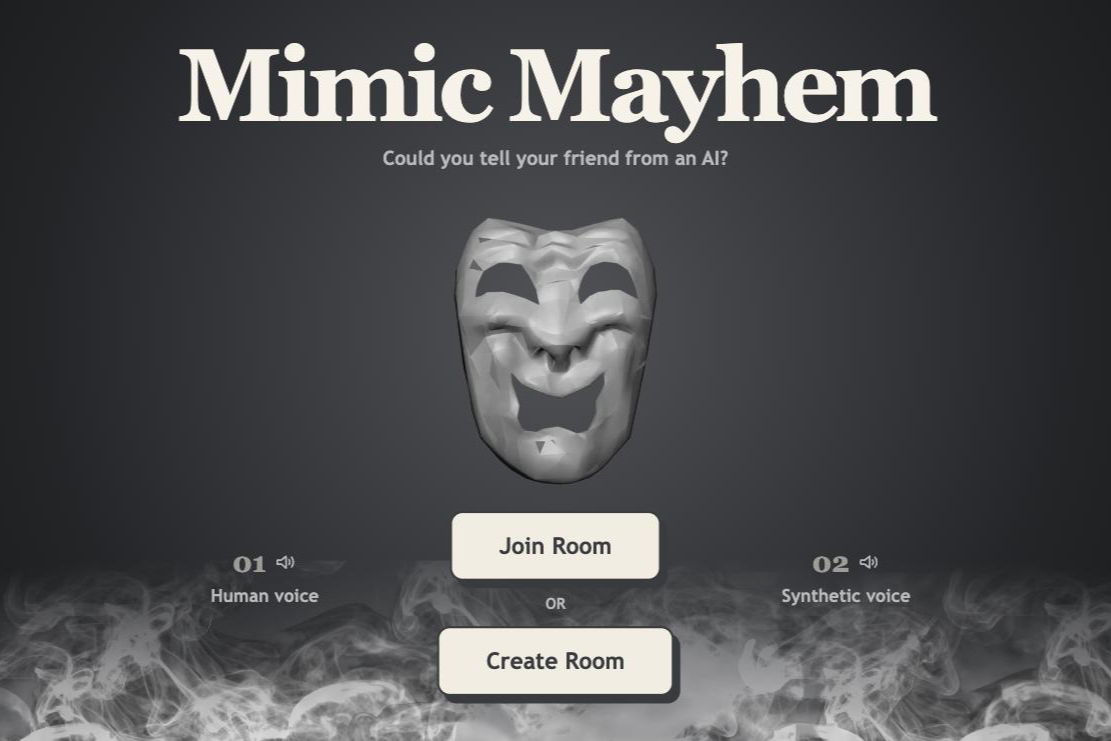
Landing page. Create or join a room.
-
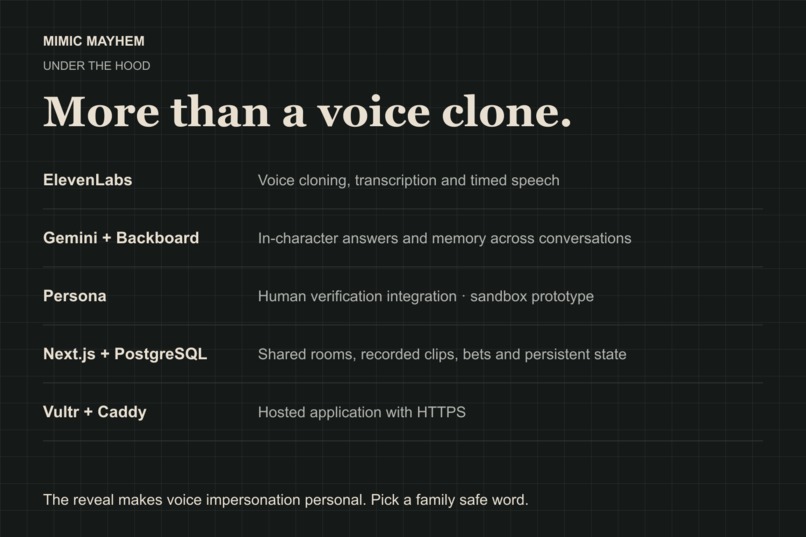
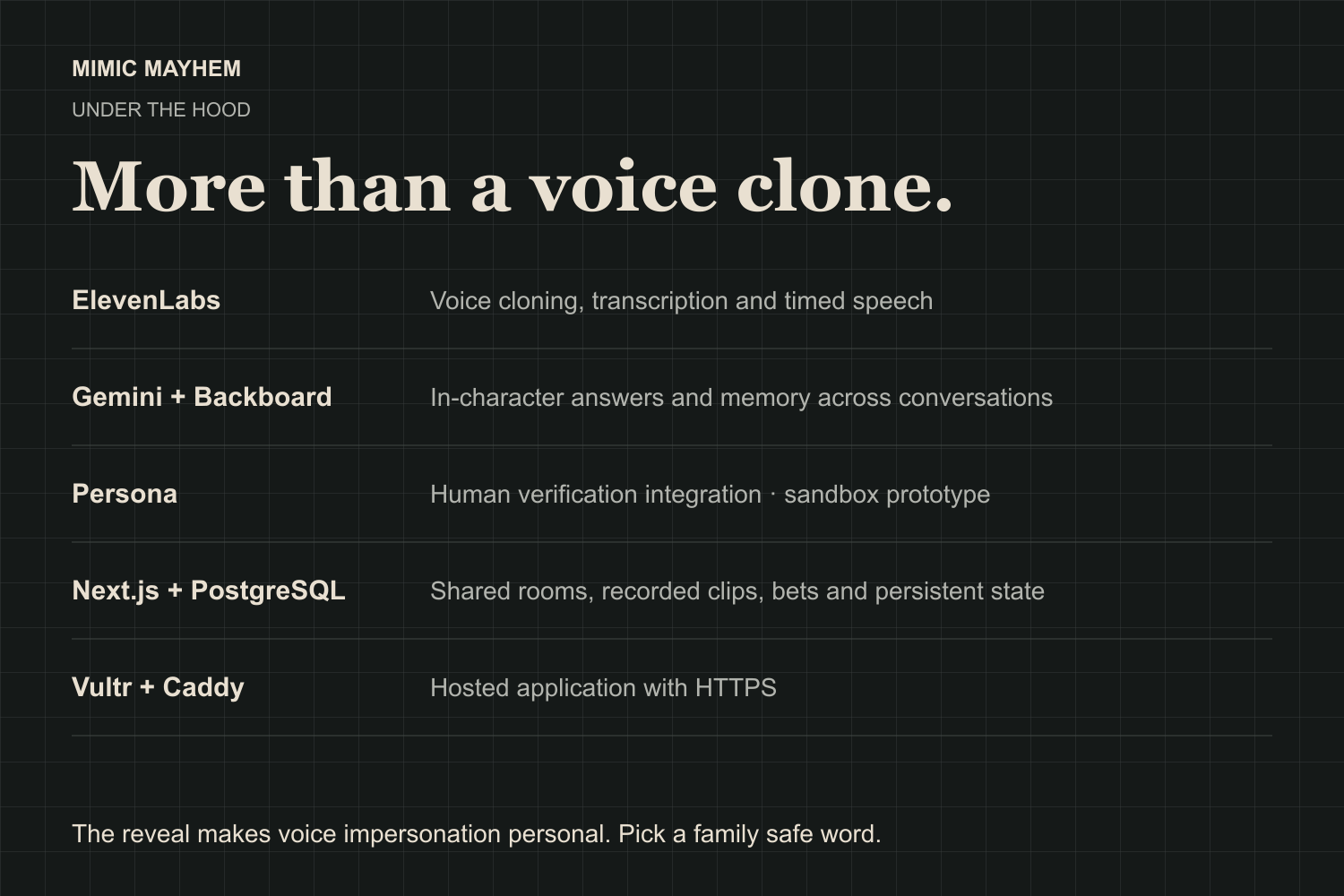
Voice cloning, AI memory, human verification, persistent game state, and HTTPS hosting work together.
-
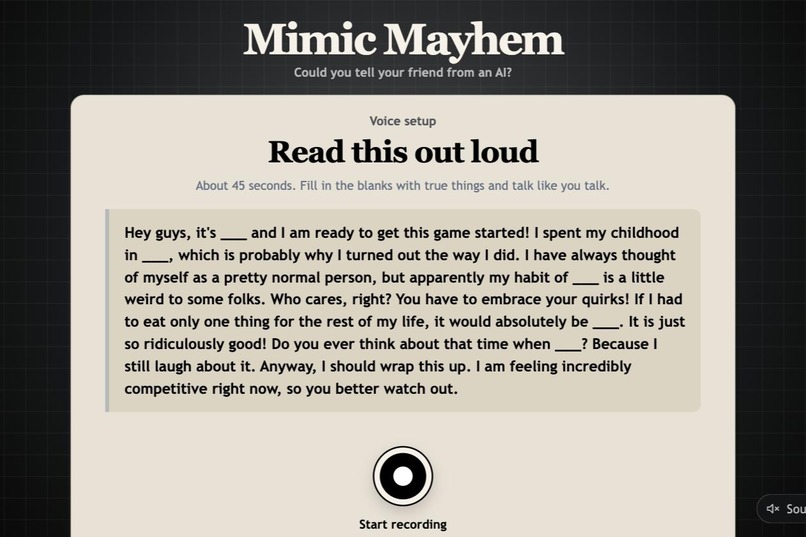
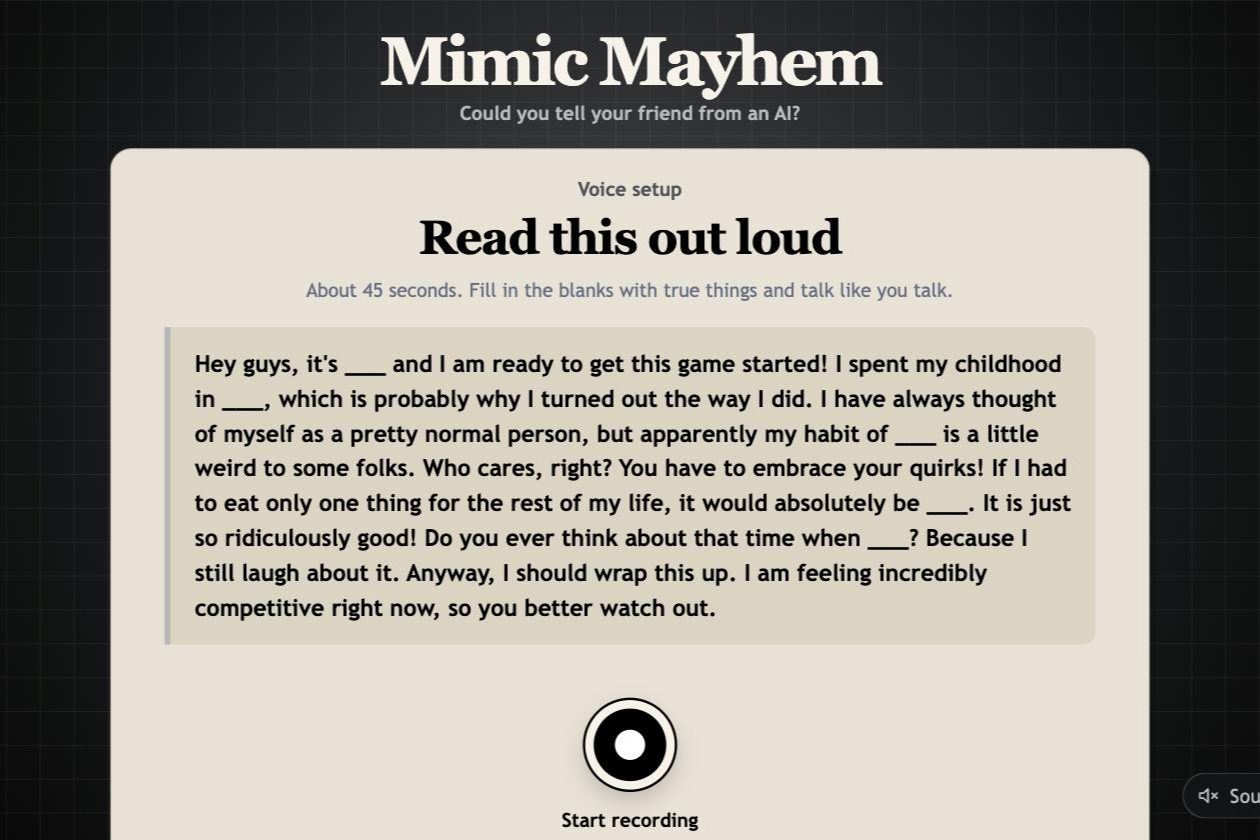
The 45 second enrollment read that trains the voice clone.
-
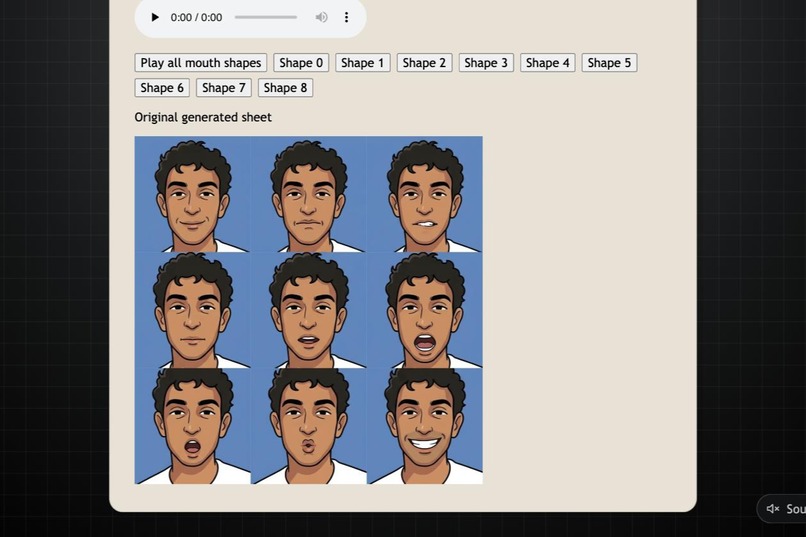
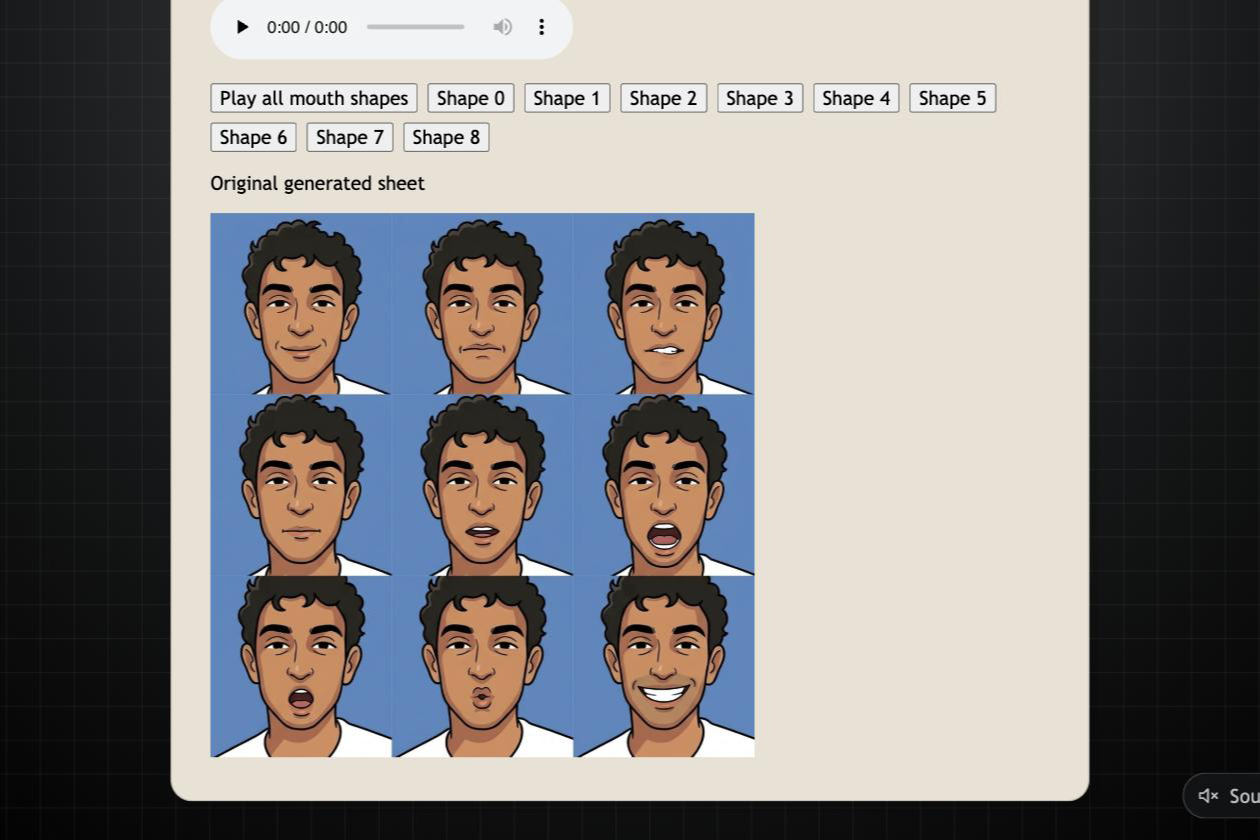
Nine Gemini generated mouth shapes drive the talking avatar.
Inspiration
You recognize your friend's voice before you think about the words. What happens when that voice is no longer proof that your friend is speaking?
We built Mimic Mayhem to put that question at the center of a party game. Hearing a clone of someone you know invent a believable answer makes voice impersonation much more concrete than a warning about deepfakes.
What it does
Mimic Mayhem is a multiplayer social-deduction game with one hidden AI imposter. Players join a shared room and read a short enrollment script about themselves. The app creates voice clones and illustrated talking avatars. An AI double is secretly assigned to one player.
Across five rounds, humans record answers privately. The double uses the copied player's answer as context, then invents a different response in that voice and takes their seat in playback. Every name appears once. Players listen, argue, bluff, and wager in-game chips on the imposter. Its conversational memory keeps its claims consistent across rounds.
The host acts as detective, with webcam-derived pulse, breathing, blink, and stress-related telemetry from Presage. These are experimental gameplay cues, not a lie detector or a medical assessment. Human and generated audio also pass through a shared microphone-style processing chain so polished studio sound does not immediately give the AI away.
The reveal shows the fake answers and the standings. Players can hear how their voice was used, and the host can delete the cloned voices through the end-game cleanup flow. A family-safe-word prompt turns the experience into a practical conversation about voice impersonation.
How we built it
- ElevenLabs: instant voice cloning, speech transcription, generated speech, and character-level speech timestamps. Those timestamps drive the talking-avatar mouth shapes. Its API also powers cloned-voice deletion.
- Google Gemini + Backboard: personalized prompts and in-character AI answers. Backboard assistants and conversation threads keep the double's claims consistent; persistent player assistants support memory across games.
- Gemini image generation: cartoon portraits and mouth-shape sprite sheets. The client aligns mouth frames to the resting portrait and blends their edges so the face stays stable while speaking.
- Persona: human verification during onboarding, implemented with Persona’s sandbox for the hackathon. It establishes the human side of a game that deliberately introduces an AI double.
- Next.js, React, and TypeScript: the browser experience and server API routes in one npm-workspace monorepo. Browser MediaRecorder handles enrollment and spoken answers.
- PostgreSQL / Tiger Data: persistent rooms, player records, clips, bets, and round state.
- Presage SmartSpectra: webcam-derived measurements delivered through a WebSocket service to the detective interface.
- ffmpeg: shared audio normalization and microphone-style processing for human and generated clips.
- Vultr + Caddy: application hosting with HTTPS, which browser microphone access requires outside localhost.
Challenges we ran into
The main challenge was keeping a multi-service game moving: enrollment, transcription, voice generation, AI answers, and playback all have different timing and failure modes. We split the integrations into typed packages and persist game state in PostgreSQL.
Talking portraits introduced another problem: generated sprite panels do not keep exactly the same face scale and position. Swapping a mouth region directly produced an obvious seam. We added frame alignment and a feathered mouth mask, then inspected open, rounded, and smiling shapes during browser playback.
We also had to make the game interesting after players recognized a voice. The AI's remembered claims, shuffled clips, and chip-based bluffing give the room more to reason about than audio quality alone.
Accomplishments we're proud of
We connected voice cloning, a memory-backed AI character, animated portraits, and multiplayer deduction in one playable experience. The strongest moment is simple: a familiar voice says something its owner never said, and everyone has to decide whether to believe it.
What we learned
A convincing impersonation needs context and consistency as well as a recognizable voice. Visual continuity matters too: a small animation mismatch can reveal the trick before anyone listens. Building the full loop also made cleanup and clear prototype boundaries part of the product rather than an afterthought.
What's next for Mimic Mayhem
Improve latency and recovery when a speech service is slow, test with more groups, refine avatar alignment across a wider range of faces, and strengthen consent, retention controls, and production verification before broader use. We also want to explore facilitated deepfake-awareness sessions where people learn by playing together.
Try it
Open the live app over HTTPS, gather at least three players, and use headphones or a quiet room for recording. This is a hackathon prototype and relies on external AI services being available.
Built With
- backboard
- caddy
- elevenlabs
- ffmpeg
- gemini
- next.js
- node.js
- persona
- postgresql
- presage
- react
- three.js
- tigerdata
- typescript
- vultr

Log in or sign up for Devpost to join the conversation.