Inspiration
The inspiration to build MiMi Money came from two major opportunities I saw: the growing ability of AI to make software development faster and more accessible, and the pain that millions of Africans still experience with fragmented financial services. With modern AI coding tools, I realized that a single developer could build, test, improve, and deploy sophisticated applications without needing a large development team or many workers. This made it possible to turn ideas into real products much faster and at a fraction of the traditional cost. At the same time, I saw how Africans still have to deal with disconnected banking, mobile money, payments, crypto, messaging, and financial services. This inspired me to build MiMi Money as an all-in-one platform that brings these experiences together, making it easier for people to communicate, send and receive money, make payments, and access digital financial services from one place. The combination of AI-powered development and a real financial problem in Africa gave me the motivation to turn MiMi Money from an idea into a working product.
I have had the idea for years, even attempted to develop but I could not afford developers, bought the domains that I have kept till now when AI has made it possible for a single developer to deliver such work and now run a business with AI agents but not human employees.
What it does
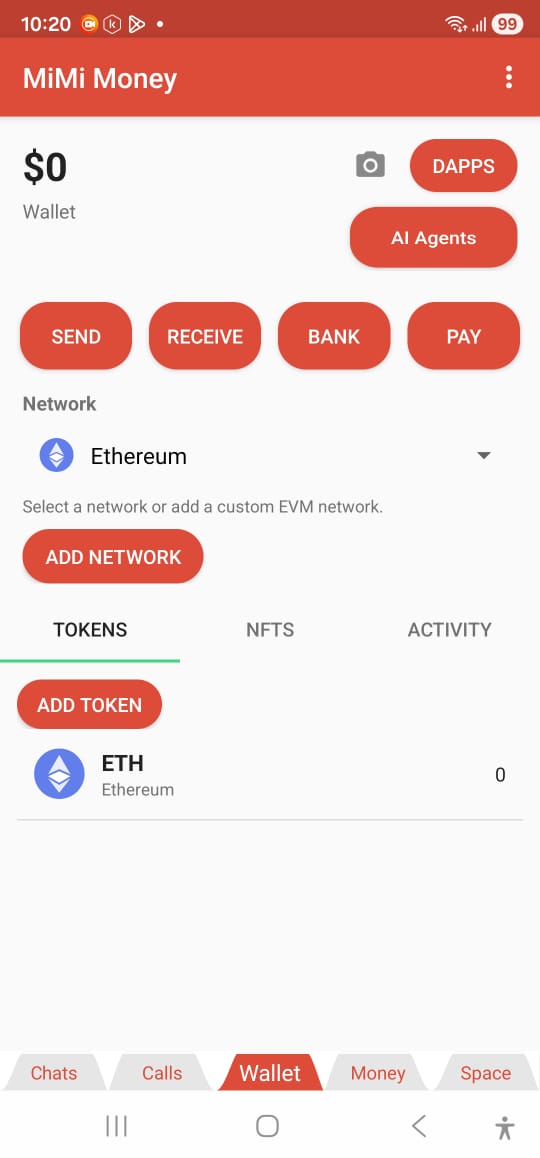
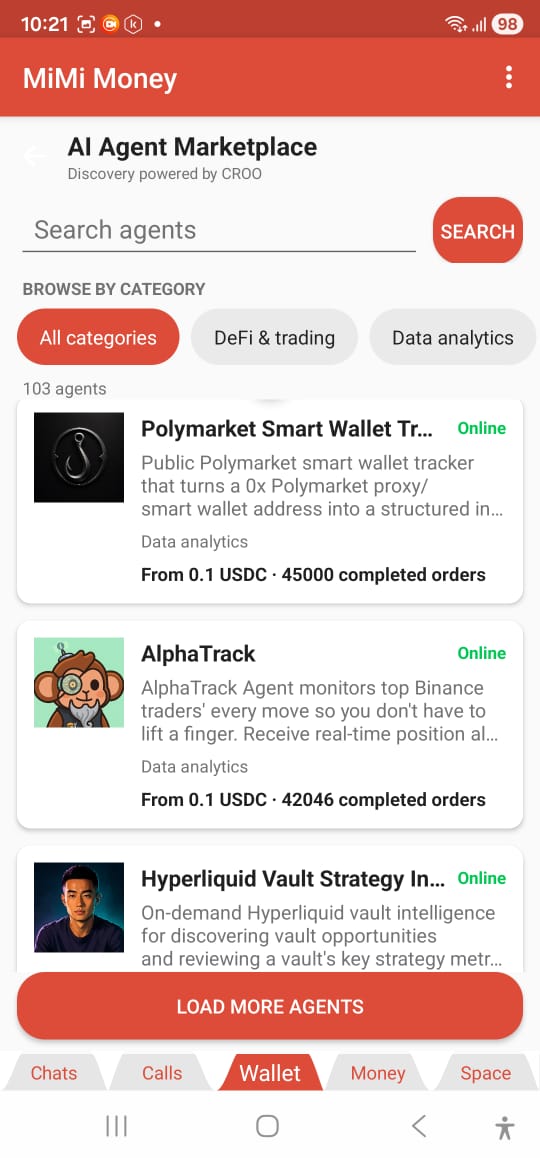
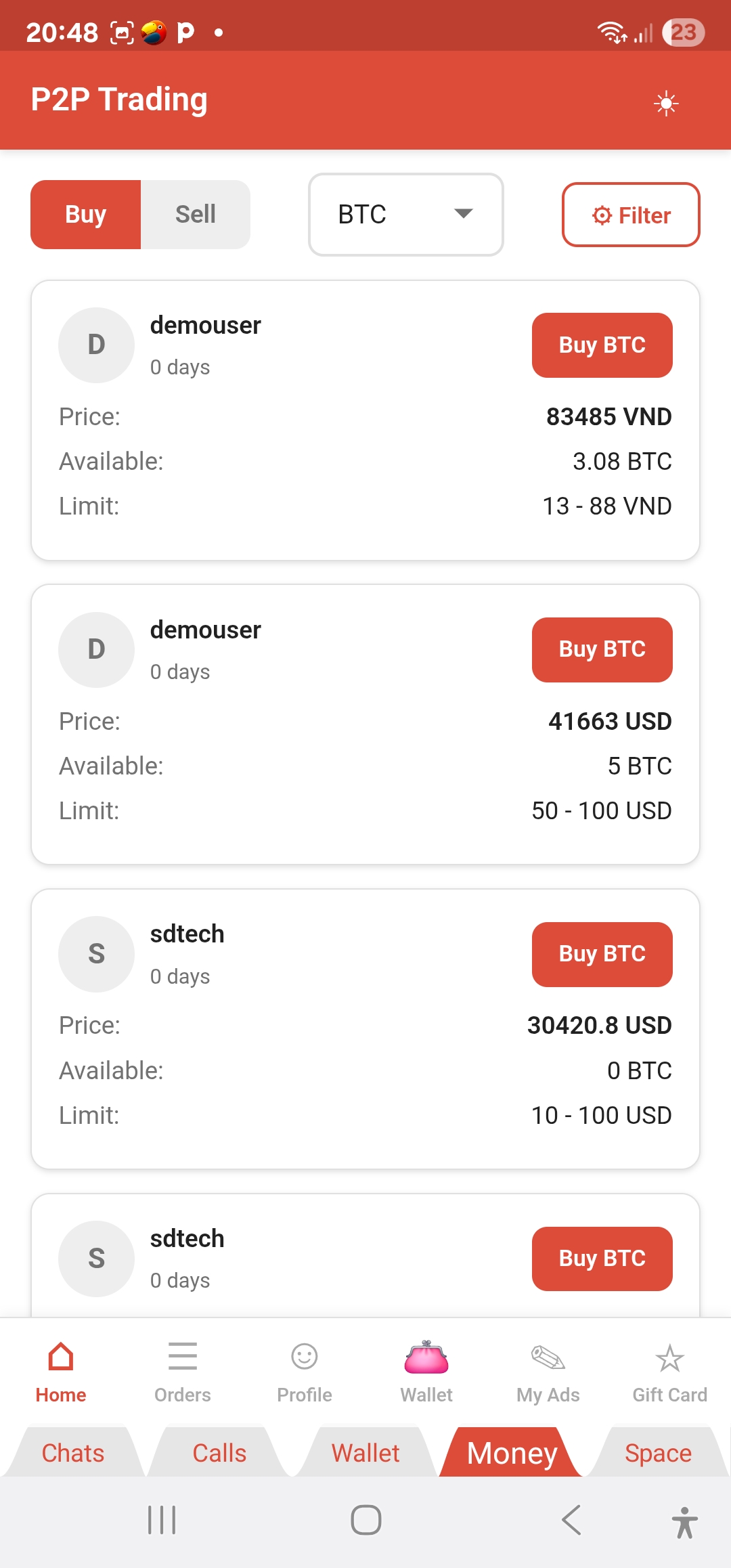
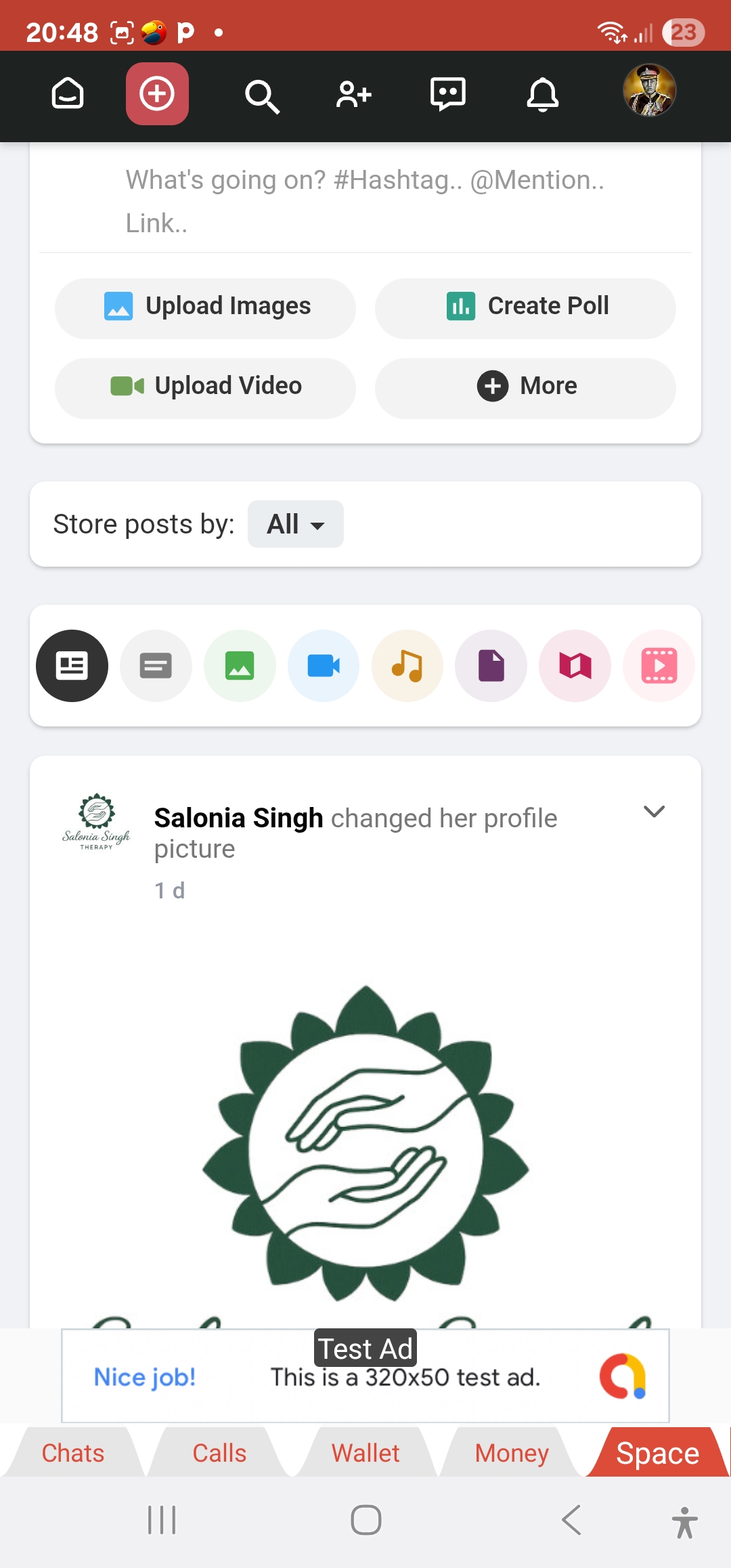
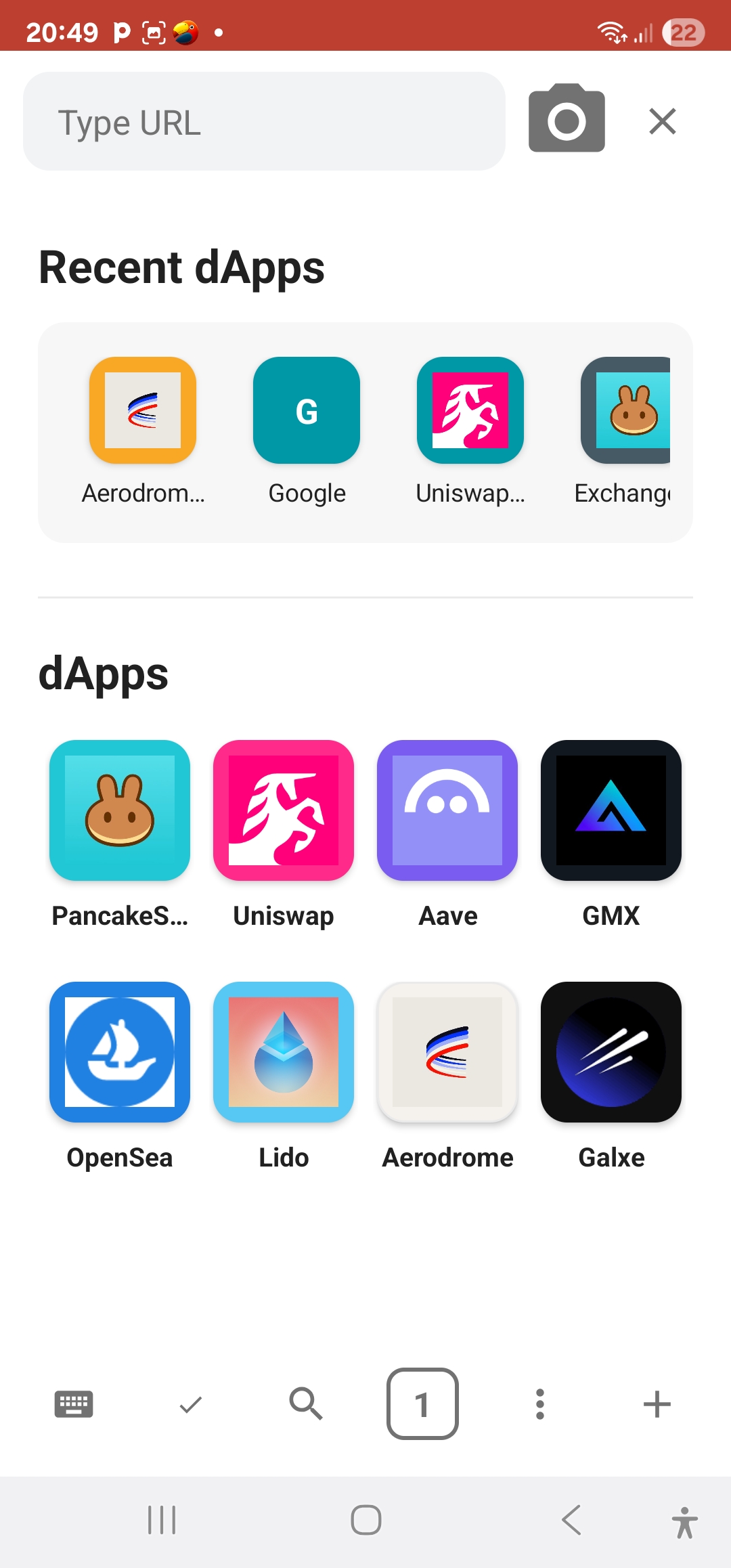
AI Agent powered Super app, Blockchain Wallet and Web3 (Web2+Blockchain)/Web4 (Web3+AI) Gateway to Transact, Social and Business network.
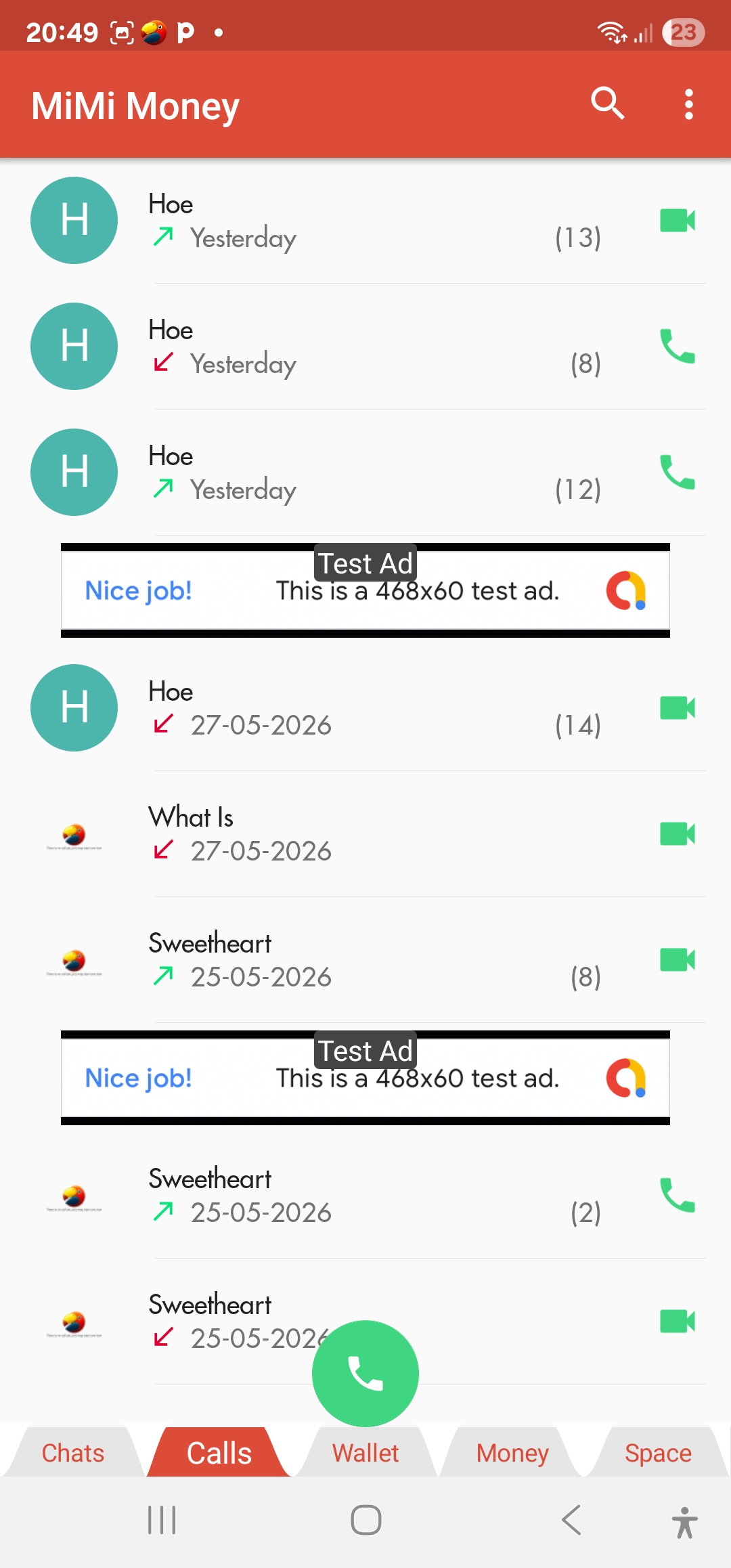
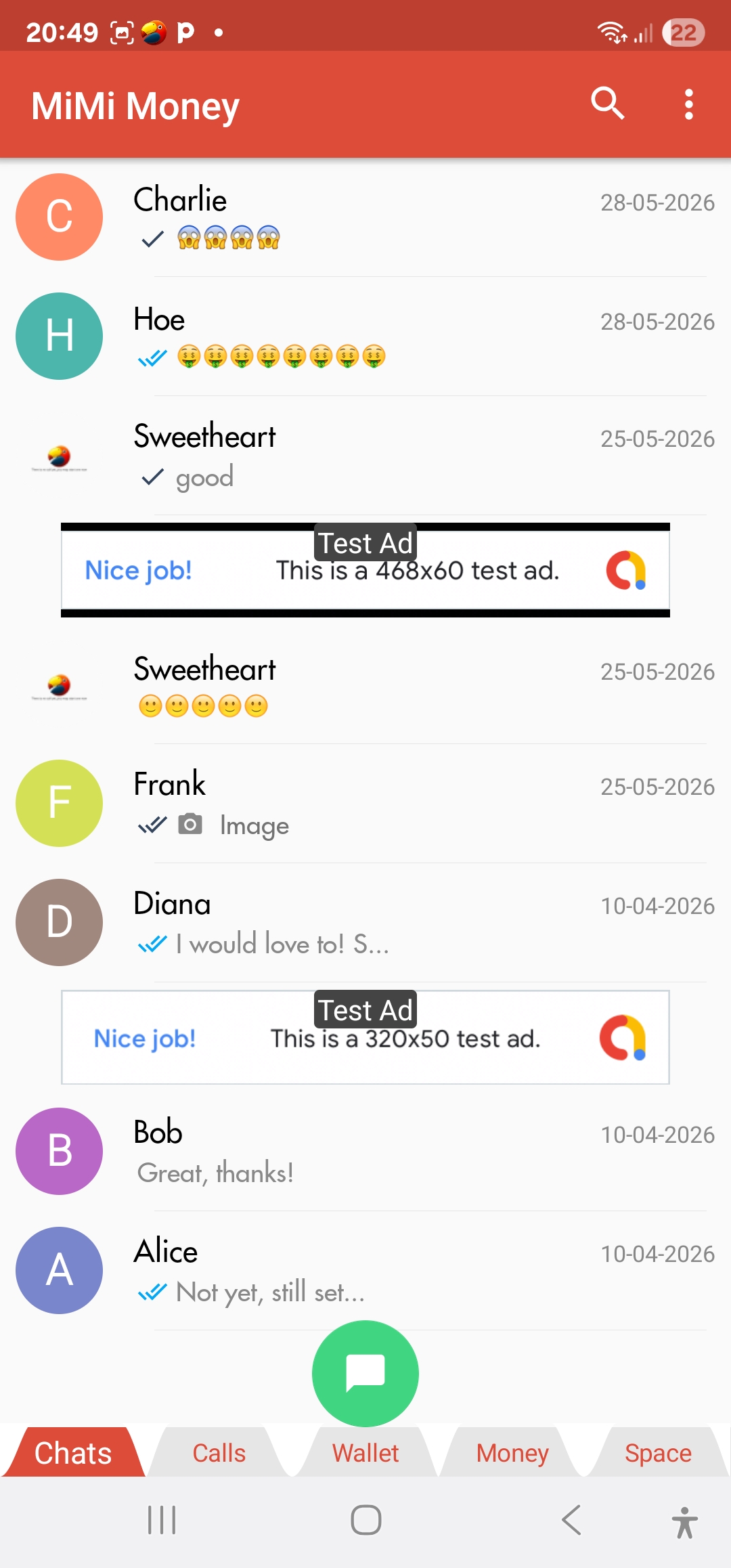
Free Chat, Voice and Video calls in real-time by registering with a free Wallet address to Transact, Social and Business network.
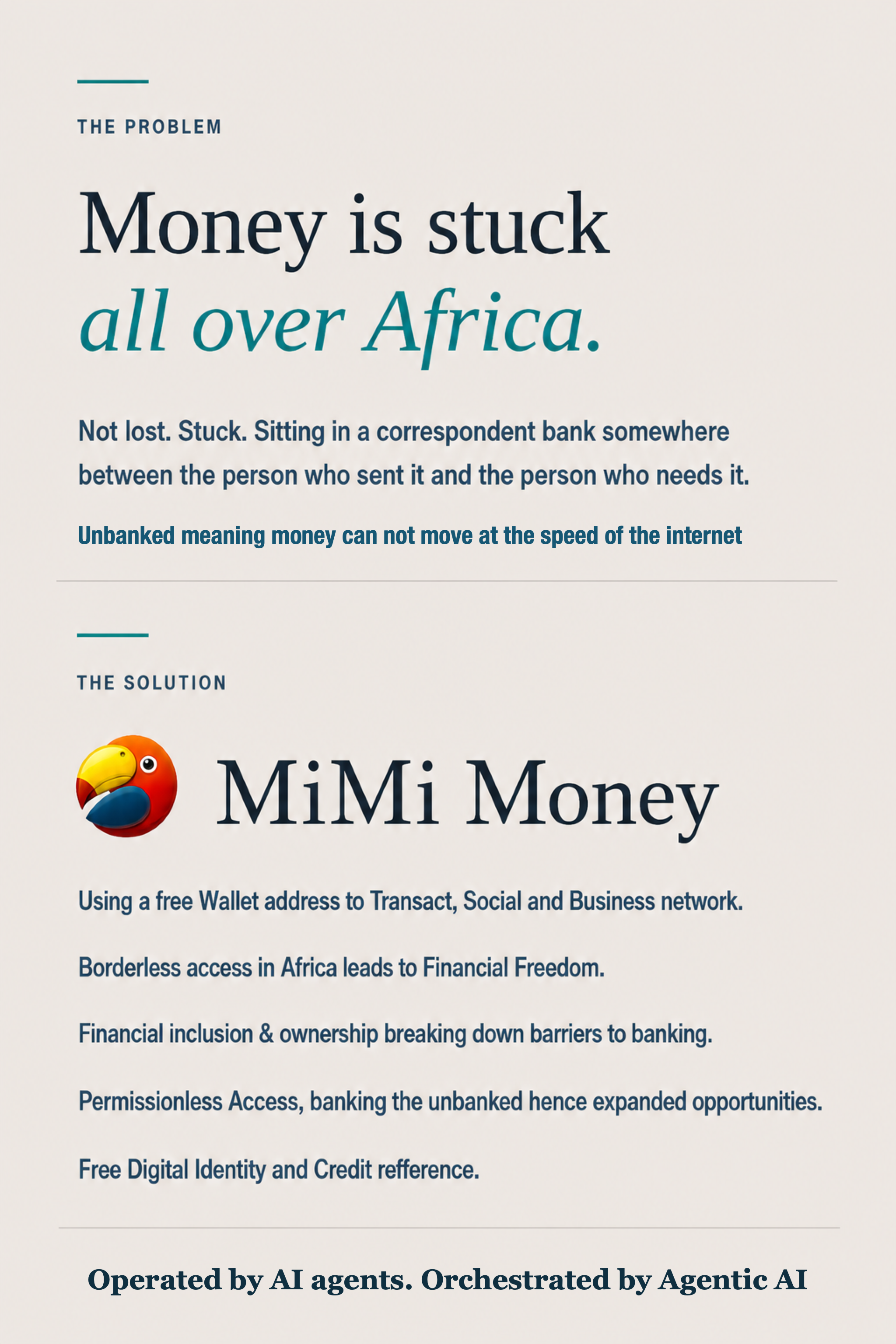
MiMi Money is a mobile-first financial application surrounded by an autonomous multi AI agents operating layer, where Paperclip orchestrates specialized AI agents, multiple LLMs provide reasoning, Firebase/Google Cloud provide application infrastructure, and financial APIs/Circle wallet infrastructure enables the agents to interact with real financial services for Humans to Humans and AI agents to AI agents.
MiMi Money in Action

How we built it
MiMi Money was built as an agentic financial platform where the Android app sits on top of a multi-agent orchestration layer, AI/LLM providers, Google Cloud/Firebase infrastructure, and backend financial services.
A. The user-facing application
The core product is the MiMi Money Android app. The experience layer, with two major AI capabilities:
Support Agent — handles customer care and resolution.
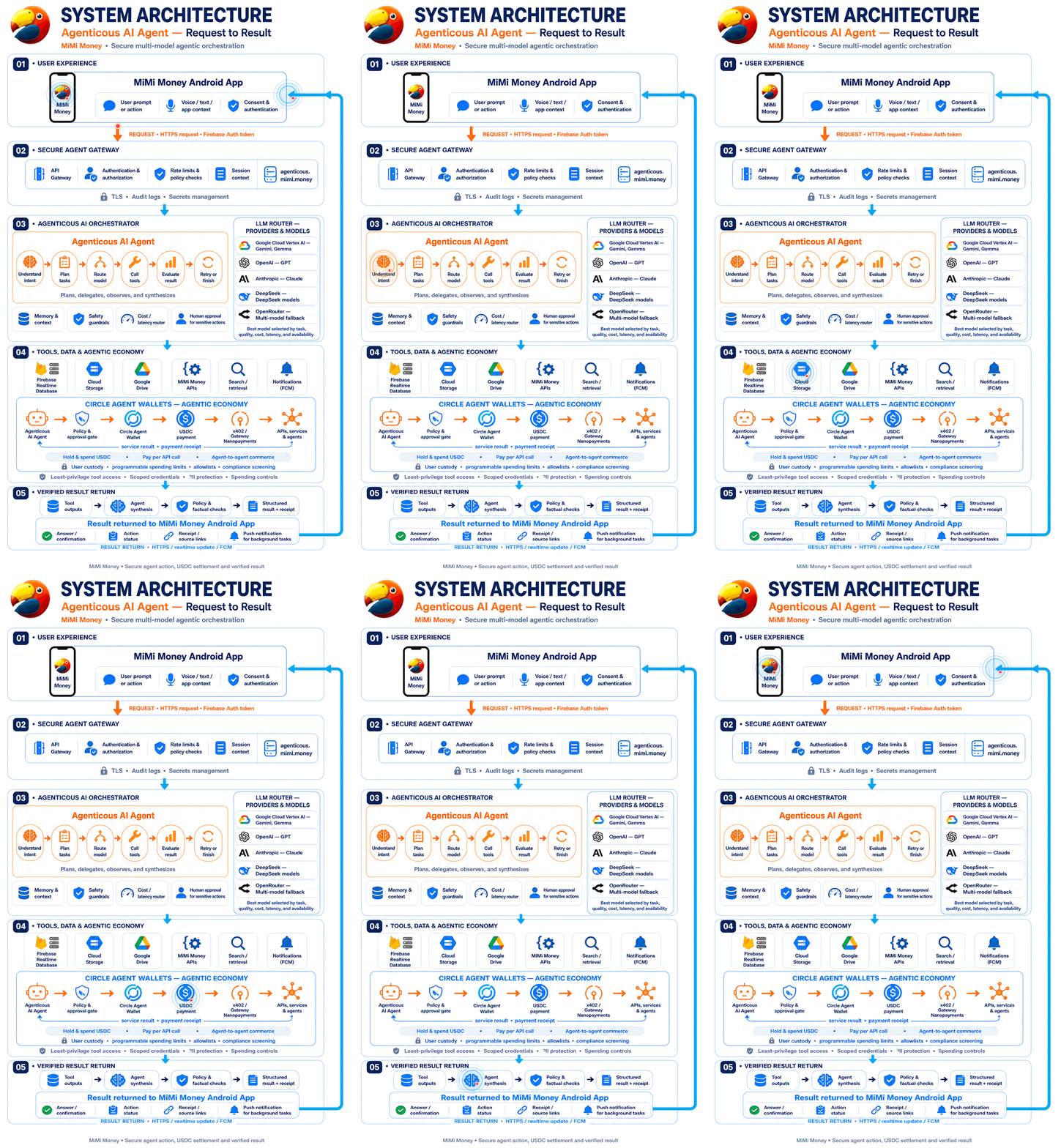
Agenticous AI agent — handles autonomous operations.
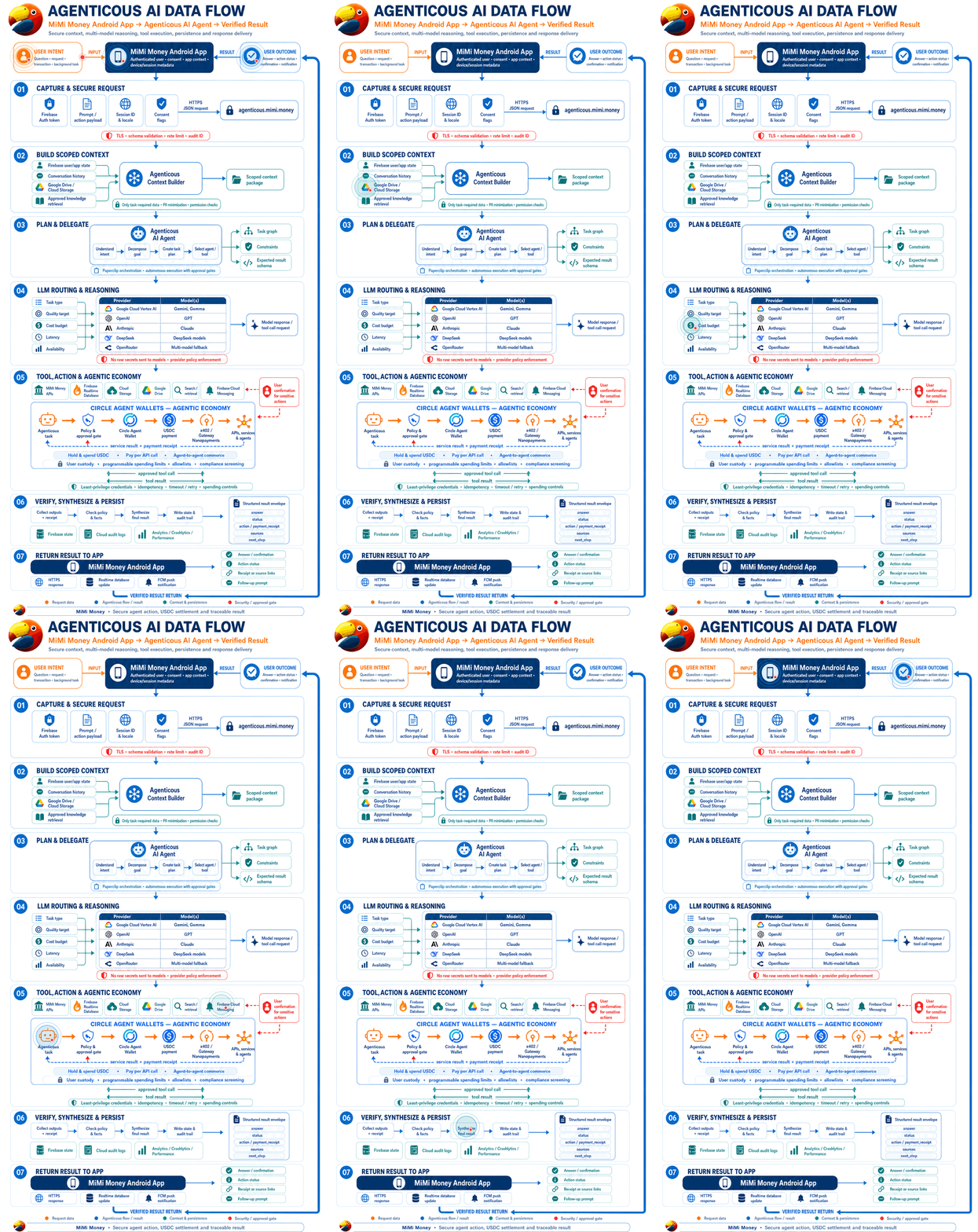
So instead of making the Android application purely a conventional fintech app, AI agents are integrated into the product experience.
B. Paperclip is the orchestration layer
The most interesting architectural component is "Orchestration 95 AI Agents" where three coordinated companies/workstreams: MiMi Money, Developer and Marketer operate. So Paperclip acts as the agent manager/orchestrator. Instead of having one giant AI agent responsible for everything, MiMi Money decomposes work into many specialized agents.
C. Google Cloud + Firebase provides the infrastructure as the third layer is the cloud infrastructure.
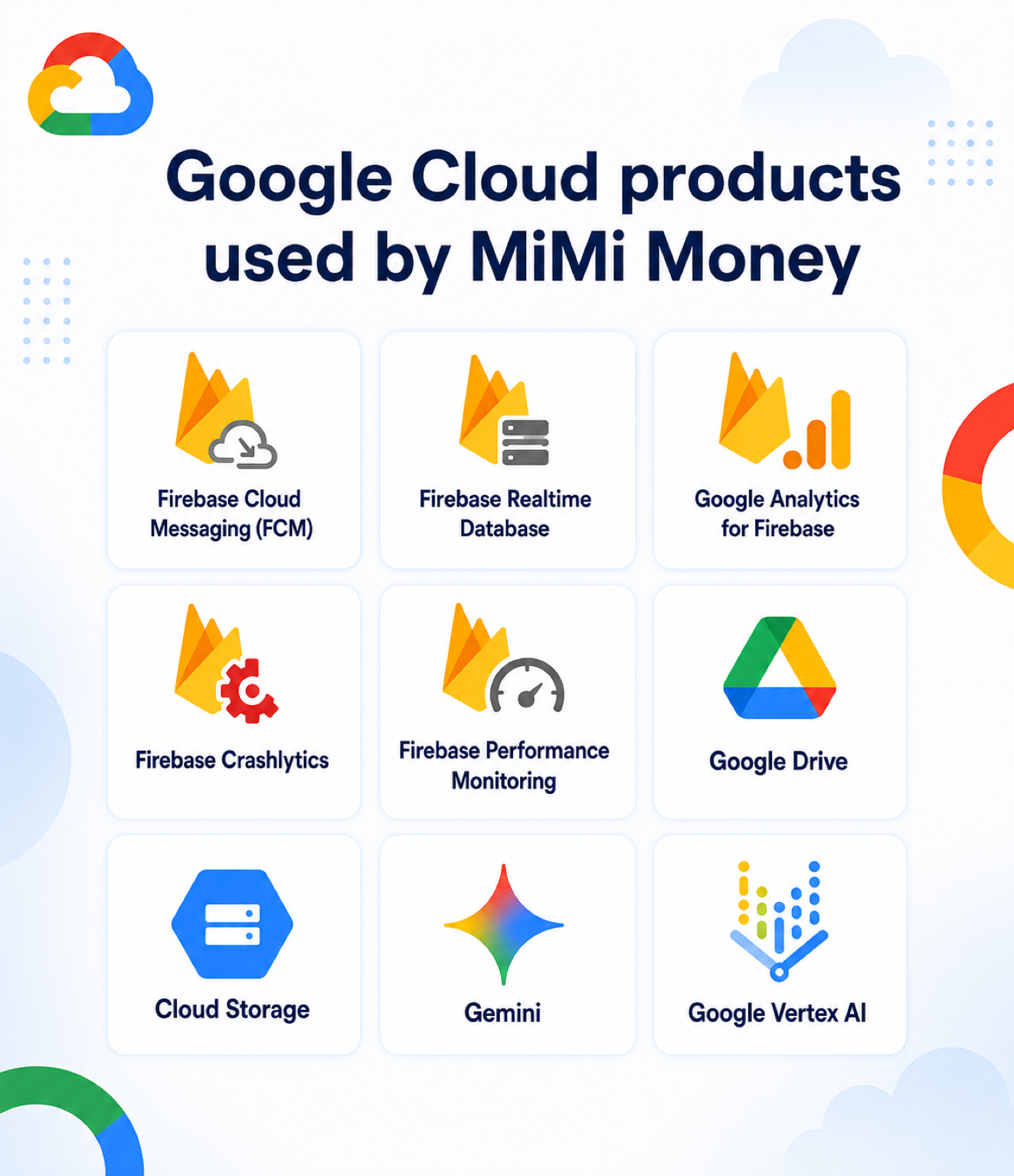
Firebase
Firebase Cloud Messaging for Push notifications
Firebase Realtime Database for Real-time application data
Google Analytics for Firebase for Product/audience analytics
Firebase Crashlytics for Crash monitoring
Firebase Performance Monitoring for Application telemetry
In detail
Firebase Cloud Messaging (FCM) — push notifications for messages, group messages, incoming calls, notices, and token registration with the Mimi Money backend. See GcmServiceListener.java (line 39).
Google Analytics for Firebase — records feature-opening and operation-result events. See AppTelemetry.java (line 58).
Firebase Crashlytics — records handled application errors and crash information. See AppTelemetry.java (line 84).
Firebase Performance Monitoring — measures application initialization, wallet transactions, support-page loading, and AI catalogue loading using custom traces. See AppTelemetry.java (line 100).
Google Drive and cloud storage chosen by user Google Drive, device storage, an SD card, Dropbox, OneDrive, or another installed document provider. (Android Storage Access Framework Used for backup and restore, Google Drive through SAF Optional, if selected by the user)
Google Cloud
Gemini for Generative AI
Vertex AI for Managed AI platform
Google Drive for Documents/collaboration
Cloud Storage for Object/file storage
Financial infrastructure for AI agents
Financial infrastructure sits underneath of this architecture where Circle Wallets, USDC, and x402 Protocol & Facilitator function operated by AI agents, built around a combination of:
Circle Wallets for AI agent wallet/payment infrastructure.
USDC for the stablecoin use as the underlying digital dollar/payment asset.
x402 for machine-to-machine/API payment flows.
Operating MiMi Money with AI Agents and Human Judgment
A written narrative (500–1000 words) of how the team uses AI day to day, what humans do versus what AI does, the jobs and economic opportunities the business creates or enables for people beyond the founding team (actual and potential), and the story of building the business this way.
I built MiMi Money around a simple conviction: AI should expand what one African founder can accomplish without replacing the human judgment, accountability, and relationships required to operate a trusted financial platform. Today, that conviction shapes both the completed MiMi Money system and how I work every day.
A typical day begins with me, not the machines. I determine the most important business priority—improving Android onboarding, resolving a customer issue, strengthening wallet security, investigating a transaction, preparing a release, growing adoption, or developing a partnership. Once I have defined the objective and its acceptable boundaries, specialized AI agents help convert it into coordinated, trackable work.
Paperclip provides the management layer for my digital workforce. I operate three connected AI companies through Paperclip: MiMi Money, Developer, and Marketeer. Together, they coordinate approximately 95 specialized agents. The main MiMi Money company includes 41 agents covering leadership, product, finance, engineering, security, operations, design, research, and strategy. The Developer company contributes specialists in Android, backend systems, blockchain, artificial intelligence, quality assurance, DevOps, cybersecurity, releases, and reliability. The Marketeer company supports research, positioning, design, video, social media, public relations, partnerships, community engagement, SEO, app-store optimization, advertising, and analytics.
These agents do not operate as an unstructured group chat. Paperclip gives them defined roles, reporting relationships, goals, budgets, issues, and visible work histories. Executive agents can delegate to specialists, related tasks can be coordinated across departments, and I can see what has been completed, what is blocked, and what requires my approval. This structure gives me access to the breadth of a much larger organization while preserving my control over consequential decisions.
The same principle is reflected in MiMi Money’s technical architecture. The platform combines a native Android super-app, a PHP and MySQL application backend, a Node.js and Socket.IO realtime communication service, a peer-to-peer trading platform, an AI-assisted customer-support system, the Agenticous AI agent, and a self-hosted x402 payment facilitator. Google technologies support the platform through Gemini, Firebase Cloud Messaging, Analytics, Crashlytics, Performance Monitoring, Google Drive-compatible backups, and a Vertex AI fallback route. Each component has a clear responsibility so that optional AI services can fail safely without disabling core messaging, wallet, or support functions.
In product development, AI agents help me research user needs, inspect source code, propose architecture, design user flows, implement features, write tests, review dependencies, diagnose failures, and prepare release documentation. Security and quality agents examine privacy risks, unsafe wallet behavior, vulnerable dependencies, and possible regressions. I still decide which problems deserve attention, review the proposed changes, test them in realistic conditions, approve security policies, and determine whether a release is ready for users. AI increases my speed and range; it does not assume responsibility for production safety.
Customer support demonstrates this human–AI partnership directly. Users can access the MiMi Money support service from the Android application or through the customer-support Agent. The Support Agent provides immediate first-line assistance, preserves conversation context, and handles routine questions. Customers can request a human at any time, and cases involving disputed payments, suspected fraud, identity, privacy, vulnerable users, or uncertain evidence are escalated rather than presented as resolved.
Agenticous extends this support model into blockchain intelligence and controlled operations. When a customer provides a public EVM wallet address, Agenticous searches supported blockchain explorers, gathers recent native and token activity, normalizes and deduplicates the evidence, and preserves transaction links for independent verification. Gemini can then explain the verified evidence under strict instructions not to invent wallet ownership, identity, intent, fraud, or risk. If the AI model is unavailable, Agenticous can still return the deterministic explorer report.
Agenticous reports are protected through the x402 machine-payment protocol. MiMi Money’s private support sidecar uses a dedicated Circle wallet to authorize the exact USDC payment required for a report. Circle Gateway Nanopayments provides the preferred settlement path, while MiMi Money’s self-hosted x402 facilitator supplies a standards-based fallback. The public Agenticous service never receives the support wallet’s private credentials.
For more advanced tasks, Agenticous supports read-only, proposal, and bounded autonomous modes. OpenClaw may select blockchain tools and pursue an approved intent, but it cannot independently move money. Privileged requests must pass through a private sidecar that checks the network, recipient, contract, amount, spend ceiling, simulation result, and idempotency record. I define these policies and decide whether autonomous capabilities should be enabled. The AI can recommend or request an action; deterministic software and my accountable human judgment control whether it may occur.
Marketing follows the same governed approach. Marketeer agents can research audiences, develop positioning, prepare campaign concepts, write social and email content, create video ideas, improve app-store listings, generate tracking plans, and model advertising budgets. They are not automatically authorized to publish content, purchase advertisements, contact partners, or make public claims. I verify the evidence, adapt messages to local realities, approve the brand’s public voice, and authorize external action.
This operating model is intended to create human opportunity rather than concentrate all work around me. I have already used the agent organization to structure planning for MiMi Money’s first engineering hire, including a job description, candidate pipeline, sourcing process, and technical assessment. As the platform grows, it can support roles for software and security engineers, customer-support specialists, compliance officers, fraud investigators, partnership managers, community representatives, financial educators, translators, content creators, and supervisors of AI-assisted operations.
The wider economic opportunity is even larger. Merchants can reach customers and accept digital value; freelancers and small businesses can communicate, receive payments, and develop transaction records; community representatives can help people adopt the platform safely; and developers can build services around MiMi Money’s wallet, communication, P2P, support, agent, and x402 infrastructure. Designers, filmmakers, educators, influencers, and local-language specialists can contribute to trusted financial education and market-specific campaigns.
MiMi Money’s story is therefore not about replacing a company with AI. It is the story of one African founder combining human purpose and lived experience with a governed digital workforce. AI gives me research, coordination, technical capacity, evidence processing, drafts, and continuous first-line assistance. I provide direction, relationships, consent, cultural understanding, approval, and accountability. Together, my AI agents and I are building both a completed financial platform and an operating model capable of creating jobs, enabling businesses, and expanding participation in the digital economy.
Challenges we ran into
I also encountered fragmented payment infrastructure, with banks, mobile-money providers, wallets, and crypto networks operating differently and with limited interoperability. Unreliable internet connectivity, power interruptions, expensive mobile data, and differences in smartphone capabilities also forced us to think carefully about performance and reliability. On the AI side, I faced challenges with LLM costs, latency, hallucinations, model reliability, and choosing the right model for different agent tasks, particularly when trying to run AI affordably at scale. Because MiMi Money handles financial activity, fraud prevention, KYC/AML, cybersecurity, data privacy, transaction verification, and protecting users from autonomous-agent mistakes became critical concerns. Stablecoin and blockchain integrations introduced additional challenges around regulation, liquidity, transaction fees, and on/off-ramp availability. Most importantly, I had to build enough trust and transparency for users to feel comfortable allowing AI agents to interact with their finances, which meant introducing clear audit trails, transaction controls, human escalation, and safeguards around autonomous actions.
Accomplishments that we're proud of
I am proud to have built MiMi Money as an AI-native financial platform designed for the realities of Africa, combining fintech, stablecoin payments, and autonomous AI agents into one ecosystem. I successfully developed an Android financial application and connected it to USDC and digital-wallet infrastructure, while also building AI-powered capabilities for customer support, transaction monitoring, and autonomous operations.
One of our biggest accomplishments was creating an agentic orchestration layer capable of coordinating 95 specialized AI agents, allowing different agents to work together across development, customer support, operations, and marketing rather than relying on a single AI assistant. Am also proud of integrating multiple AI models, including Gemini, GPT, and Gemma, giving us flexibility to select the most appropriate model for different tasks and control AI costs. Beyond the AI layer, I built the surrounding infrastructure using Google Cloud and Firebase services for real-time data, notifications, analytics, monitoring, storage, and AI capabilities. Most importantly, I demonstrated that AI agents can move beyond simply answering questions and actually observe events, reason about what needs to happen, use tools, coordinate with other agents, and execute real financial and operational workflows, bringing us closer to our vision of an autonomous financial platform built specifically for Africa.
What we learned
Developing MiMi Money taught us that building an AI-powered financial platform in Africa requires much more than simply combining AI models with a payment application. I learned how important it is to design for Africa’s unique infrastructure, financial systems, regulations, and user needs, rather than assuming solutions built for other markets will work unchanged. I learned that AI agents need clear boundaries, reliable tools, verification mechanisms, and human escalation because autonomous systems must be trusted with sensitive financial operations. I also learned how valuable multi-agent orchestration can be when complex tasks are divided among specialized agents, and how using different LLMs such as Gemini, GPT, and Gemma can help balance intelligence, cost, speed, and reliability. Working with USDC, digital wallets, and agentic payments taught us how AI can move from simply generating responses to actually performing financial and business operations. Most importantly, I learned that successful fintech innovation is not only about technology—it is about trust, security, compliance, accessibility, reliability, and creating a product that solves real problems for African users.
What's next for MiMi Money
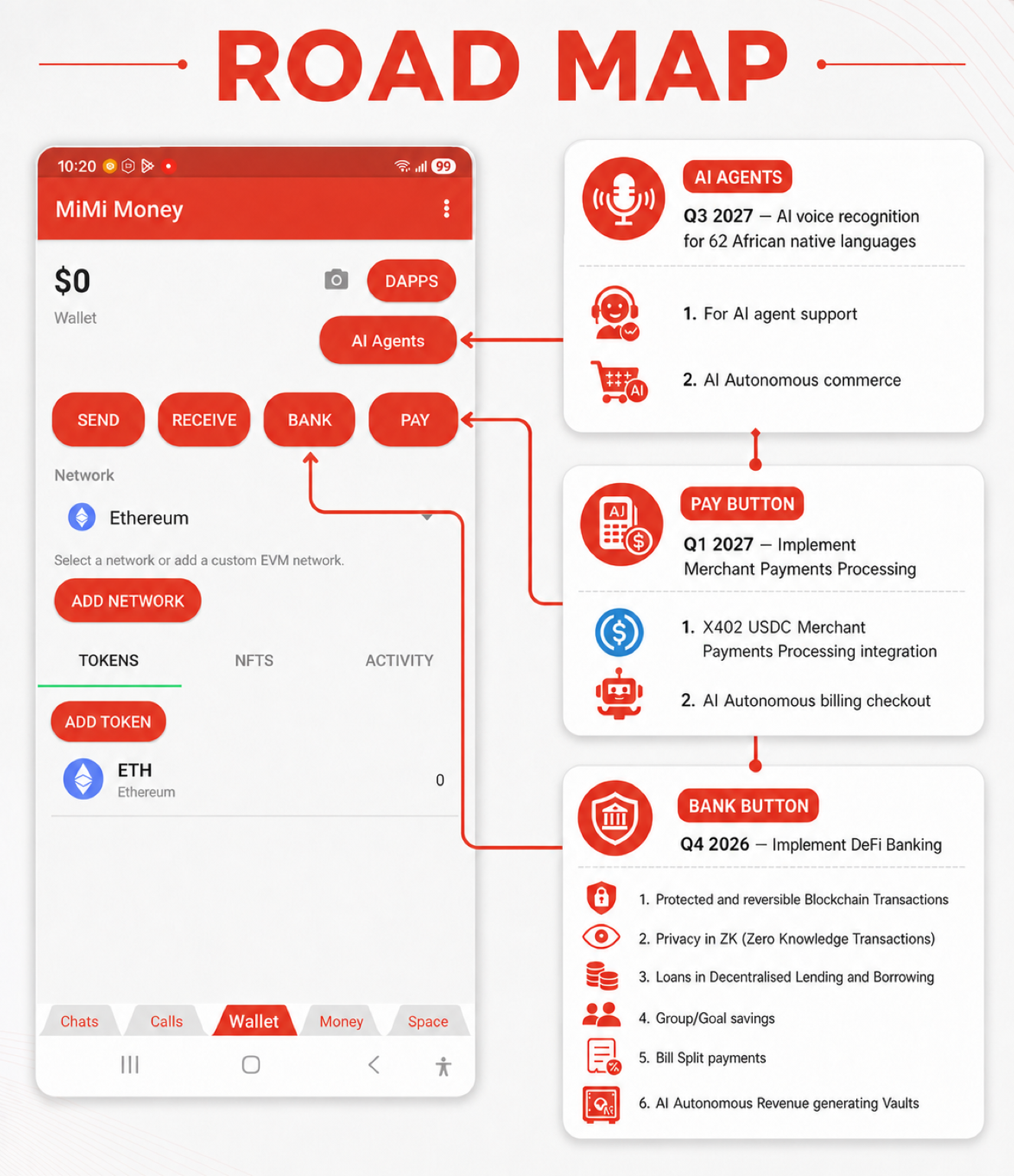
Following the roadmap for 2026 and 2027.


Log in or sign up for Devpost to join the conversation.