-
-
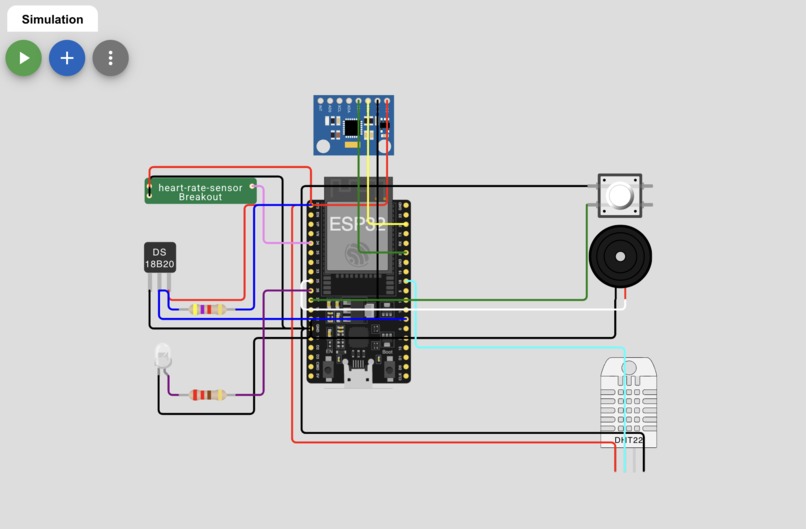
Mimamori: Electronic Concept
-

E.g. Low Risk Status
-

E.g. Moderate Risk Status
-

E.g. High Risk Status
-
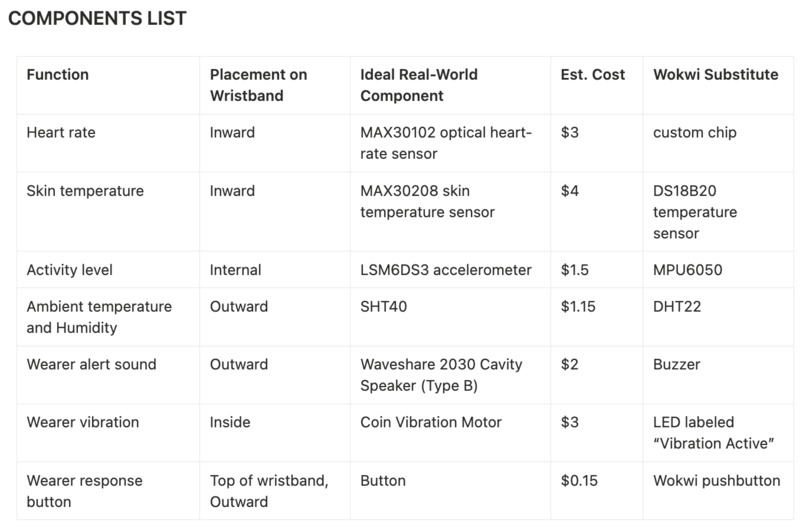
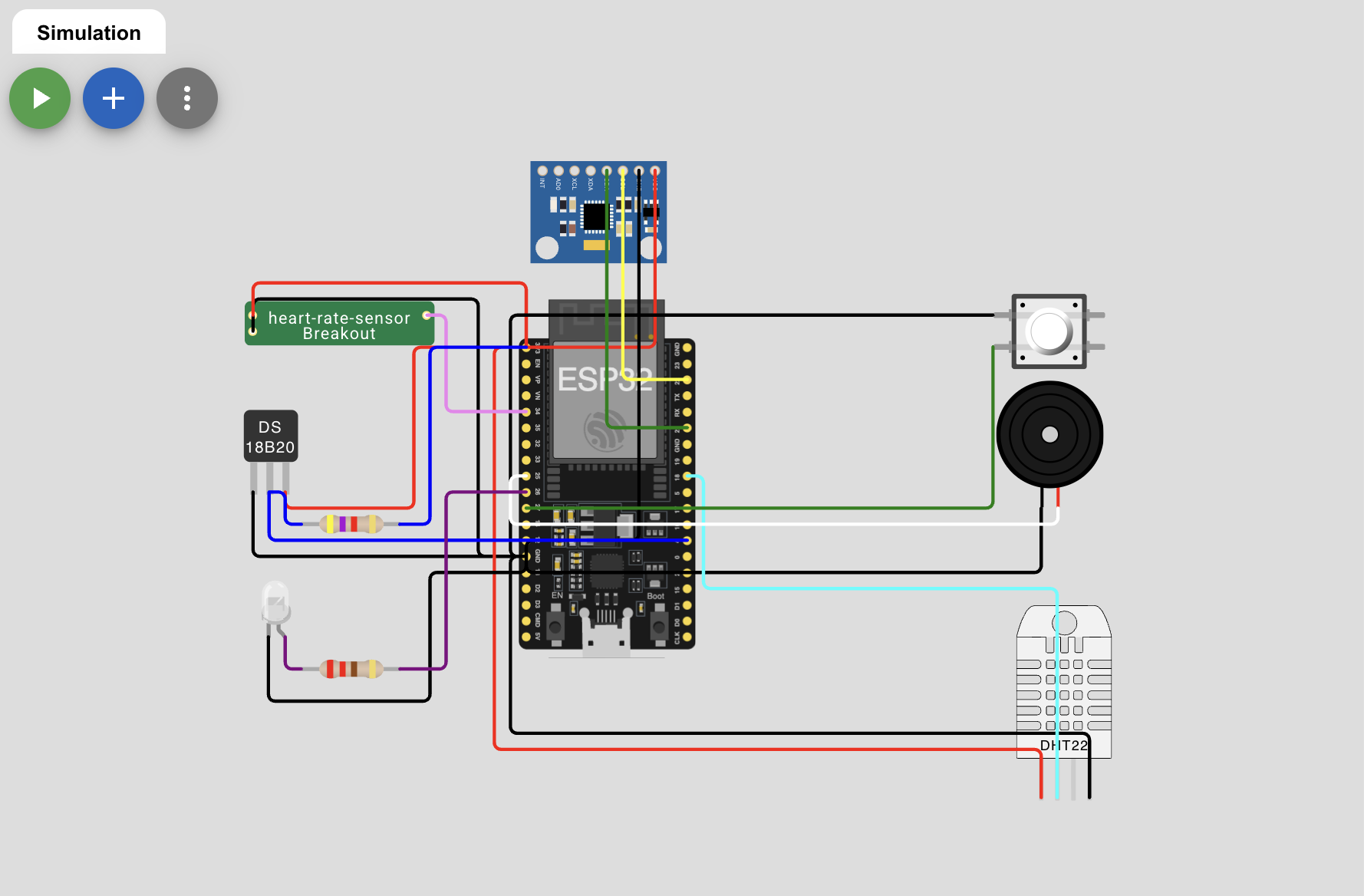
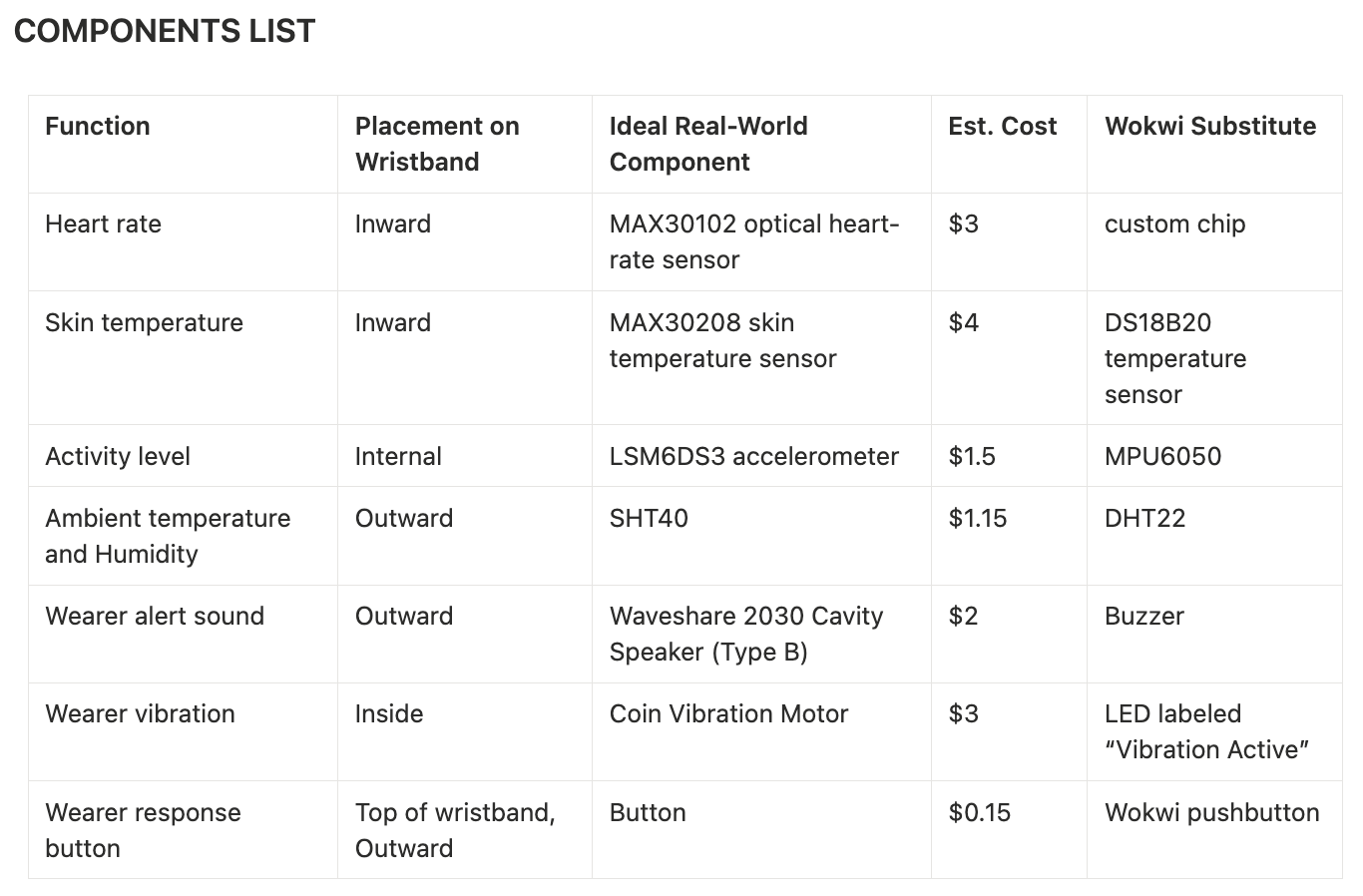
Components List (Ideal Real World Component W/ Wokwi Equivalent)
-
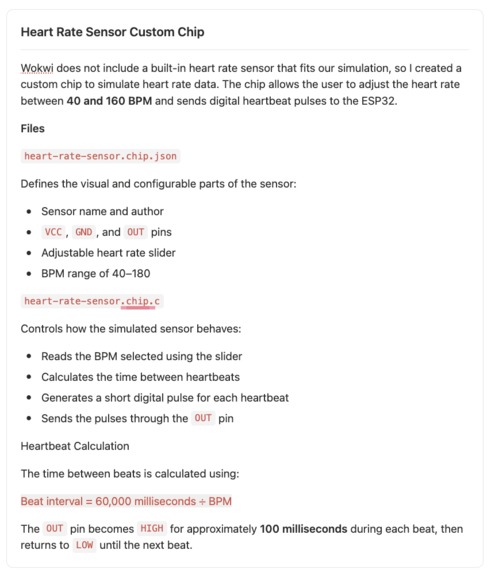
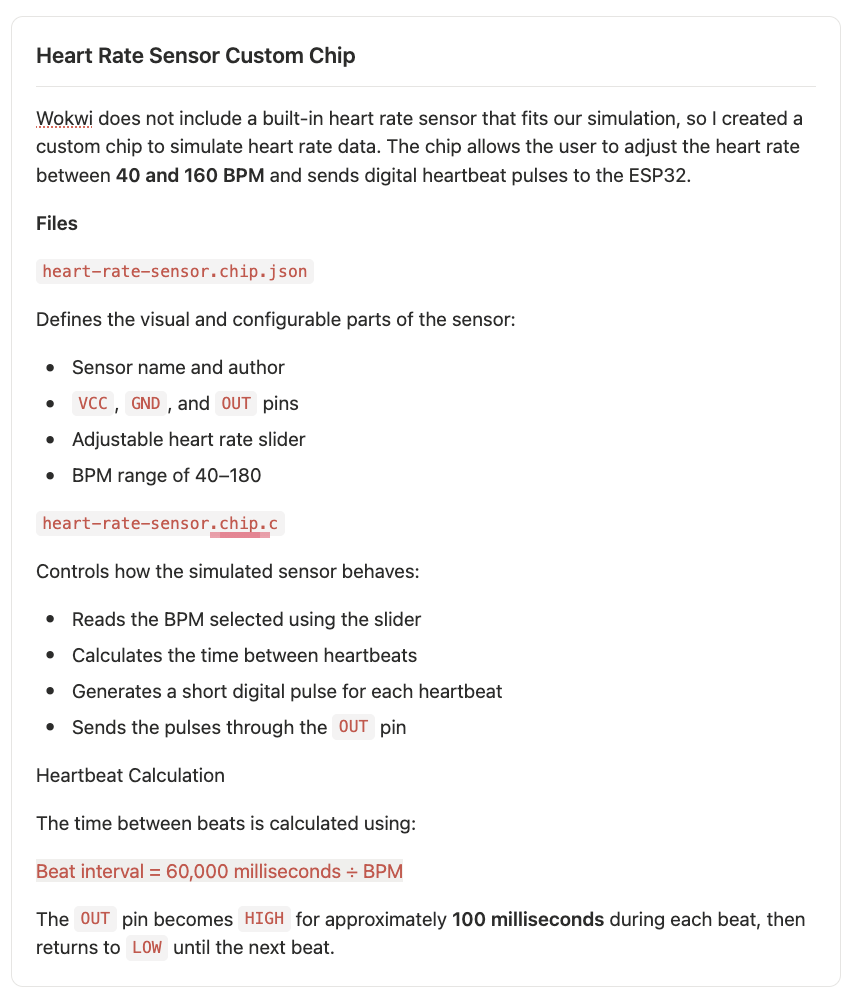
Heart Rate Sensor Custom Chip Information
-
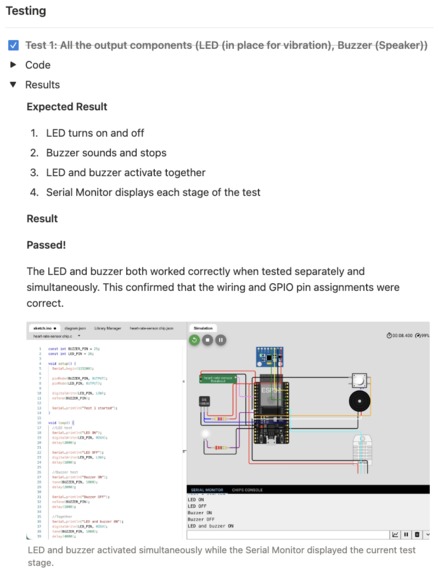
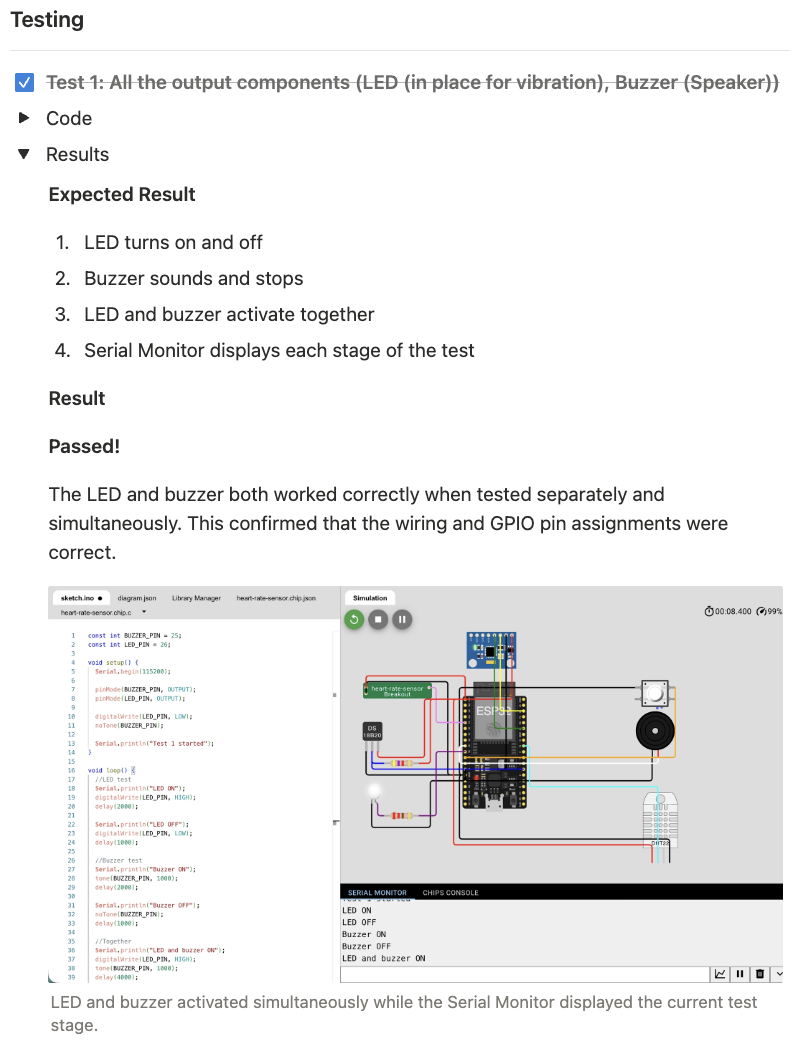
Test 1: Output Components
-
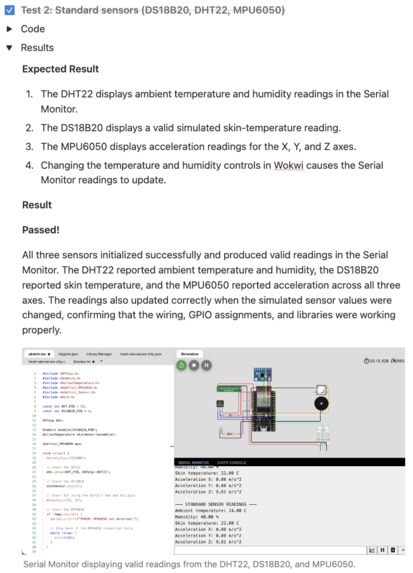
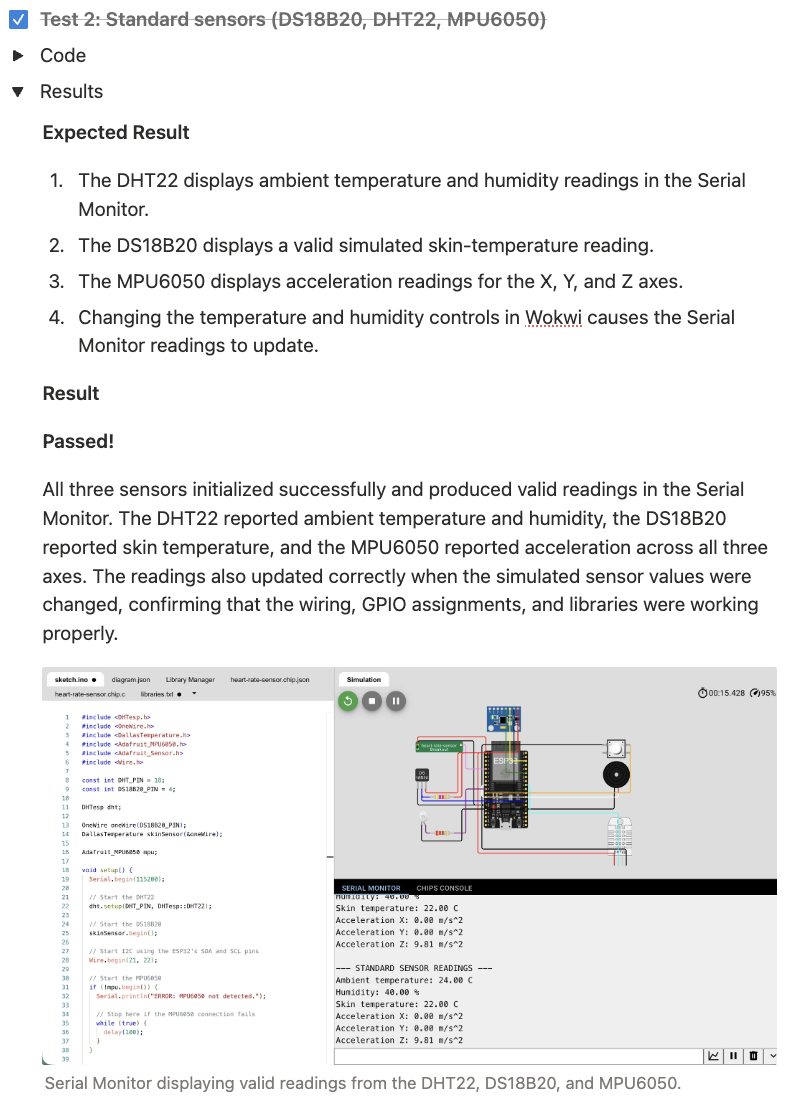
Test 2: Standard Sensors
-
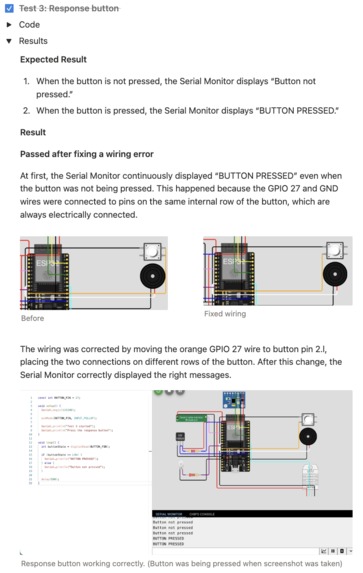
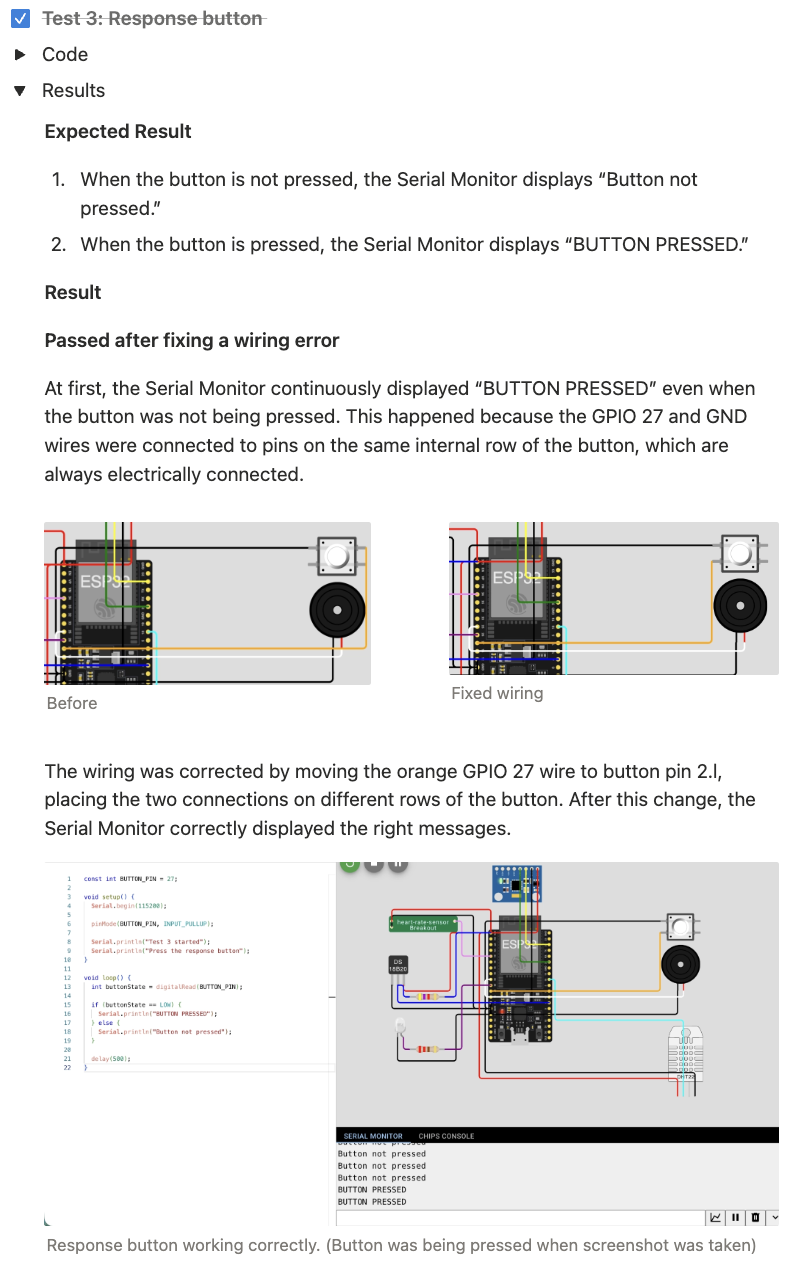
Test 3: Response Button
-
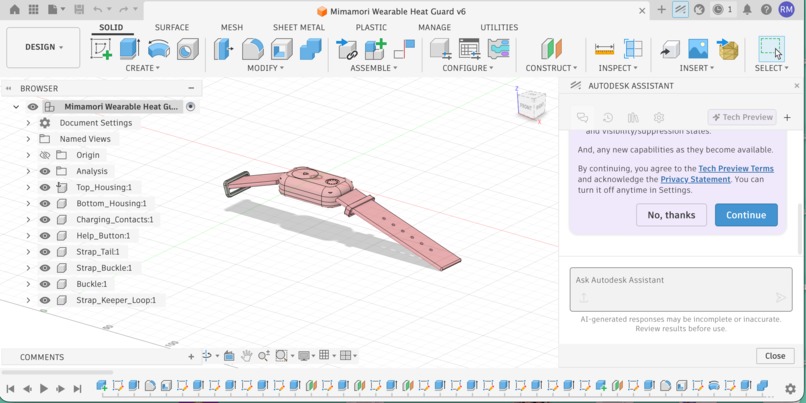
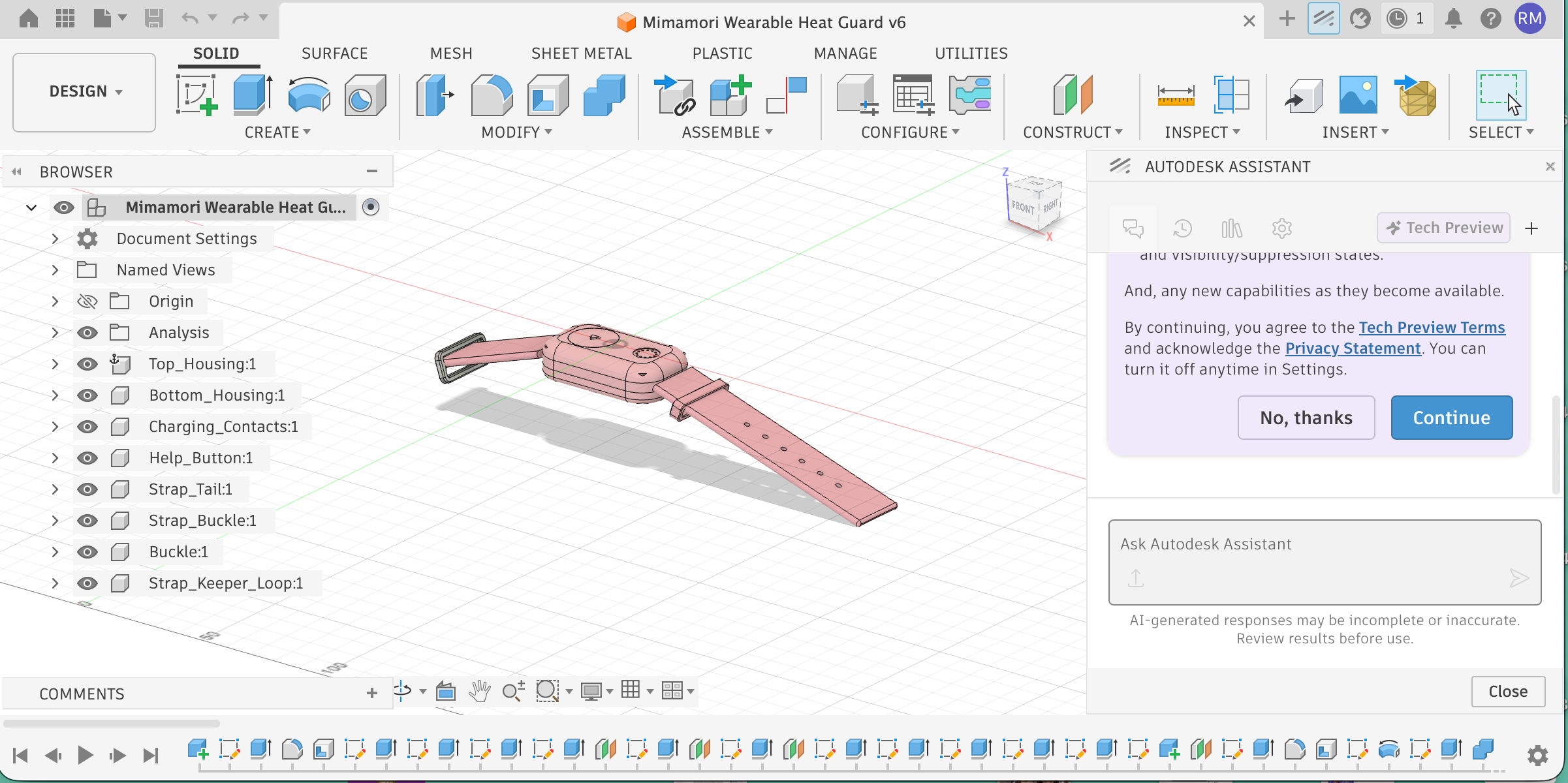
Wristband in Fusion 360
-
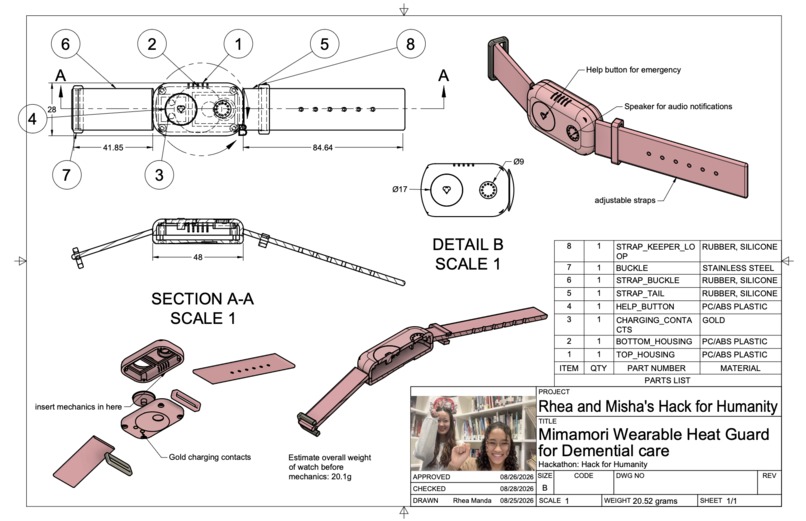
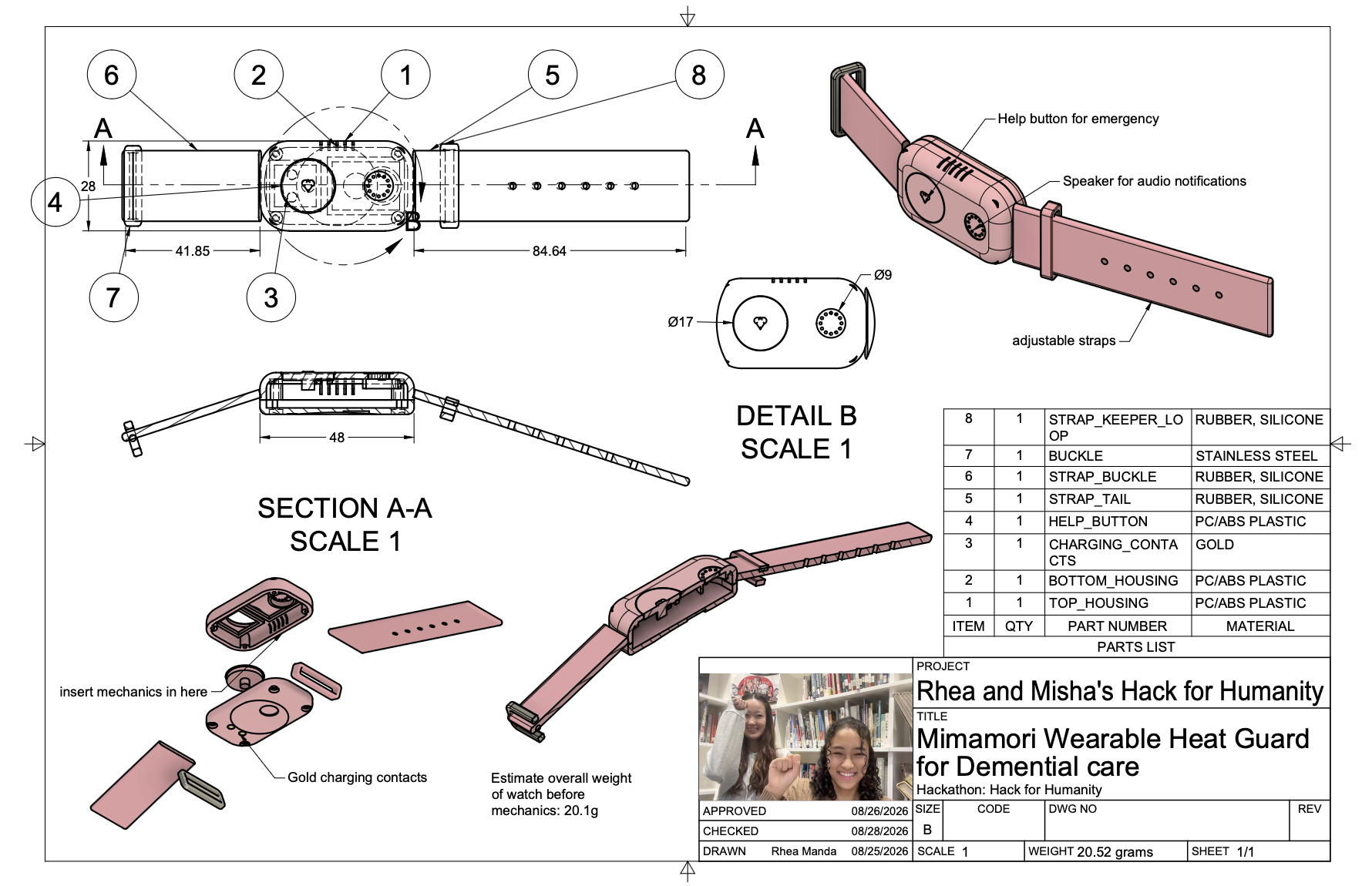
Expanded view



Inspiration
Japan’s rapidly aging population makes dementia an increasingly important local health challenge. Around 4–4.5 million people in Japan are currently living with dementia, with that number projected to reach approximately 5.8 million by 2040. At the same time, Japan is experiencing increasingly intense periods of extreme heat.
While researching the intersection of these two issues, we learned that people with dementia can be especially vulnerable to heat because cognitive decline may make it more difficult to recognize symptoms, remember to hydrate, adjust air conditioning, or respond appropriately when their body begins overheating. Research from Japan has also found an association between prolonged exposure to hot weather and increased dementia risk.
This inspired Mimamori, a screenless wearable designed to continuously watch for signs of heat stress and intervene before the wearer has to recognize the danger themselves.
What it does
Mimamori is a wearable heat-guard wristband designed for older adults with dementia or cognitive decline.
The wristband combines information about both the wearer and their environment, including:
- heart rate
- skin temperature
- movement and activity
- surrounding temperature
- humidity
These readings are processed by an ESP32 microcontroller, which calculates a heat-risk level.
The overall system follows this flow:
Sensors → ESP32 → heat-risk algorithm → risk level → appropriate alert → wearer response → caregiver escalation if necessary
Instead of relying on a screen, Mimamori communicates directly with the wearer through simple outputs such as vibration and voice alerts.
For example, if the system detects increasing heat risk, the wearer could receive a vibration followed by a simple instruction such as moving somewhere cooler or drinking water. A response button allows the wearer to acknowledge the alert.
If the risk becomes high (or if the wearer does not respond for a prolonged period), the system is designed to escalate the warning to a caregiver or family member.
This creates two layers of protection: helping the wearer respond independently when possible while still providing a safety net when additional support may be needed.
How we built it
We began by researching both dementia and heat-related risk in Japan before designing the system around one key question: What information could a small wearable realistically monitor without requiring the user to operate it?
We divided our sensor system into three categories.
- Body-facing sensors monitor physiological signals such as heart rate and skin temperature.
- Environment-facing sensors monitor surrounding temperature and humidity.
- An internal accelerometer provides information about movement and activity.
All of these inputs feed into an ESP32, which acts as the wristband’s central processor. Instead of treating one measurement as automatically dangerous, our concept combines several measurements to determine whether conditions indicate low, moderate, or high heat risk.
We also developed and tested the individual components of the system before combining them into the larger concept. This allowed us to verify sensor readings, alerts, user-response inputs, and the communication between different parts of the prototype separately before thinking about the full wearable.
For the physical design, we wanted Mimamori to resemble an ordinary lightweight fitness tracker rather than medical equipment. Our proposed wristband uses a medical-grade silicone strap with a lightweight PC+ABS housing, with a target weight below 35 grams.
We also designed a magnetic charging system using gold-plated pogo-pin contacts and alignment magnets. This avoids requiring an older user to insert a small charging cable and could also help support a more water-resistant enclosure.
Challenges we ran into
One of our biggest challenges was deciding how to determine heat risk responsibly. Heat stress cannot be identified perfectly from one sensor. A high heart rate could come from exercise, a warm skin temperature does not necessarily mean dangerous overheating, and environmental temperature alone does not tell us how someone’s body is responding. This meant Mimamori needed to consider several signals together rather than relying on a single threshold. Another challenge was designing specifically for people with cognitive decline. Many wearable devices assume that the user can read a screen, understand a notification, navigate an app, and decide what action to take. For our target user, adding more information could actually make the product harder to use.
That led us toward a screenless design with simple vibration, voice prompts, and a single-response interaction. We also had to think beyond the electronics. A wearable intended for older adults needs to be comfortable, lightweight, sweat-resistant, durable, easy to charge, and simple enough to wear every day.
Accomplishments that we're proud of
We’re especially proud that Mimamori was our first project where we learned electronics in much greater depth and actually worked through how individual hardware components function together as one system. We learned how to wire and test sensors, read data from heart-rate, temperature, humidity, and motion components, control outputs such as vibration motors and buzzers, and use a response button as part of the device’s logic. Instead of only designing what the wristband could do, we tested each component separately, debugged wiring and code when things did not work, and gradually built an understanding of how sensors, a microcontroller, and outputs communicate. Bringing those technical pieces together with our caregiver-alert system, wearable design, and charging concept made Mimamori feel like our first real step from a product idea into hands-on hardware engineering.
What we learned
Through Mimamori, we learned that engineering for healthcare means taking into consideration which information is actually useful and how the system should respond to it.
We learned how physiological and environmental sensors can complement each other, how microcontrollers can combine multiple streams of data, and how hardware inputs and outputs can form a complete feedback system.
We also learned the importance of designing around the user rather than around the technology. For someone experiencing cognitive decline, the “smartest” interface may actually be the one that is the simplest. (Occam's razor in this case)
Most importantly, this project changed how we thought about accessibility. An effective assistive device should not simply provide information, but it should reduce the number of decisions a vulnerable user has to make.
What's next for Mimamori
Our next step is to combine the individually tested components into one integrated wristband prototype and connect the sensor data to a single heat-risk algorithm running on the ESP32. We would then test how heart rate, skin temperature, ambient temperature, humidity, and activity change together under different heat conditions, refine the thresholds that trigger vibration, voice, and caregiver alerts, and evaluate practical details such as battery life, charging reliability, comfort, and enclosure durability. Longer term, we would want feedback from caregivers and healthcare professionals to make sure both the risk logic and the user experience are appropriate for people with dementia.


![rhea :]](https://lh3.googleusercontent.com/a/ACg8ocLo1F2q2CHu2iKVo3VWYhJ4bE8u7XZUR6hj7QG8ztrJcl_RQJc=s96-c?type=square "rhea :]")
![rhea :]](https://lh3.googleusercontent.com/a/ACg8ocLo1F2q2CHu2iKVo3VWYhJ4bE8u7XZUR6hj7QG8ztrJcl_RQJc=s96-c?height=180&width=180 "rhea :]")
Log in or sign up for Devpost to join the conversation.