-
-
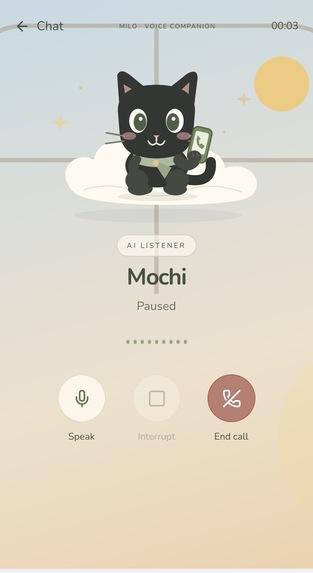
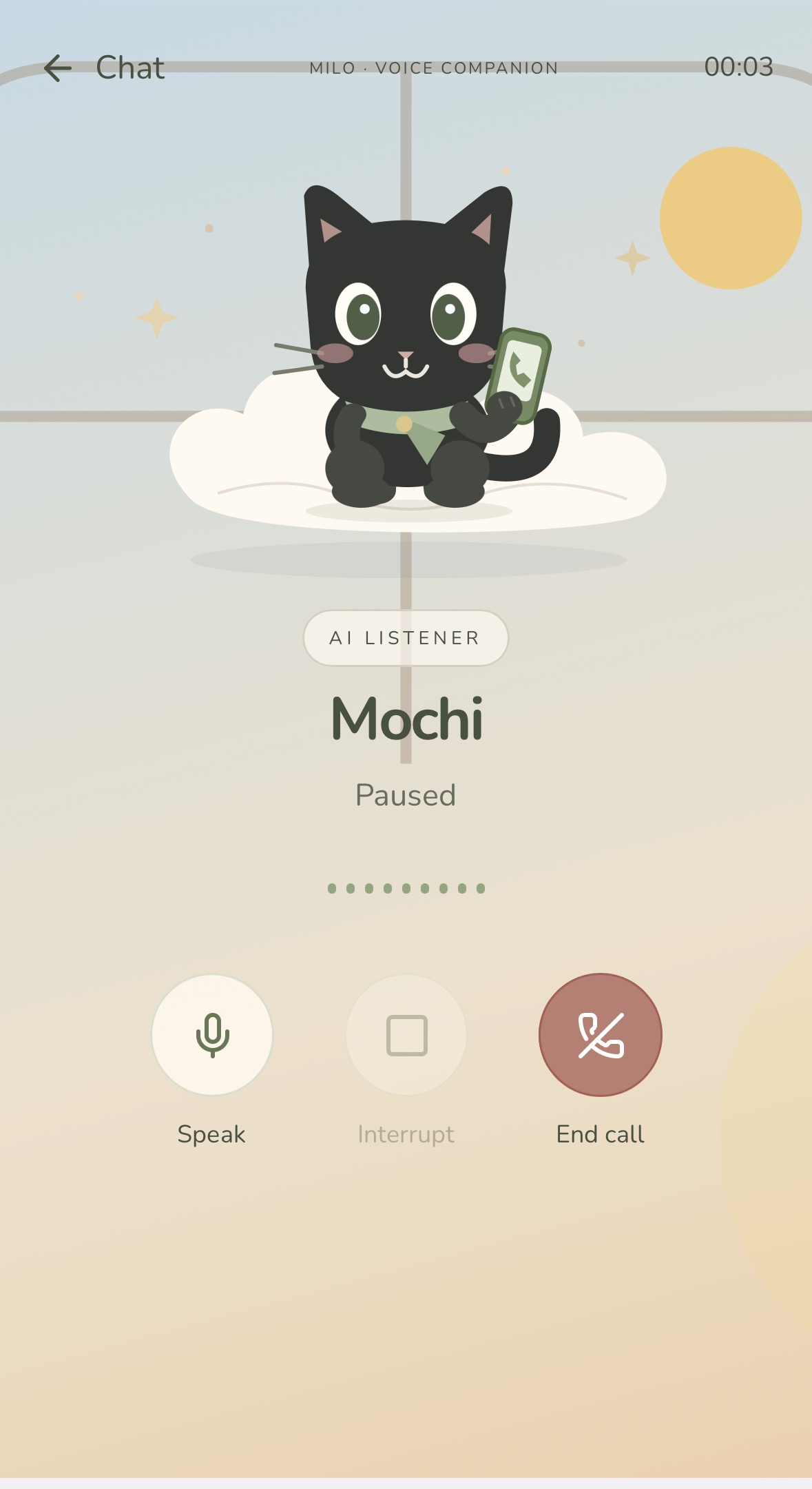
have a phone call with digital companion
-
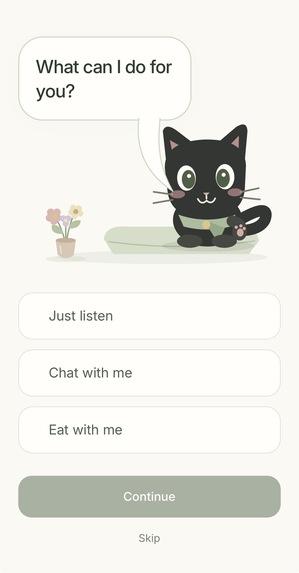
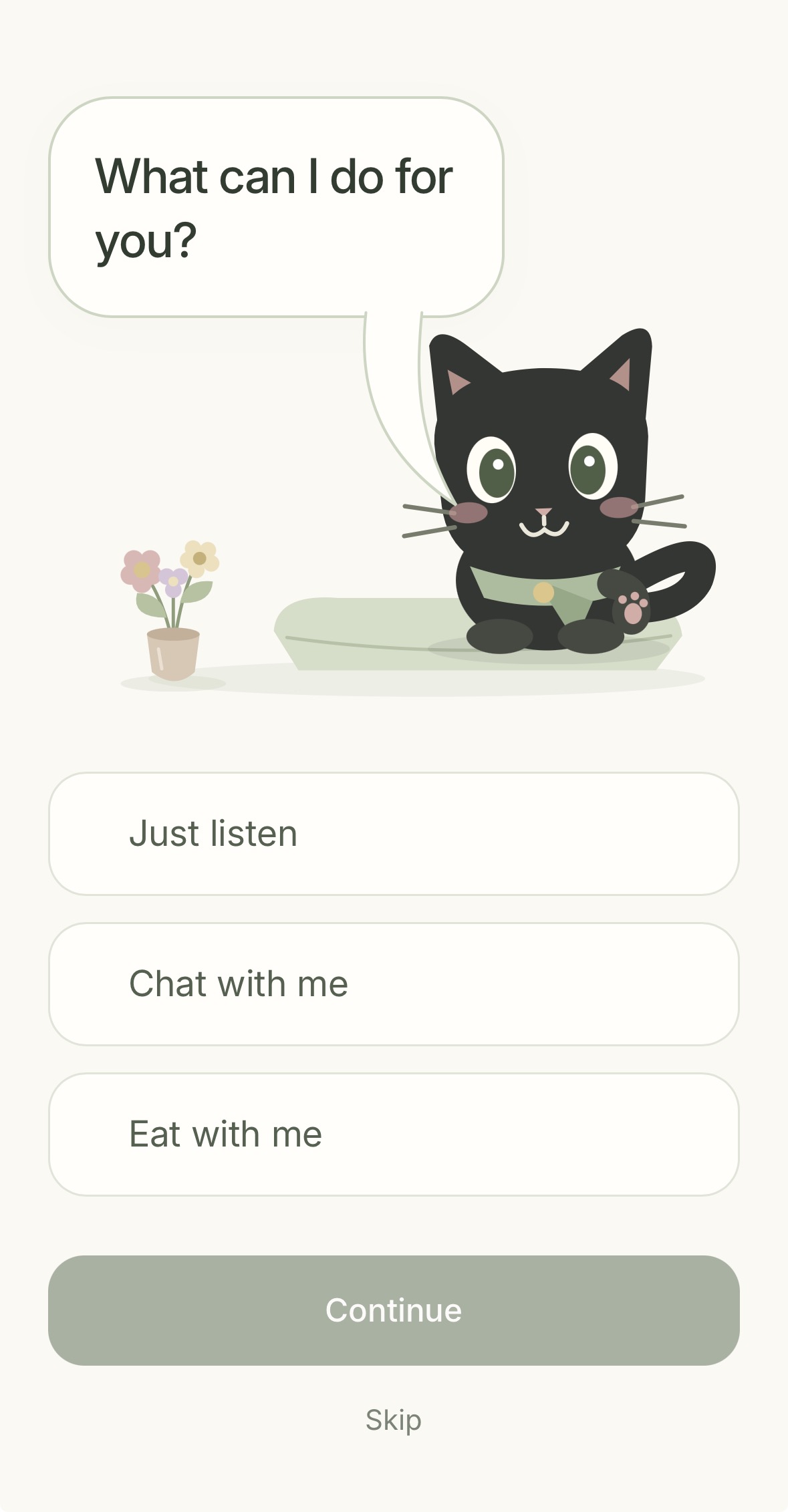
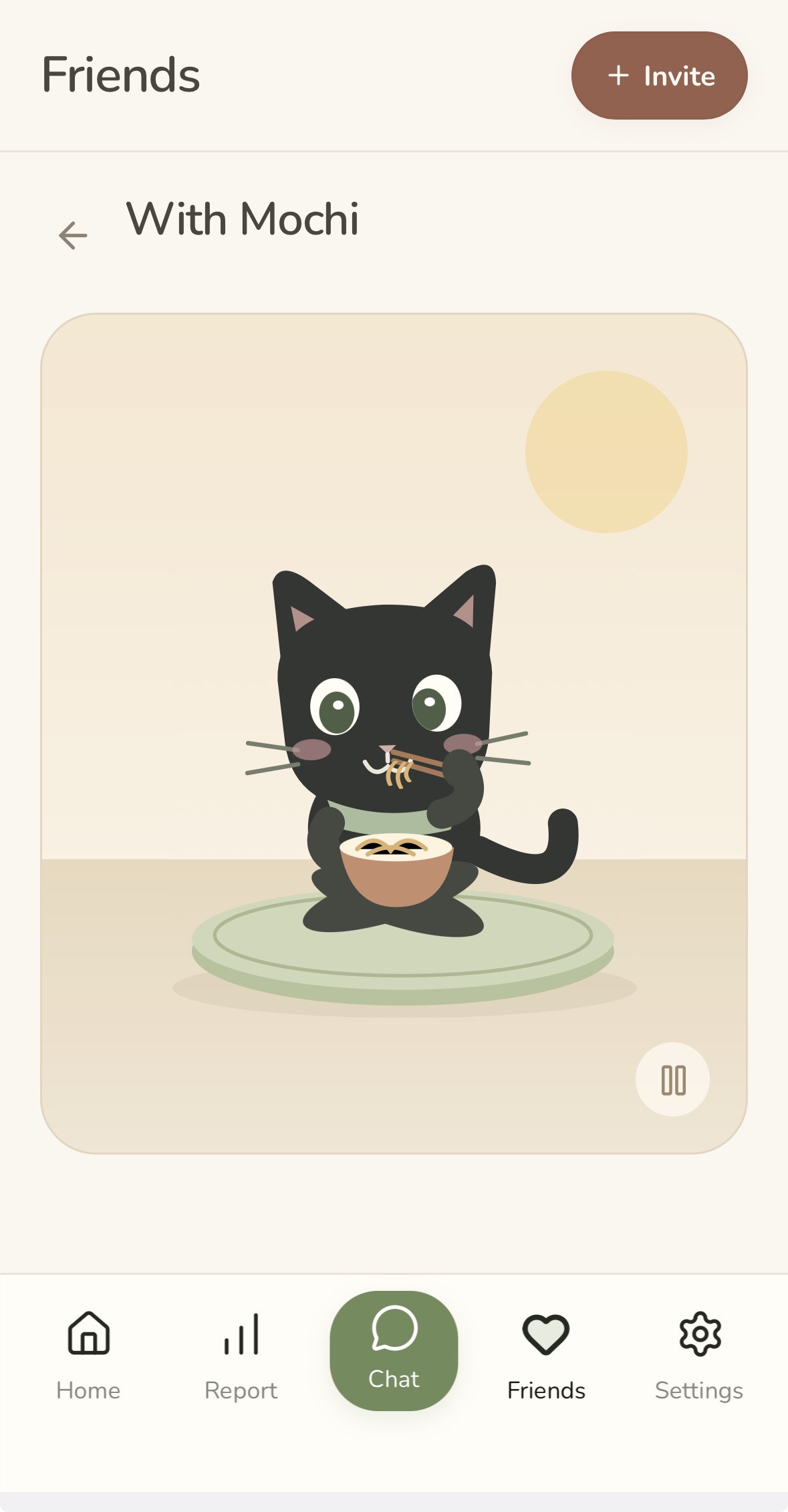
Choose “Chat with Me” to start a video call, or “Eat with Me” to share a meal with your digital companion.
-
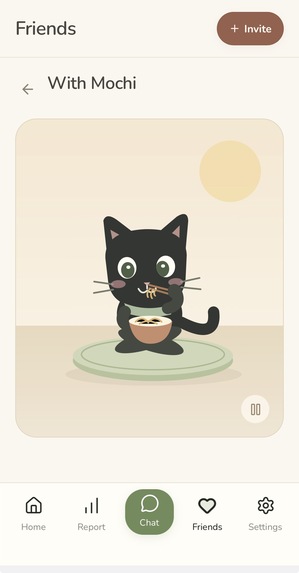
eat with digital companion
-
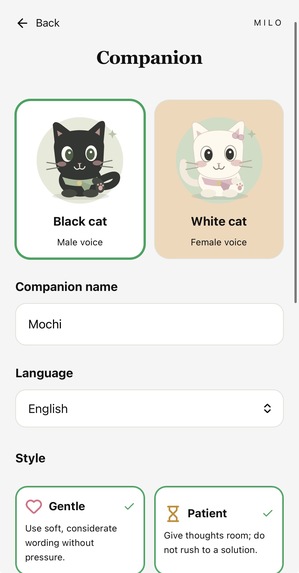
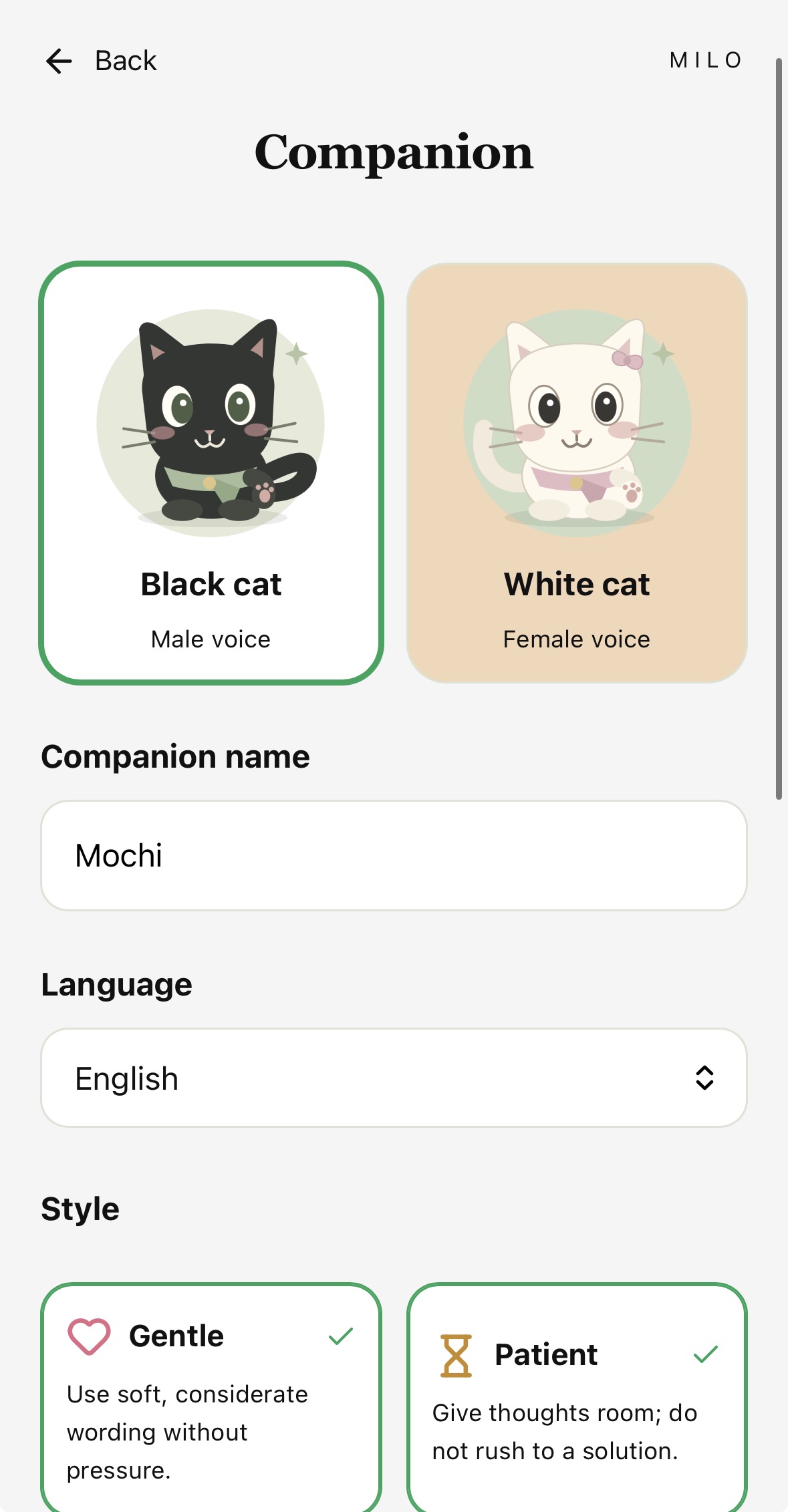
choose and personalize your companion
-
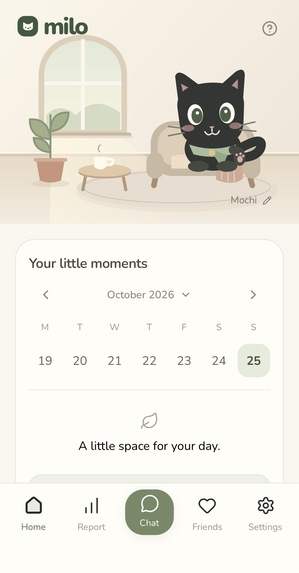
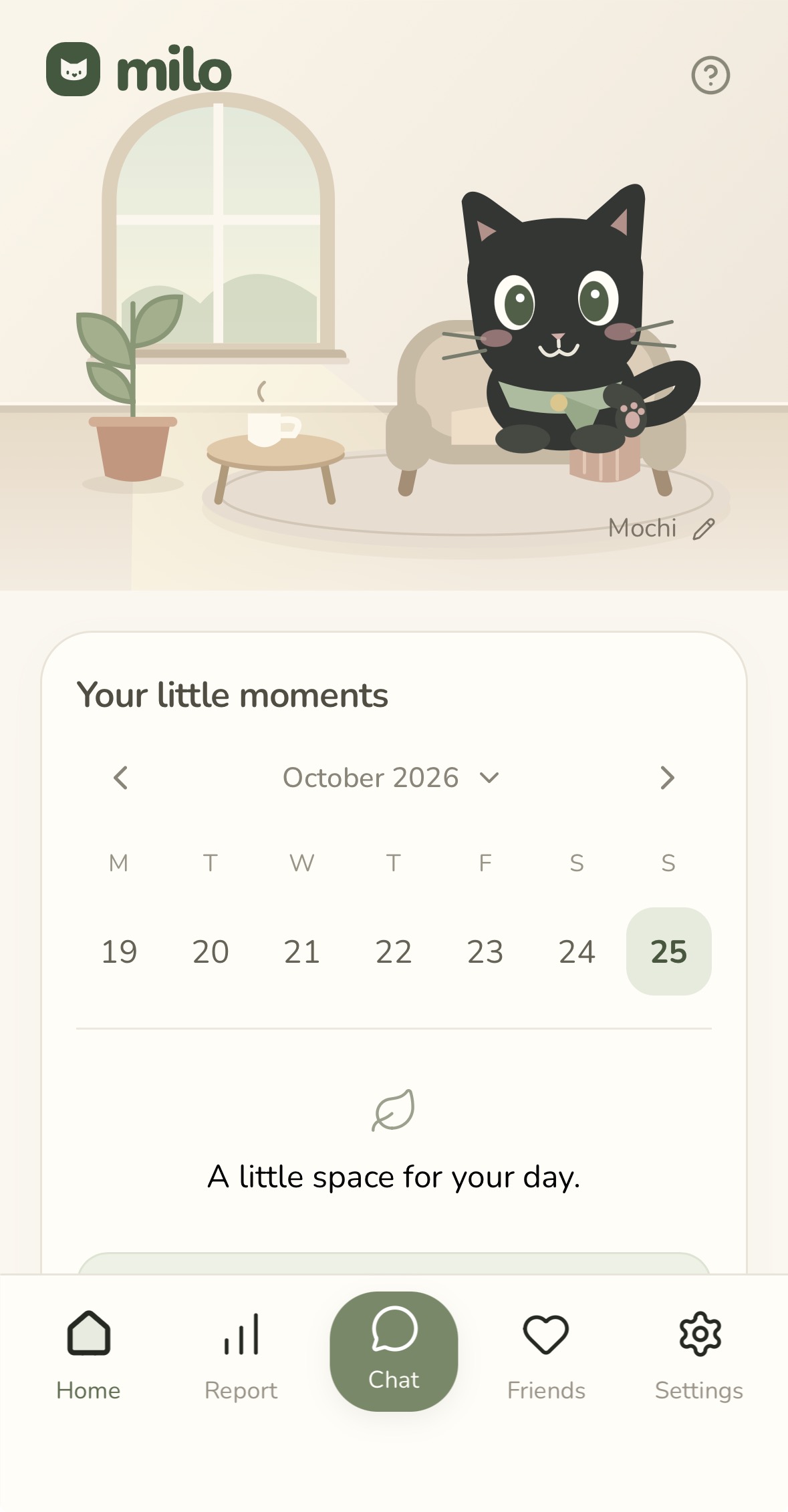
home page
-
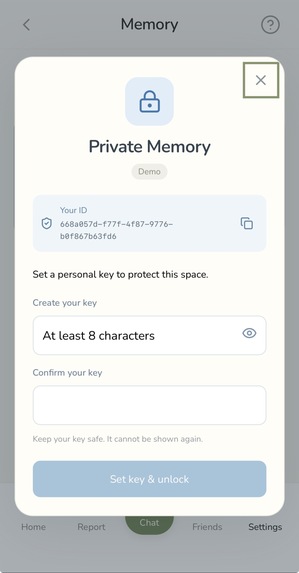
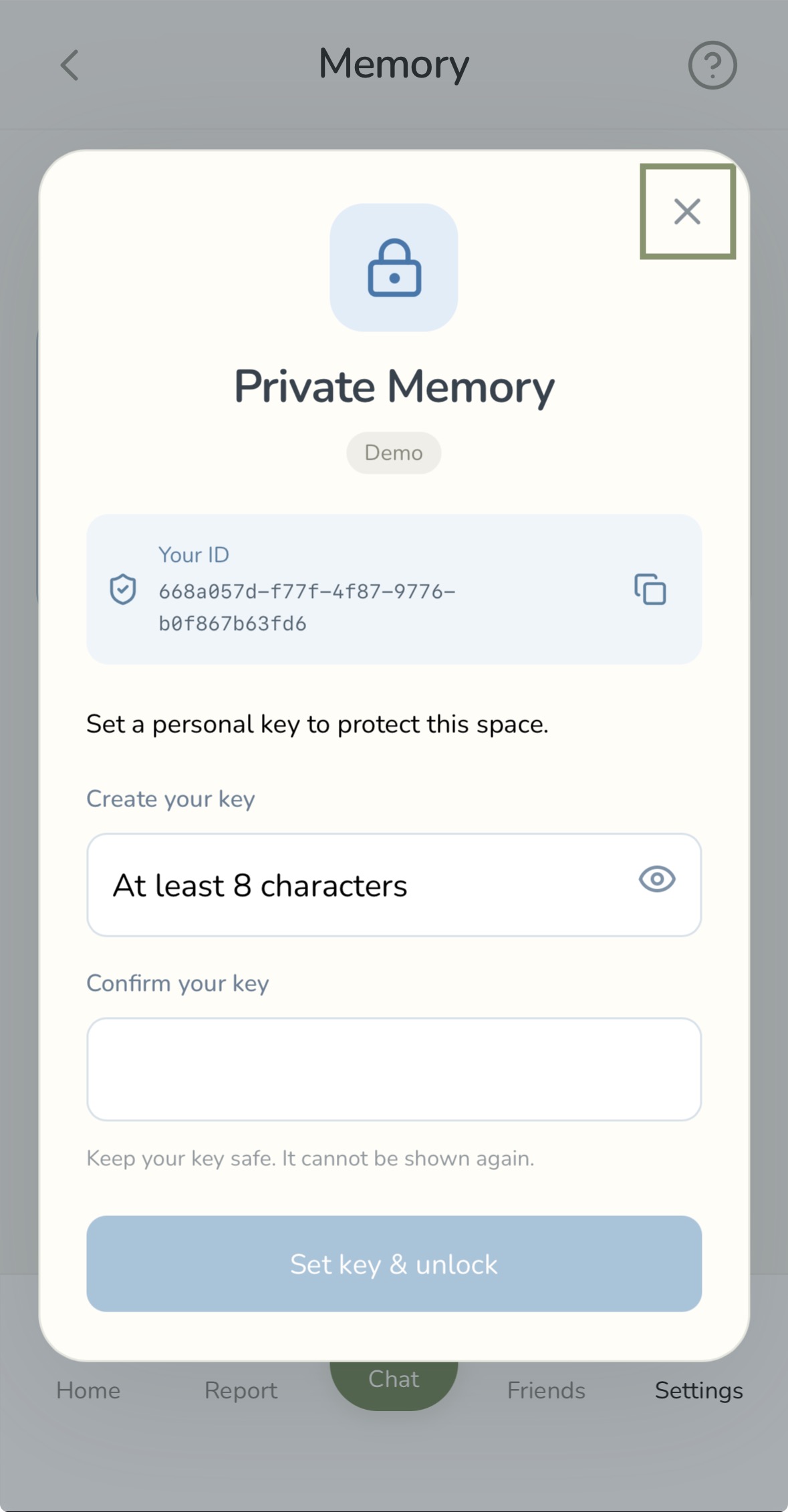
generate your secret key to access your private memories.
-
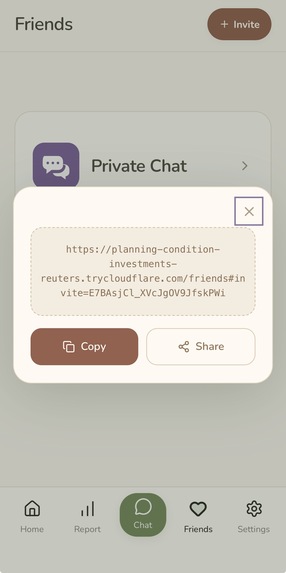
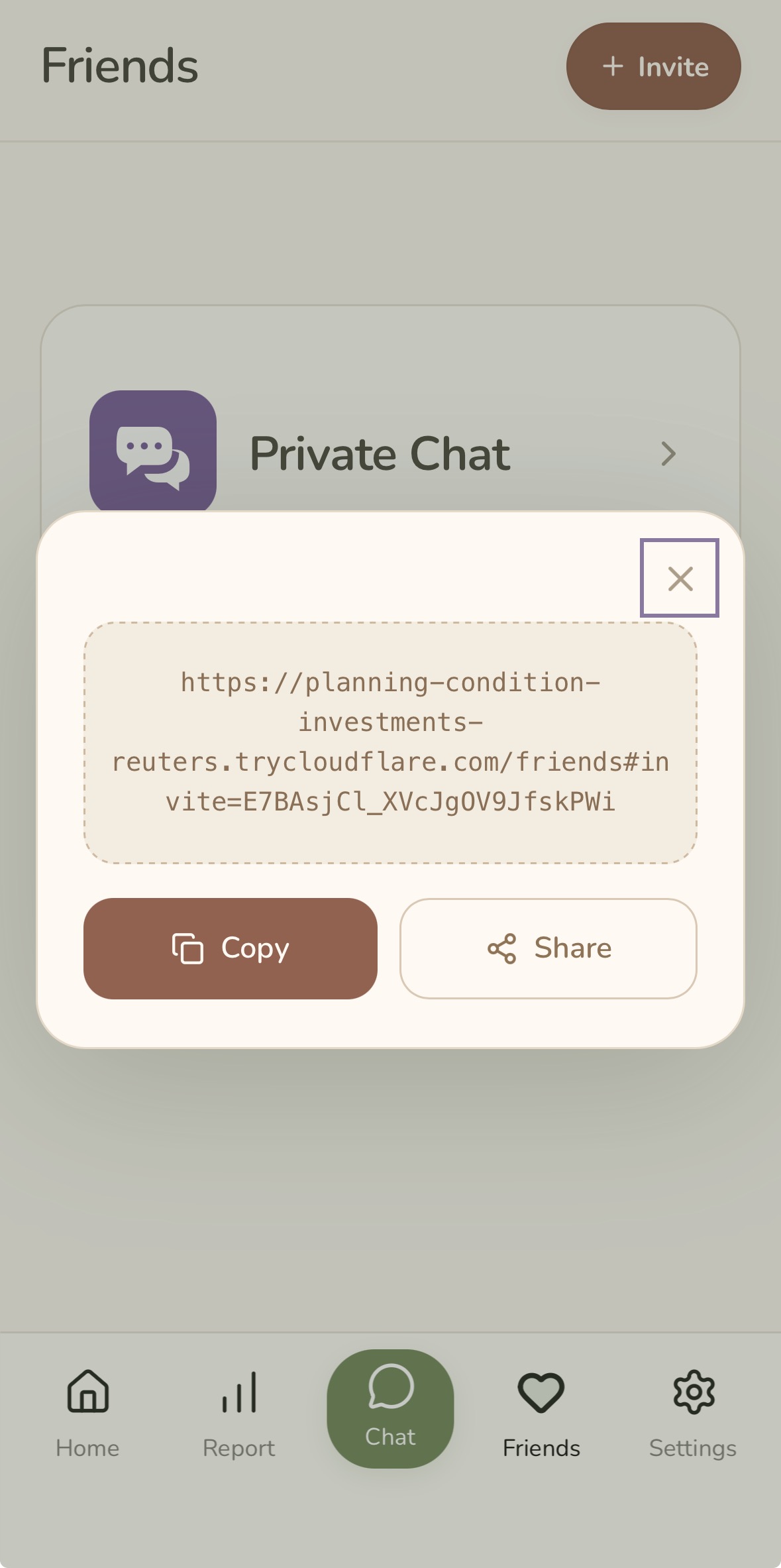
use private link to invite friends to group chat
-
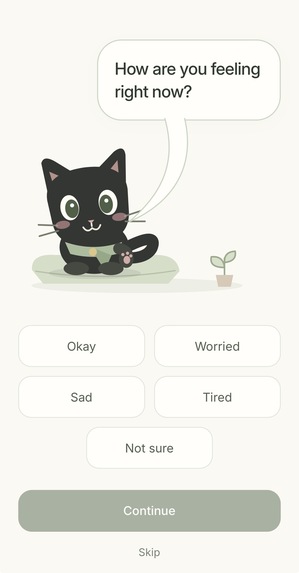
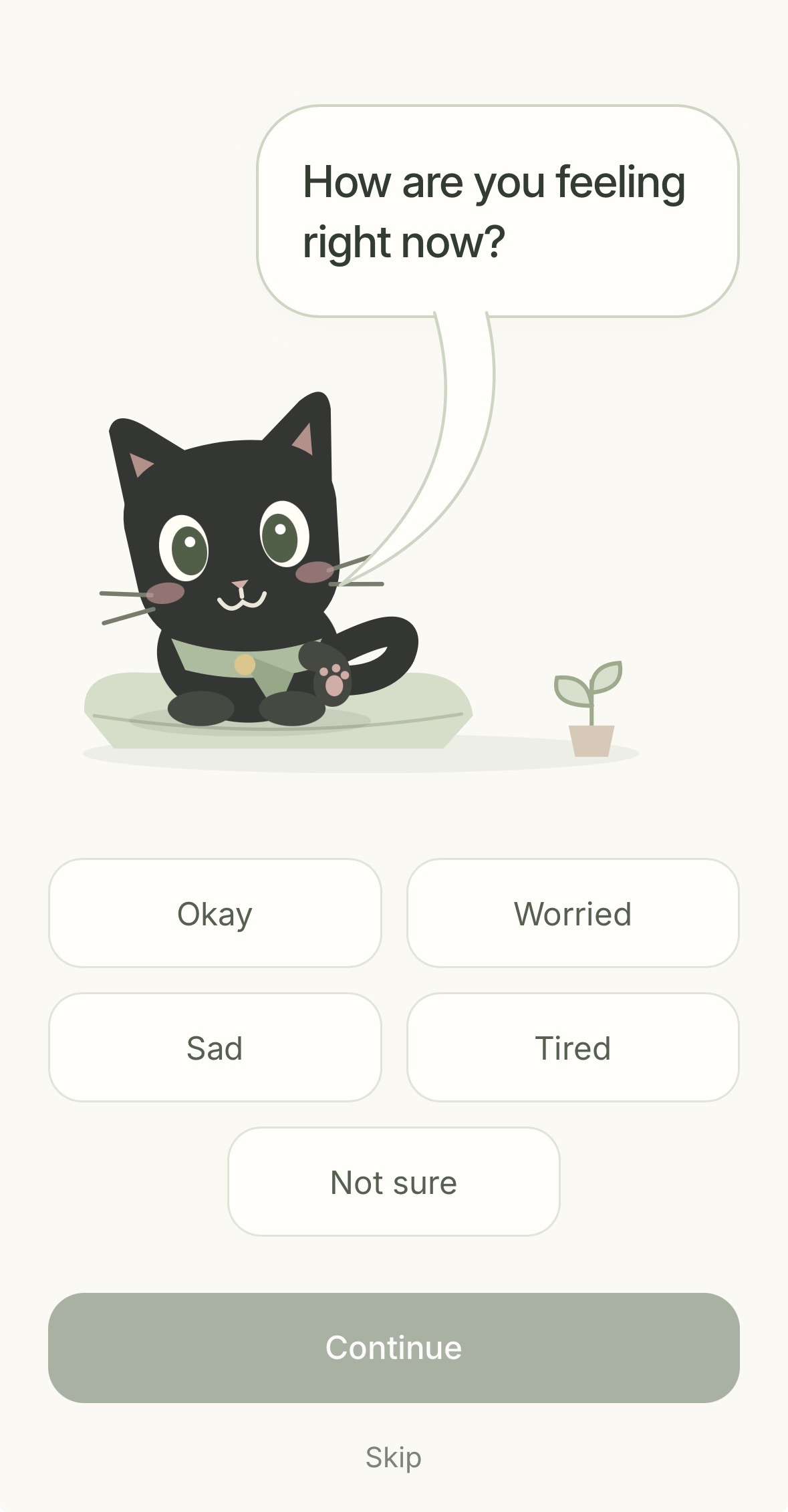
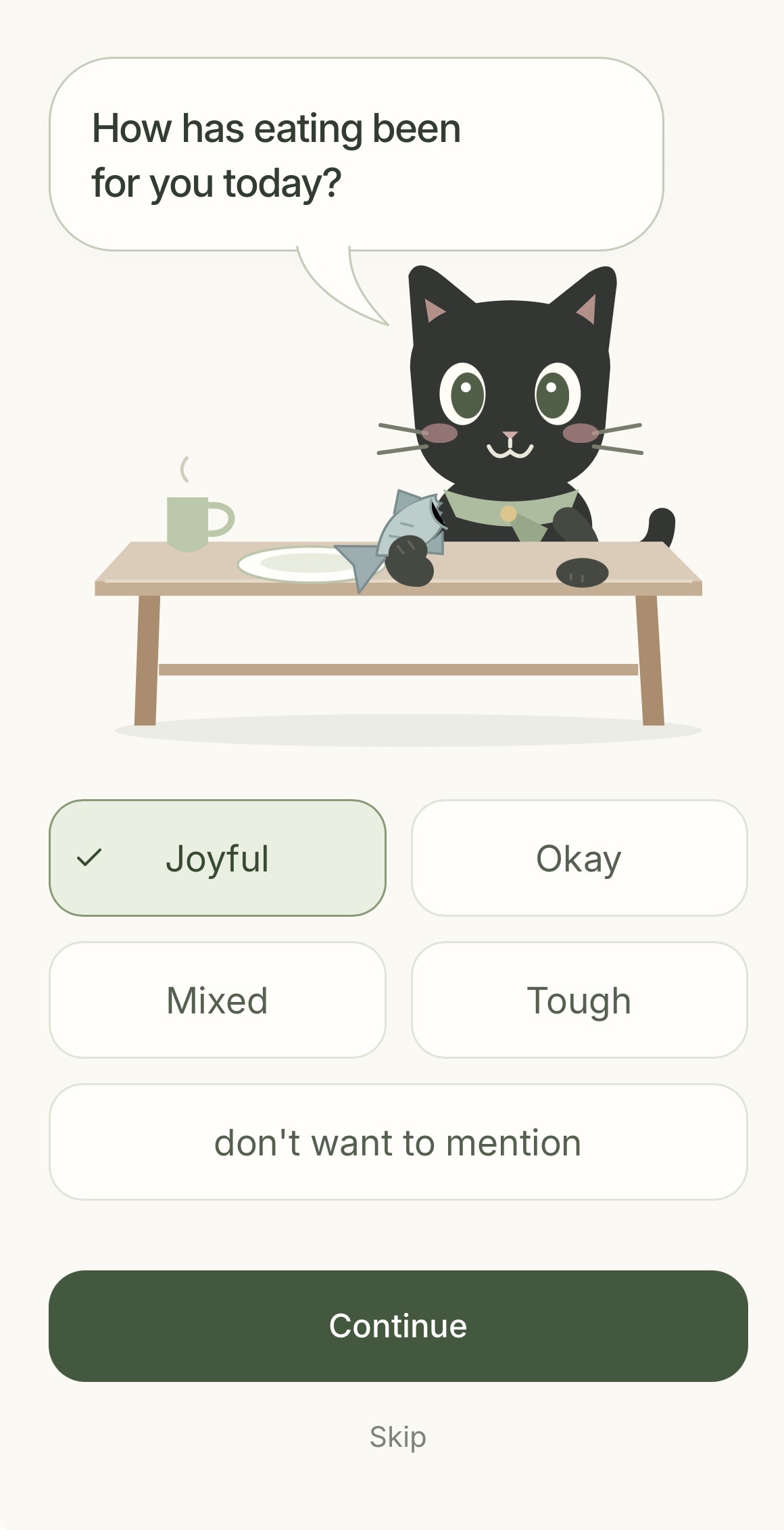
lead in question1
-
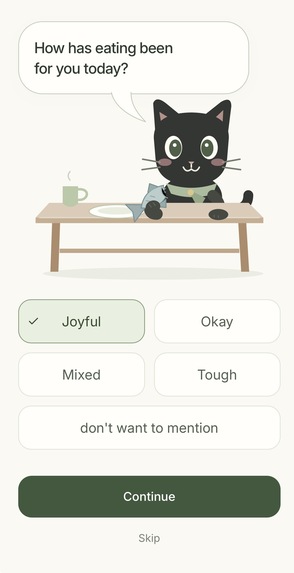
lead in question2
-
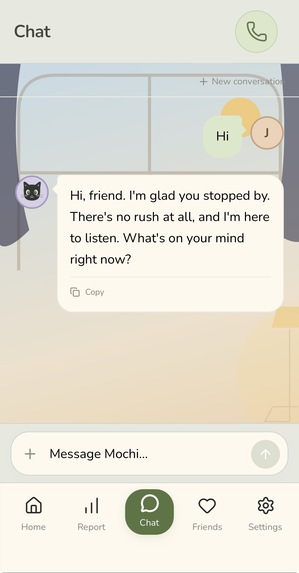
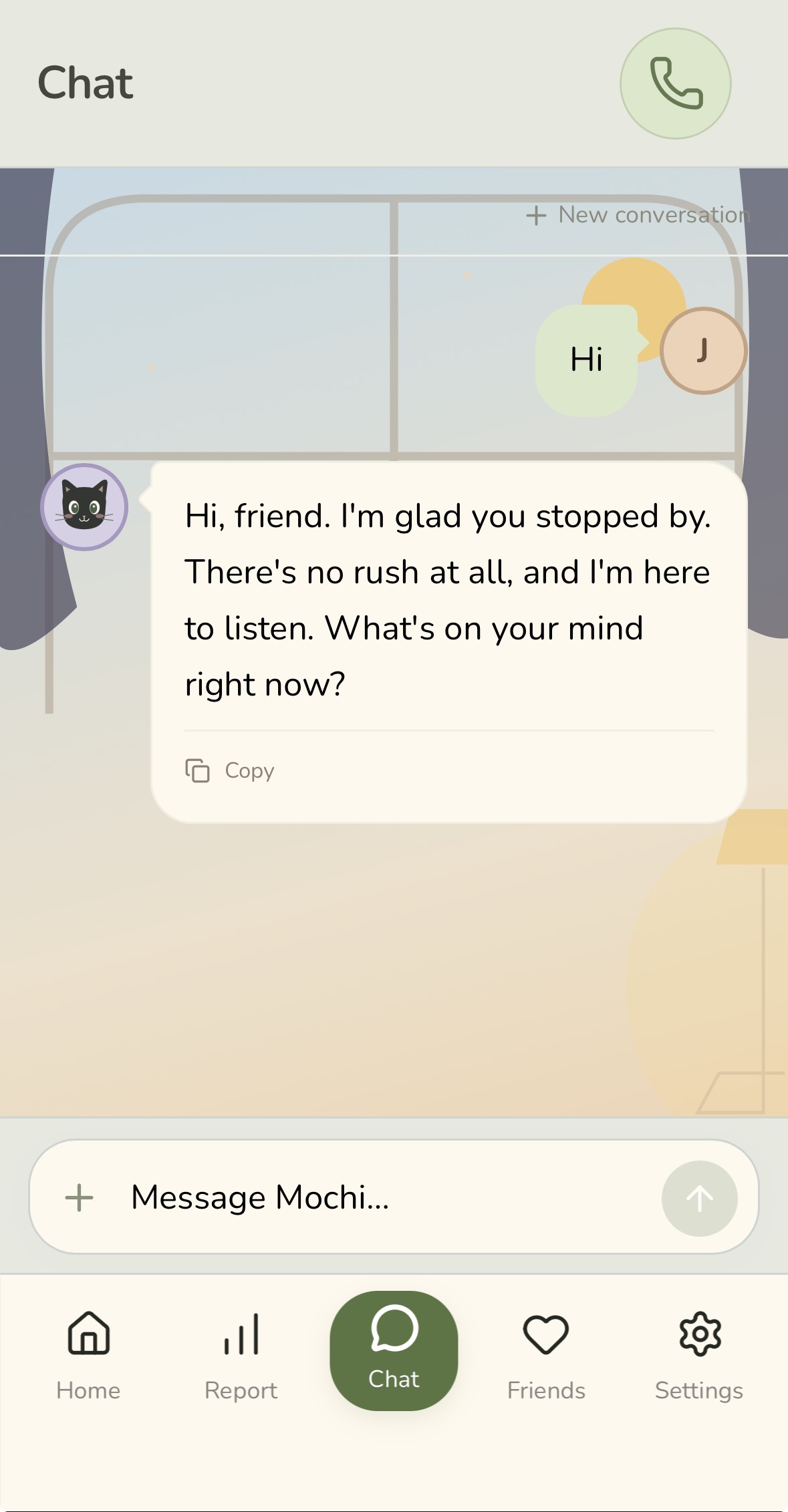
chat with digital companion
Inspiration
I had a friend who once underwent tremendous pressure and ultimately developed an eating disorder. After breaking up with her boyfriend, she started to eat lots of high-calorie food and entered a vicious cycle of eating and throwing it up. Seeing how much she was suffering prompted me to create something that could help her through this - Something she could turn to when I couldn’t be there. Something that would listen and encourage her to talk about her feelings. Something that could help her work through them little by little.
What it does
The app is designed to help people with eating disorders log their meals, track their habits, and also to provide emotional support.
- Helps users record meals and feelings.
- Shows patterns in their habits over time.
- Offers emotional support through chat and video calls
- Remembers preferences with permission for more personal conversations.
How we built it
I integrated the Claude API to power Milo’s multimodal conversations and personalized support plans. Claude interprets users’ messages and meal photos, then combines relevant private memories with a curated knowledge base to generate context-aware responses. I used generative AI to adapt support to each person’s preferences and experiences. I also integrated Cartesia’s text-to-speech API to turn responses into natural spoken replies, allowing users to talk with Milo when typing feels difficult.
Challenges we ran into
Along the way, my teammates disappeared on me. I ended up doing the bulk of the project myself due to these differences. I was also relatively inexperienced when it came to software development, so lots of this was new to me.
Initially, Milo’s replies were slow, I experimented with a library of pre-generated responses to reduce latency. Although this made replies faster, they felt robotic and often missed the context.I found a solution. Instead of using pre-generated replies, I focused on reducing transcription delays.
Accomplishments that we're proud of
I am very proud that I made a project that can actually help people. I thought a lot about my friend and people who suffer from eating disorders like her when I was making it, and I'm very glad that the product I've produced has some kind of meaningful impact in that sense. I'm also proud of the overall composition and design of the app. It is my first time developing an app, so the fact that it is fully functional is a miracle.
What we learned
One of the most basic things I learned was how to construct a good tech stack for an app. I learned about which services I can use for databases, which ones I can use for voice APIs, and how to build a web app on my computer and connect it to my phone.
I also had a great talk with some of the mentors from the booth who gave me insight on how to design my app. I drew inspiration from my operating systems class, designing the app by thinking about memory addresses and kernel processes.
What's next for Milo
First of all,I want to send this app to my friend. There is still a lot of optimization to be done.I want to upgrade voice calls to video calls with a lifelike 3D AI companion. By analyzing eye movements and facial microexpressions, the agent could pick up on emotional cues and adapt its responses. I also want to work on in building a safe and good communityMore realistic avatars, natural-sounding voices, and faster, more empathetic responses would make conversations feel more human.
Built With
- cartesia
- claude
- faster-whisper
- mem0
- minilm
- next.js
- postgresql
- qdrant
- react
- supabase
- typescript


Log in or sign up for Devpost to join the conversation.