Inspiration
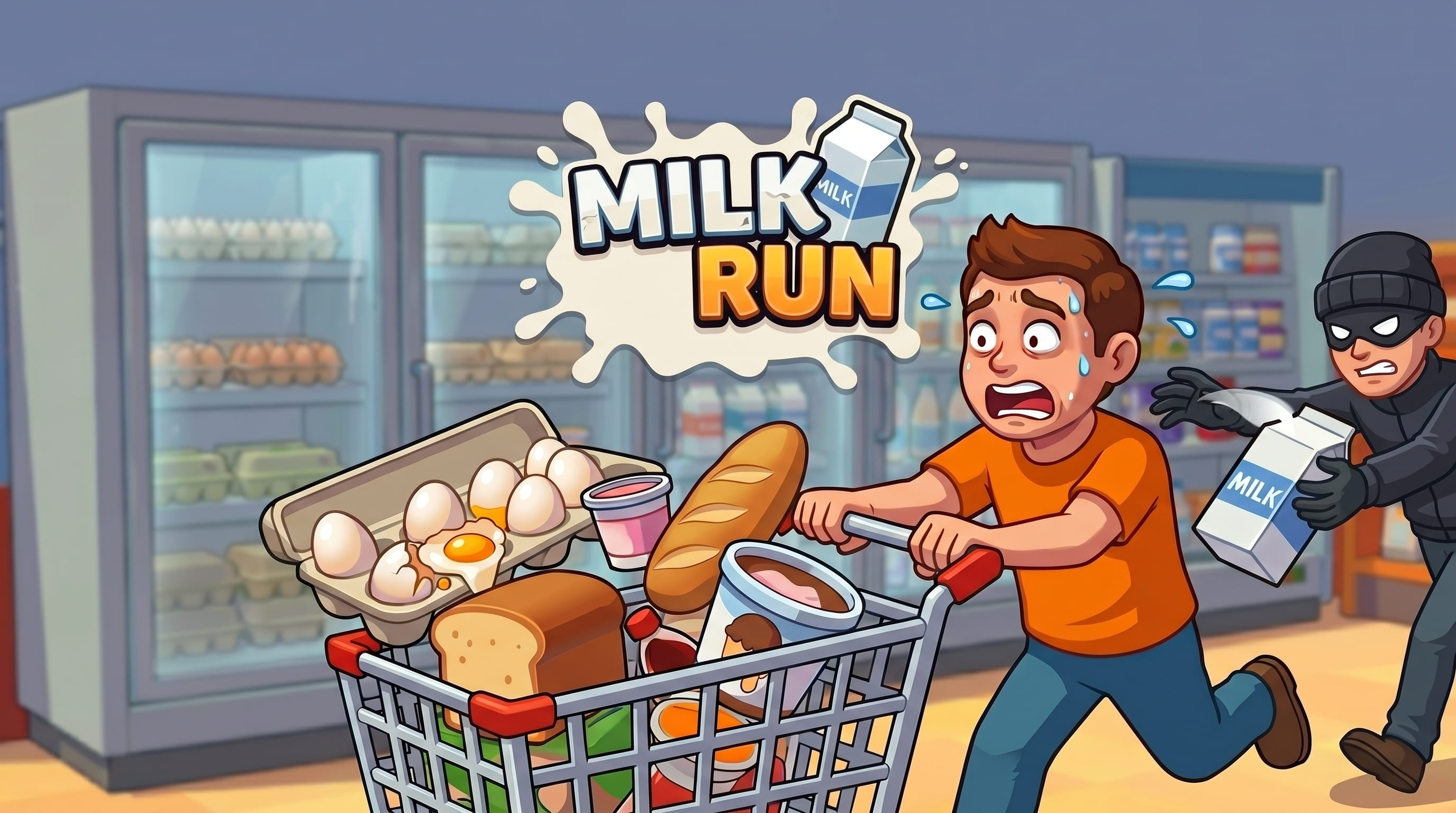
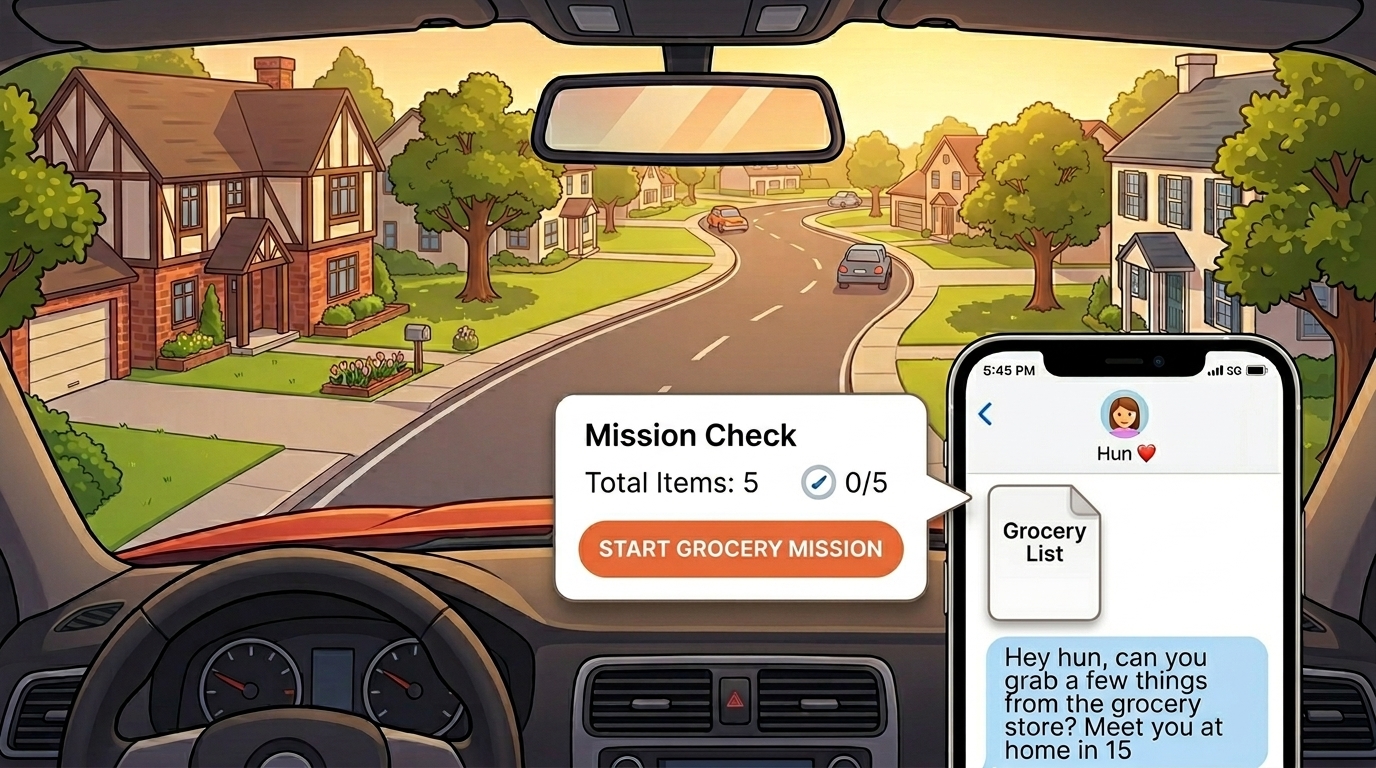
Milk Run was inspired by a real run for milk my wife asked me to make last week. What started as one quick errand turned into me racing around the store for a few extra things she texted me, while still trying to make it home in time for dinner.
That ordinary little moment felt surprisingly game-like: timer pressure, route planning, item recognition, crowd dodging, and the constant fear that the cart was about to betray me. Milk Run turns that everyday stress into a comedic survival and resource-management game.
What It Is
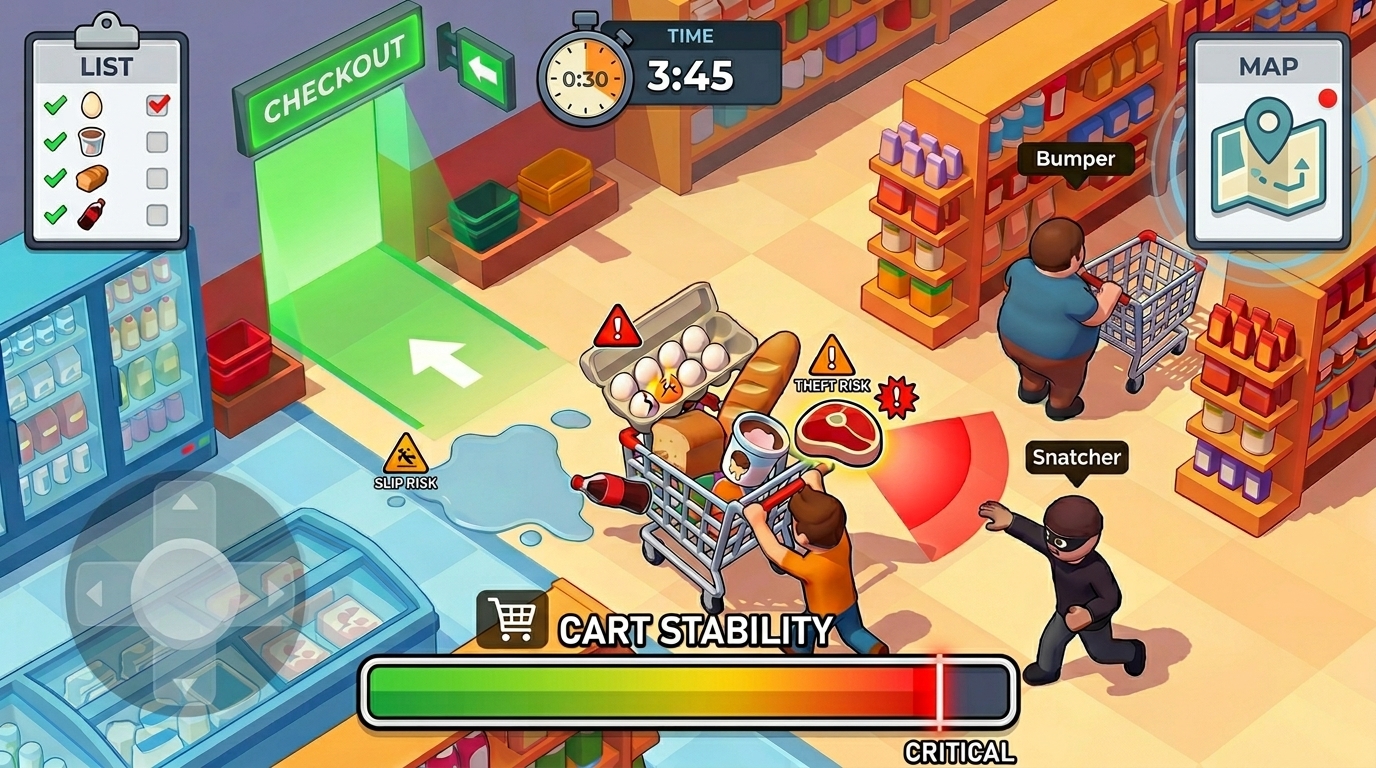
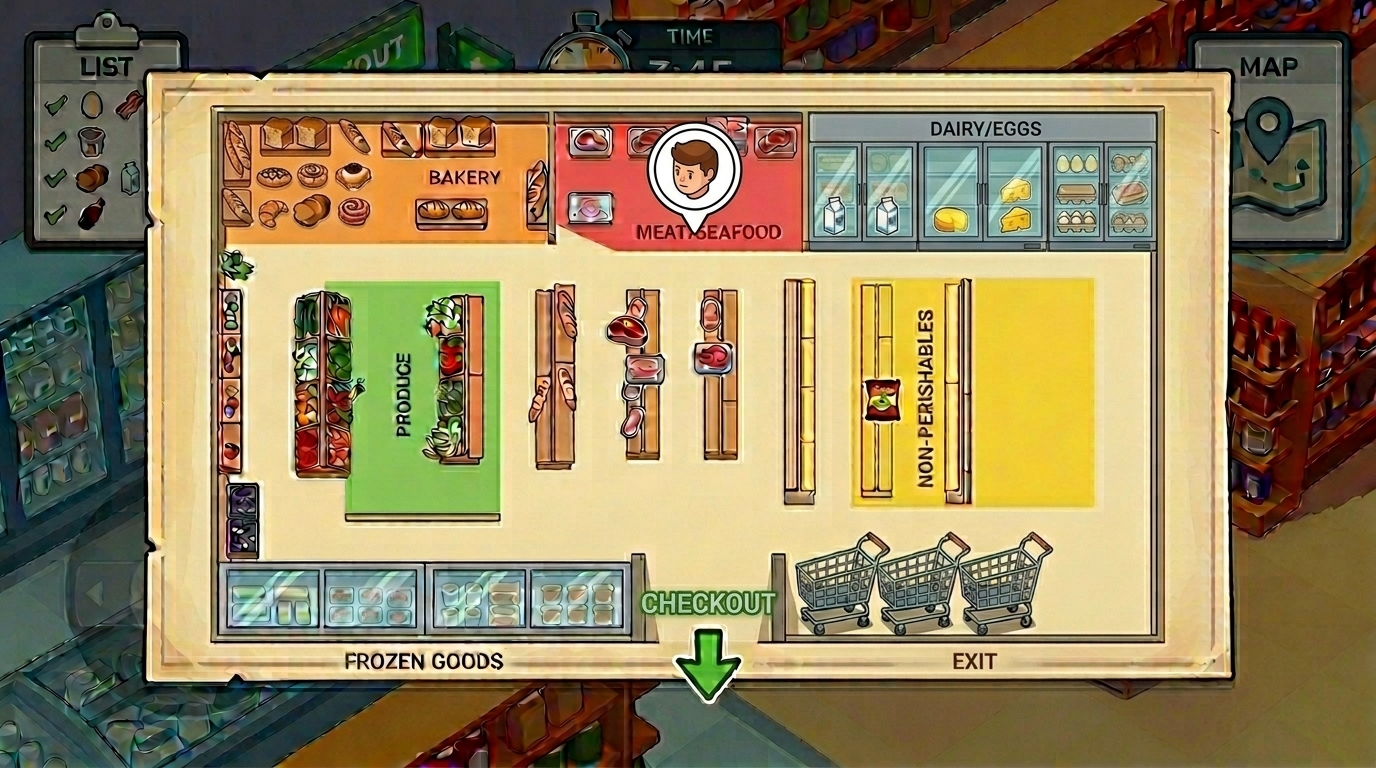
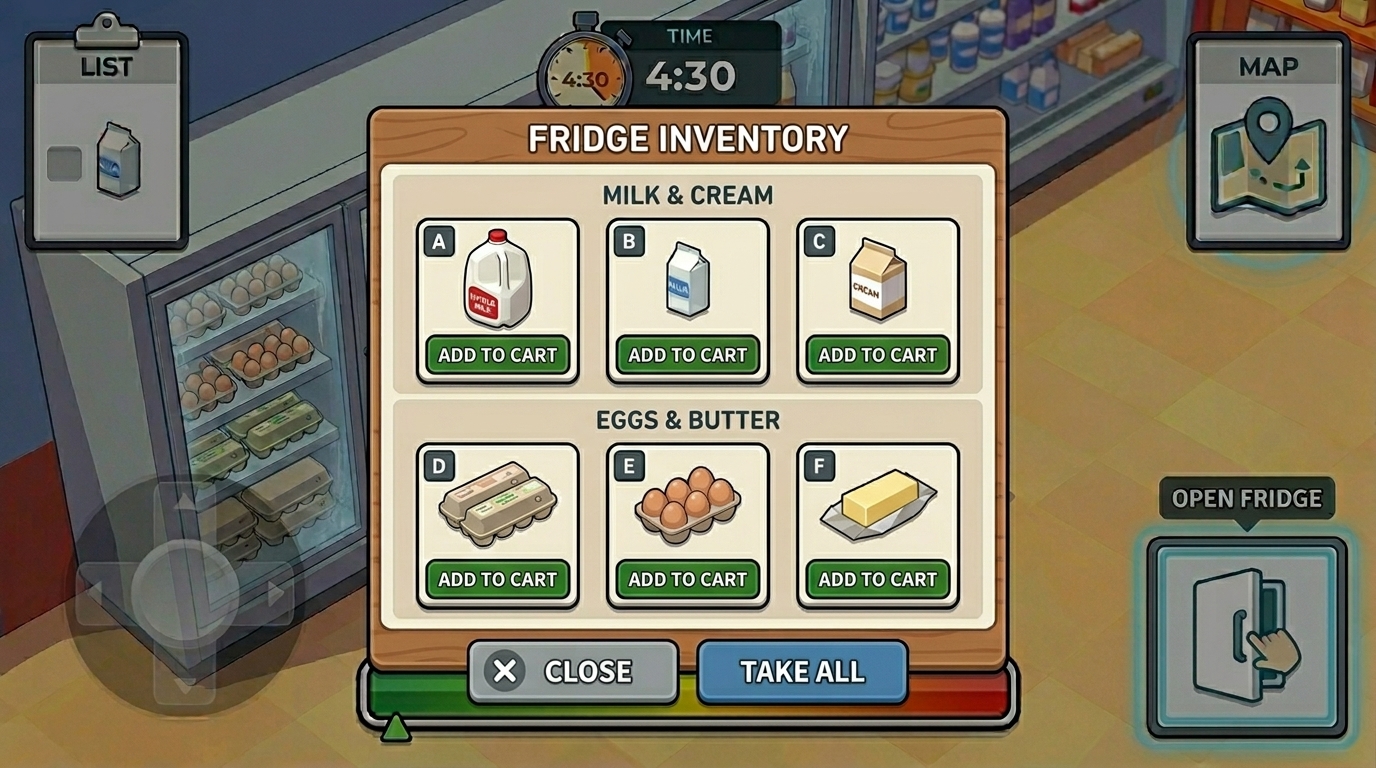
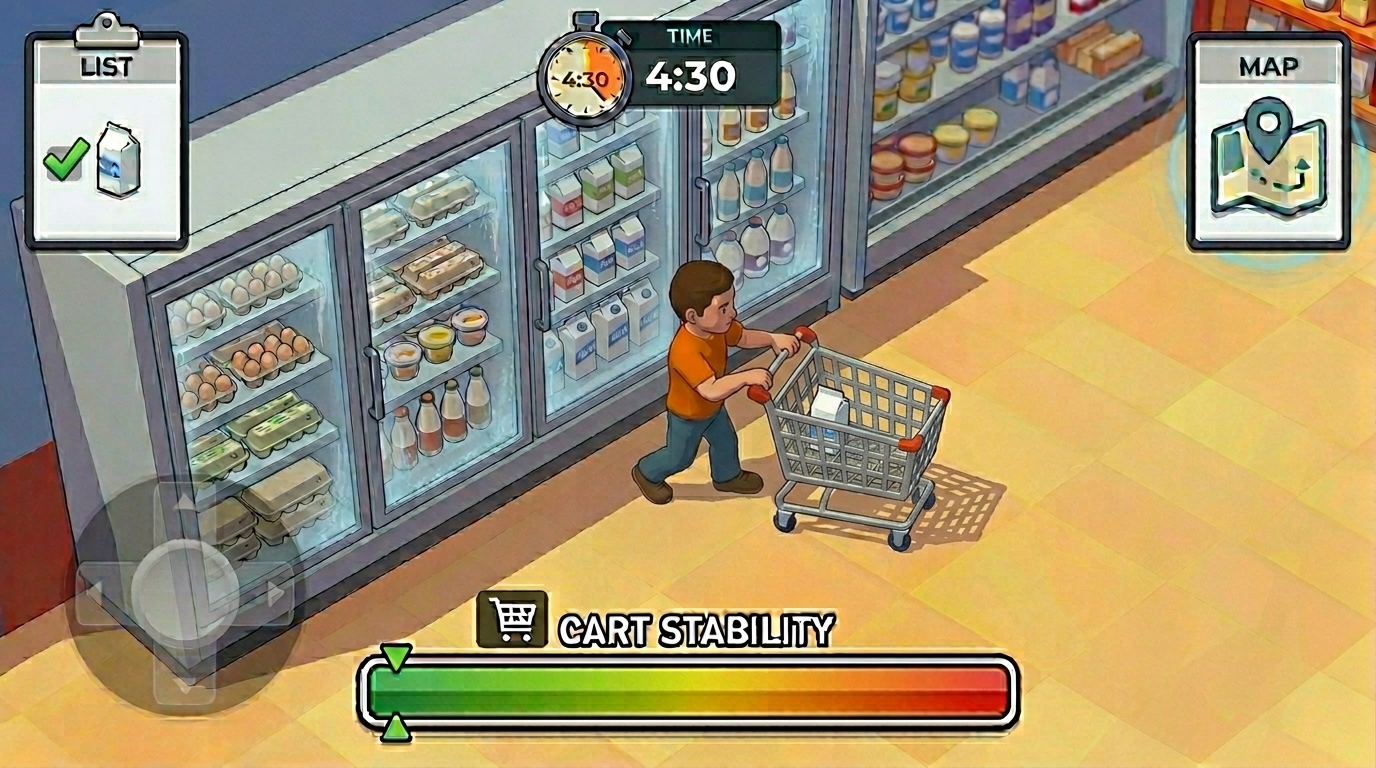
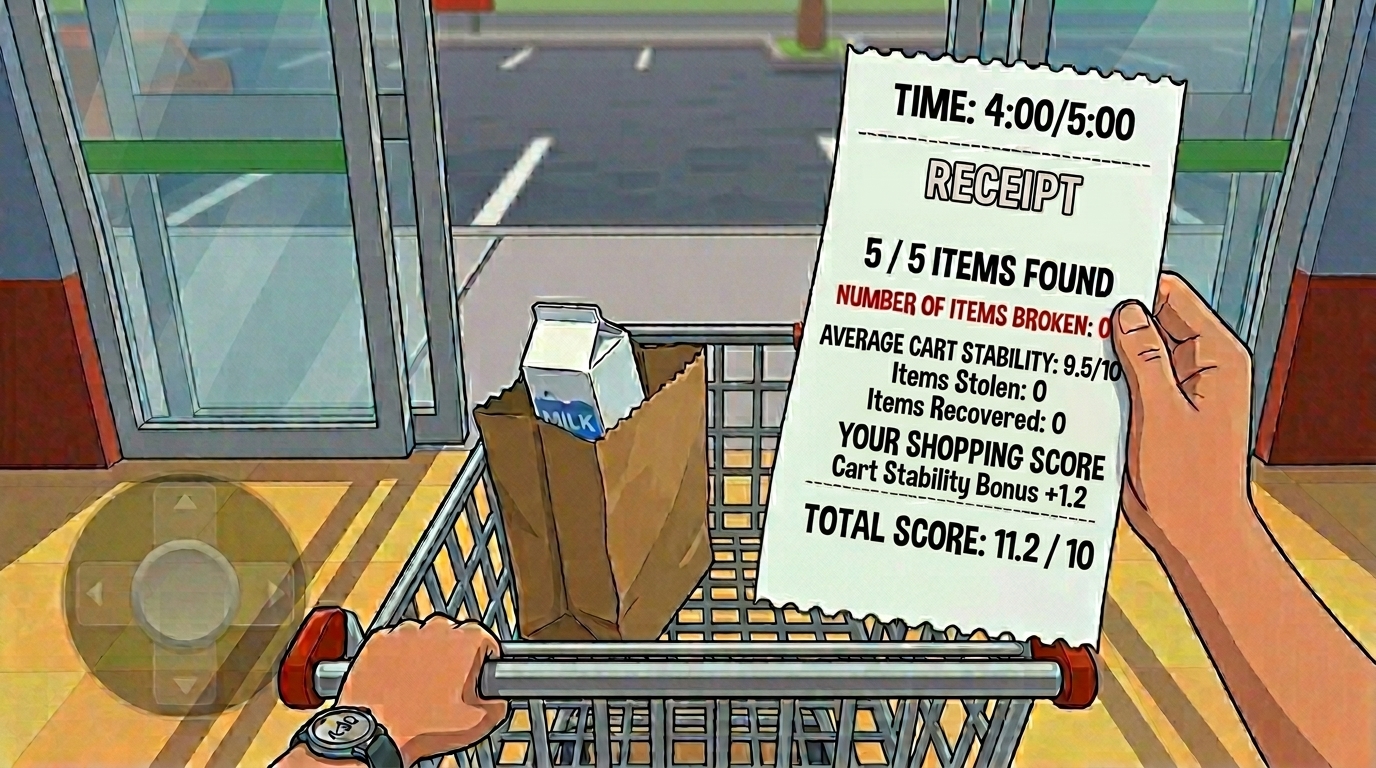
Milk Run is a short-session mobile game where a simple grocery errand becomes a chaotic race to find the list, protect the cart, and reach checkout before time runs out. Each run asks the player to read a grocery list, choose a route, collect items, manage cart stability, defend groceries from rival shoppers, score the run, upgrade, and try again.
The game fits the Survival & Resource Management genre through three connected pressures:
- Time: the countdown to checkout.
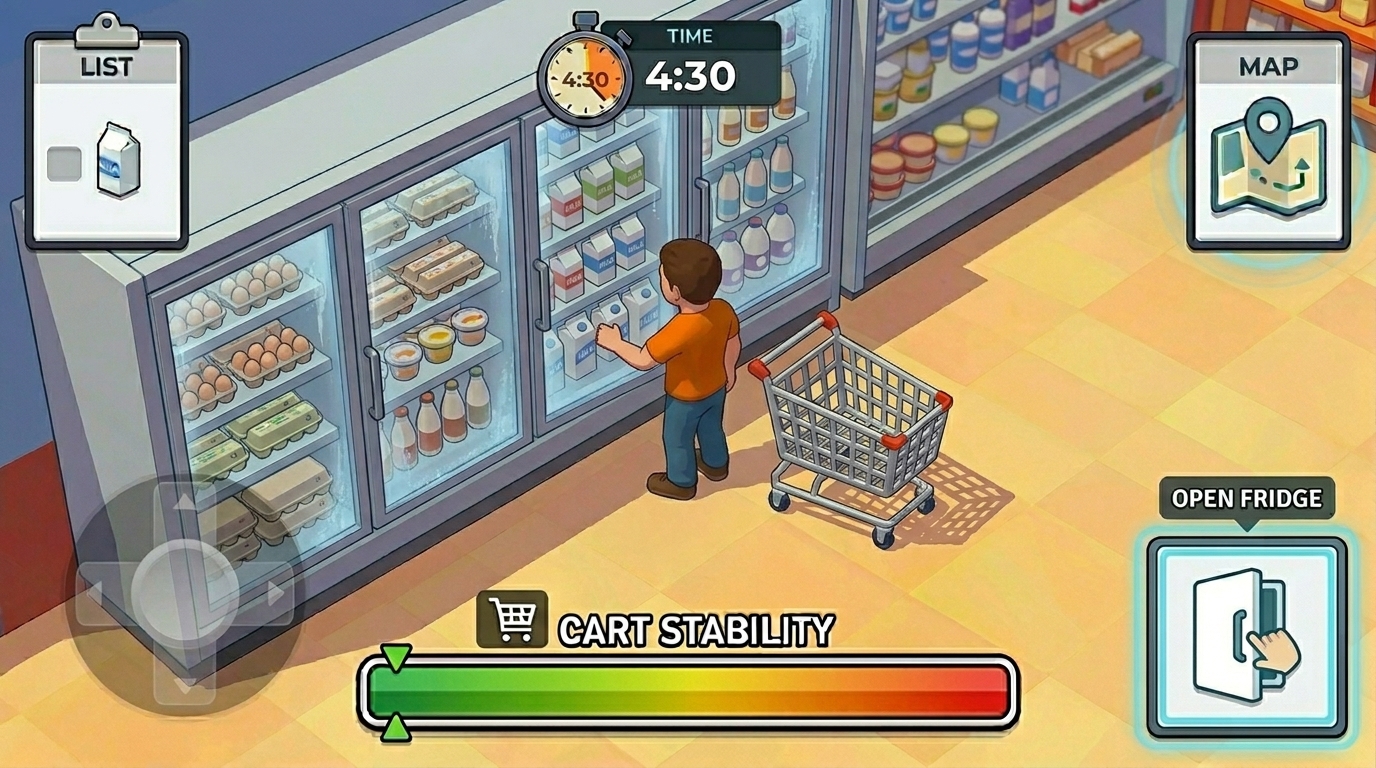
- Cart Stability: how well the cart handles sharp turns, crashes, overload, and hazards.
- Item Security: how safe collected groceries are from theft, exposure, or spills.
The failure cascade is intentionally simple: time pressure causes rushing, rushing causes bad turns, bad turns damage cart stability, and low stability makes groceries vulnerable. A strong run feels clever; a bad run feels funny and recoverable.
What Makes It Different
The twist is that the cart becomes the survival object. It is not just inventory; it is the player's mobile base, weak point, shield, and progression system. Groceries can be safe, at risk, stolen, broken, or lost depending on how well the player handles and protects the cart.
Instead of fighting enemies, the player manages grocery triage: take the crowded shortcut or the safer long route, slow down for control or sprint to checkout, protect exposed groceries or chase a stolen item.
How It Would Be Built
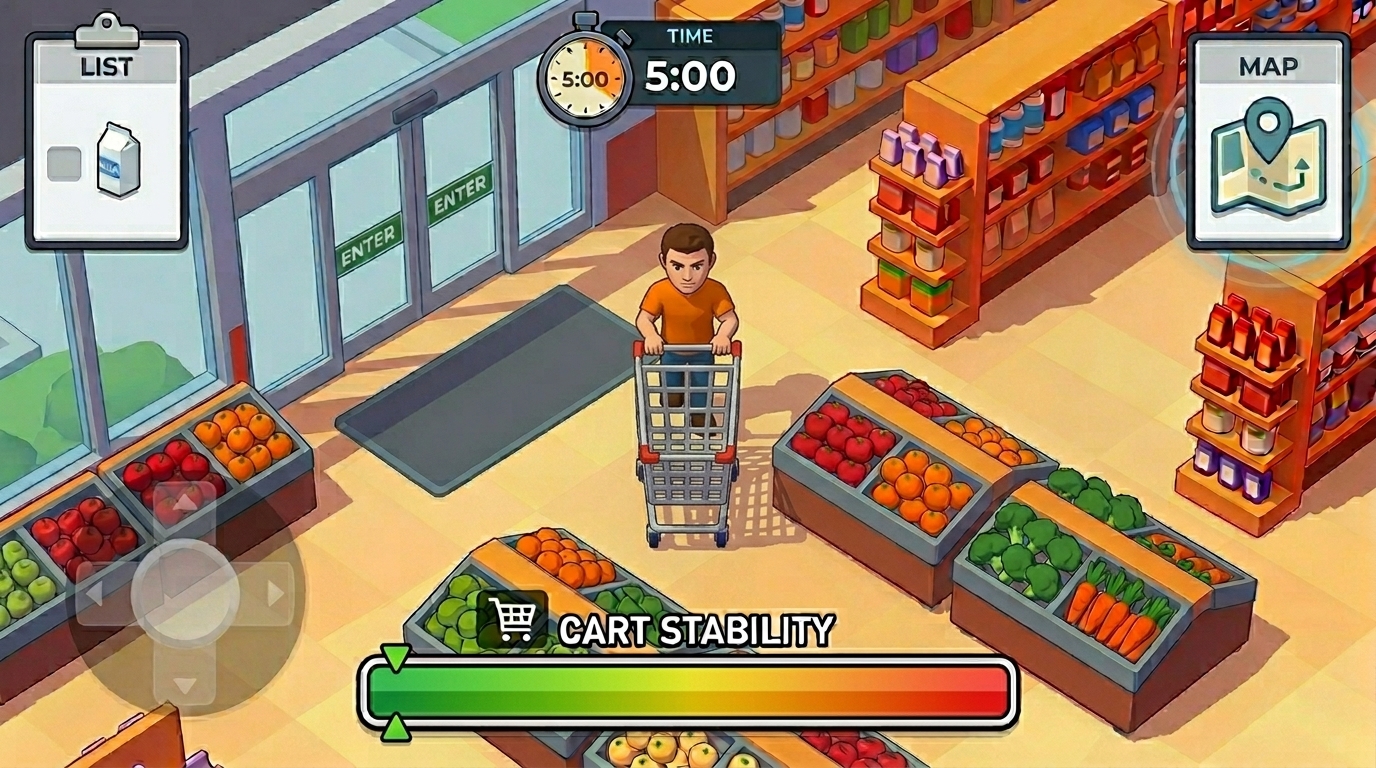
The MVP is scoped as one replayable supermarket with a fixed top-down isometric camera, touch movement, a shopping list system, cart stability, simple item states, rival shoppers, environmental hazards, checkout scoring, and a short upgrade track.
The design avoids heavy technical risk by using deterministic cart-state rules instead of full item-by-item rigid-body physics. Cart wobble, spills, broken or lost groceries, item exposure, and theft risk are driven by readable events such as sharp turns, crashes, overloading, and rival behavior.
The MVP does not require accounts, cloud saves, live databases, multiplayer services, or server infrastructure. Game data can be stored locally, and save data can track tutorial completion, upgrades, best scores, and personal records.
Challenges
The biggest design challenge was keeping the game deep without making it too complicated. Early versions had more abstract resources and heavier item-condition mechanics, but the final version ties everything back to the strongest systems: time, cart stability, item security, route choice, and rival shoppers.
The other challenge was keeping all four submission artifacts aligned so the GDD, journey map, visual package, and production plan all describe the same game from different angles.
What I Learned
This project clarified how much stronger a design becomes when the core mechanic is protected. Once the shopping cart became the identity of the game, every other decision became easier: what to cut, what to show first, what belongs in the MVP, and what the visual package needs to communicate.
The result is a tighter, more buildable design: a mobile survival game about grocery chaos where the comedy comes from systems interacting, not from random noise.
Built With
- chatgpt
- claude
- gemini


Log in or sign up for Devpost to join the conversation.