About MigrationOps
MigrationOps was inspired by a simple frustration: legacy modernization is usually treated as a collection of disconnected documents, architecture diagrams, cost spreadsheets, and risky implementation work. We wanted to turn that into one guided, transparent journey.
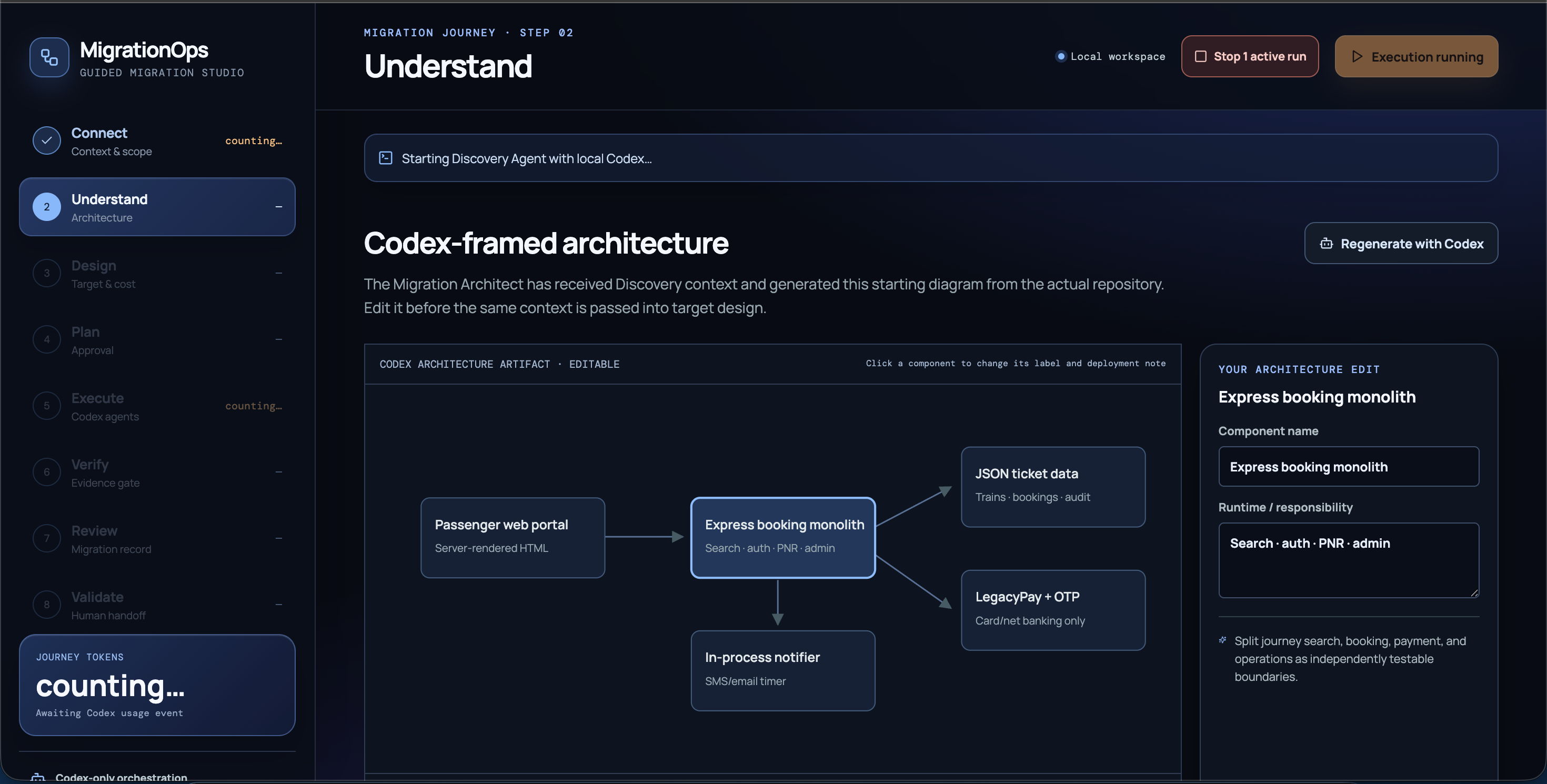
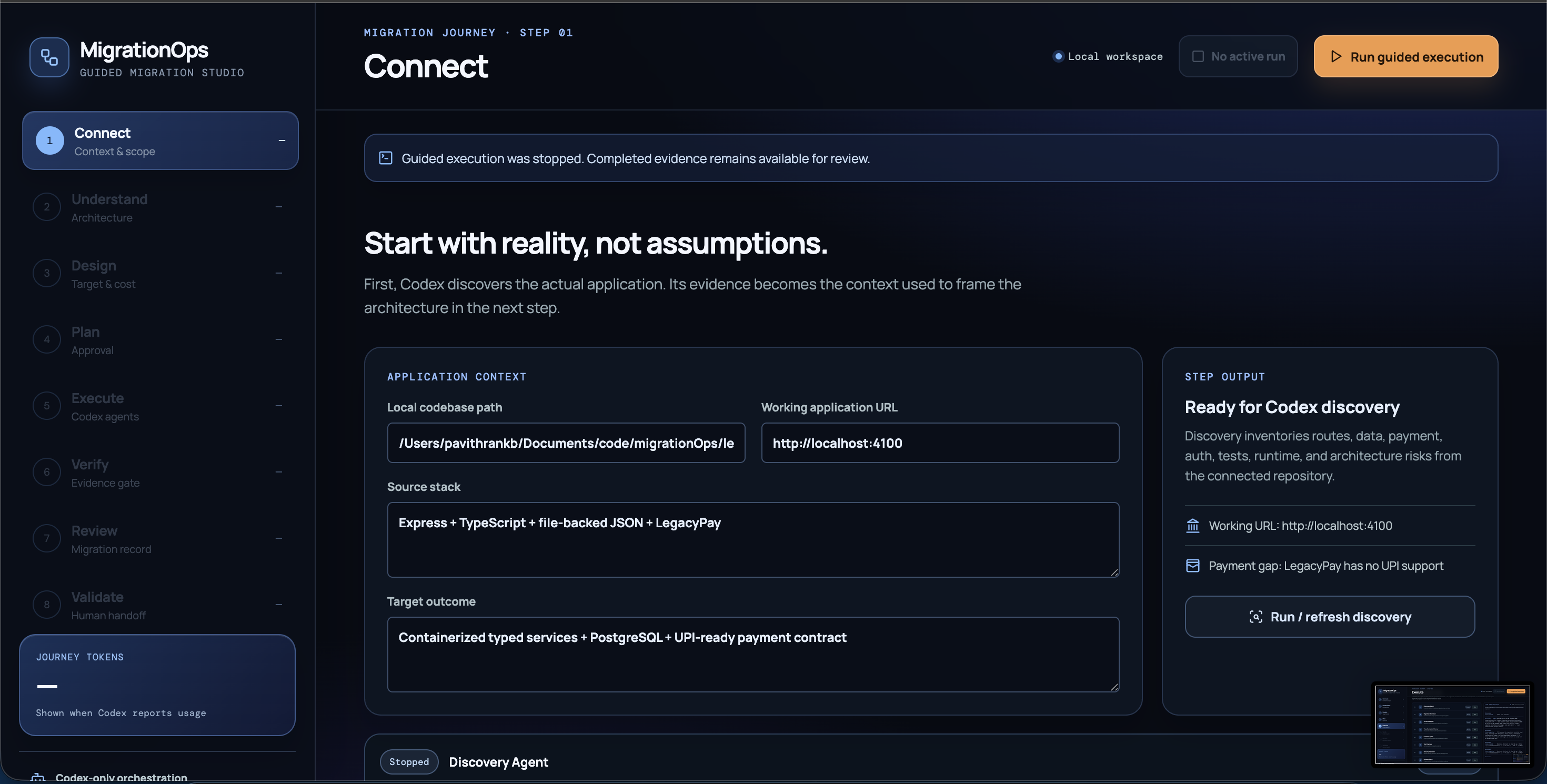
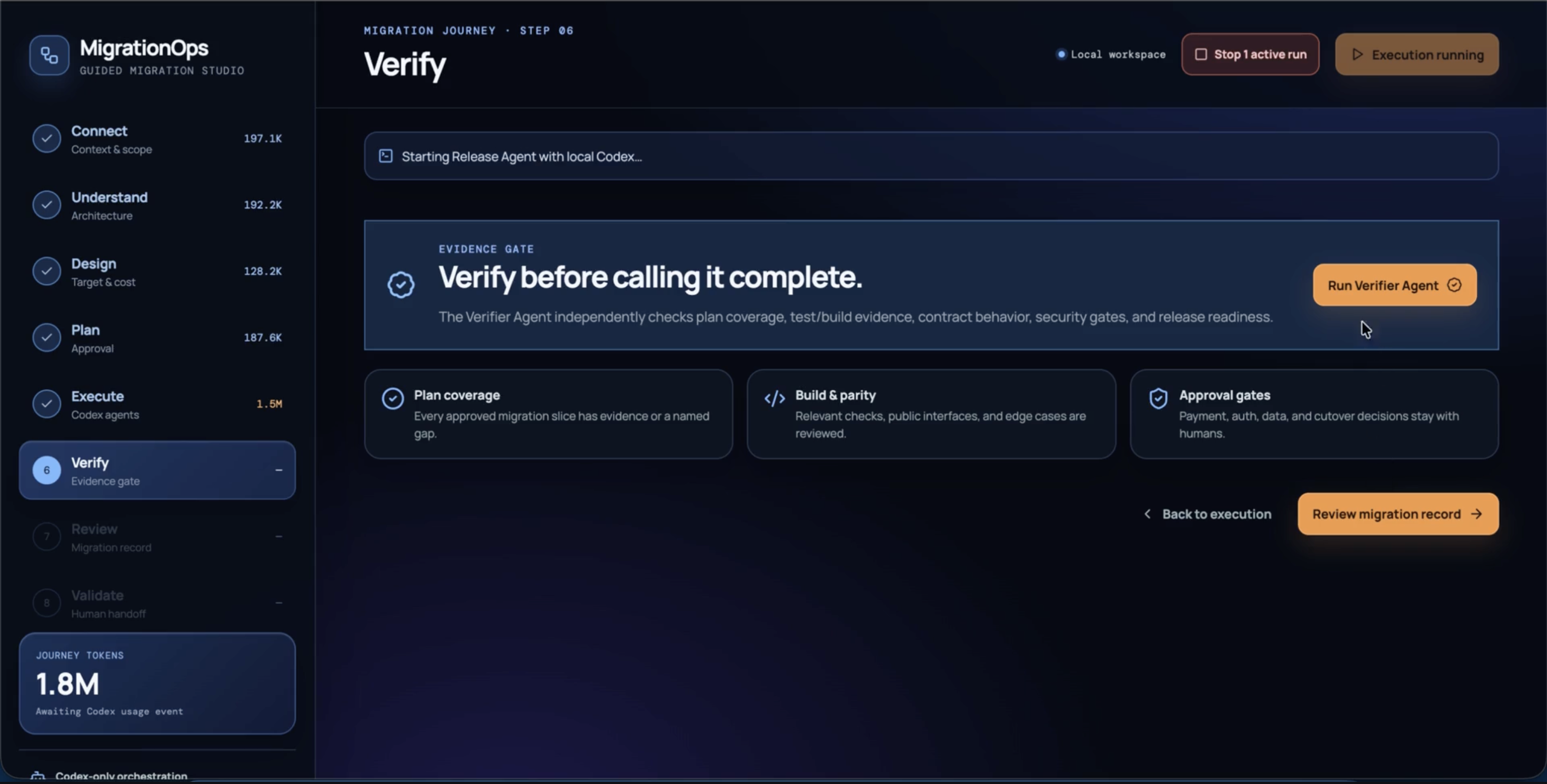
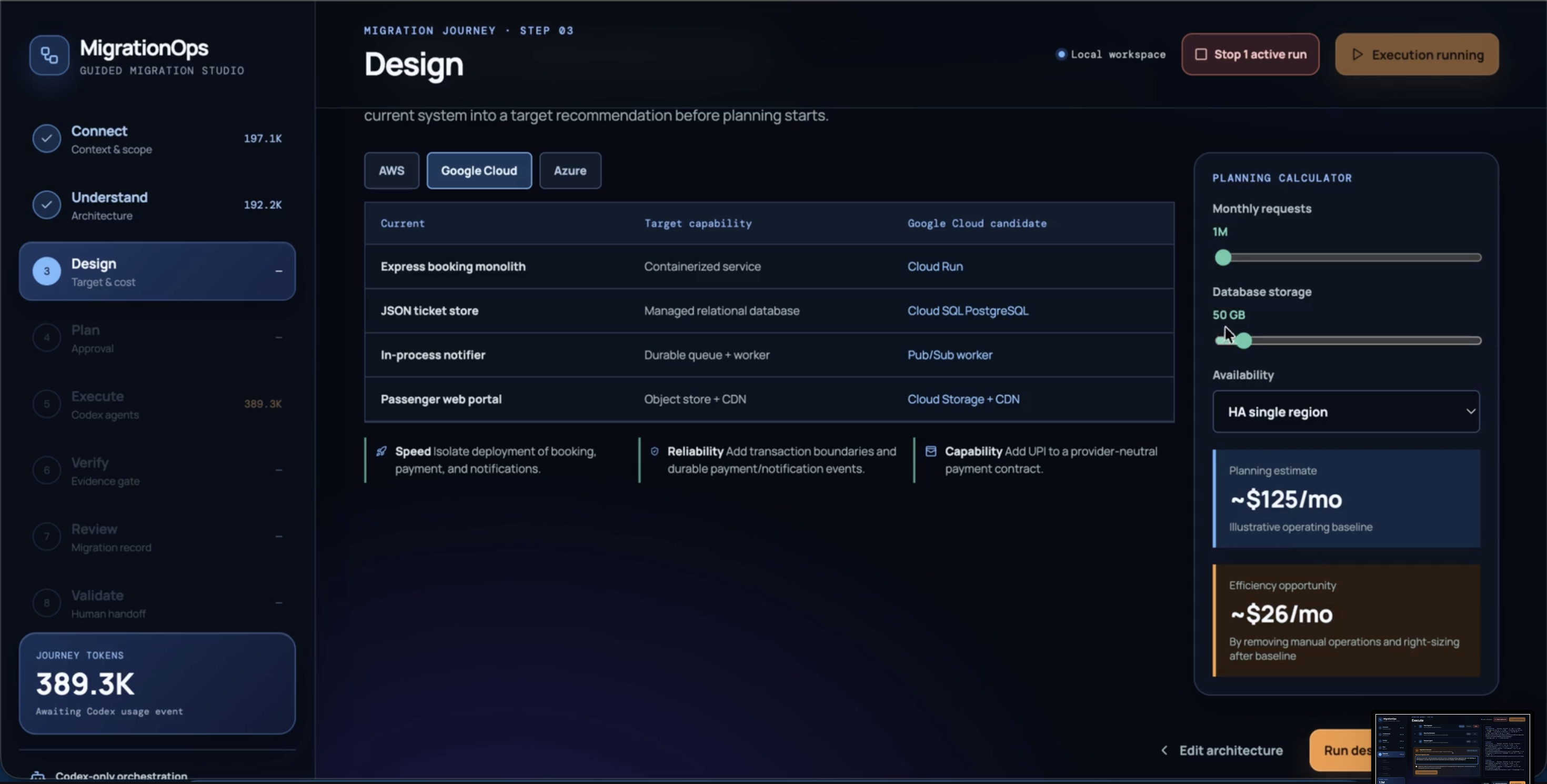
The project demonstrates this with a legacy Indian railway ticket-booking application, including authentication, OTP, PNR lookup, booking flows, payments, and persistent data. MigrationOps helps a user connect the application, understand its current architecture, edit the generated diagram, choose a target cloud approach, compare cost and performance considerations, approve a plan, execute work, and verify the outcome.
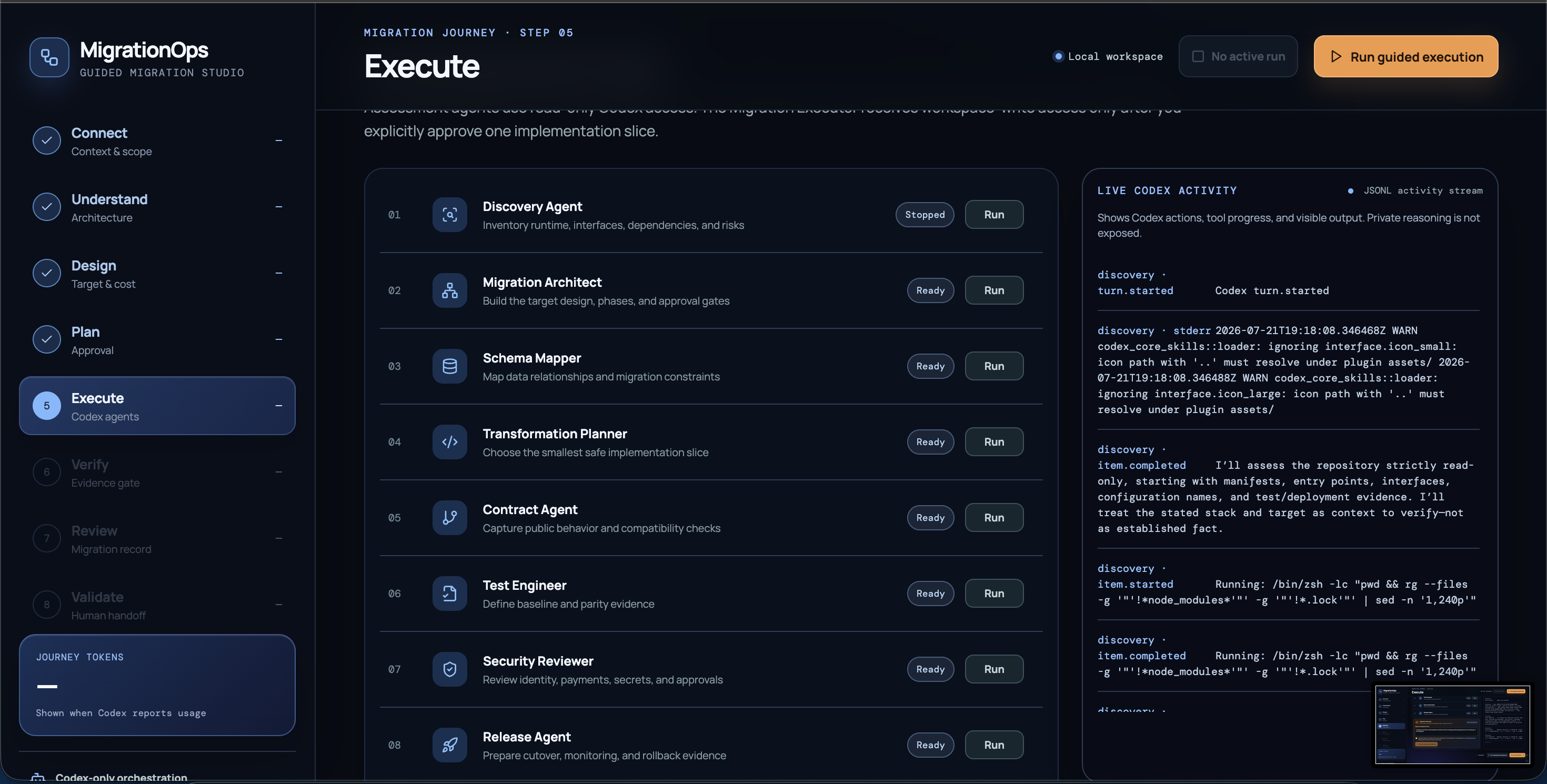
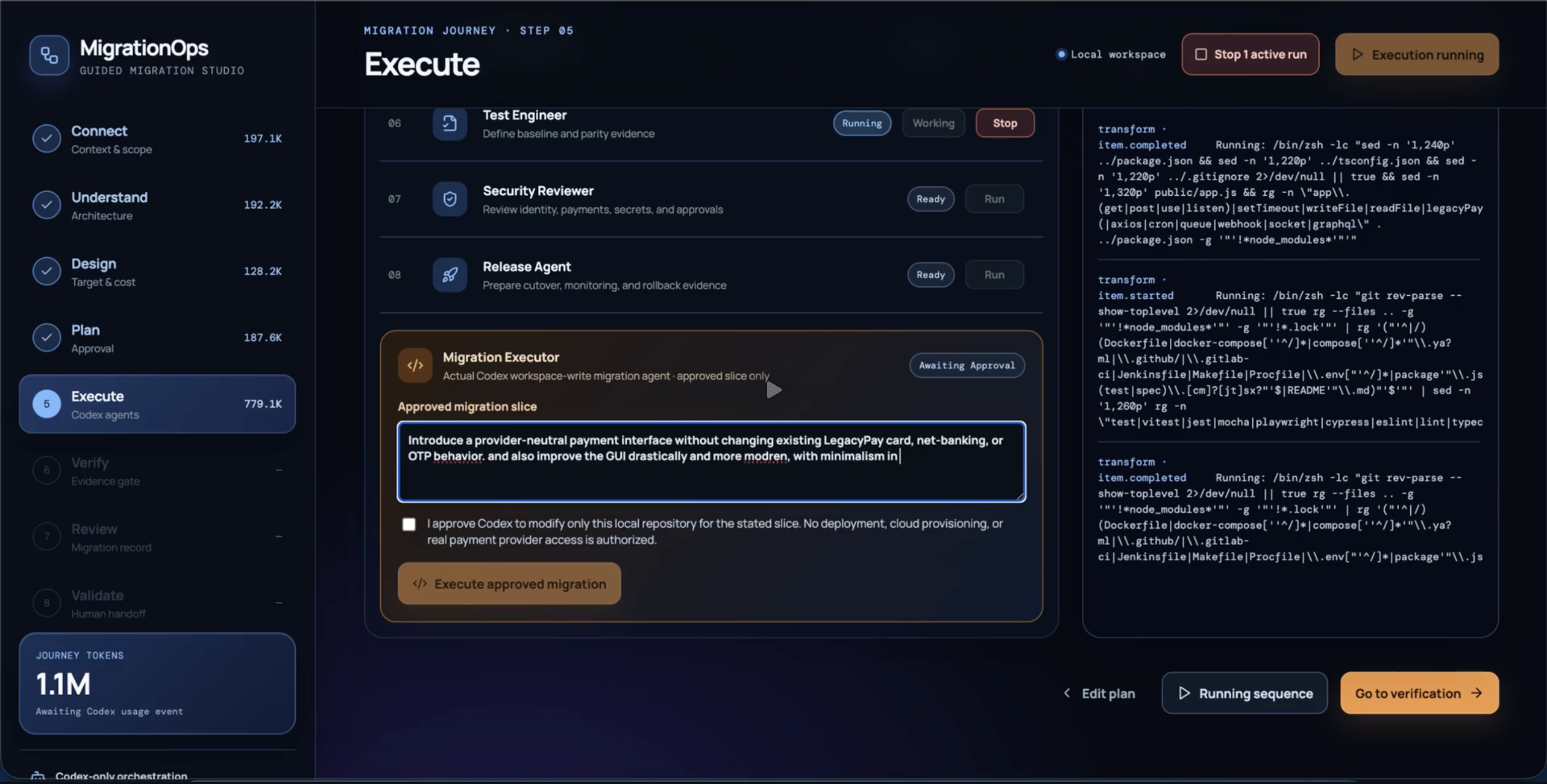
We built the platform as a React and TypeScript web application with a local backend that orchestrates Codex using GPT-5.6 Terra. Specialized migration-agent definitions and skills guide stages such as discovery, architecture, planning, execution, and verification. The UI exposes live agent activity, outputs, stop controls, and token consumption so the migration process is observable rather than a black box.
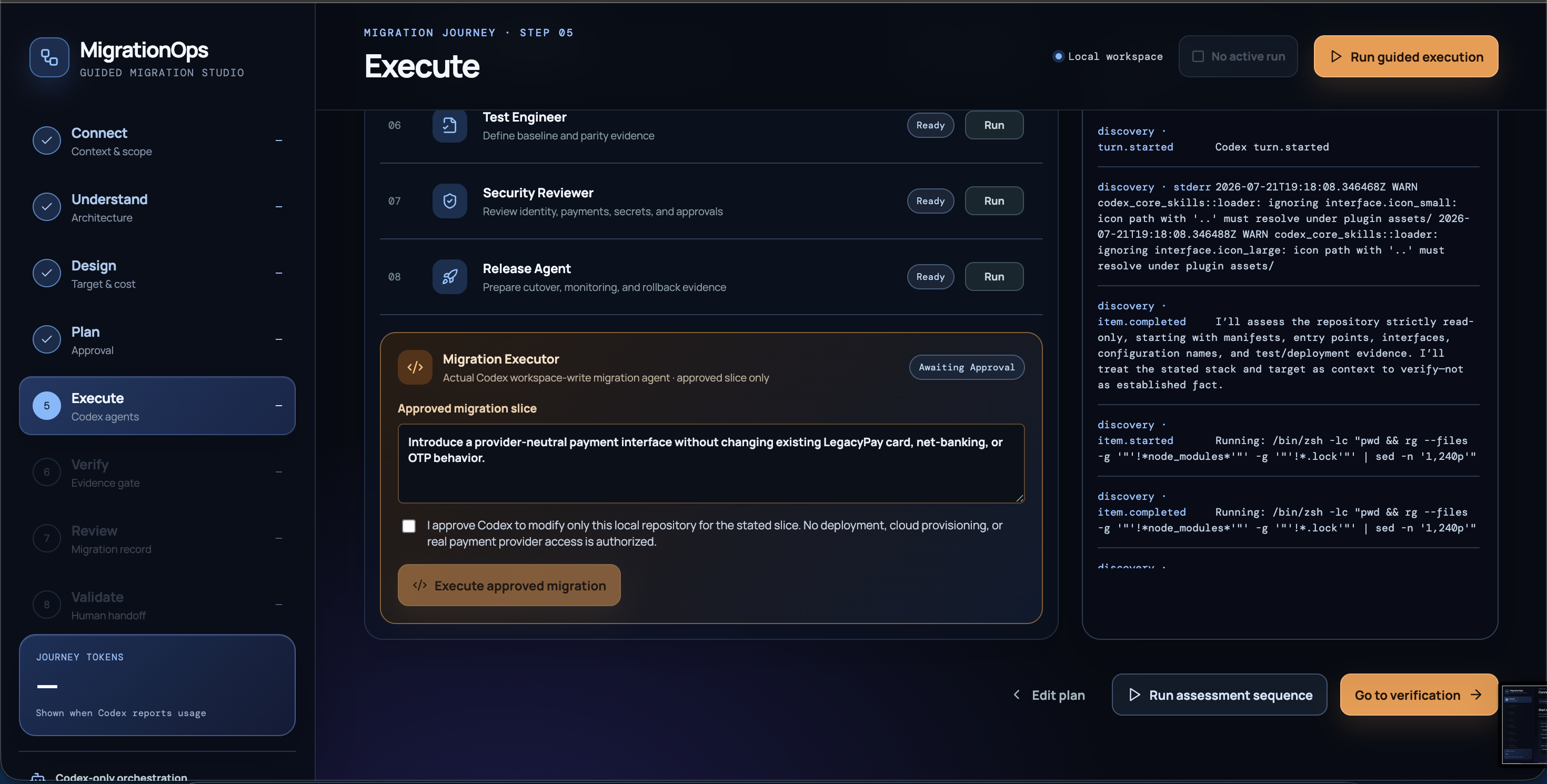
One of our biggest challenges was building a clear, responsive experience that makes a complex migration workflow easy to follow. We redesigned it as a step-by-step command centre with editable decisions and explicit approval points.
We learned that successful modernization is as much about trust and clarity as it is about code generation. Teams need to understand what will change, why it is recommended, what it costs, and how it was verified. MigrationOps makes those decisions visible from legacy discovery through final validation.
Built With
- agentic
- ai
- api
- architecture
- cli
- cloud
- codex
- css
- express.js
- gpt-5.6
- migration
- node.js
- openai
- react
- rest
- terra
- typescript
- vite


Log in or sign up for Devpost to join the conversation.