Our MigraSend Story – Inspiration, Journey, and Lessons What Inspired Us The idea for MigraSend started with a simple but powerful observation: millions of migrant workers in Singapore and across Southeast Asia work incredibly hard, yet every time they send money home to their families, a big chunk — often 6–10% — disappears in fees, and the transfer takes days. We’ve seen construction workers, domestic helpers, and service staff here in Singapore lining up at remittance centers, paying high charges just to support their loved ones back home. That money could buy school supplies, medicine, or food, but instead it goes to middlemen. When we read the NUS FinTech Summit 2026 problem statement focused on innovative blockchain-enabled financial applications on XRPL, we immediately thought: this is the perfect technology to fix this. XRPL is built for fast, low-cost payments — exactly what remittances need. The addition of escrow and issued currencies opened the door to not just speed, but trust in a trustless environment. So together, we built MigraSend: a simple, secure way for migrant workers to send money home instantly, almost for free, and with full transparency. How We Built It We started from zero blockchain knowledge just days before the hackathon. Step by step:
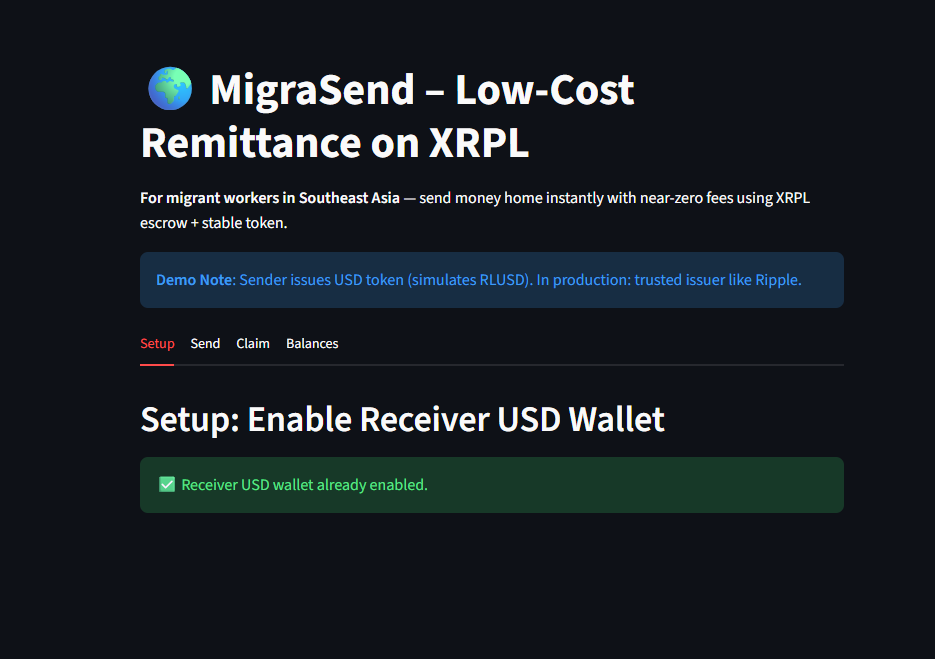
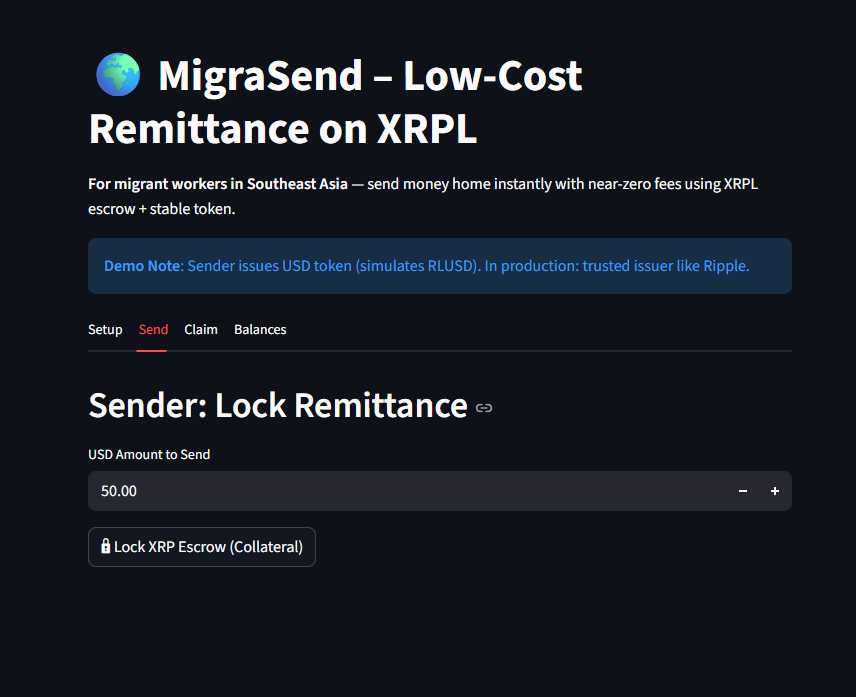
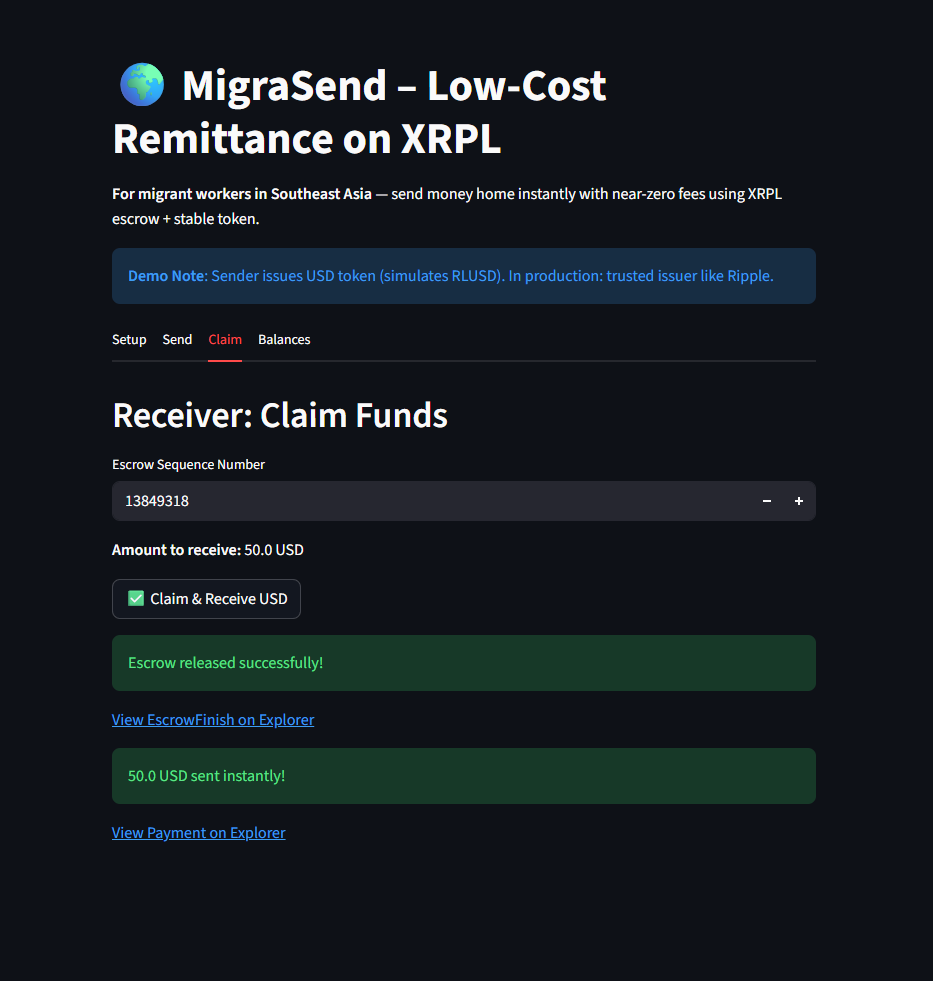
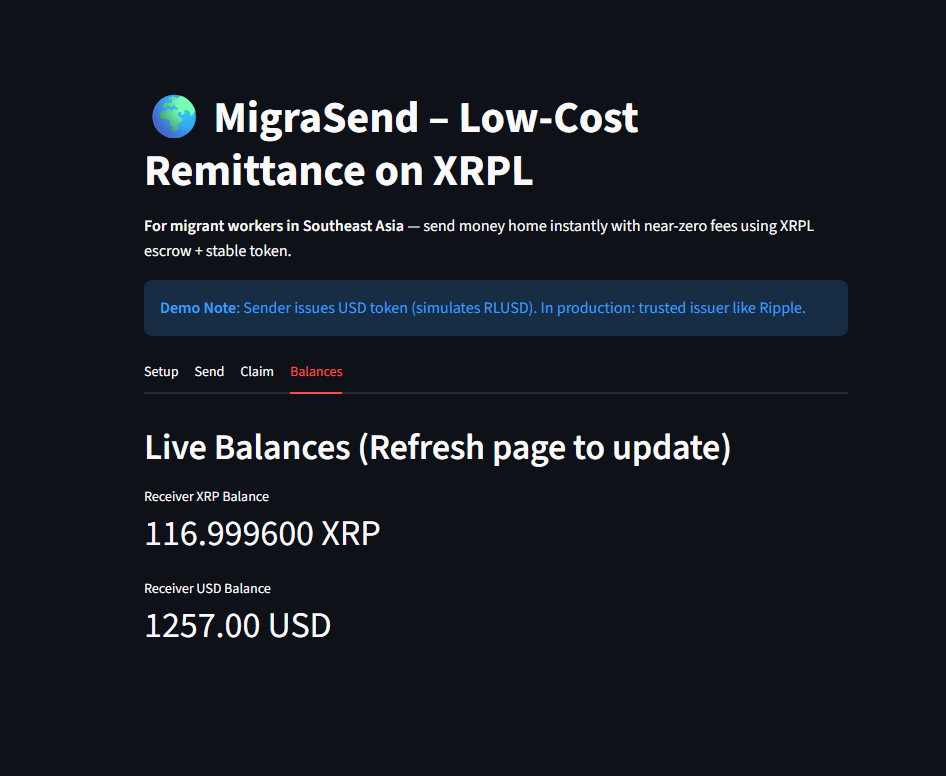
We dove into XRPL documentation and xrpl-py library tutorials. We learned core features: payments, trust lines, issued currencies (to simulate RLUSD), and most importantly — escrow for conditional release. We built the backend in Python using xrpl-py to handle real Testnet transactions. We created a clean Streamlit web app so anyone could use it without technical knowledge — separate views for sender and receiver. We added live balances, transaction explorer links, and proper error handling for a polished experience.
The key innovation: using XRP escrow as collateral to prove sender intent, then releasing the full stable-value amount (USD token) only after claim. This adds security without complexity. Challenges We Faced
Learning curve: We had never touched blockchain or XRPL before. Understanding seeds, trust lines, issued currencies, and escrow timing took intense focus. Testnet quirks: Issued currency rules and escrow limitations required creative workarounds (like using sender as issuer for demo reliability). Time pressure: Building a full end-to-end flow — from trust setup to conditional payment — in just a few days while attending workshops and opening day was exhausting. Debugging transactions: Dealing with sequence numbers, failed submissions, and timing errors taught us patience and careful error handling.
But every challenge was worth it. Each fixed bug made the app stronger. What We Learned
XRPL is incredibly powerful for real-world finance — fast, cheap, and feature-rich (escrow, issued currencies, DEX). Blockchain isn’t just about crypto speculation — it can solve real human problems, especially financial inclusion. Building under pressure sharpens focus: We learned more in 5 days than in months of regular study. Simple, working solutions beat complex unfinished ones in hackathons.
Final Thought MigraSend is more than code to us — it’s a small step toward making the world a little fairer for the people who build our cities, care for our families, and keep economies running, often far from home. Thank you to the NUS FinTech Society, Ripple, and all mentors for this incredible opportunity. We’re proud to have turned inspiration into a working prototype — and we hope it shows what’s possible when we use blockchain for good. MigraSend: Sending money home shouldn’t be expensive. It should just work. — Team MigraSend, NUS FinTech Summit 2026
Built With
- python
- xrpl


Log in or sign up for Devpost to join the conversation.