Inspiration
Navigating the U.S. immigration system can be overwhelming, especially for individuals with Temporary Protected Status (TPS). Information is often scattered across multiple government websites, difficult to understand, and not always available in a user's preferred language. I wanted to create a tool that would make this process less intimidating by bringing trusted resources, educational guidance, and important information together in one place.
The goal of MiEstatus is not to replace official government resources, but to make them easier to access and understand. By presenting information in plain language and supporting both English and Spanish, I wanted to create an experience that feels approachable, inclusive, and empowering.
What it does
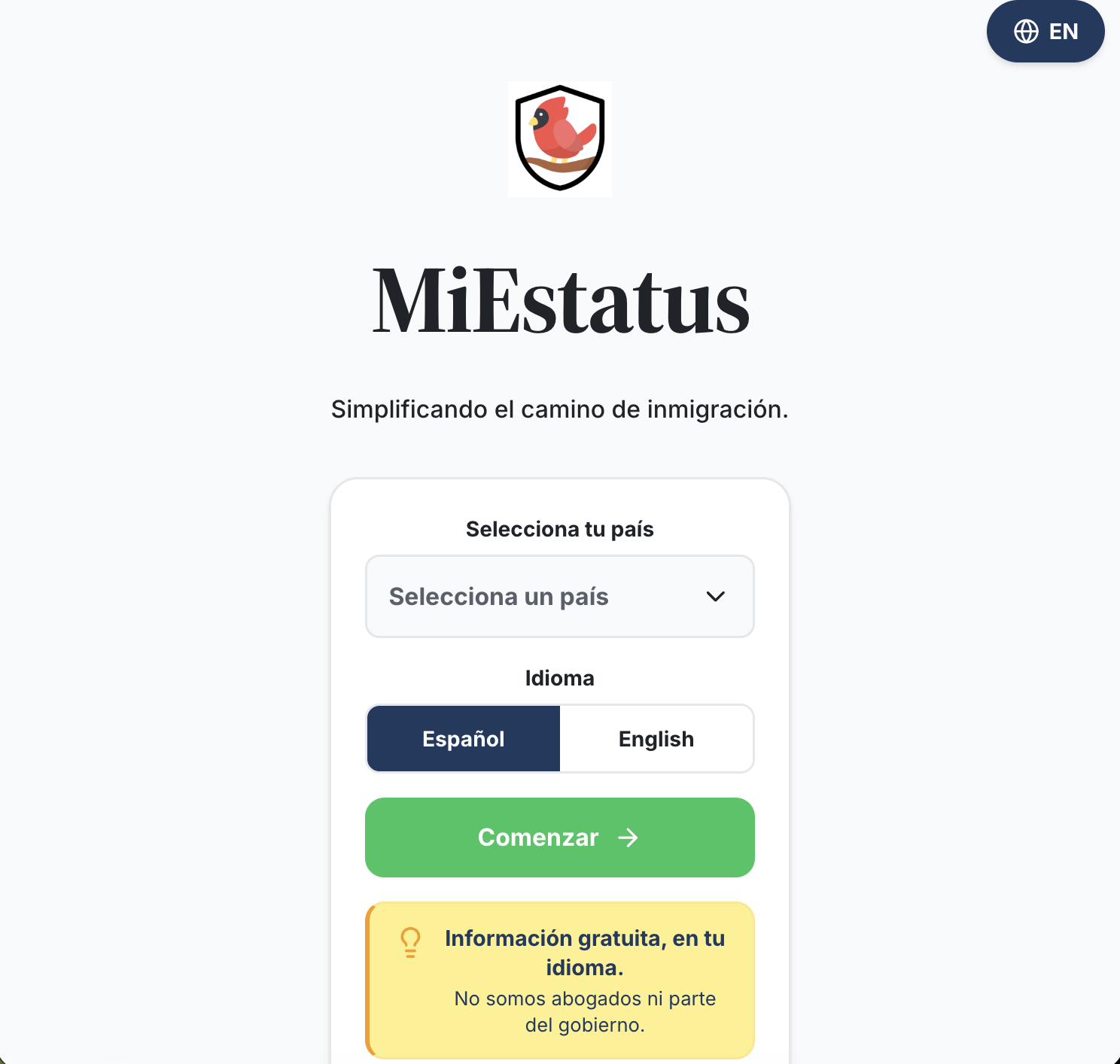
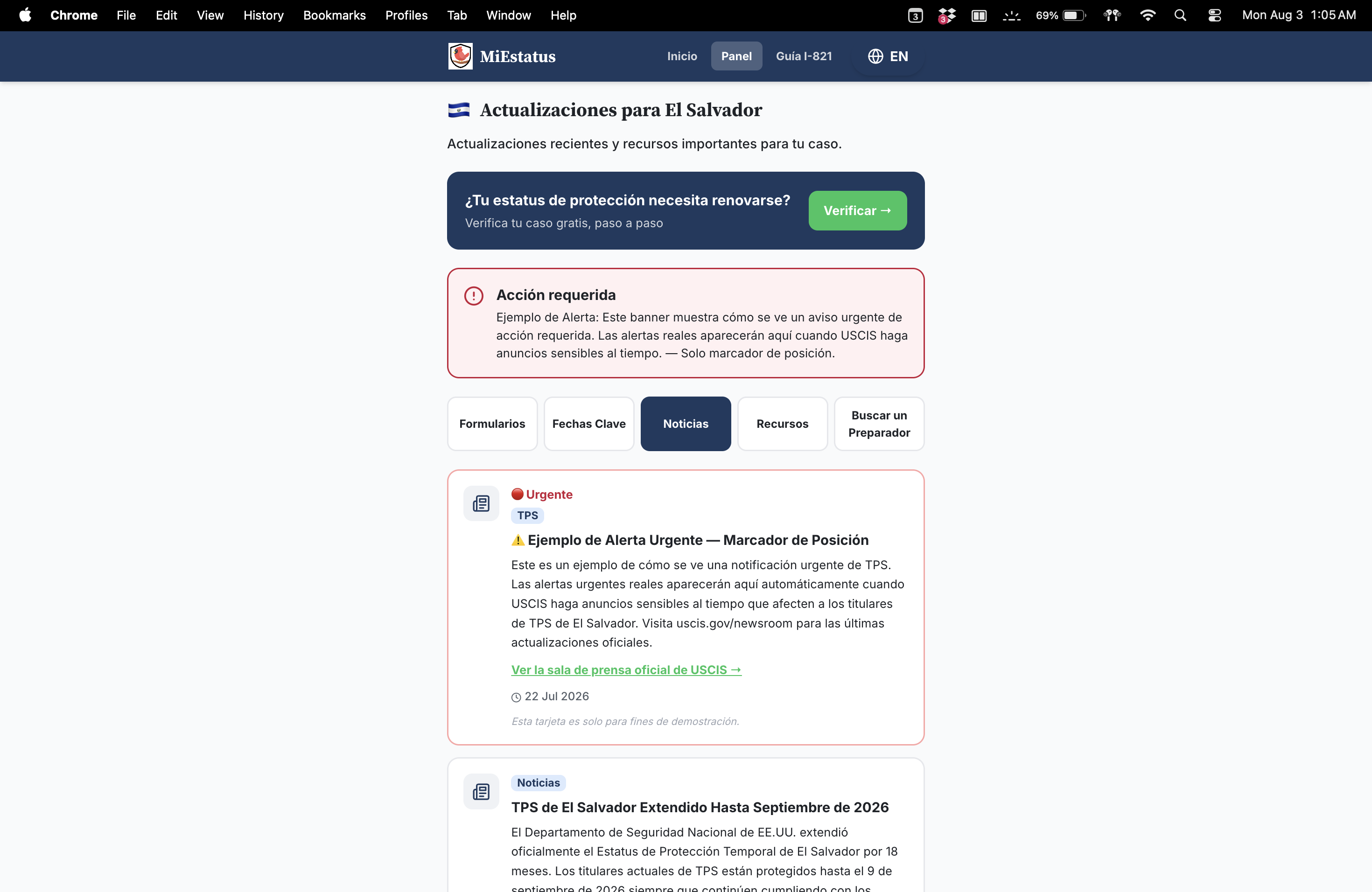
MiEstatus is a bilingual web application designed to simplify the immigration journey for TPS holders.
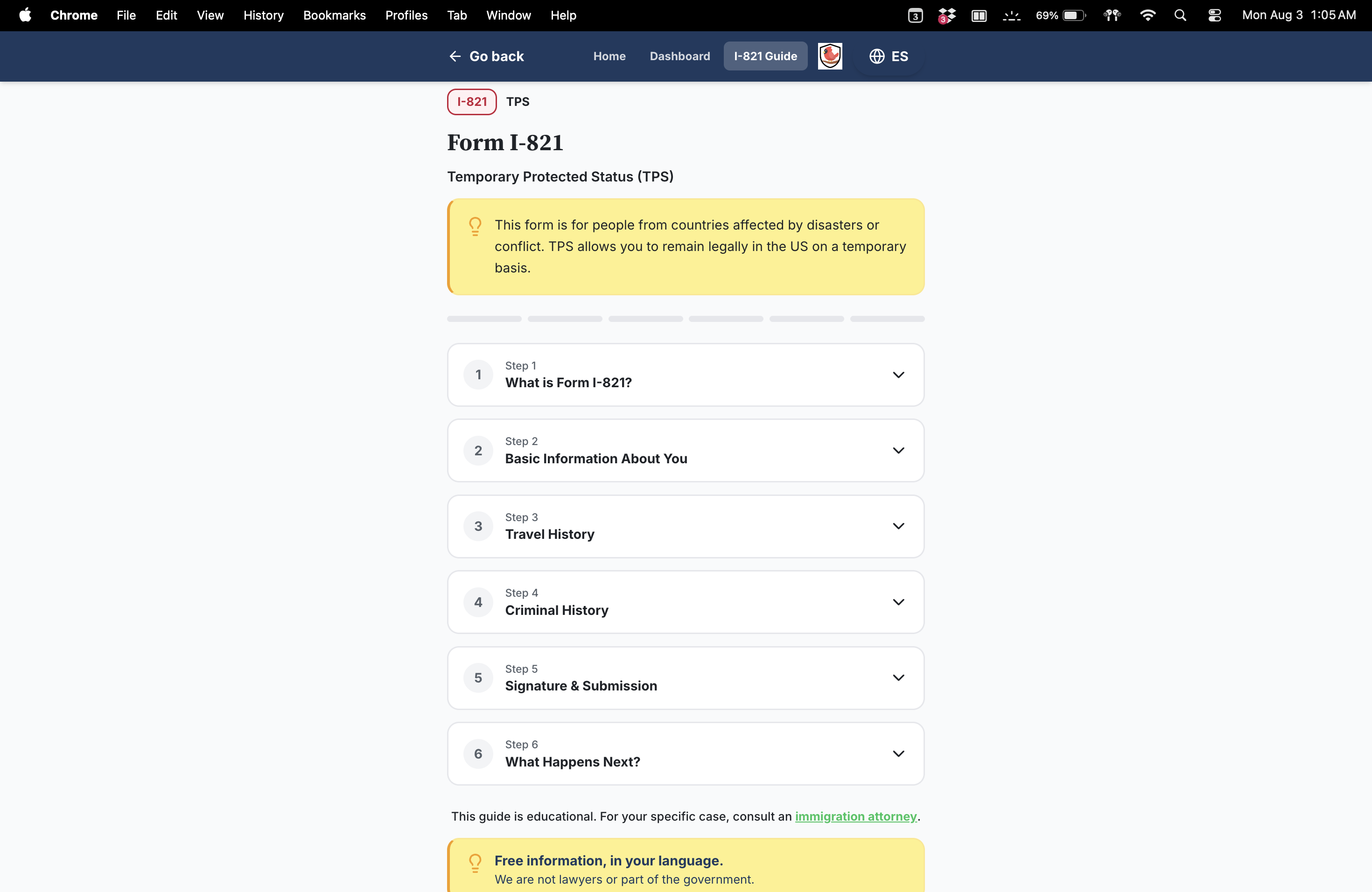
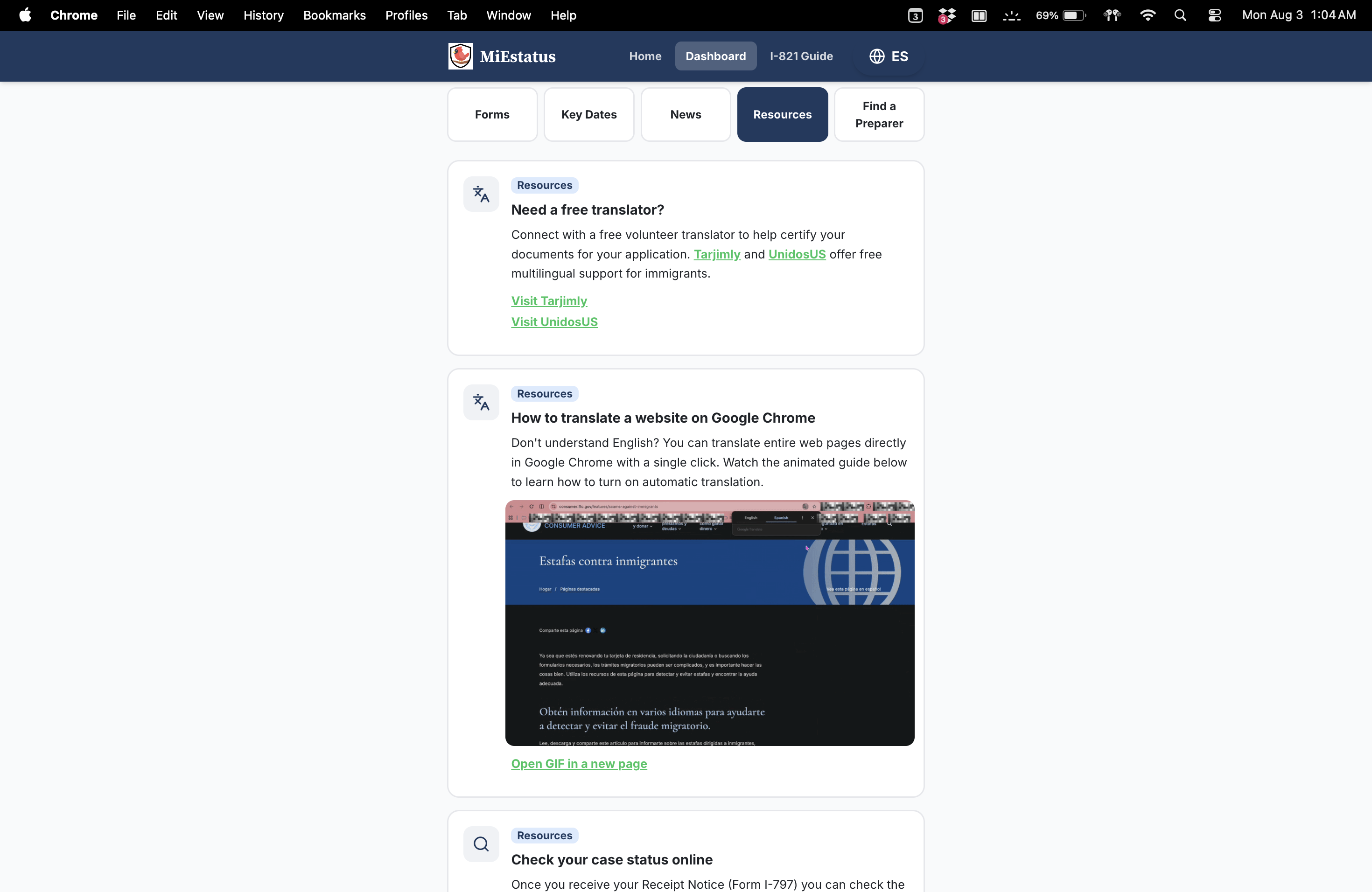
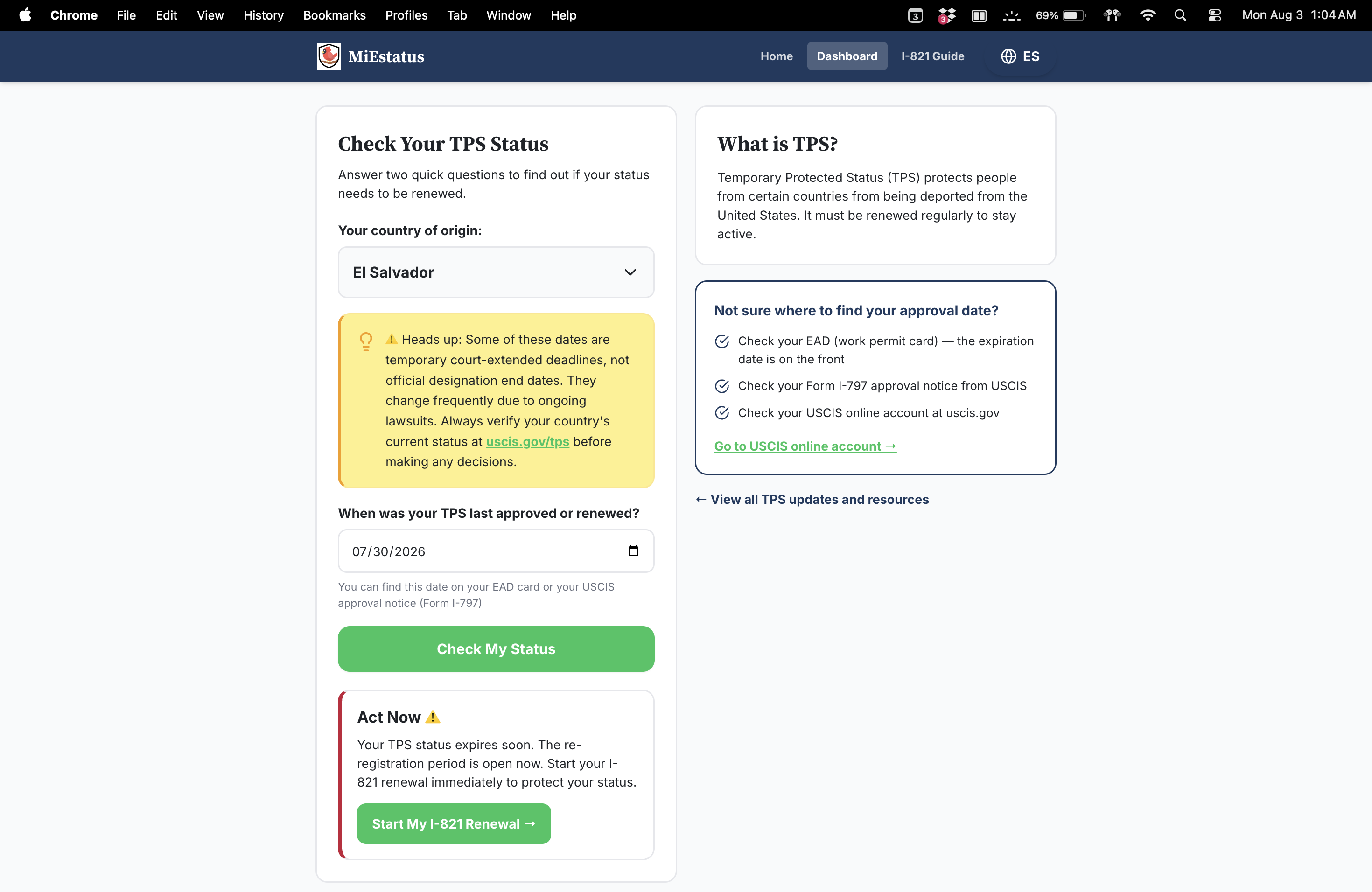
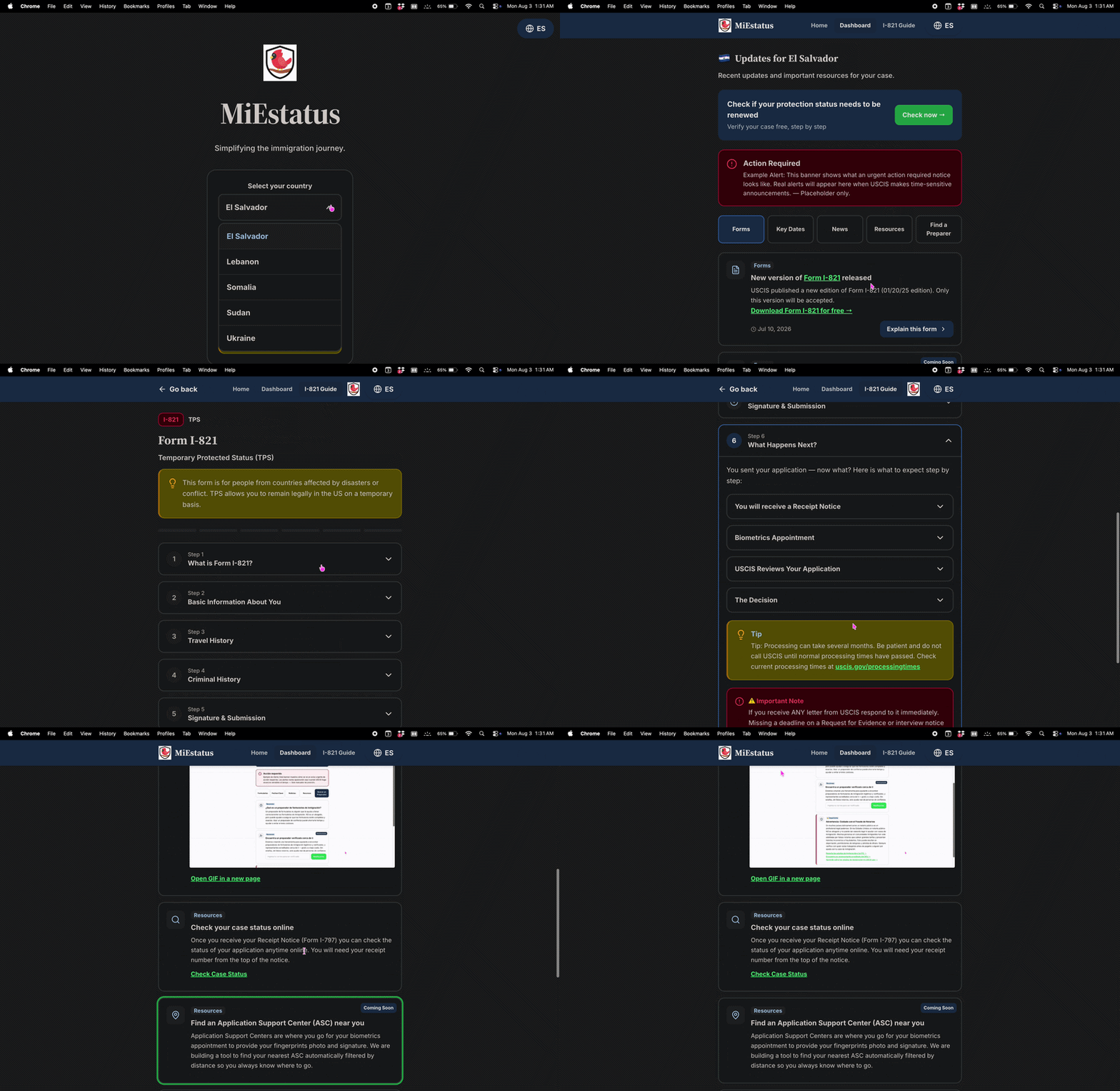
Users can: Browse country-specific TPS information and updates. Use an interactive TPS Status Checker to better understand whether they may need to take action based on their country and approval date. Follow a step-by-step guide for Form I-821 with explanations, tips, warnings, and links to official USCIS resources. Access a curated directory of trusted resources, including legal aid organizations, translators, case status tools, USCIS services, transportation resources, and information about avoiding immigration fraud. Switch seamlessly between English and Spanish without losing their place.
The application was designed to be mobile-friendly, easy to navigate, and accessible to users with varying levels of technical experience.
How I built it
MiEstatus was built using:
React TypeScript Vite Tailwind CSS Supabase
Bolt.new was used as a development assistant to help accelerate implementation, debug issues, and speed up frontend development. Every AI-generated suggestion was reviewed, modified when necessary, and integrated into the final application. The overall concept, feature selection, user experience, content organization, research, testing, and final implementation decisions were completed by me.
Challenges I ran into
One of the biggest challenges was organizing a large amount of immigration related information into a format that was easy to understand without oversimplifying important details. I also spent significant time designing the interface so users could move naturally between guides, resources, and status information without feeling overwhelmed.
Another challenge was ensuring the application worked well in both English and Spanish while maintaining a consistent experience across the entire site. Throughout development, I continually refined the navigation, layout, and content organization to make the application as intuitive as possible.
Accomplishments that I'm proud of
One of my biggest accomplishments was creating an application that makes complex immigration information more approachable without sacrificing accuracy. Rather than simply linking users to government websites, MiEstatus organizes trusted resources, explains TPS-related information in plain language, and guides users through important processes in a way that is easier to understand.
I'm also proud of building a fully bilingual experience. Every major feature, piece of content, and navigation element is available in both English and Spanish, allowing users to switch languages seamlessly without losing their place.
From a technical perspective, I'm proud of developing a responsive React application with an interactive TPS Status Checker, a step-by-step Form I-821 guide, a curated resource directory, and a backend-ready reminder system—all completed within the one-week hackathon timeframe.
Most importantly, I'm proud of building a project that addresses a real-world problem and has the potential to make government information more accessible for the communities it serves.
What I learned
This project strengthened my skills in React, TypeScript, component-based UI development, responsive design, and working with Supabase. I also gained valuable experience designing for accessibility, organizing complex information into intuitive user experiences, and using AI tools responsibly as part of a modern development workflow.
Perhaps the biggest lesson was learning how thoughtful design can make complicated government processes feel much more approachable. Building MiEstatus reinforced the importance of creating technology that solves real problems while remaining accessible to the people who need it most.
What's next for MiEstatus
MiEstatus is intended to continue growing beyond this hackathon. Future plans include expanding support to every TPS-designated country, automating USCIS news and policy updates, launching the email reminder system, and adding browser and SMS notifications for important immigration deadlines.
I also plan to introduce additional educational tools, including interactive form assistance, saved user profiles, map-based resource locators, and expanded accessibility testing to ensure the application is as inclusive as possible.
My long-term goal is to make MiEstatus a trusted companion that helps immigrants confidently navigate complex government processes through clear guidance, verified resources, and accessible technology.
Built With
- bolt.new
- html
- javascript
- lucide-react
- react-18
- supabase/postgresql
- tailwind-css
- typescript
- vite


Log in or sign up for Devpost to join the conversation.