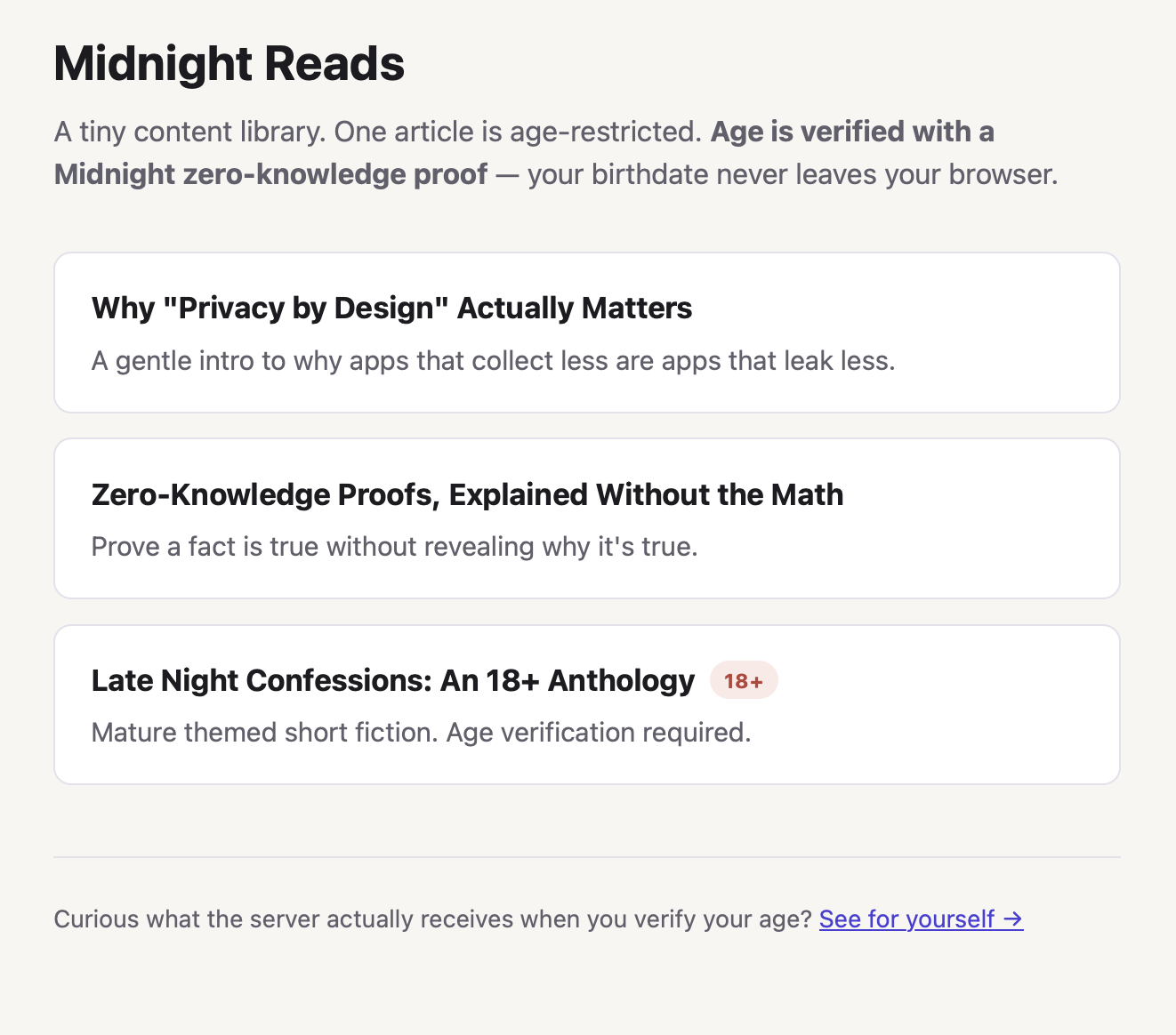
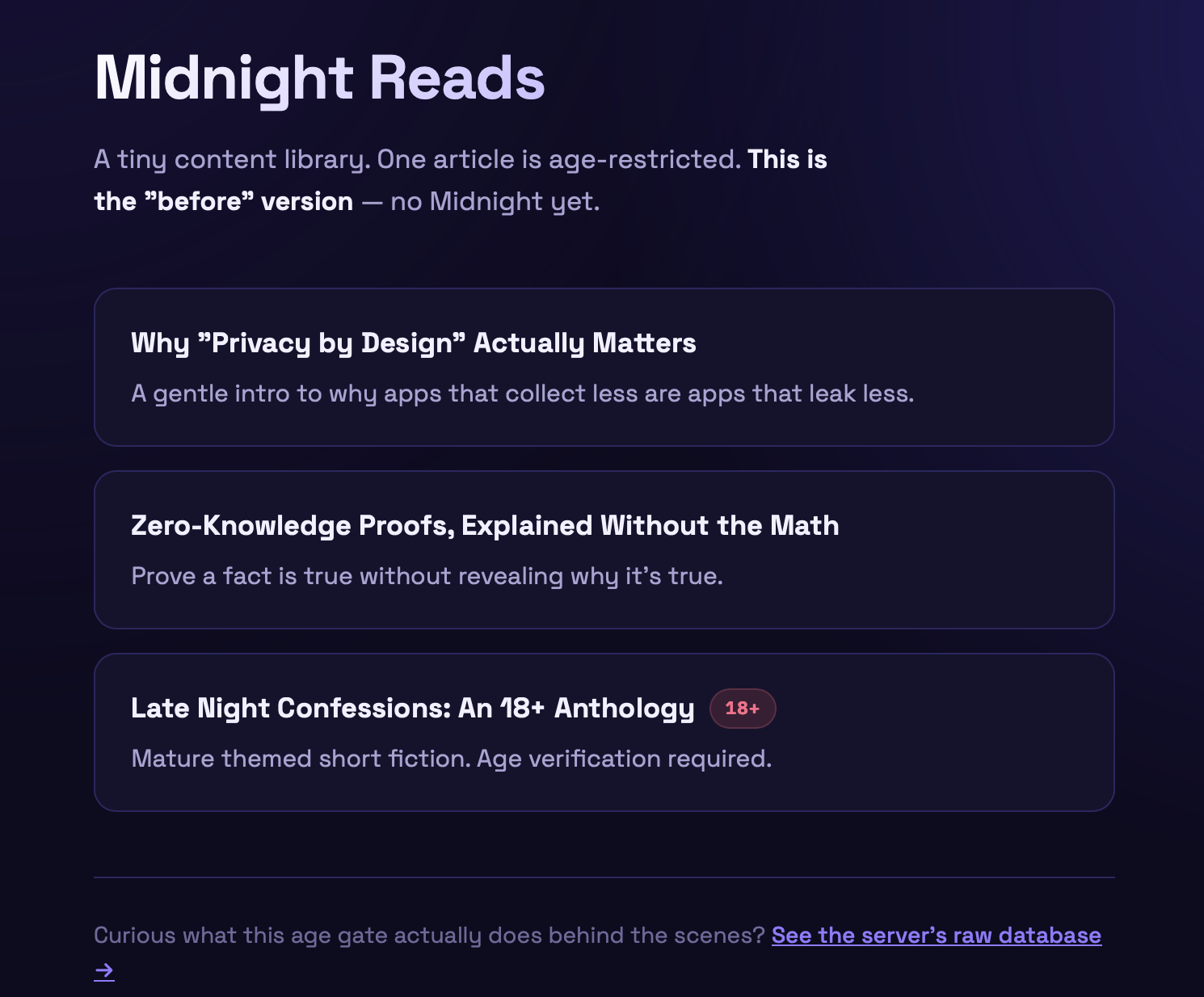
How I built it: The "before" app is a small Express server and vanilla JS frontend with three articles, one gated behind a naive date-of-birth form that gets written straight to a JSON file on disk.
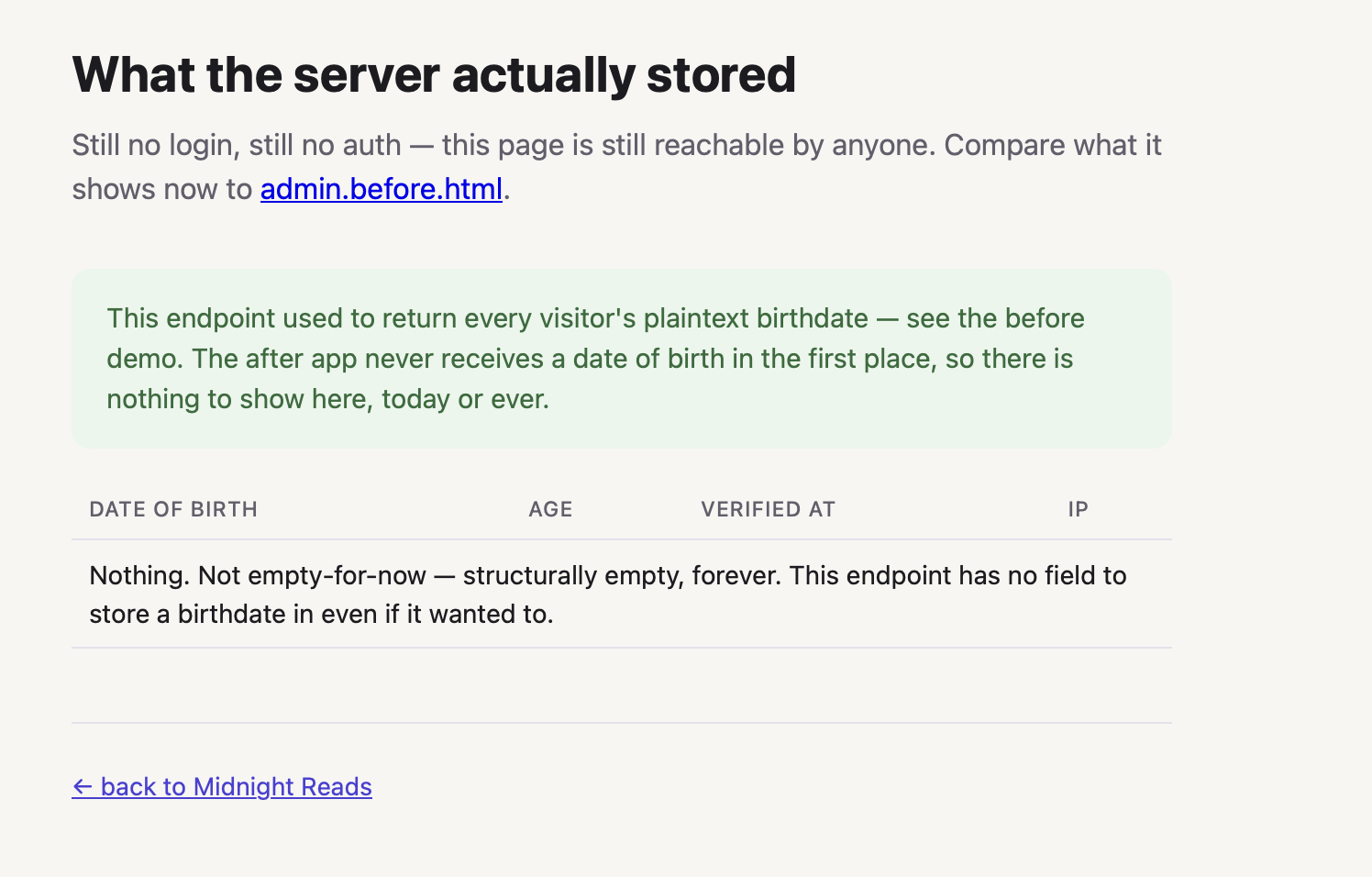
For the "after" version, compact/age_verification.compact defines the actual zero-knowledge circuit: a private witness (date of birth, as days since epoch) compared against a public cutoff date, returning a boolean. midnight/prover.js runs client-side, evaluating that same comparison locally so the birthdate never leaves the browser. midnight/verifier.js runs server-side and only ever receives the proof result plus the public cutoff date, never a birthdate. The original before-hackathon files are kept in the repo (server.before.js, app.before.js, admin.before.html) so the diff is easy to inspect directly.
Challenges we ran into: The build environment didn't have Midnight's compactc compiler or a live proof server available, so the proving/verification step is simulated rather than run against real Midnight infrastructure disclosed directly in code comments in prover.js and verifier.js. What's real and tested end-to-end is the privacy property that matters: the birthdate is read once in the browser and never serialized, transmitted, or stored anywhere.
What's next: Compiling the circuit against a real compactc toolchain and wiring in an actual Midnight proof server and wallet integration via midnight.js, so the proof itself is cryptographically sound rather than simulated.
Built With
- compact
- express.js
- html
- javascript
- midnight
- node.js
- zero-knowledge-proofs

Log in or sign up for Devpost to join the conversation.