-
-
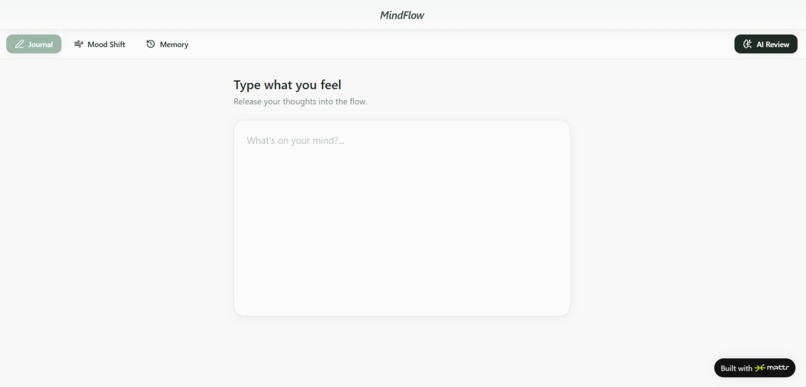
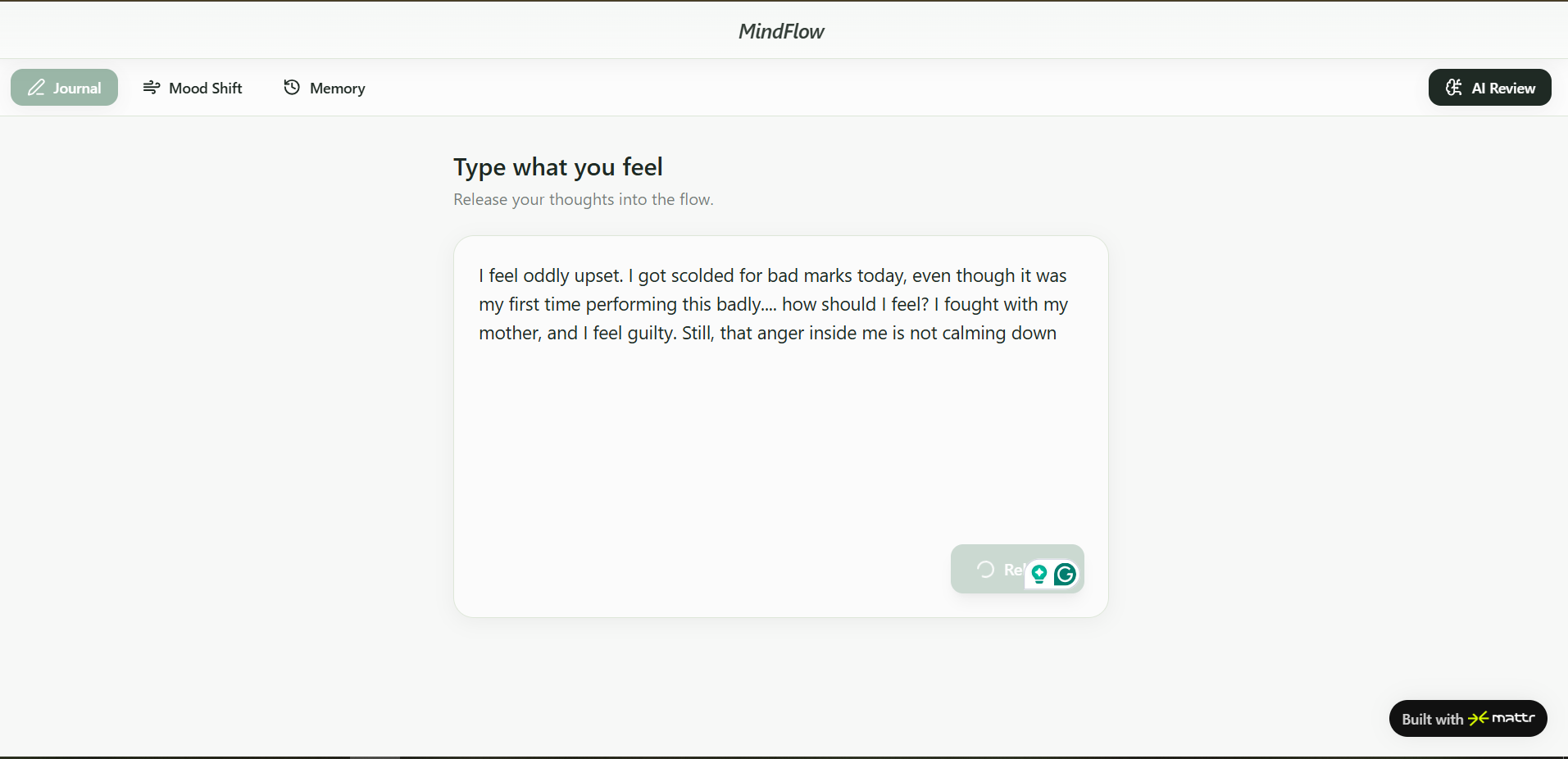
Journal page: entry
-
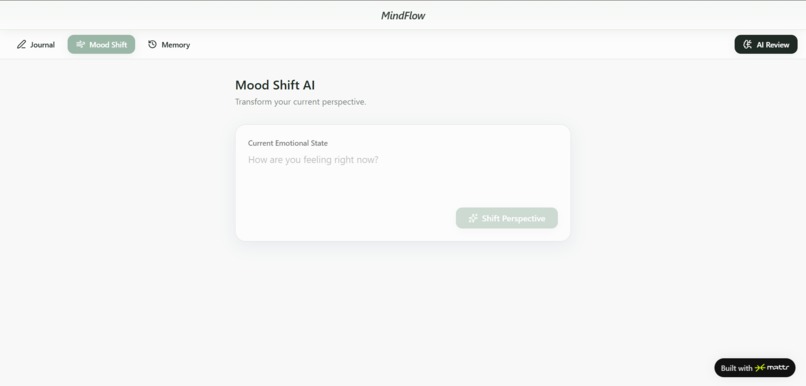
Perspective shift and feedback
-
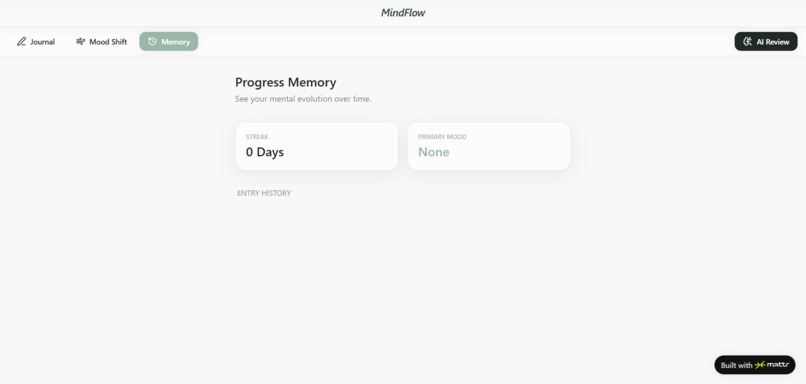
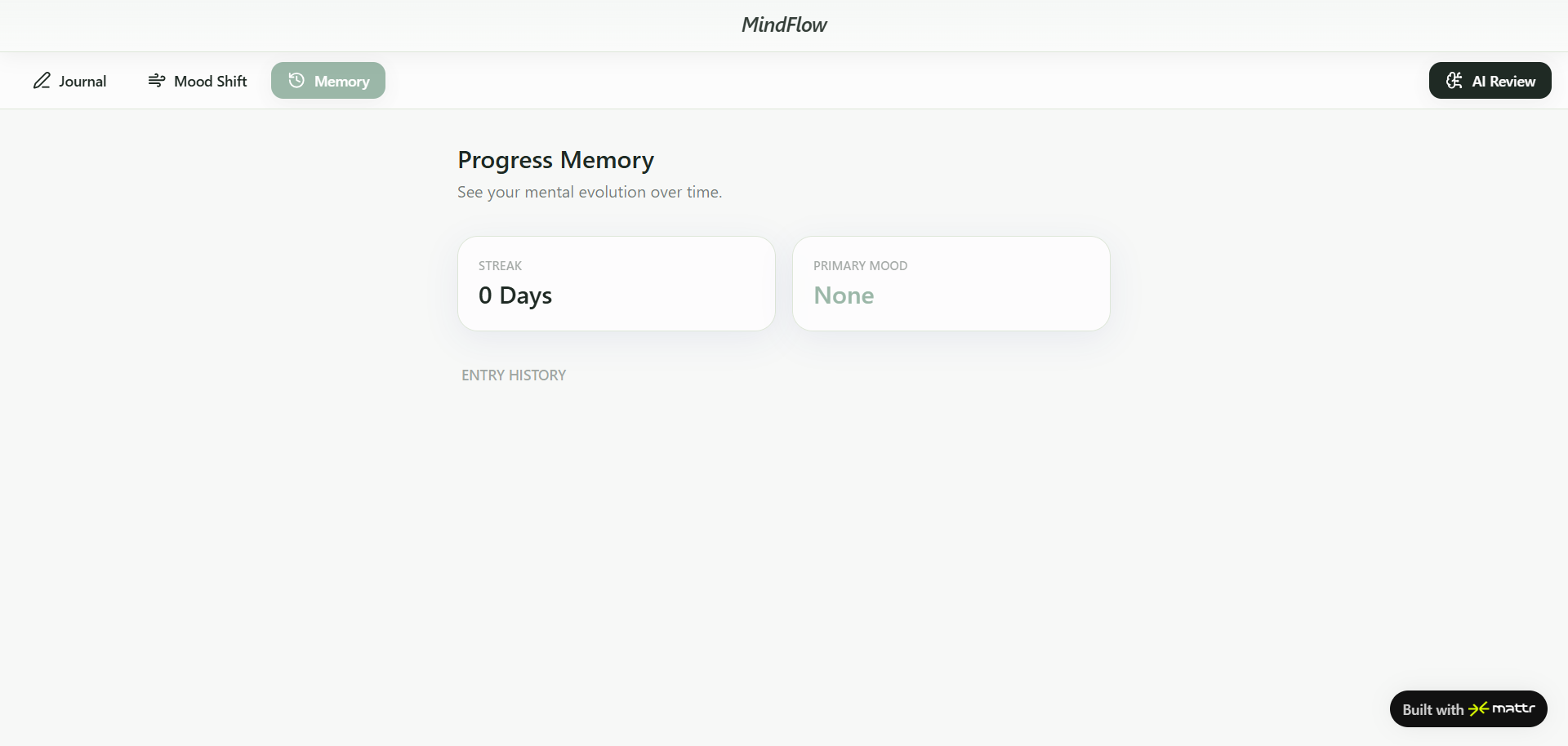
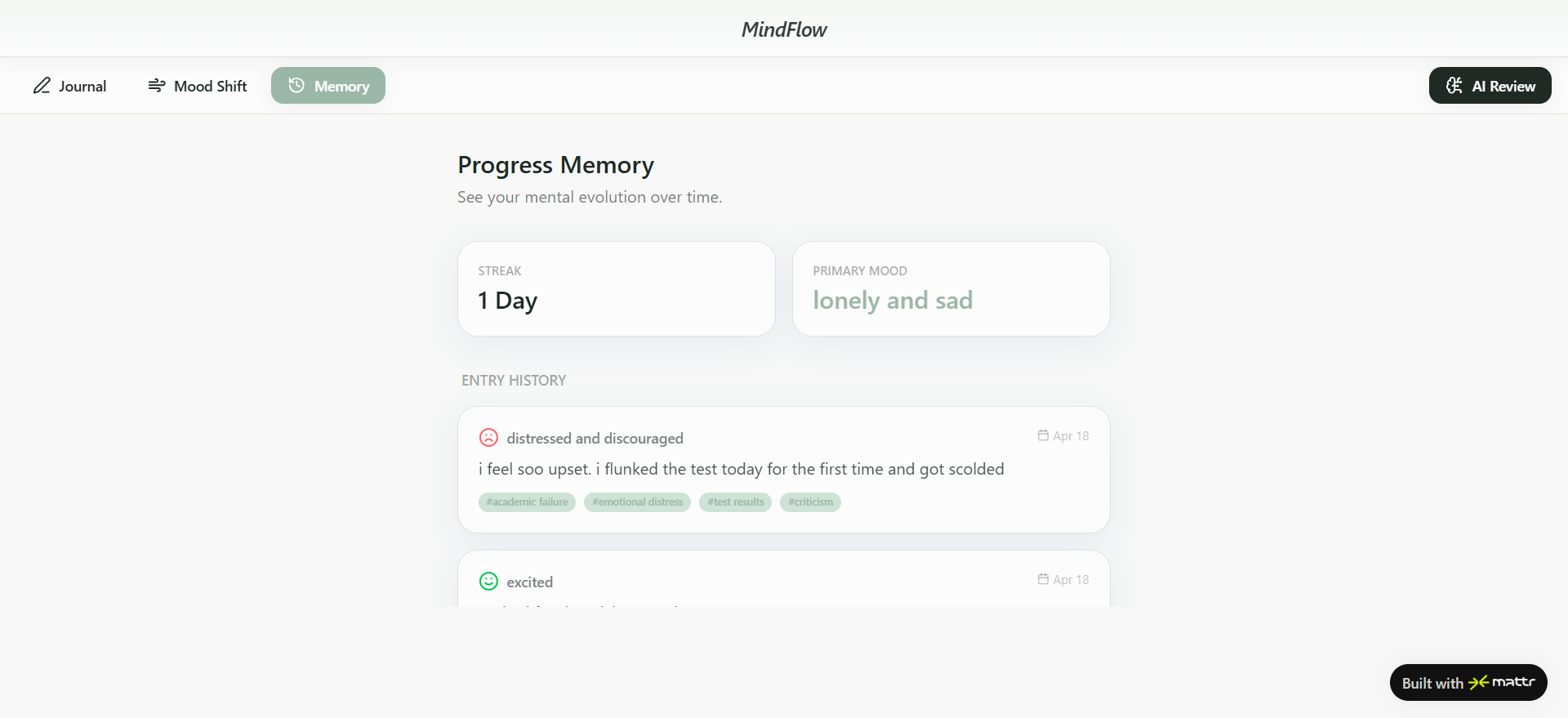
Memory and past data (landing page without any input data)
-
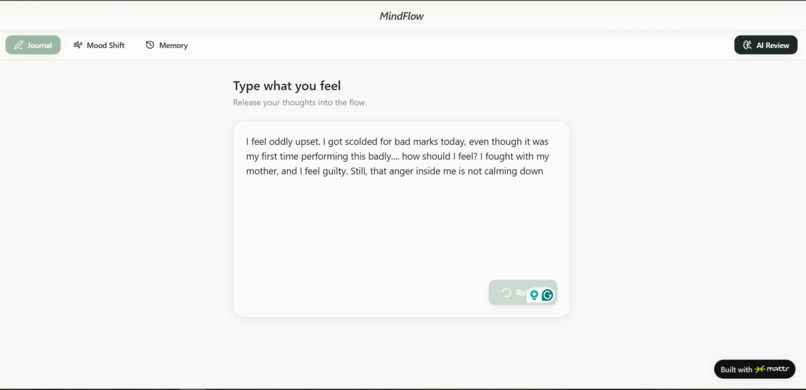
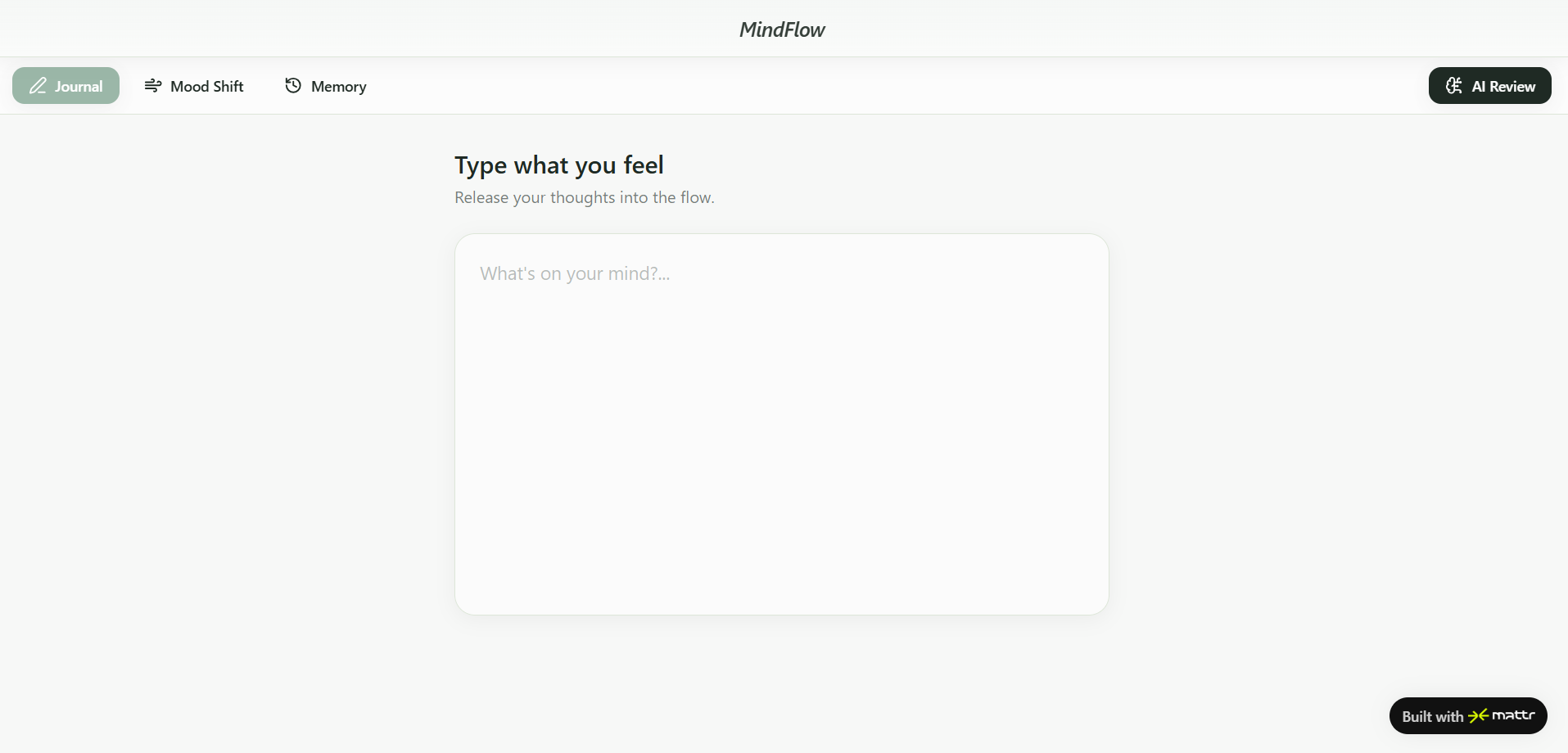
journal page: type what you feel
-
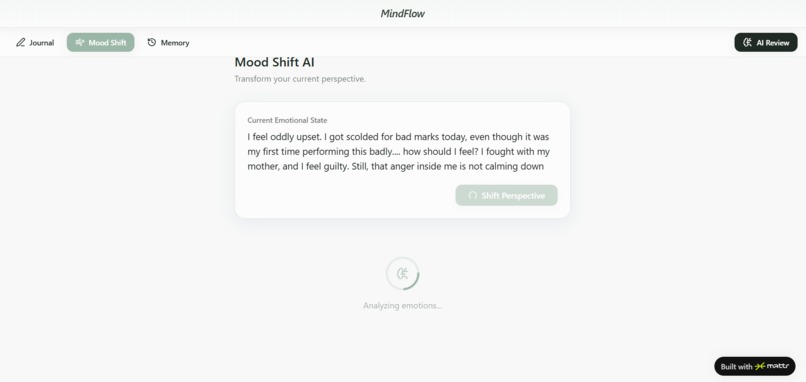
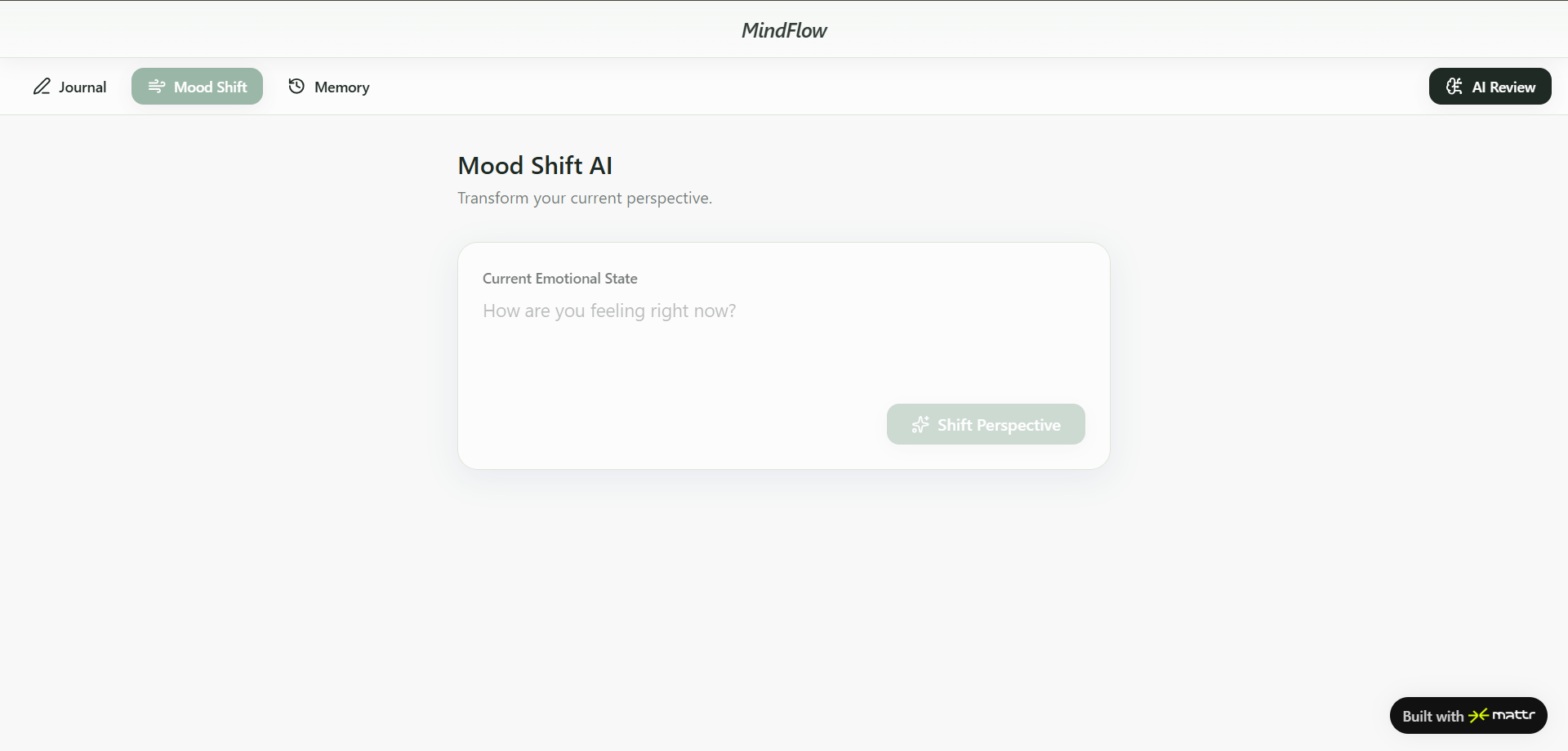
Help change mood to more positive
-
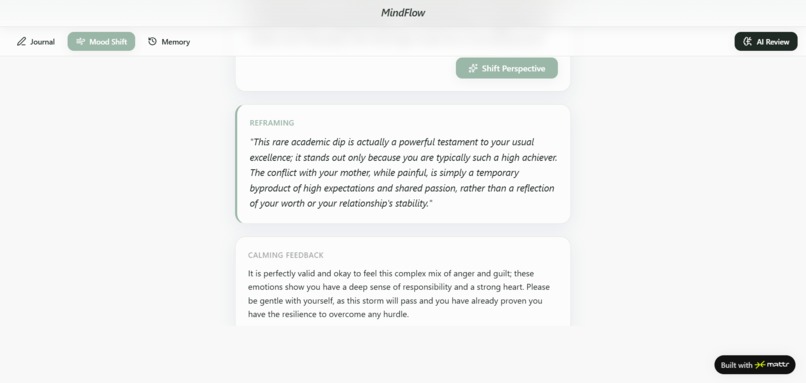
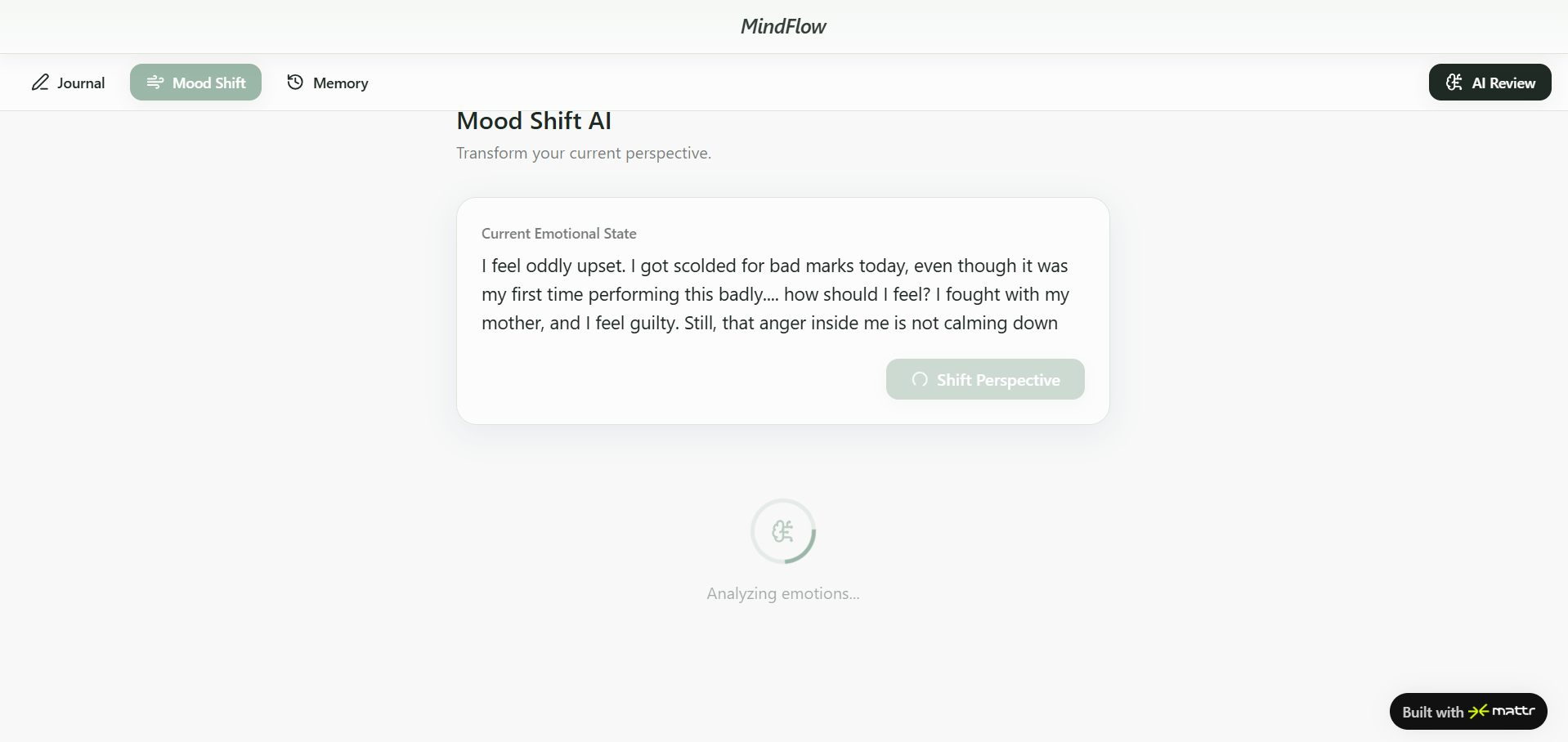
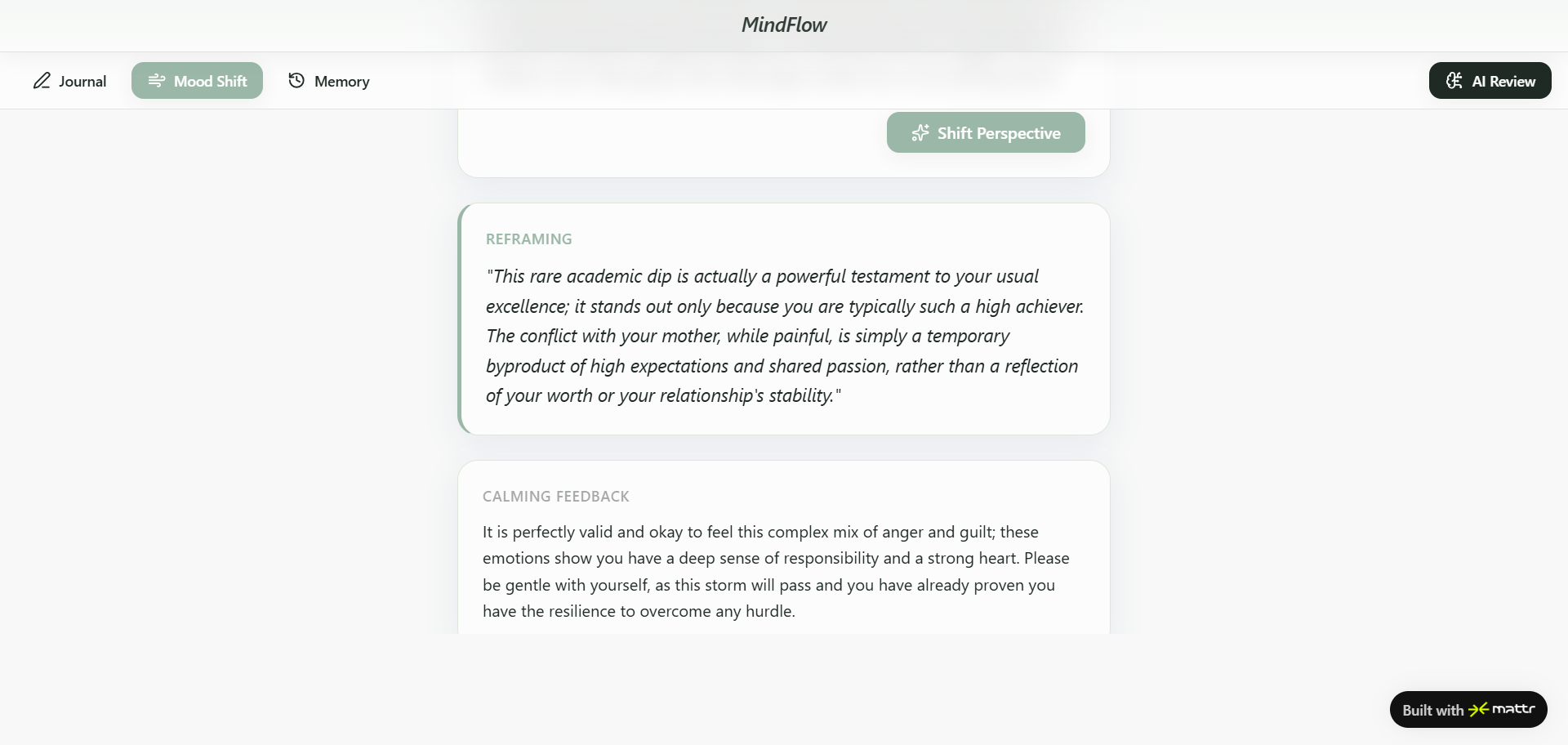
mood shift review 1
-
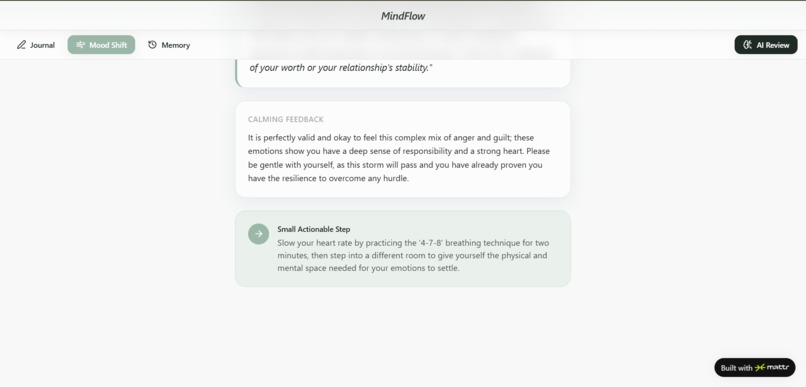
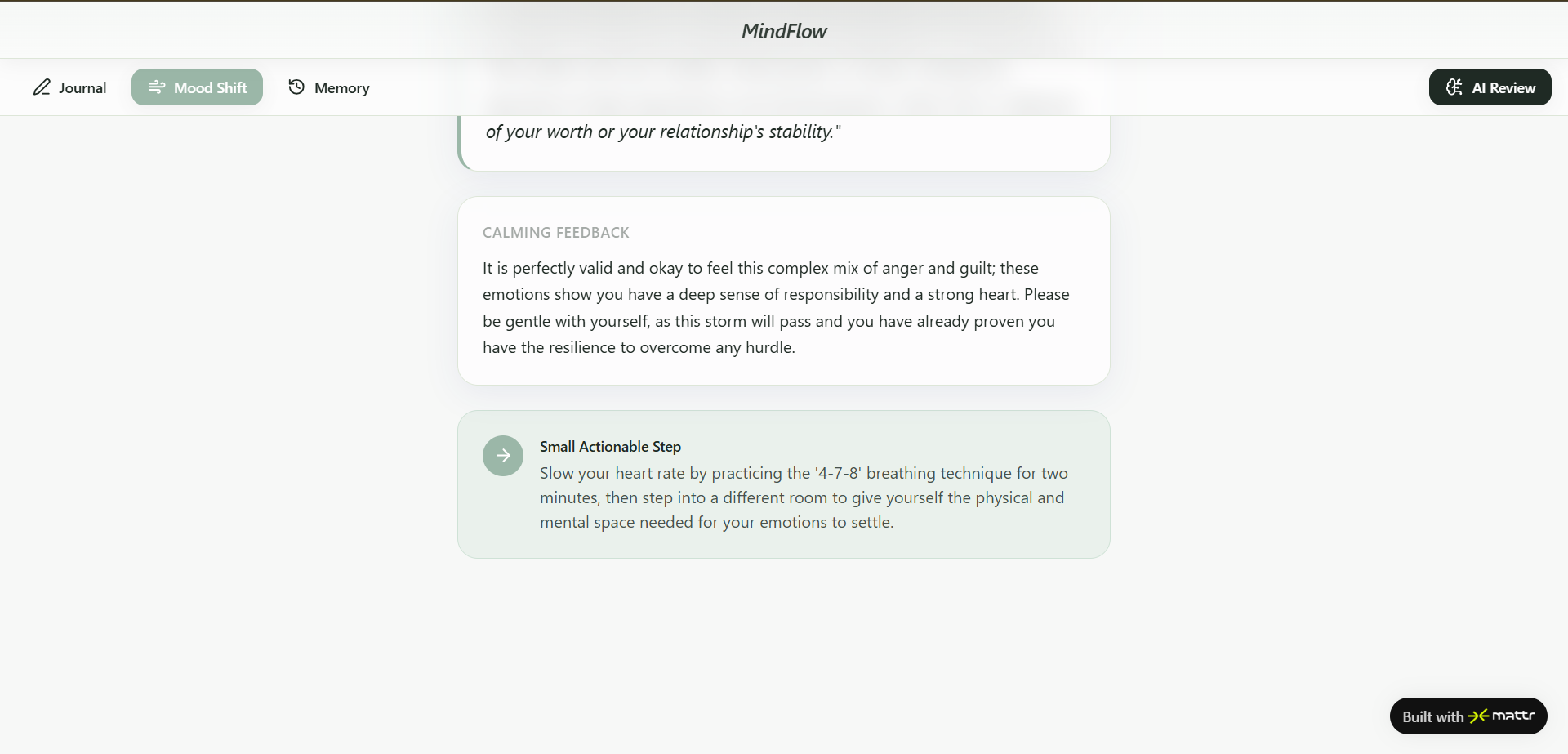
mood shift review 2
-
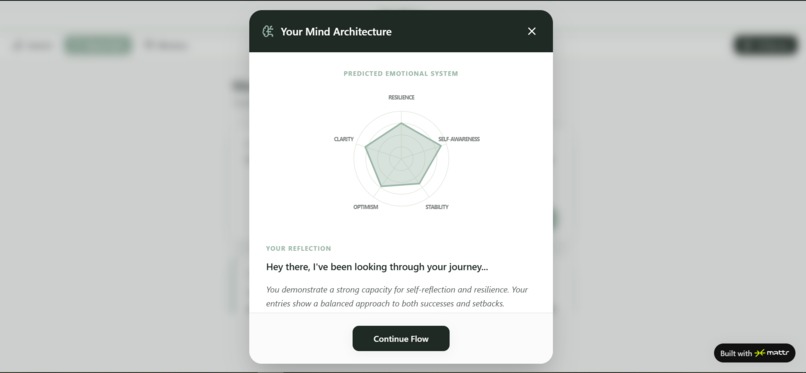
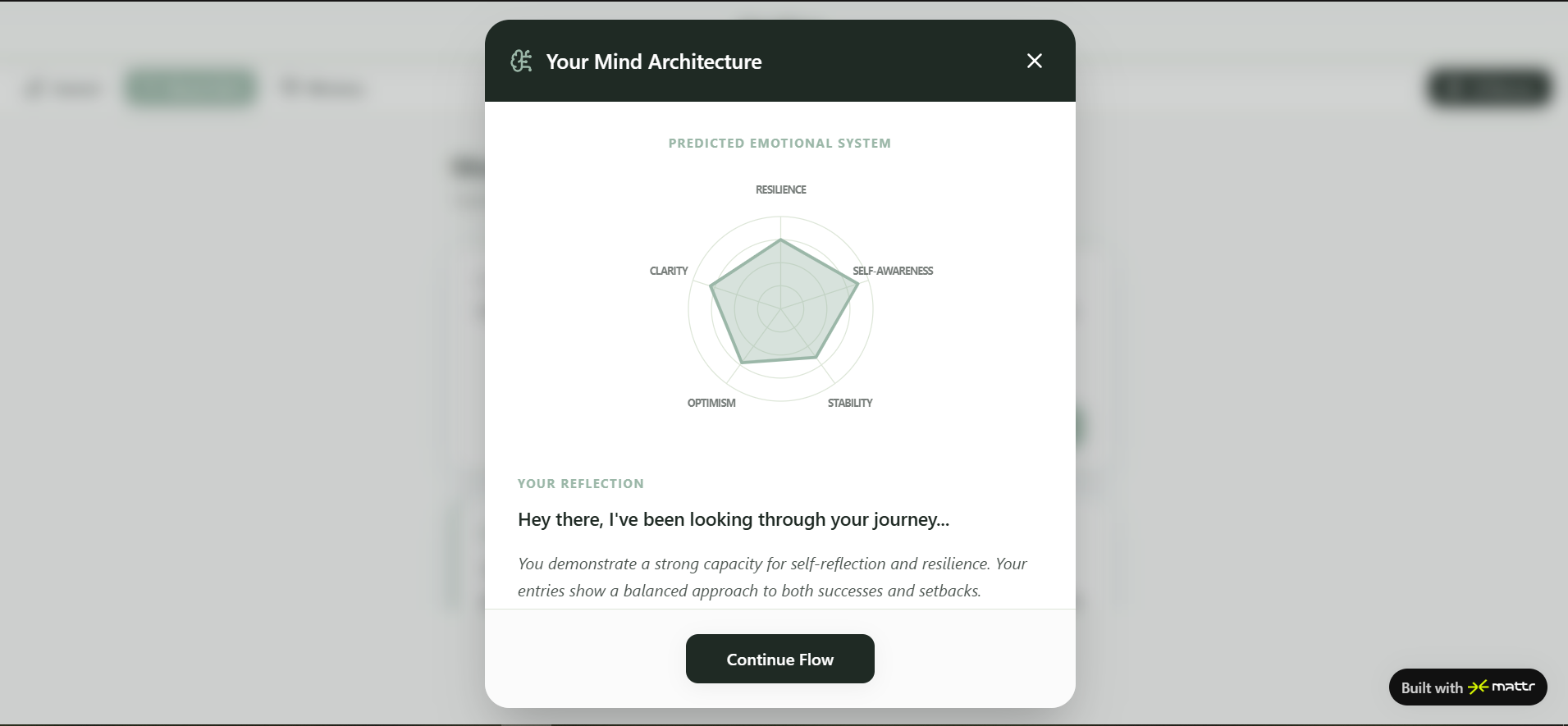
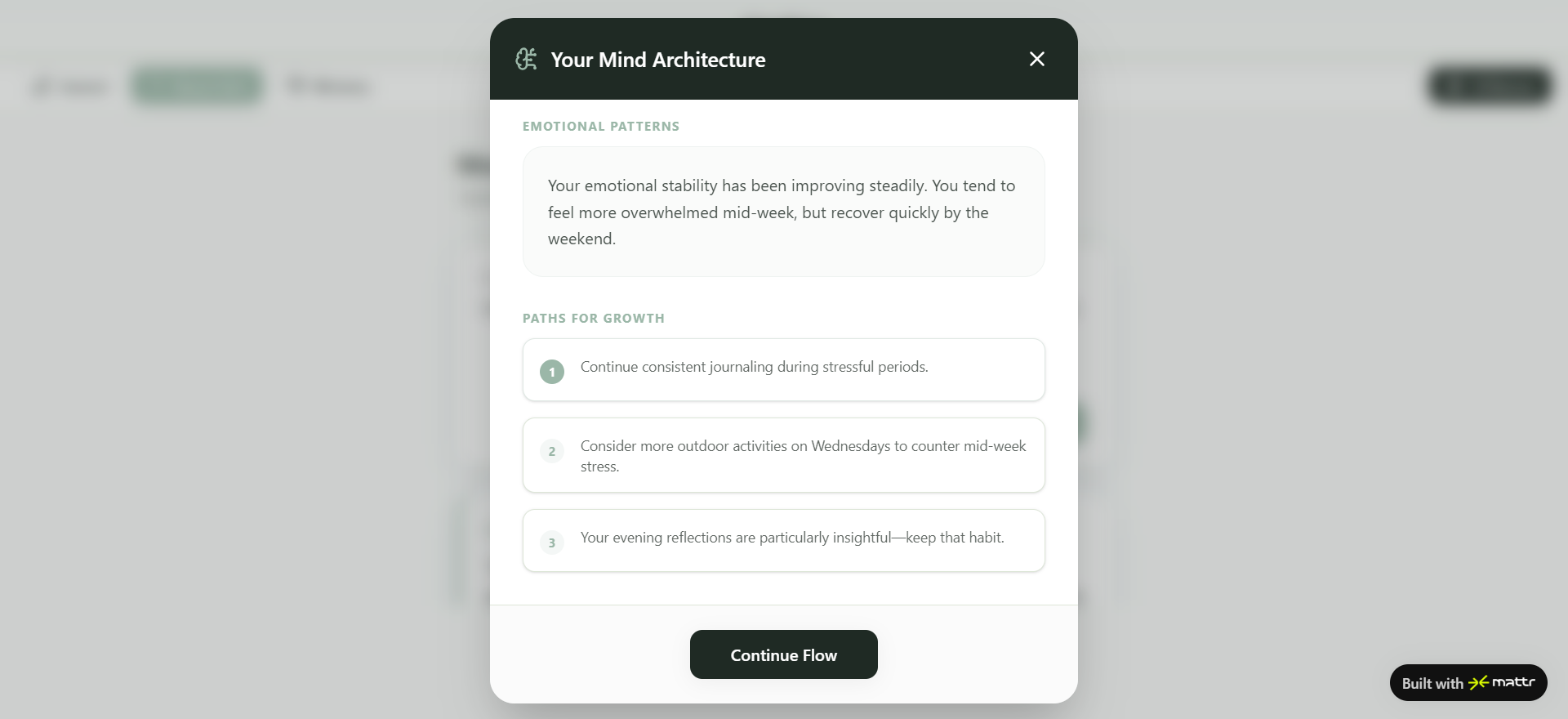
total analysis 1
-
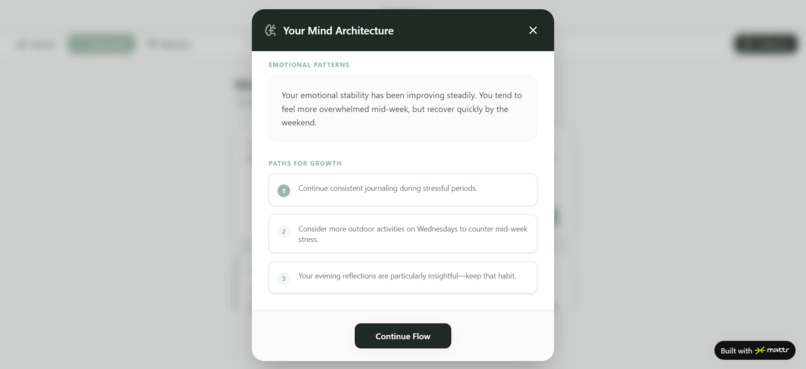
total analysis 2
-
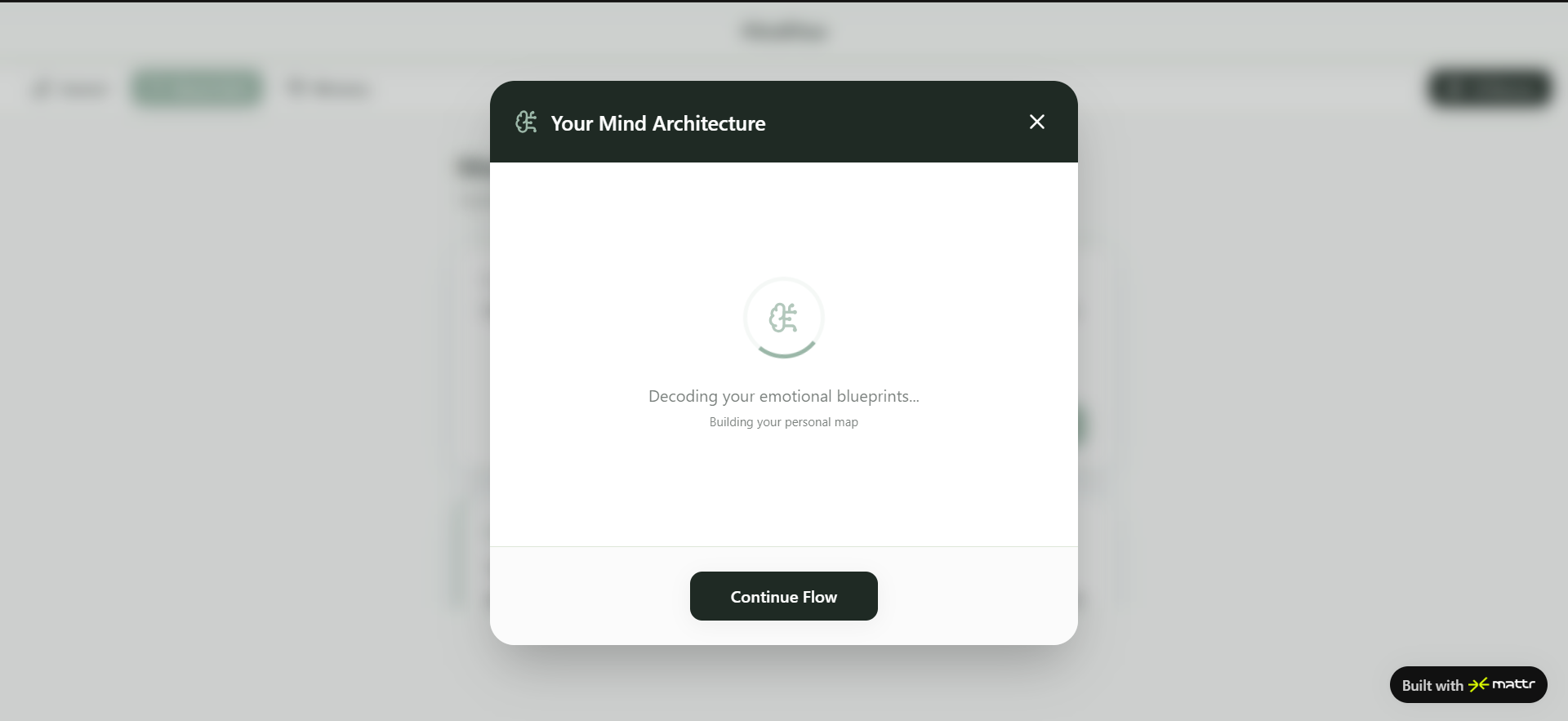
total analysis loading
-
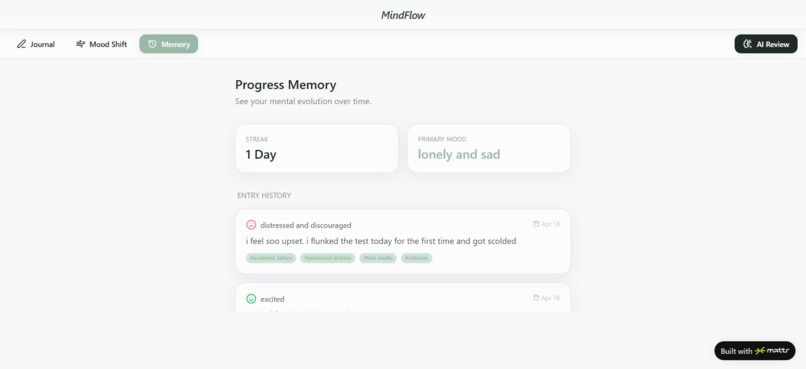
stored data 1
-
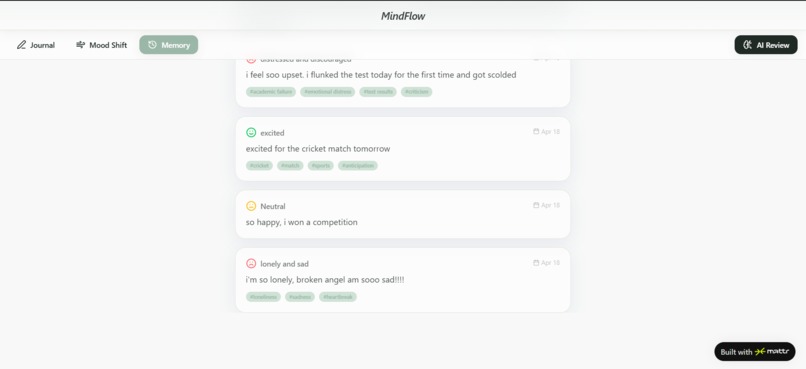
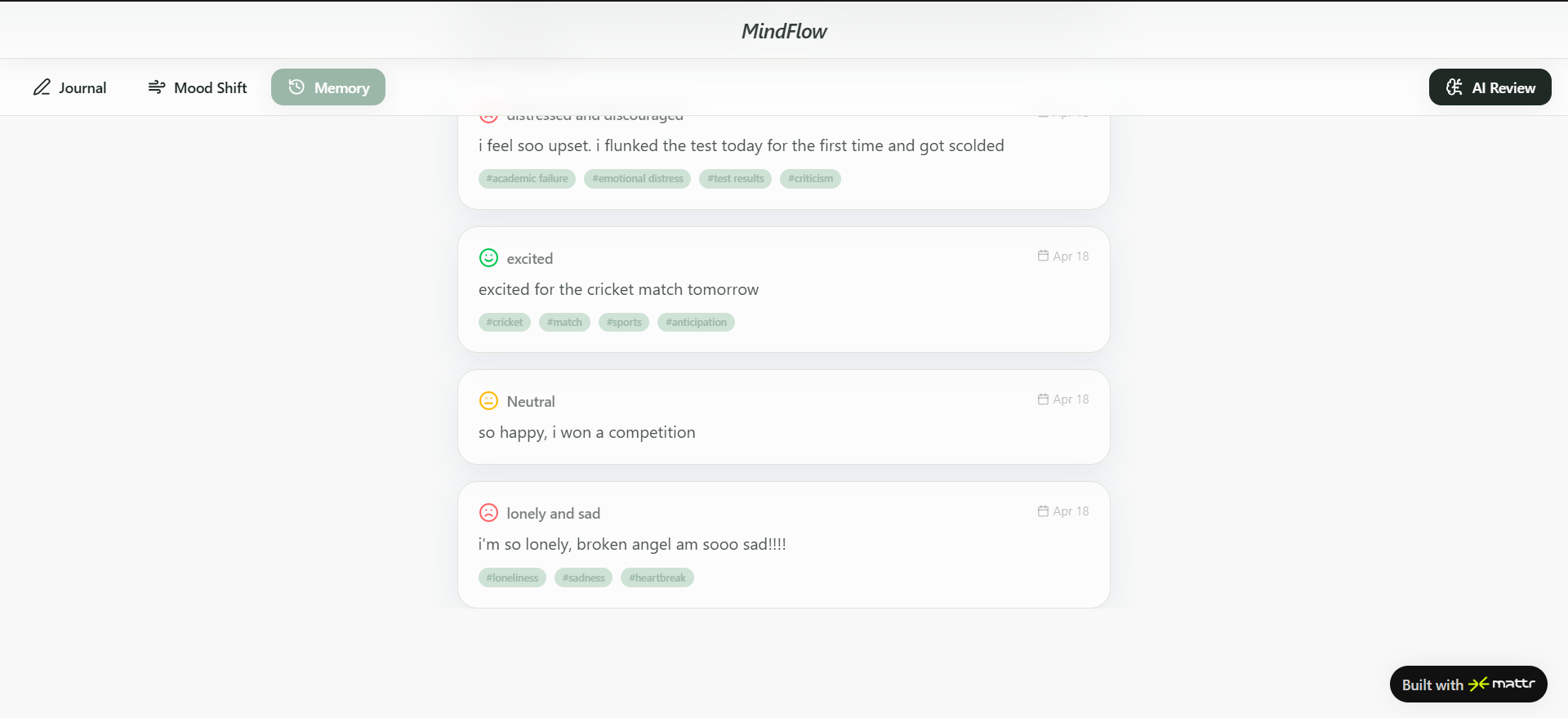
stored data 2
Inspiration
Decision-making can become overwhelming when thoughts are unstructured, emotions are noisy, or too many options compete at once. I wanted to build something that doesn’t behave like a generic chatbot, but instead acts like a structured thinking companion that helps users move from confusion to clarity.
MindFlow was inspired by a simple question:
What if AI could help people think better, not just answer questions?
What it does
MindFlow is an AI-powered decision assistant that helps users break down complex thoughts into structured decisions.
Through guided flow logic, it:
- Clarifies the core problem
- Detects possible cognitive patterns or biases
- Generates realistic options
- Suggests one concrete next step
- Provides a Clarity Score to show progress
Instead of endless chat, MindFlow focuses on resolution.
How I built it
I built MindFlow using an AI-assisted no-code application builder and designed it around response-driven logic rather than traditional chatbot behaviour.
The system uses:
- Multi-turn guided questioning
- Stateful conversation logic
- Decision branching based on user input
- Structured response formatting
- A calm, minimal interface designed to reduce cognitive load
A custom reasoning framework transforms user input into structured outputs:
- Situation
- Detected Pattern
- Options
- Next Step
- Clarity Score
Challenges I ran into
One major challenge was balancing structure with flexibility — making the assistant feel guided without feeling rigid.
Another challenge was preserving context across multiple turns while keeping the user experience simple and calm.
There were also technical challenges around tooling, deployment, and publishing, which required iterating across multiple platforms before achieving a working prototype.
What I learned
I learned that building AI products is not just about model outputs — it is also about designing reasoning flows, user trust, and interface behaviour.
I also learned how important prompt architecture, state logic, and calm UX are when building tools for thinking and decision support.
What's next for MindFlow
Future versions could include:
- Visual decision trees
- Voice-to-Clarity input
- Thinking journal/history
- Advanced bias detection
- Persistent user sessions
- Productivity integrations
The goal is to evolve MindFlow into a true cognitive support tool.
Built With
- ai
- ai-assisted
- app
- builder
- conversational
- design
- development
- engineering
- json
- logic
- mattr
- no-code
- prompt
- prototyping
- react
- reasoning
- response-driven
- stateful
- structured
- typescript
- ux
- workflow

Log in or sign up for Devpost to join the conversation.