Inspiration
Middleman started with research into a practical question: Which audiences in Bangladesh have everyday problems worth building a sustainable startup around?
I initially explored promising customer segments for a B2C startup. That led me to small businesses selling through Facebook and other social platforms—businesses where a seller often handles customer conversations, orders, payments, and deliveries themselves.
The audience felt familiar for a personal reason: my mother frequently buys from these businesses. Connecting my research with her experience helped me look beyond the storefront and think about what happens after someone decides to buy.
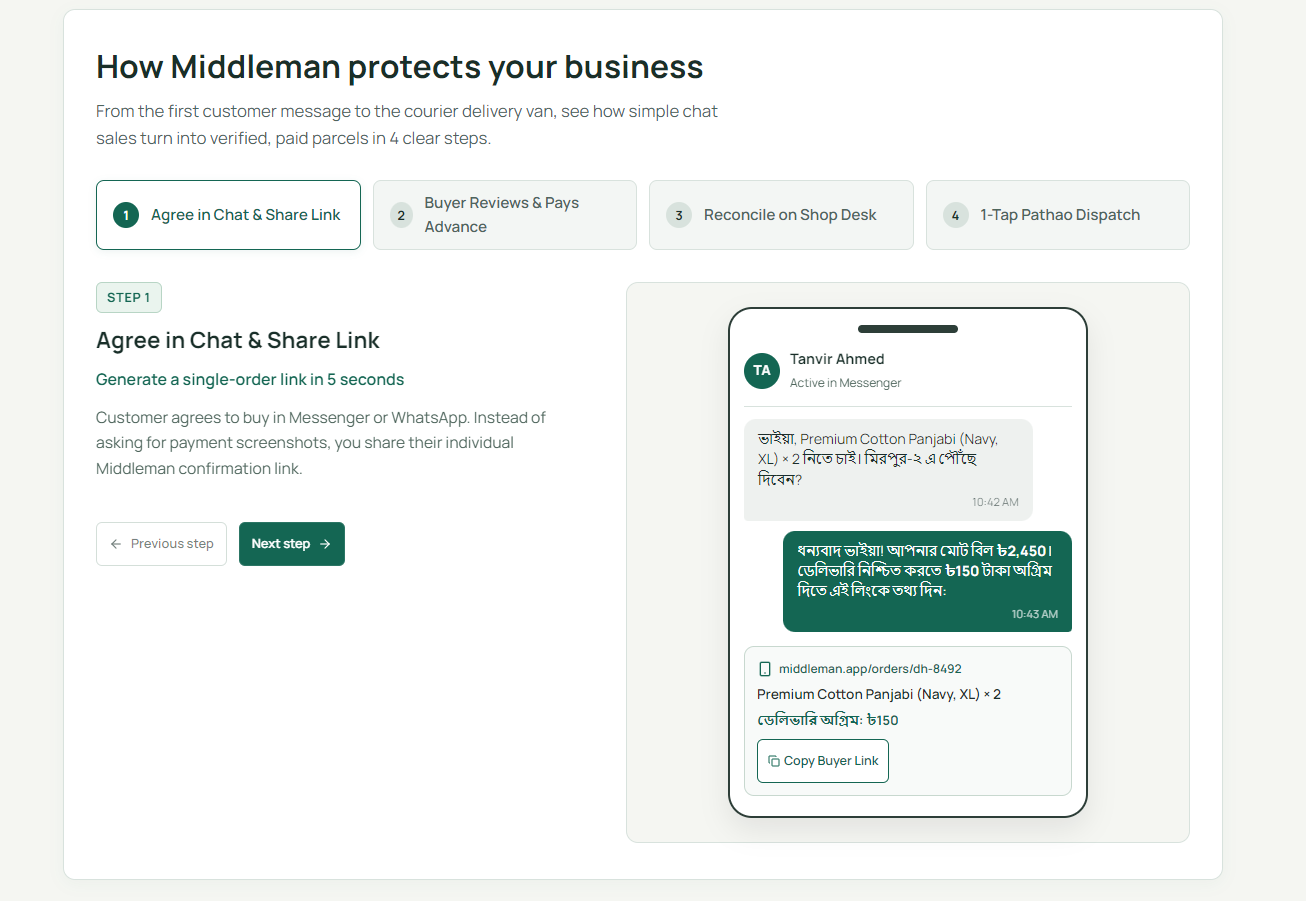
A conversation can establish what a customer wants, but completing the order requires much more: confirming the amount, collecting an address, checking a payment claim, calculating the remaining balance, and preparing delivery details. When that information lives across messages, both sides depend on repeated follow-ups.
That became the problem I wanted to address: How can small social-commerce sellers manage orders more clearly while giving buyers a simpler, more reassuring experience?
What it does
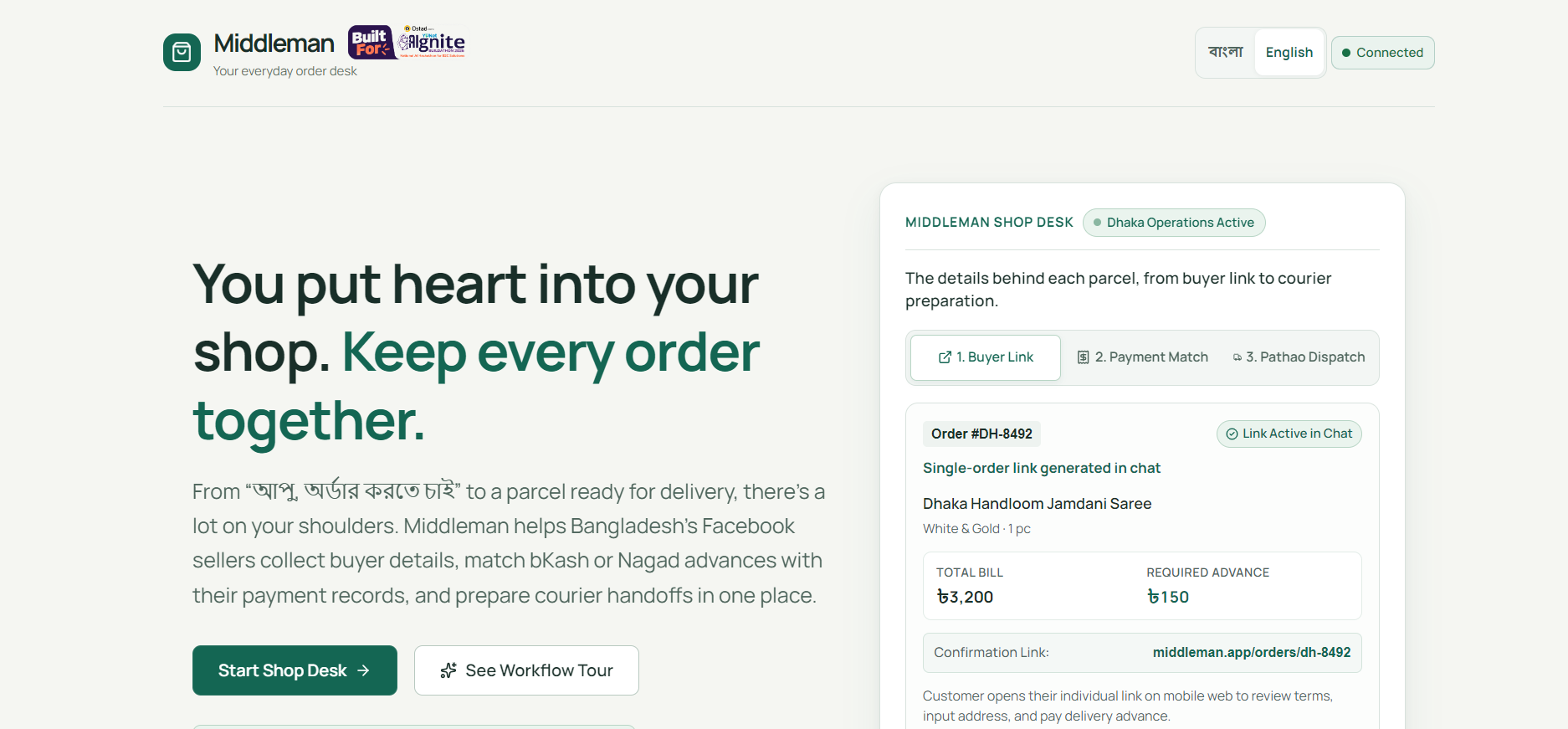
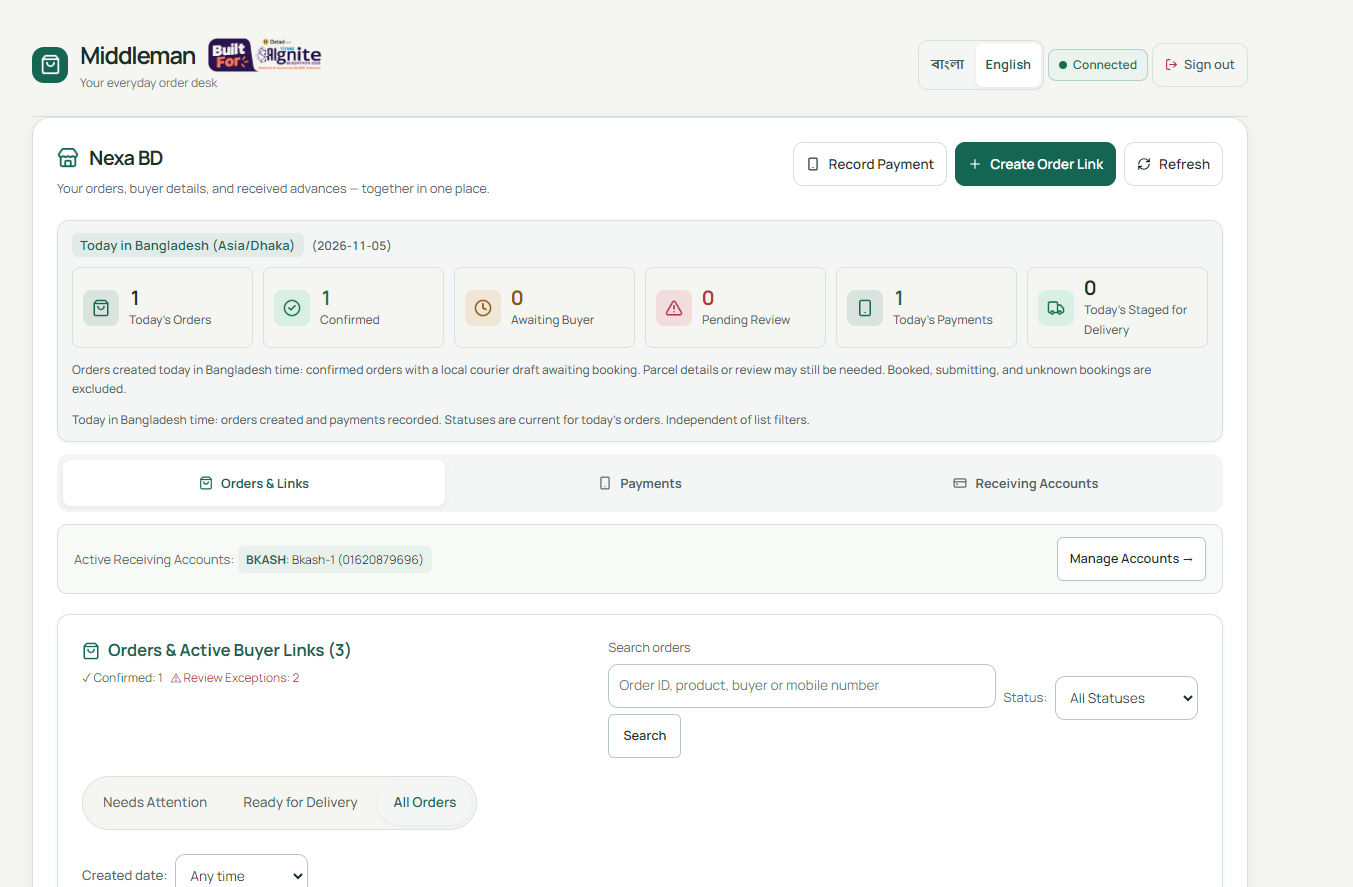
Middleman brings the work between a customer conversation and a courier handoff into one Bengali-and-English workspace.
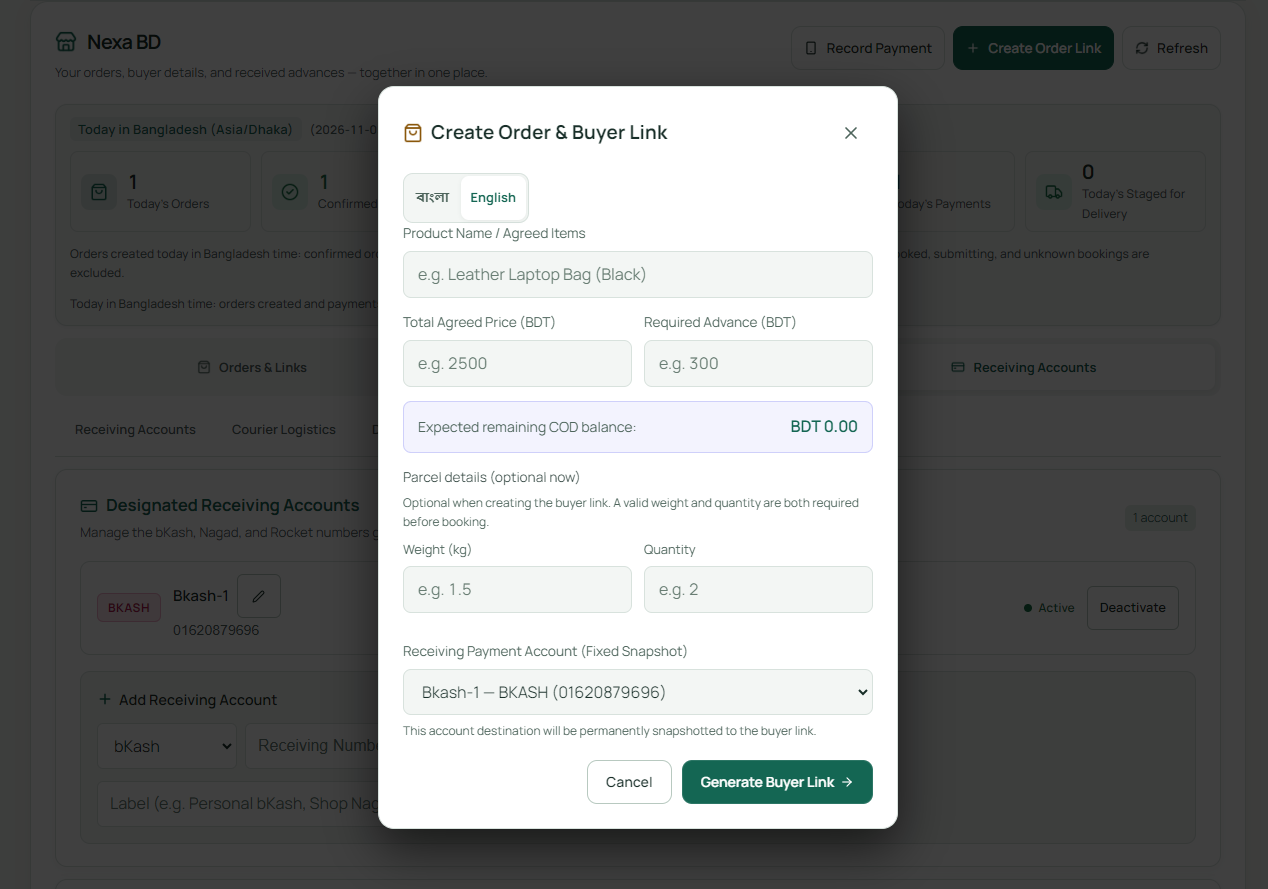
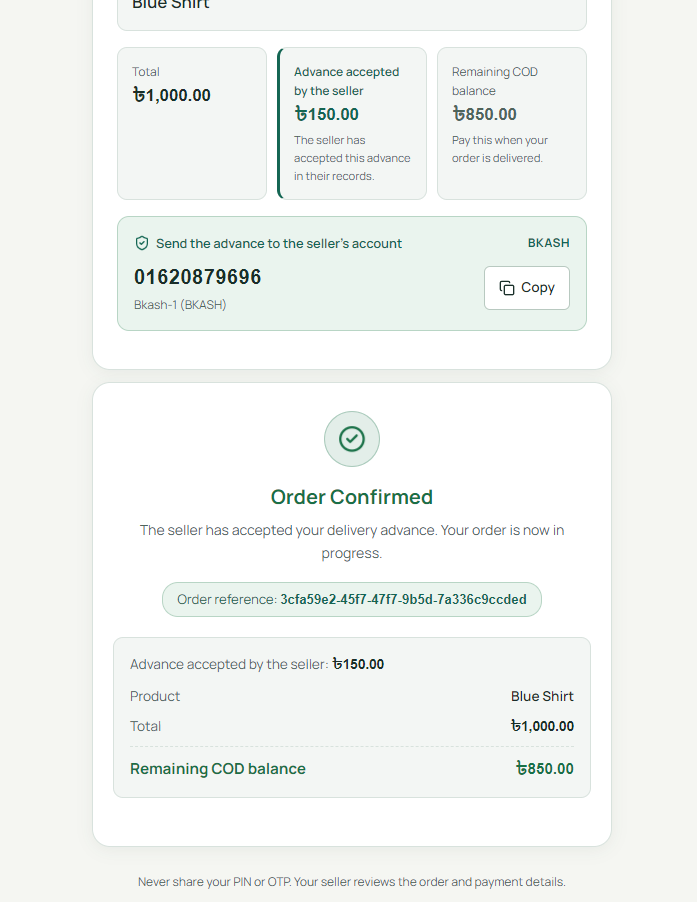
A seller creates an order with the agreed details and shares a dedicated link. The buyer can review the order, provide delivery information, and submit payment details without repeating everything across chat messages.
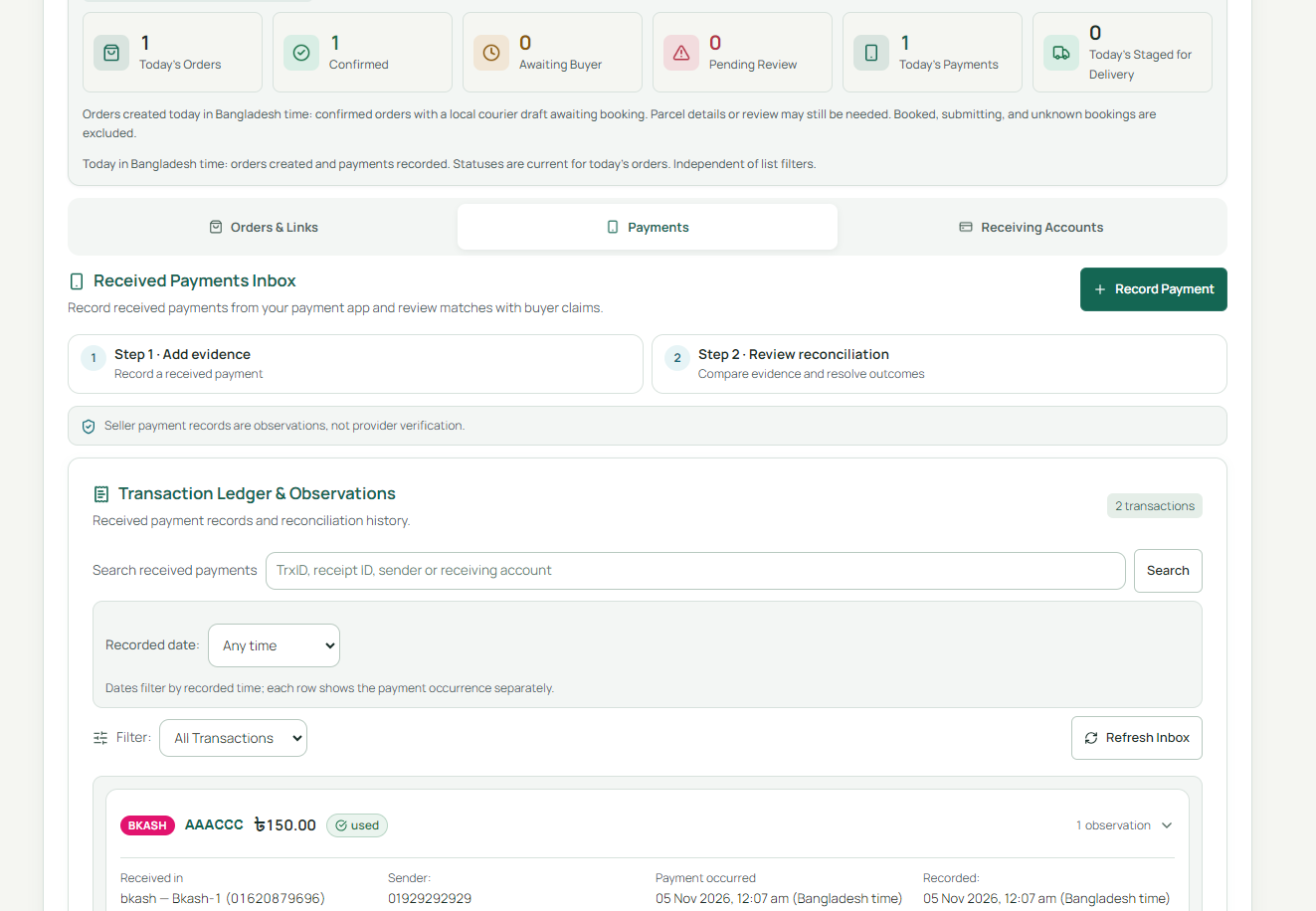
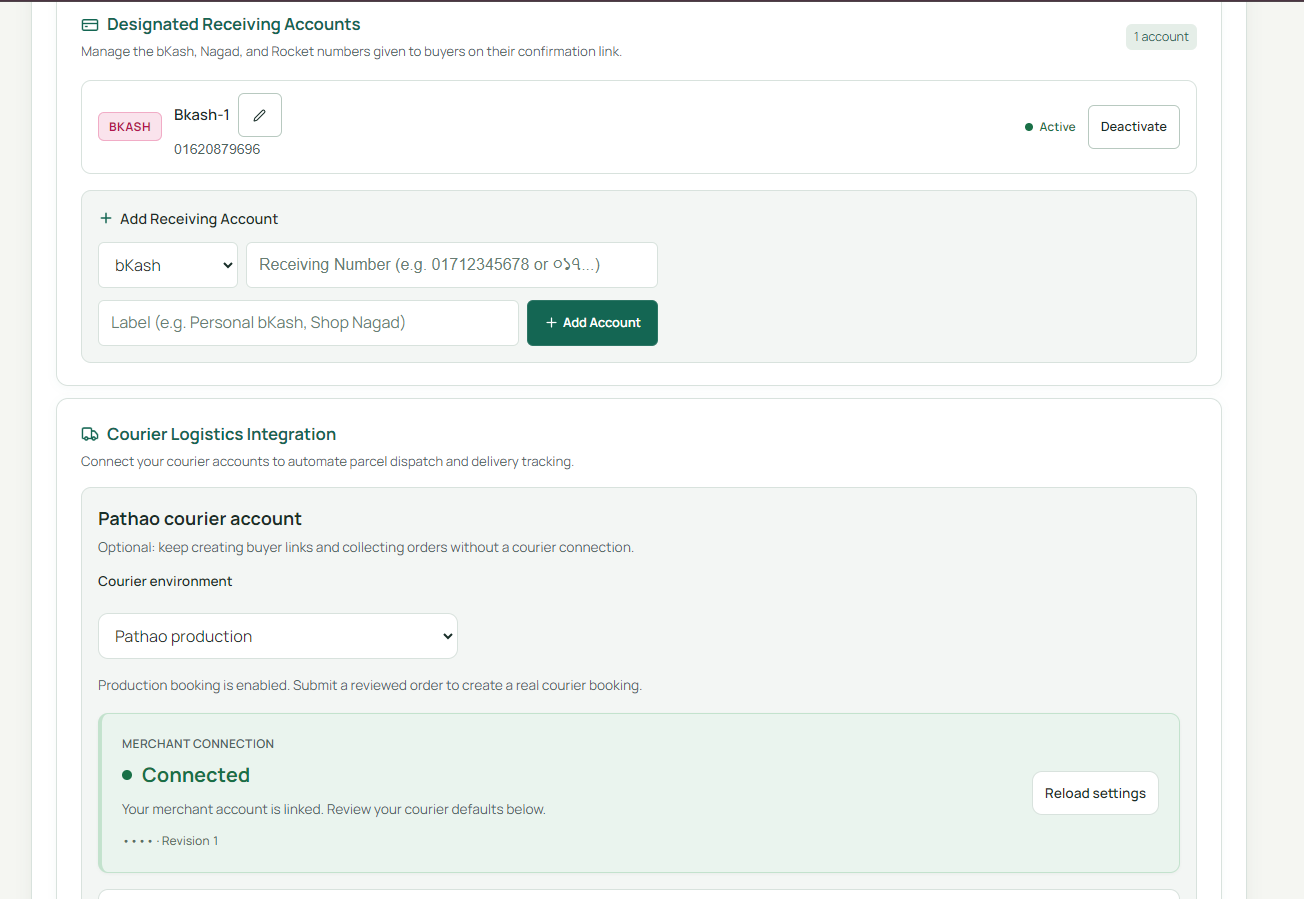
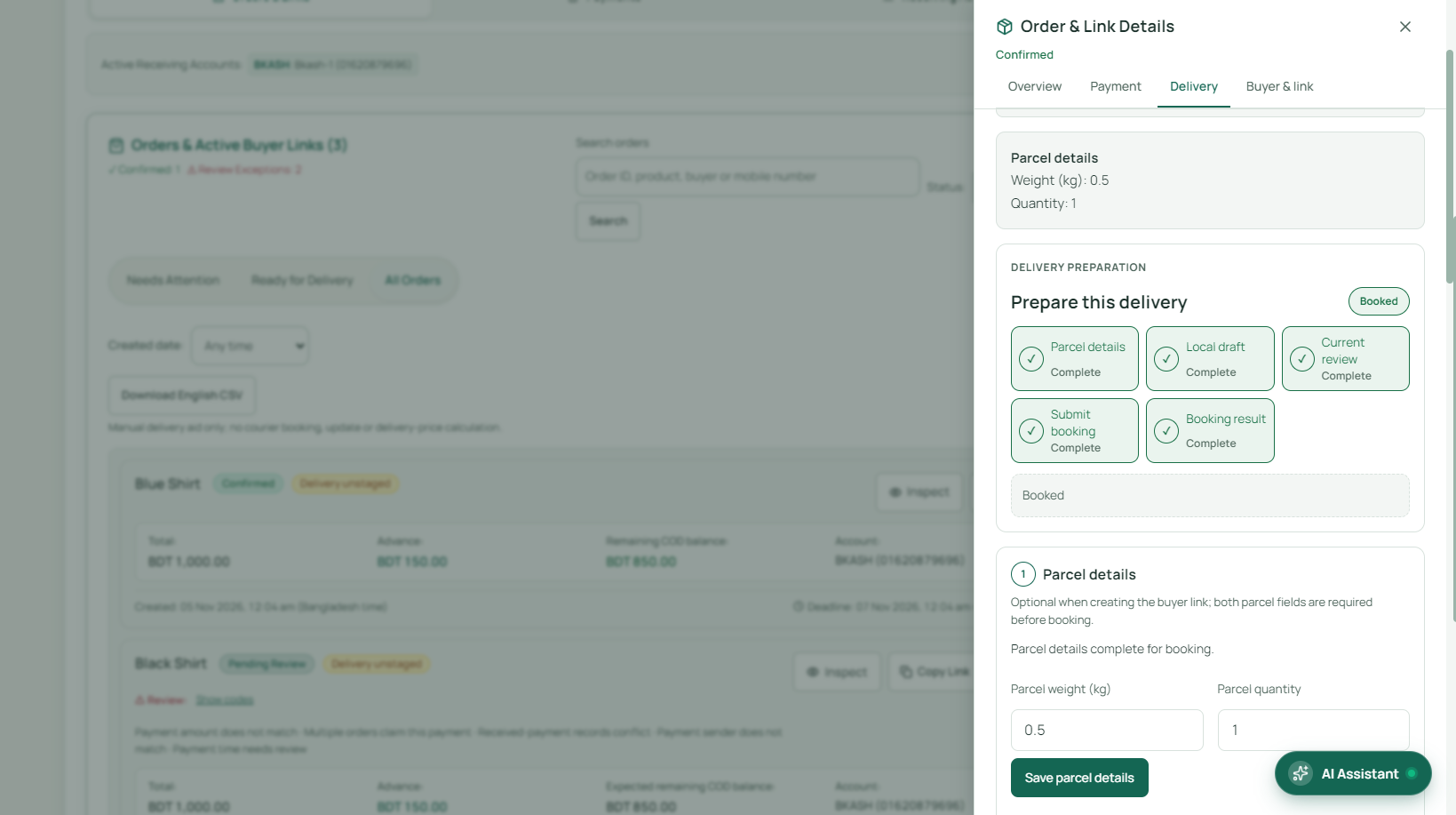
The seller can then compare payment claims with recorded transactions, review discrepancies, track the remaining cash-on-delivery amount, and prepare the order for delivery through the Pathao integration.
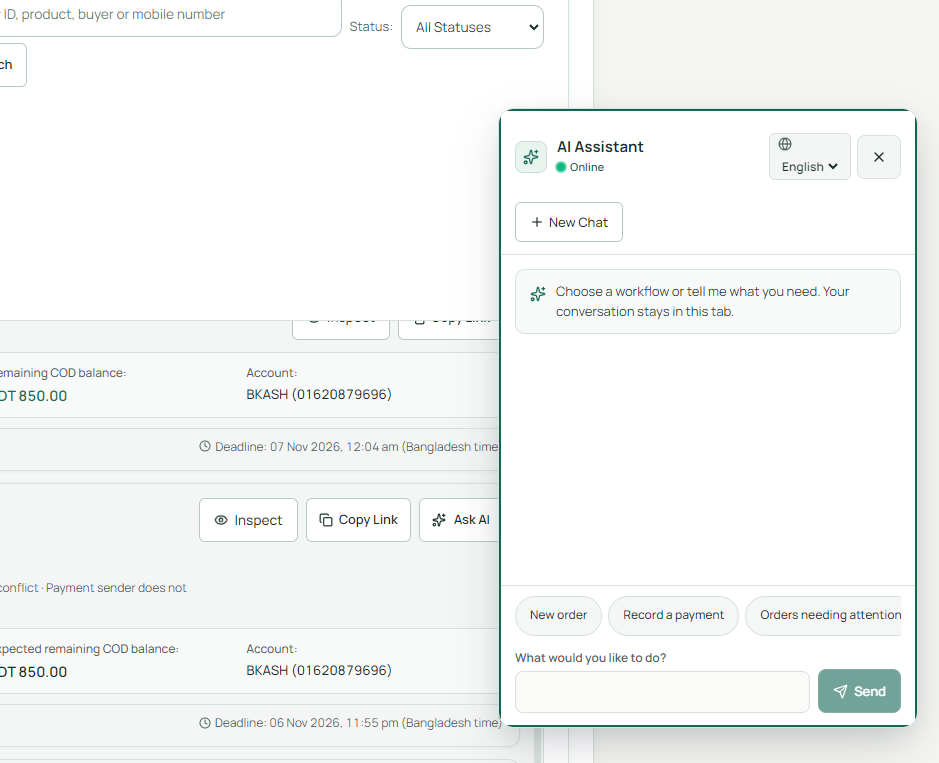
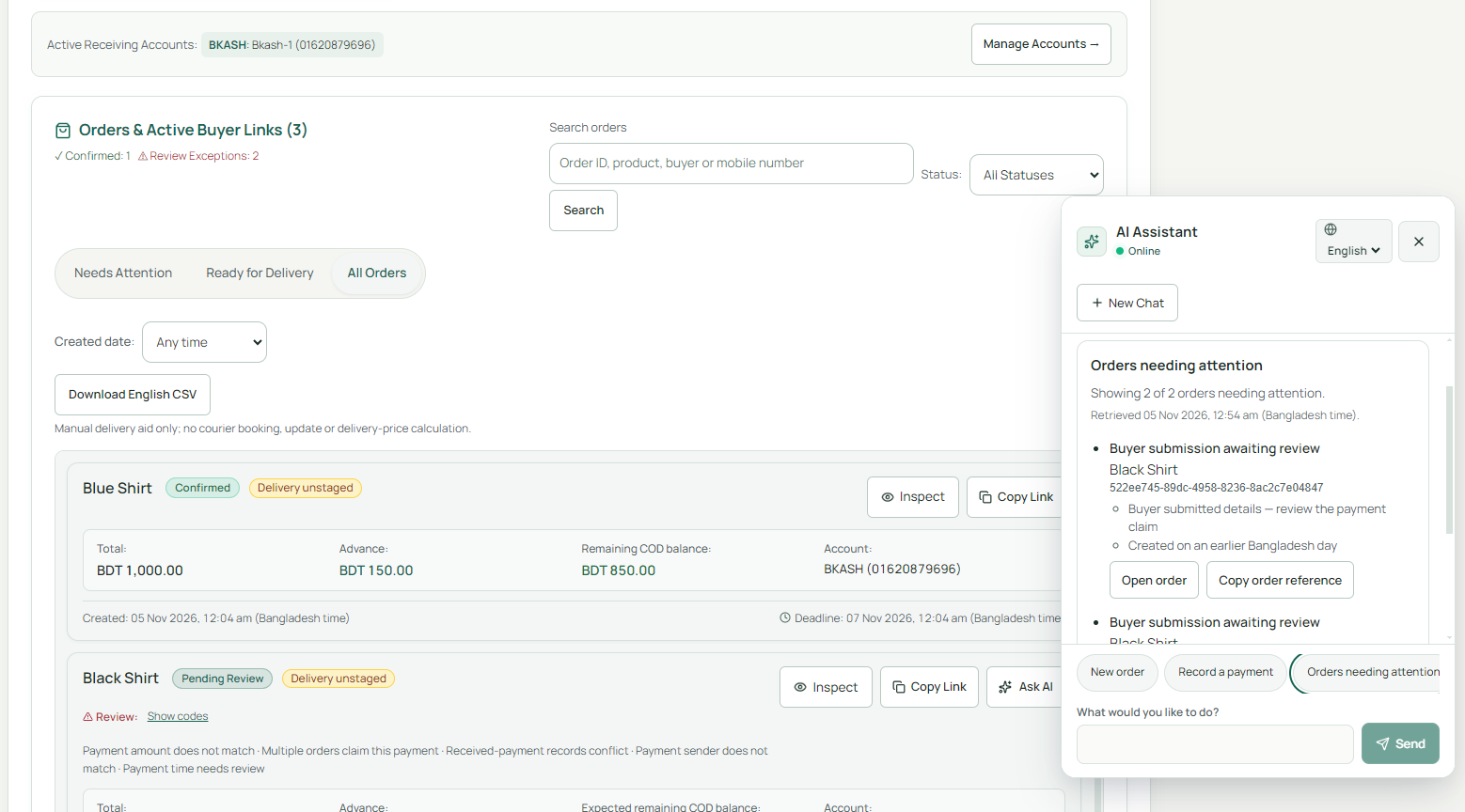
A conversational seller assistant also helps with entering orders, recording transactions, and finding work that needs attention. Sellers review and confirm changes before they are saved.
How I built it
I built separate seller and buyer experiences using React and TypeScript, supported by a FastAPI backend with Pydantic request and response contracts. The application supports PostgreSQL for durable storage and an offline development mode.
I organized the product around the order journey: agreed terms, buyer details, payment review, and courier preparation. This helped keep the interface connected to the tasks a seller actually needs to complete.
The assistant supports Bengali, English, and Banglish input, with optional Gemini assistance. Business rules and seller confirmation control consequential actions, so a conversational response alone cannot authorize a change.
Challenges I ran into
One challenge was deciding how much to automate. Entering an order more quickly is useful, but misunderstanding a payment or delivery instruction can create a real problem. I designed the assistant around reviewable drafts and explicit confirmation.
Payment handling required similar care. A buyer submitting a transaction reference is different from a seller confirming receipt. Middleman keeps payment claims, recorded transactions, and seller decisions separate; it does not treat a submitted reference as independent verification from bKash or Nagad.
Another challenge was keeping the workflow understandable. The product connects several tasks, but the seller still needs a clear answer to a simple question: What does this order need next?
What I learned
My initial research focused on commercial potential. Connecting it to an audience familiar through my mother helped me frame a more specific problem around the work involved in completing an order.
I also learned that the seller and buyer experiences are closely connected. Better organization for a seller can mean fewer repeated questions and clearer order information for a buyer.
Technically, this project pushed me to think beyond a successful demonstration: how records survive restarts, how retries avoid duplicate actions, and how an assistant should behave when information is incomplete or ambiguous.
What’s next
My next priority is to test the workflow with small sellers and buyers, observe where they still need help, and use that feedback to simplify the product.
I also want to validate the hosted experience and live integrations under realistic conditions. The goal is to make Middleman useful in the everyday situation that inspired it: a small business owner trying to keep up with customers while getting each order right.
Built With
- fastapi
- gemini
- genai
- neondb
- postgresql
- python
- react
- typescript
