-
-
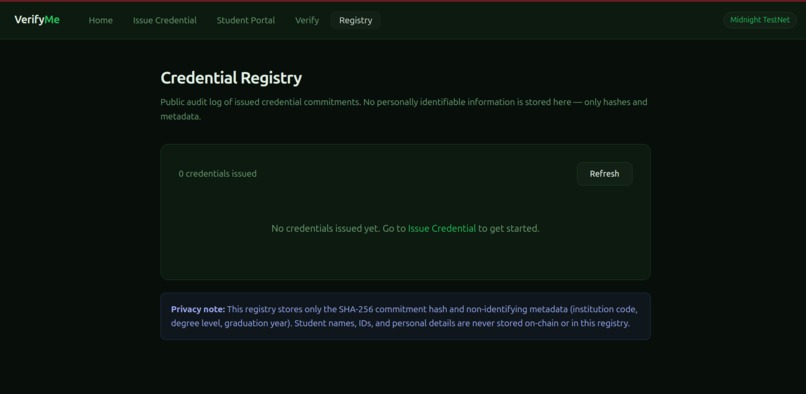
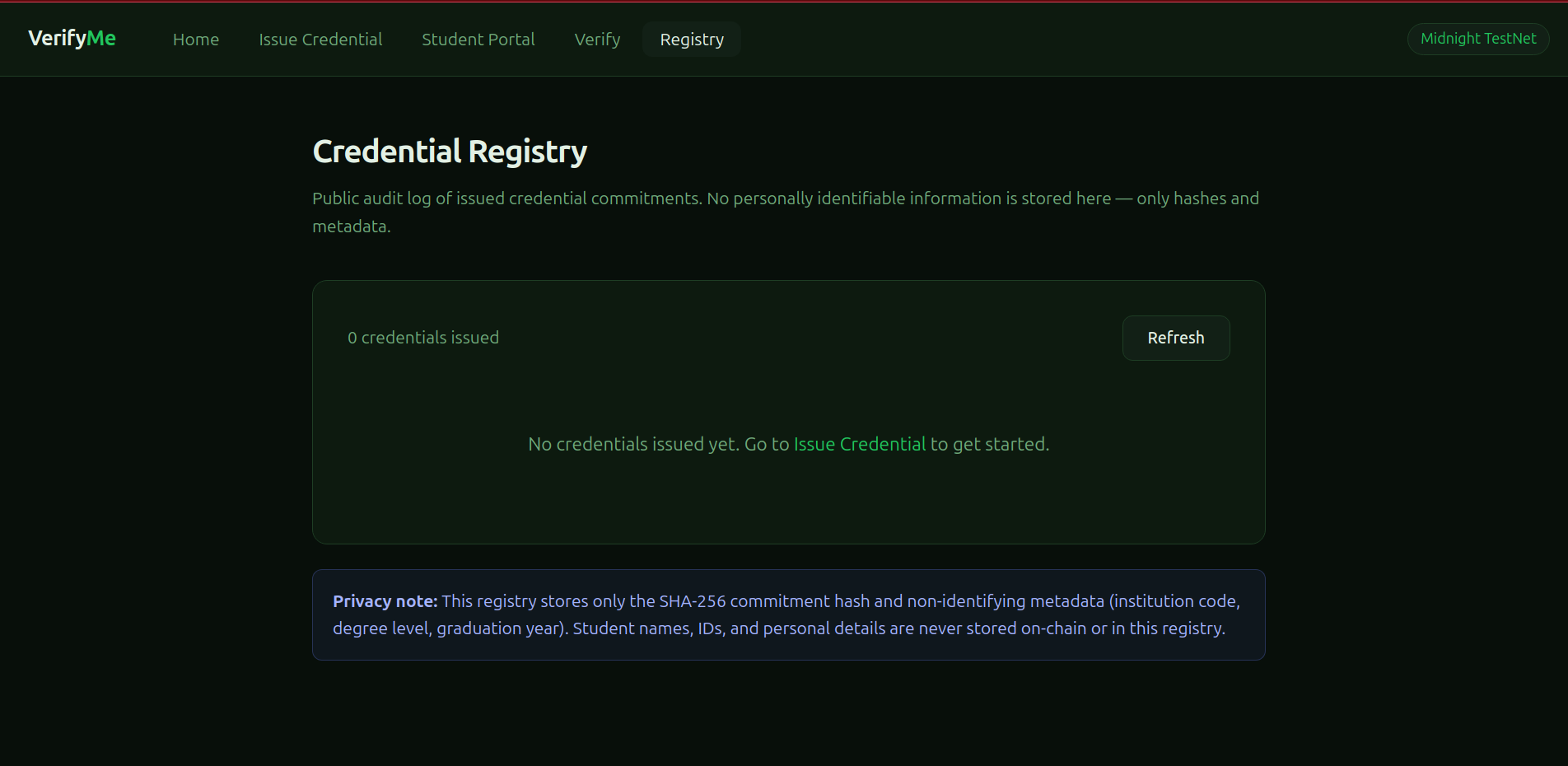
When a credential has been issued out,it appears here
-
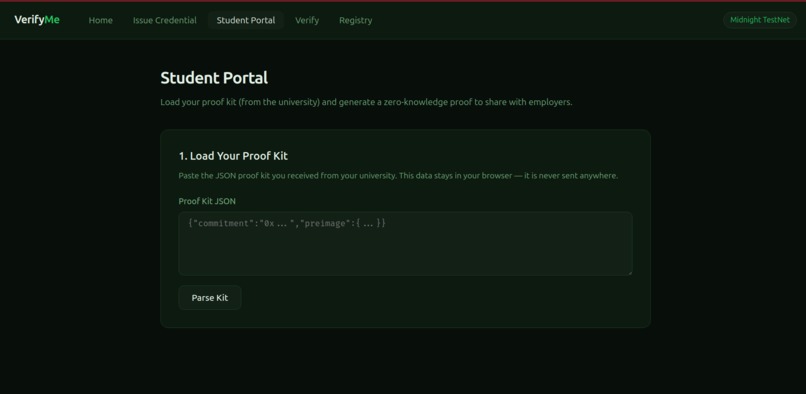
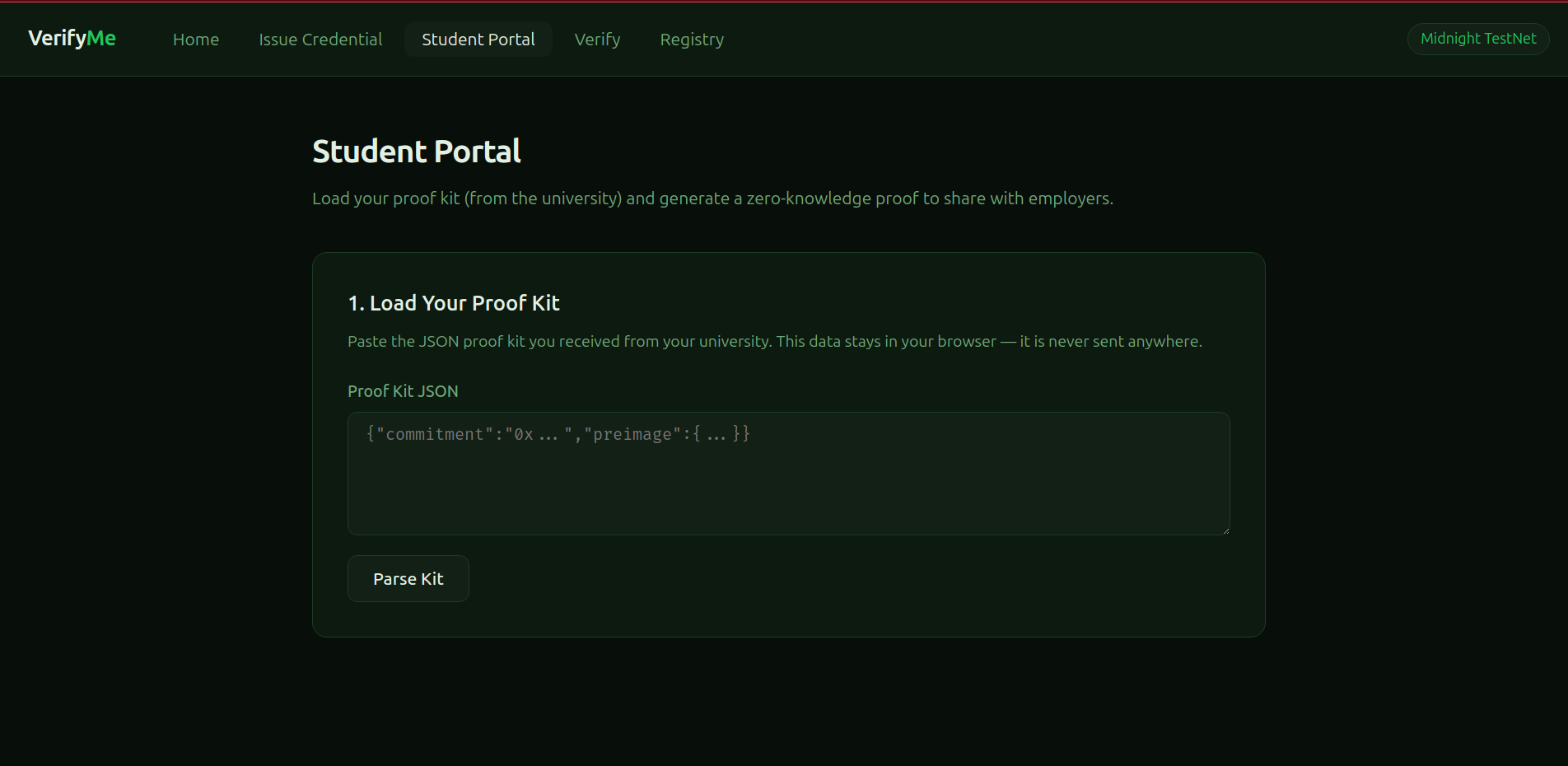
Load your proof kit (from the university) and generate a zero-knowledge proof to share with employers.
-
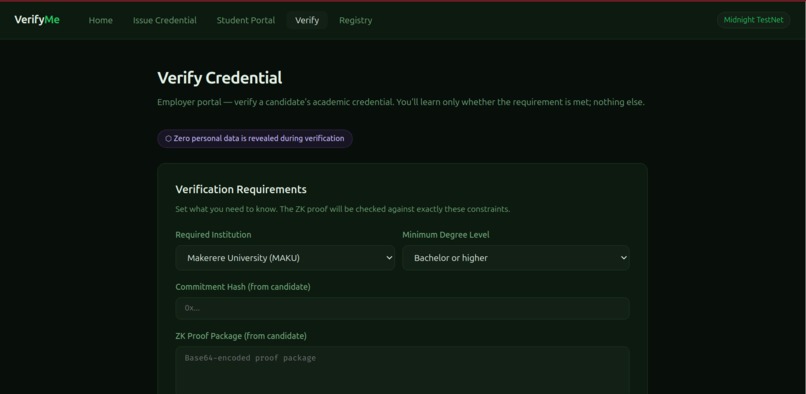
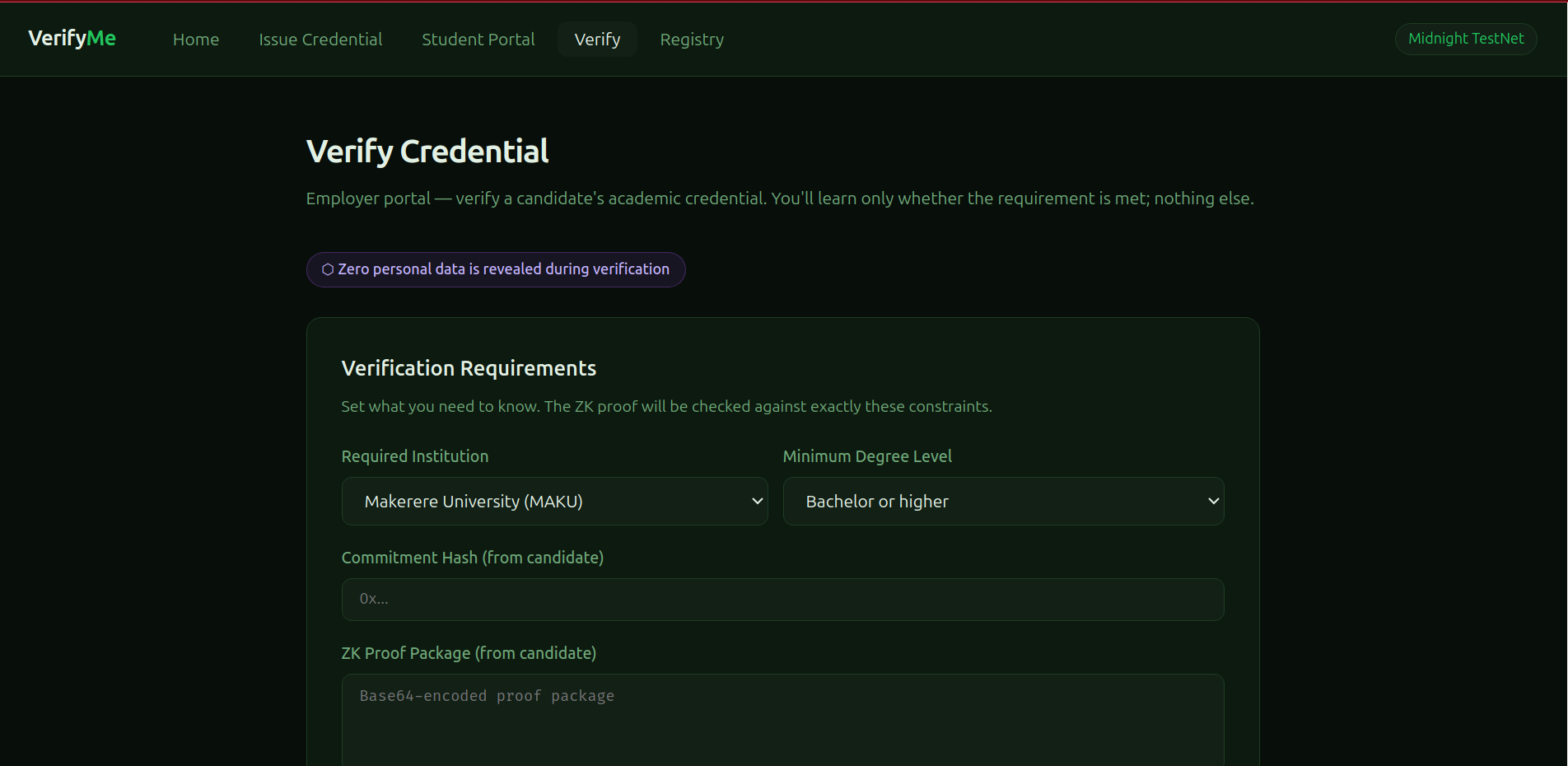
An employer or somebody that is interested in verifying credentials comes here
-
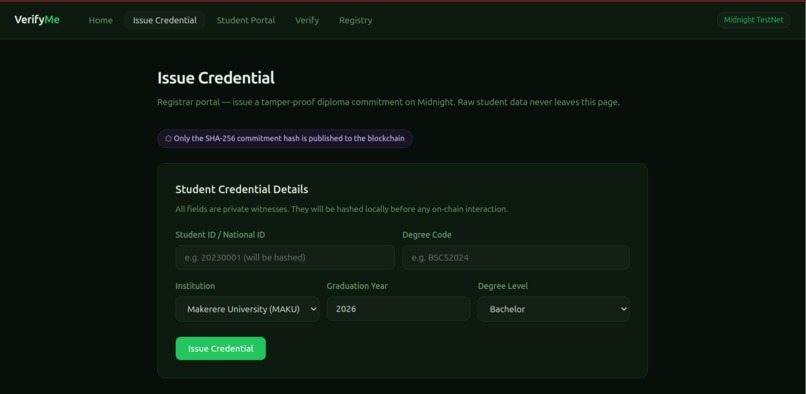
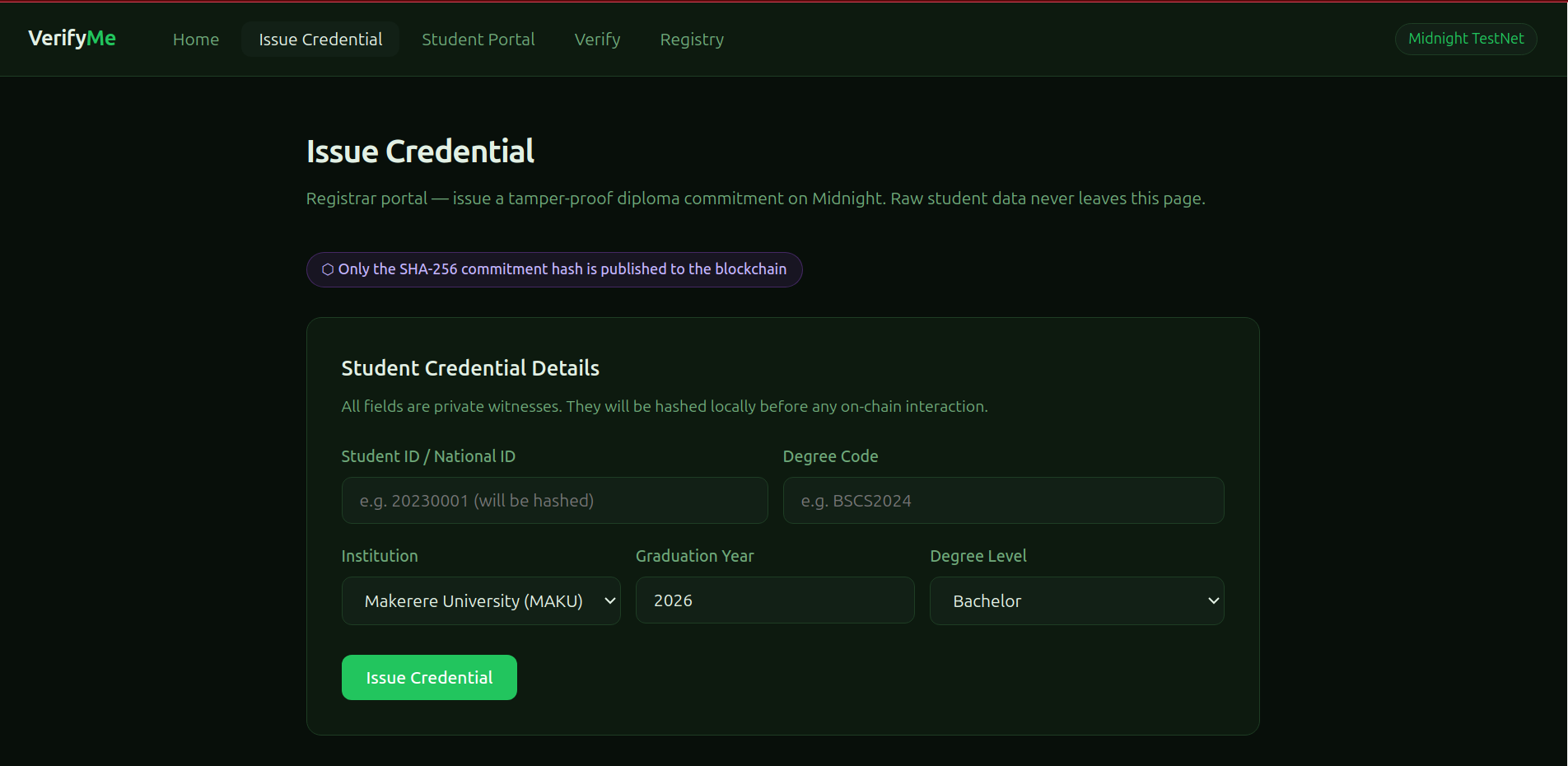
The admin comes here to issue a credential
-
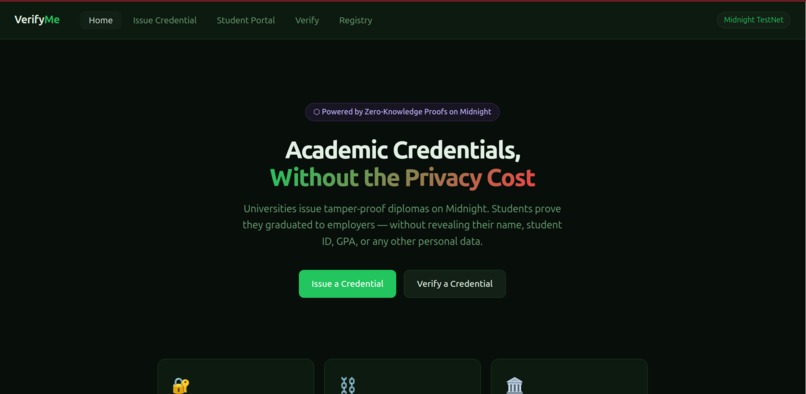
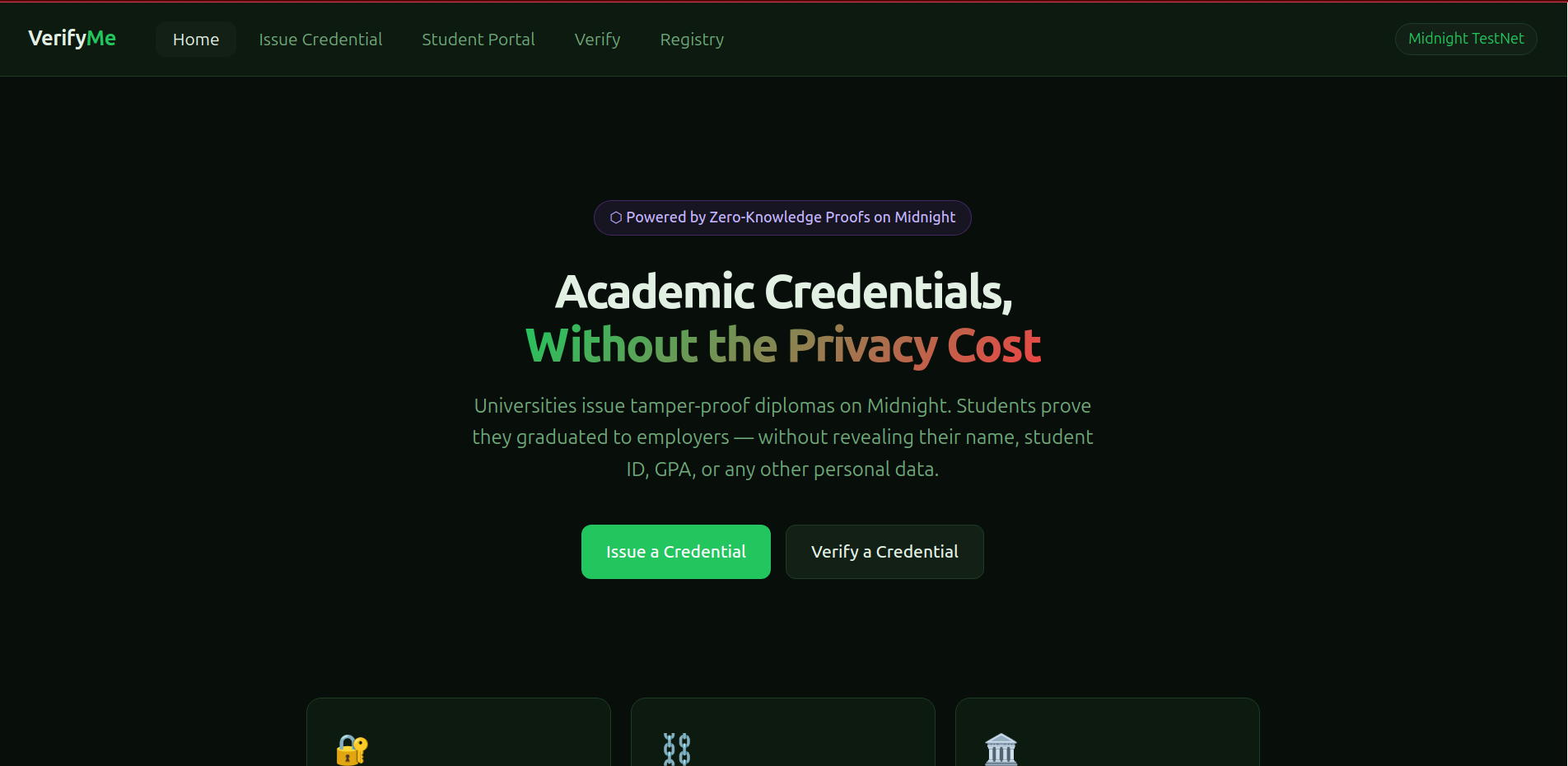
Home page with a bit of description of the system
Inspiration
Every year, graduates are asked to send copies of their academic certificates and transcripts to employers, scholarship providers, and other institutions. This process exposes far more personal information than is usually necessary and leaves digital copies of sensitive documents scattered across multiple organizations.
I wanted to explore how blockchain could solve this problem, not by storing certificates publicly, but by allowing graduates to prove their qualifications without revealing unnecessary personal information. Midnight's privacy-first blockchain made it the perfect platform to demonstrate this idea.
What it does
MidCred is a privacy-preserving academic credential verification platform built on Midnight.
Universities can issue tamper-proof digital academic credentials to students. When a graduate needs to prove they earned a qualification, they generate a cryptographic proof instead of sharing their certificate or transcript.
Employers can instantly verify that:
The credential was issued by a trusted university. The graduate possesses the required qualification. The credential has not been altered or forged.
At no point does the employer need access to the student's full academic record or other personal information.
How we built it
I built MidCred as a web application integrated with Midnight's privacy-preserving blockchain concepts.
The project consists of:
A university interface for issuing digital credentials. A student wallet for managing credentials. An employer verification portal. Midnight-based credential verification using privacy-preserving proofs. Smart contract logic for registering and validating issued credentials.
The verification process is designed so that only the requested claim is verified while the rest of the student's information remains confidential.
Challenges we ran into
The biggest challenge was learning how privacy-preserving blockchains differ from traditional application development. Instead of focusing on storing and retrieving data, I had to design a system that verifies information without revealing it.
Another challenge was understanding how digital credentials, cryptographic proofs, and blockchain verification fit together into a seamless user experience. Balancing security, privacy, and usability required careful planning.
Accomplishments that we're proud of
Designed a practical real-world use case for Midnight. Built a prototype focused on privacy instead of data exposure. Created a verification flow that minimizes information disclosure. Demonstrated how blockchain can address credential fraud while giving users greater control over their personal data. Expanded my understanding of privacy-preserving application development.
What we learned
This project gave me a deeper understanding of:
Zero-knowledge proof concepts. Privacy-first blockchain development. Digital identity and verifiable credentials. Smart contract design on Midnight. How blockchain can be used to solve trust and verification problems rather than simply storing data.
Perhaps the biggest lesson was that blockchain is most valuable when it enables trust while preserving user privacy.
What's next for MidCred
The next step is to integrate full Midnight smart contracts and implement end-to-end cryptographic proof generation and verification.
In the future, I plan to expand MidCred beyond universities to support:
Professional certifications Employment verification Government-issued credentials Medical and professional licenses Cross-border credential verification
My long-term vision is to make privacy-preserving digital credentials the standard for education and professional verification, allowing people to prove their achievements without sacrificing control over their personal information.
Built With
- compact
- express.js
- midnight
- node.js
- npm
- proofs
- react
- sha-256
- typescript
- vite
- zero-knowledge


Log in or sign up for Devpost to join the conversation.