Inspiration
The idea for MicroZ Lab came from a very personal place. In her early years, my wife struggled to learn assembly programming. She would spend hours staring at cryptic syntax, trying to make sense of how registers and memory interacted, often without any feedback or guidance. I tried to learn alongside her, and I felt the same frustration.
Those evenings of confusion and trial made something clear to me: it wasn’t that assembly was impossible, it was that the tools for learning it were unwelcoming. That’s when I asked myself a simple question: “What if assembly could be learned in a way that was interactive, visual, and approachable?”
That question was the beginning of MicroZ Lab.
How We Built It
We started by designing the MicroZ instruction set architecture (ISA) from scratch:
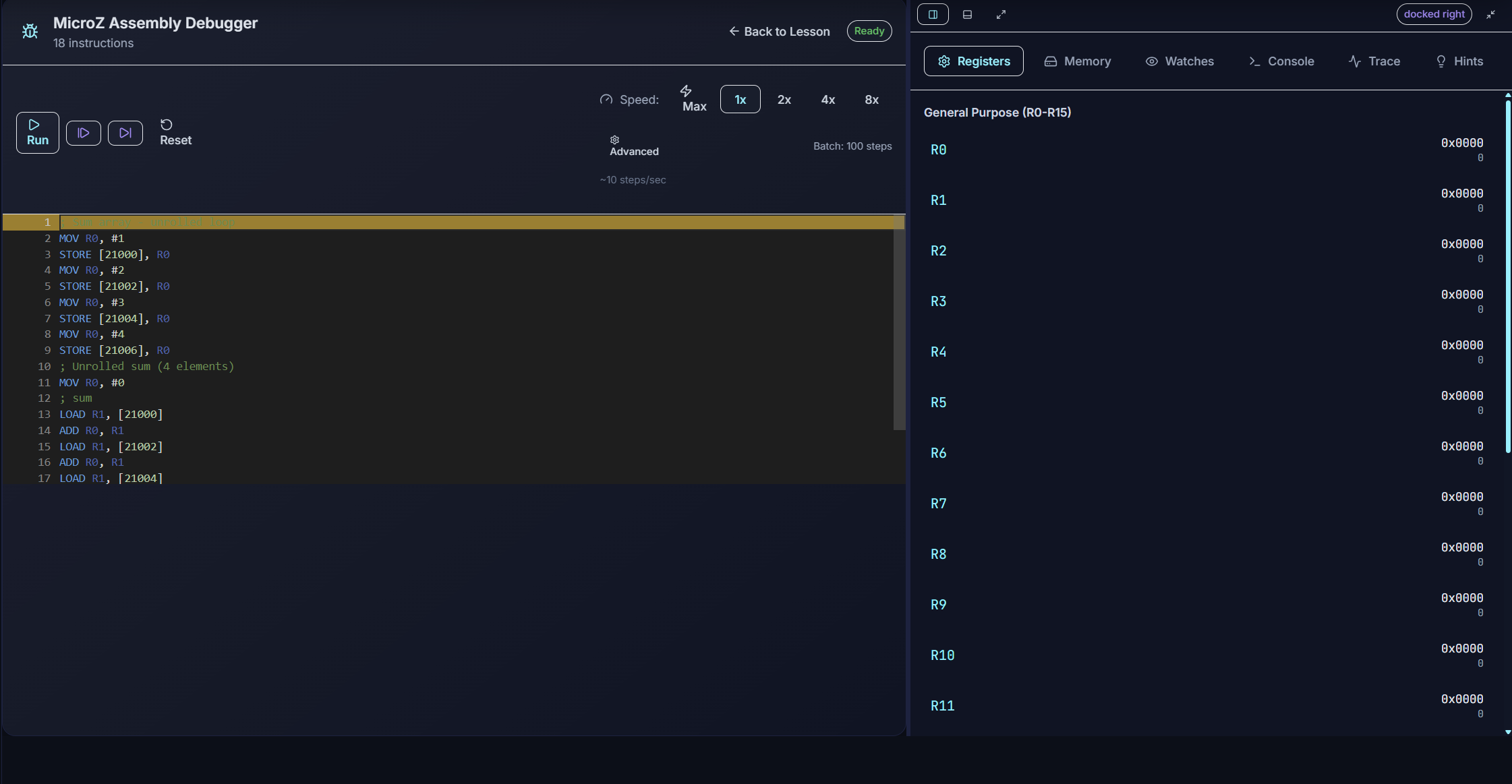
Sixteen general-purpose registers 𝑅 0 – 𝑅 15 R0–R15 plus special registers like 𝑆 𝑃 , 𝐵 𝑃 , 𝐼 𝑃 SP,BP,IP.
A complete instruction set covering data movement, arithmetic, logic, and control flow.
A memory model divided into TEXT and DATA sections, with support for multiple addressing modes.
Once the ISA was defined, we built the assembler engine by vibe coding it line by line:
Lexical analysis and parsing for MicroZ assembly syntax.
A cycle-accurate execution engine with proper flag handling.
Real-time memory management and register updates.
On top of the engine, we built the learning experience:
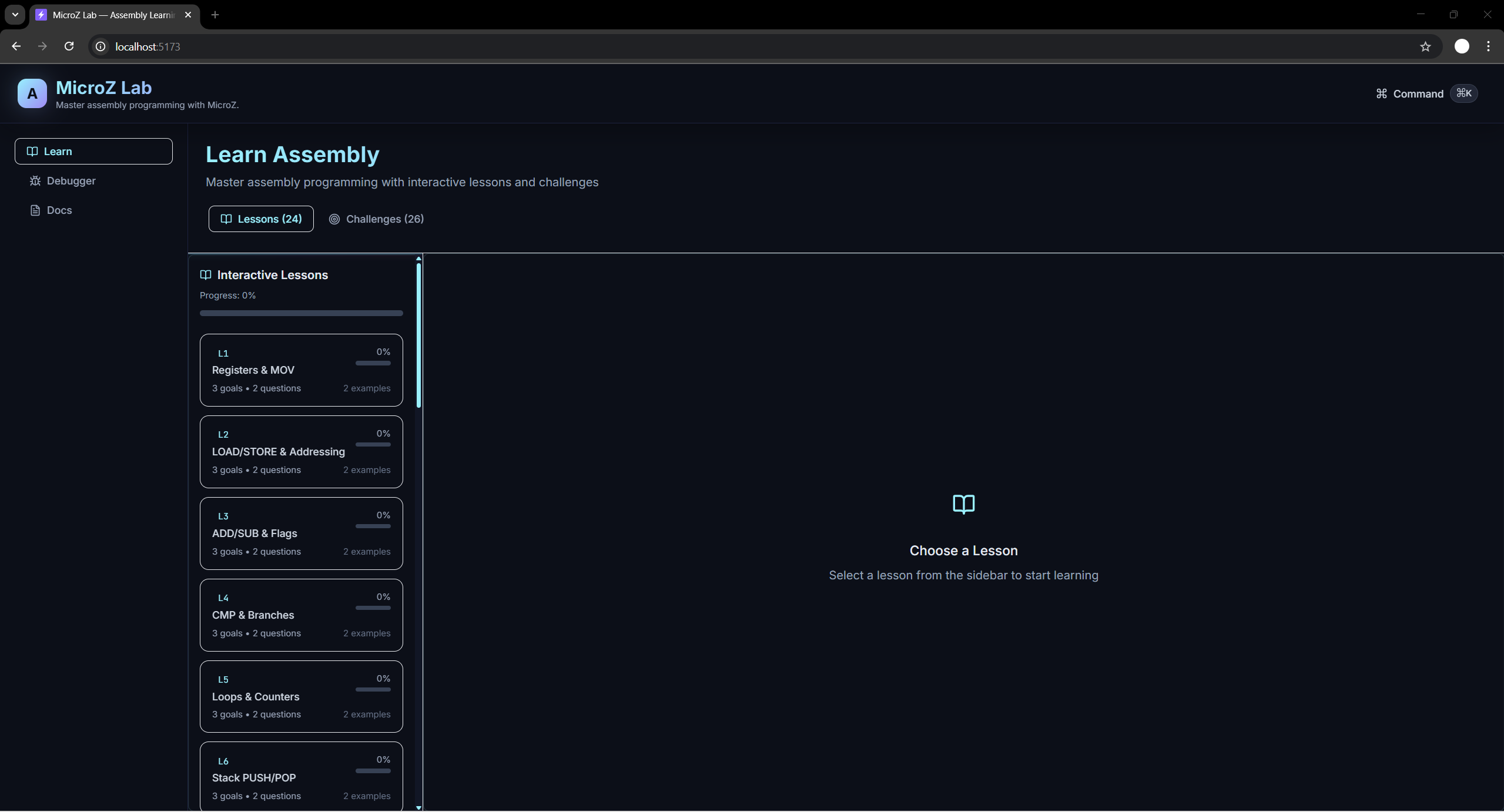
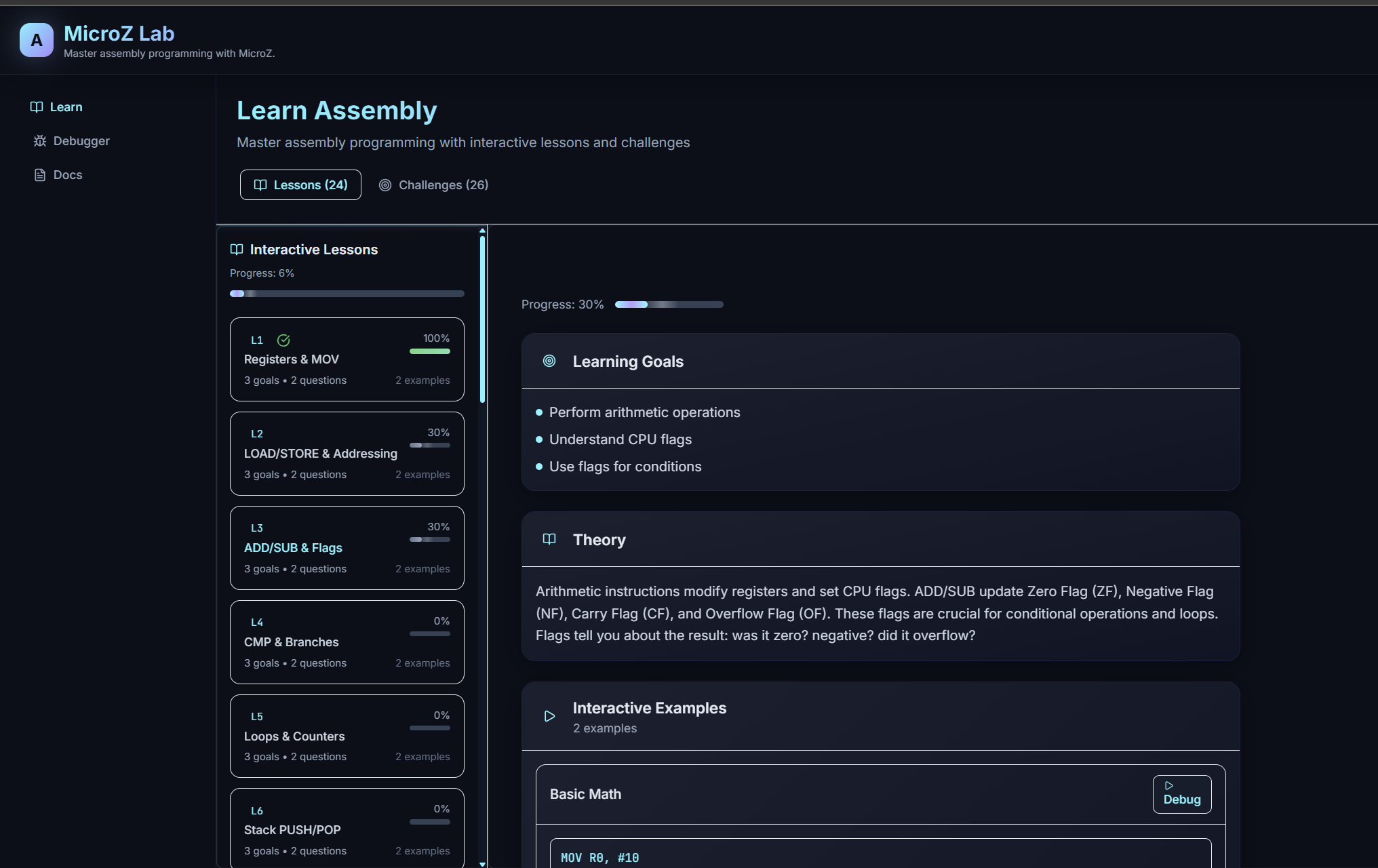
Lessons and Quizzes that guide learners step by step and provide instant feedback.
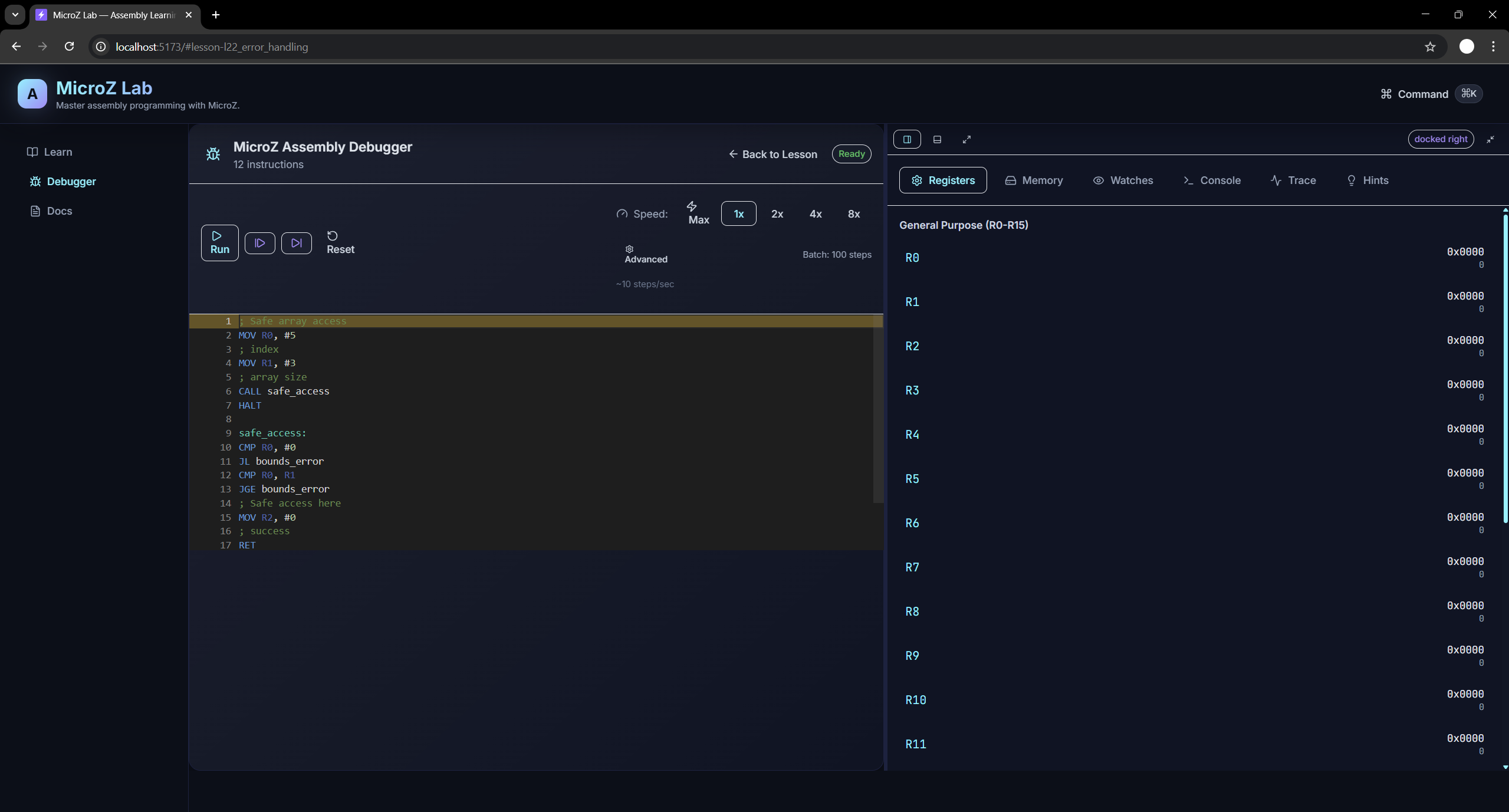
A Real-Time Debugger where users can see registers, memory, and execution flow as they step through code.
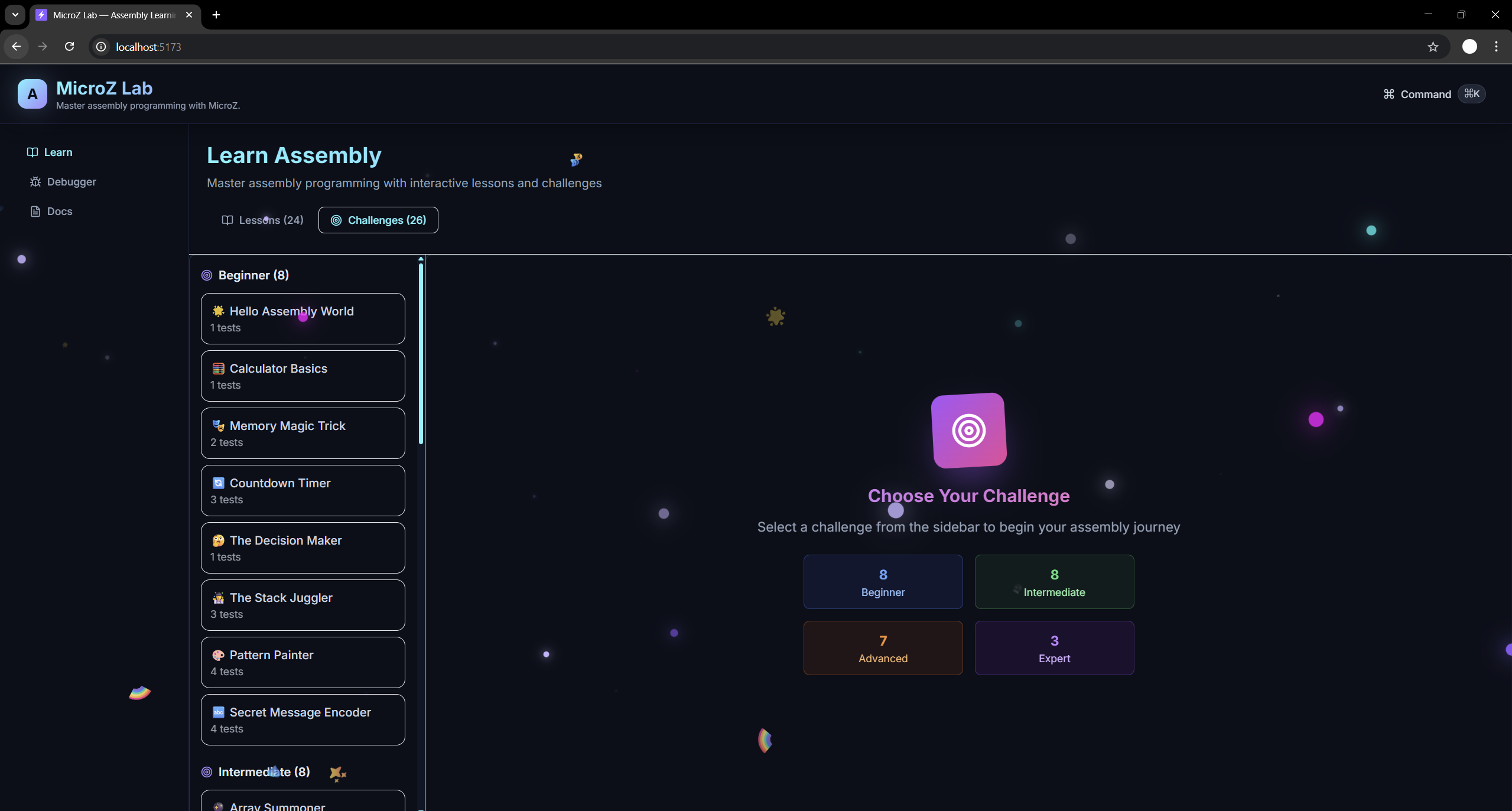
A Challenge System with eighteen graded problems, hints for when you’re stuck, and instant grading that makes learning feel rewarding instead of punishing.
The entire system runs in the browser, powered by React, TypeScript, Vite, and Monaco Editor. It requires no setup, no downloads, and no complicated environments.
Challenges We Faced
One of the biggest challenges was writing the assembler itself. Assembly interpreters are rarely written from scratch during hackathons, and we had to handle parsing, execution, and error reporting under tight time pressure. Another challenge was designing the debugger so that it felt responsive while showing complex state changes in real time.
We also had to think deeply about education. How do you reduce a steep learning curve without oversimplifying the subject? The balance between technical accuracy and approachability shaped many design decisions.
What We Learned
We learned that building technology is only half the battle. The real test is whether someone can learn from it. Instant feedback, visualizations, and small wins matter far more than raw functionality.
We also realized that this project connects to a larger vision: making mainframe and low-level systems accessible through modern, approachable tools. It’s the same philosophy behind another idea we’re working on, MZAP, which aims to reimagine mainframe operations with AI and zero-agent monitoring.
Looking Ahead
MicroZ Lab started as a way to make assembly less intimidating for learners like me and my wife, and it’s grown into a platform that can serve students, hobbyists, and professionals alike. Our hope is that it will not only teach assembly, but also change how people feel about learning something that once seemed out of reach.
Github : https://github.com/suyogs1/microzlab
Built With
- monaco
- react
- tailwind
- typescript
- vite

Log in or sign up for Devpost to join the conversation.