-
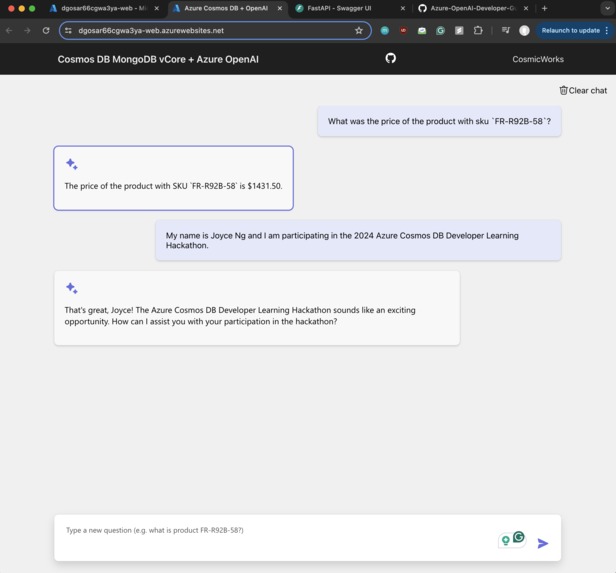
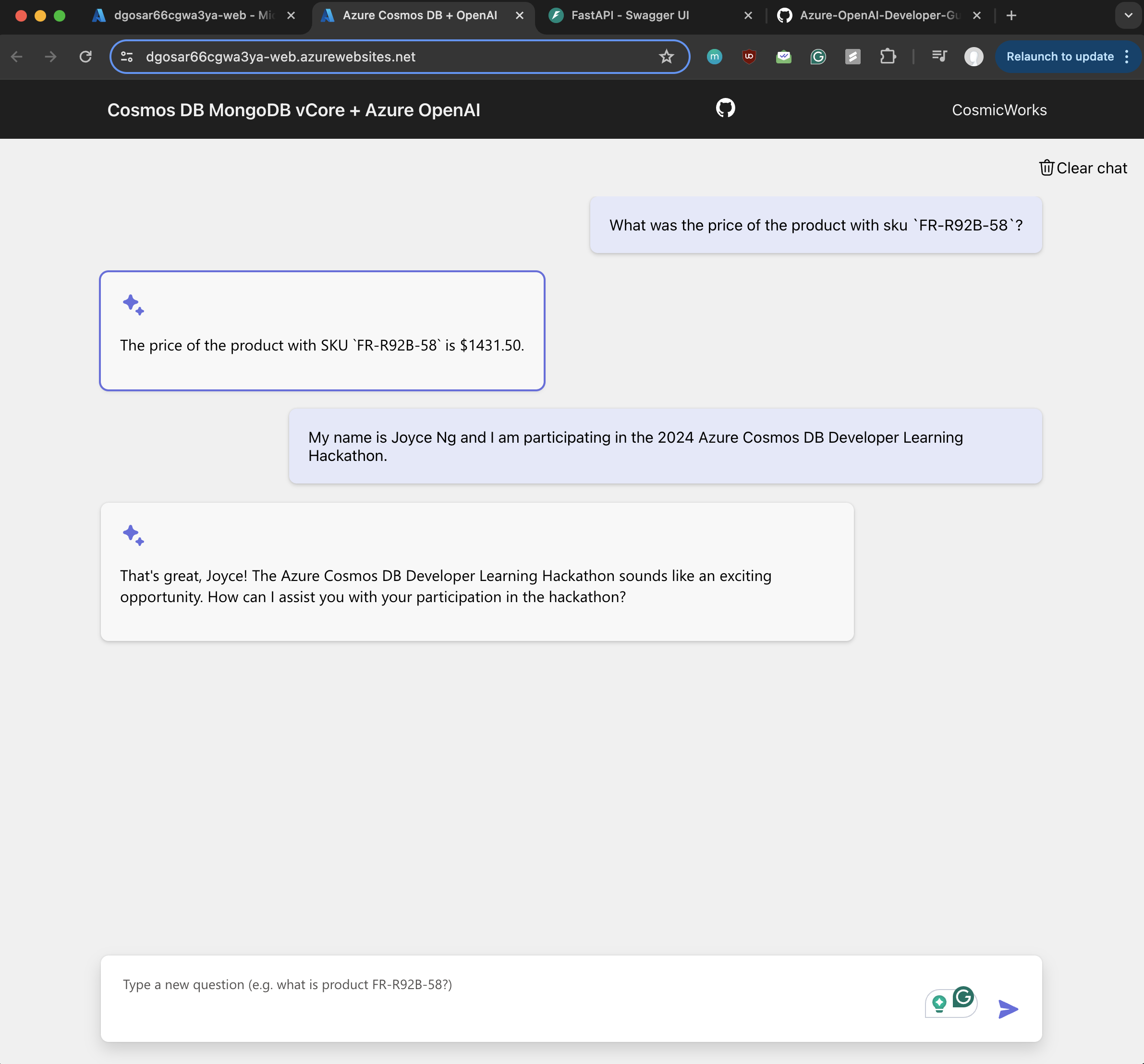
UI of Part 1 & 2
Inspiration# About the Project
Inspiration
The inspiration for this project came from the need to leverage the power of Azure OpenAI and Azure Cosmos DB to create an intelligent, scalable, and efficient backend API. Combining these technologies enables us to build a robust solution for handling complex queries and data management while offering advanced AI capabilities for various applications.
What I Learned
Throughout the project, I learned a great deal about integrating different Azure services and dealing with the challenges that come with it. Some of the key learnings include:
- Azure OpenAI Integration: Understanding how to set up and use Azure OpenAI services for generating embeddings and handling complex AI tasks.
- Azure Cosmos DB: Learning how to configure and use Cosmos DB for scalable and efficient data storage and retrieval.
- Docker: Using Docker for containerizing the application, which makes deployment and scaling much more manageable.
- FastAPI: Implementing the API using FastAPI, which is a modern, fast (high-performance), web framework for building APIs with Python 3.6+.
- Handling Errors and Debugging: Dealing with various errors and debugging them, which provided deeper insights into the workings of these technologies.
How I Built the Project
Setup and Configuration:
- Azure Services: Set up Azure OpenAI and Cosmos DB services, configured necessary keys, and permissions.
- Environment Setup: Created a virtual environment and installed necessary Python packages including FastAPI, pymongo, and Azure-related SDKs.
Backend Development:
- FastAPI: Developed the backend API using FastAPI, defining endpoints for various operations.
- Database Integration: Integrated Cosmos DB for data storage, handling CRUD operations efficiently.
- AI Integration: Used Azure OpenAI for generating embeddings and performing similarity searches.
Containerization:
- Dockerfile: Created a Dockerfile to containerize the application, ensuring that it runs consistently across different environments.
- Docker Commands: Built and ran the Docker container locally to test the application.
Deployment:
- Azure Container Apps: Deployed the containerized application to Azure using Azure Container Apps, ensuring it is scalable and resilient.
Challenges Faced
Service Integration:
- API Rate Limits: Managing API rate limits and ensuring the application handled requests efficiently without hitting the limits.
- Authentication: Configuring and managing authentication for various Azure services, ensuring secure and seamless integration.
Debugging Errors:
- Complex Error Messages: Dealing with complex error messages that often lacked clarity, requiring deep dives into logs and documentation to resolve issues.
- Dependency Management: Ensuring all dependencies were correctly installed and compatible with each other, which sometimes led to unexpected issues.
Performance Optimization:
- Query Performance: Optimizing database queries to ensure they were performant and did not lead to timeouts or excessive resource usage.
- AI Processing: Ensuring that the AI tasks were processed efficiently, balancing the load to prevent any single component from becoming a bottleneck.
Final Thoughts
Building this project was a highly educational and rewarding experience. It provided a hands-on opportunity to work with cutting-edge technologies from Azure, and the challenges faced along the way led to a deeper understanding of cloud-based AI and database services. The end result is a powerful backend API that leverages the strengths of both Azure OpenAI and Cosmos DB, showcasing the potential of combining AI with scalable data solutions.
Built With
- azure
- cosmodb
- docker
- fastapi
- mongodb
- python
- visual-studio

Log in or sign up for Devpost to join the conversation.