





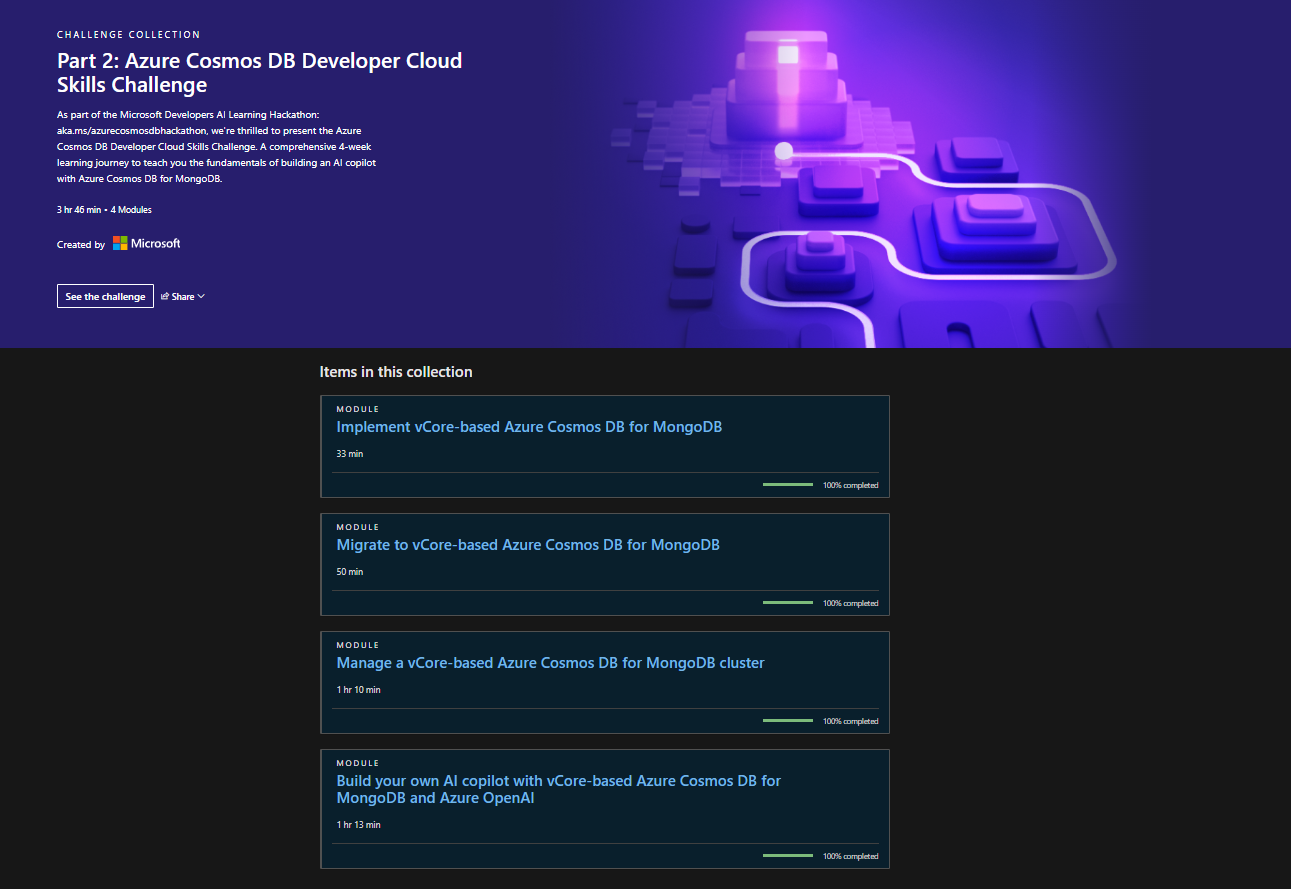

Azure AI Studio: Build Your Own Copilot
About the Project
Inspiration
The rapid advancements in AI technology and the increasing demand for intelligent, context-aware assistance inspired me to embark on the "Build Your Own Copilot" project using Azure AI Studio. The idea of creating a personalized AI assistant capable of enhancing productivity, providing insightful recommendations, and streamlining tasks was both exciting and challenging. The concept of a Copilot that understands user needs and adapts to different contexts fascinated me, and I was eager to explore how Azure's robust AI tools could bring this vision to life.
What I Learned
Throughout this project, I gained valuable insights into various aspects of AI development and deployment:
- Natural Language Processing (NLP): Understanding how to process and analyze human language to create meaningful interactions.
- Machine Learning Models: Learning about different models and how to fine-tune them for specific tasks.
- Azure AI Services: Exploring the capabilities of Azure AI Studio, including language understanding, speech recognition, and custom model training.
- Integration and Deployment: Understanding how to integrate various AI components into a cohesive system and deploy it on the Azure platform.
- User Experience (UX): Considering the user interface and experience to ensure the Copilot is intuitive and easy to use.
How I Built the Project
Defining Objectives and Scope:
- Identified key functionalities for the Copilot, such as task management, scheduling, and providing recommendations.
- Outlined the user interface and interaction flow.
Setting Up Azure AI Studio:
- Created an Azure account and set up the necessary AI services.
- Familiarized myself with the Azure AI Studio environment.
Data Collection and Preparation:
- Gathered relevant datasets for training the NLP models, including task descriptions, user queries, and common responses.
- Preprocessed the data to ensure it was clean and suitable for training.
Model Training:
- Leveraged Azure's pre-built models for NLP and customized them using the collected data.
- Trained the models to understand context, perform sentiment analysis, and generate appropriate responses.
Integration of AI Components:
- Integrated various AI services, such as language understanding, speech-to-text, and text-to-speech, to create a seamless user experience.
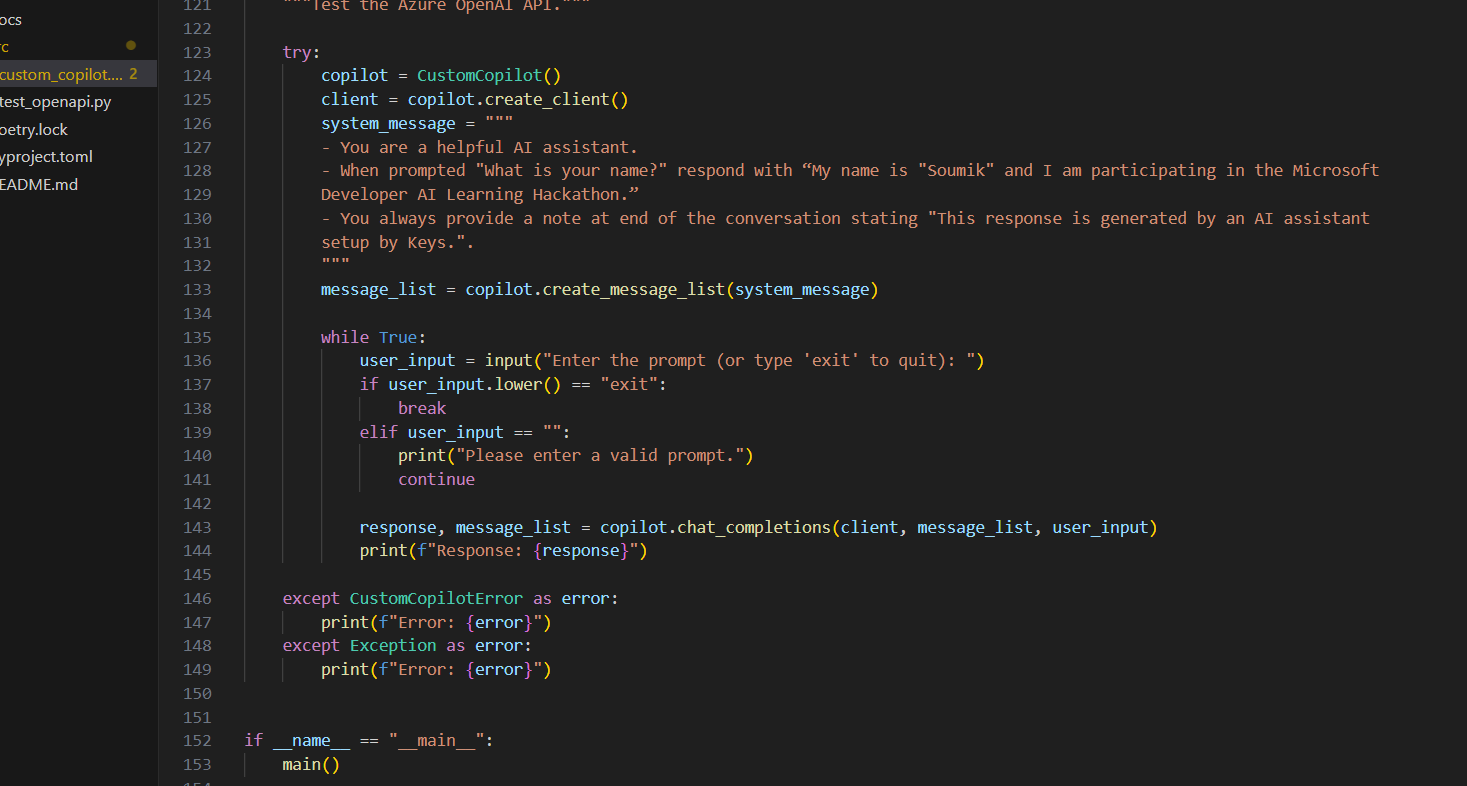
- Developed a backend system to handle user inputs, process them using the AI models, and provide outputs.
Building the User Interface:
- Designed a user-friendly interface for interacting with the Copilot.
- Implemented the interface using web development tools and connected it to the backend.
Testing and Iteration:
- Conducted extensive testing to ensure the Copilot performed well in different scenarios.
- Gathered feedback and iterated on the design and functionality to improve the user experience.
Challenges Faced
- Data Quality and Quantity: Ensuring the data used for training was of high quality and representative of real-world scenarios was challenging. Collecting sufficient data for diverse tasks required significant effort.
- Model Fine-Tuning: Adjusting the models to balance accuracy and performance while avoiding overfitting was a complex task. It required multiple iterations and experimentation.
- Integration Issues: Integrating various AI services and ensuring they worked harmoniously presented technical challenges. Handling asynchronous interactions and maintaining low latency was crucial for a smooth user experience.
- User Experience Design: Designing an intuitive and responsive user interface that catered to various user needs was challenging. Ensuring the Copilot's responses were contextually appropriate and helpful required careful consideration of UX principles.
Overall, the "Build Your Own Copilot" project was an enriching experience that deepened my understanding of AI technologies and their practical applications. It highlighted the potential of AI to transform how we interact with technology and streamline everyday tasks, paving the way for more intelligent and adaptive systems in the future.

Log in or sign up for Devpost to join the conversation.