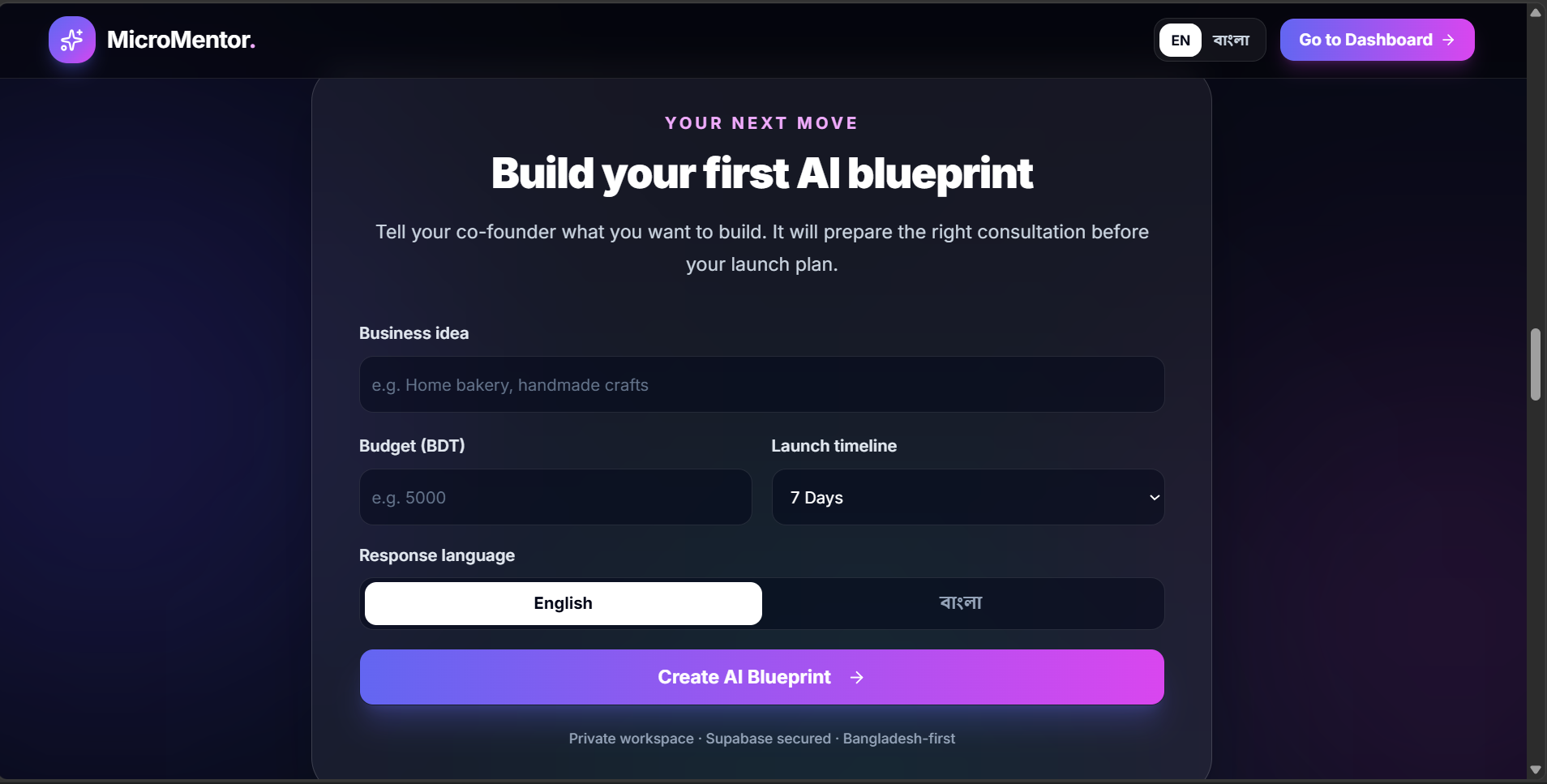
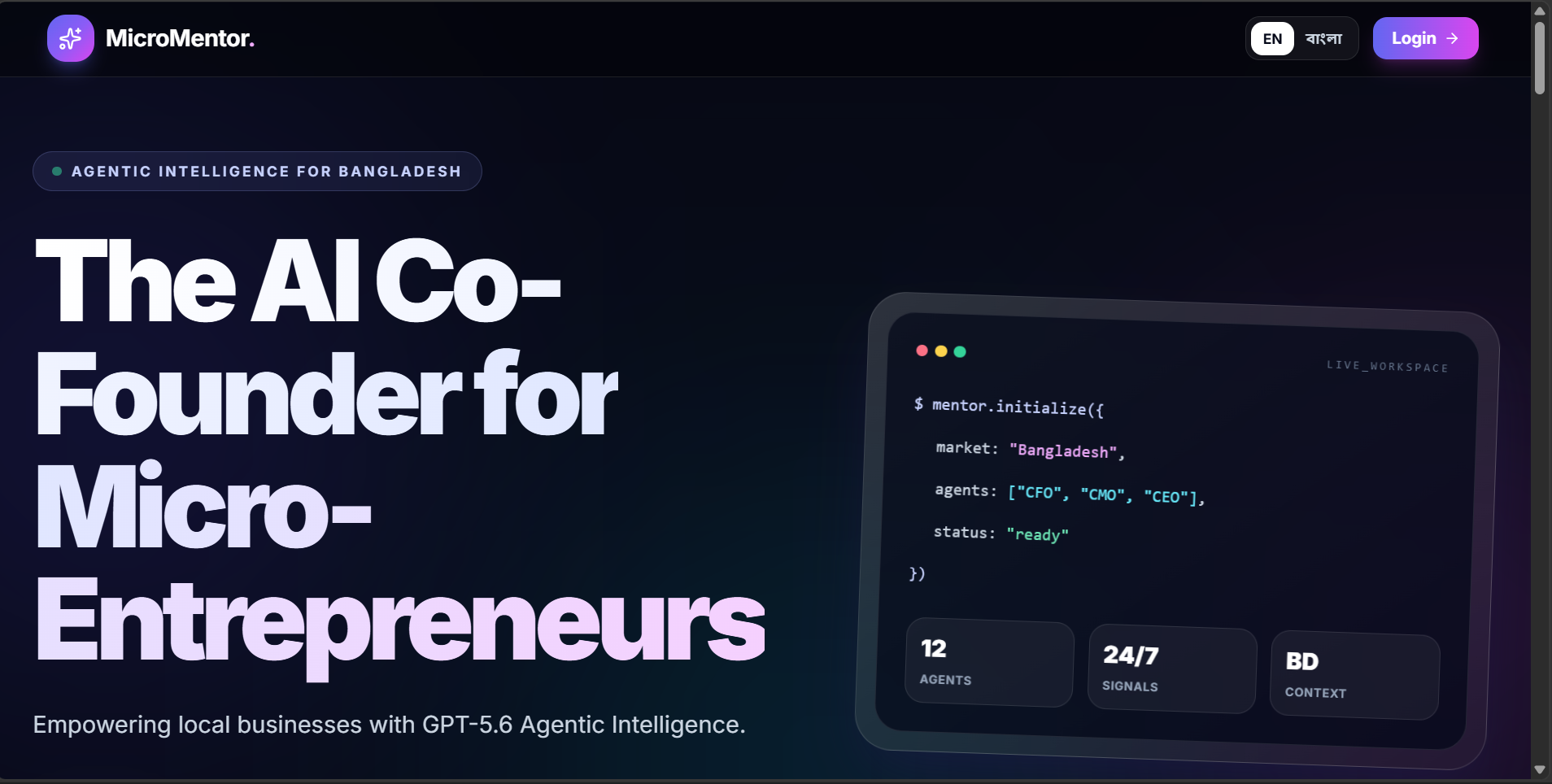
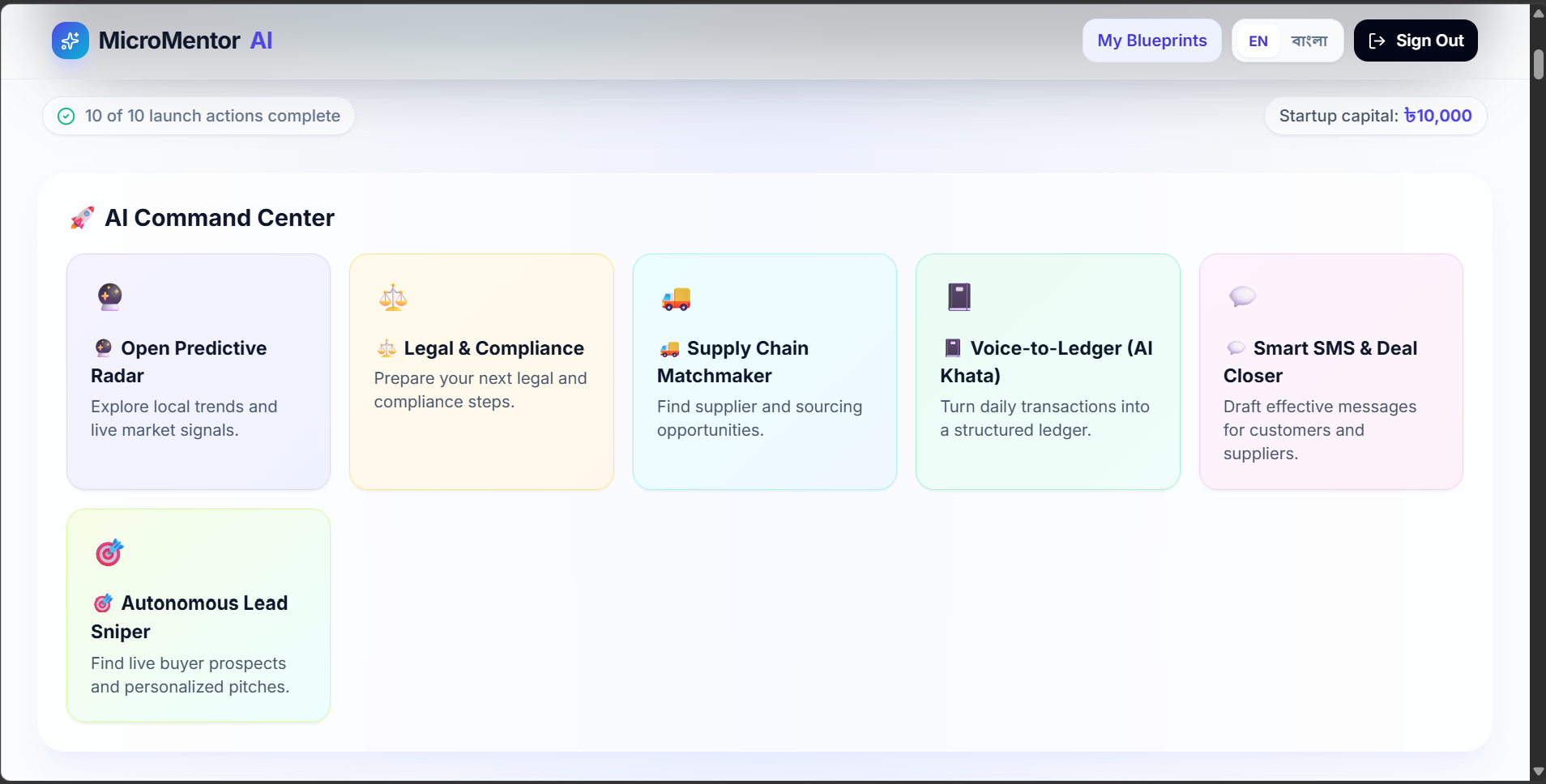

💡 Inspiration
In regions like Rajshahi, Bangladesh, micro-entrepreneurs—ranging from seasonal mango orchard owners to local boutique operators—face an alarming 80% failure rate within their first year. They don't fail due to lack of grit; they fail due to a lack of strategic foresight, financial literacy, and immediate crisis management.
While enterprise corporations have access to seasoned CFOs, legal teams, and market analysts, micro-business owners operate in total isolation. MicroMentor was born out of a single question: What if a local street vendor or small agro-business could afford a Fortune 500-level Board of Directors for free?
Our mission is to democratize high-level business intelligence by combining Agentic AI workflows, native bilingual support (English & Bengali), and accessible low-latency architectures.
🏗️ How We Built It
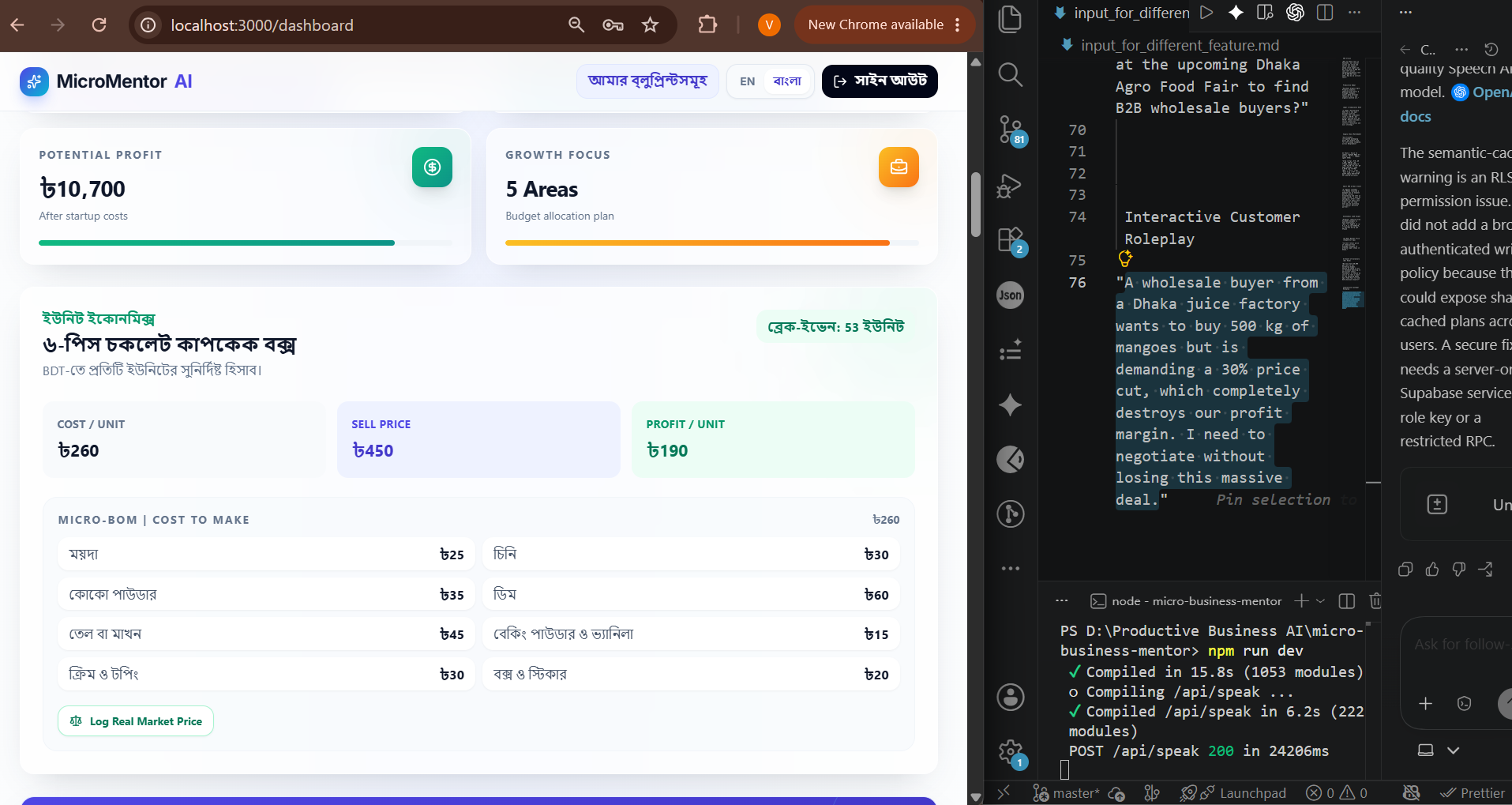
MicroMentor was engineered from the ground up using a Hub-and-Spoke architecture on Next.js 14, paired with Supabase for secure data isolation and real-time state management.
⚡ Powered by OpenAI Codex & GPT-5.6
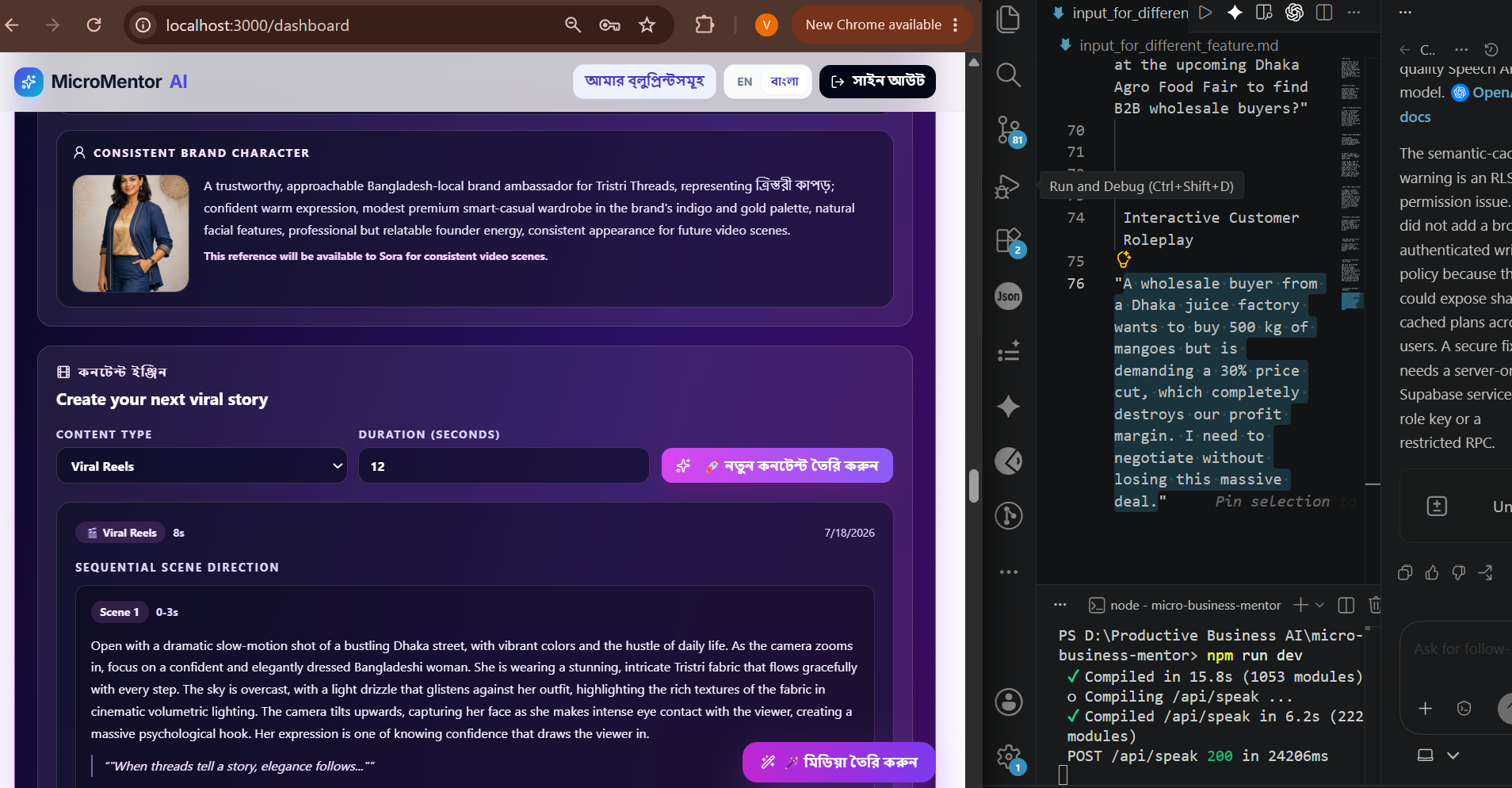
- Codex as the Execution Engine: We adopted a Pre-planned Prompt Architecture methodology. Instead of typing vague queries, we drafted structured system specifications locally and passed them to OpenAI Codex. Codex handled ~80% of our frontend Glassmorphism UI components, Tailwind styling, and Next.js API routing setup, drastically accelerating development.
- Dynamic Model Routing ($GPT\text{-}5.6$): To deliver deep reasoning without frustrating latency, we implemented a dynamic router between the GPT-5.6 model family based on task complexity:
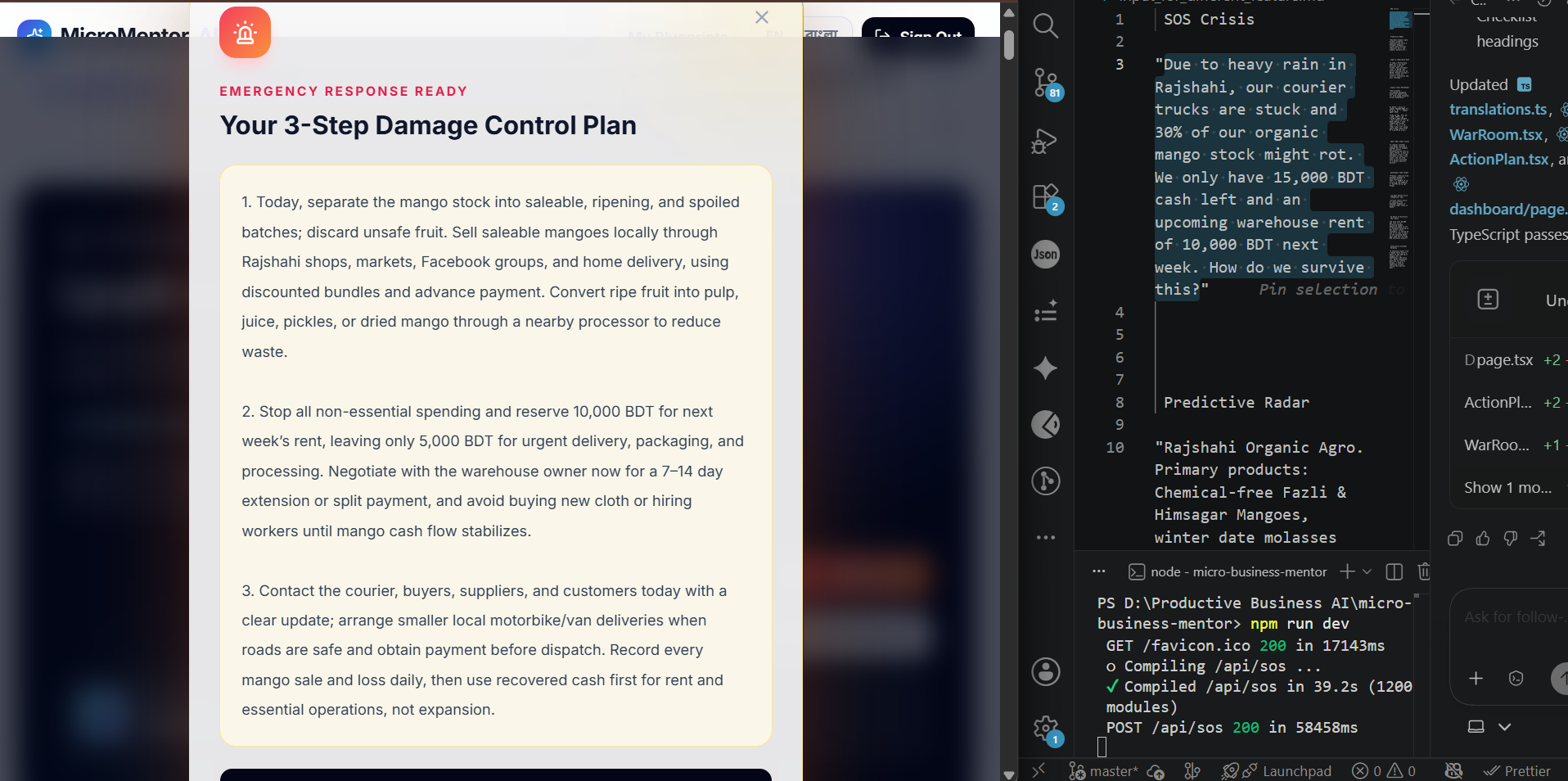
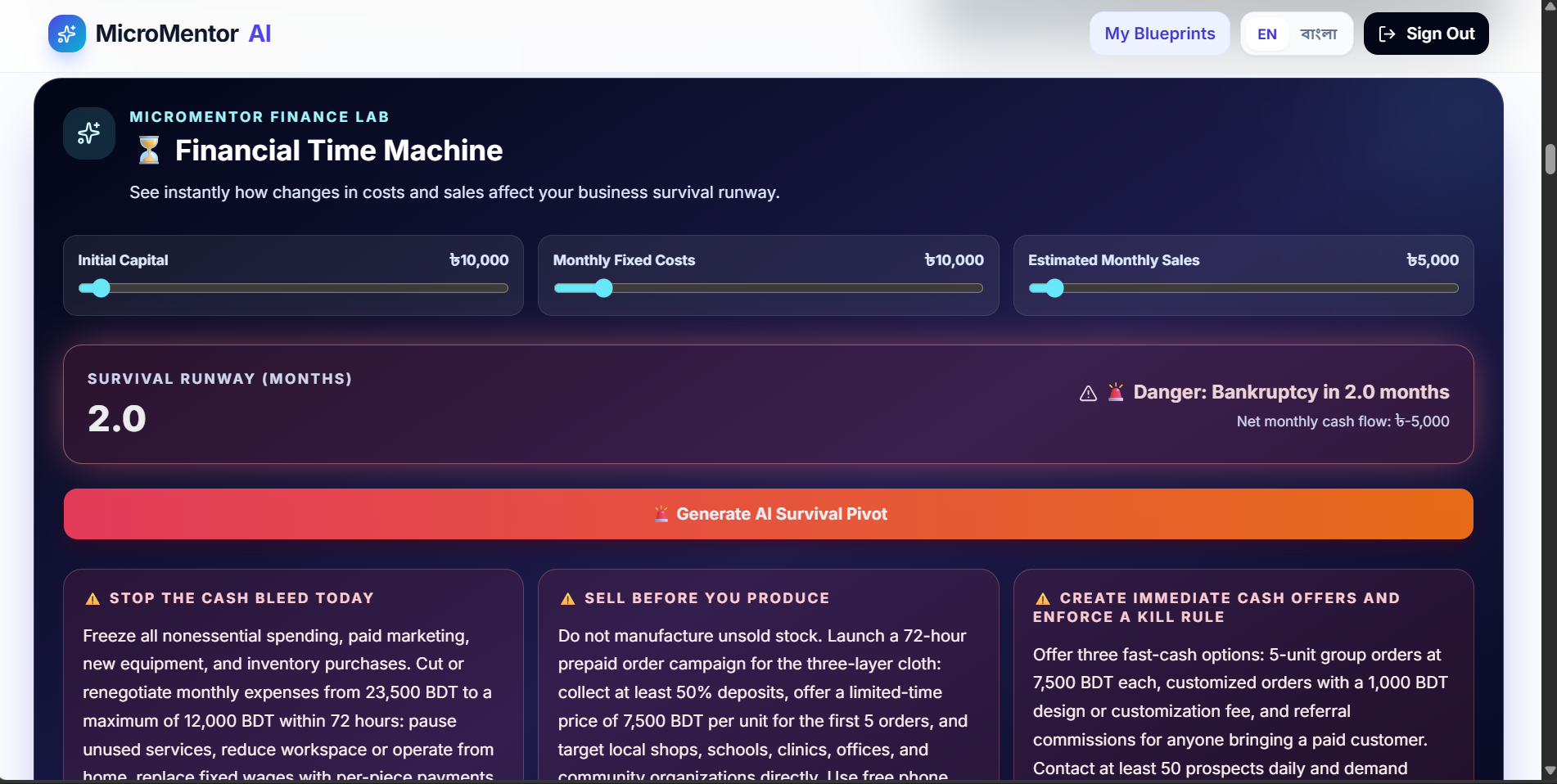
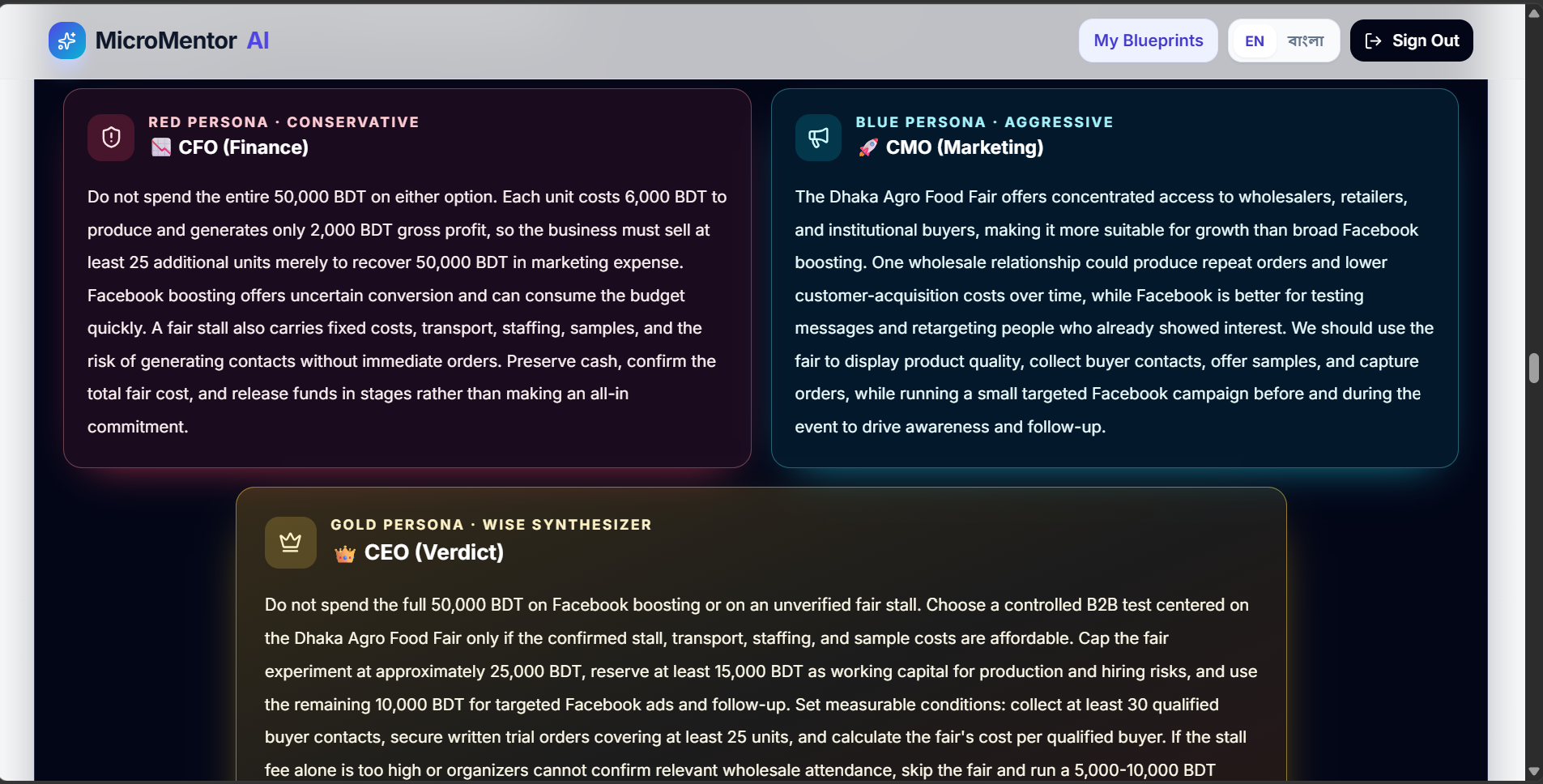
- $GPT\text{-}5.6\text{-}Luna$ (Deep Reasoning): Powers our multi-agent War Room (AI Board of Directors), SOS Crisis Manager, and Legal Desk where zero-shot accuracy and complex trade-off evaluation are required.
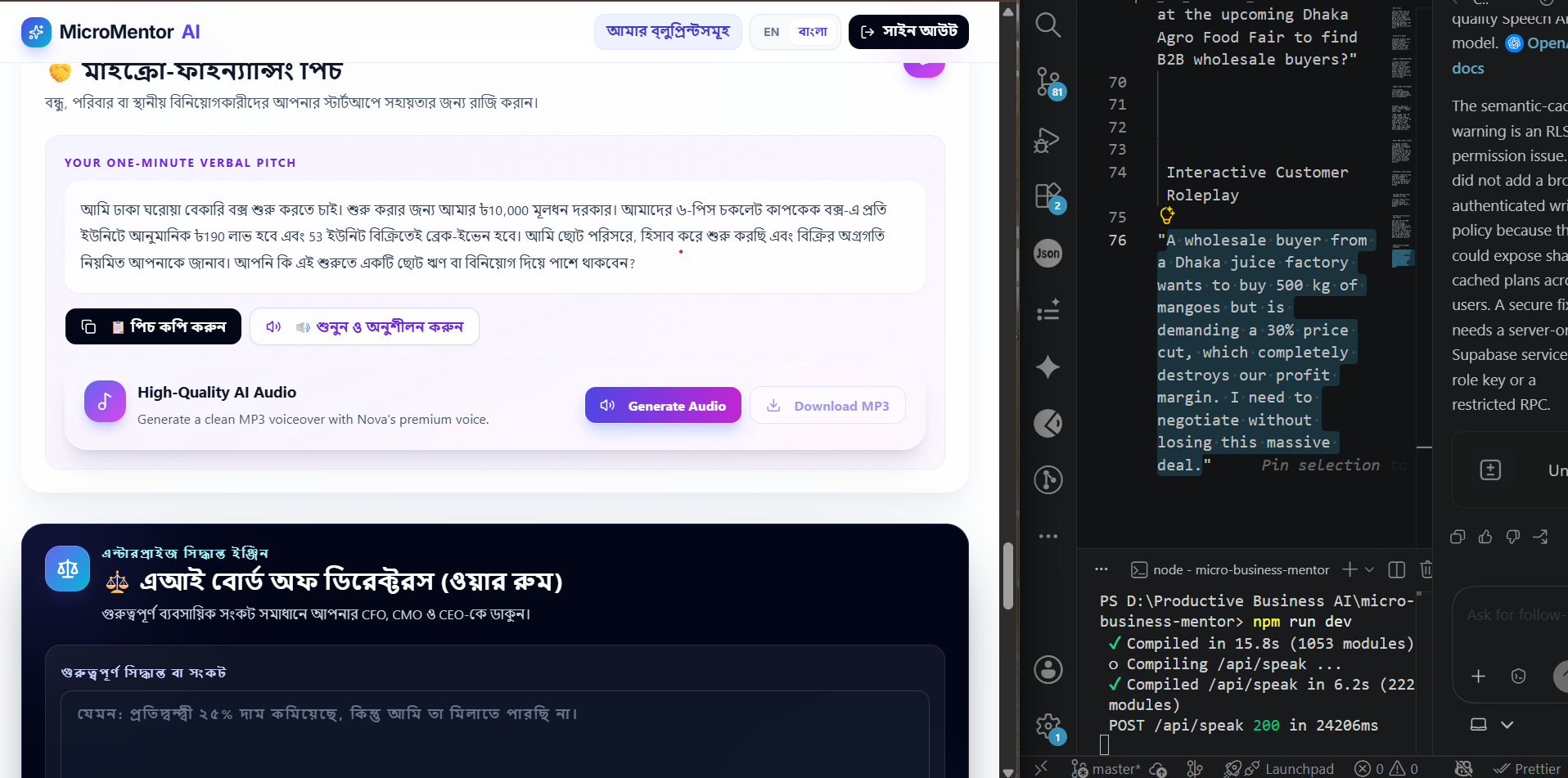
- $GPT\text{-}5.6\text{-}Mini$ (Flash Execution): Powers low-latency daily utilities such as AI Khata (Voice-to-Ledger), Smart SMS, and Customer Roleplay.
🧮 Model Routing & Latency Optimization Formula
To optimize the balance between execution speed and intelligence quality, we defined the routing decision utility function $U(M)$ for selecting model $M \in {\text{Luna}, \text{Mini}}$ given a user request $R$:
$$U(M) = w_1 \cdot \text{ReasoningDepth}(R, M) - w_2 \cdot \text{Latency}(M) - w_3 \cdot \text{Cost}(M)$$
Where weights $w_1, w_2, w_3$ dynamically shift depending on whether the feature is real-time interactive (e.g., chat) or deep analytical (e.g., legal drafting).
🚧 Challenges We Faced
- Latency vs. User Perception: Deep multi-agent reasoning in the AI Board of Directors takes processing time. To prevent user drop-off, we built an Agentic Streaming UI that displays real-time thought logs ("Analyzing supply chain...", "Consulting Financial Advisor...") to mask execution latency smoothly.
- Bilingual Context Precision: Translating complex business logic into localized Bengali without losing technical context (e.g., profit margin calculations or partnership clauses) required fine-tuning system prompts and structured JSON outputs.
- Push Protection & Security: Managing secrets while maintaining rapid git cycles during the hackathon forced us to implement strict pre-commit verification workflows.
📚 What We Learned
- AI as a Pair Programmer: Using OpenAI Codex with strict architectural constraints yields production-grade code in minutes rather than hours, provided the developer designs the system boundaries first.
- Designing for Micro-Users: True accessibility isn't just about dark mode or glassmorphism—it’s about enabling voice inputs, native regional language understanding, and actionable, one-click execution plans.
🚀 What's Next for MicroMentor
- WhatsApp & SMS Bot Integration: Allowing vendors to update their ledger and query their AI Co-Founder via basic feature phones without requiring continuous internet access.
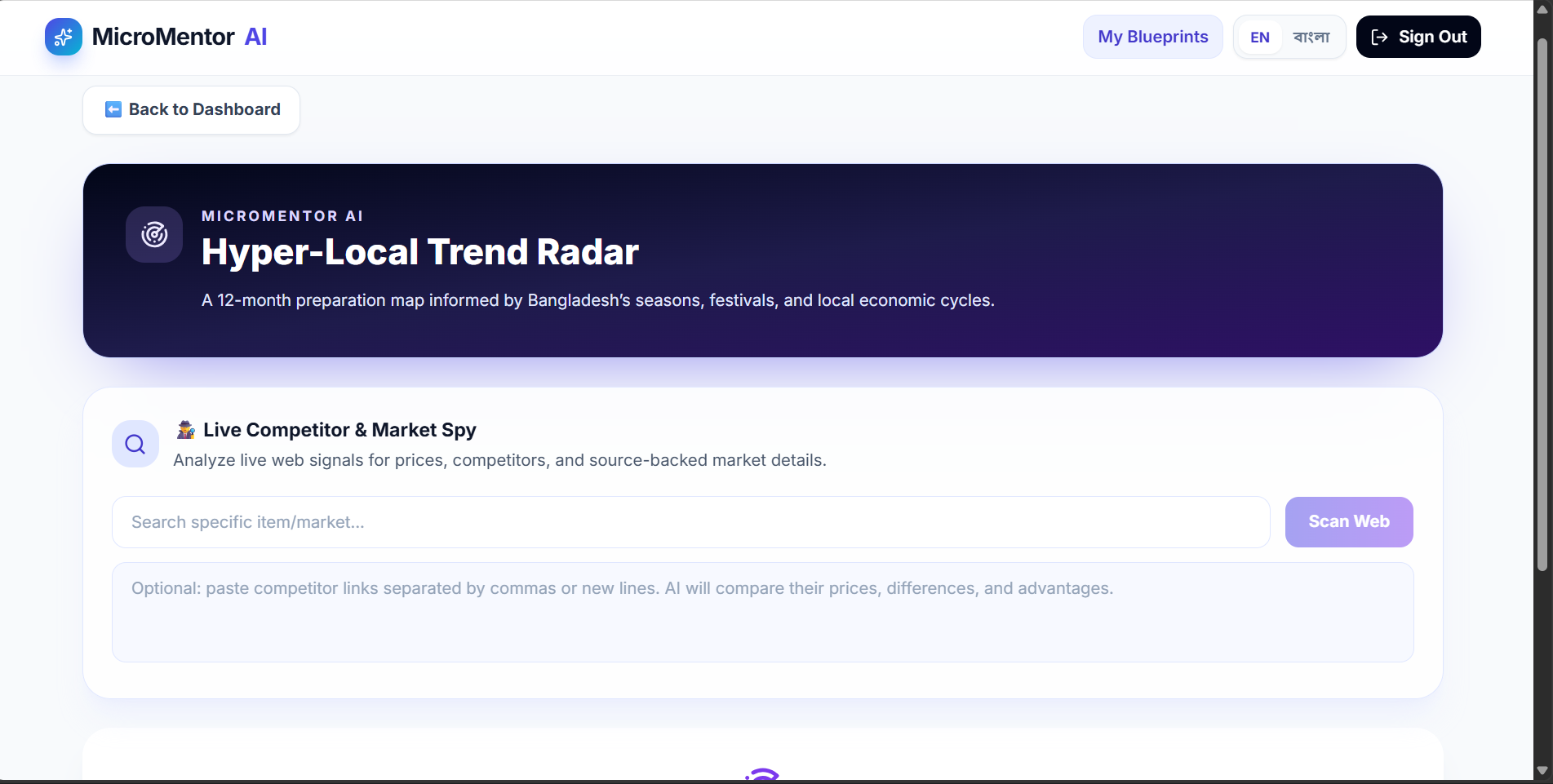
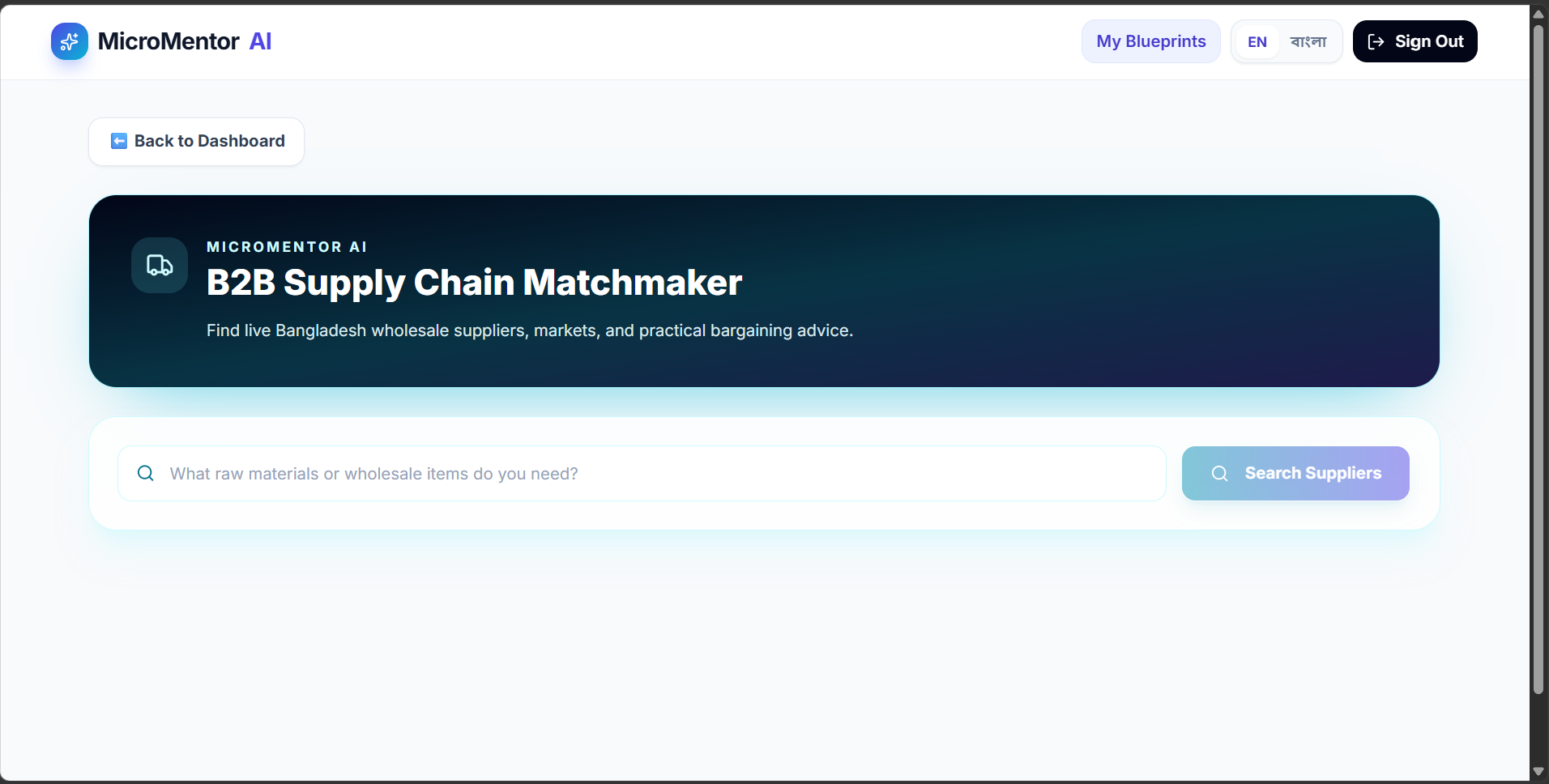
- Localized Logistics Integration: Connecting local transport systems directly with the Autonomous Lead Sniper to automate supply chain fulfillment.
Built With
- agentic-ai
- artificial-intelligence
- bilingual
- codex
- css3
- git
- github
- gpt-5.6
- html5
- javascript
- machine-learning
- multi-agent
- next.js
- node.js
- openai
- postgresql
- productivity
- react
- rest-api
- saas
- supabase
- tailwind
- typescript
- vscode


Log in or sign up for Devpost to join the conversation.