Inspiration
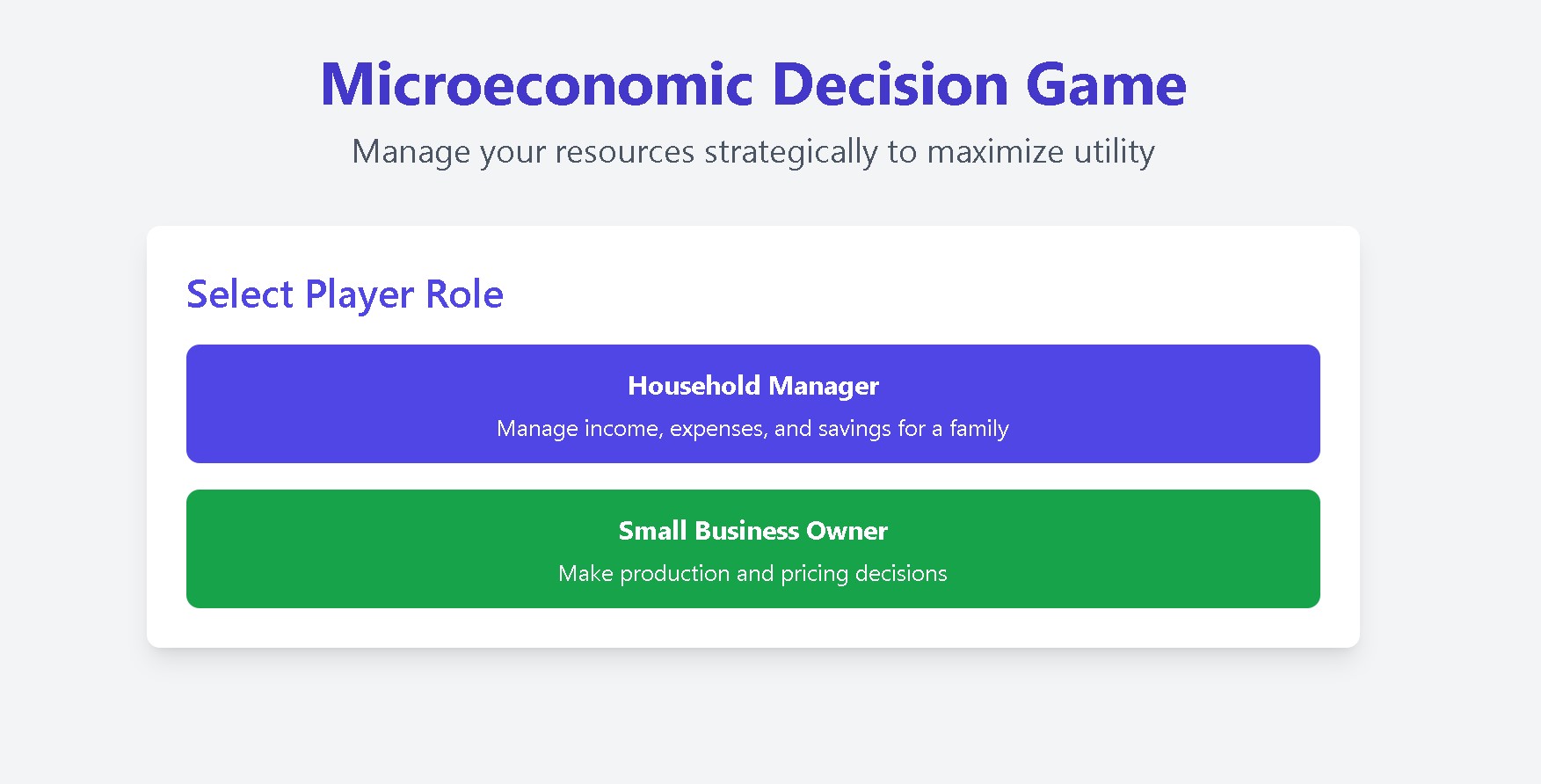
The inspiration for this project came from a desire to create an engaging educational tool that helps players understand the principles of microeconomics. I wanted to simulate real-world economic decisions, allowing players to experience the consequences of their choices in a fun and interactive way. The idea was to blend learning with gameplay, making economics accessible and enjoyable for everyone.
What it does
Game Design: Understanding how to create engaging gameplay mechanics that keep players interested. JavaScript and DOM Manipulation: Enhancing my skills in JavaScript, particularly in manipulating the Document Object Model (DOM) to create dynamic user interfaces. Responsive Design: Implementing responsive design principles using Tailwind CSS to ensure the game is playable on various devices. Data Visualization: Utilizing Chart.js to represent data visually, which helps players understand their economic performance over time.
How we built it
HTML: For the structure of the game interface. CSS: Tailwind CSS was used for styling, providing a modern and responsive design. JavaScript: The game logic was implemented in JavaScript, managing the game state, player interactions, and dynamic updates to the UI. Chart.js: This library was used to create visual representations of the player's economic data, such as resource allocation and performance over time. The development process involved:
Planning: Outlining the game mechanics, player roles, and overall flow of the game. Prototyping: Creating a basic version of the game to test core functionalities. Iterative Development: Continuously refining the game based on testing and feedback, adding features like random events and decision outcomes. Testing: Conducting thorough testing to ensure the game is bug-free and provides a smooth user experience.
Challenges we ran into
Balancing Game Mechanics: Ensuring that the game is challenging yet fair required extensive testing and adjustments to the economic model. Dynamic UI Updates: Implementing real-time updates to the UI based on player decisions was complex, especially when managing multiple game states. Data Visualization: Integrating Chart.js and ensuring that the charts accurately reflected the game state required careful data management and testing. Responsive Design: Making the game responsive across different devices posed challenges, particularly in maintaining usability and aesthetics.
Accomplishments that we're proud of
Successfully creating an engaging and educational game that simplifies complex economic concepts. Implementing a dynamic and responsive user interface that enhances the player experience. Integrating real-time data visualization with Chart.js, allowing players to track their performance effectively. Developing a robust game logic that simulates real-world economic scenarios and decision-making processes.
What we learned
Game Design: Understanding how to create engaging gameplay mechanics that keep players interested. JavaScript and DOM Manipulation: Enhancing skills in JavaScript, particularly in manipulating the Document Object Model (DOM) to create dynamic user interfaces. Responsive Design: Implementing responsive design principles using Tailwind CSS to ensure the game is playable on various devices. Data Visualization: Utilizing Chart.js to represent data visually, which helps players understand their economic performance over time.
What's next for Microeconomic Decision Game
Adding more player roles and scenarios to diversify gameplay. Introducing additional random events and challenges to increase unpredictability. Expanding the educational content to cover more economic concepts and principles. Gathering user feedback to refine gameplay mechanics and improve the overall experience. Exploring the possibility of multiplayer features to allow players to compete or collaborate in economic decision-making.
Built With
- chart.js
- css3
- html5
- javascript
- tailwind

Log in or sign up for Devpost to join the conversation.