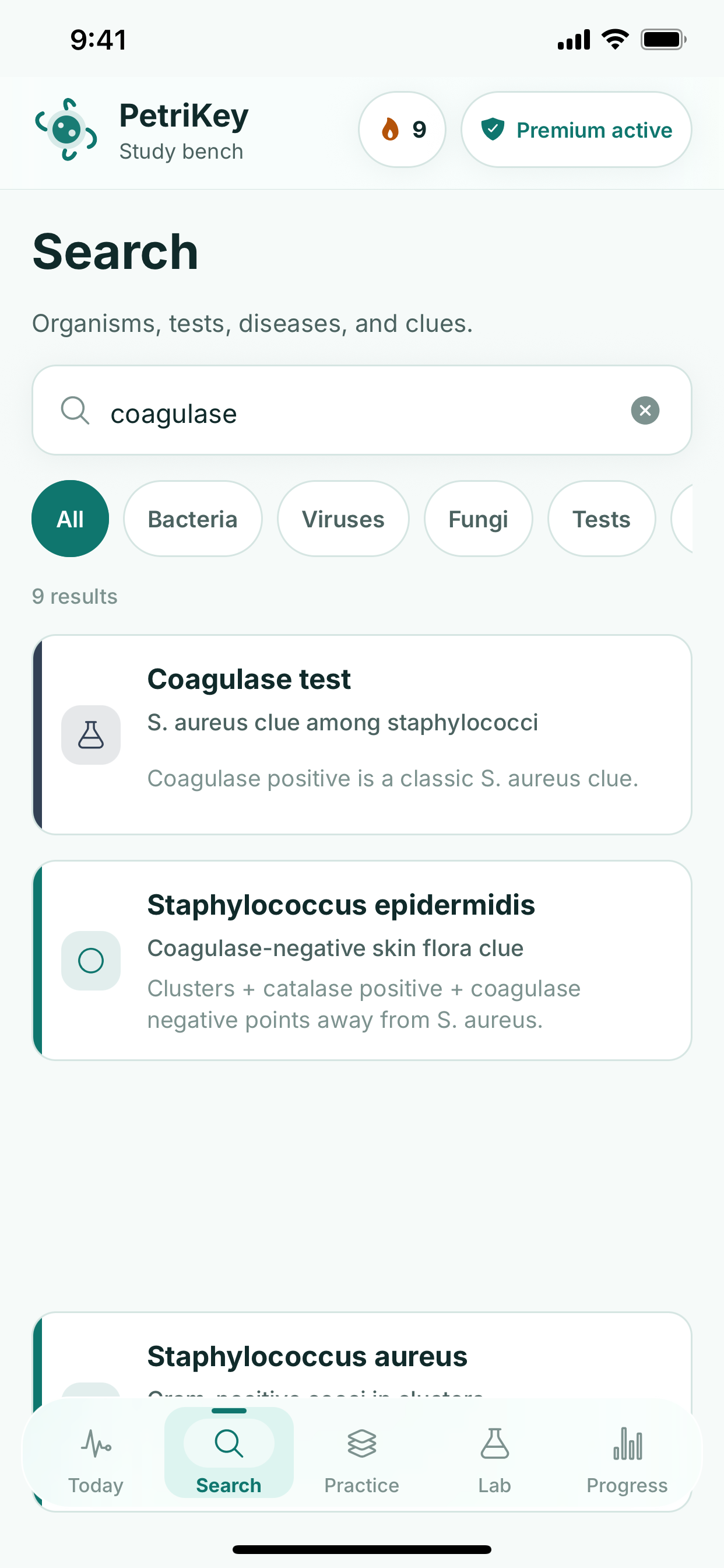
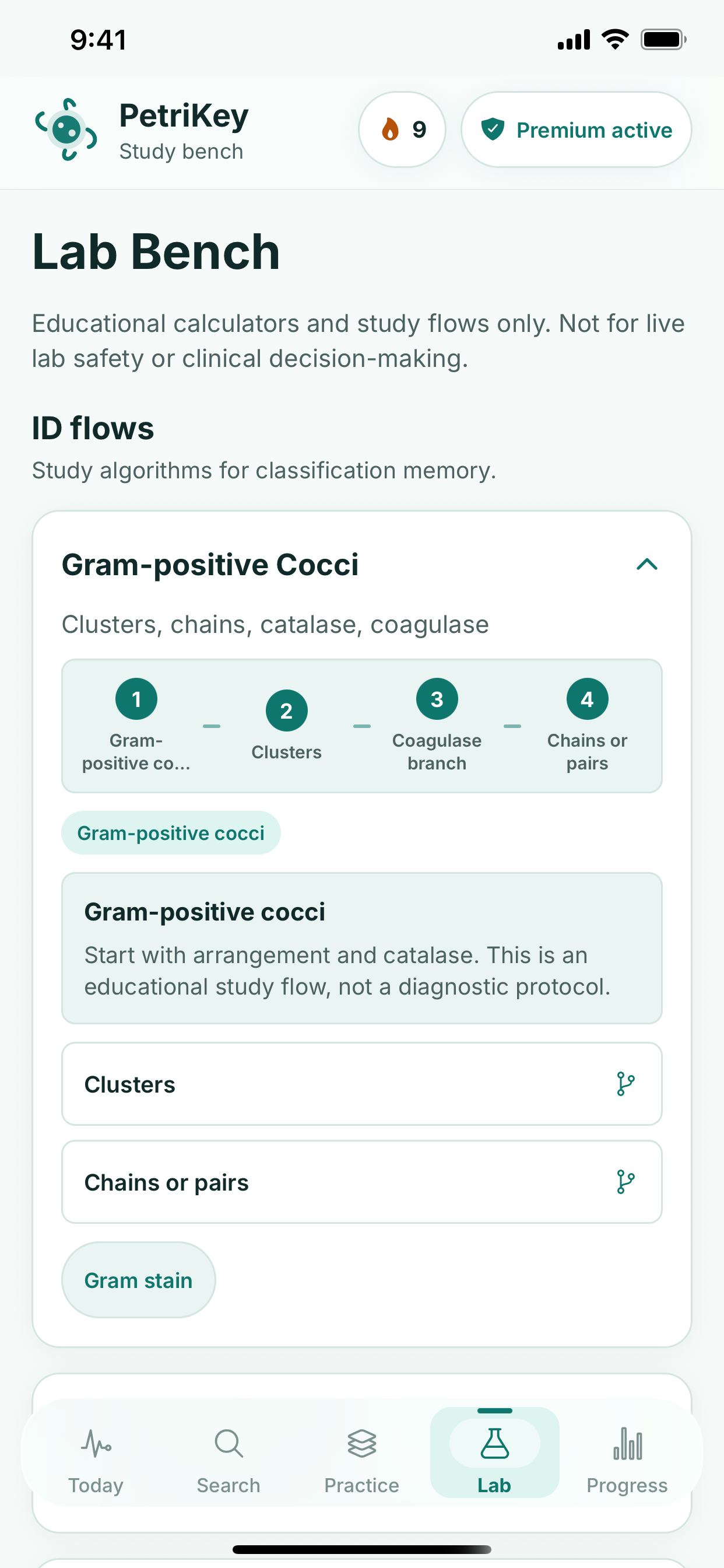
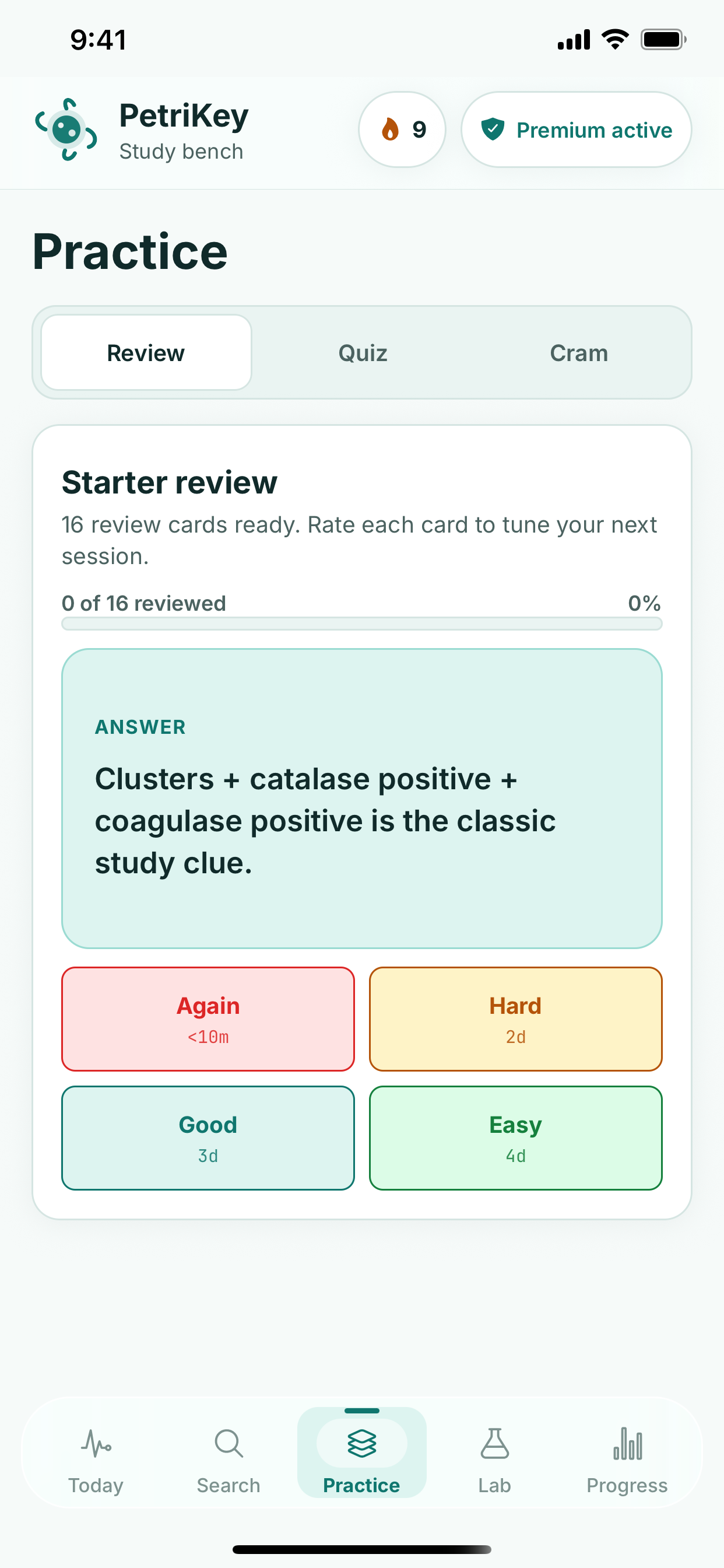
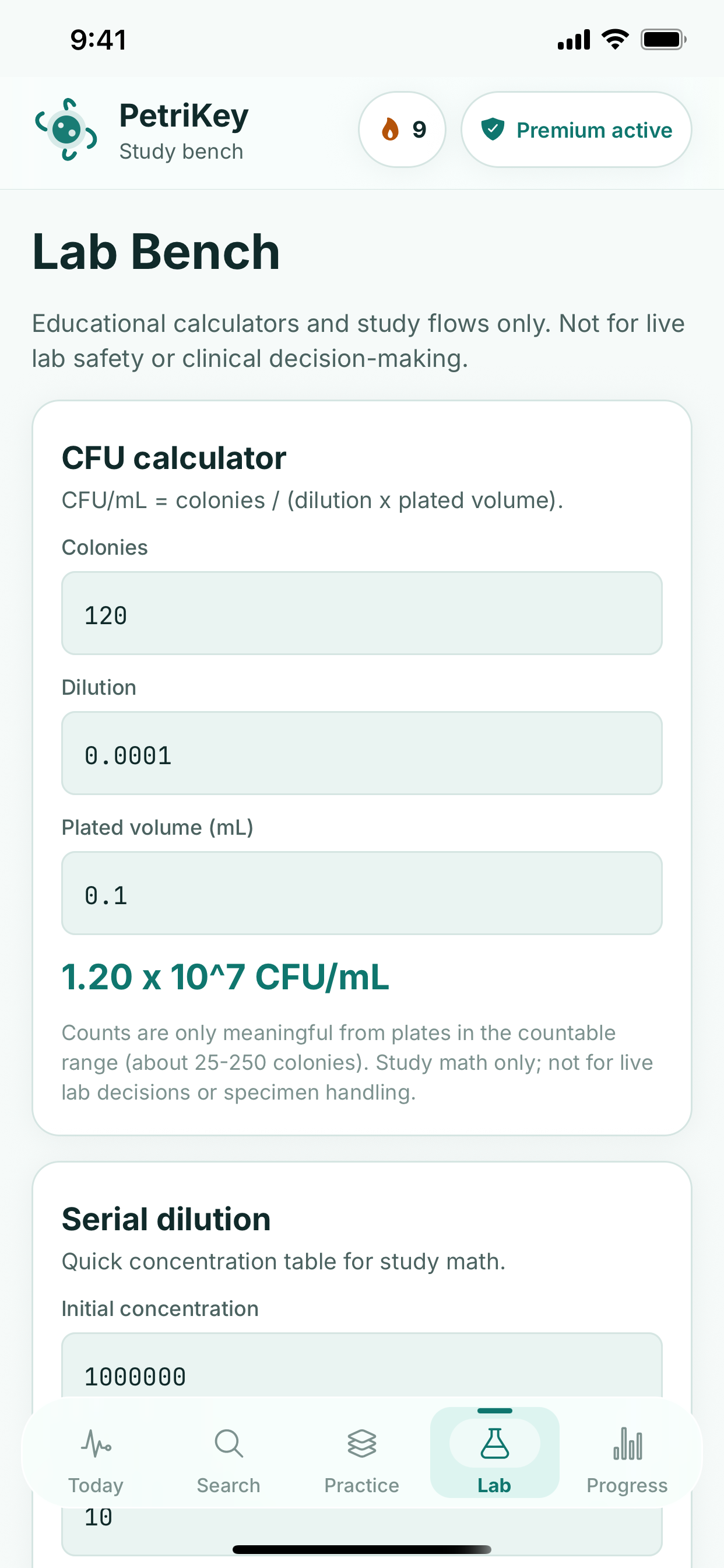
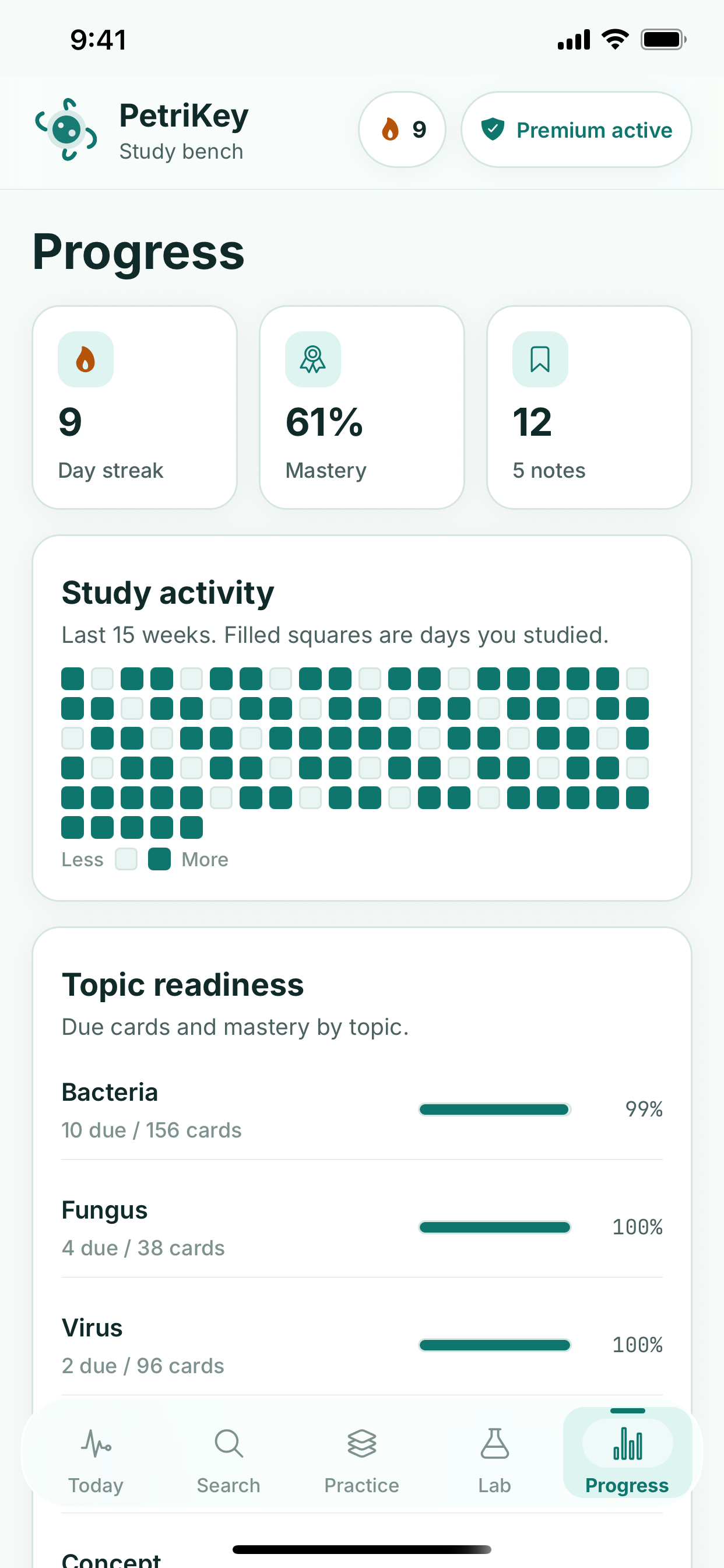
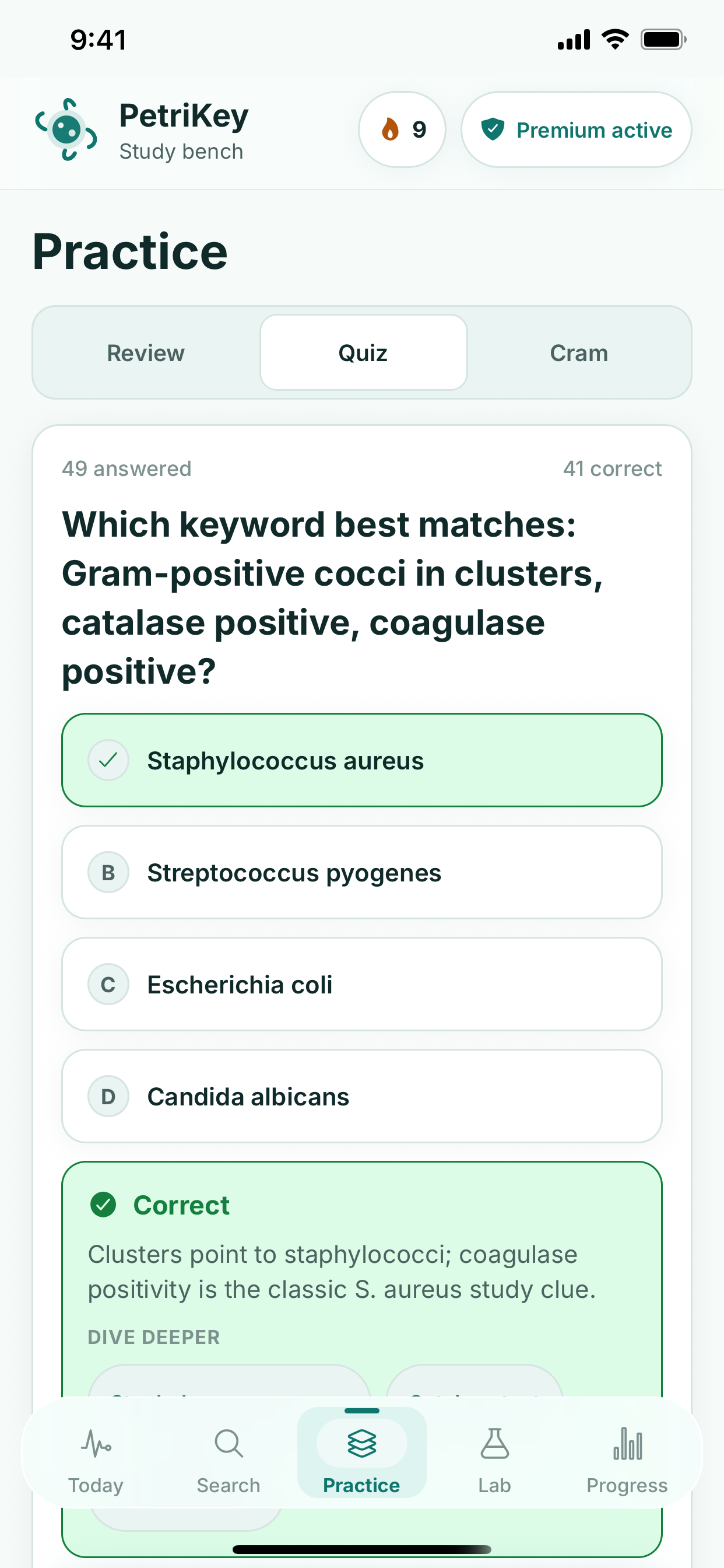
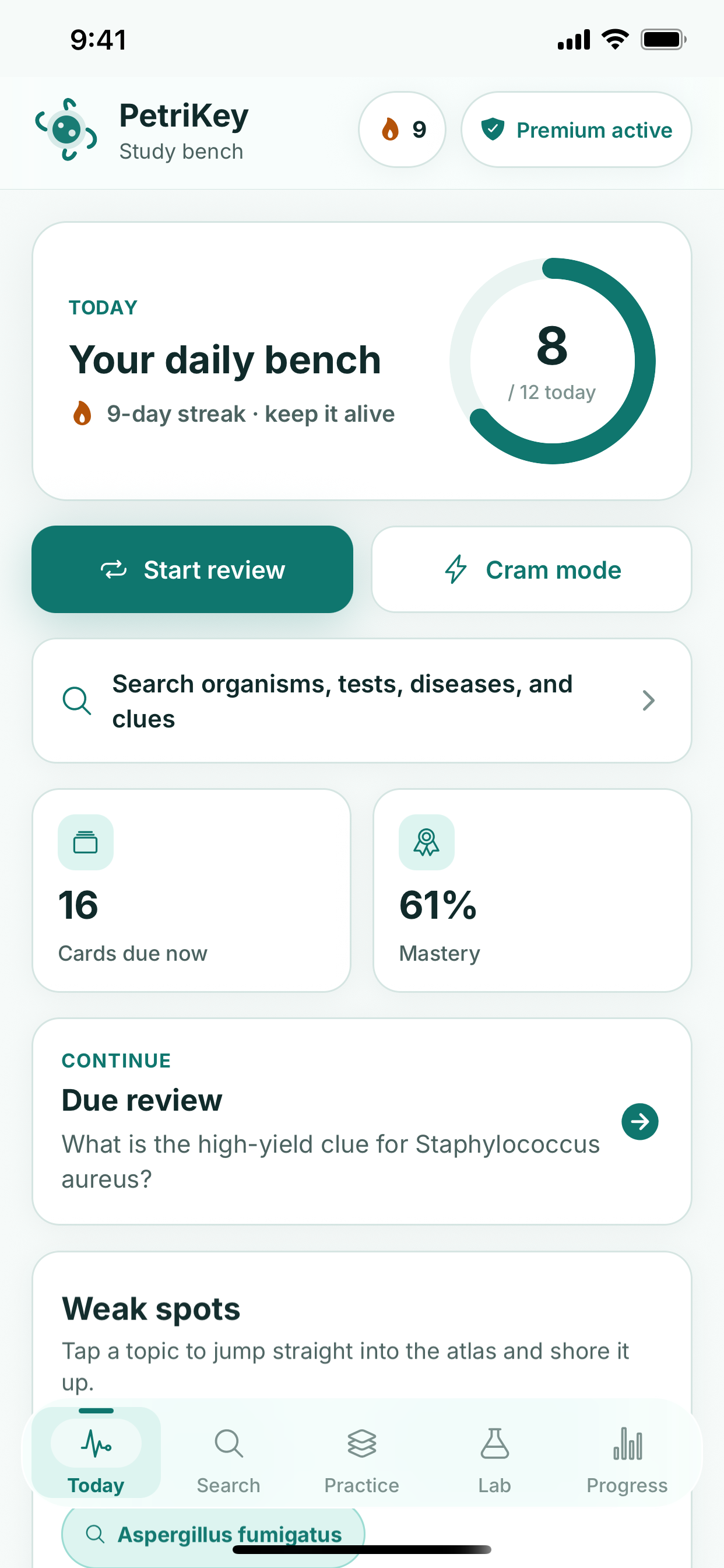
What it is. PetriKey is an offline microbiology study atlas for nursing, pre-med/PA, and med-lab students. Its differentiator is provenance: 341 organism entries carry source references to CDC, CDC DPDx, NCBI Bookshelf, OpenStax, ICTV, and WHO, and were run through fact-check passes including ICTV taxonomy corrections - in a category full of error-ridden crib apps. Beyond the atlas: custom SVG microbe morphology visuals (not stock images), a spaced-repetition flashcard engine, MCQ quizzes, and a Lab tab with CFU/mL and serial-dilution calculators plus interactive dichotomous identification flows. Fully offline.
What we built during Build Week with Codex (Jul 13–21). PetriKey existed pre-window. Inside the submission window, in Codex sessions, we executed the single largest push in the project's history - the complete iOS platform port (submitted to App Store review Jul 18), a large content expansion and verification pass, and release hardening.
How Codex contributed. Codex carried the volume: cross-platform porting, batch content structuring against the provenance schema, and release-blocking fixes at a scale that is simply not reachable by hand in a week. We set the editorial standard - what counts as an acceptable source, how taxonomy disputes resolve, which content is high-yield - and Codex executed and self-checked against it.
Why it matters. Students memorize from whatever app is cheapest, and wrong facts propagate into clinical training. PetriKey treats correctness as a product feature, with a citation behind every claim.
Built With
- codex
- expo.io
- react-native
- revenuecat
- svg
- typescript
- zustand


Log in or sign up for Devpost to join the conversation.