-
-
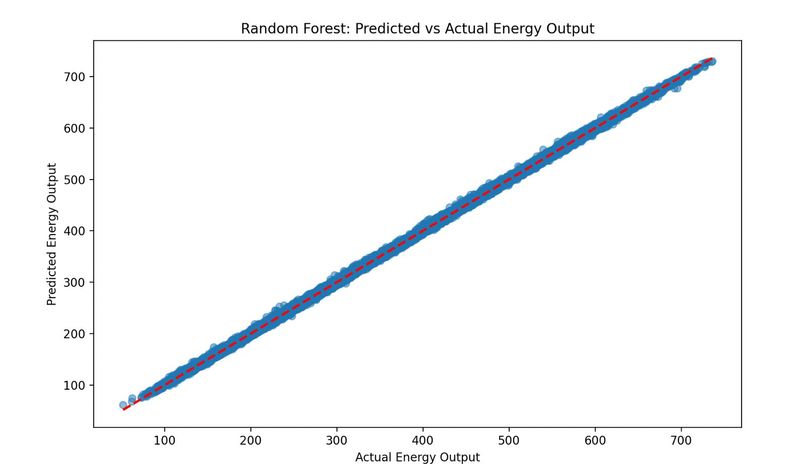
R square
-
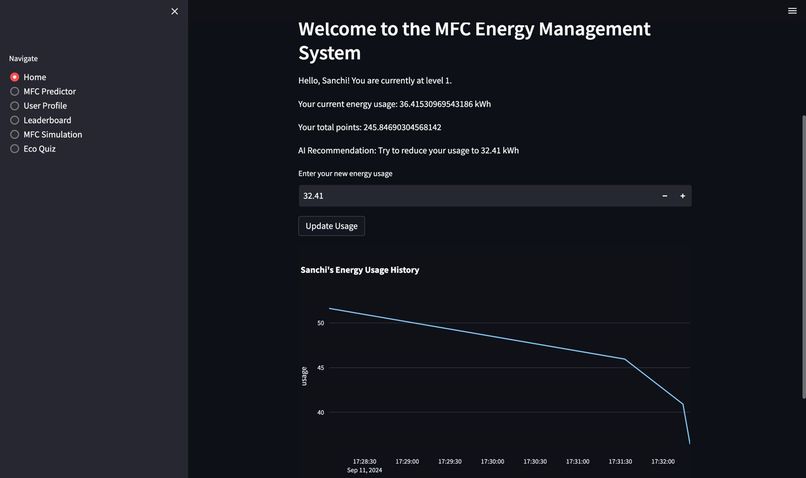
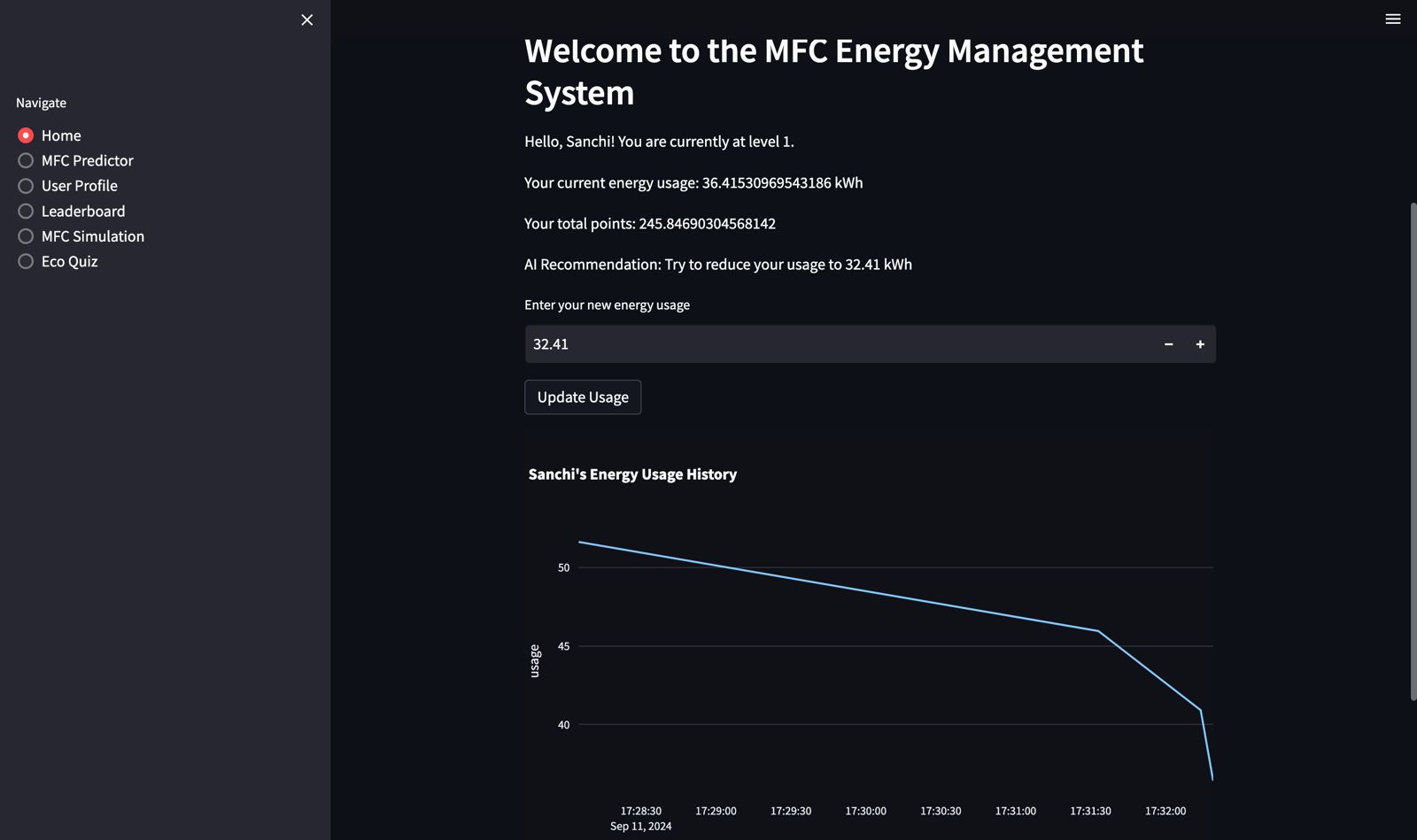
Homempage
-
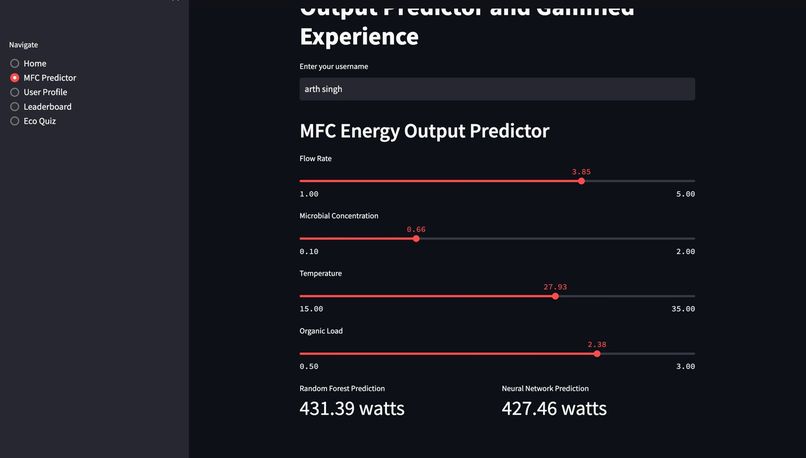
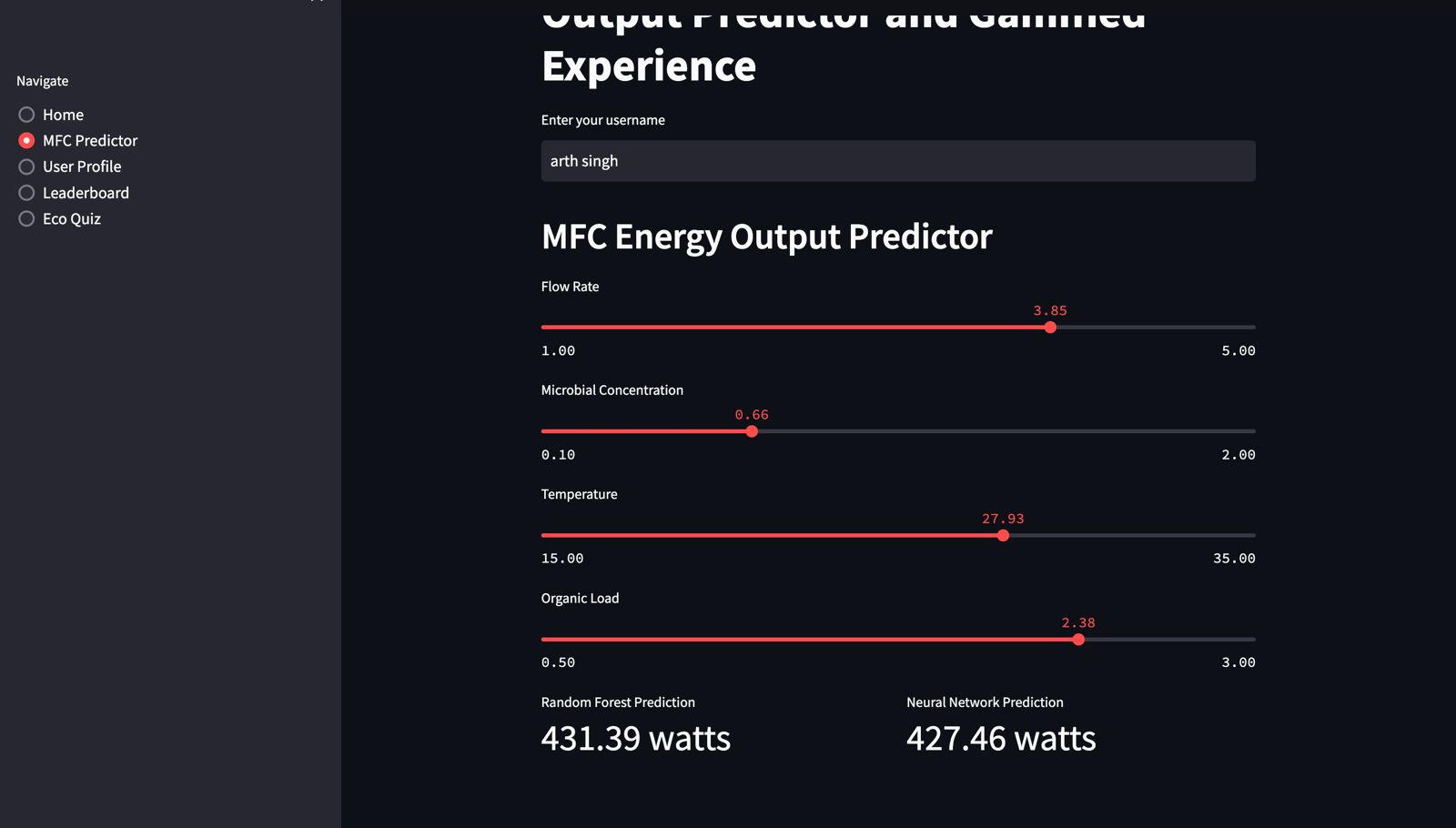
Prediction
Inspiration
The project draws inspiration from my coursework in biotechnology, specifically a subject called "Valorization of Mass." This subject focuses on the principles of a circular economy, aiming to maximize energy utilization by reducing waste.
I was intrigued by the potential of microbial fuel cells (MFCs) in contributing to sustainable cities. The idea of integrating AI for better prediction and optimization arose from the need to efficiently analyze MFC performance under various conditions.
What It Does
This project models the production and efficiency of microbial fuel cells under different parameters.
By introducing AI-driven prediction, urban planners can optimize the use of MFCs in city infrastructures to promote sustainability.
We also incorporated a gamification element, which encourages reduced energy consumption by fostering competition among users, driving more engagement in sustainable energy practices.
How We Built It
The project was built using Python, leveraging AI and machine learning techniques. The libraries used include:
- Streamlit:
streamlit==1.25.0 - NumPy:
numpy==1.25.2 - Pandas:
pandas==2.0.3 - Scikit-learn:
scikit-learn==1.3.0 - TensorFlow:
tensorflow==2.13.0 - Plotly:
plotly==5.15.0
The models used are:
- Random Forest: A robust decision-tree algorithm, known for its accuracy and ability to handle large datasets.
- Neural Networks: A deep learning model that identifies patterns in the data to predict MFC performance.
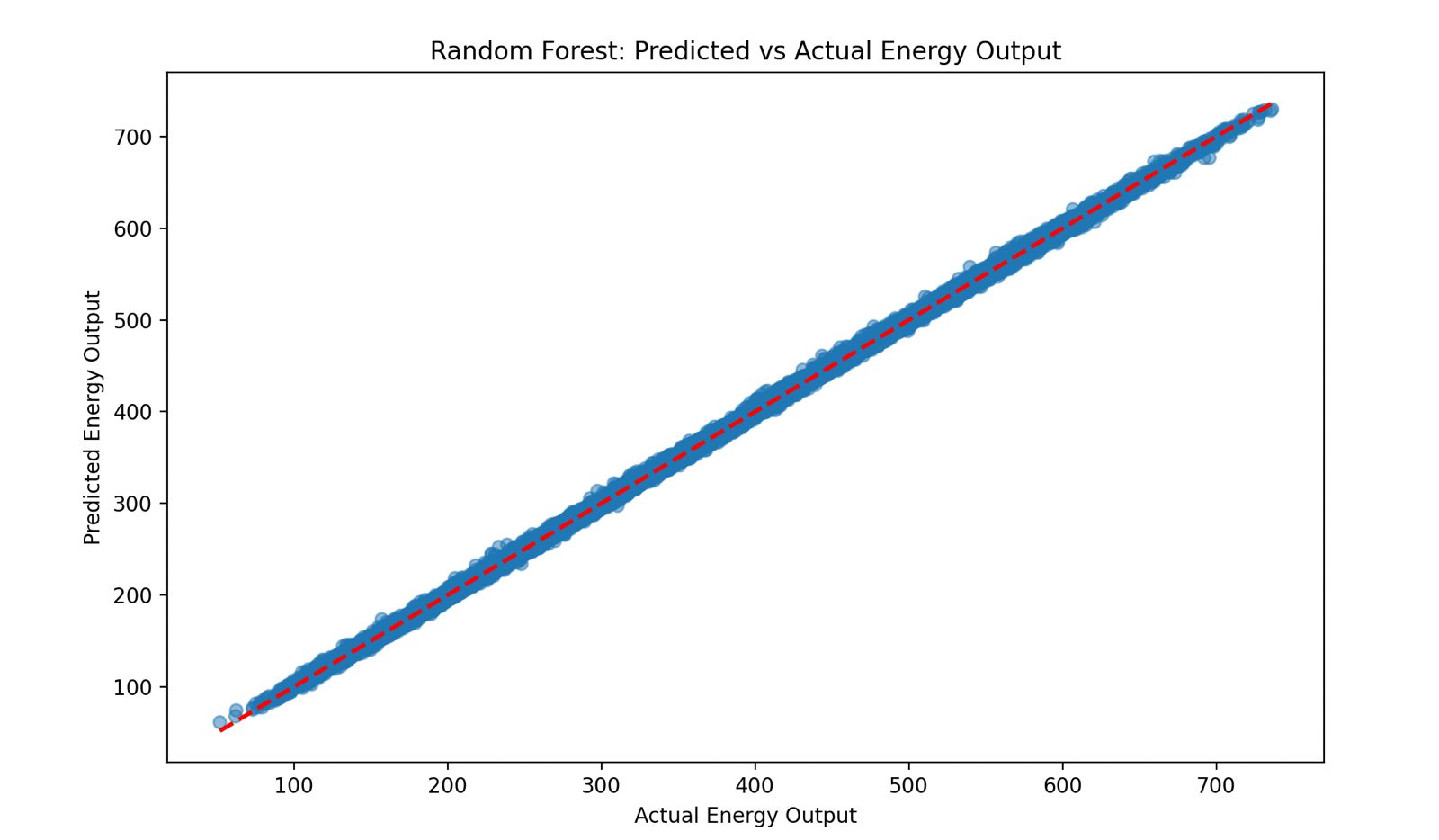
The model achieved an excellent R-squared value of 0.99, indicating near-perfect accuracy in prediction.
Gamification was added to the platform, making the usage of energy-saving techniques more engaging for city residents.
Challenges We Ran Into
- Debugging Issues: We faced multiple challenges while debugging the Python code and ensuring the AI models functioned as expected.
- Parameter Tuning: Achieving the best results required meticulous tuning of hyperparameters for both the Random Forest and Neural Networks models.
- Limited Resources: Given our background in biotechnology, mastering AI and ML required extra effort to overcome knowledge gaps, especially in coding and model optimization.
Accomplishments That We're Proud Of
- High Accuracy: Achieving a near-perfect R-squared value of 0.99 was a significant milestone, indicating strong predictive power of the models.
- Pioneering AI in MFCs: To the best of our knowledge, this is one of the first projects to use AI to analyze microbial fuel cells, making it a pioneering effort.
- Interdisciplinary Success: As biotechnology students, successfully implementing AI and ML into this project was a personal achievement, demonstrating that our background didn’t limit us from exploring advanced technologies.
What We Learned
- The project reinforced the importance of interdisciplinary learning—combining biotechnology with AI and ML to create innovative solutions.
- We gained significant experience in model development, parameter tuning, and integrating predictive models into practical applications.
- The gamification aspect taught us the value of engaging users through competition to promote sustainable behavior.
What's Next for Microbes Save Us
- Platform Expansion: The next step is to integrate the model into a comprehensive website or application, making it accessible to urban planners and city developers.
- Improved Sensors and Hardware: We aim to collaborate with hardware engineers to develop better sensors and a complete hardware setup to monitor MFC performance in real-time.
- Scalability: We plan to scale this project by improving the AI models further and integrating the data collection from more sources, making it adaptable for different urban environments.


Log in or sign up for Devpost to join the conversation.