-
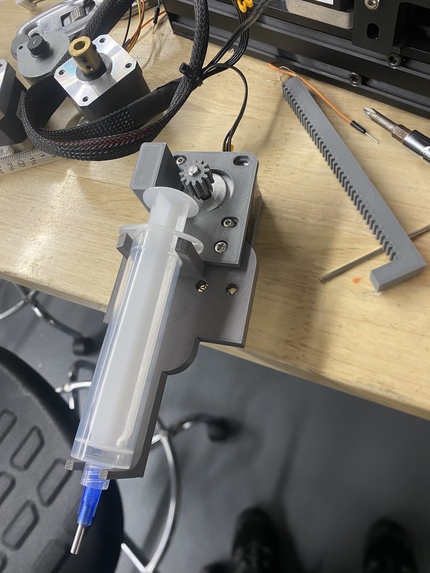
Prototype 1: Humble beginnings
-
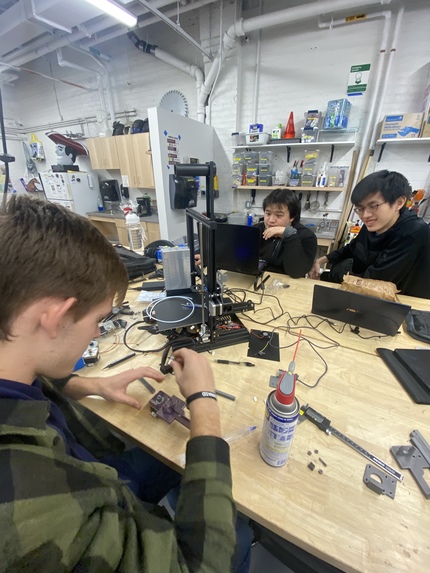
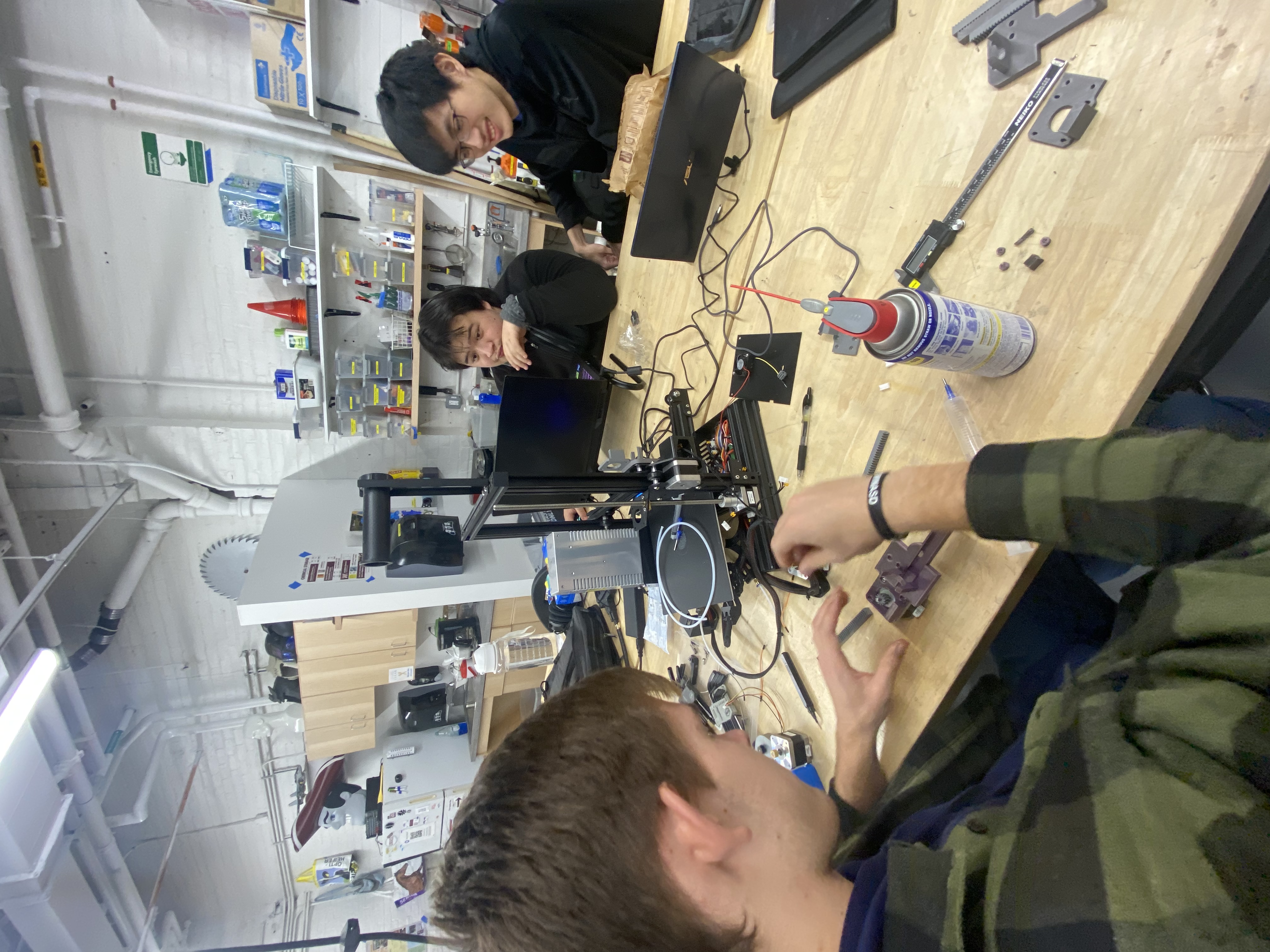
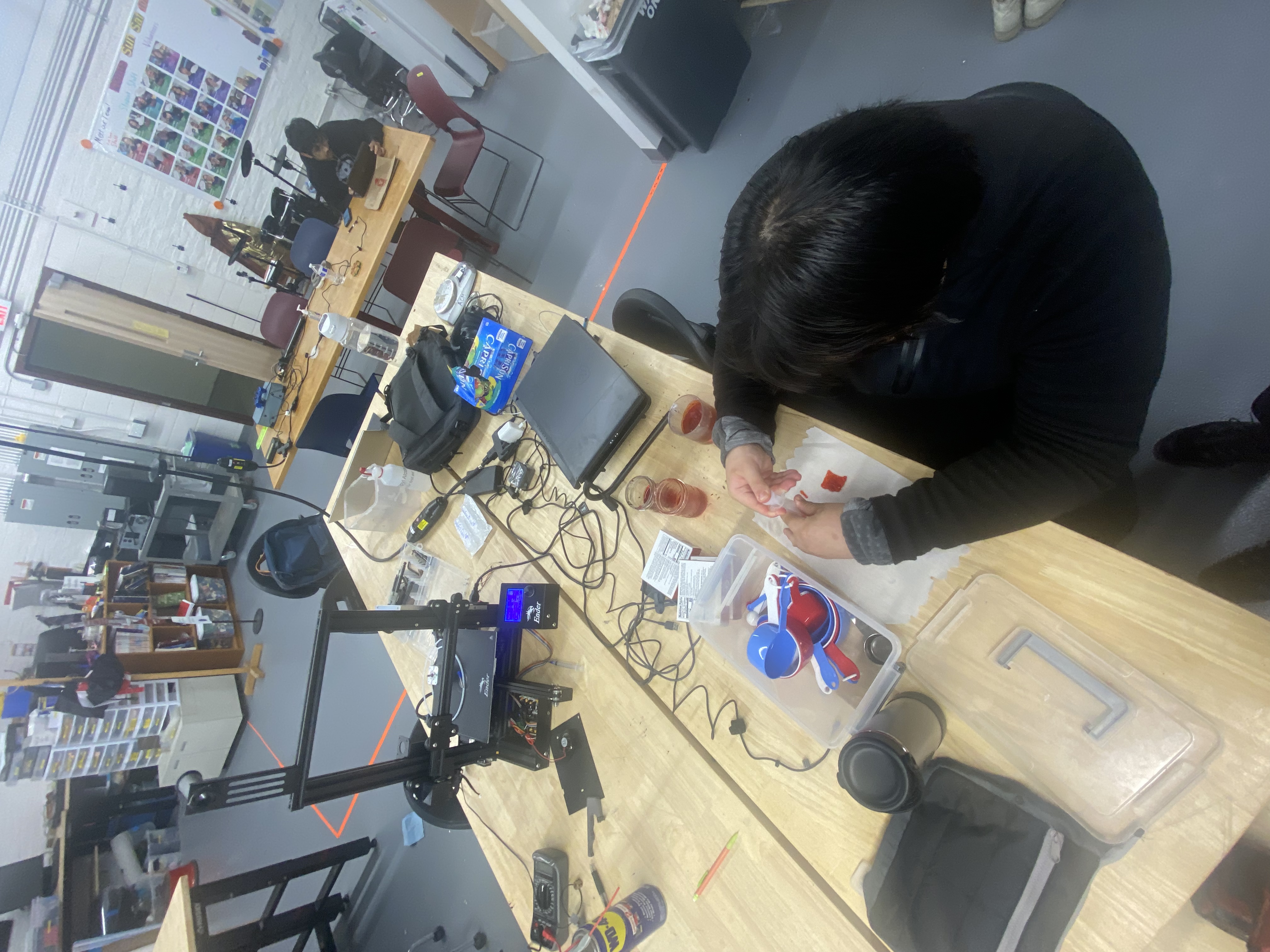
Men at work
-
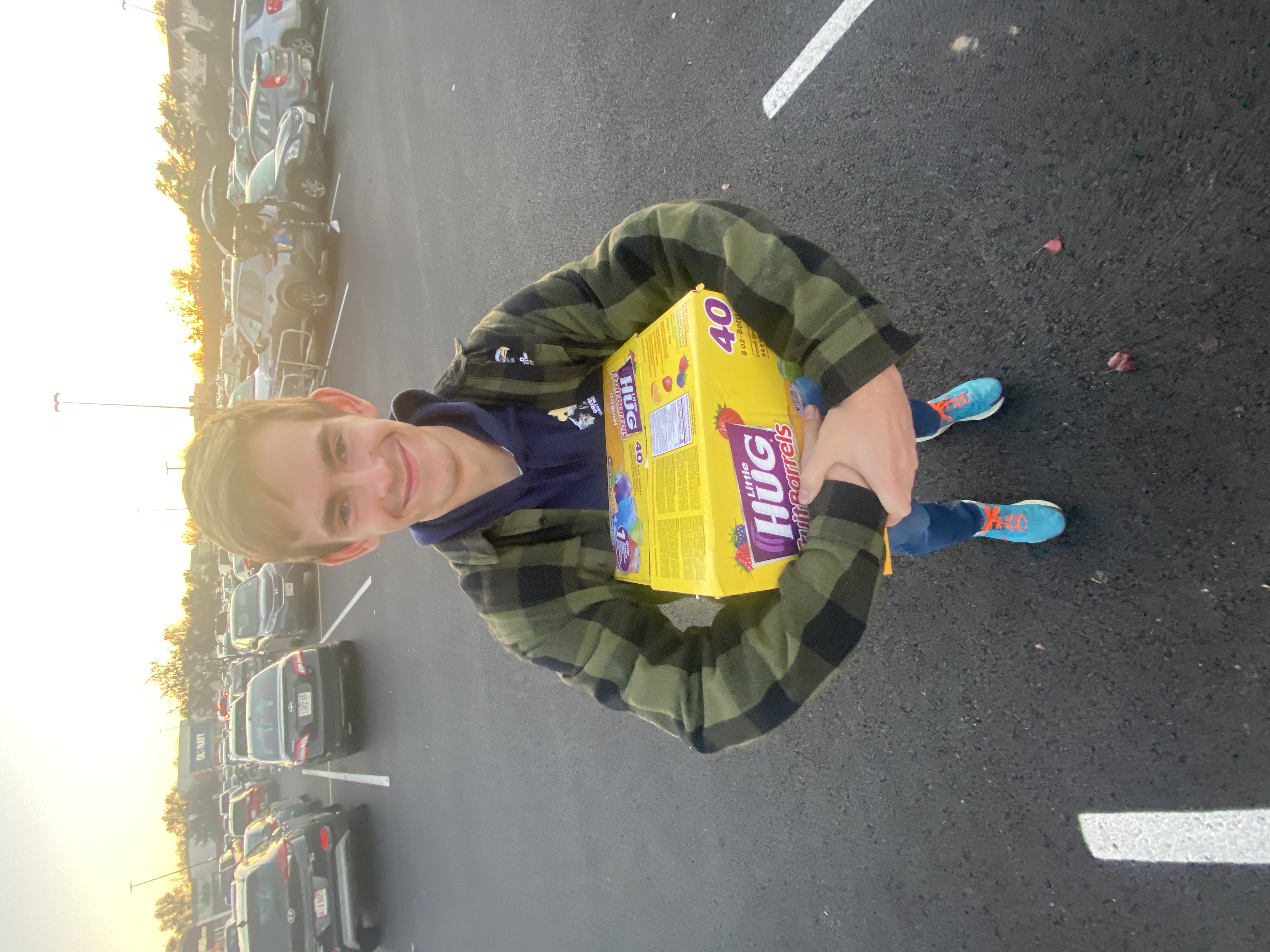
HUG Barrels for fuel
-
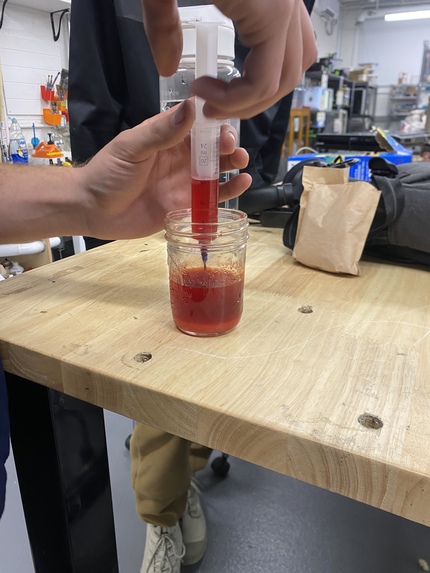
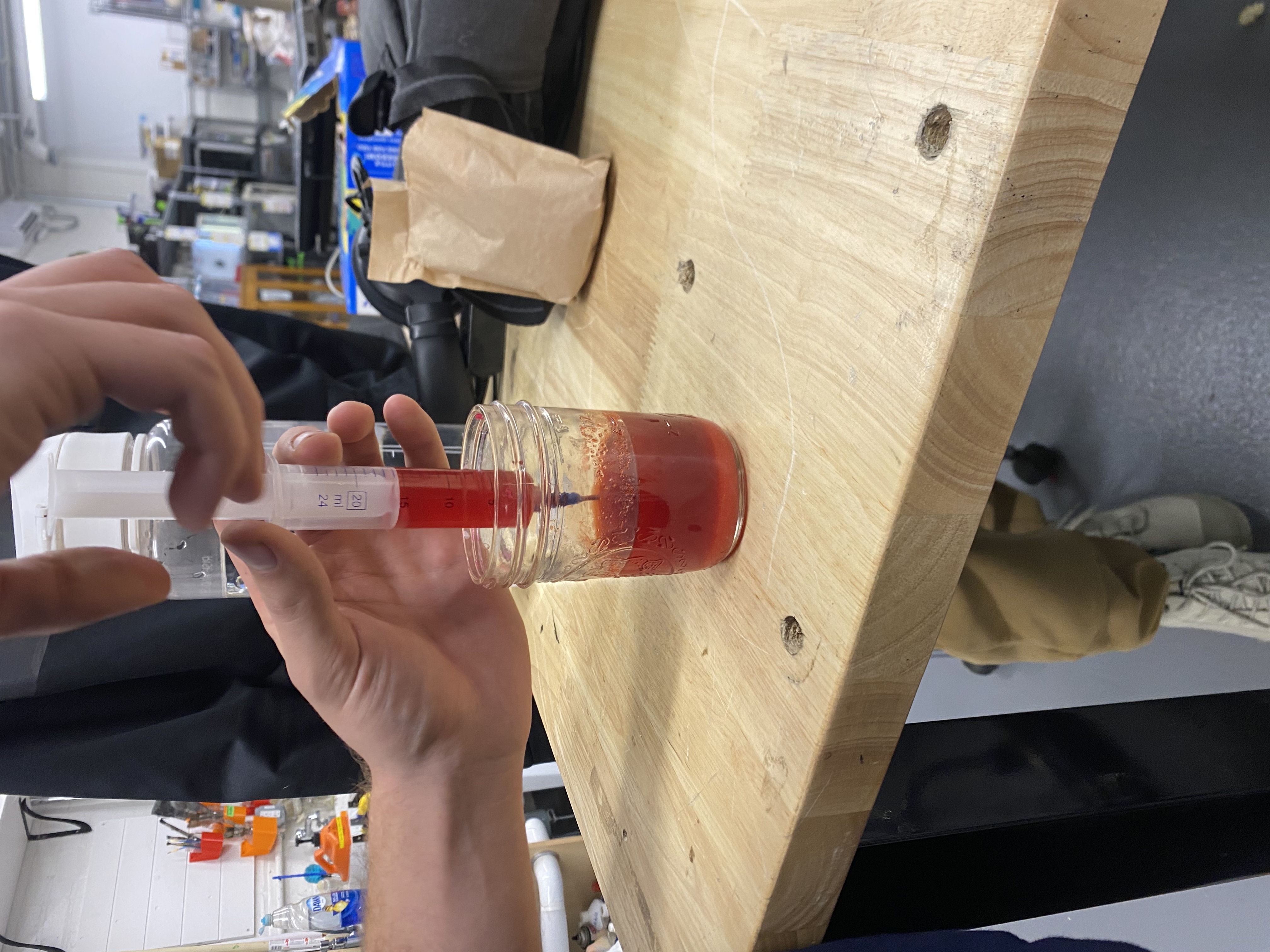
Viscosity testing
-
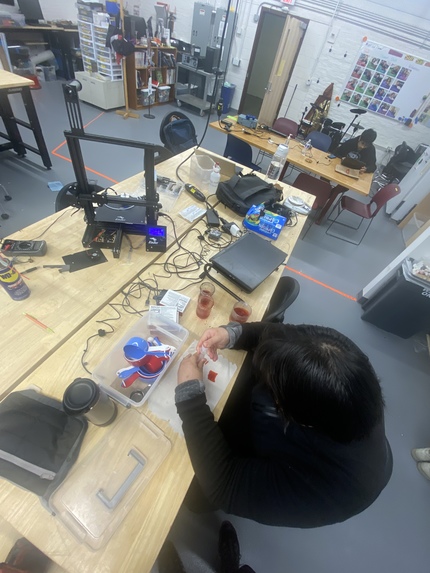
Viscosity testing (pt. 2)
-
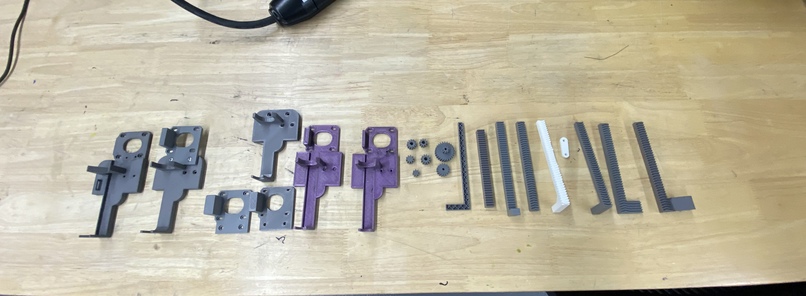
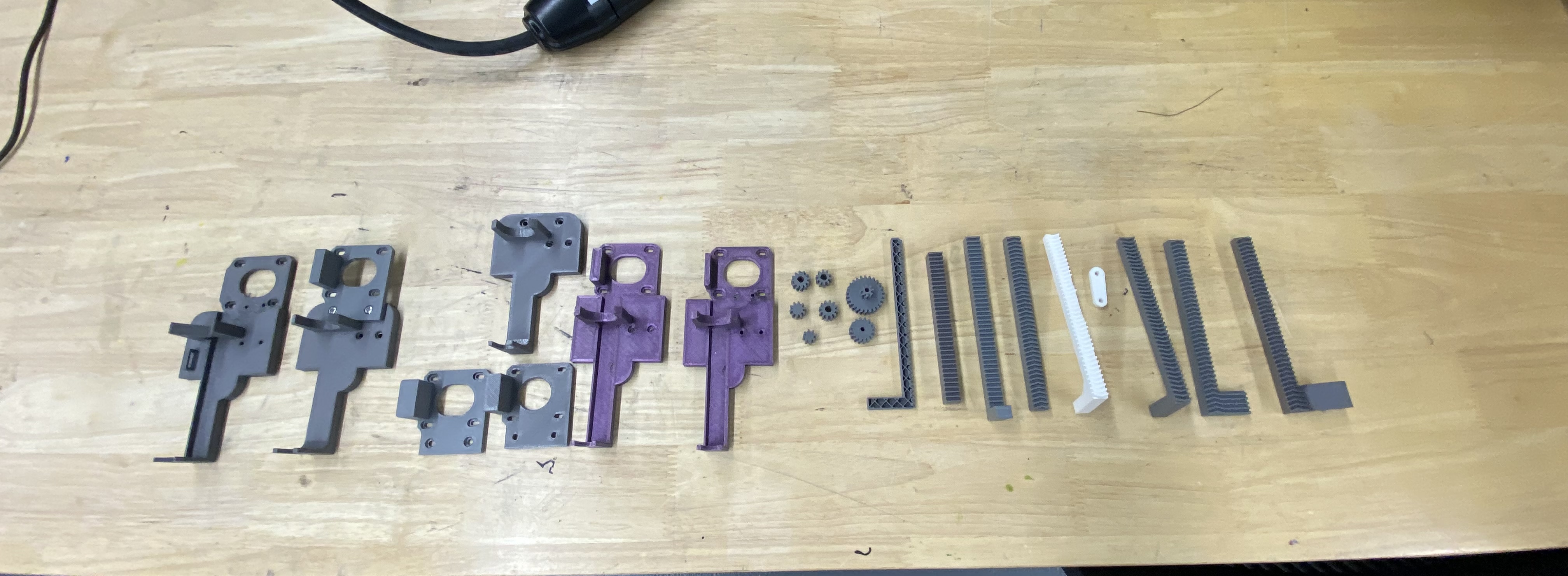
Iterative Design
-
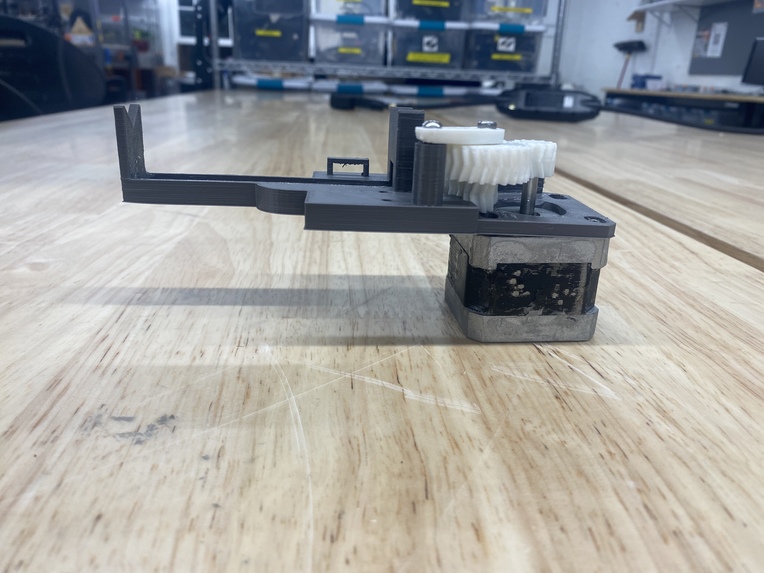
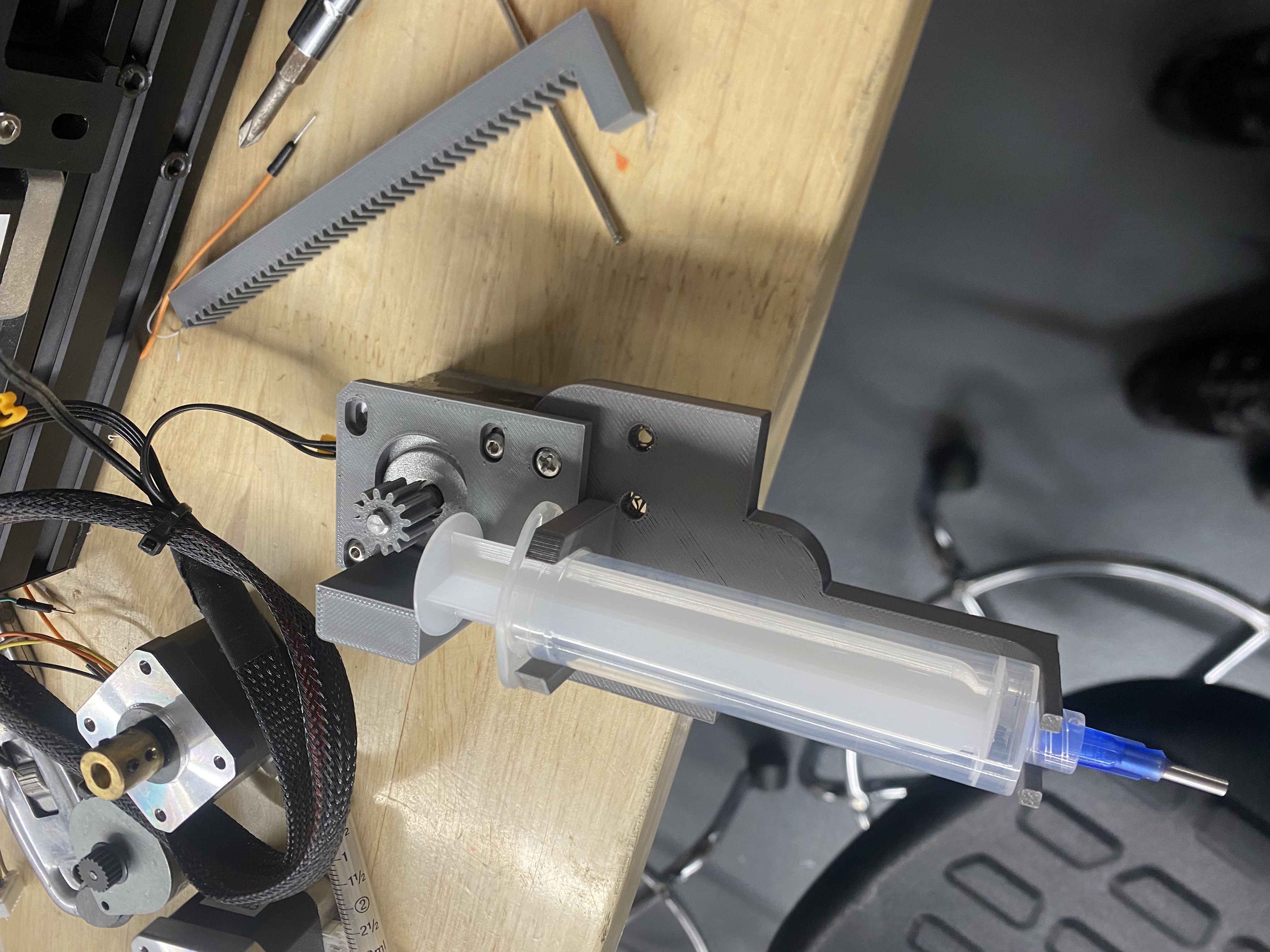
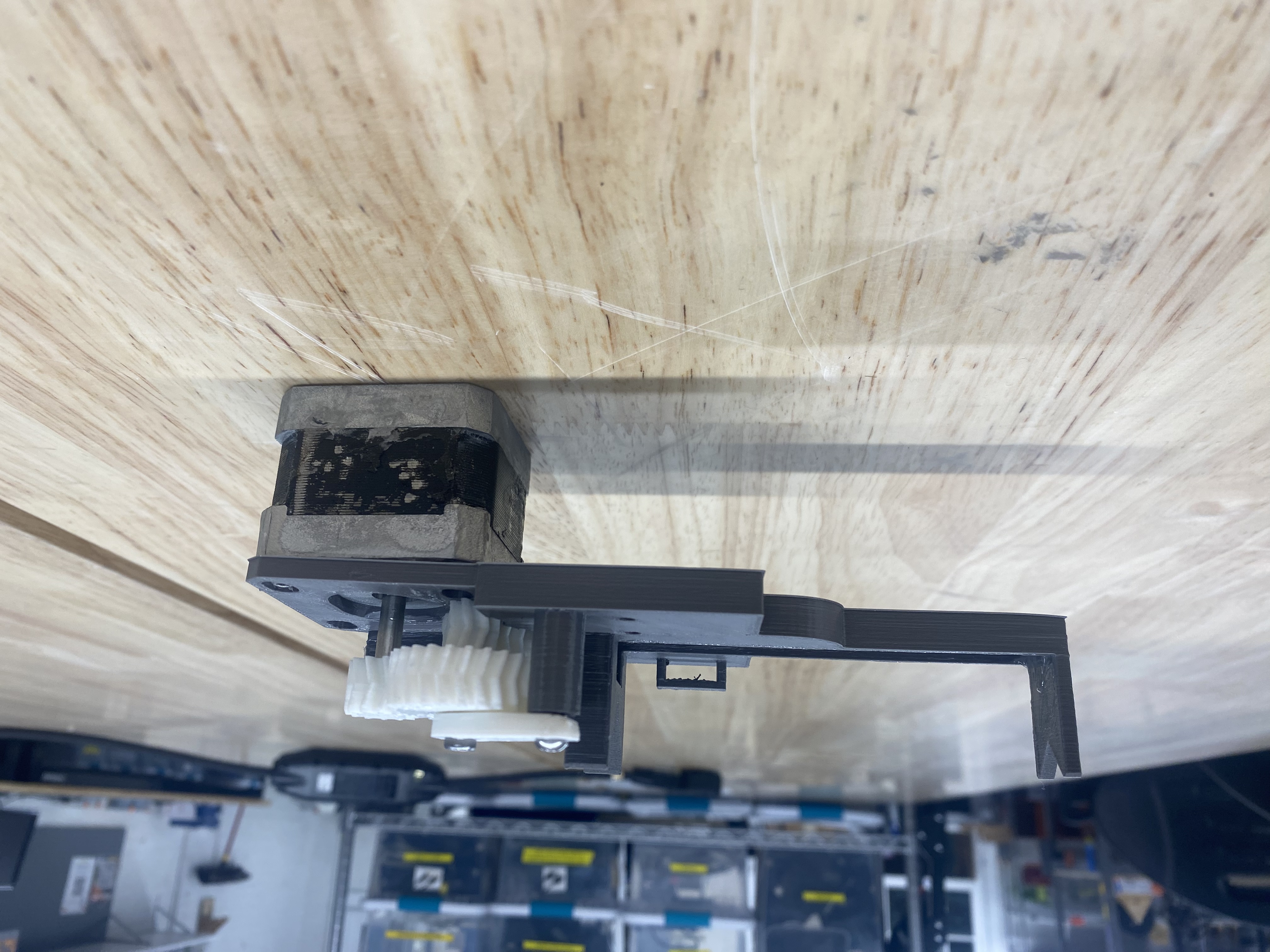
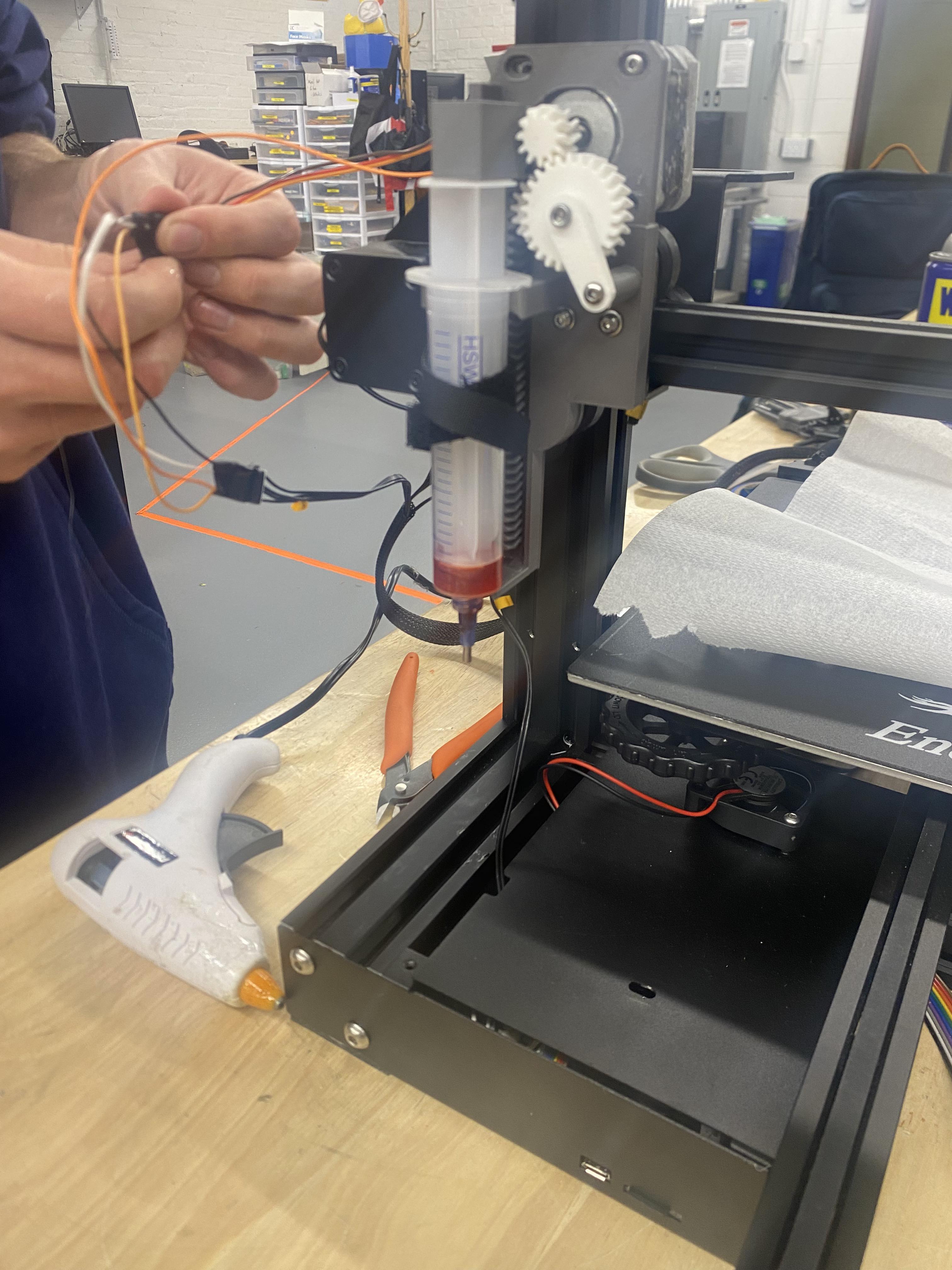
Final syringe actuator design (Side View)
-
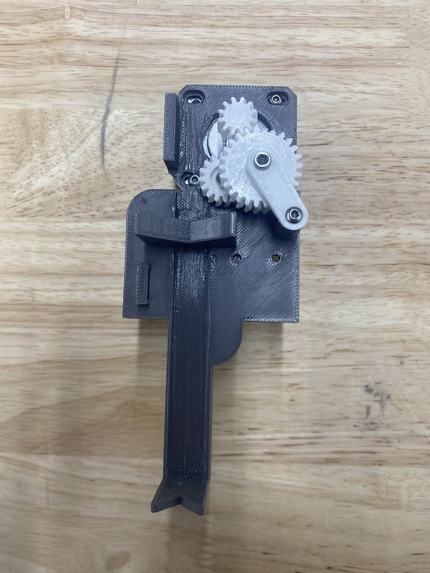
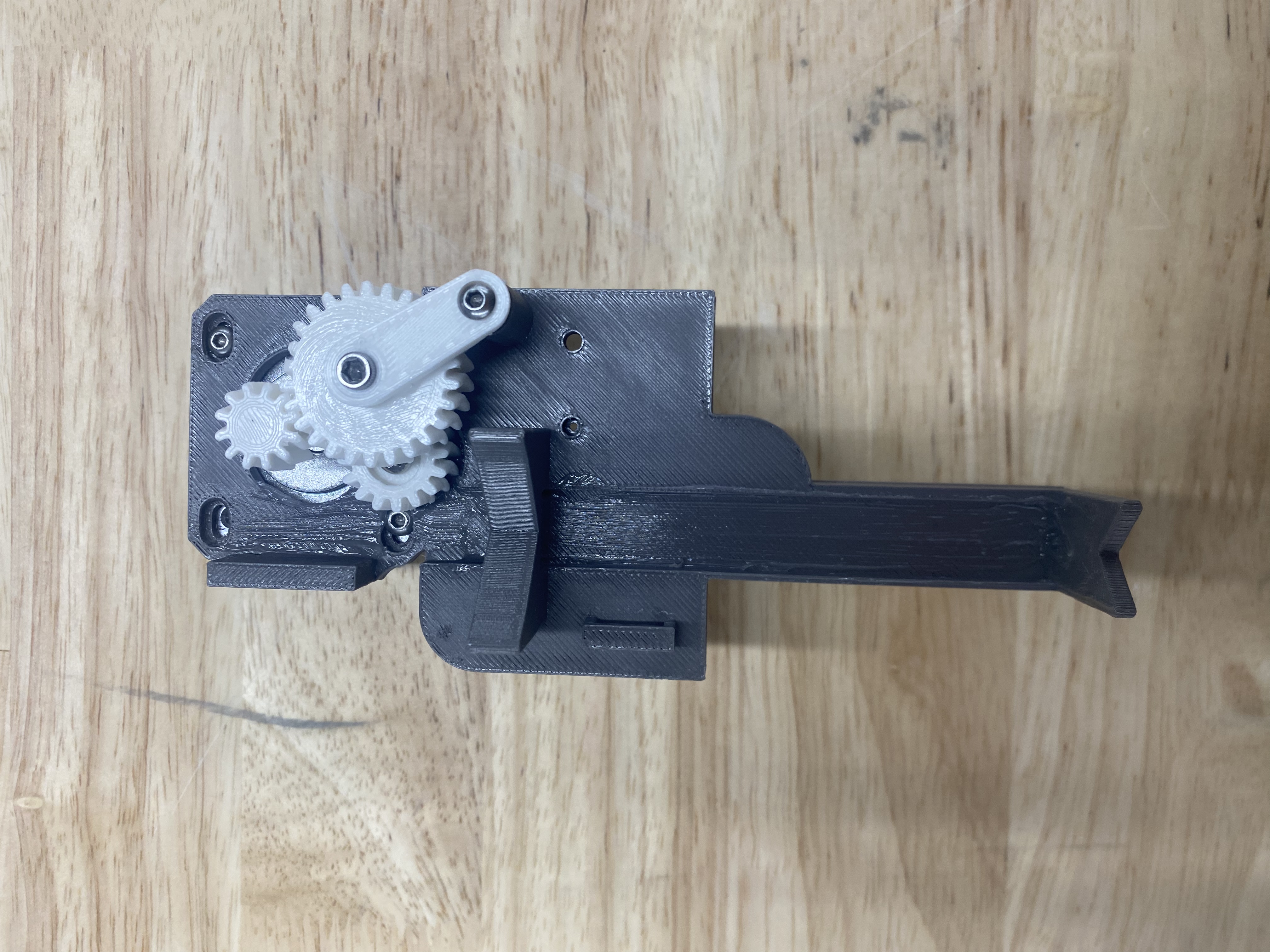
Final syringe actuator design (Top View)
-
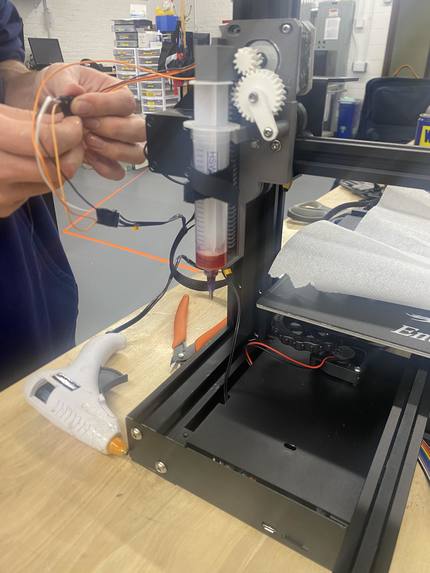
Final product
Inspiration
The medical industry is very costly, and the consistent influx of innovative technologies have led to bio printers. Bio printers consist of the utilization of 3D printing to combine cells, growth factors, bio-inks, and/or biomaterials to create biomedical parts that imitate natural tissue and form bio-films. Our goal for this project was to create a feasible, cost-effective bio printer. We wanted to use all the original parts of the printer so anyone with an Ender-3 3D printer can use it. This is an important step towards making bio printing accessible to the masses and addressing organ shortages, personalized treatments, advancing drug development, and providing ethical alternatives to animal testing.
What it does
Our product turns a standard mass-market 3D printer into a printer capable of extruding hydro-gels for biomedical research. This is an open-source project and can be used with many different forms of paste, allowing for the development of new 3D-printable materials.
How we built it
Hardware
First, we tested different motors to see whether the existing motors would have enough torque. Next, we made a preliminary design by mocking up the Ender 3 extruder carriage in CAD. Afterwards, we modeled a holder for the syringe and an actuator for the syringe pump. We used a rack and pinion gear system and after several iterations, decided to change the gears to give the rack more torque. After finding a gear design that worked, we tested multiple viscosities of gel in order to find a suitable gel to print with.
Software
The software package we made is an edited version of Marlin 2.0.9.7 and utilizes a custom UltiMaker Cura profile for slicing. We changed the firmware on the Ender 3 which allowed us greater control over the temperature while printing, as many features of the printer are temperature-locked. The board configuration had to be switched from a Make2560 to a Creality 4.2.2 because the Marlin software required it.
Challenges we ran into
Hardware
We went through 10 different versions of gear racks before settling on one that worked effectively. We started off with a standard spur-gear and transferred to a double-helical to keep the gears centered and meshing. Then, we had to change the gearing in order to provide more torque because the rack was not providing enough force after some testing. We also ran into issues with some 3D printed parts of our project due to printing errors.
Software
The default version of Marlin (2.1.2.1) is no longer supported on the Ender 3 3D printer with the secret upgrade of the Creality 4.2.2 board. We also ran into issues interfacing with the screen. We had to retrieve a microSD card. There were only two ways to connect to the interface of the screen and only one of them worked which was through microSD. We were all relatively inexperienced with Marlin programming which also caused issues at certain points. The printer seemed to have issues with running G-code when not printing. There’s some changes to the settings that need to be made before the printing that required G-code. One of the largest issues we faced in the software was the de-bugging.
Accomplishments that we're proud of
We started off this project with general knowledge of the theoretical components of what we were trying to create, but had no idea what challenges we were going to face. We came out of this project all having a much greater understanding of gear systems, software programming, electrical circuiting, and especially 3D printing. The fact that we were able to create a functioning design within a very restrictive timeframe was a great accomplishment to us.
What we learned
We learned and received a much more hands-on level of experience in the fields listed above. We changed from having just good understanding of how each of these components may work, to having a good understanding of how each of these components do work. This project truly accentuated the importance of hands-on learning when developing skills in a certain field.
What's next for the Micro-extrusion bio printers bolt-on upgrade kit
We plan on optimizing this for power and supporting multiple syringe types. In addition, we plan to create other upgrades for this printer to make it a better bio printer.
Built With
- autodesk-fusion-360
- crealityslicer
- cura
- g-code
- marlin
- platformio
- prusiaslicer
- ultimaker
- visual-studio-code
- youtube


Log in or sign up for Devpost to join the conversation.