Inspiration, background, and the problem
Hi, I'm Alex, I'm a nature tourism guide. Nature tourism is great in so many ways, but my abilities as a guide are limited - I can be only in one place, with only one group of people.
For many years, I've been dreaming to create an app that would help me scale my skills and guide more people to nature.
The problem of nature travel is simple - people just don't know where to go and what to look for, and going on an organized trip with a guide isn't affordable for many. Nature is full of amazing stories, but there's nobody to tell them.
That's why I'm so excited that with the help of Gemini I could create Micro-Expeditions - an app that takes your regular afternoon into a micro-expedition, sending you on a mission to nature.
What Micro-Expedition does
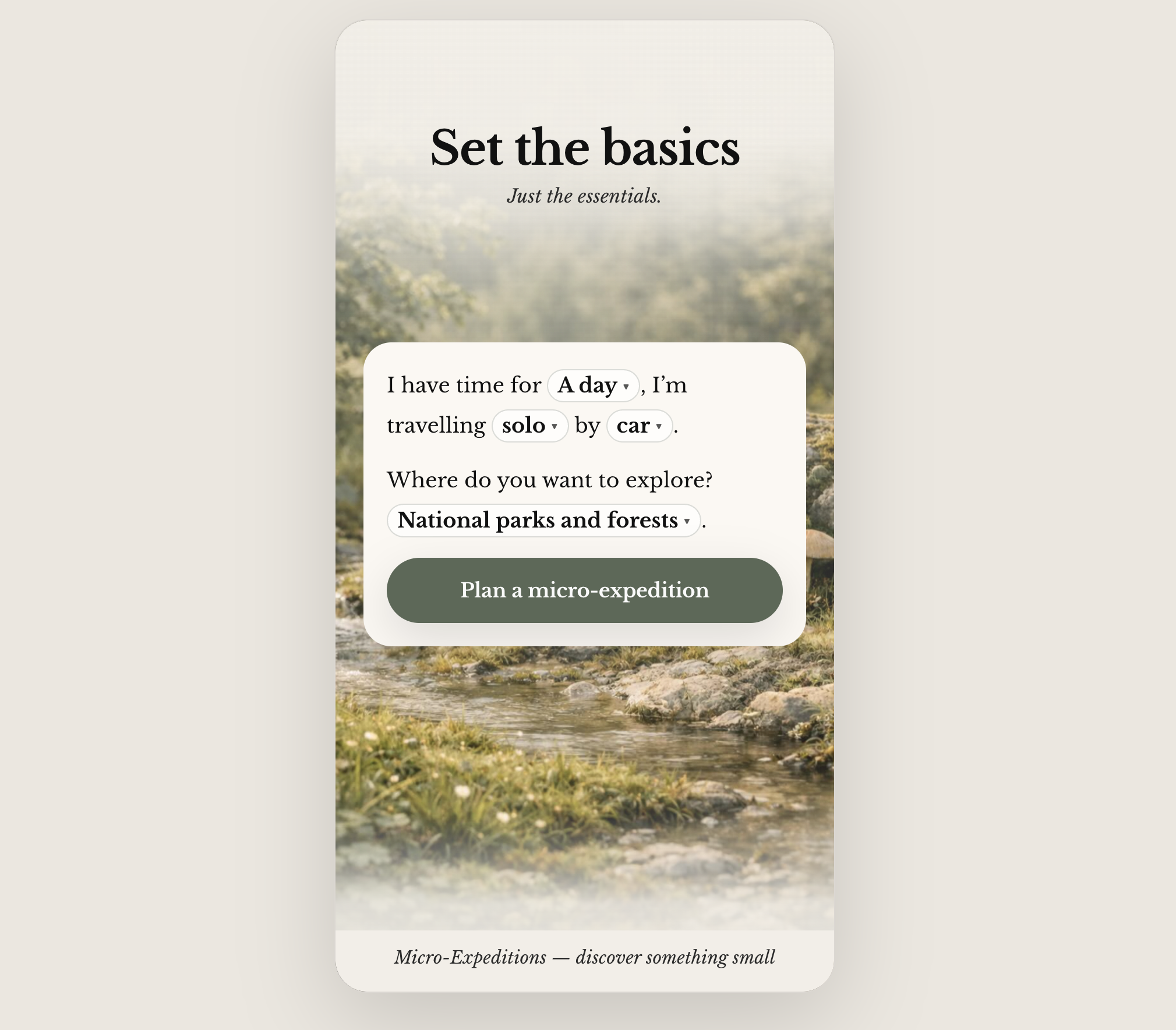
Micro-Expeditions is creating mission-driven trip plans to nature areas, so you go to nature with purpose of recording the observations of flora and fauna. For that, Micro-Expedition planning engine looks for nature sites to visit in location of your choice, checks the weather, and creates a comprehensive travel plan.
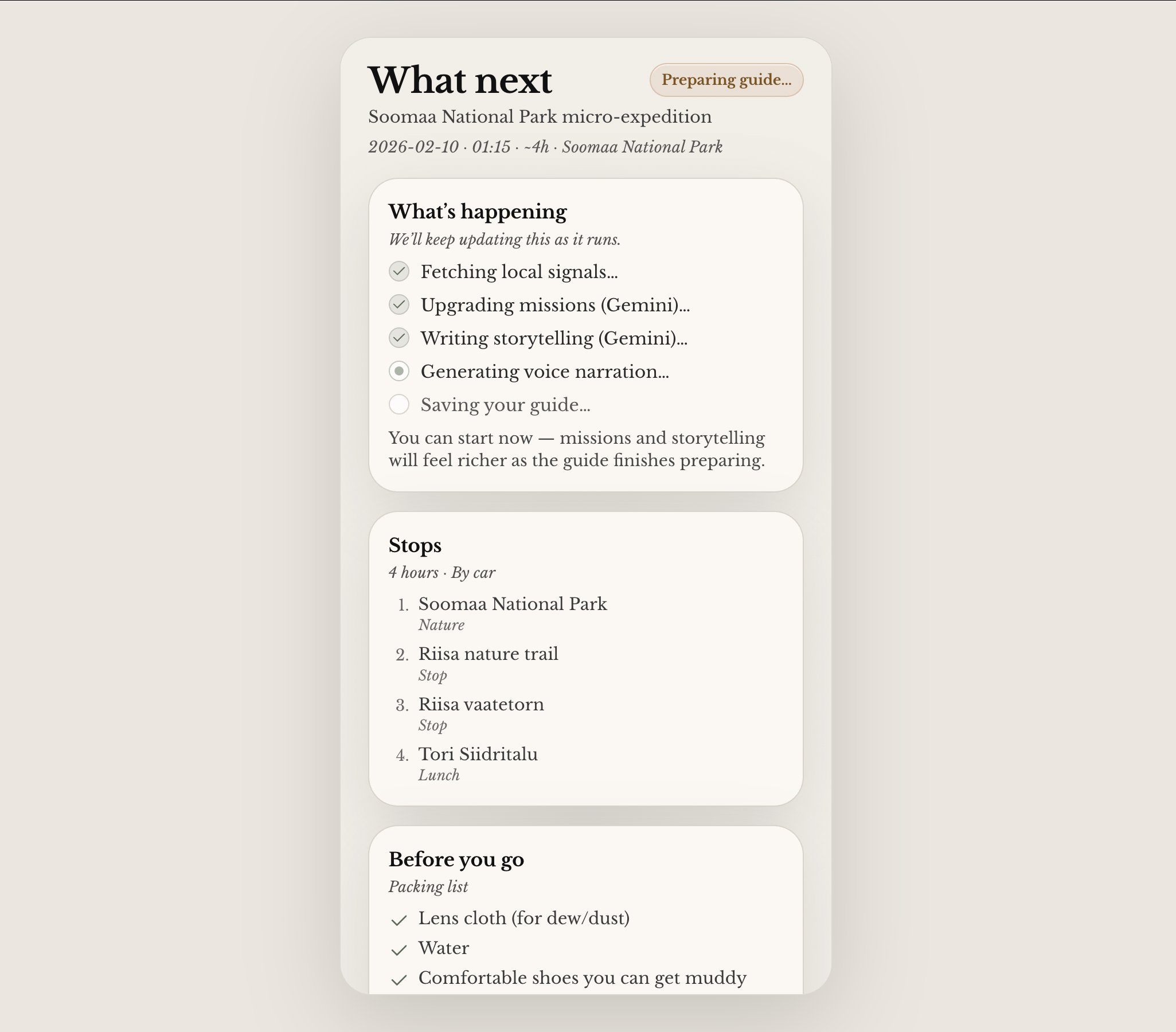
It finds interesting stories, records audio narration, and puts it all together into a single scenario of nature trip, from start to finish.
After you record your observations, it also helps you to understand what you see by identification of plants and animals of any size & shape, from lichens to elephants.
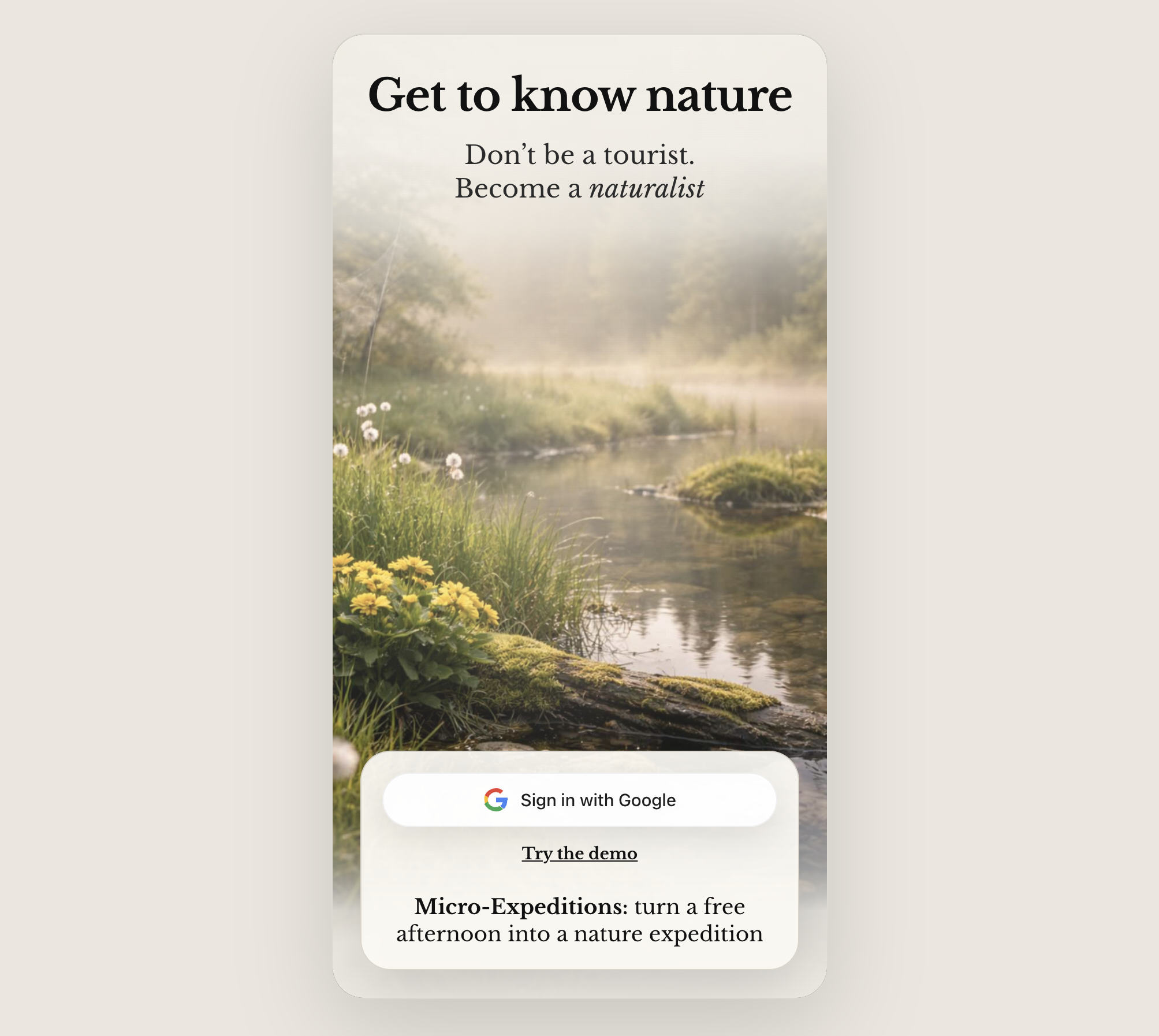
So if you don't want to be a tourist but want to become a naturalist, Micro-Expeditions is your guide.
How Gemini is used inside Micro-Expeditions:
Micro‑Expeditions uses Gemini as the app’s core Expedition Planner + Field Guide. But it’s not just a chat wrapper.
Finding where to go. The server finds real natural areas to visit and then calls Gemini 3 to curate three micro‑expedition options. Gemini’s output is schema‑validated structured JSON, and it’s constrained to choose only from the candidate place IDs we provide, so it can’t hallucinate locations. Users can also type plain‑language adjustments (“shorter drive”, “more kid‑friendly”); Gemini returns a structured constraints patch that we validate and re‑plan. The app also checks weather and generates a preparation checklist.
Creating stories and missions. After you confirm an expedition, a background preparation step uses Gemini to upgrade missions + storytelling, grounded by research-grade iNaturalist API with the information about local flora and fauna. It also generates narrated audio so the guide can be hands‑free.
In the field: multimodal verification. Take a photo, and Gemini extracts notable traits + quick verification questions. We fetch iNaturalist candidate taxa (and local species counts when location is available), and Gemini explains why each might match, but you look at details and confirm.
Conclusions
I believe that AI can tremendously help in nature education on scale and making eco-tourism more accessible. At the same time, tourists aren't just visitors - they are aspiring citizen scientists, and by increasing our regular observations, we get the deeper understanding of nature and help nature conservation.
Thank you for your support!
- Alex
Built With
- gemini
- inaturalist
- nextjs
- typescript
Log in or sign up for Devpost to join the conversation.