-
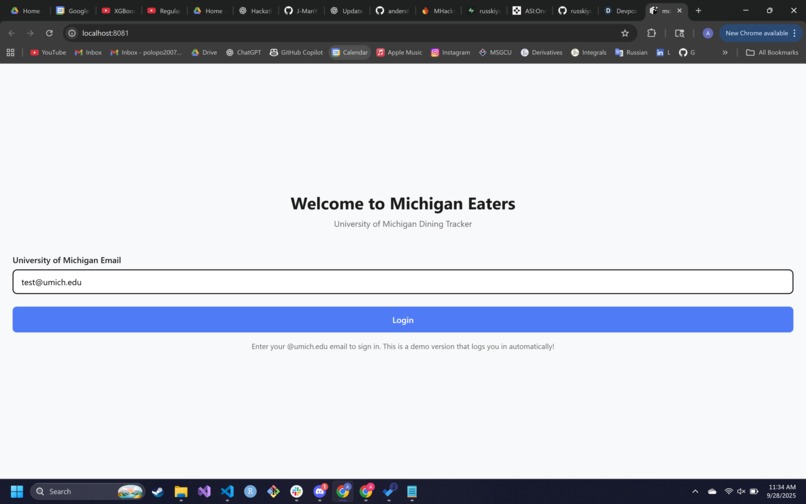
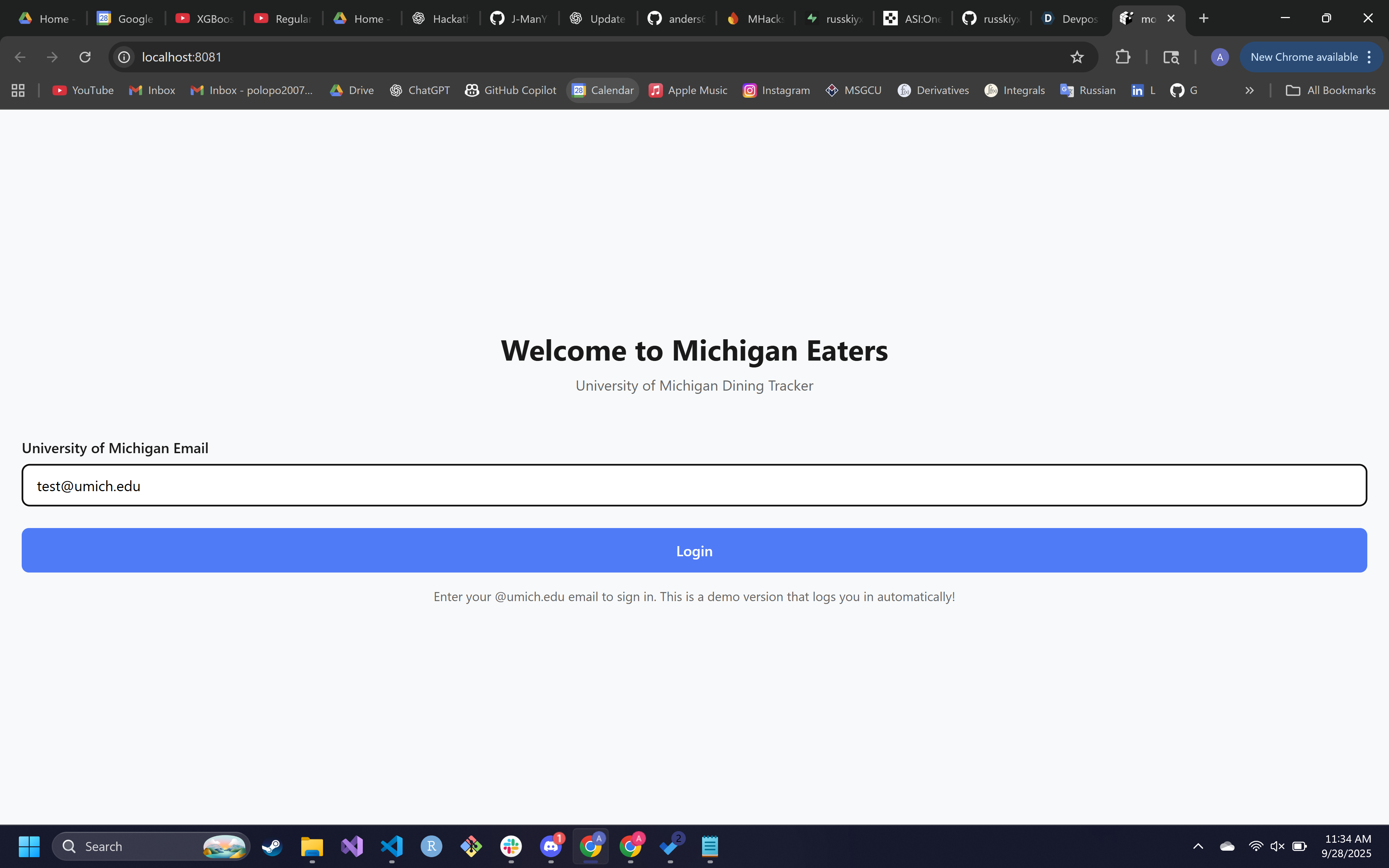
Login screen
-
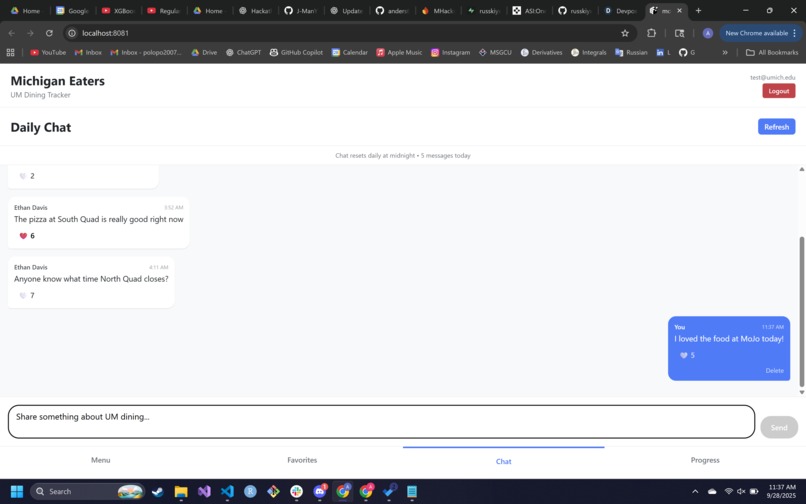
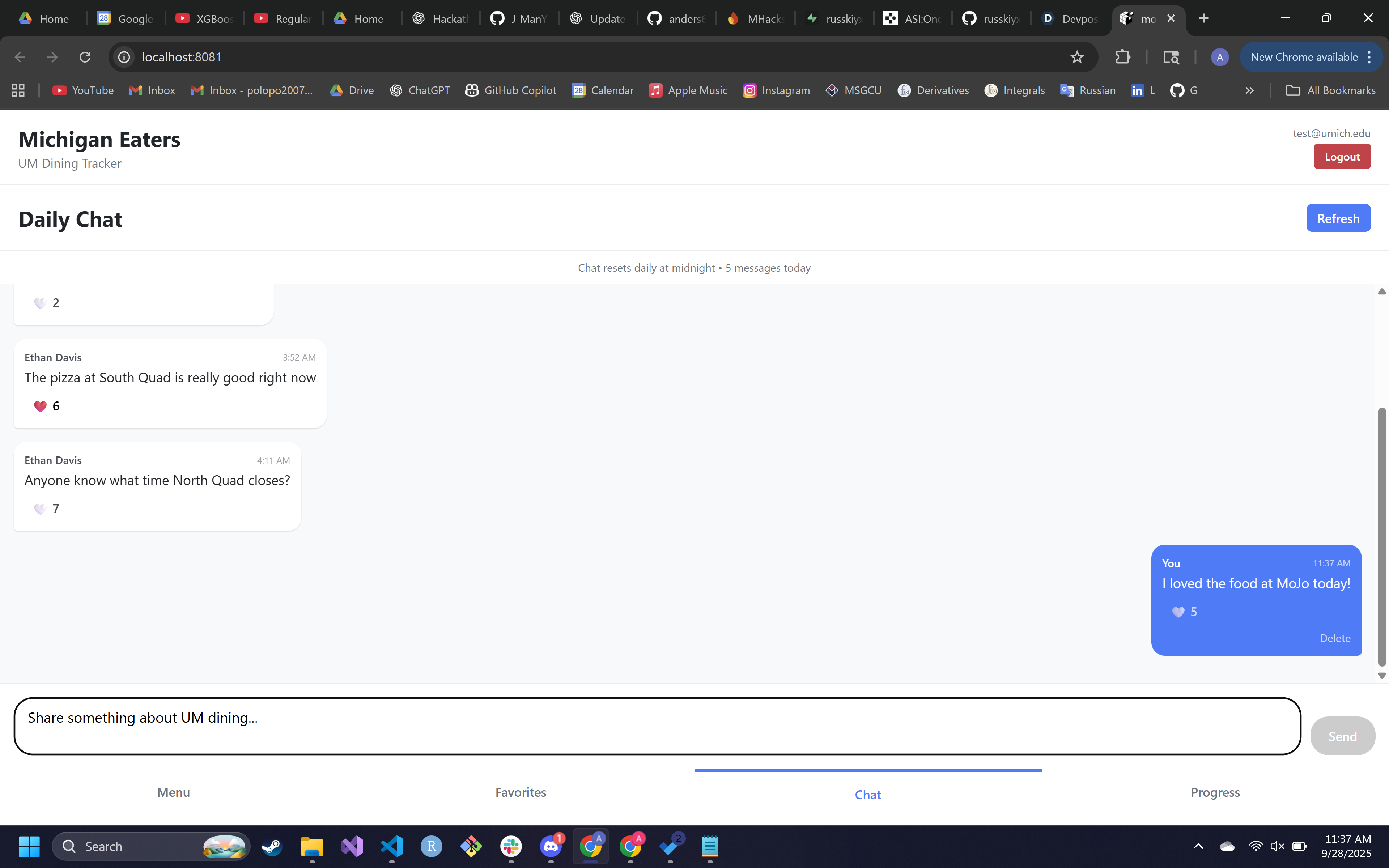
Chat page
-
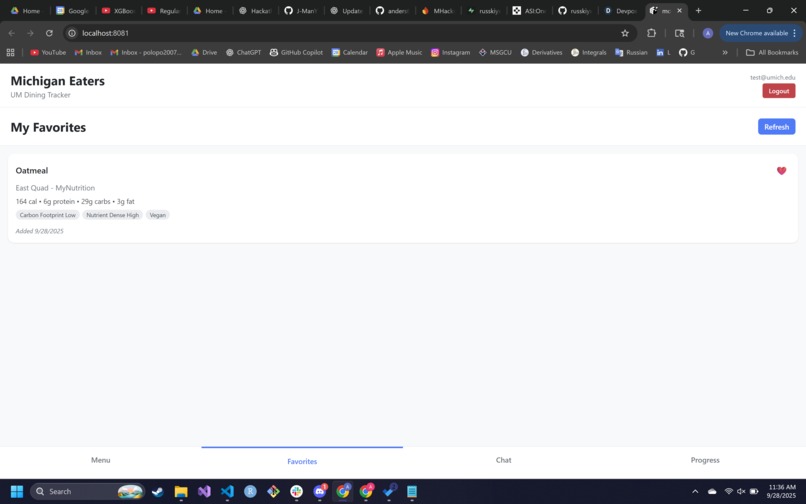
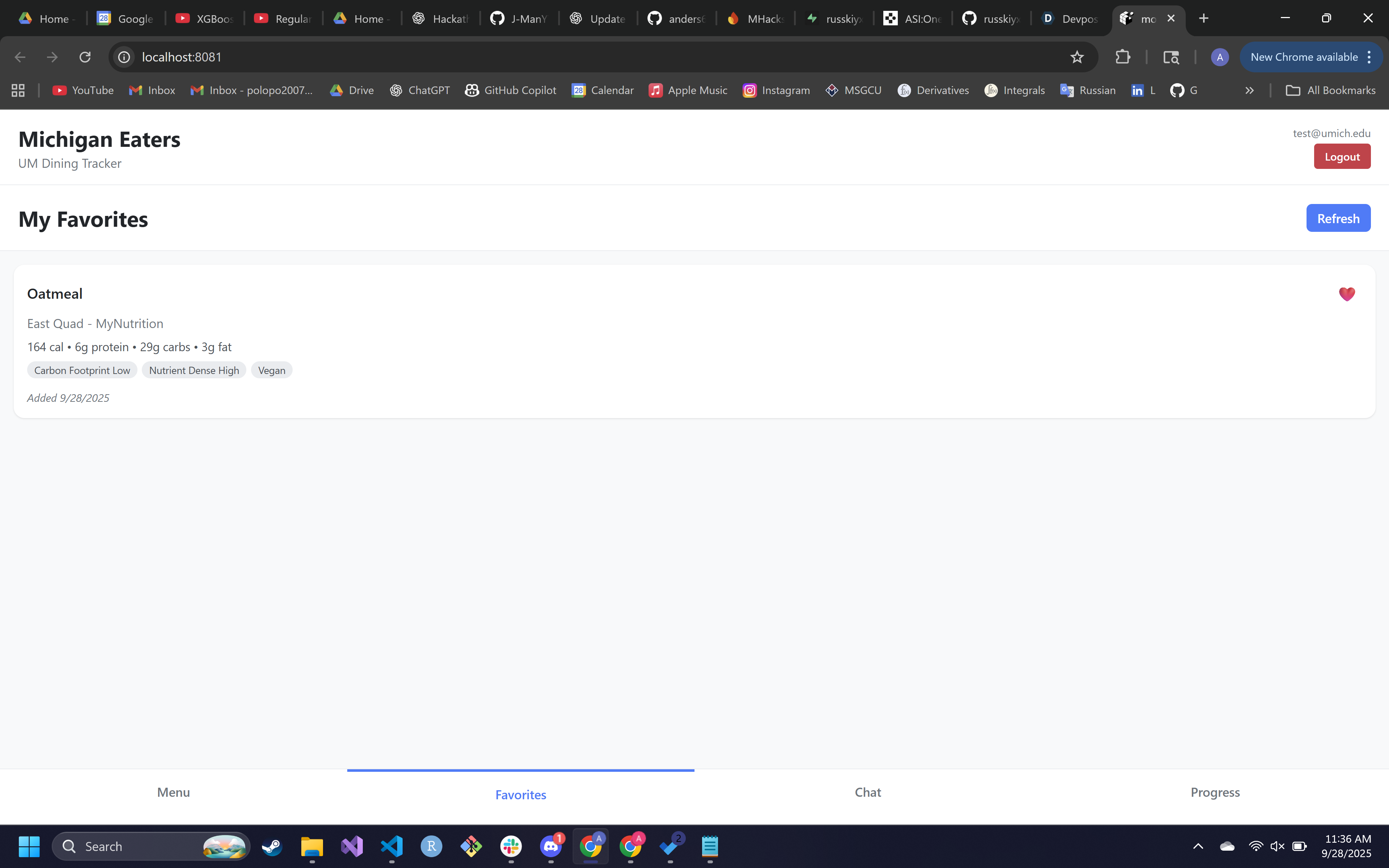
Favorites page
-
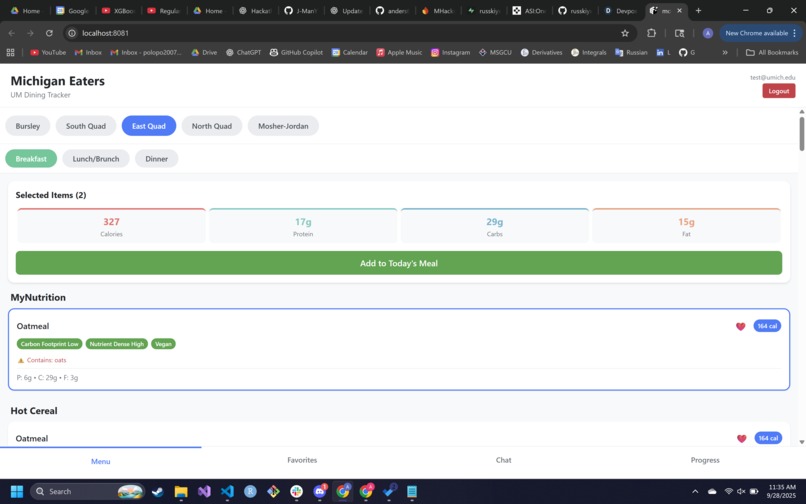
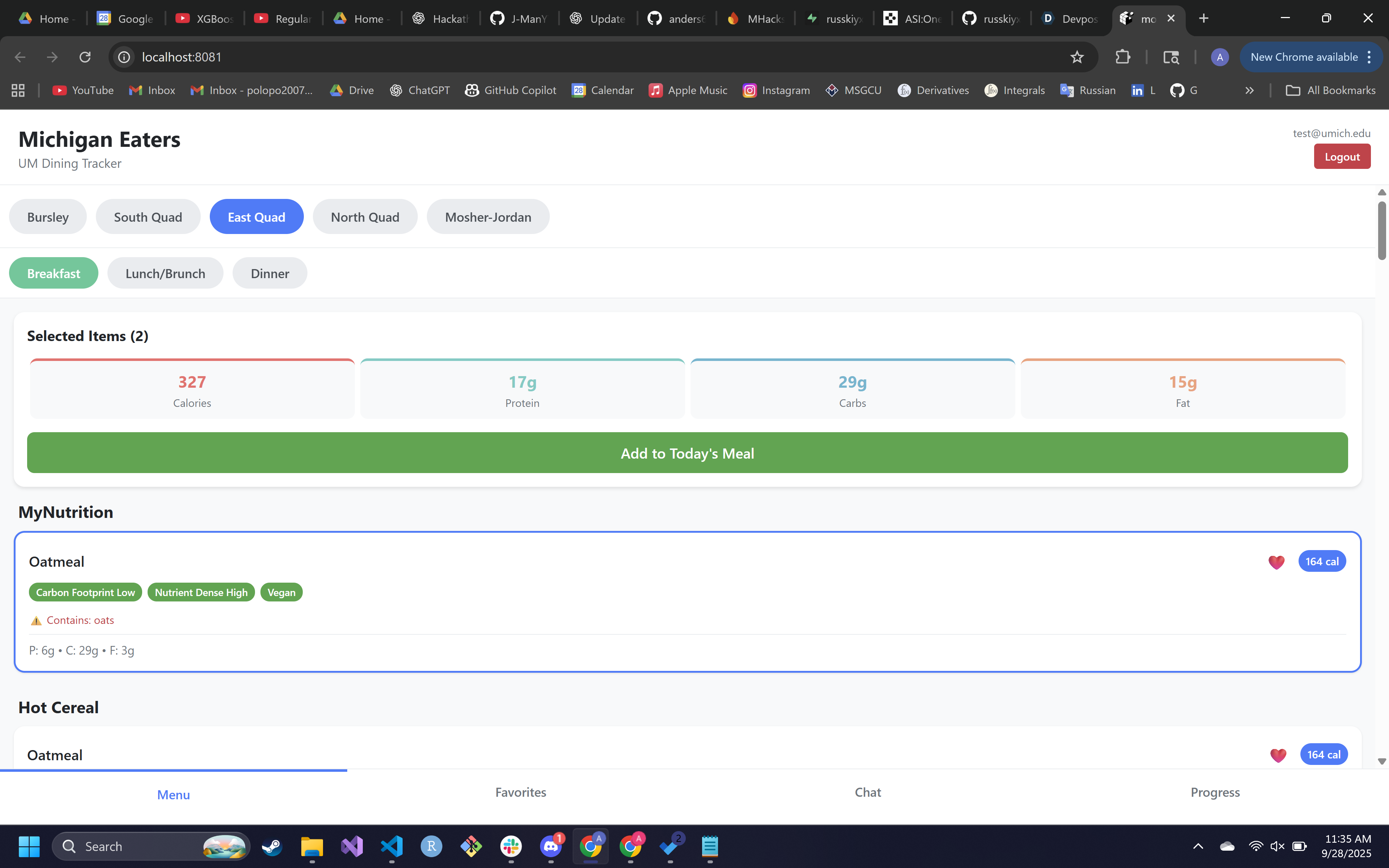
Menu page
-
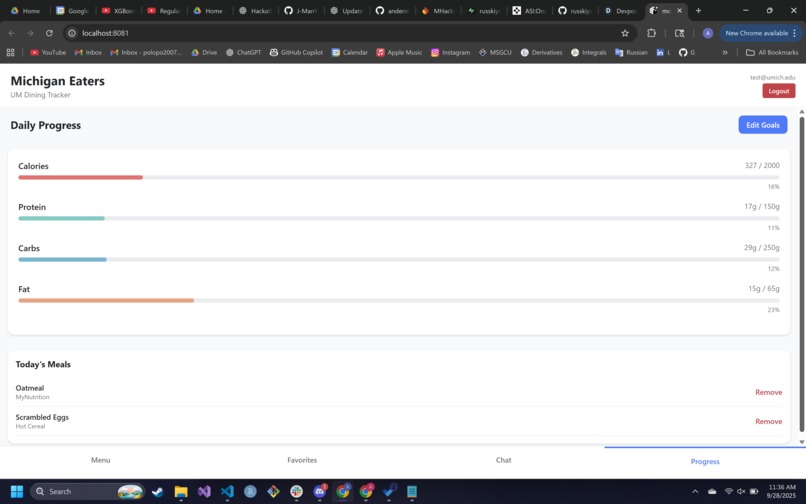
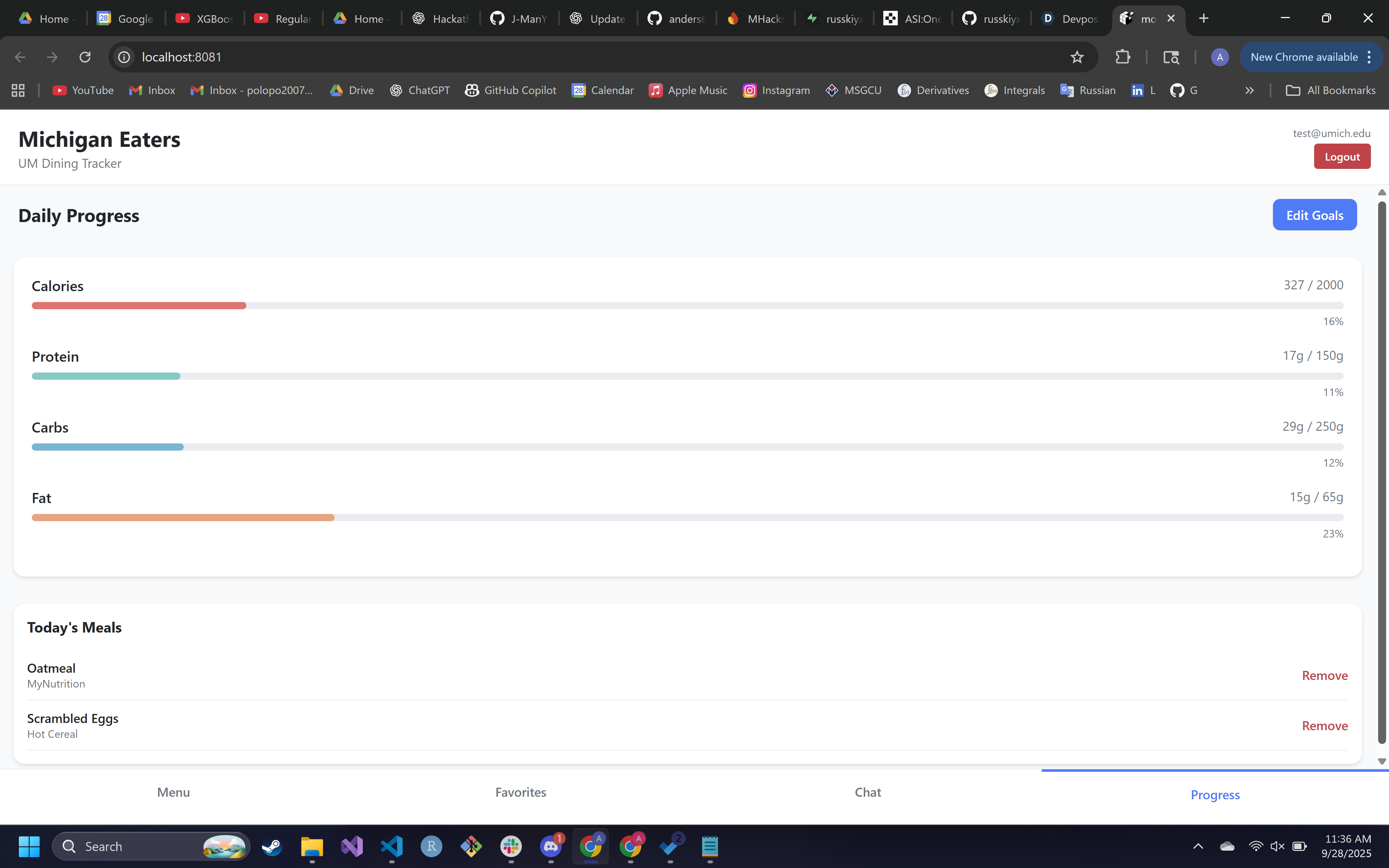
Progress page
-
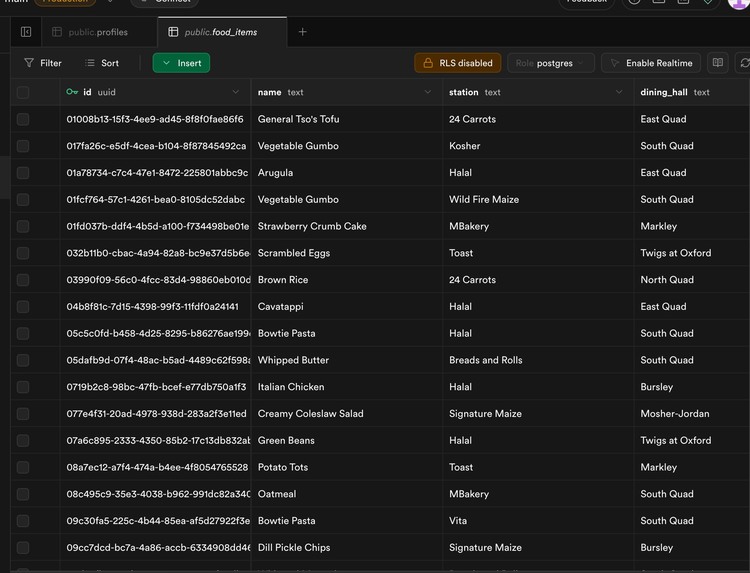
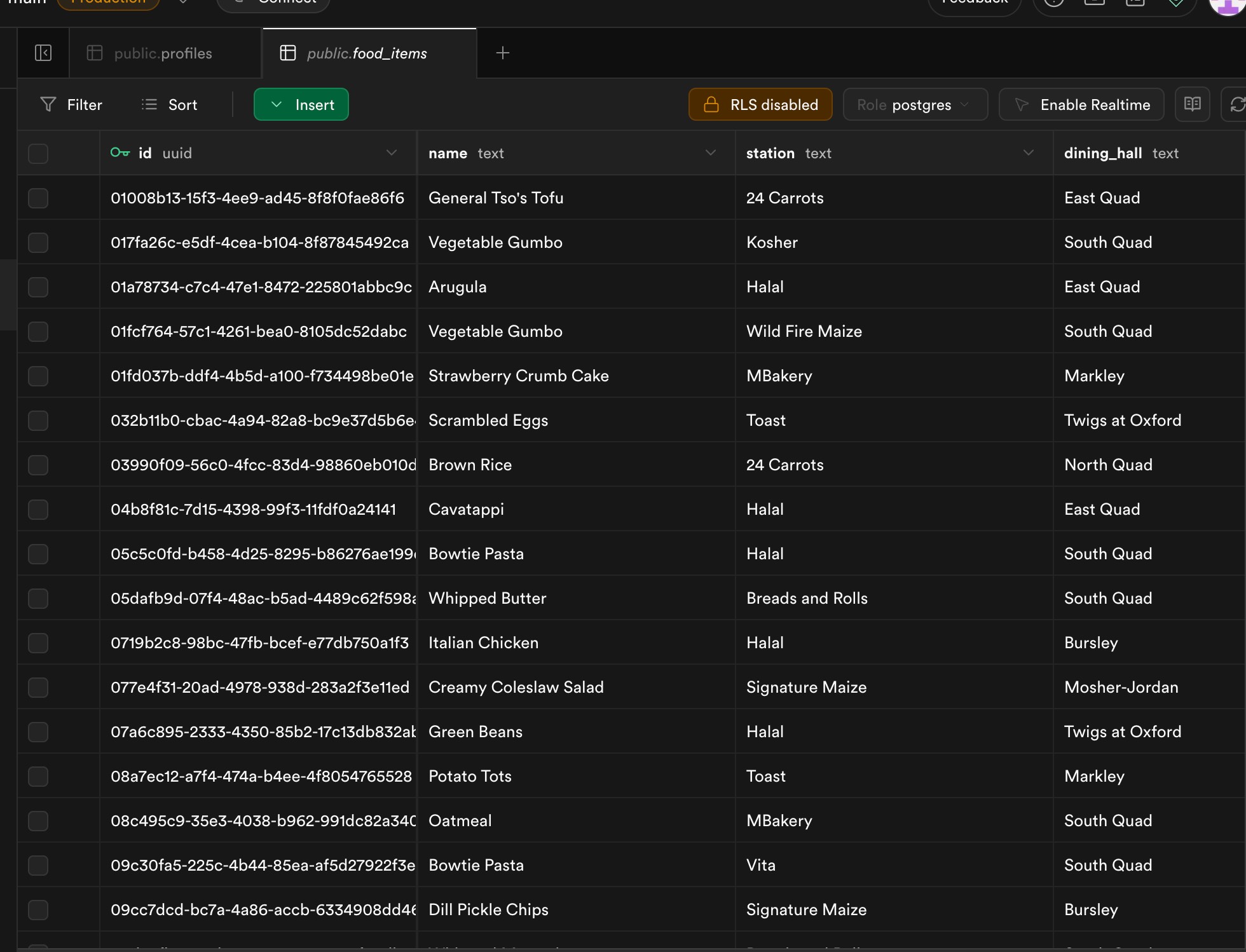
Backend screenshot
Inspiration
Every member on our team goes to the gym daily and tracks what they eat. We found that it is very inconvenient to track caloric and nutritional intake using traditional calorie-counting apps since engaging with the dining hall food is inefficient, requiring either going on the MDining website or holding up the food line trying to read the sign and write down the information in an app. We wanted to track our macros efficiently using the daily MDining data, review dining hall food, and engage with other students, so we made Michigan Eaters to consolidate all those functions into one app.
What it does
Michigan Eaters takes live data from MDining and presents it in a UI-friendly way in the app. Users have accounts where they can set calorie/macro goals. Users add food items to their daily meals, ensuring they can track their caloric intake efficiently. Users can favorite food items, which makes the app push a notification every time a favorited food is available (e.g., "Grilled chicken at MoJo for dinner today"). Lastly, users can like and leave daily comments in a campus-wide chat, enabling student-to-student communication specifically for the purpose of reviewing the day's food options.
How we built it
We built most of the project using agentic AI, including Cursor, Claude, and ChatGPT. We started with the front end and eventually split our project into two prototypes, iterated through two different UIs and backends.
Challenges we ran into
We 1. Had to iteratively ideate to sharpen our idea into something actually useful, 2. Figure out how to access the MDining API, and 3. Figure out how to implement the backend. We have two prototypes, each with a different version of data collection - one uses the official MDining API while the other scrapes the dining hall websites and parses the html. Finally, our backend (Supabase) is fully integrated in one of our prototypes but we ran into issues with the other - specifically, migrating the scripts from mock data to our database turned out to be more difficult than expected.
Accomplishments that we're proud of
We are proud of the fact that we made a working full-stack application as relatively inexperienced first-year students.
What we learned
We learned: efficient prompt engineering, frontend tools (Native), backend tools (Supabase), and how to use Node.js.
What's next for Michigan Eaters
We will fully integrate our two prototypes to have our best versions of both frontend and backend. We will migrate dining hall data (currently in a json file) to our database. Lastly, we will add users to our database instead of just storing the user locally.
Built With
- javascript
- node.js
- python
- supabase


Log in or sign up for Devpost to join the conversation.