Inspiration
Manual PCB inspection is quite slow and error-prone. I wanted to automate quality control using computer vision to make electronics manufacturing more efficient.
What it does
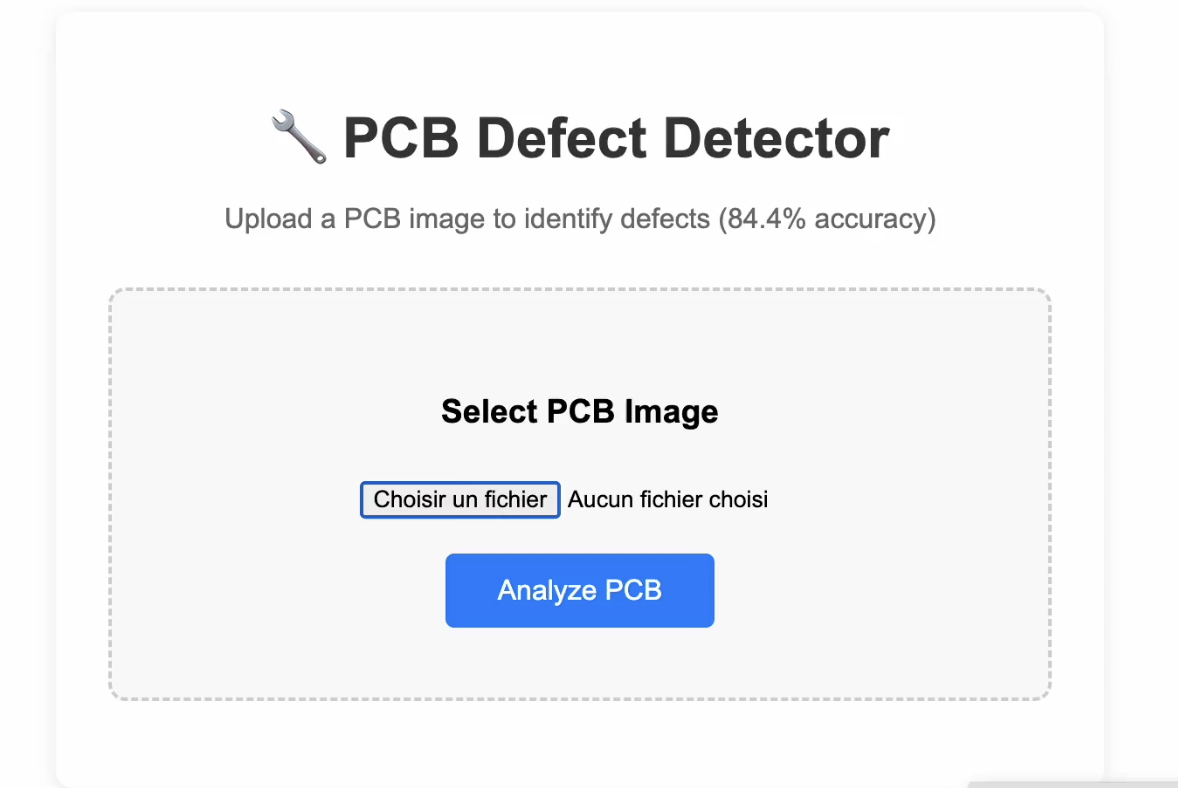
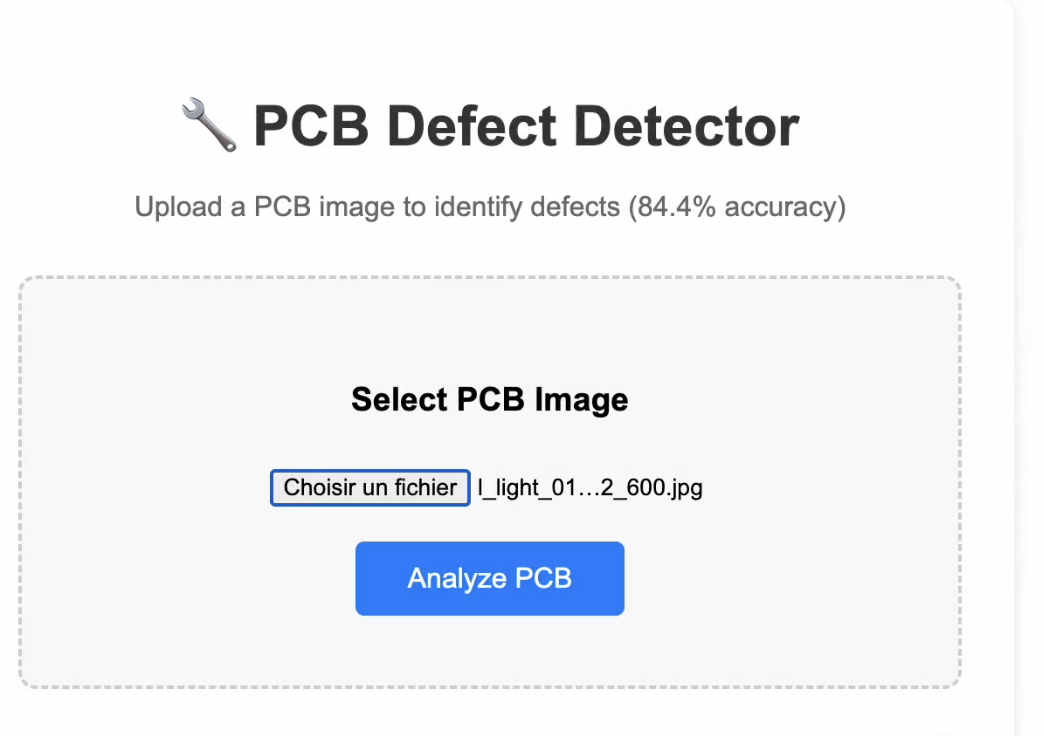
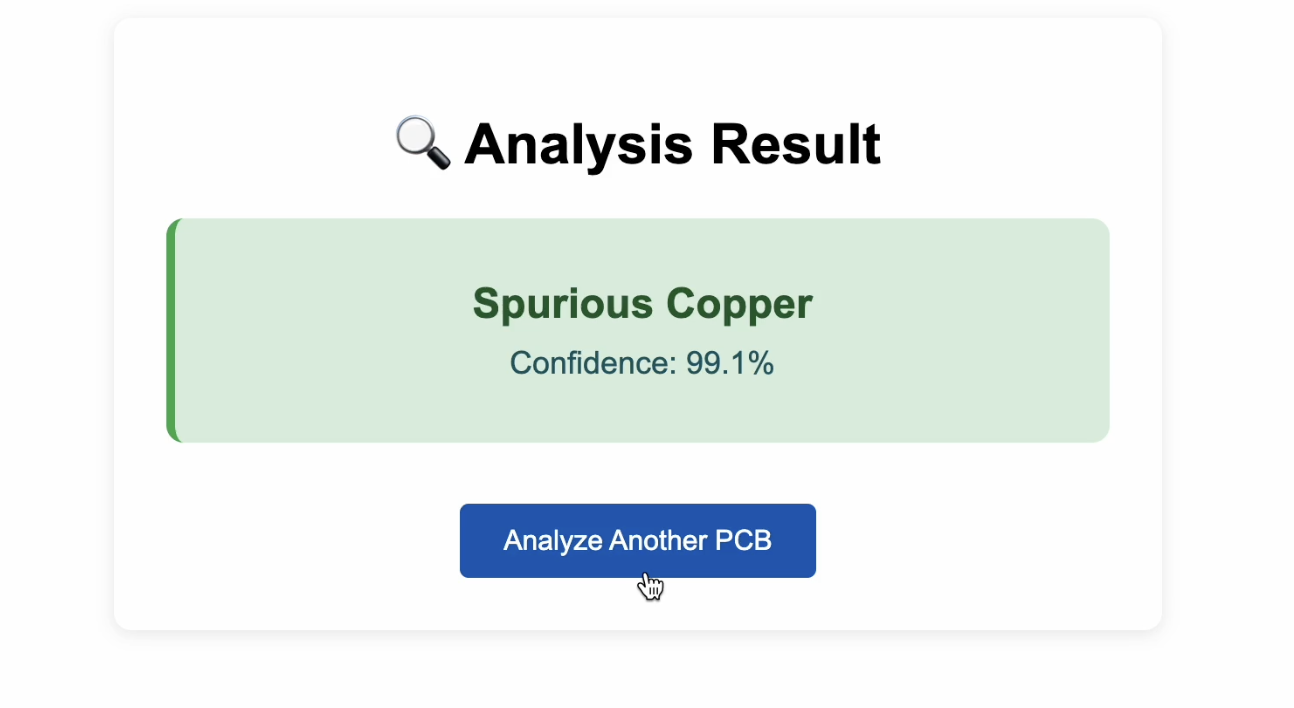
Upload a PCB image and instantly identify 6 common defect types with 84.4% accuracy, providing confidence scores for each prediction.
How I built it
- Converted YOLO bounding box annotations to cropped defect images
- Trained a streamlined CNN with 3 convolutional layers and batch normalization
- Deployed as a Flask web application with real-time image processing
Challenges I ran into
Complex CNN architectures overfitted badly (20% accuracy). The breakthrough came from simplifying the model and adding strategic regularization.
Accomplishments that I am proud of
Achieving 84.4% validation accuracy and deploying a fully functional web application that provides instant, usable results.
What I learned
For specialized tasks like small defect detection, simpler architectures with proper regularization outperform complex models. Sometimes less really is more.
What's next for PCB Defect Detection
Improving performance on Missing Hole and Spur defect classes (currently 63-71% accuracy) by collecting more targeted training data and implementing data augmentation specific to these challenging defects.

Log in or sign up for Devpost to join the conversation.