-
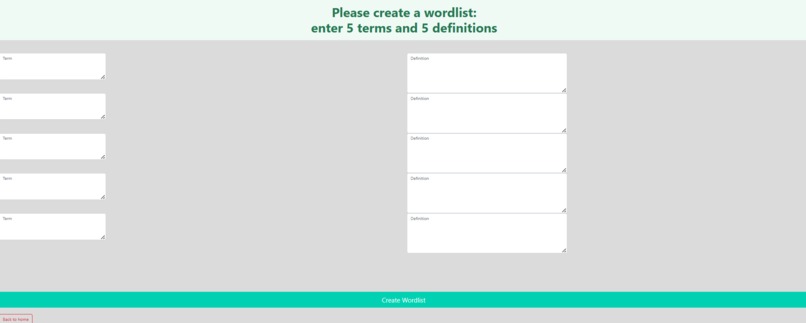
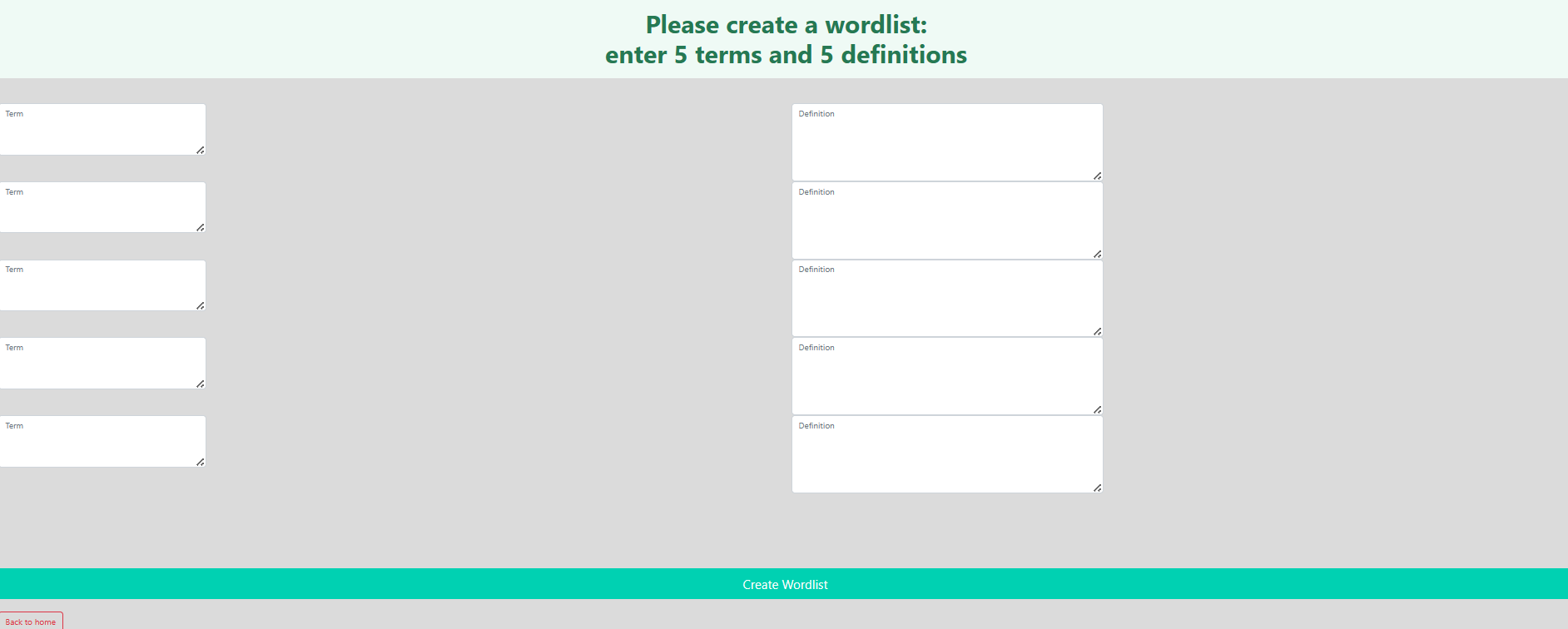
Create Game
-
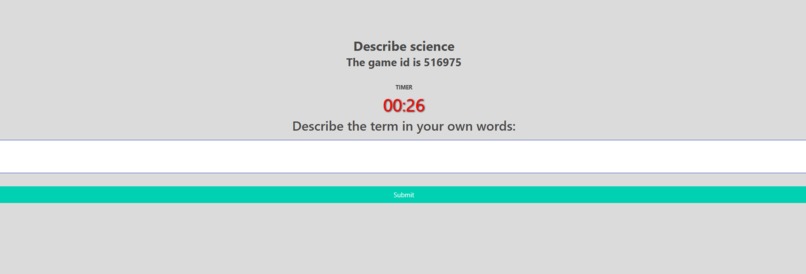
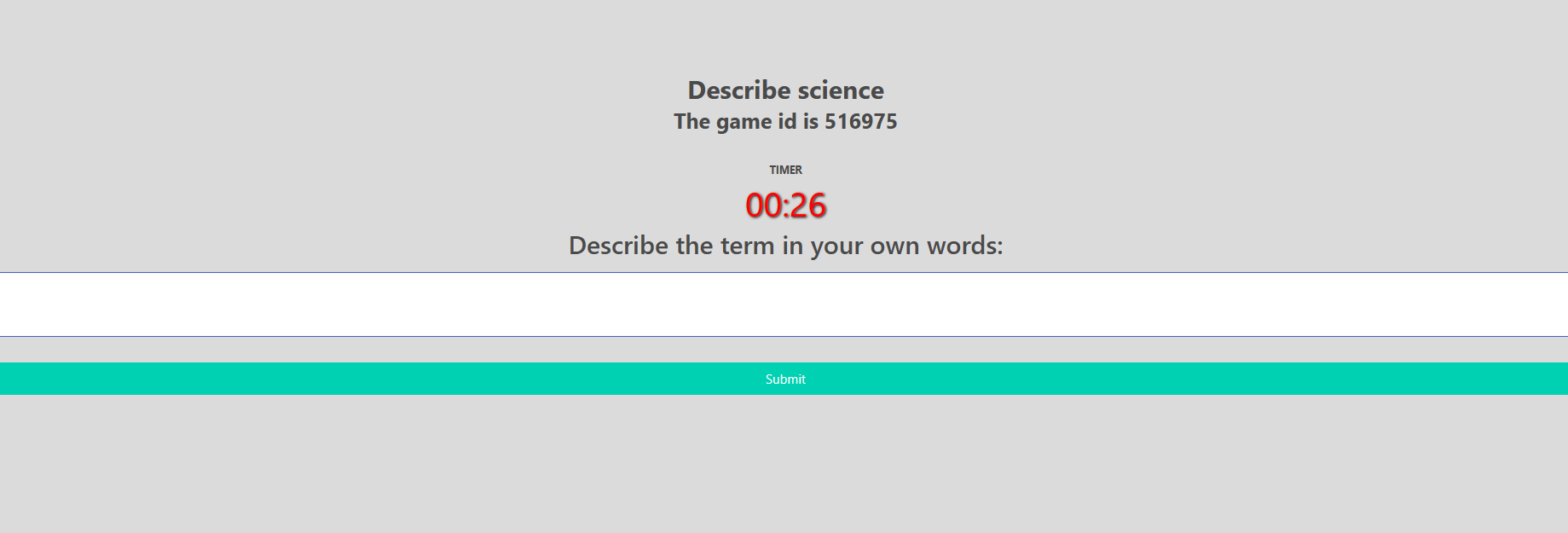
Game Page
Inspiration
Modern online learning tools such as Quizlet encourage students to memorize the concepts rather than understand them. However, understanding the concepts, especially for younger students from the age of 6-16 is crucial because they are building the foundations for their future studies. Our approach is to encourage students to self-explain the concepts rather than memorize the definitions, which has been proven to be an effective way of improving understanding (Michelene T.H. Chi). Wordy helps students to UNDERSTAND the concepts by asking them to explain certain concepts and scoring them based on how well their OWN understanding matches with the definition.
What it does
Wordy provides a gamified way for students to practice describing concepts and getting feedback on how well they did with AI and natural language processing by scoring how well their own understanding matches with the definition.
How we built it
We used Python with Flask to manage app routes and frontend/backend communication, SQLite being our database management solution, and the hugging face sentence-transformer module as the AI model we used to assign similarity scores.
Challenges we ran into
Some technical challenges we ran into involved taking an extended amount of time to settle on the project idea that would eventually become Wordy (our initial idea was an AI smart assistant), challenges with getting specific sections of the game (think terms and definitions) with specific parameters in the URL, and general communication between our frontend and backend to allow for an efficient user experience.
Accomplishments that we're proud of
Besides the technical aspect of the project, which involved working through the night to solve data transferal problems, debugging sessions, and working through the details of implementations with MHacks mentors, we are also proud of the commitment that each member of our team was able to make to the larger, collective goal of making a project that we are proud of and we know will have a measurable, real-life impact.
What we learned
We learned about how to create data structure using SQlite, how to interface with Flask, and how to use the Bluma framework in HTML. Furthermore, we also looked at React tutorials while trying to solve the problem of dynamic data updating for websites.
What's next for Wordy
We want to make Wordy a multiplayer game similar to Kahoot to make it more interactive. In addition, we wish to include a database where users are able to log into their accounts and see the games they created in the past.


Log in or sign up for Devpost to join the conversation.