-
-
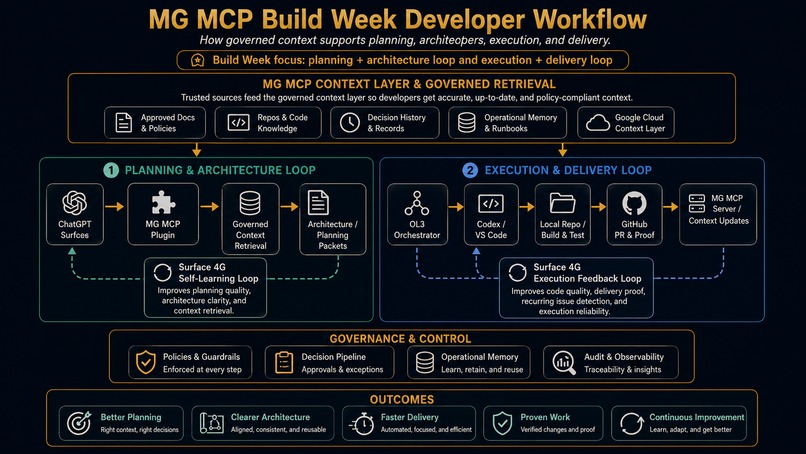
The AI developer support tool - a vane of architecture in our broader system design for the MG MCP
-
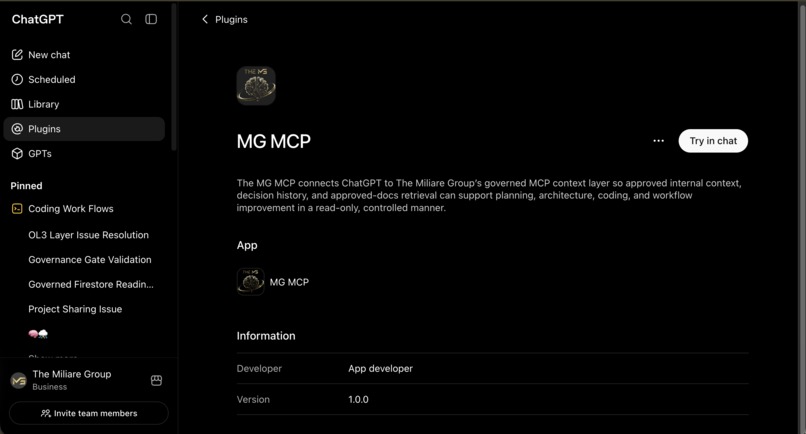
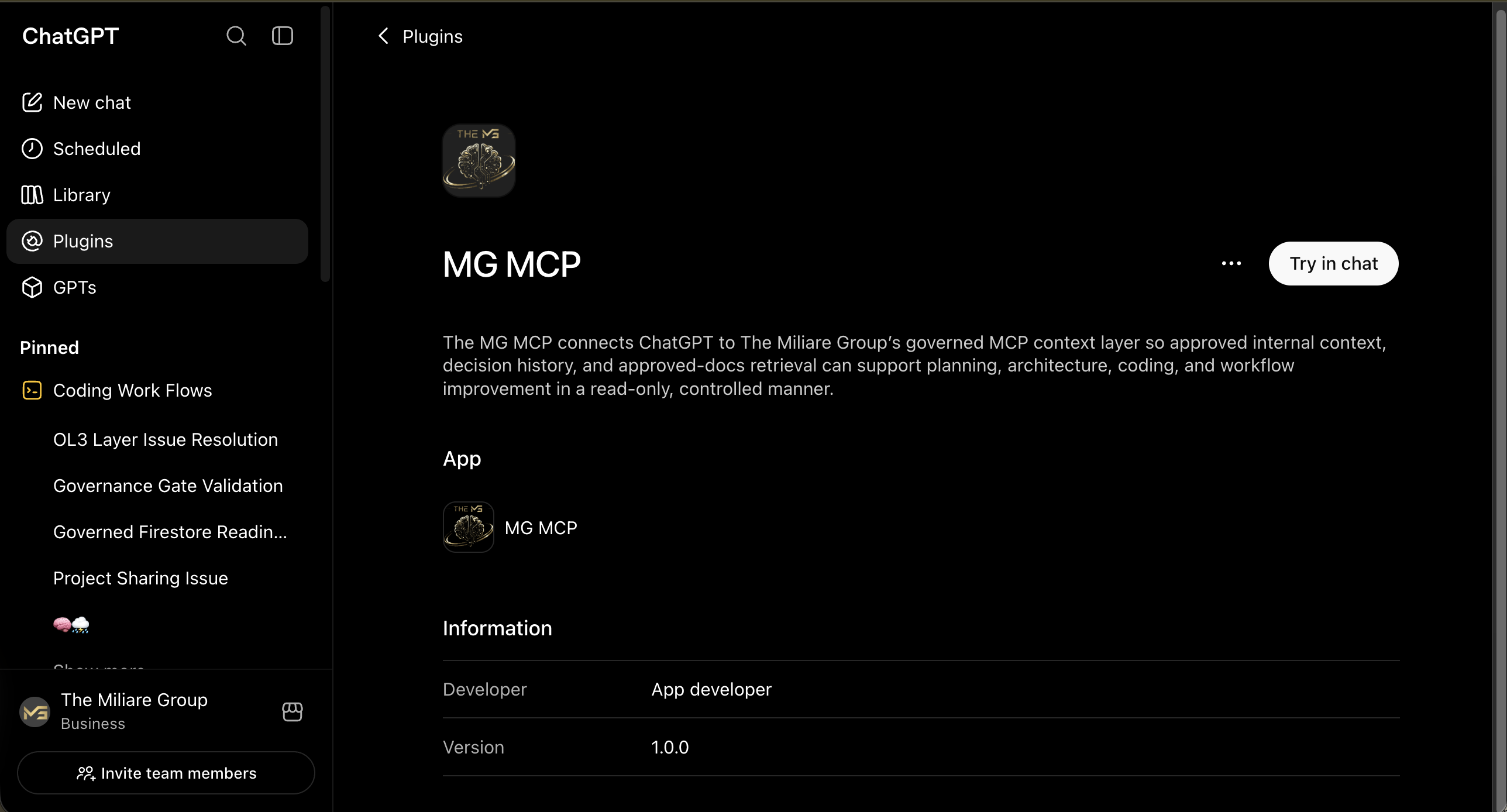
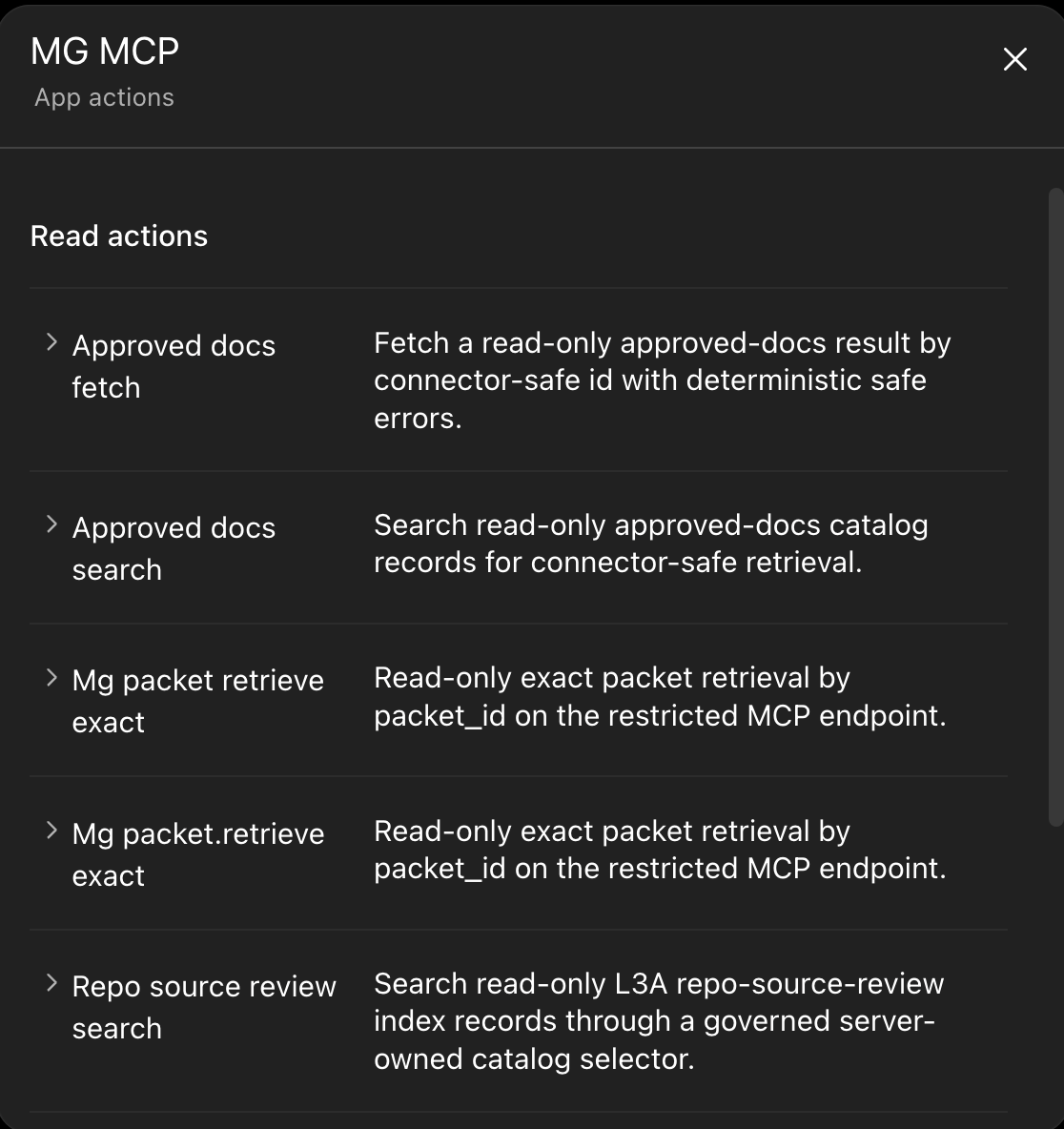
Our MG MCP surfaced on ChatGPT
-
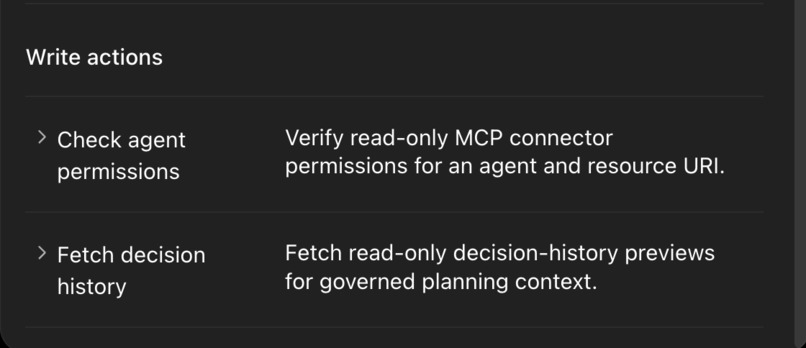
Plugin-tooling
-
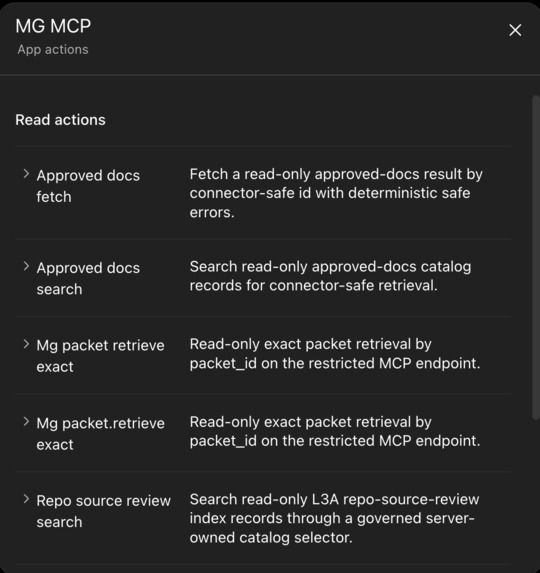
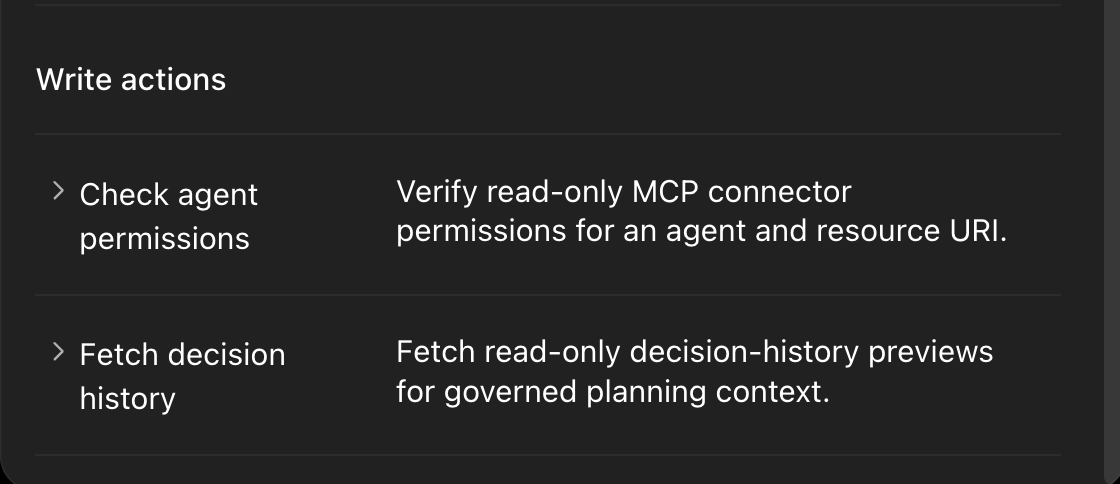
Plugin-tooling
-
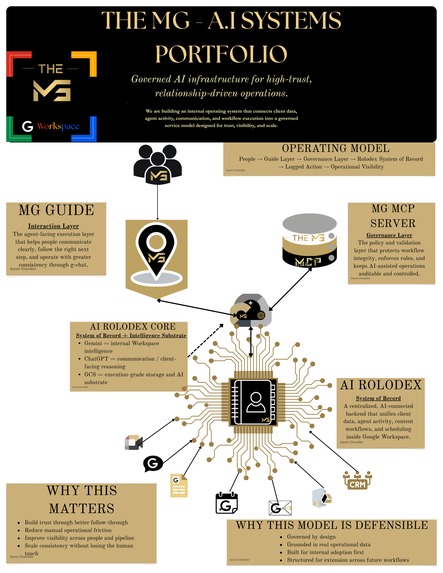
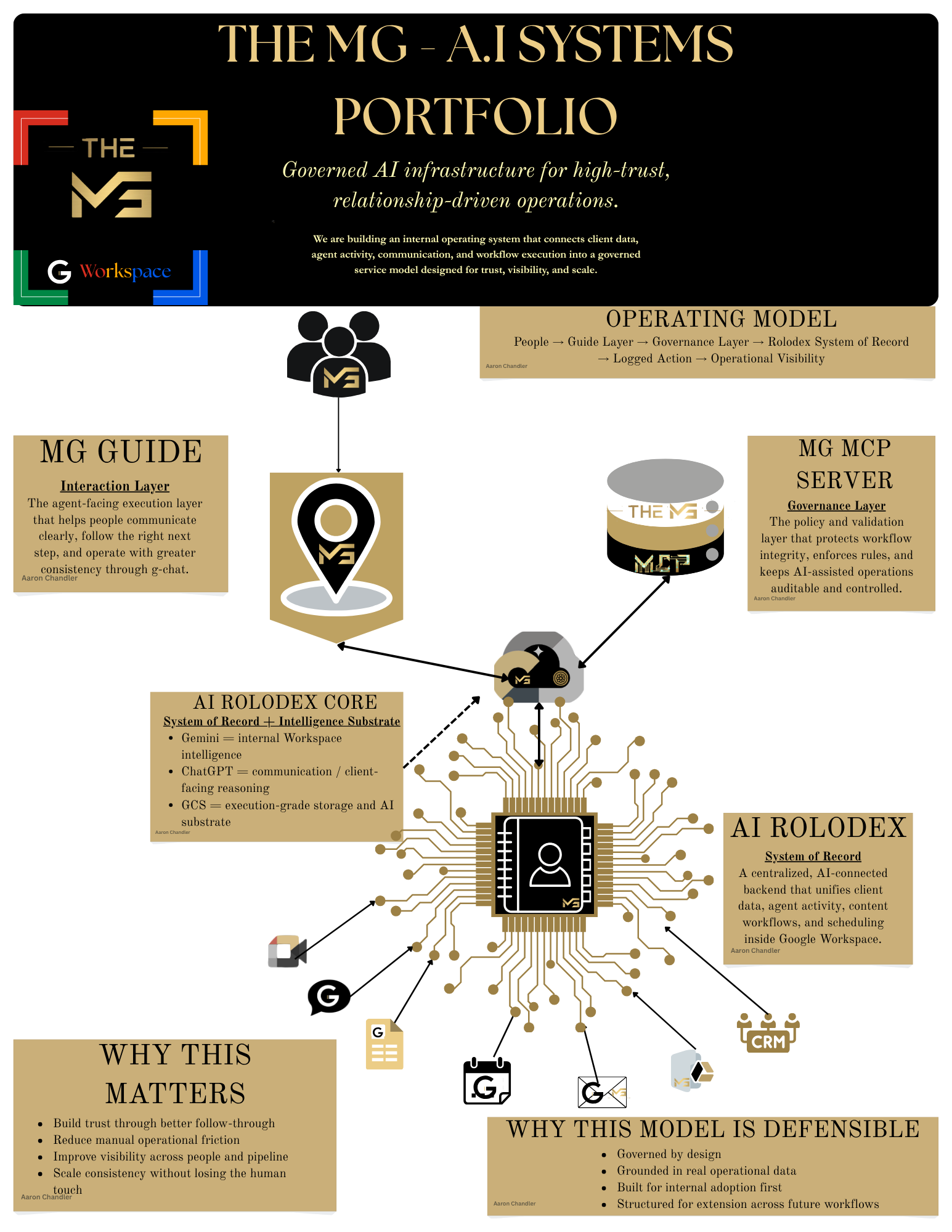
Broader system design overview at an enterprise level.
Inspiration
The life insurance industry grew rapidly during the COVID era. Many people had more time and mental space to think about protection, savings, retirement, and long-term financial decisions. Agencies also expanded through virtual recruiting, remote training, and digital communication.
That growth created new opportunities, but it also exposed structural gaps.
As the industry moved beyond the COVID era, agents returned to faster, more distracted routines. Training became harder to sustain. Important knowledge became scattered across meetings, messages, files, calendars, CRM systems, and individual leaders. Agencies often lacked a clear way to understand:
- what agents had been taught;
- which guidance was current;
- where agents were struggling;
- what decisions leadership had already made;
- who needed support;
- whether teams were following consistent processes.
The problem was not simply a shortage of information. The problem was the absence of trusted, shared organizational context.
That challenge inspired the larger vision for MG MCP.
The larger vision
MG MCP is being developed as the governed context layer within The Miliare Group’s broader AI operating system that lives where our licensed and trained field force (insurance agents) work - the google workspace (G-drive, G-mail, G-chat, G-Calendar, ect.)
At the organizational level, the long-term goal is for MG MCP to help people and AI work from the same approved, attributable, and up-to-date context across a domain-specific Google Workspace and its connected systems.
This context layer is intended to support multiple parts of the organization, including:
- MG Guide, for internal guidance, coaching, and operational support;
- Pulse Messaging, for communication cadence, reminders, and follow-up;
- social-media and content systems, for coordinated publishing workflows + developing an organic market across social media platforms;
- CRM and sales systems, for relevant contact, pipeline, and opportunity context;
- leadership and training workflows, for accountability, consistency, and visibility;
- AI development workflows, for architecture, implementation, validation, and review.
The larger objective is not to create one chatbot that tries to do everything.
It is to create an architecture in which specialized tools and AI systems can retrieve the context they need while preserving source authority, permissions, provenance, and human accountability.
MG MCP is the connective context layer within that architecture.
What we are building now
The full organizational vision requires a reliable way to build, test, govern, and improve the system itself.
For that reason, we are currently building a focused developer-support capability inside MG MCP.
This developer-support vein is the scope we are showcasing during Build Week.
It is designed to help our development workflows answer questions such as:
- What has already been designed or implemented?
- Which source is authoritative?
- Was a change only proposed, or was it reviewed and merged?
- Which constraints still apply?
- What work is currently blocked?
- What proof exists for a claim?
- What should the next bounded development task contain?
Rather than relying on long chat histories or asking developers to manually search through hundreds of files and pull requests, the developer-support capability retrieves governed context from approved sources and repository records.
It then helps ChatGPT, Codex, our orchestration layer, and human reviewers work from a more accurate picture of the system.
The distinction between the platform and the Build Week project
The broader MG MCP platform is intended to support organizational knowledge, operations, training, communication, business insight, and AI-assisted workflows across The Miliare Group.
The Build Week project focuses on one narrower but foundational capability:
Using MG MCP to support the development of MG MCP and the wider AI portfolio.
In other words, we are building the context infrastructure for the organization while also creating a specialized path within that infrastructure to help us build the larger system more effectively.
The organizational platform is the destination.
The developer-support workflow is the foundation and the competition showcase.
What the developer-support capability does
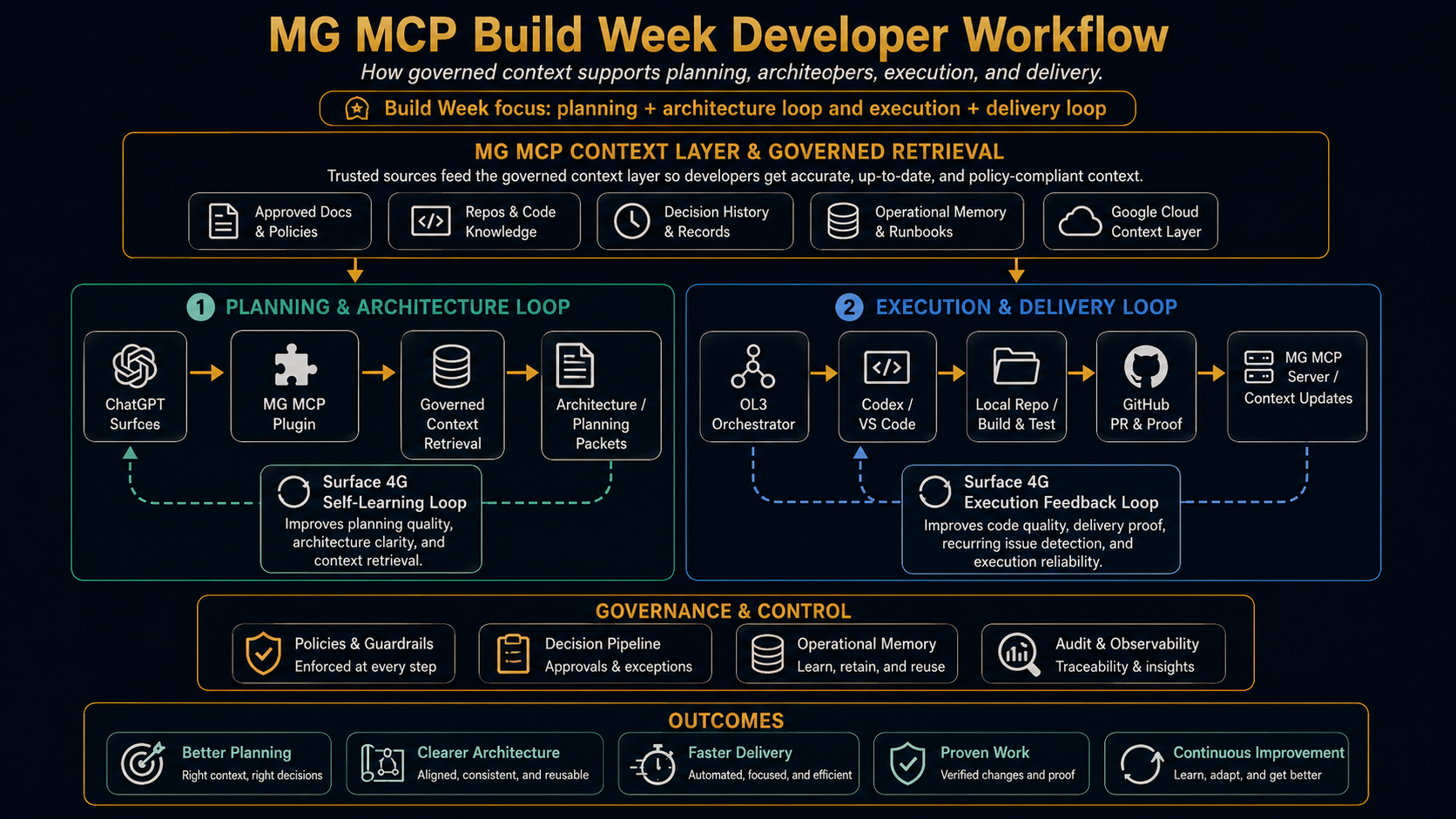
The workflow connects several governed layers:
- ChatGPT supports planning, architecture, synthesis, and proof review.
- MG MCP retrieves governed context from approved documents, repository sources, decision history, and operational memory.
- Our orchestration layer coordinates context gathering, planning, implementation, validation, and independent review.
- Codex and other AI workers receive bounded task packets rather than broad, open-ended instructions.
- VS Code and the terminal remain the execution surfaces.
- GitHub pull requests and proof artifacts preserve durable evidence of what changed, why it changed, and how it was validated.
- Humans remain responsible for approval, promotion, and authority.
This creates a practical development loop:
Retrieve governed context
→ generate a bounded task packet
→ execute through VS Code + Codex with our orchestration layer
→ validate the work
→ return proof
→ capture lessons
→ promote approved decisions through governance
Built With
- bigquery
- chatgpt
- cloud-run
- codex
- docker
- express.js
- firestore
- github
- github-actions
- gohighlevel
- google-cloud
- google-cloud-discovery-engine
- google-pub-sub
- google-secret-manager
- google-workspace
- javascript
- model-context-protocol
- node.js
- oauth-2.0
- openai
- rest-api
- typescript
- vertex-ai


Log in or sign up for Devpost to join the conversation.