-
-
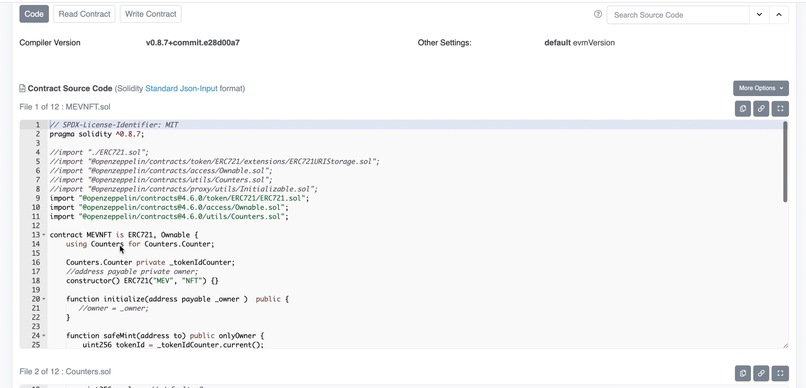
Deployed Smart Contract
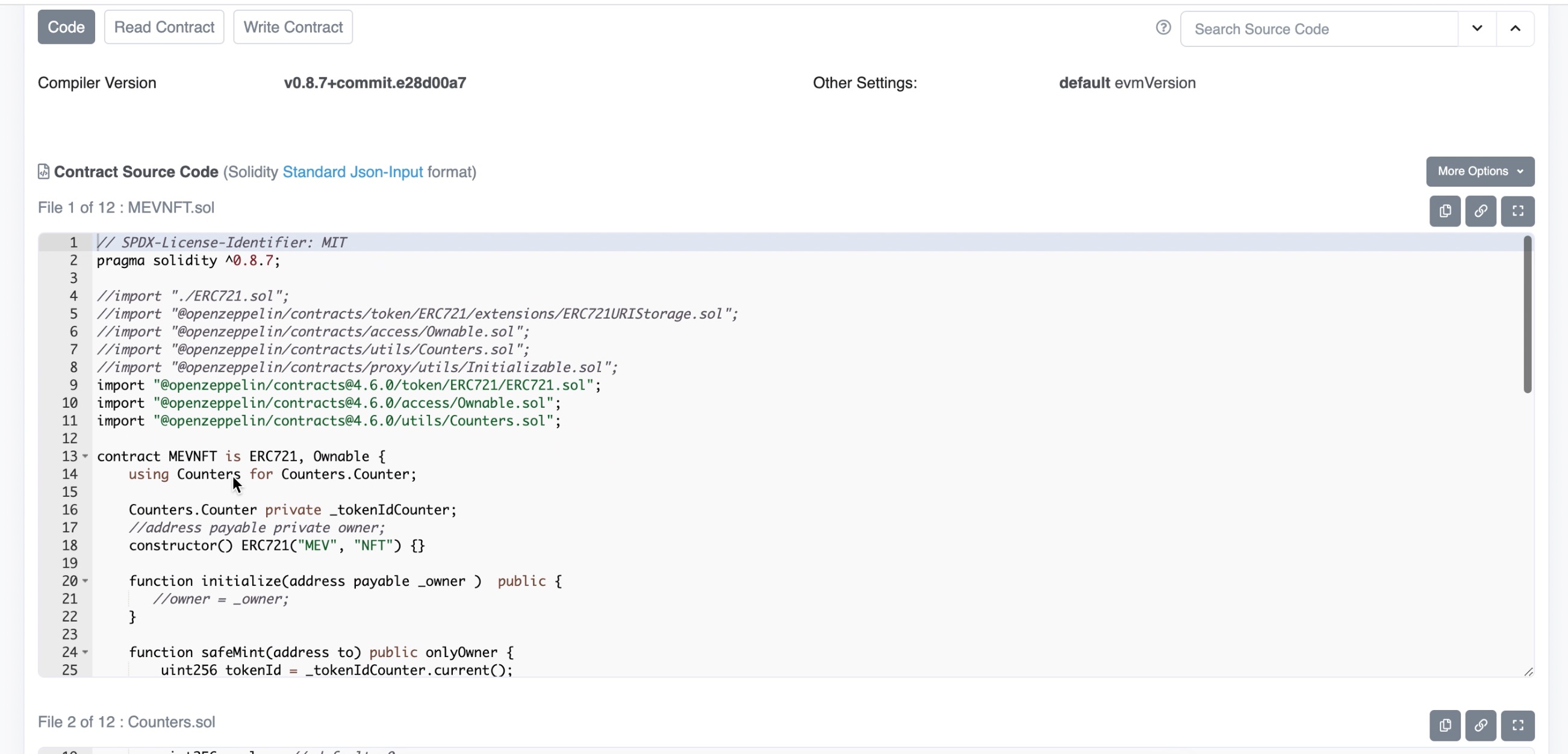
Inspiration
MEV (miner extractable value) is an issue that often times disbenefits the smaller consumers or traders. Flashbots, sandwich and other types of MEV affect more than 50% of Ethereum blocks. While traditional MEV is a bigger problem to solve, for our project we focussed on one specific type of extractable value: MEV NFT!
Let's illuminate the dark forest.
An example: Someone offers to buy an NFT on OpenSea for 10 ETH - while this is below the minimum price on that platform, it is possible that the same NFT is listed on another marketplace at a much lower price - say 5 ETH. This presents an arbitrage opportunity for anyone who knows about either offer.
Bots can then buy the NFT on the second marketplace for 5 ETH and immediately sell it on OpenSea for 10 ETH - all in one transaction - for a quick profit of 5 ETH minus gas and exchange fees.
Our MEV NFT is a fork of ERC-721 standard, that denies such MEV exploits
What it does
The MEV NFT limits the amount of transfer calls inside a block, preventing any arbitrage possibilities. To showcase the versatility of the contract, we minted multiple NFTs to several chains, supplying all of them with arbitrage-proof non-fungible token.
How we built it
Firstly, to research Arbitrage of NFTs, which hasn't been done in that capacity before, we created a new subgraph with the new API from The Graph looking for past arbitraged NFTs. After finding several examples, we analysed them and found a common denominator in all of these trades.
We then rewrote an ERC-721 code in a way, that prevents this common execution from happening, while troubleshooting, in which cases this might be a false alarm and ruling those out. We then created a website where you're able to mint this new NFT on potentially any EVM chain.
Additionally, we built a price comparison tool for you to check if an NFT is potentially prone to arbitrage opportunities. (Unfortunately, that subgraph is still indexing to this time).
Accomplishments that we're proud of
We're proud of building this never before integrated solution to one type of MEV, that can be leveraged into several other use cases. We're also very proud to have made this MEV NFT available for everyone to mint over several different chains!
What we learned
MEV is a more common problem than even we thought. While using a Subgraph to query all blocks that became subject to MEV (in this case the specific MEV case of arbitraging NFTs), we saw the extent of MEV happening. We deployed NFTs for the first time, which was a bigger challenge than we expected. We loved learning about decentralized storage with ipfs and the integration of several wallets to make the NFT accessible via several chains (and potentially even more in the future).
Working with a Coinbase Wallet integration, we got some valuable insights and feedback to the user experience as well as the developer experience:
What's next for Untitled
This project is launched on several chains and allows everyone to mint an $XOR NFT. Part of the reasoning behind this was, that we wanted to dig deeper in this code-level MEV prevention for token assets. To get a true grasp, if this prevention works in all potential cases, we need many people on many chains experimenting with the MEV NFT and leave feedback to the project, so this can be optimized and - maybe one day - be introduced as a feature of a future NFT standard.
Built With
- assemblyscript
- python
- react
- solidity
- typescript


Log in or sign up for Devpost to join the conversation.