-
-
splash screen
-
-
-
-
-
-
-
-
-
-
-
Inspiration
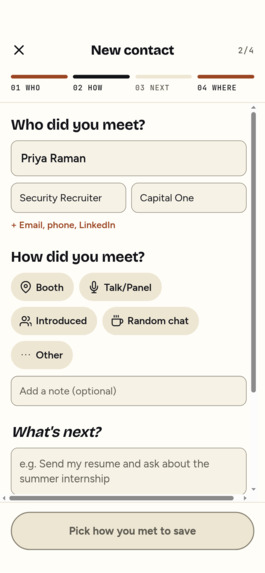
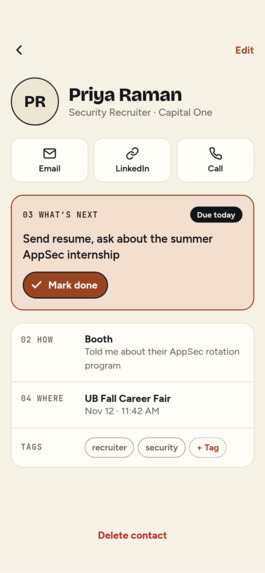
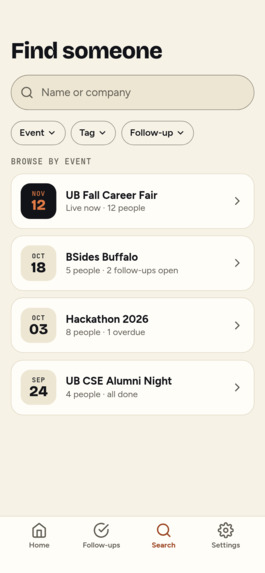
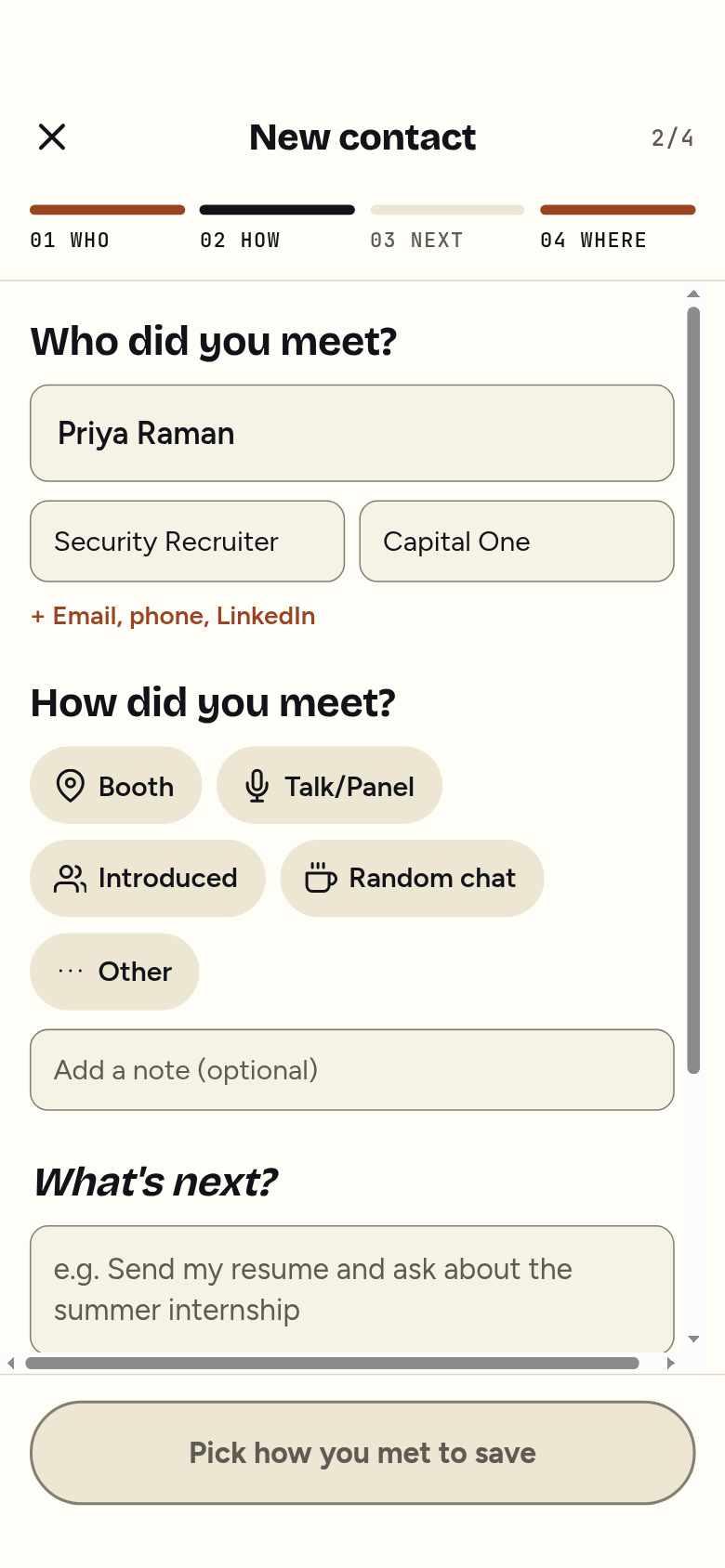
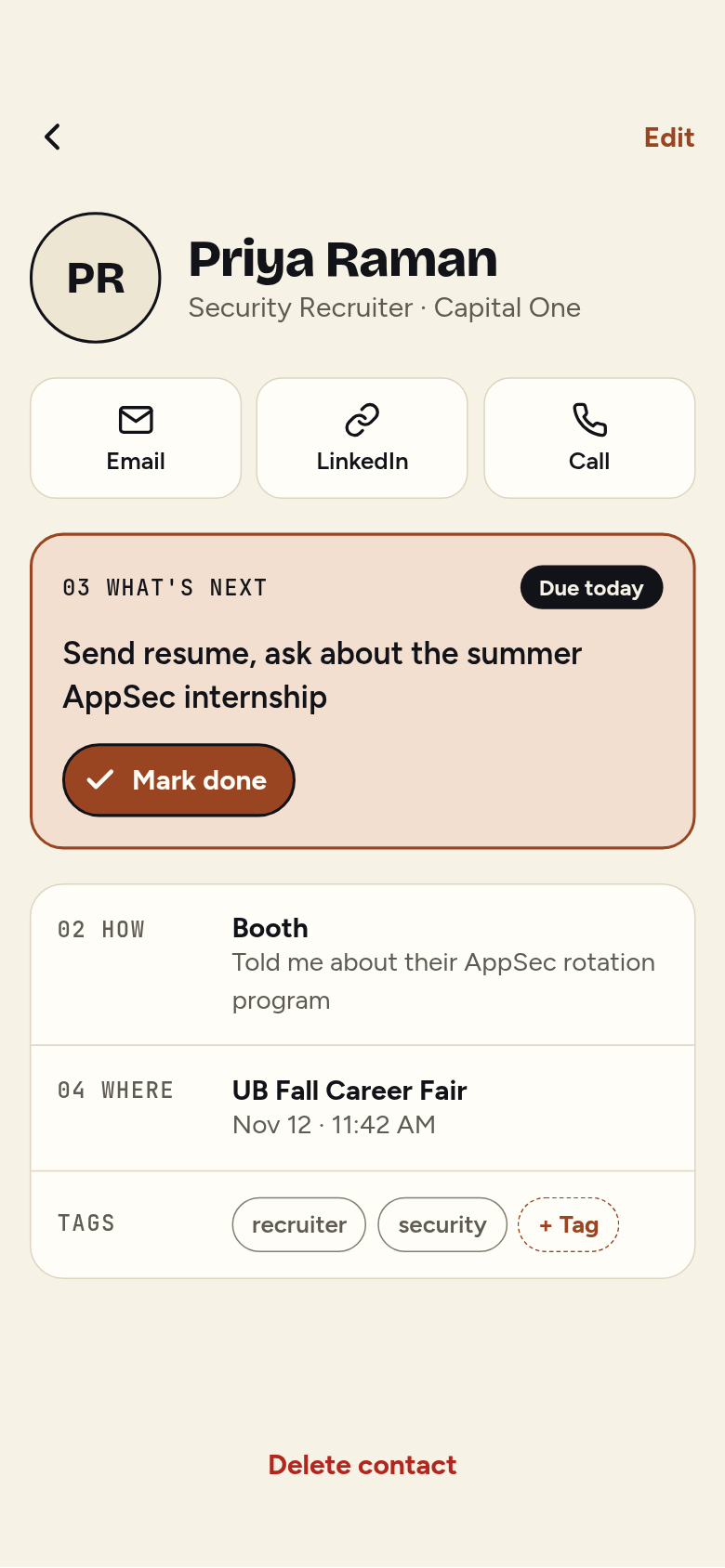
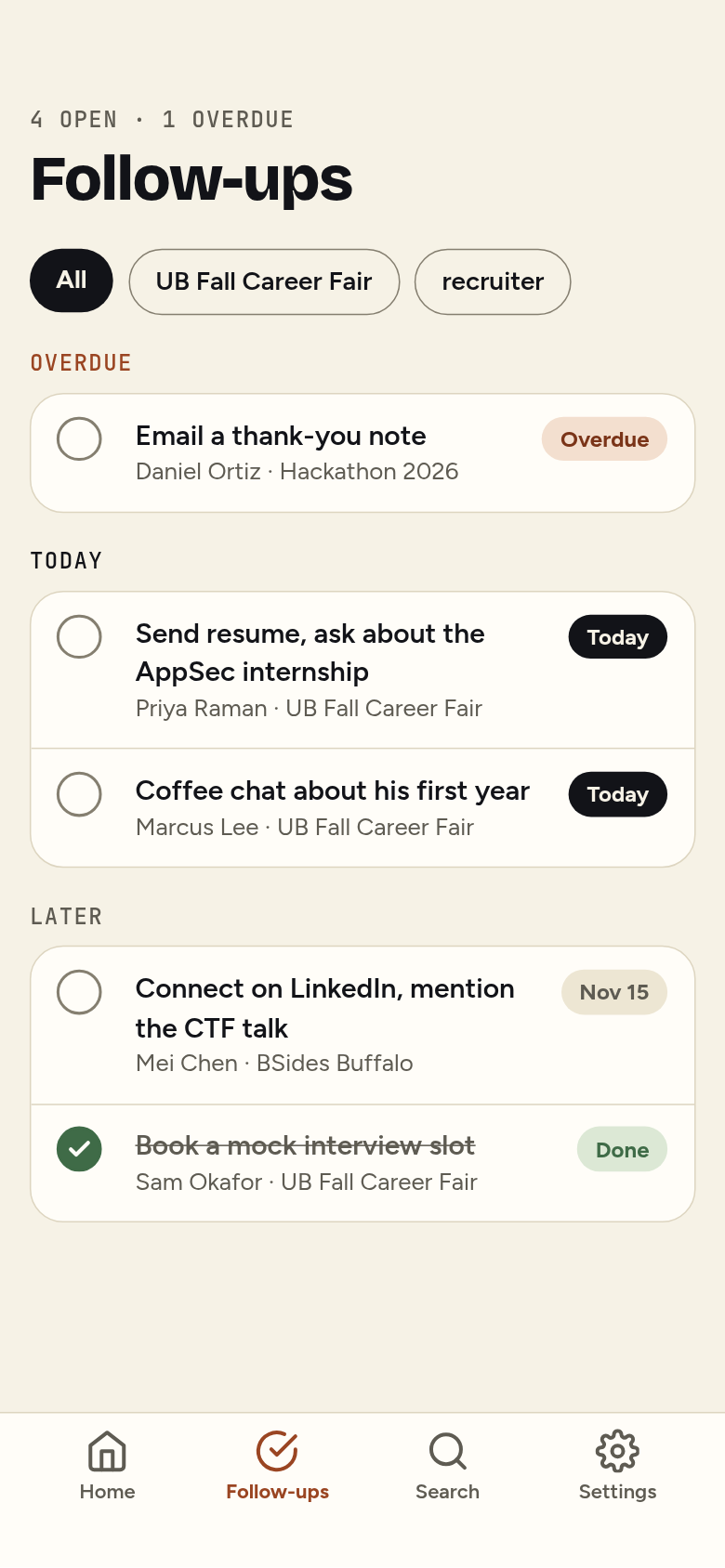
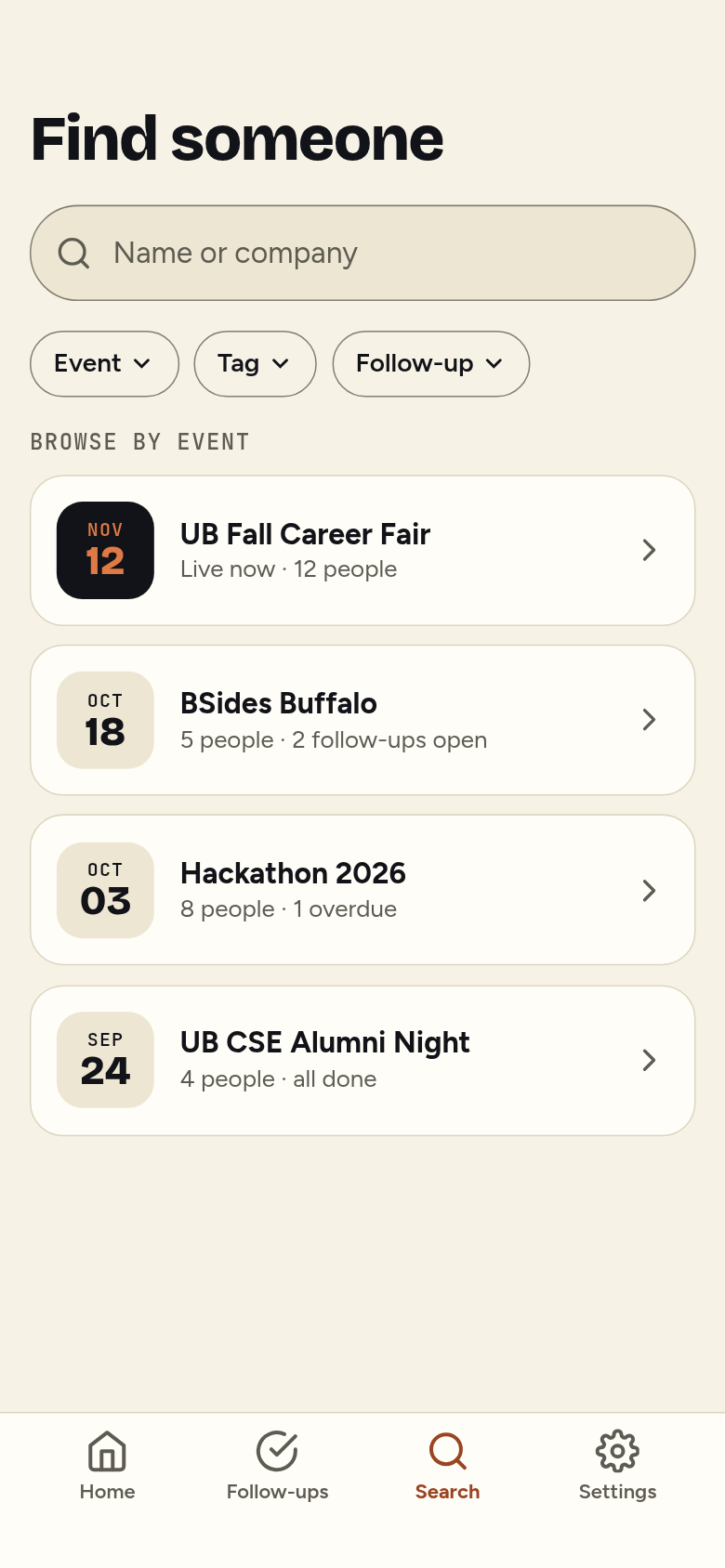
Metwork is a mobile app for students who meet a lot of people at career fairs and conferences and lose track of them a week later. LinkedIn records that you know someone, but not where you met or what you promised. Metwork fixes that by saving every contact under the event where you met, with four answers attached: who they are, how you met, where you met, and what to do next.
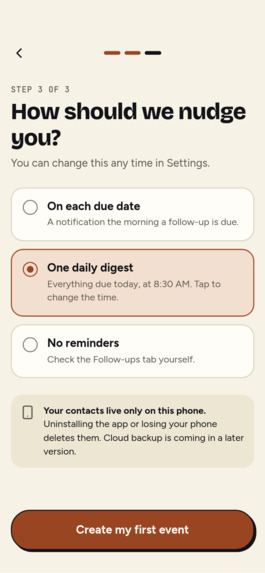
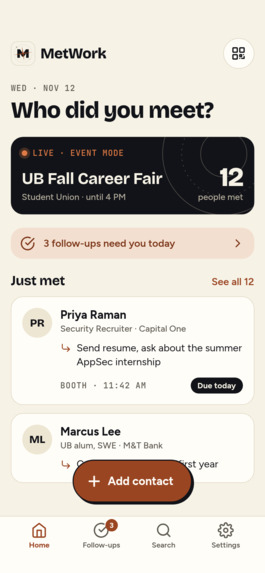
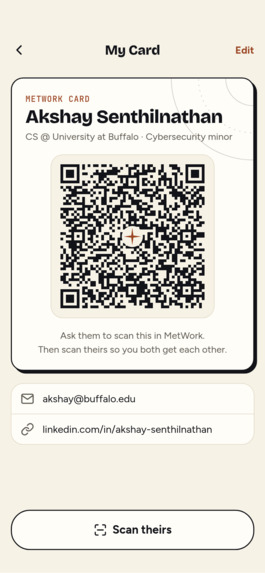
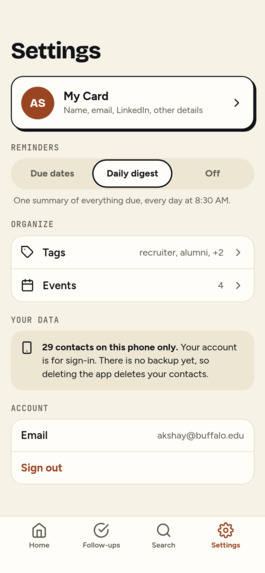
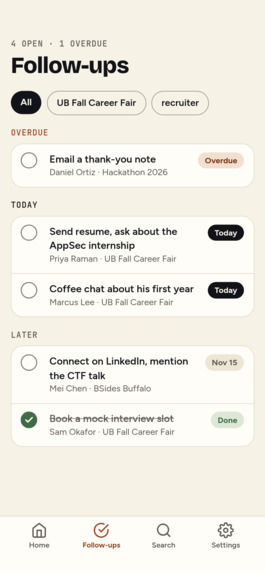
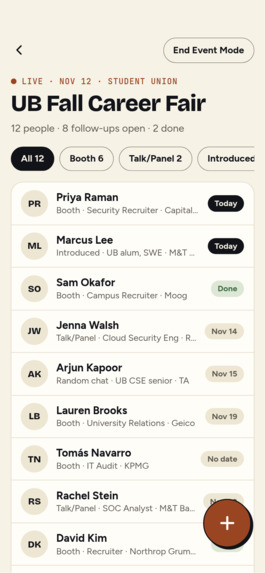
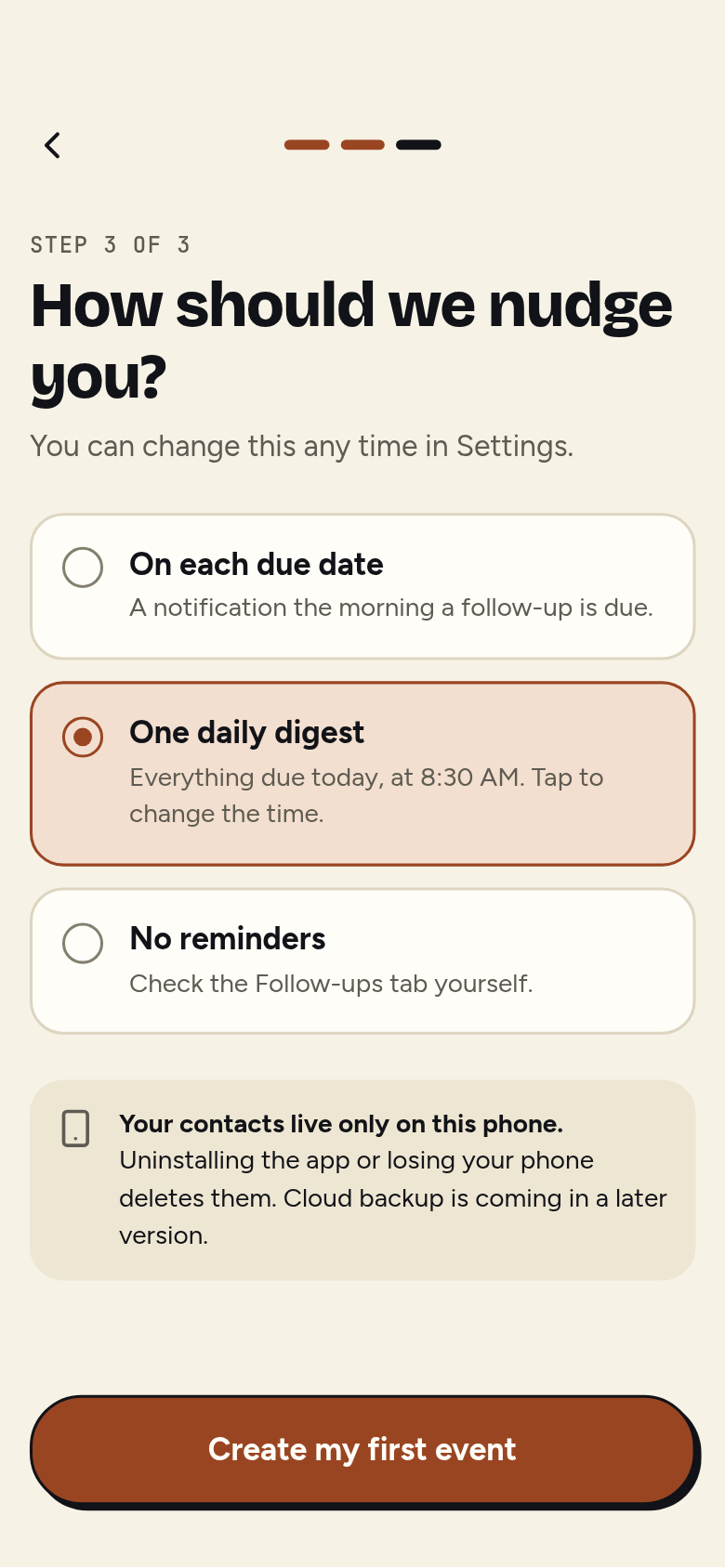
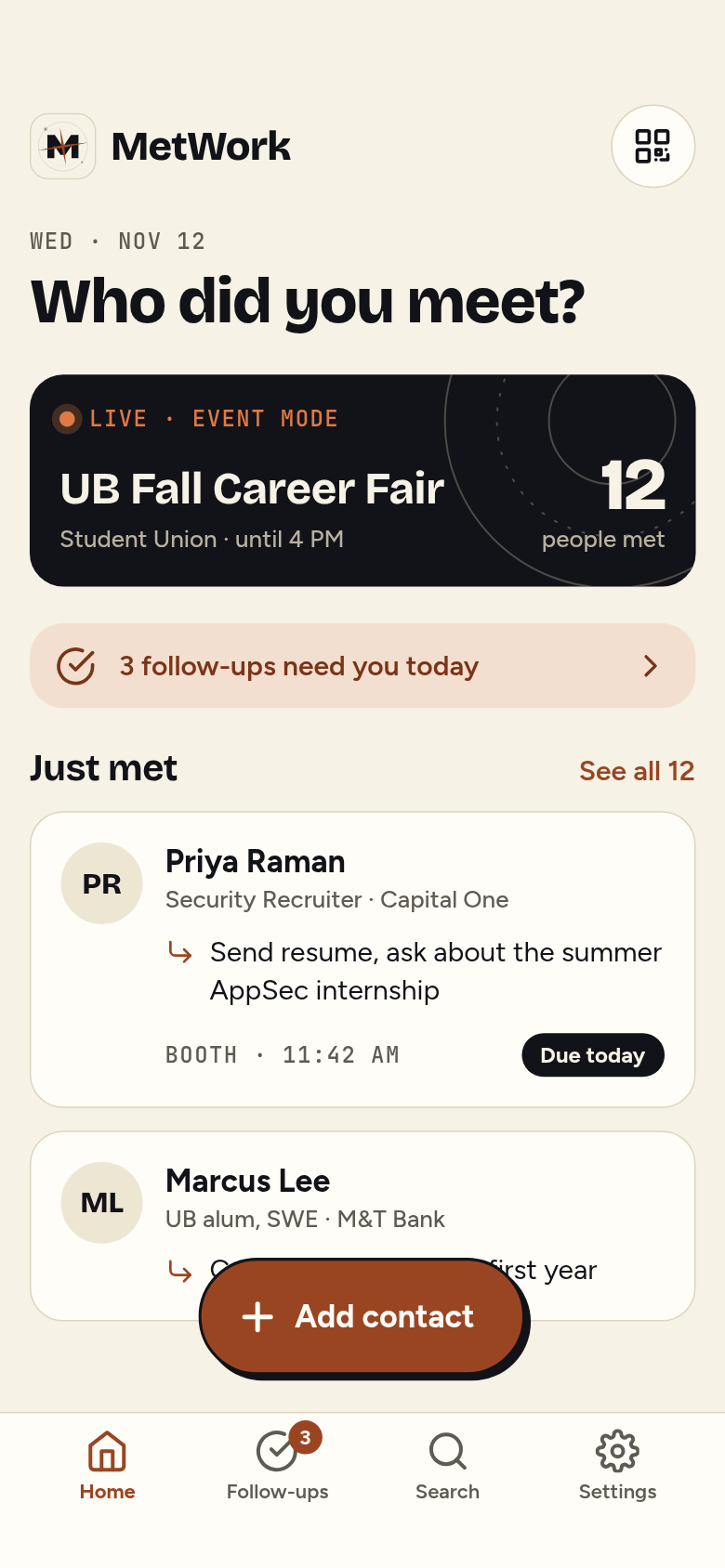
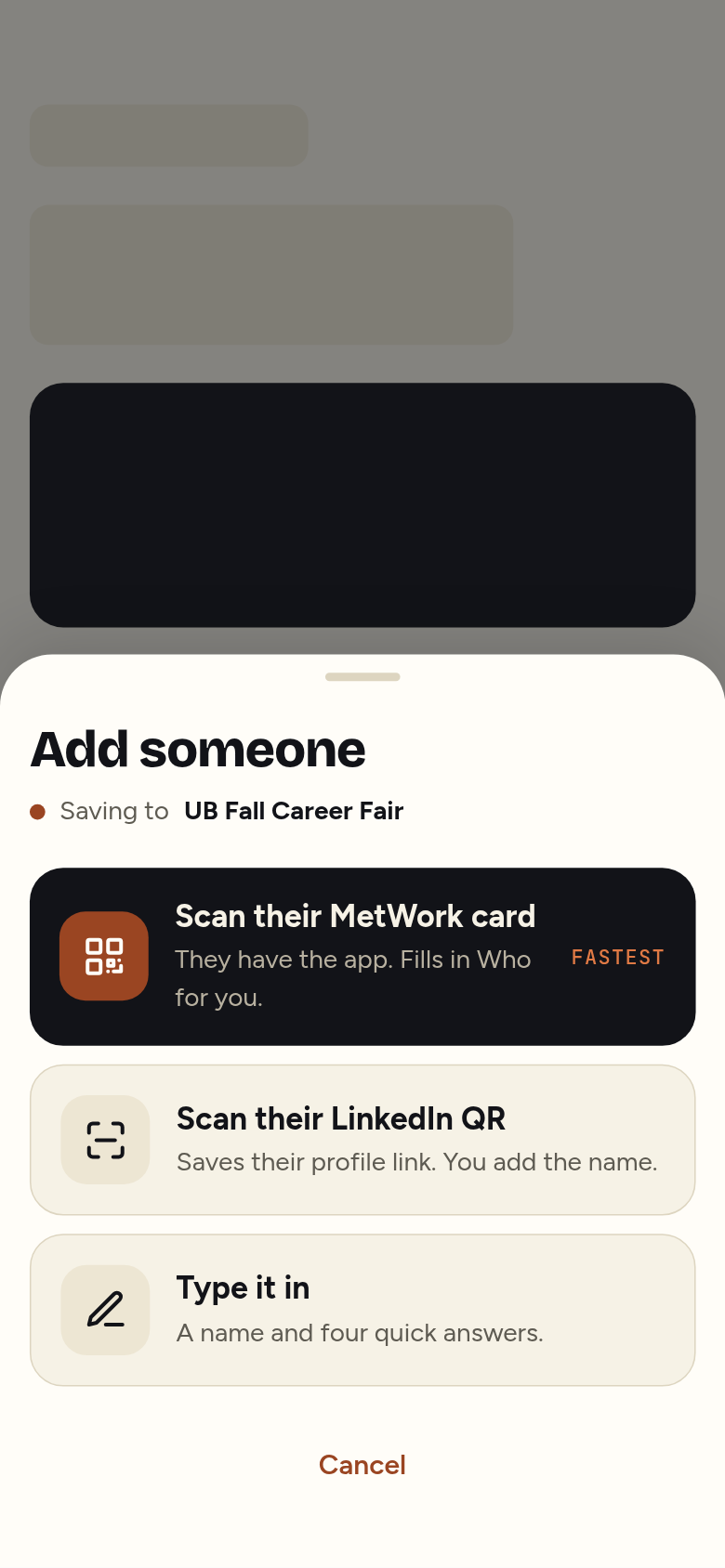
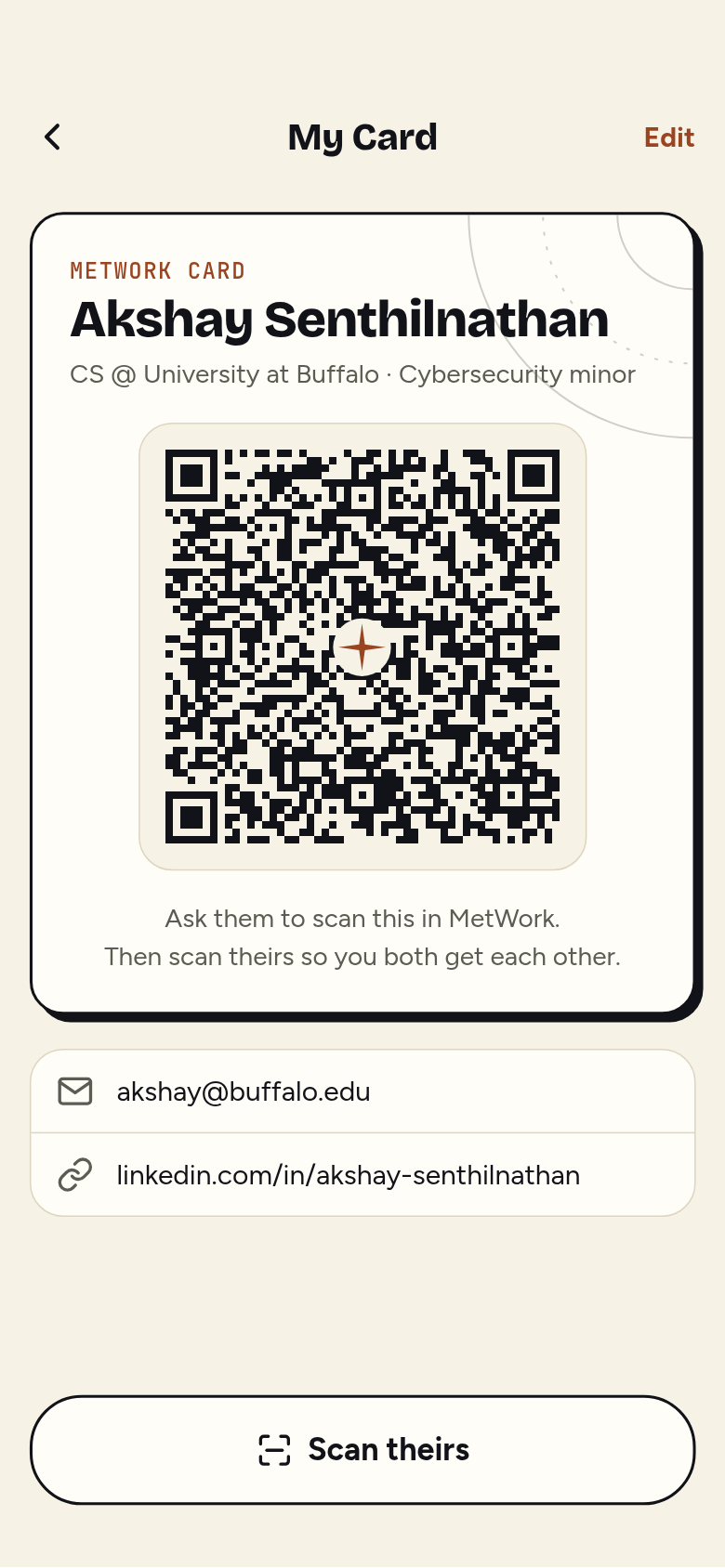
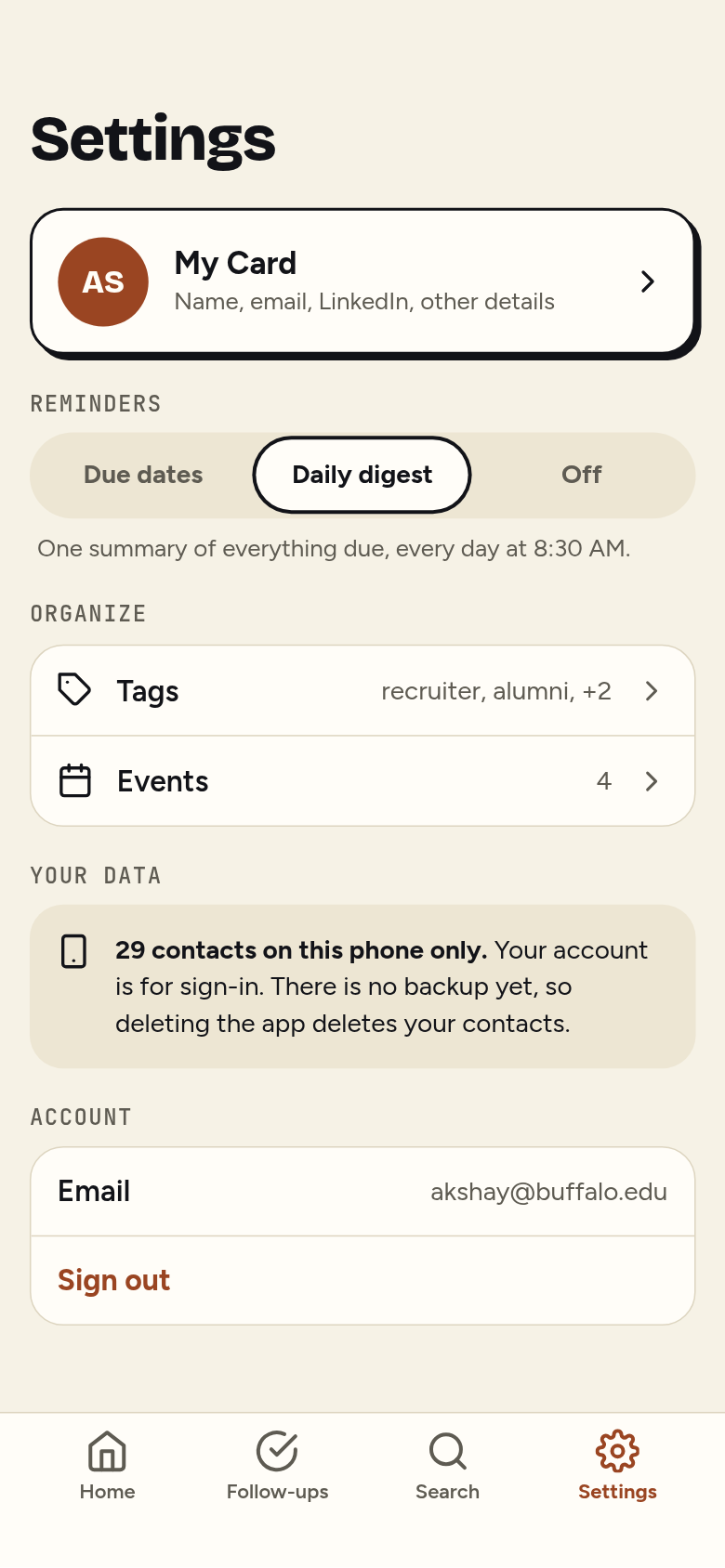
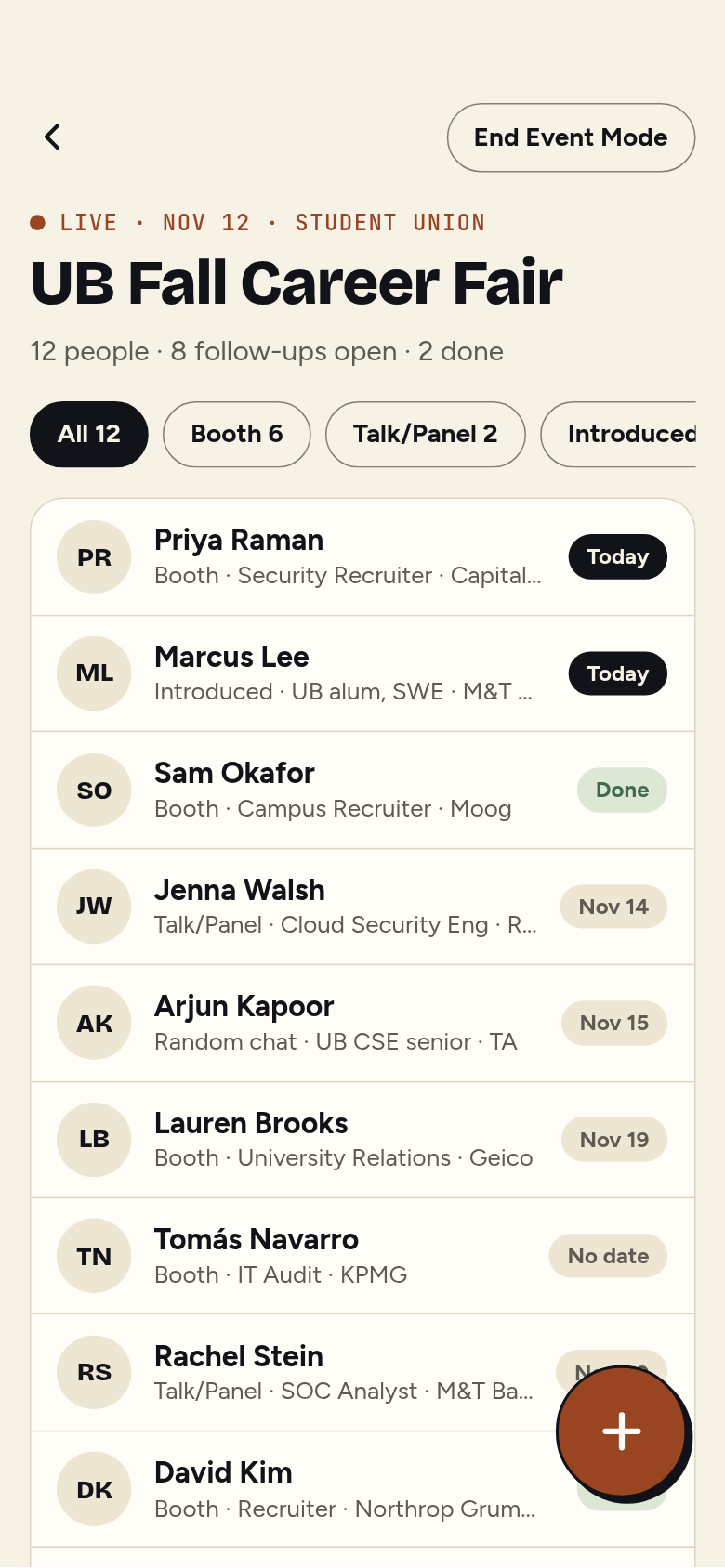
Turn on Event Mode before you walk in, and everyone you add is tagged to that event automatically. Swap cards with other Metwork users by QR code, scan a LinkedIn QR for everyone else, and get reminded about follow-ups the way you prefer. Contacts are stored locally on your phone, and the account is used only for sign-in.
Built with React Native and Expo as a single codebase for Android and iPhone.
What it does
Metwork is a mobile app designed to help students turn quick conference and career fair conversations into long term professional relationships. Instead of letting business cards collect dust or losing track of new connections on LinkedIn, Metwork automatically organizes every person you meet under the specific event where you met them.
Each contact profile captures four essential details:
Who they are: Name, role, company, and contact details.
How you met: Key conversation points and shared interests.
Where you met: Event tag and location context.
What to do next: Specific follow-up tasks and deadlines.
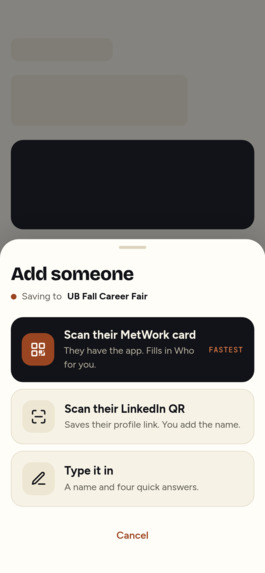
With Event Mode, users can toggle on an active event to automatically tag all new contacts added during that timeframe. Connections can be made instantly via in app QR code exchange or by scanning standard LinkedIn QR codes. Metwork respects privacy by keeping contact data stored locally on your device using your account strictly for authentication and sends personalized follow up reminders to ensure promises made during networking don't fall through the cracks.
How we built it
Framework & Tooling: Built as a cross platform mobile application for iOS and Android using React Native and Expo, enabling a single unified codebase.
Architecture & UI: Designed with lightweight component architecture and custom UI components tailored for fast, single handed data entry in busy event environments.
Scanner & Sharing: Integrated expo camera and expo barcode scanner for seamless QR code creation and scanning, allowing instant peer to peer Metwork swaps as well as fast fallback scanning for external LinkedIn QR codes.
Data Storage & Privacy: Implemented local first persistence using AsyncStorage (or SQLite) so all contact notes and personal networking data remain strictly on the user’s device.
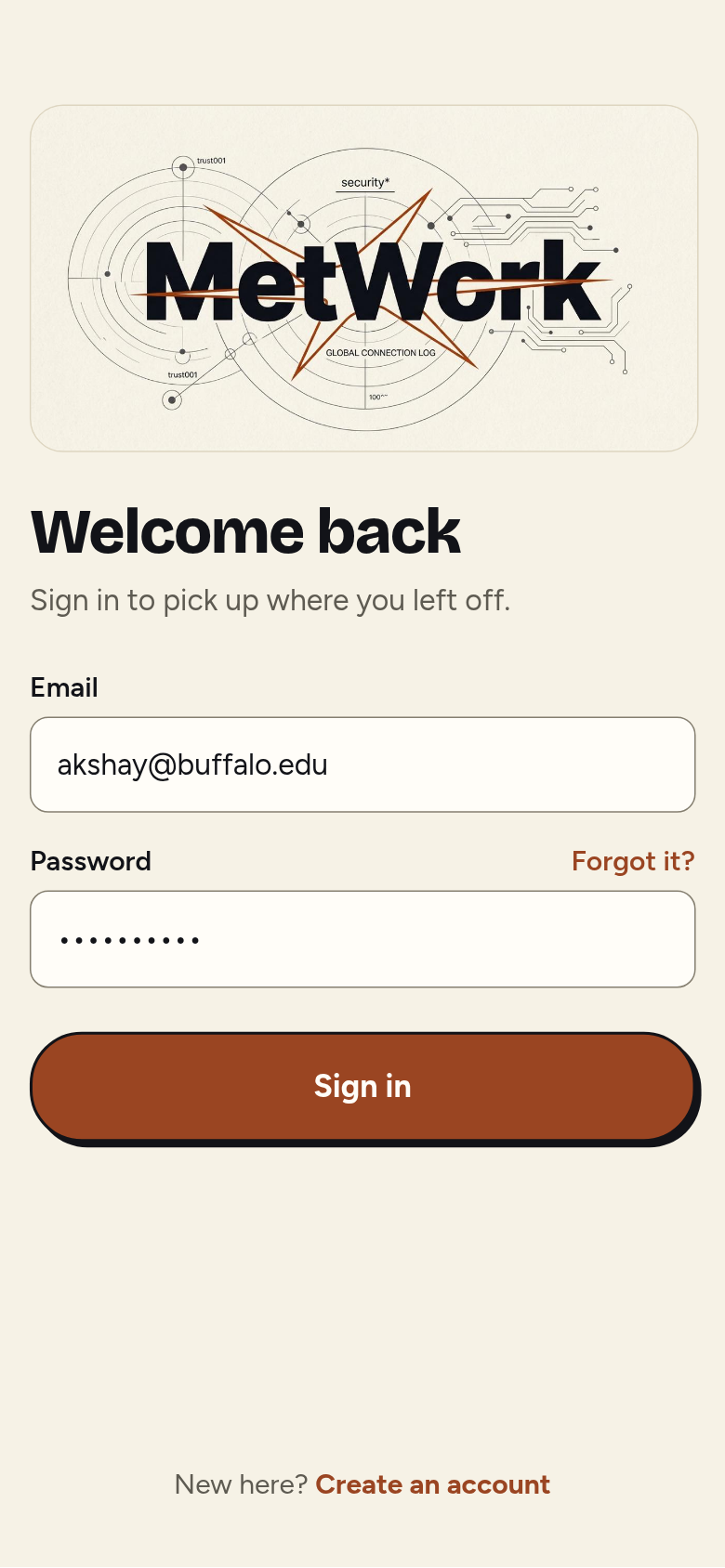
Notifications & Auth: Configured local device notifications via Expo Notifications for follow-up reminders and integrated a lightweight authentication provider (such as Firebase Auth or Supabase) strictly for user sign in and session verification.
Challenges we ran into
Scanning Reliability in Crowded Venues: Standardizing barcode/QR detection under poor lighting conditions and dynamic camera angles typical of noisy, crowded conference floors.
Handling Diverse QR Inputs: Seamlessly parsing custom Metwork user payloads while gracefully handling external URLs and standard LinkedIn QR formats without breaking user flow.
State Management in Event Mode: Ensuring global event state persisted reliably across app suspends, backgrounding, and camera switches so users didn't lose their active event tag mid-networking.
Accomplishments that we're proud of
Zero Friction Networking: Achieving a fast, intuitive contact onboarding flow that lets a user log a high-quality contact and action item in under 15 seconds.
Seamless Dual QR Integration: Successfully supporting both Metwork-to-Metwork instant peer exchanges and external LinkedIn QR scans in a unified camera workflow.
True Local Privacy: Building a completely local-first data architecture, providing students full ownership of their personal contacts and notes.
Cross Platform Parity: Delivering a fluid, high-performance experience on both iOS and Android from a single React Native codebase.
What we learned
Mobile UX for High-Stress Environments: Designing UI for real-time networking requires minimal form inputs, smart defaults, and large touch targets every extra tap reduces user adoption in a crowded room.
Local First Patterns in React Native: Deepened our knowledge of local offline persistence strategies, optimizing local querying without leaning on external databases.
What's next for MetWork
Business Card OCR Scanning: Integrating on device optical character recognition (OCR) to capture paper business cards for professionals who don't use digital QR codes.
