-
-
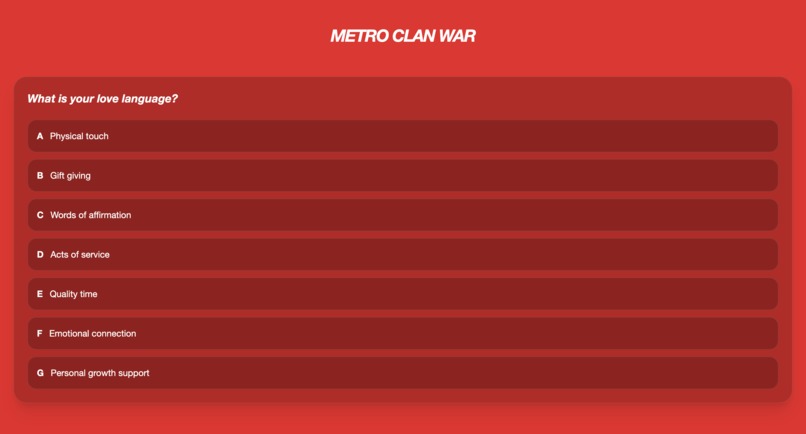
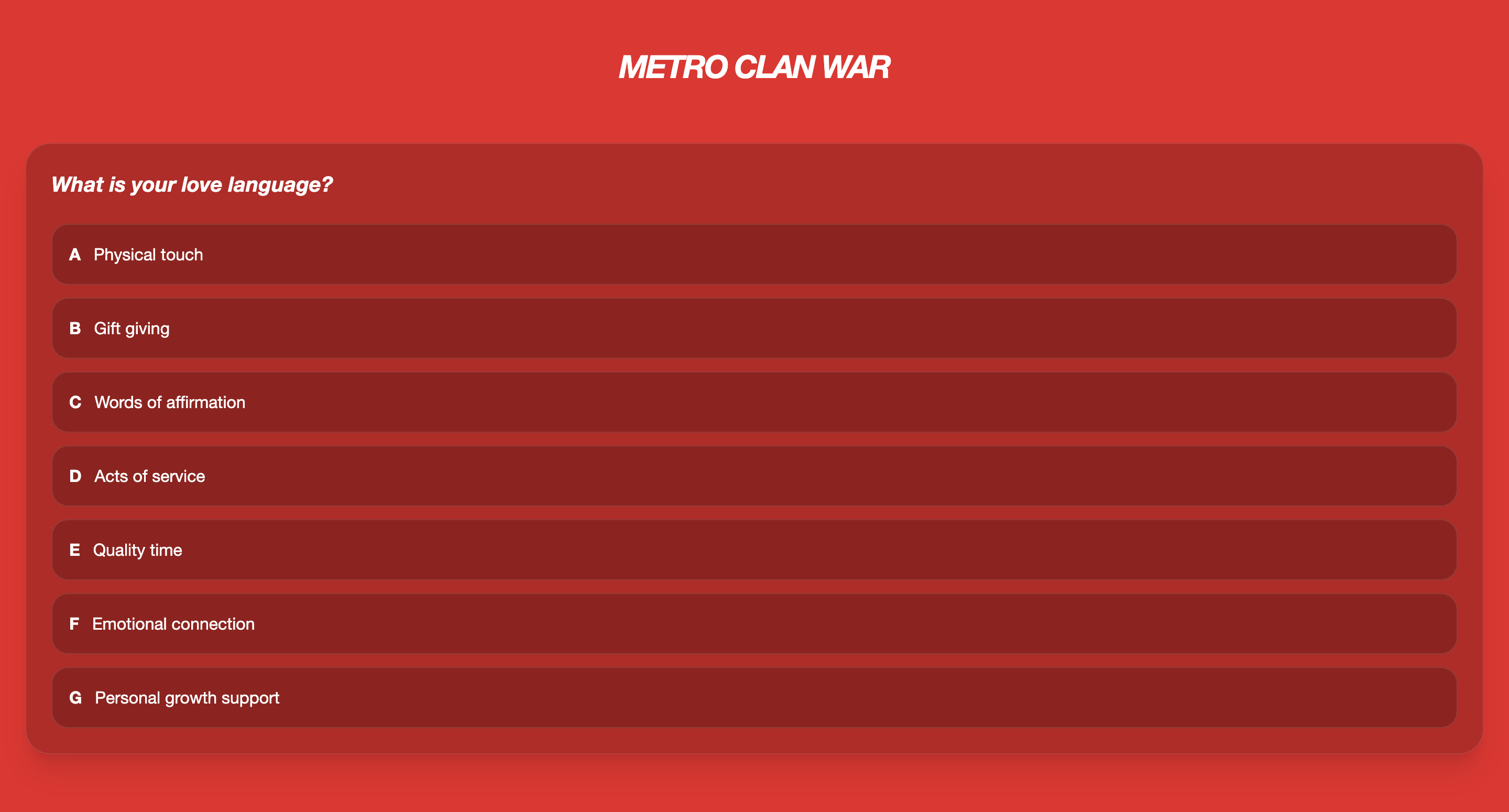
Innital Questions To Discover Your Clan
-
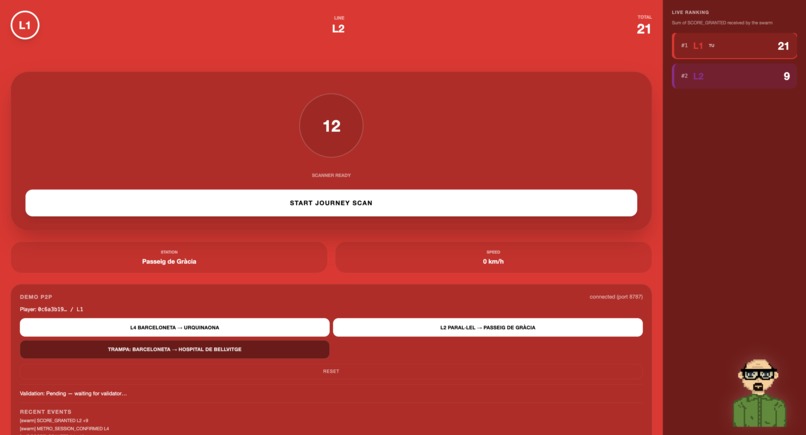
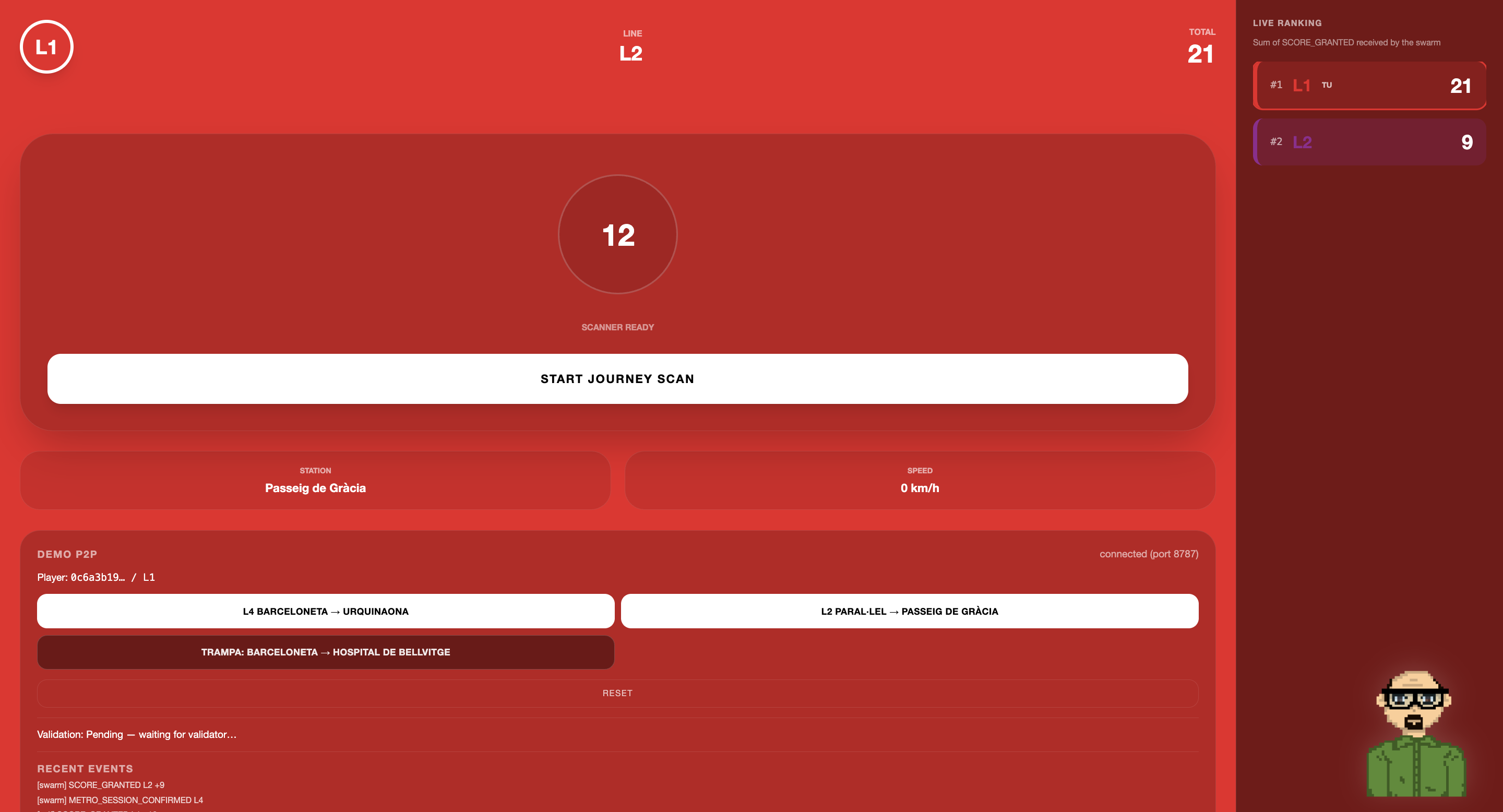
Main Menu After Others Journey's
-
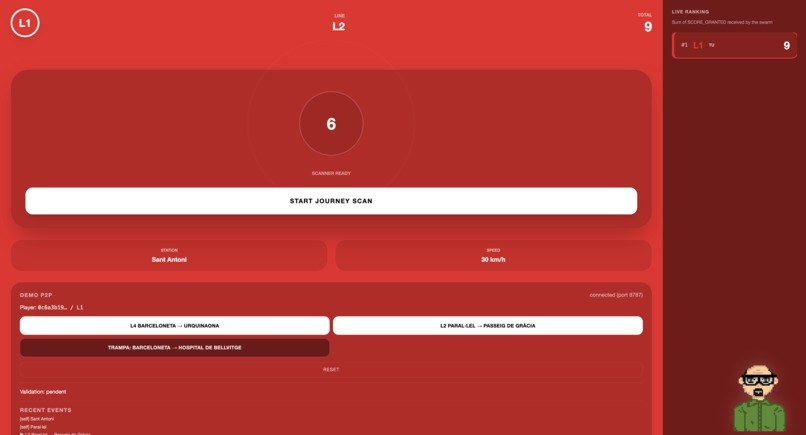
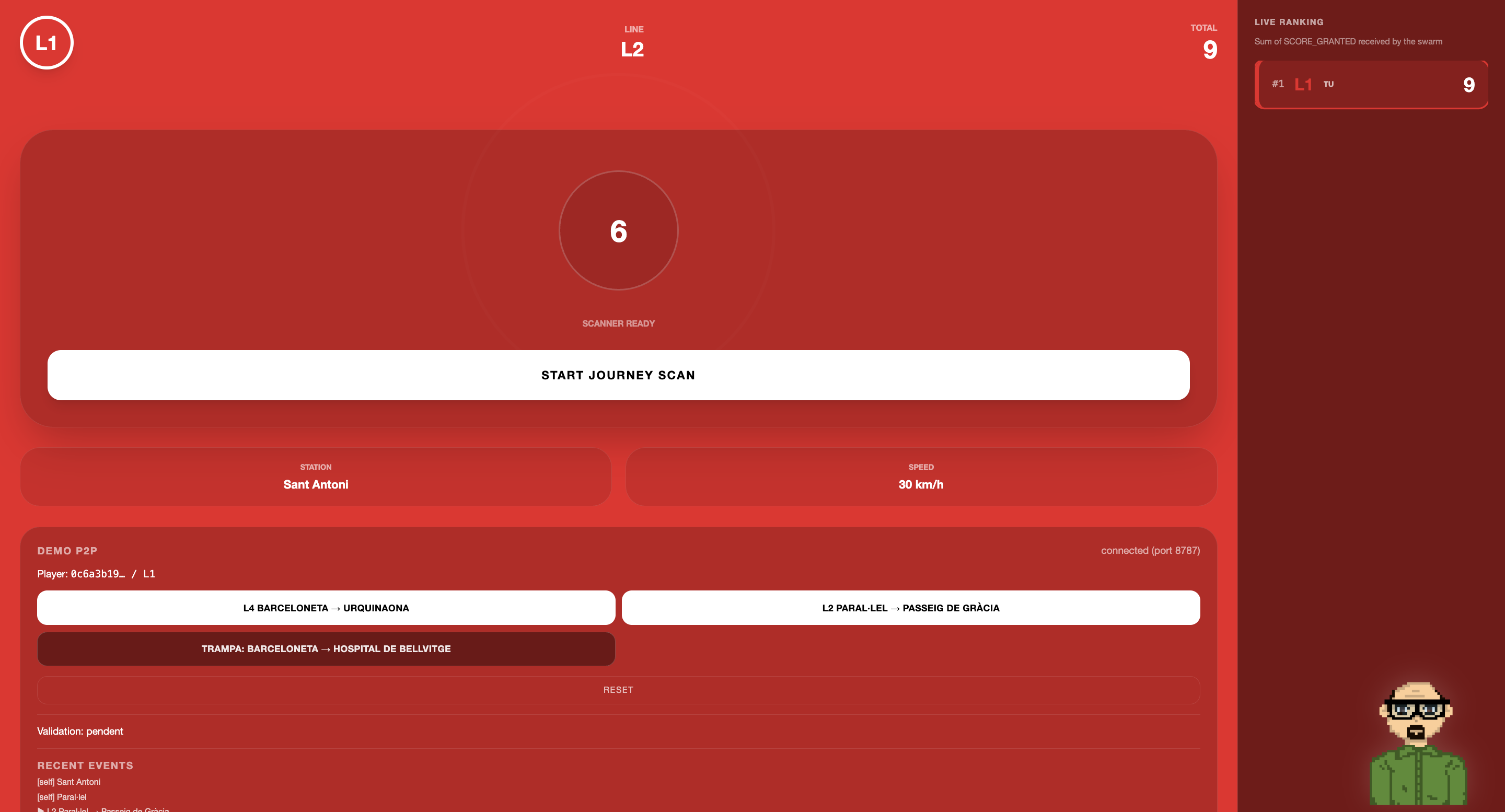
Main Menu After Your Journey
-
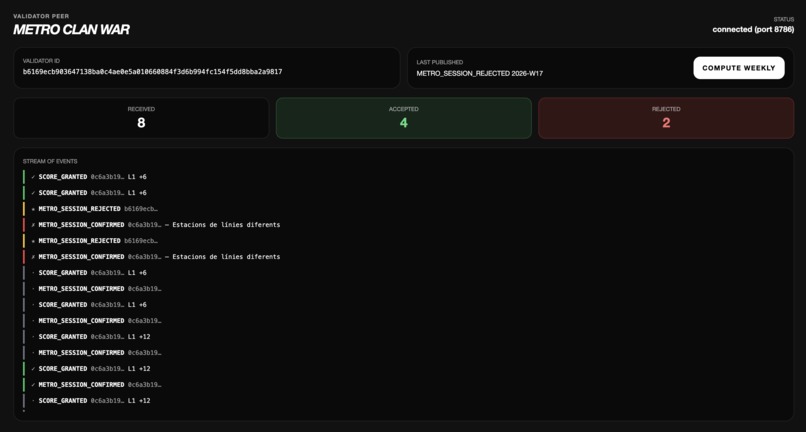
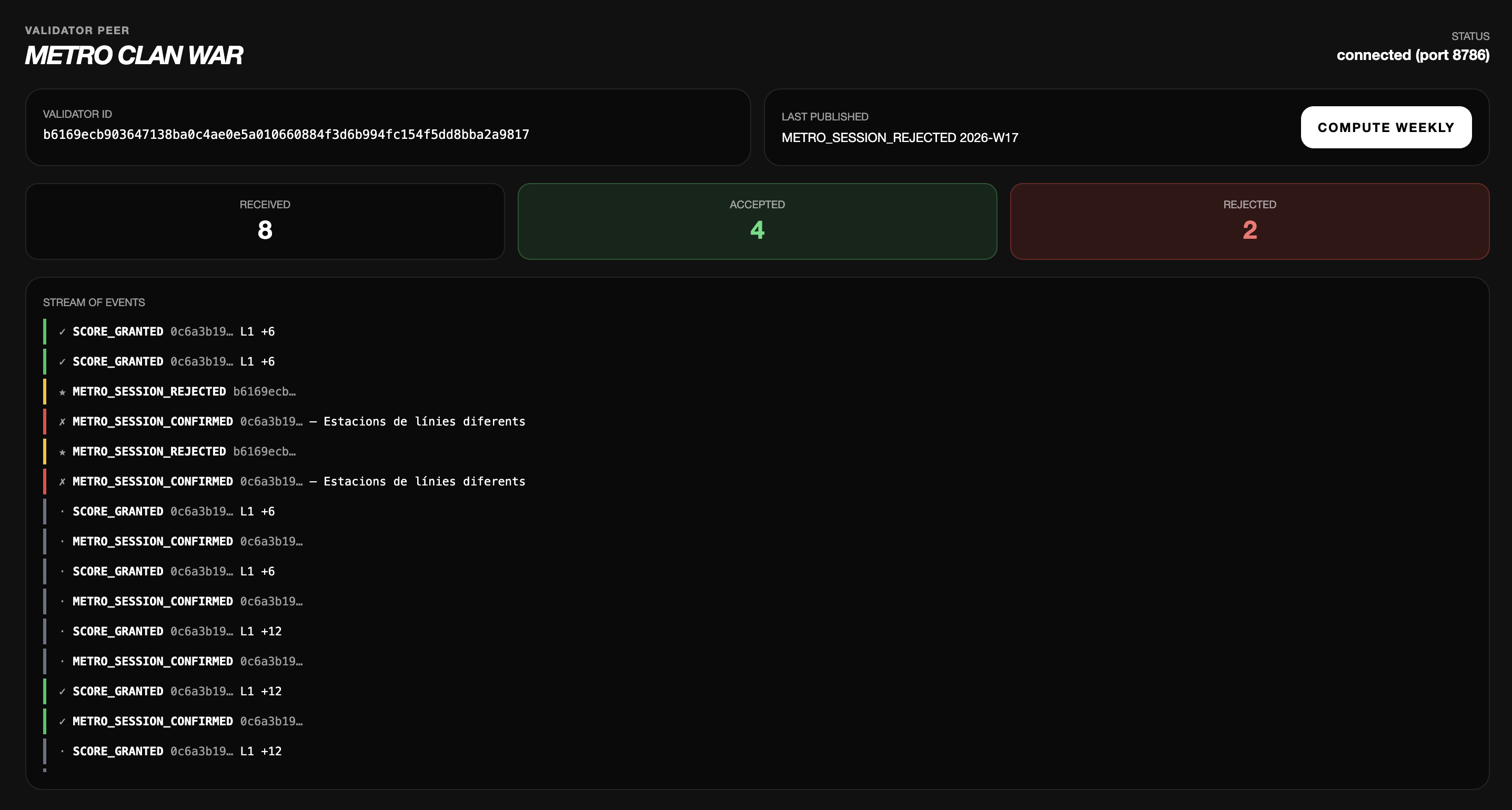
Validator Interface
-
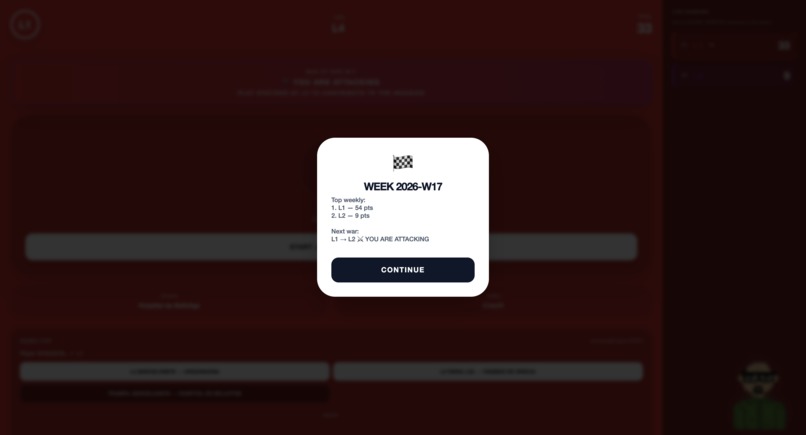
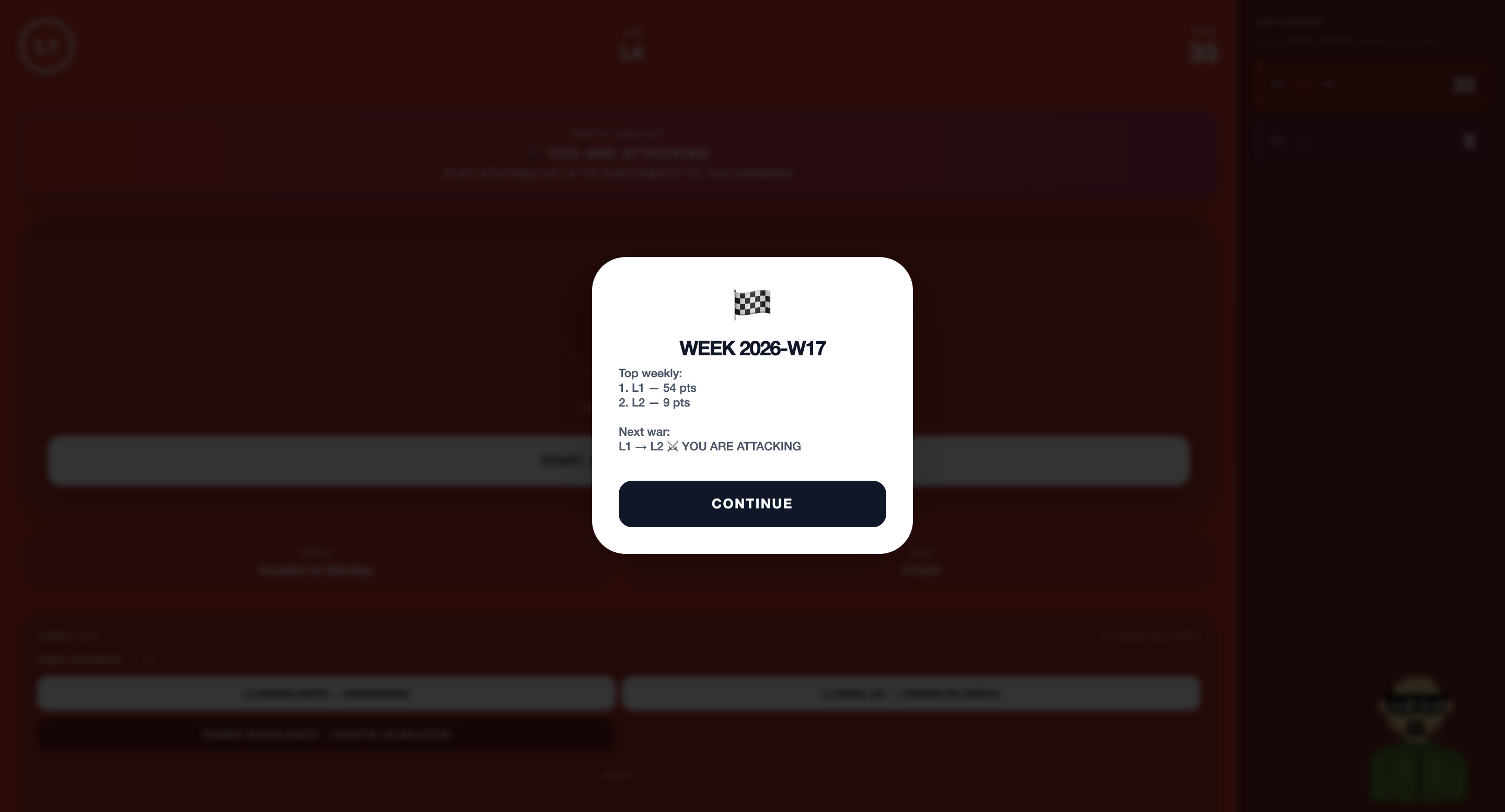
End Of Week Alert + War Start
-
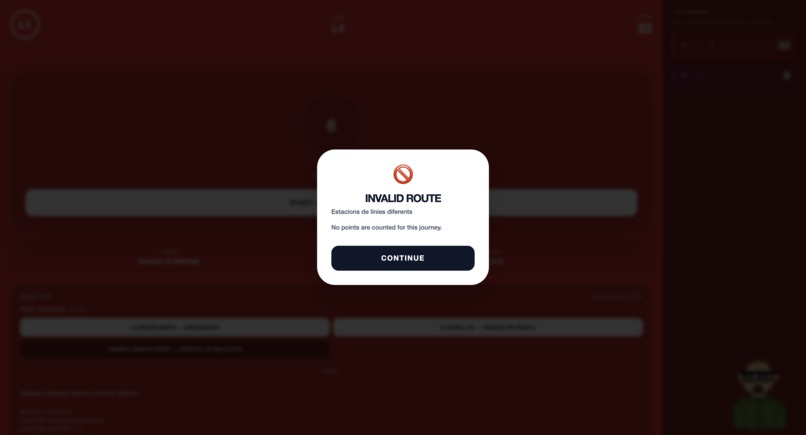
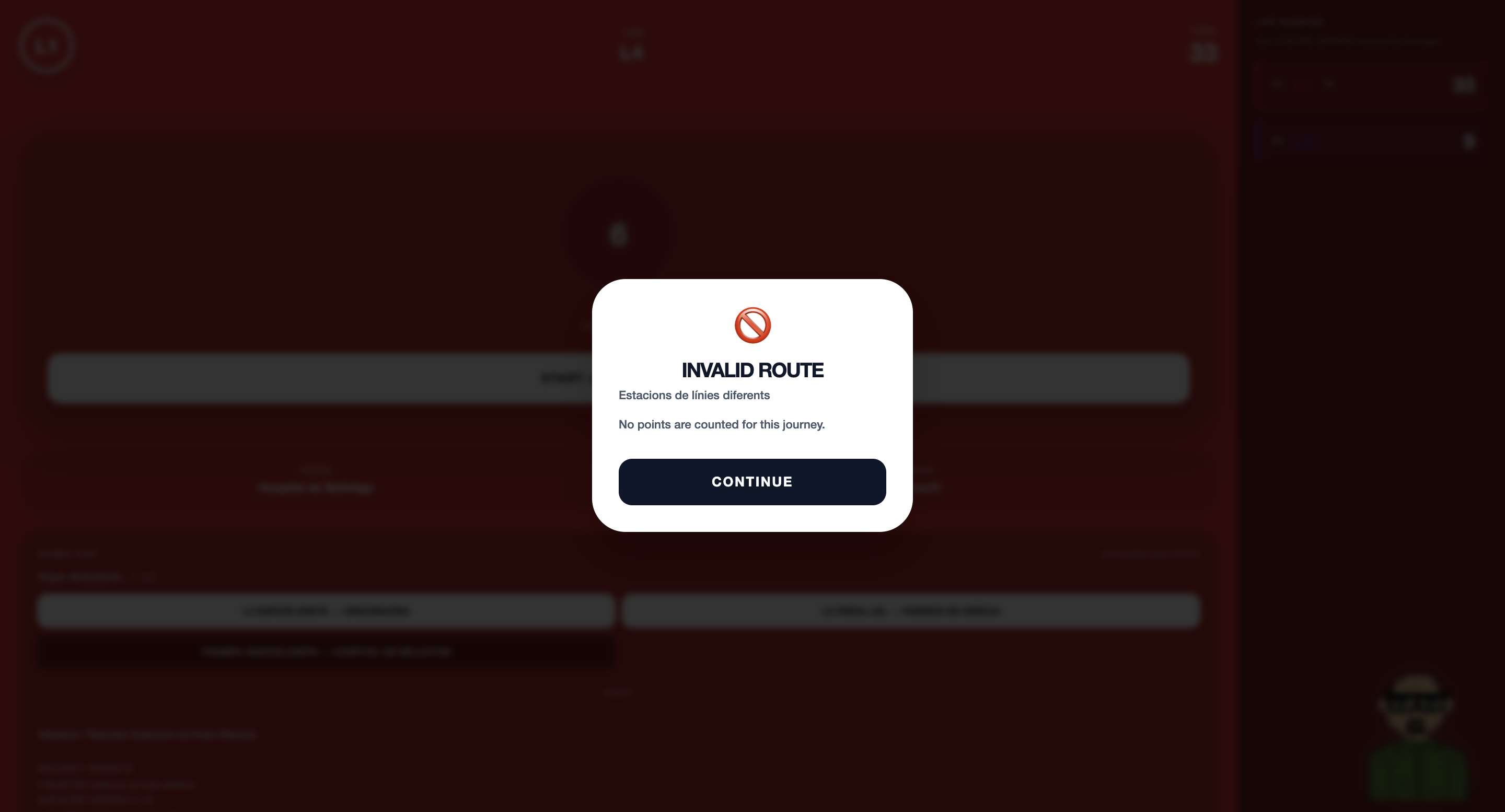
Invalid Route Detected
-
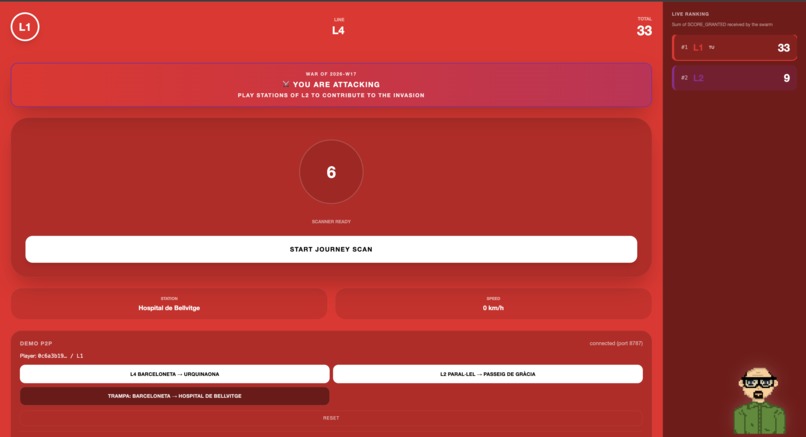
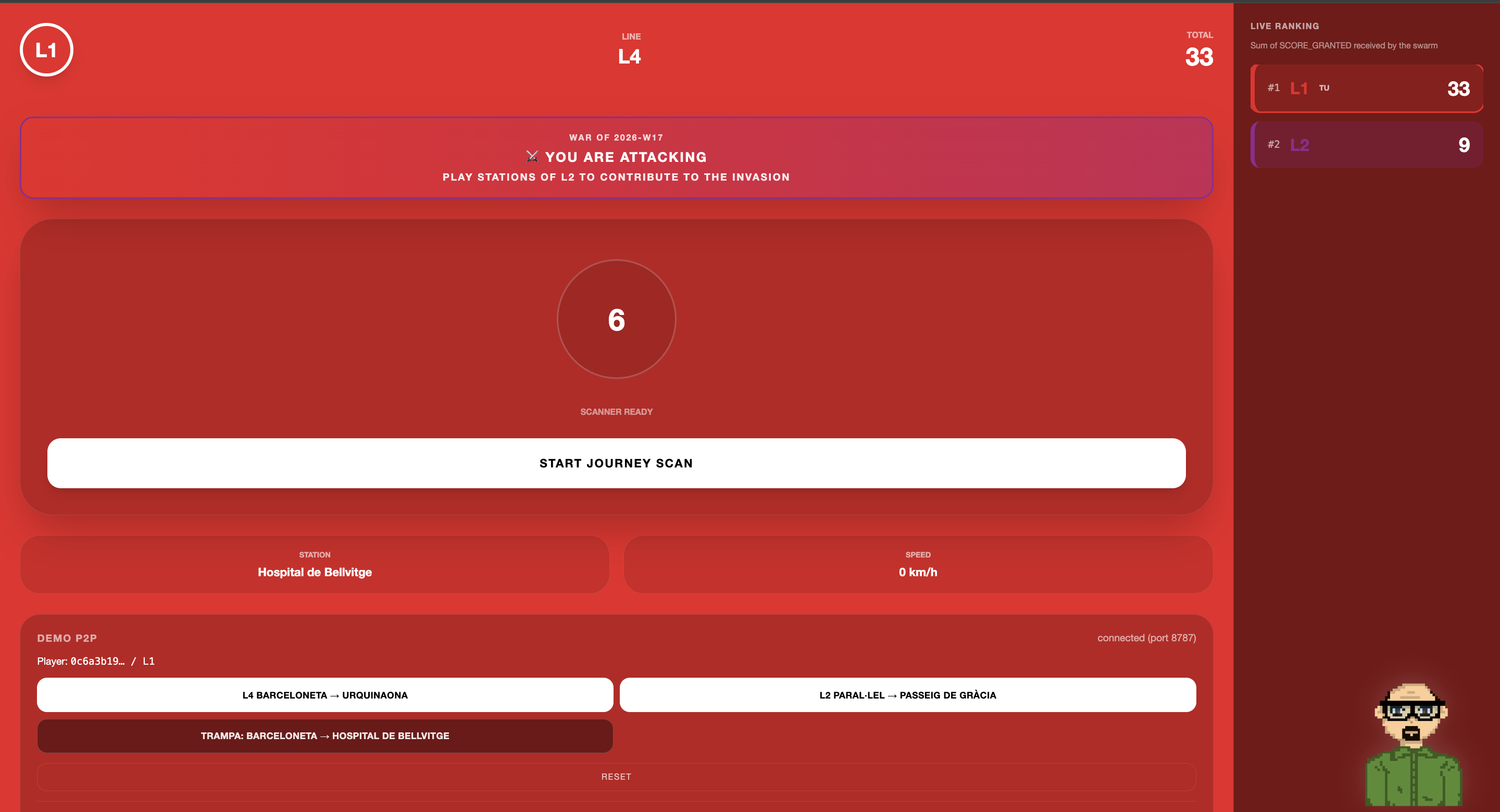
Main Menu on Attack Day
-
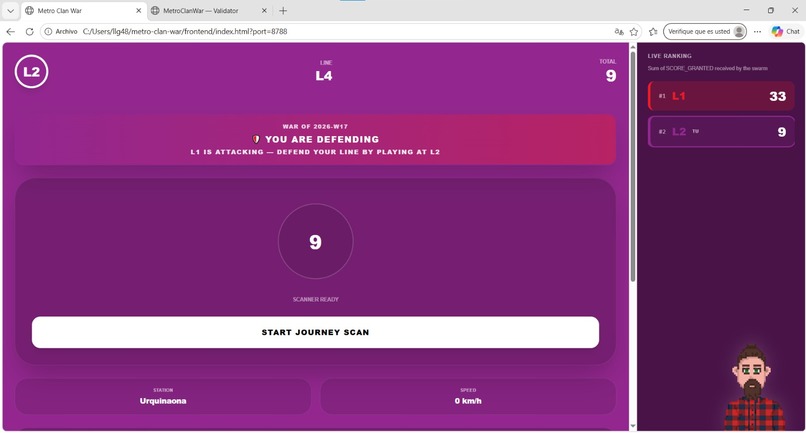
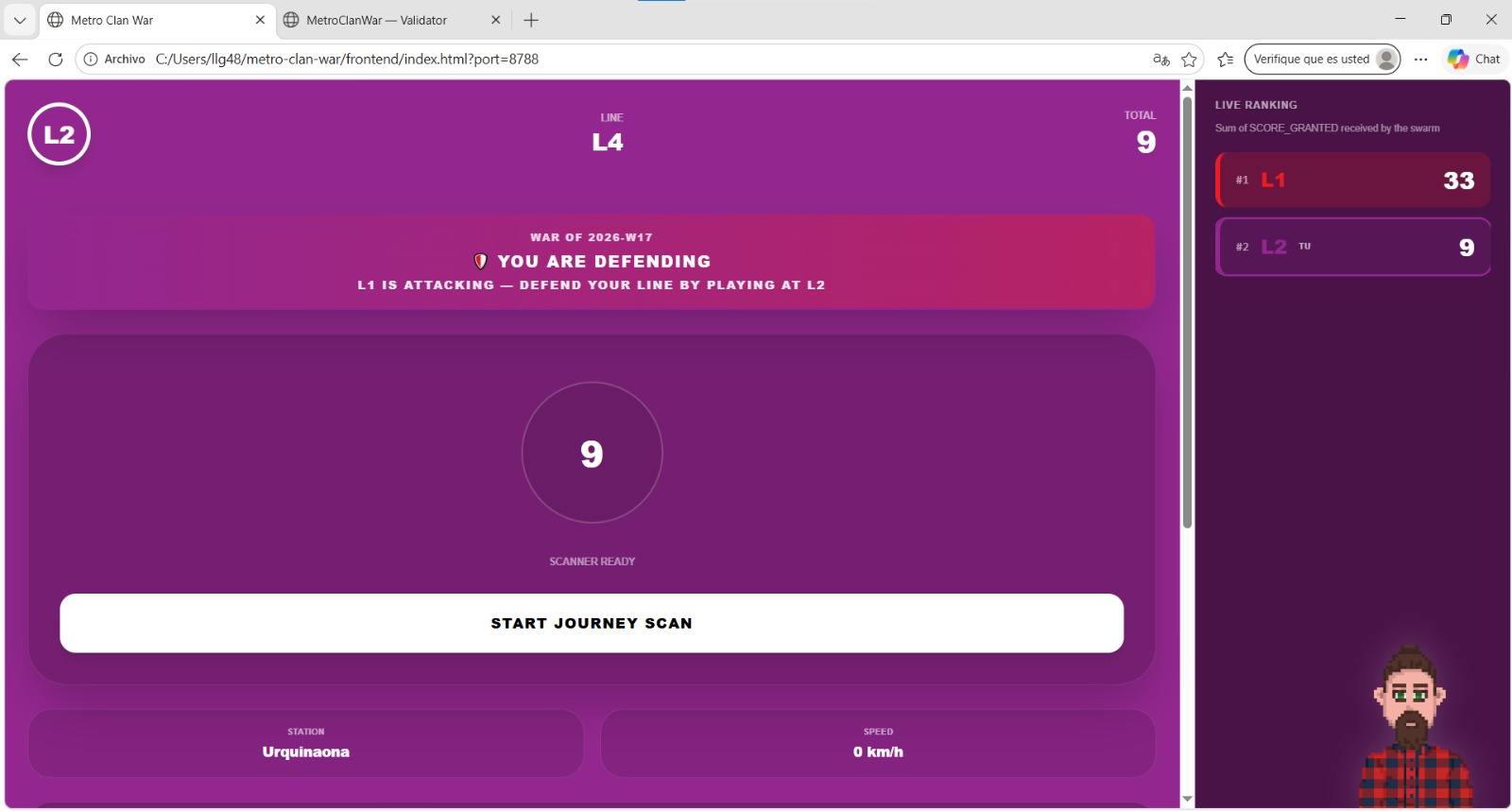
Main Menu on Defence Day
Inspiration
As university students, we use the Barcelona metro nearly every day and feel really fond of trains as a mode of transport. We wanted to create a project that would make the daily commute and transportation of so many people a little more interesting, while also strengthening the pride that the citizens of our city have for the subway.
In addition, we are big fans of the Barcelona metro and we think it is one of the coolest metro systems found in major cities.
What it does
It is a game that assigns you to a faction corresponding to a metro line and makes you fight other factions by using the metro.
You earn points every time you take a train, based on the number of stops you pass. At the end of the week, the two factions with the most overall points enter the high leagues and compete against each other, while the others remain in the normal league. Every week, this fight for line hegemony repeats.
Why a P2P implementation?
Our idea moves away from traditional methods and centralized structures for synchronization, communication, and online connectivity, instead taking advantage of peer-to-peer technology from multiple perspectives.
We researched P2P projects and found that there are actually very few video games built using this system, even though it offers many benefits for the gaming industry. It is still rarely used.
By relying on a P2P foundation, we avoid dependence on third parties. In our case, players can connect and synchronize without relying on a central server, which makes the project more independent and cost-efficient if commercialized.
Additionally, since our app needs to handle users’ geolocation data, being decentralized helps ensure that this sensitive information remains encrypted and outside the reach of centralized entities.
How we built it
We used a work division approach. We split the project into GUI, backend, and frontend, and developed them simultaneously while keeping in mind all interdependencies and the minimum necessary functionality.
Challenges we ran into
We had to work with a previously unknown toolset. Our experience with JavaScript frameworks was still basic, so the development process also involved a lot of learning.
The P2P architecture itself was also something new that we needed to understand. Additionally, working in a team always comes with organizational challenges that we had to solve before anything else.
Accomplishments that we're proud of
Overall, the whole project is a triumph for us and we are really happy to have finished it.
Also, all the user sprites are hand-drawn.
What we learned
We gained a good understanding of the Next.js framework, as well as core P2P concepts.
What's next for MetroClanWars
We will continue improving the idea and making it more complete. Our future efforts will focus on increasing the app’s longevity and growing the user base through word-of-mouth and possibly advertising.
Built With
- html
- javascript
- next.js
- tailwind

Log in or sign up for Devpost to join the conversation.