-
-
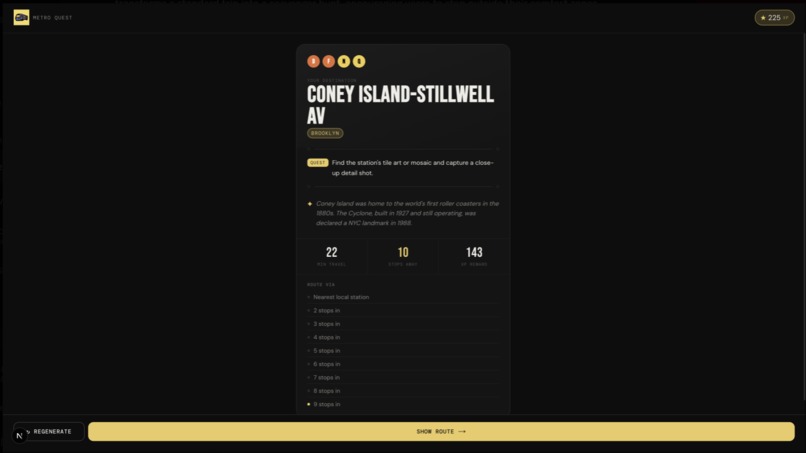
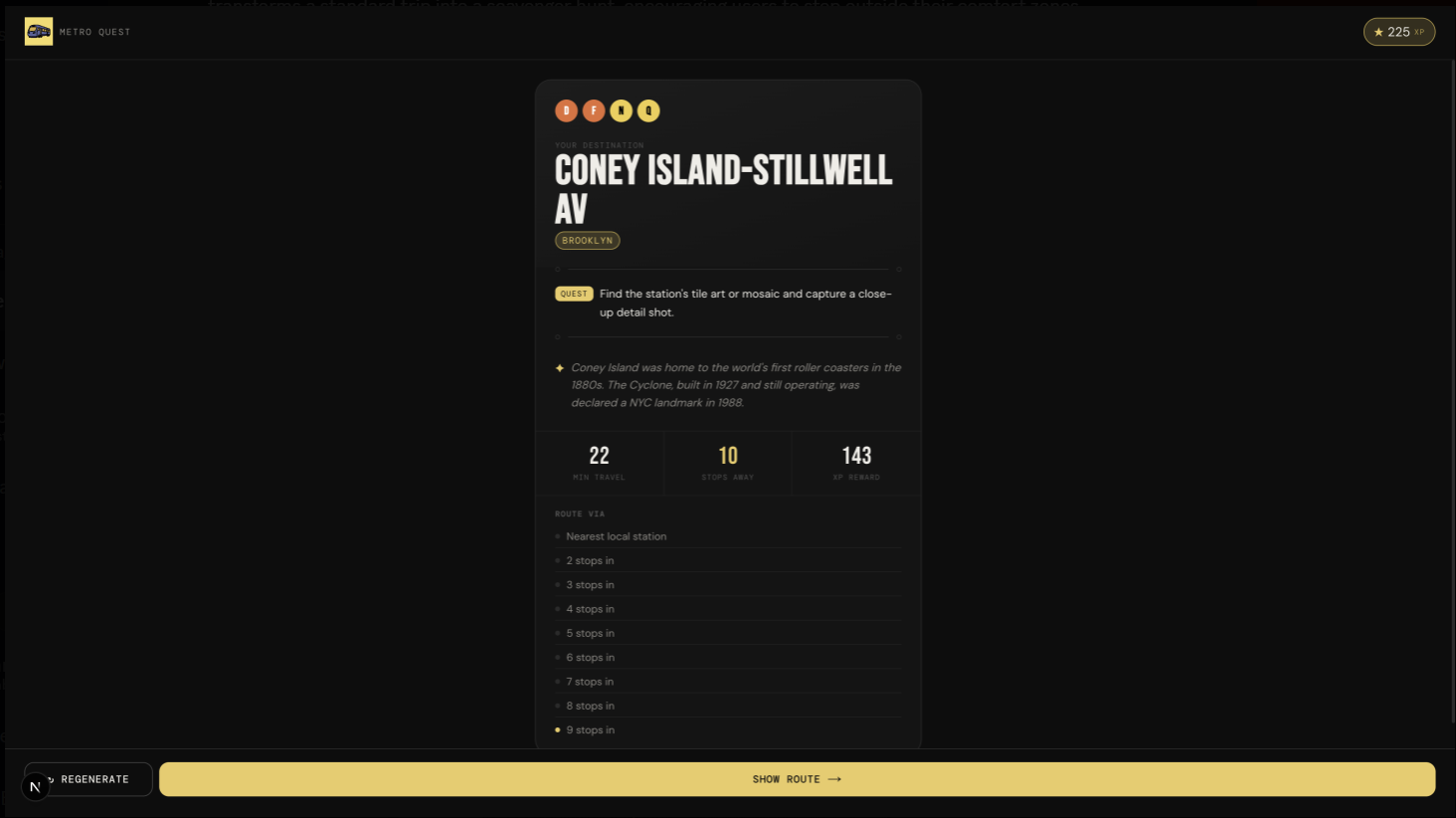
User is given an adventure card.
-
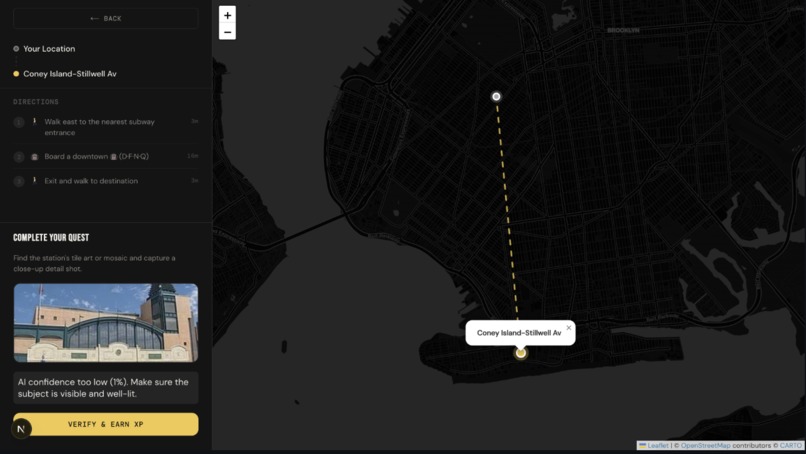
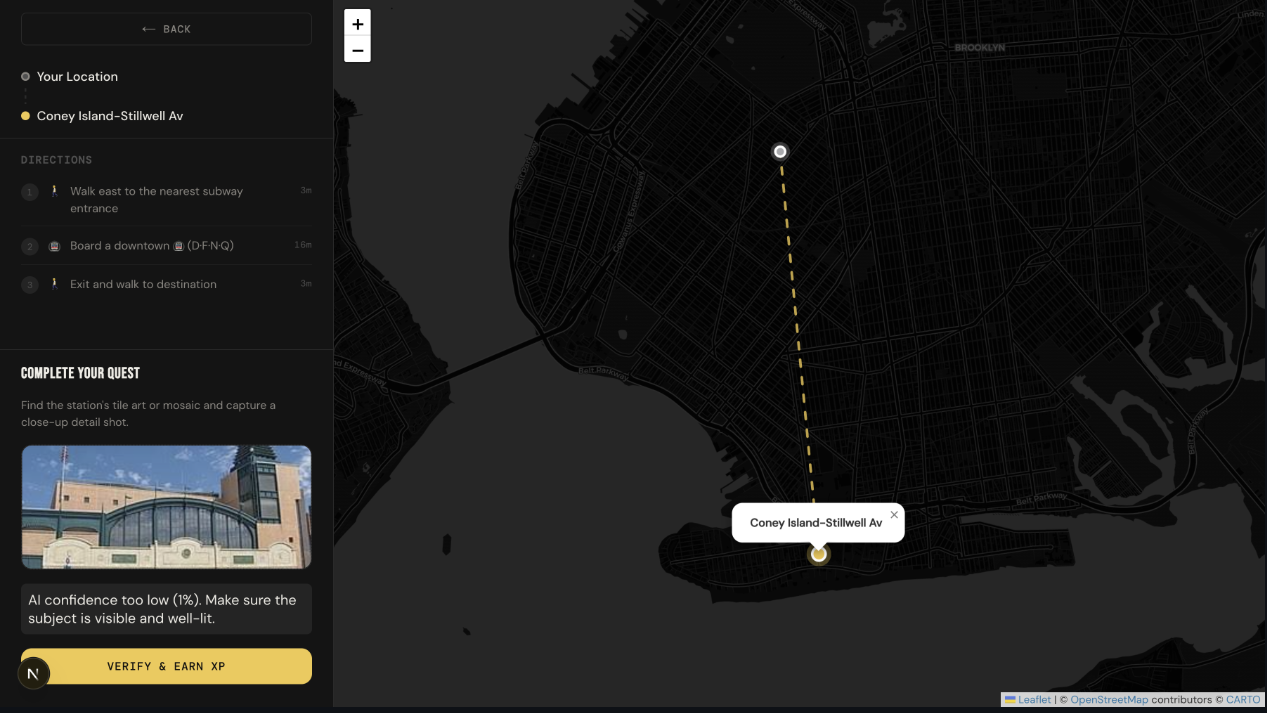
They accept the quest and are given the route.
-
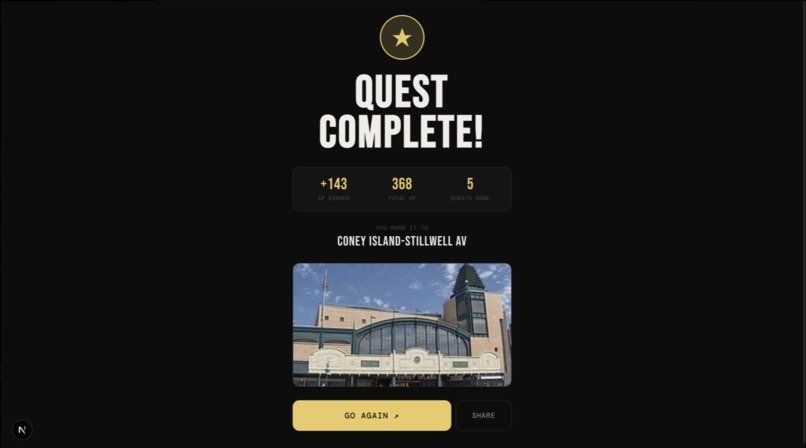
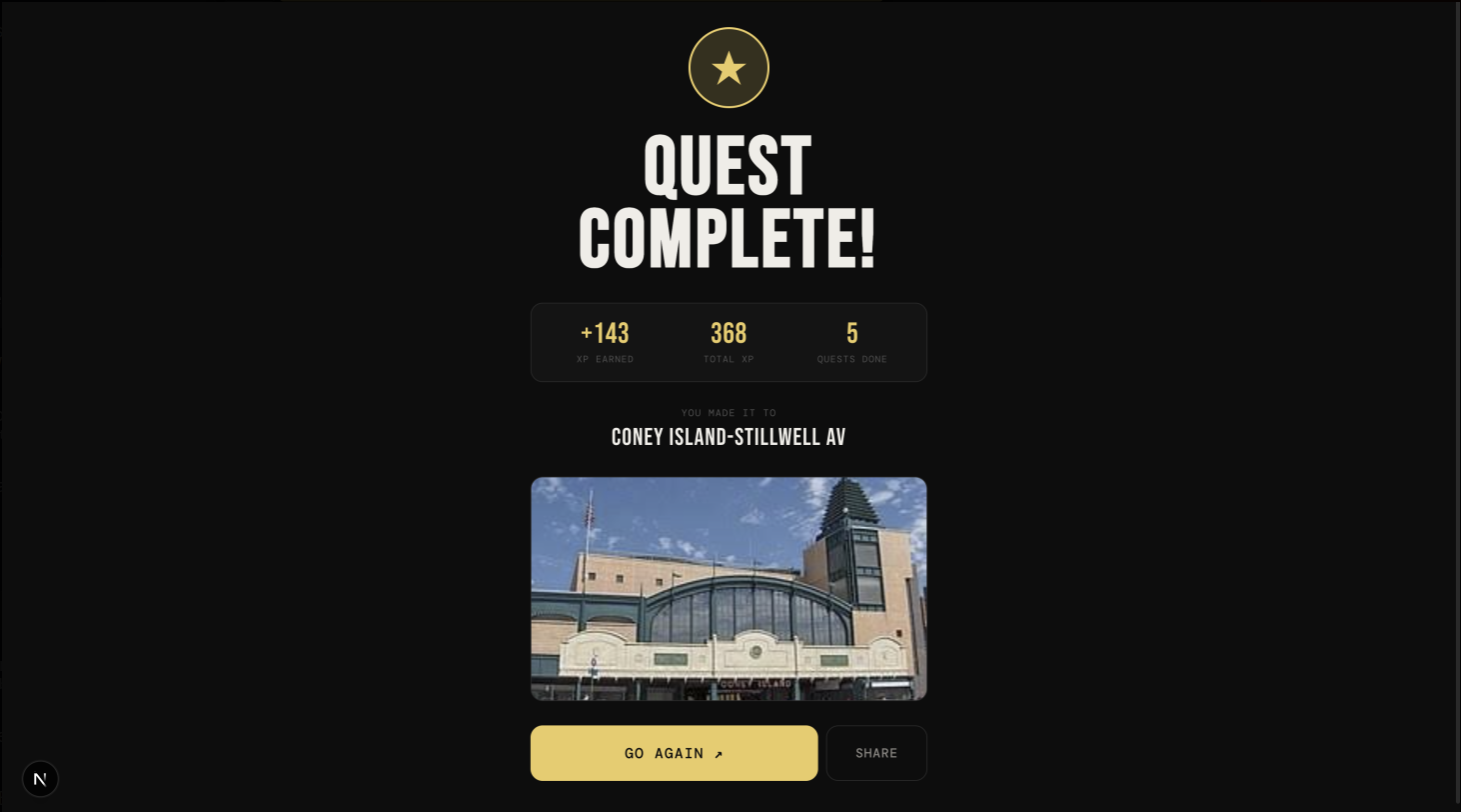
Once a person submits their photo for verification and it passes through, the user gains xp and updated stats are displayed.
Inspiration
New York City is a dense tapestry of history and hidden wonders, yet most people only see their commute. We wanted to recapture the magic of urban life by turning the city’s massive footprint into a playable map where every station tells a story.
What it does
Metro Quest gamifies exploration. With one tap, the app "drops" the user at a random subway station with specific transit directions. To encourage discovery, we provide a localized fun fact and a unique "Quest" that requires interacting with the surrounding neighborhood.
How we built it
We mapped the 472 MTA stations and paired them with a database of historical landmarks and cultural trivia. The core engine uses a randomization algorithm to select destinations, integrated with transit APIs to provide real-time routing for the user.
Challenges we ran into
The biggest hurdle was balancing randomness with accessibility—ensuring quests were exciting but achievable. We also had to curate meaningful data for hundreds of stations to ensure the "fun facts" felt authentic rather than generic.
Accomplishments that we're proud of
We successfully turned a utility (the subway) into an adventure. We’re proud of the seamless "Quest" generation that transforms a standard trip into a scavenger hunt, encouraging users to step outside their comfort zones.
What we learned
We discovered that the best way to fight "decision paralysis" is to take the choice away entirely. We also learned an incredible amount about NYC’s niche history—from Inwood’s ancient forests to the secrets of the G train.
What's next for Metro Quest
We plan to implement a social layer where users can earn XP, unlock digital badges, and compete on leaderboards. We also want to add "Seasonal Raids," where groups of users converge on a specific borough for a limited-time event.
Built With
- css
- google-maps
- html5
- huggingface
- javascript
- leaflet.js
- next.js
- node.js
- postgresql
- supabase
- tailwind
- typescript
- vercel

Log in or sign up for Devpost to join the conversation.