-
-
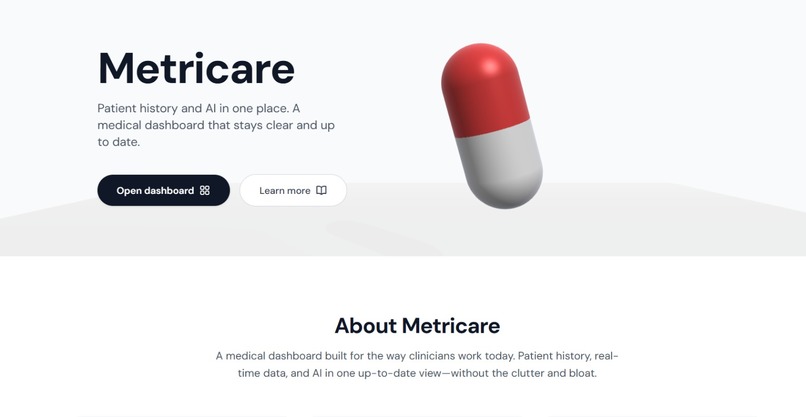
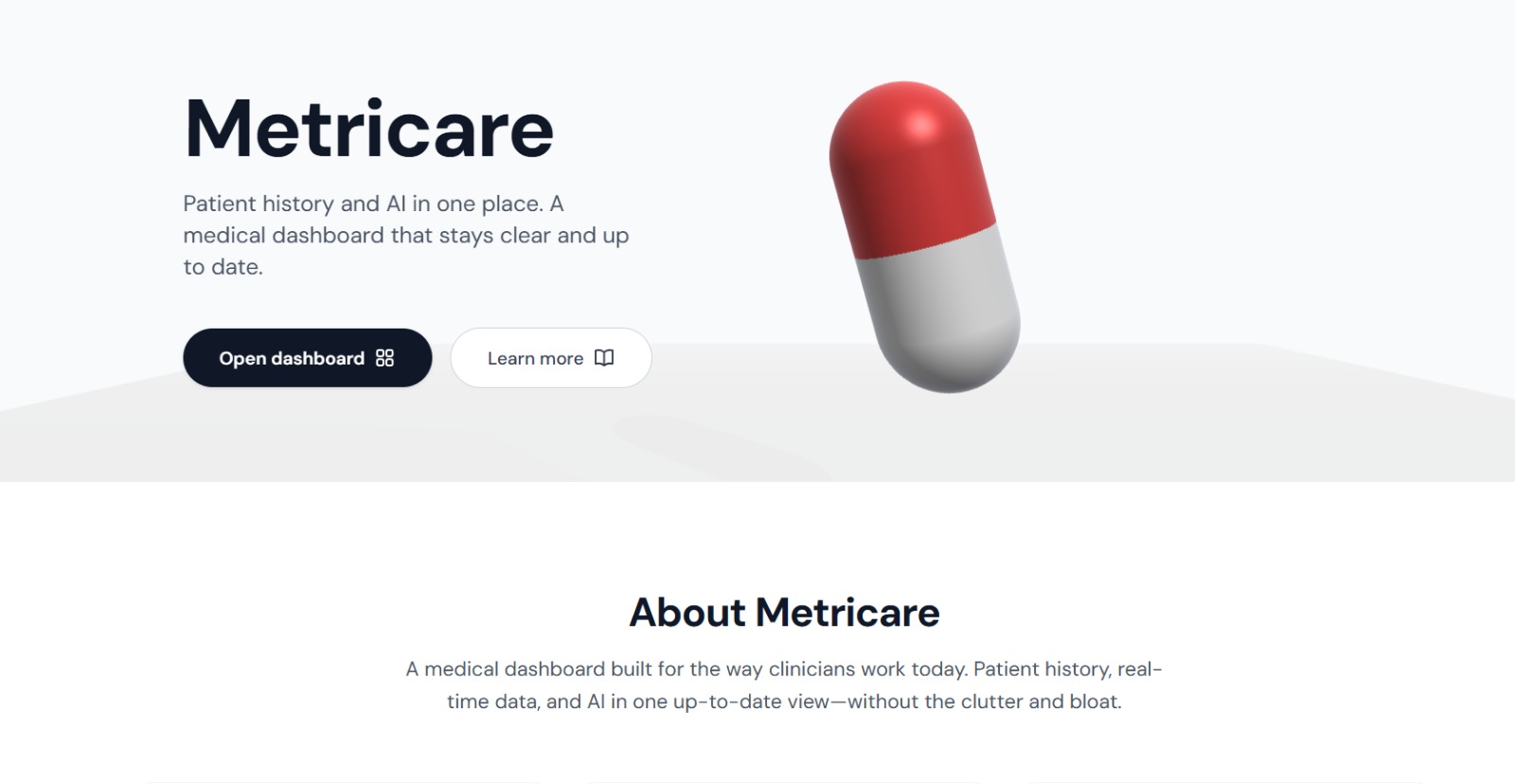
Landing Page
-
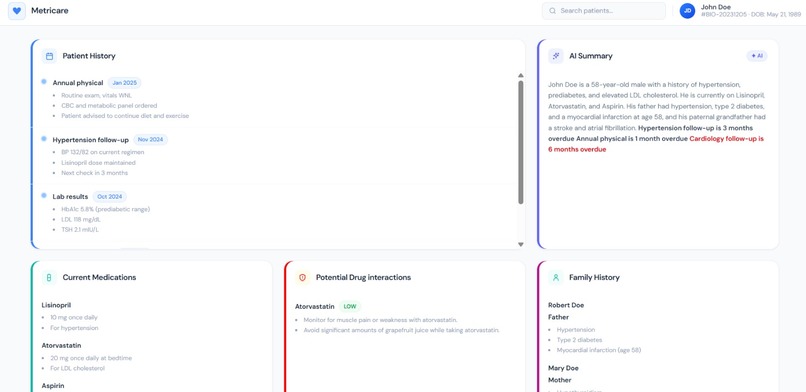
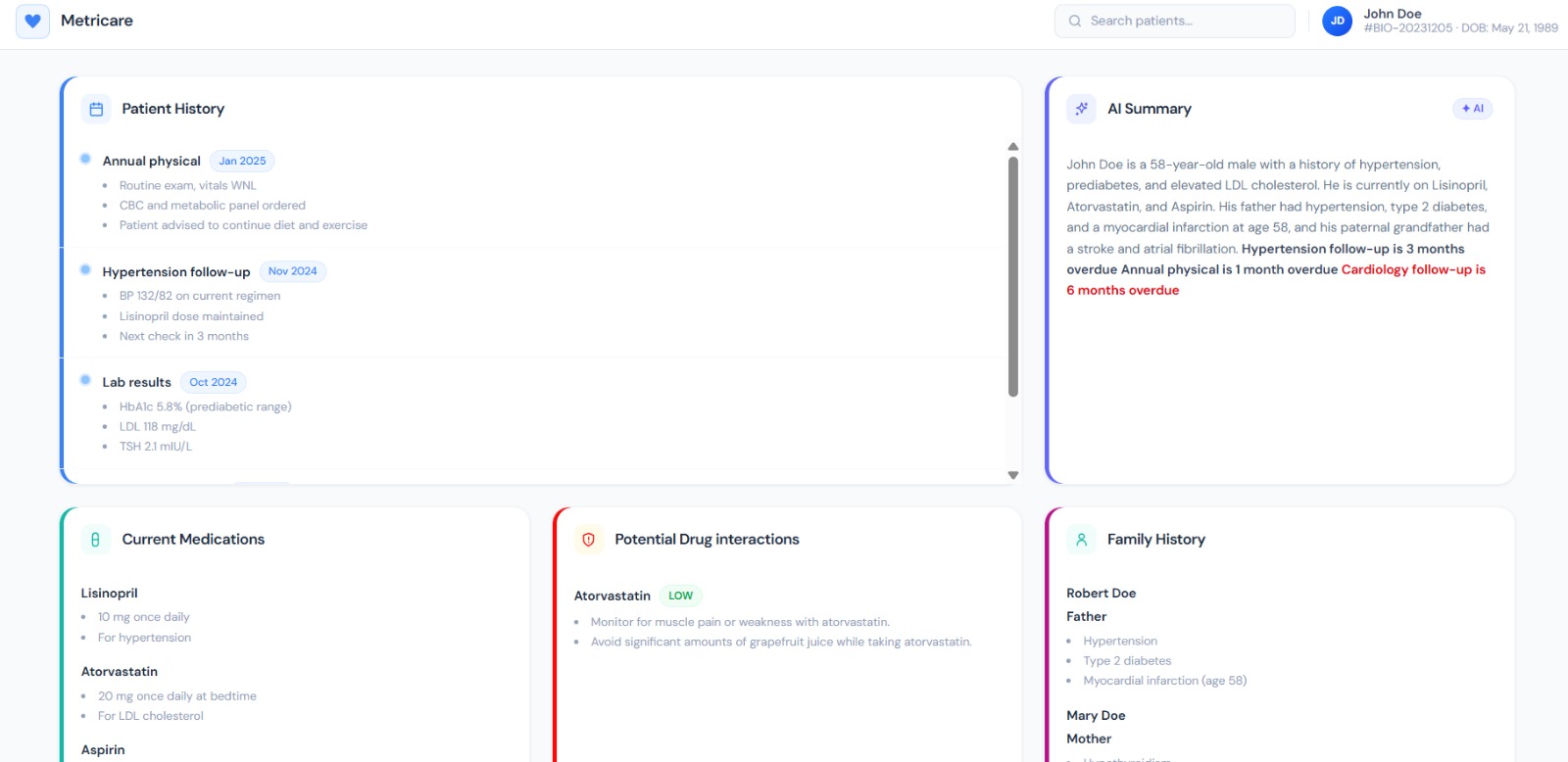
Dashboard
Inspiration
Clinicians today have access to more patient data than ever before, but it is often presented in cluttered, disorganised, and fragmented ways. Important information can be buried in long clinical notes, spread across multiple systems, or difficult to interpret quickly. This increases cognitive load, wastes valuable time, and raises the risk of missing critical details. We built Metricare to transform complex medical records into a clear, structured patient story, helping clinicians quickly understand what matters most and make safer decisions.
What it does
Metricare is a clinical dashboard that structures a patient’s medical history into a clear, chronological timeline and generates a concise summary of the patient’s most important information. It also presents medications, vitals, and lab results, automatically flagging abnormal or concerning values so clinicians can quickly identify risks. We incorporate a medication intelligence system that checks for drug–drug interactions, side effects, and contraindications, helping clinicians make safer prescribing decisions. A key strength of Metricare is that it is fully compatible with FHIR (Fast Healthcare Interoperability Resources), the global standard for healthcare data exchange. This allows Metricare to integrate seamlessly with existing electronic health record systems, ingest structured patient data securely, and work alongside current hospital infrastructure without requiring system replacement. All of this information is displayed in a streamlined, intuitive interface designed to save clinicians time, reduce burnout, and ensure that no critical patient information is overlooked.
How we built it
We built the application using Python, TypeScript, and FastAPI and we used Vercel and Render for hosting. The back-end contains sample data which structured to mirror real patient records. It is also set up to process data in an FHIR compatible way which would allow the application to be expanded to receive real patient information if connected to the Irish patient database. In addition, it connects to the openFDA drug database to retrieve detailed information about the medications a patient is taking. This data is processed, analysed, and prepared for presentation on the dashboard. We then use the Gemini API to generate structured clinical summaries, highlight key insights, and identify potential risks such as dangerous drug interactions or conflicts between medications and reported symptoms. All processed data is delivered to the front-end, where it is presented through a clean, visually appealing, and user-friendly dashboard designed for speed, clarity, and clinical usability.
## Challenges we ran into One of the main challenges was creating realistic, FHIR-compliant patient data, as we did not have access to real medical records. We had to design our own dataset that accurately reflected real clinical scenarios and covered a range of edge cases. We also found working with the FHIR standard challenging due to its complexity, particularly when parsing and structuring the data into a clear and meaningful timeline. Integrating external services such as the openFDA database and the Gemini API also required careful handling to ensure reliable data processing and secure system design.
Accomplishments that we're proud of
We are proud of building a fully functional clinical dashboard that can ingest structured patient data, generate clear summaries, and highlight key risks such as abnormal results and drug interactions. Successfully designing Metricare to be FHIR-compatible was a major achievement, as it ensures the system can integrate with real healthcare infrastructure. We are also proud of creating a clean, intuitive interface that makes complex medical information easier to understand, demonstrating the real potential of Metricare to improve clinical workflows and decision-making.
What we learned
Accessing health data proved more challenging than we initially expected. This highlighted how medical information is often fragmented, inefficiently organised, and difficult for clinicians to access. However, as we explored this further, we also recognised that privacy and security are critical considerations. There is a difficult but necessary balance between making data accessible for better care and protecting patient confidentiality.
What's next for Metricare
Metricare is currently not integrated with the official Irish FHIR database so the patient data that is available on the website is not real patient data. We would like to add the ability for clinicians to authenticate using the official Irish database of patient records and access real patient data. If we received approval from the official bodies to access their API this would be very easy to accomplish as we have already setup a sample API in our backend which is FHIR compliant and returns data in the same way as our sample file. As a result, all we would have to do is change this function to include an API key and change the server to access data from here instead of our sample data file. One concern we also acknowledge with the current edition of Metricare is the privacy concerns surrounding our use of the Gemini API to summarise patient history. One of our long term goals would be to host our own LLM which could be used to accomplish this while also preventing user data from being sent to a third party service. The Irish government is currently in the process of creating a "One Health Record" which would allow users to access their own personal health data and enable the sharing of health records seamlessly across all HSE services. This provides an excellent opportunity for Metricare to help patients in navigating and understanding complex medical histories. Finally, with access to a complete and accurate patient history, the summaries would be far more detailed and insightful, as they could draw on information from every previous visit — data that we currently do not yet have access to.
Built With
- djs3
- gemini
- openfda
- python
- typescript
- vercel


Log in or sign up for Devpost to join the conversation.