Inspiration
I kept running into the same problem while building agent systems. Agents can call tools easily, but the moment money is involved everything breaks down. Tool developers have to build custom billing, access control, retries, and accounting from scratch. Agents have no reliable way to know what a call costs or whether payment is enforced fairly.
I wanted to make monetization native to MCP, not something bolted on later. If agents are going to transact autonomously, payment needs to be a first class primitive.
What it does
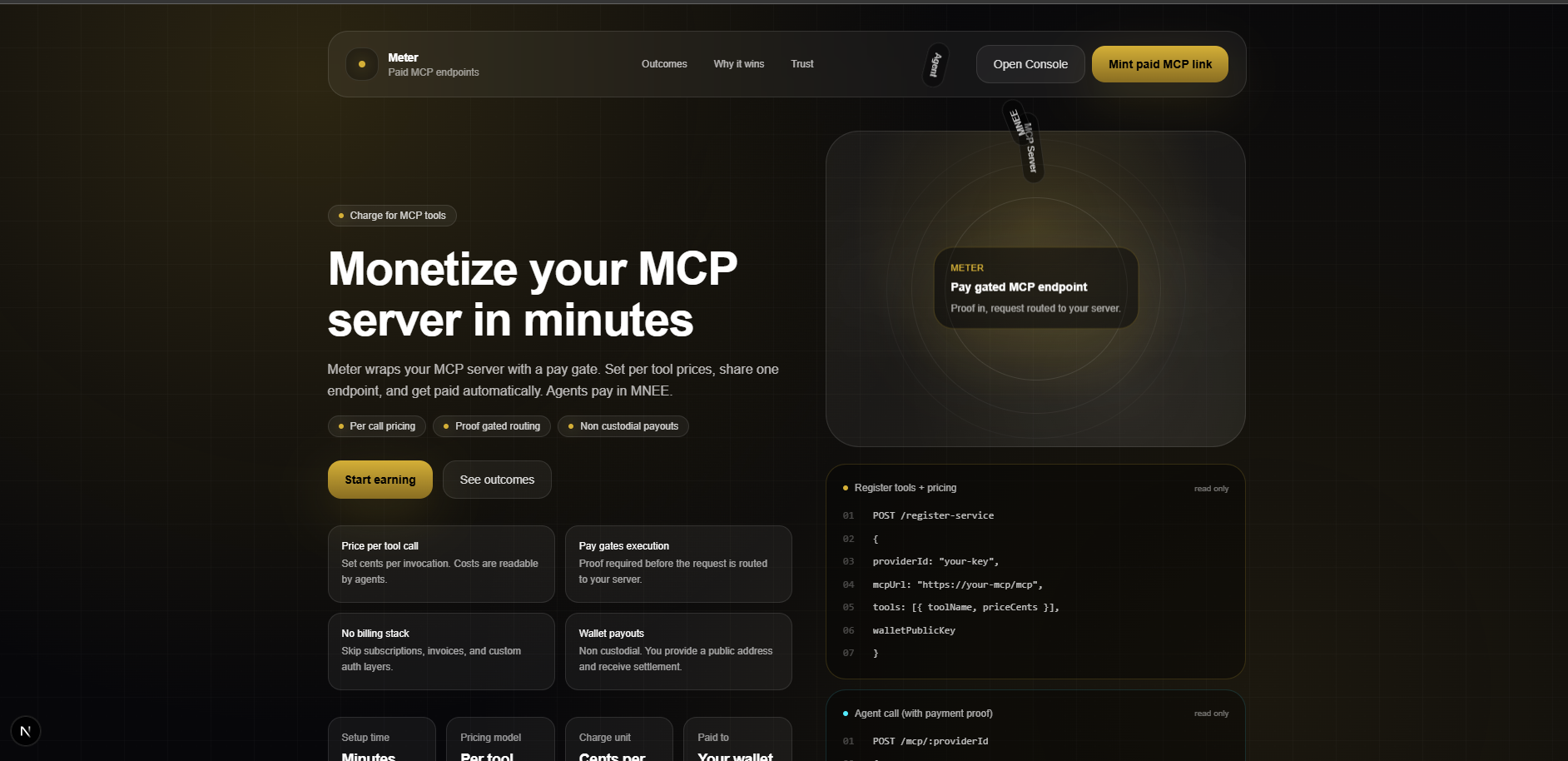
Meter turns any MCP server into a paid endpoint.
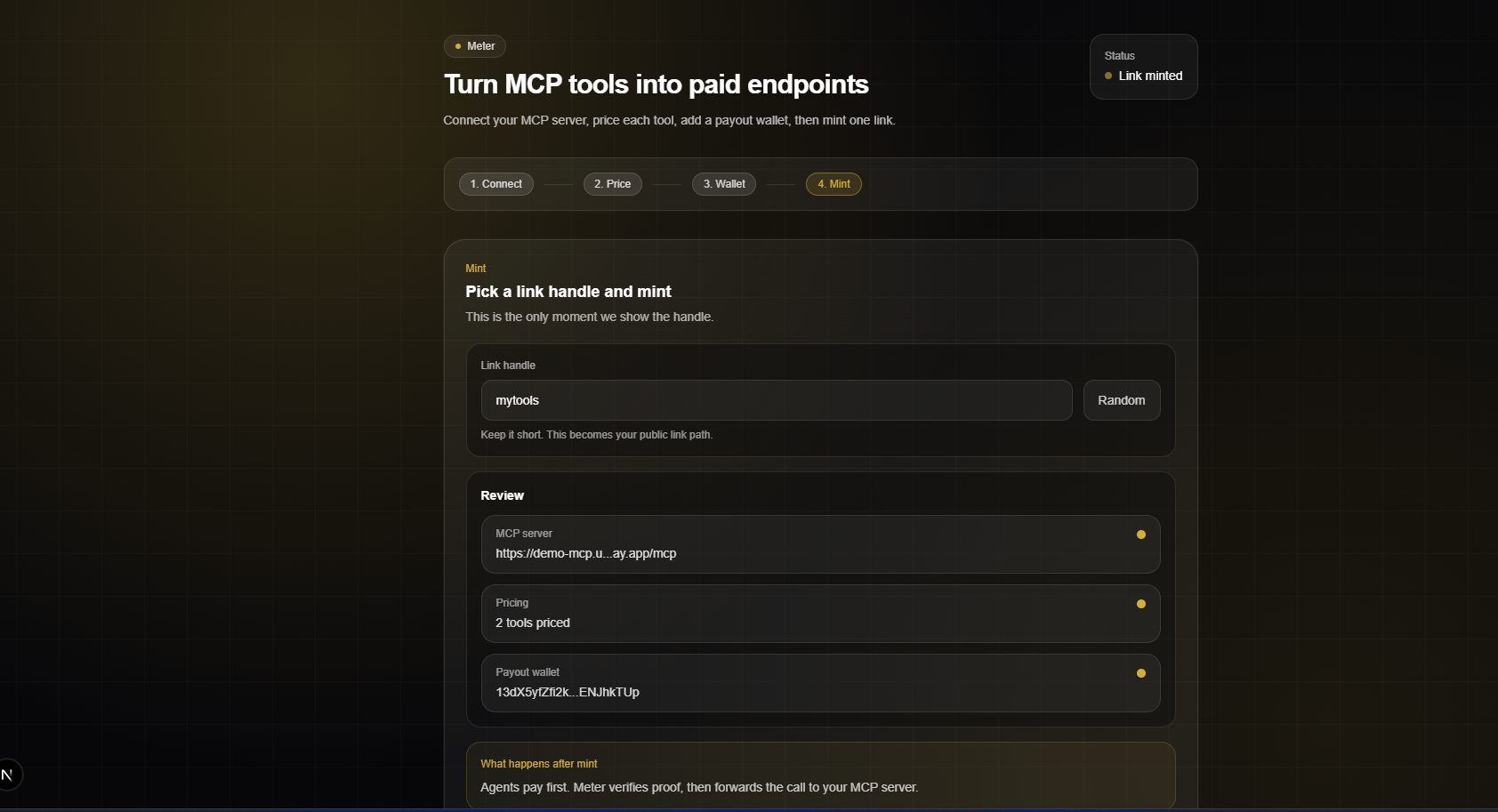
I register an MCP server, set per tool pricing in cents, and provide a public wallet address. Meter wraps the server with a pay gate so agents must include payment proof before a request is executed.
Agents pay per tool call in MNEE. Payment is verified first, then the request is routed to the existing MCP server. Settlement goes directly to the provider wallet with no custody and no billing stack.
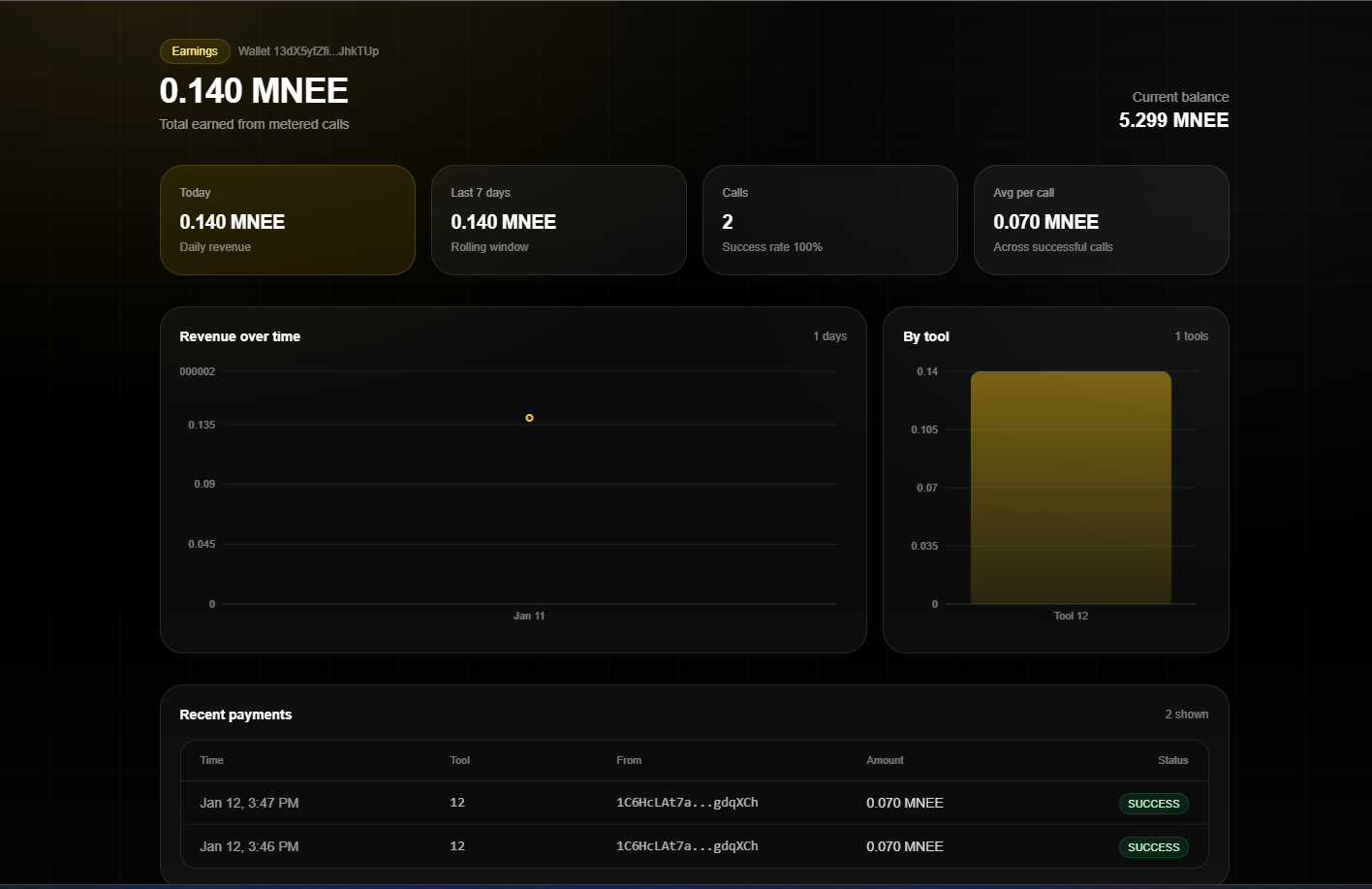
Meter also provides real time analytics showing usage, revenue, and wallet balance.
How I built it
I built Meter as a lightweight gateway in front of MCP servers.
On the backend, I created endpoints to register providers, tools, and pricing, enforce proof gated routing, and record payments. Payments are persisted with provider, tool, amount, proof, and status.
I integrated the MNEE SDK to fetch real wallet balances and verify settlement. The frontend is built with Next.js and Tailwind, focusing on a clean, infrastructure style UI. The Analyze page aggregates payments, computes revenue metrics, and visualizes usage over time.
The MCP server itself remains unchanged. Meter only acts as the gate.
Challenges I ran into
The hardest challenge was designing the flow so payment enforcement did not interfere with MCP semantics. Proof verification had to happen before execution without leaking complexity into the tool implementation.
Another challenge was making the analytics trustworthy. All numbers needed to line up perfectly between tool calls, payments, and wallet balances. Any inconsistency would immediately undermine credibility.
I also had to be careful with scope. This was built in a short hackathon window, so I focused on making the core payment primitive rock solid instead of adding features.
Accomplishments that I am proud of
I built a full end to end system that demonstrates real agent payments using MNEE.
I am especially proud of the Analyze dashboard. It shows real earnings, per tool usage, success rates, and live wallet balance fetched from chain data. Nothing is mocked.
I also kept the design minimal and calm. Meter feels like infrastructure, not a demo toy.
What I learned
I learned that payment primitives need to be boring and predictable to be powerful. The simpler the rule, pay first then execute, the easier it is for agents and providers to reason about behavior.
I also learned how important trust signals are in financial systems. Clean UI, consistent numbers, and clear flows matter as much as code.
What is next for Meter
Next, I want to support multiple providers, richer agent level analytics, and exportable usage data.
I also want to add on chain verification hooks and make deployment fully self service so any MCP provider can mint a paid endpoint without manual setup.
Long term, I see Meter as core infrastructure for agent to agent commerce.
Built With
- express.js
- langchain
- mcp
- mnee
- nextjs
- postgresql
- prisma
- tailwind

Log in or sign up for Devpost to join the conversation.