-
-
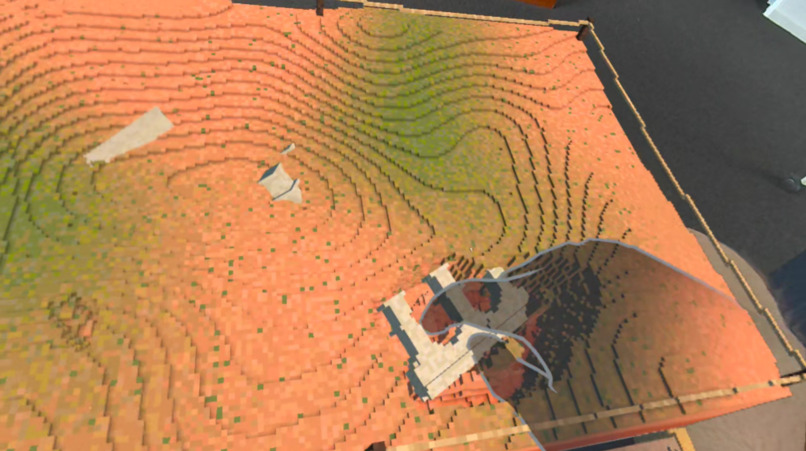
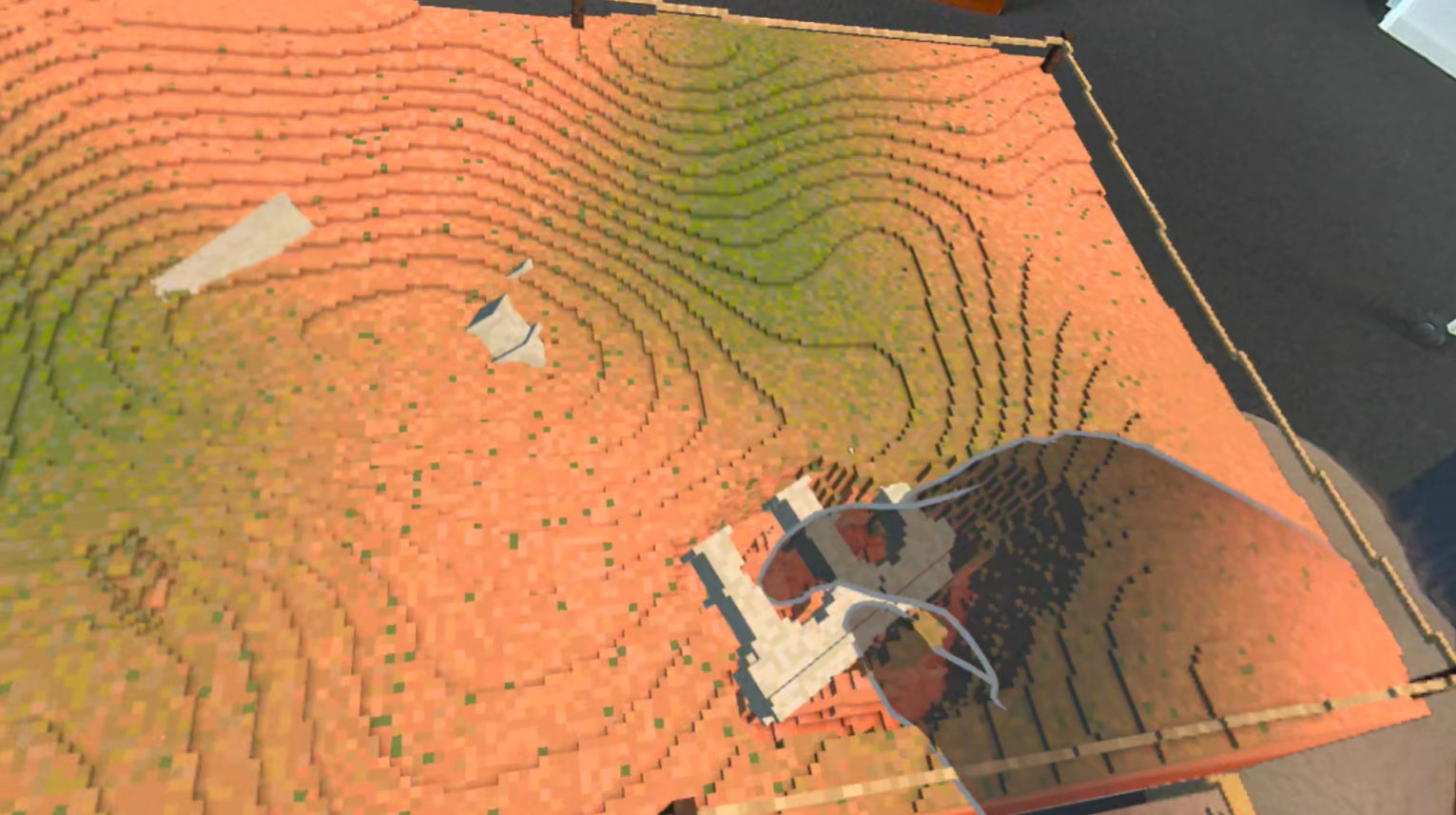
Use your hands to dig up ruins
-
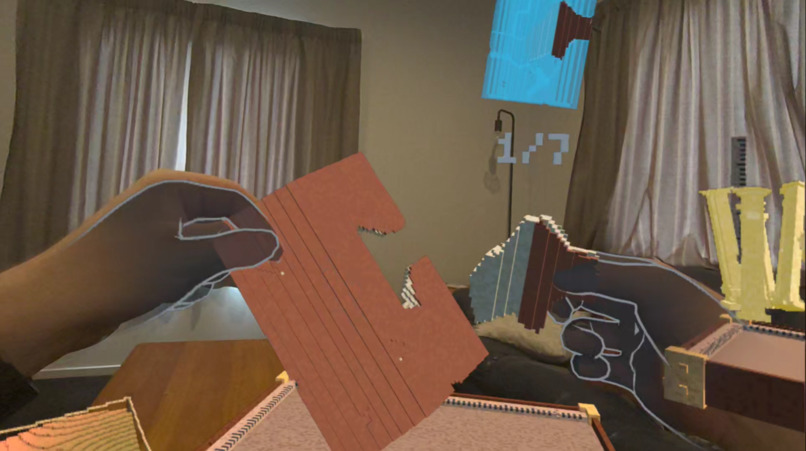
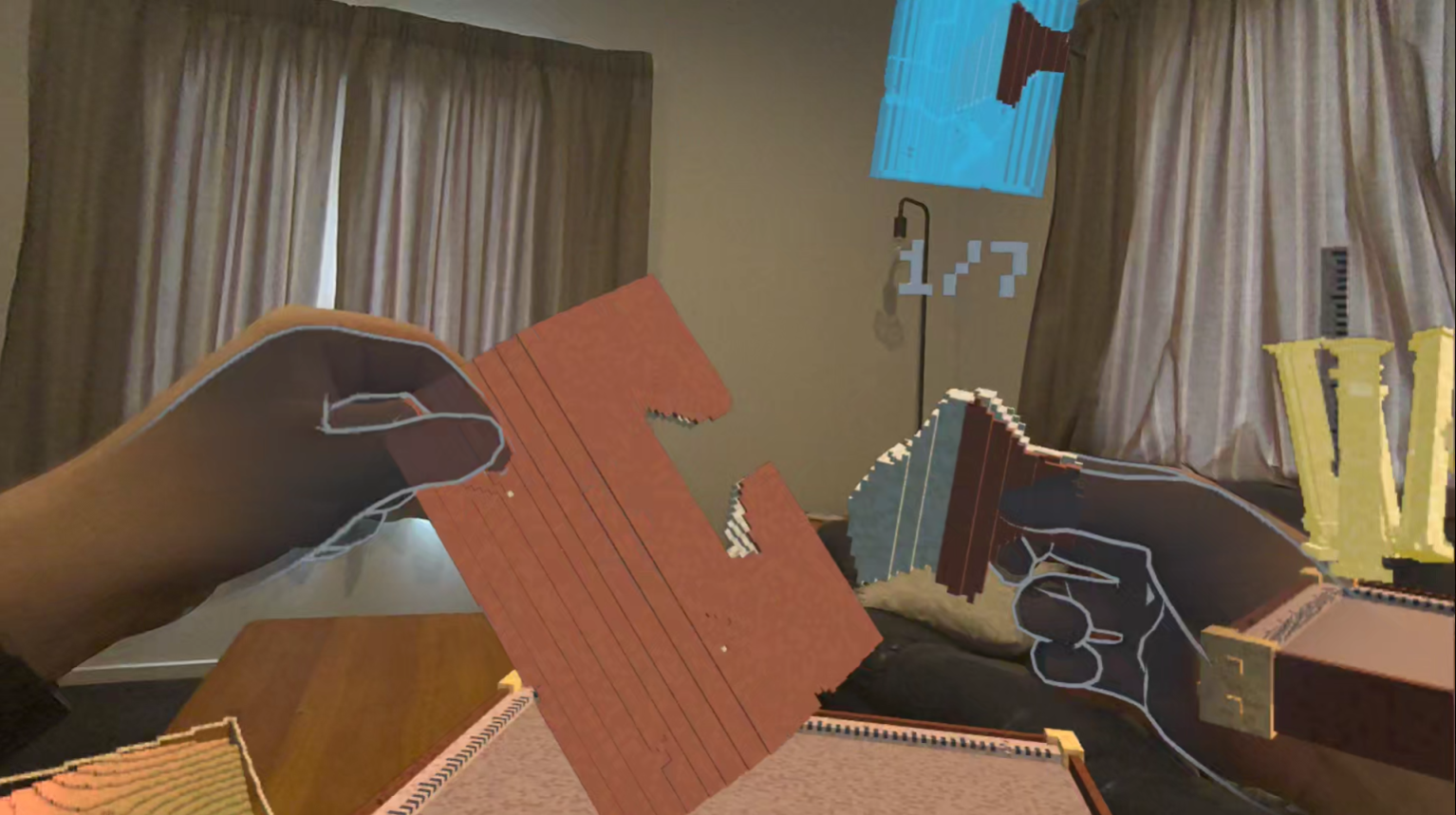
Solve how parts go back togeather
-
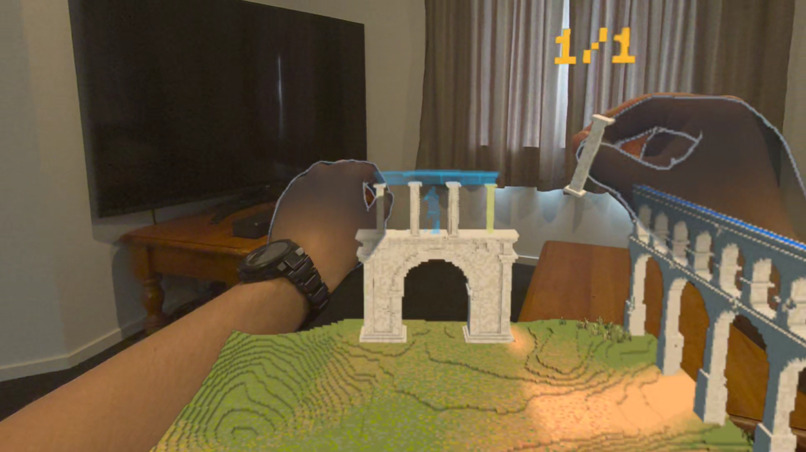
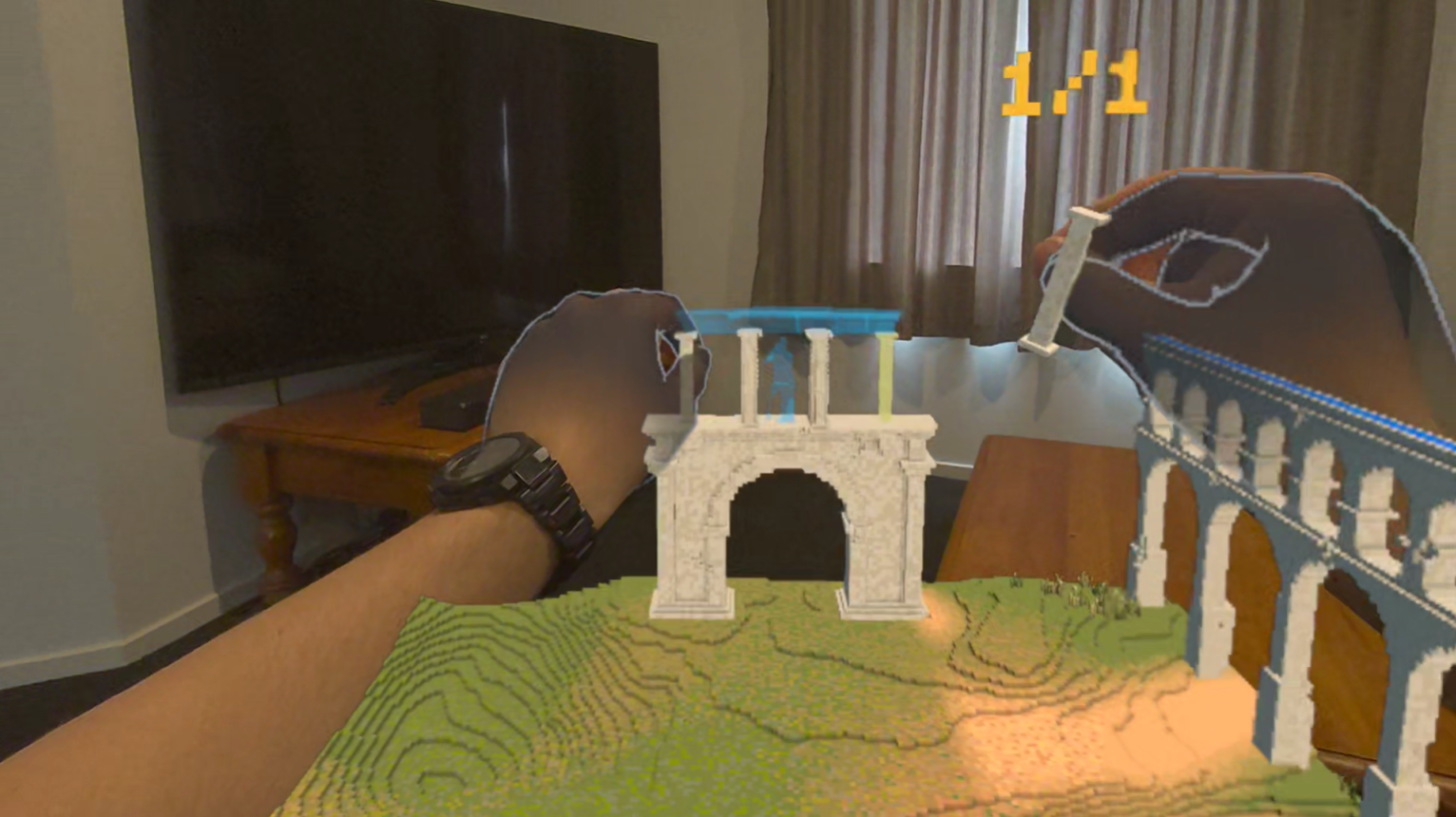
Restore ancient structures to see what they once were
-
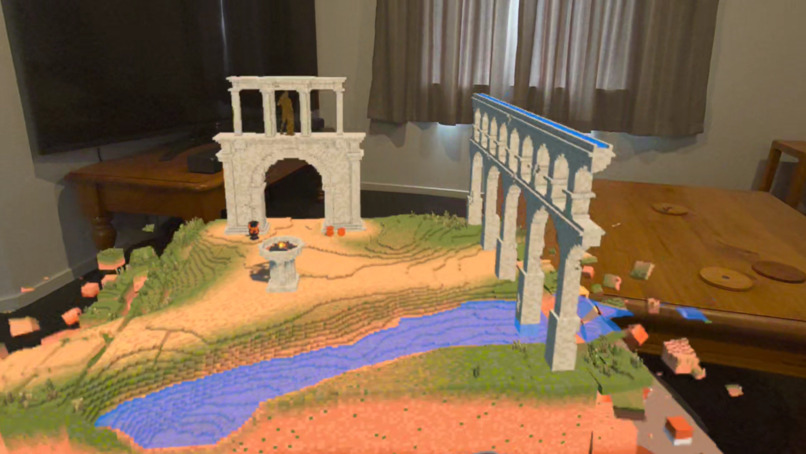
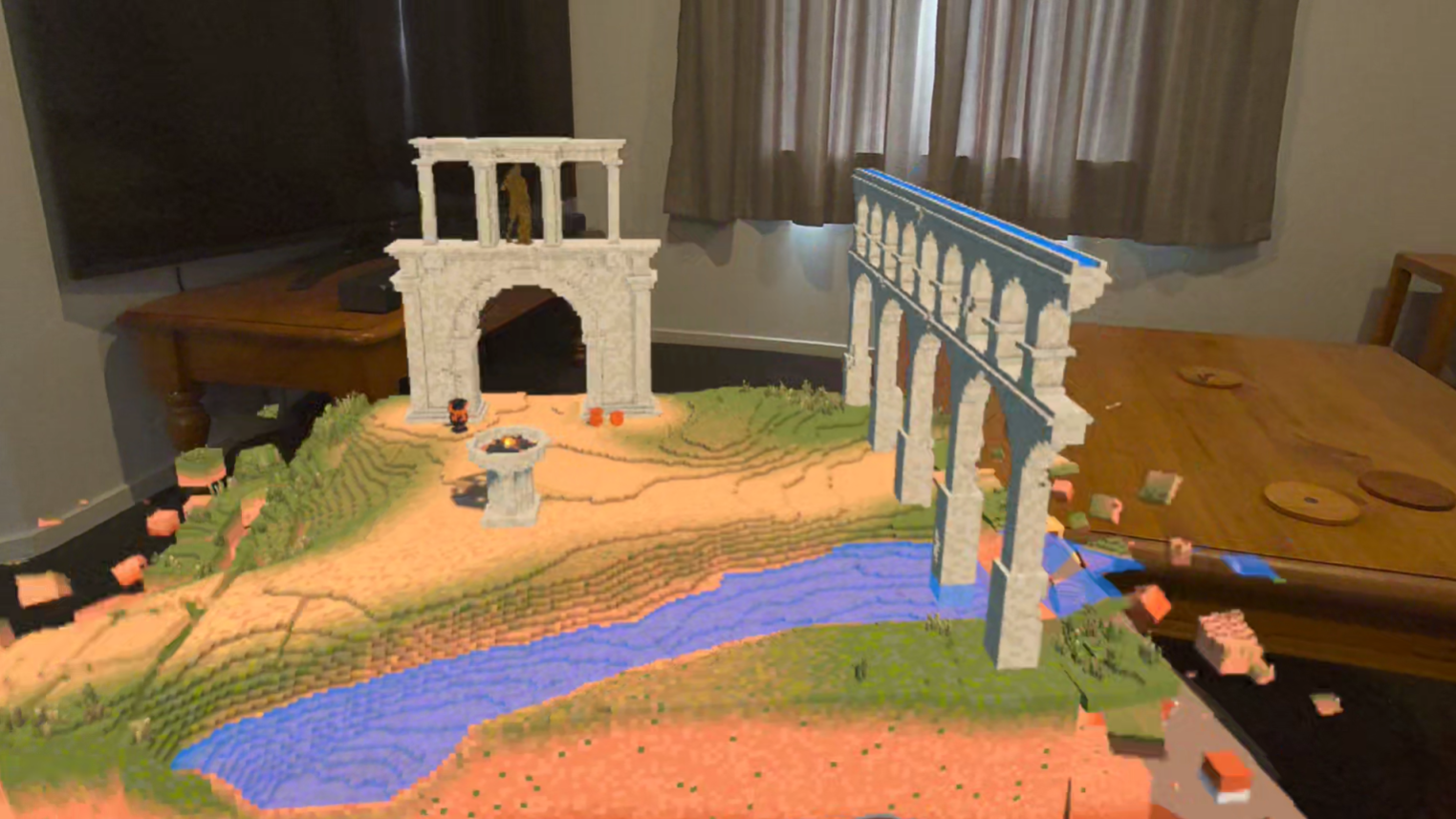
Explore the world you rebuilt
Inspiration
We were inspired by real-life archaeology and the stories behind the ruins that have been discovered from ancient times. Whether people are into history or not, we wanted to give them a way to interact with the world of archaeology in a fun and unique way. Inspired by jigsaw puzzles and the satisfying building process of LEGO, we wanted to combine both of these into a game that makes discovering and rebuilding ancient ruins an enjoyable experience.
What it does
Strata is a mixed-reality archaeology game that can be picked up and put down whenever, allowing players to make progress at their own pace. Players dig through the ground with their fingers, pull out buried pieces, and work out how they fit back together to rebuild ancient structures. Each restored structure unlocks props to decorate the world with, and trays help players organize their pieces. Much like a jigsaw in the living room that you chip away at every now and then, players can spend as little or as much time as they like rebuilding ancient ruins, with their progress saved between sessions. By using passthrough, Strata doesn’t take the player’s full attention, so it’s easy to play in shared spaces like the living room or on the bus. Players don’t need to set aside time to play. They can simply come back to their excavation whenever they have a spare moment.
How we built it
We started development on October 13th, giving just one developer and one artist only 4 weeks to build the game in Unity and Blender. To get a head start, we took the procedural voxel terrain and destruction code from an old scrapped project and reworked it for VR. We also built our own tools to turn custom models into voxel assets for the game. We used the Meta XR SDK for hand tracking and passthrough. A big part of development went into optimizing the voxels and destruction to run smoothly in VR on Quest, while polishing the assets and scenes to give the world more character. The rest went into fine-tuning the grab and build mechanics so they feel fun and intuitive.
Challenges we ran into
One of our main challenges was finding a reliable way to turn 3D models into voxelized models that could be used in the game. Working with voxels also meant finding the right balance between voxel size and detail while keeping performance smooth on Quest. Digging constantly reshapes the terrain, and overhangs in particular added extra faces and shadows that hurt performance. To solve this, we added falling sand physics so that unsupported sand collapses instead of leaving overhangs. This kept the face count down and let us remove the shadows. During playtesting, we also found that players loved the feel of the sand collapsing as they dug, which was a nice bonus.
Accomplishments that we're proud of
We’re proud to have created a cohesive archaeology experience in just 4 weeks that playtesters didn’t want to stop playing, well beyond the 15 minutes we asked them to play. Using you fingers to dig, watching the sand collapse and clicking pieces back together all feel satisfying.
What we learned
We learned that the best way to teach an interaction is to let players find it on their own. Symbols on handles and sliders make players assume there must be an interaction, rather than thinking they’re just decoration. Simple actions also lead into new ones: joining two pieces already puts the player’s hands in position to twist parts, so they discover new mechanics just by playing. We kept just a couple of short animated hints to get brand-new players started. After that, players learn at their own pace without being overwhelmed.
What's next for Strata
- More levels themed around ancient civilizations like ancient Egypt or the Aztecs along with potential DLC content.
- Upgrades to the customization after completing a level, allowing players to customize the world to their liking.
- Different materials in the terrain requiring new interactions to dig up the artifacts
- We have started discussions with a local museum about creating an educational version of the game where people can learn about the structures they're rebuilding.


