-
-
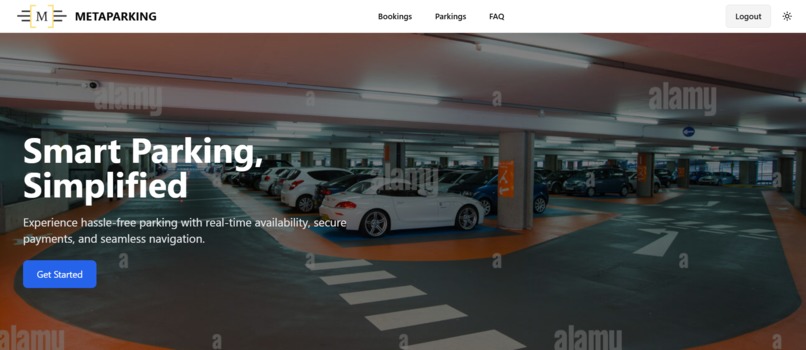
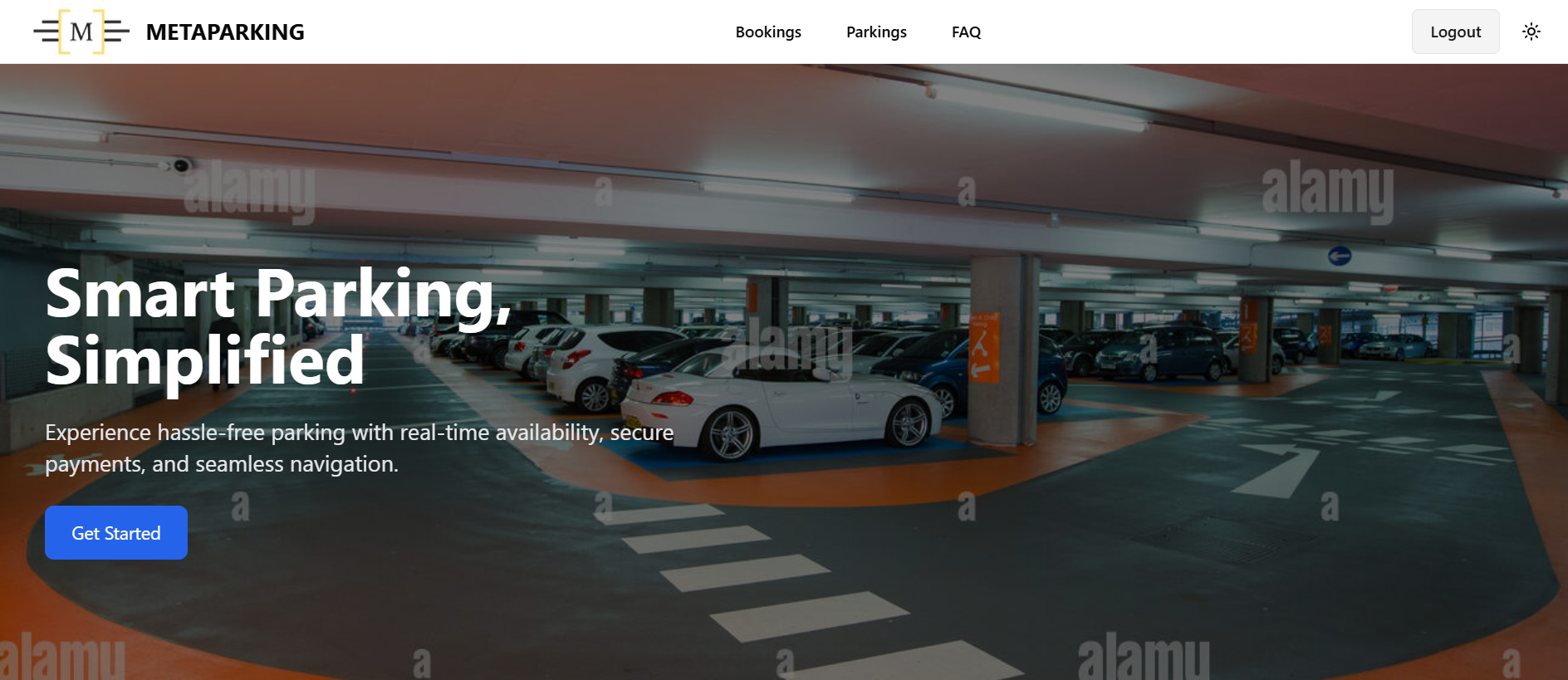
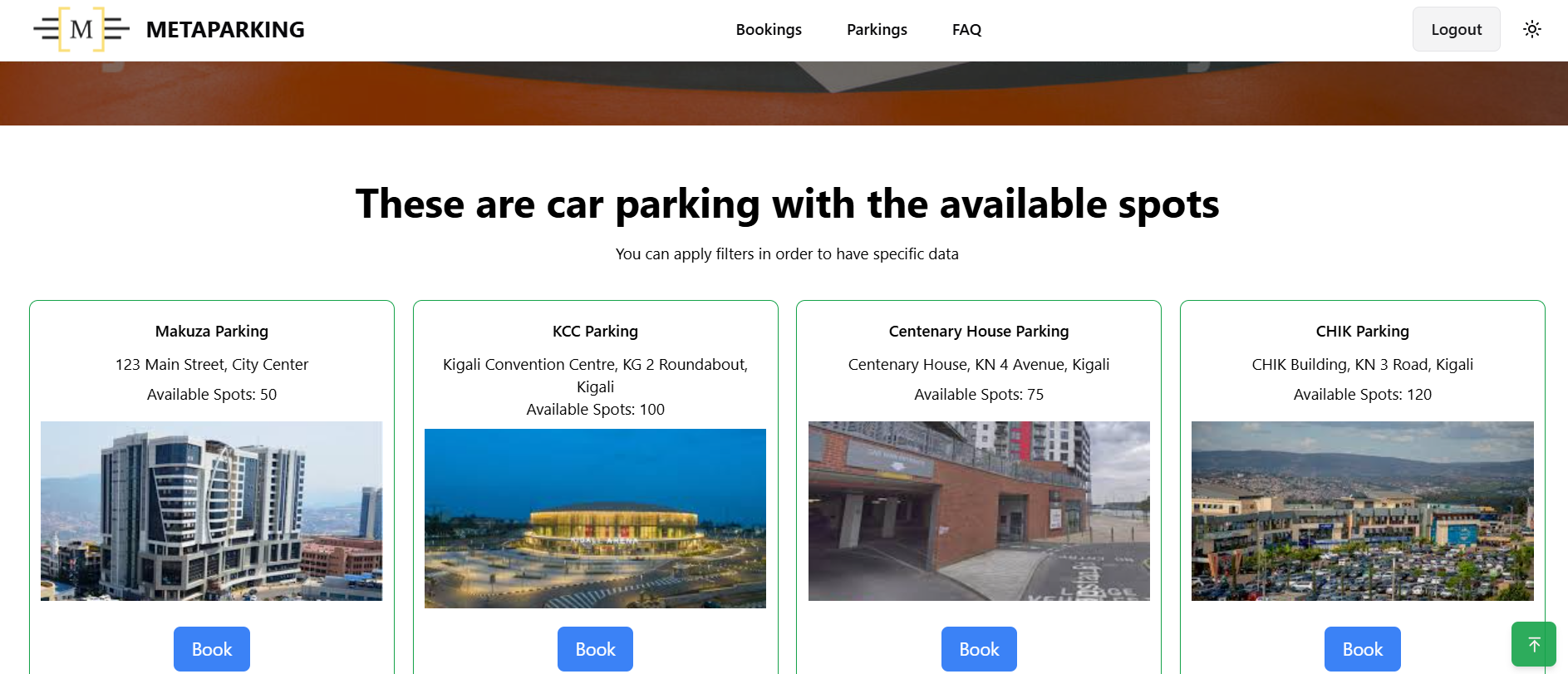
Landing apage
-
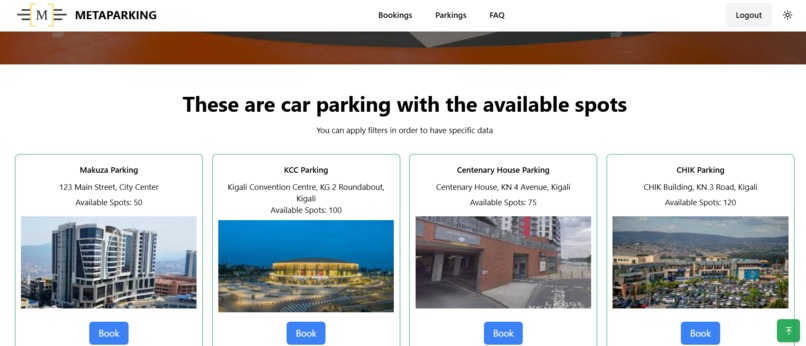
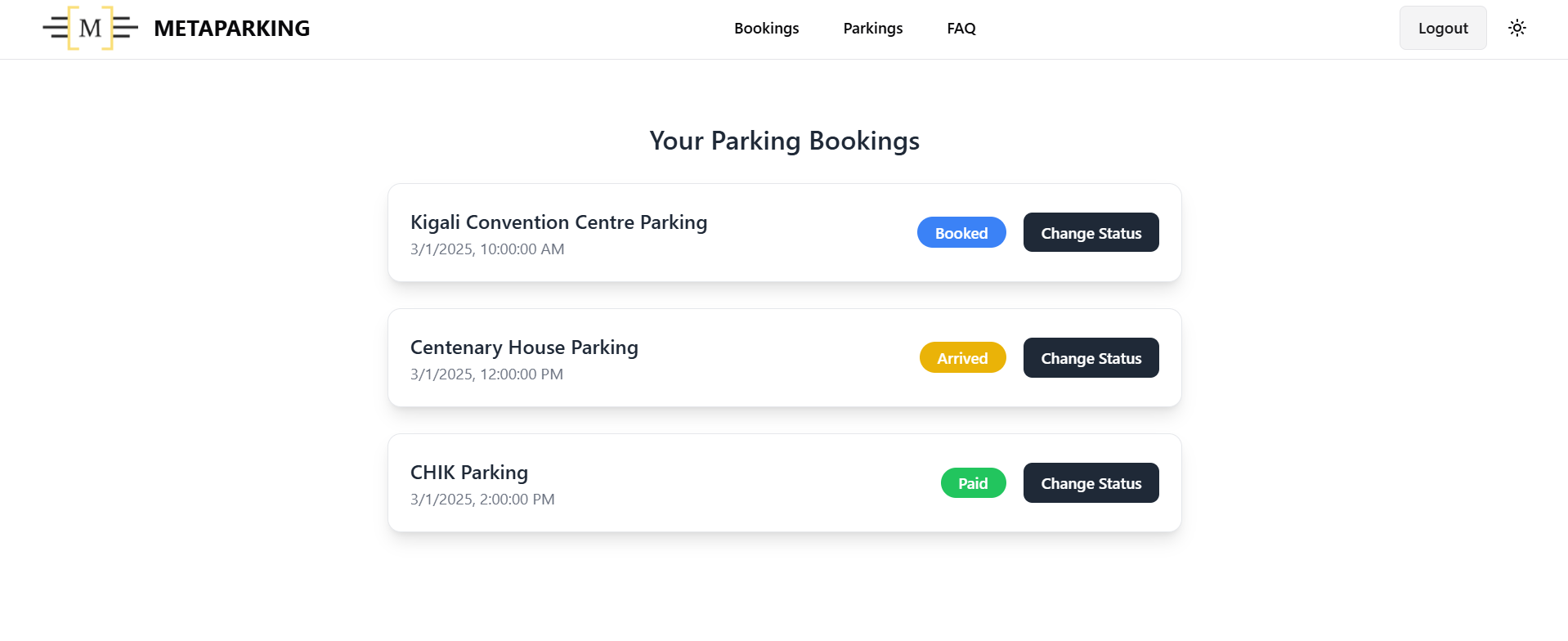
Booking slot
-
METAPARKING: Project Story
Inspiration
The idea for METAPARKING emerged from the growing frustration many people experience when trying to find parking in busy urban areas. As cities grow and car ownership rises, parking spaces become more scarce, leading to traffic congestion and wasted time. Inspired by the need for a smarter, more efficient way to handle parking, we decided to create an app that would provide real-time parking spot availability, allow reservations, and simplify the parking process. The goal was to use technology to reduce stress, save time, and improve the overall urban experience for drivers.
What it does
METAPARKING is a mobile app designed to help users easily find and reserve parking spaces in crowded urban areas. Key features include:
- Real-Time Availability: The app shows available parking spots in real-time, giving users an up-to-date view of parking options.
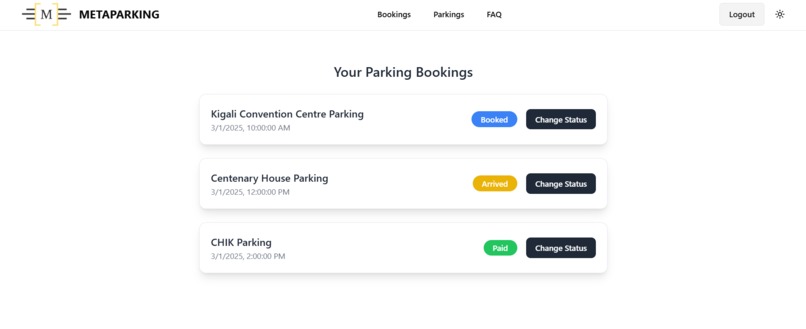
- Reservation System: Users can reserve a spot ahead of time, ensuring they have a space when they arrive.
- Geolocation: Integrated with Google Maps, the app provides navigation to available parking spots, making it easier for users to find them.
- Payment Integration: Users can make payments directly through the app for a seamless experience.
- User Profiles: Each user can manage their parking history, payments, and preferences.
How we built it
Backend Development:
- We used Node.js with Express for the backend, handling all API requests related to parking spot data, reservations, and user profiles.
- PostgreSQL was used to store parking spot data, reservations, user information, and transaction history.
- WebSockets were implemented to provide real-time updates on parking availability.
Frontend Development:
- The app was built using React Native to create a cross-platform solution for iOS and Android.
- Integrated with Google Maps API for real-time location tracking and navigation to parking spots.
- The app's interface was designed to be user-friendly, allowing users to easily search for parking spots and make reservations.
Payment Integration:
- Stripe/PayPal was integrated to handle payments securely, ensuring a smooth checkout experience for users when they reserve a parking spot.
Testing and Debugging:
- Extensive testing was done on both the frontend and backend to ensure the system was reliable, scalable, and bug-free.
Challenges we ran into
Real-Time Data Syncing:
- Ensuring that parking spot availability updates in real-time across multiple devices posed a challenge. WebSockets were used to achieve synchronization, but handling data consistency across users required careful management.
Payment System Integration:
- Integrating third-party payment systems (Stripe/PayPal) presented some challenges with API security and ensuring smooth payment processing.
GPS Accuracy and Battery Consumption:
- GPS tracking, essential for geolocation services, often faced challenges with accuracy and high battery consumption, especially in areas with poor signal reception.
User Experience:
- Balancing functionality with simplicity was difficult. We needed to make the app intuitive, while also providing all the necessary features without overwhelming the user.
Accomplishments that we're proud of
- Successfully implementing real-time parking spot availability updates using WebSockets.
- Building a robust reservation and payment system that allows users to securely book and pay for parking spots through the app.
- Integrating geolocation services with Google Maps, providing an easy-to-use navigation experience for drivers.
- Creating an app with a smooth and responsive user interface, with a focus on simplicity and ease of use.
What we learned
- The importance of real-time data synchronization and how WebSockets can be effectively used to keep data updated across multiple devices.
- How to handle complex payment systems and ensure security when processing transactions.
- The challenges of integrating GPS and location services, especially when balancing accuracy with battery efficiency.
- How to design and develop a mobile app that provides value to users while maintaining an intuitive user experience.
What's next for METAPARKING
- Expansion to More Cities: We plan to expand METAPARKING to cover more cities, making it easier for drivers in different regions to find parking.
- Parking Spot Analytics: We aim to add analytics features that provide users with insights on the best times to park, based on historical data.
- AI-Powered Parking Assistance: Future versions of the app could leverage AI to predict parking availability and suggest the best spots based on user preferences and traffic data.
- Collaborations with Parking Providers: We plan to partner with parking garages and providers to offer even more parking options and streamline the reservation process.

Log in or sign up for Devpost to join the conversation.