-
-
MetalCraft Logo
-
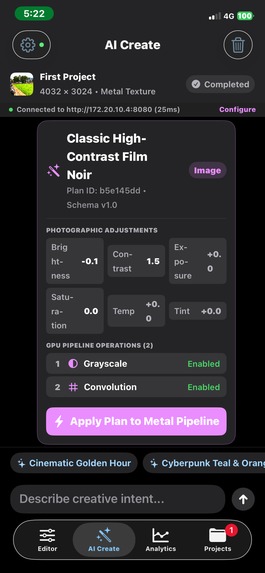
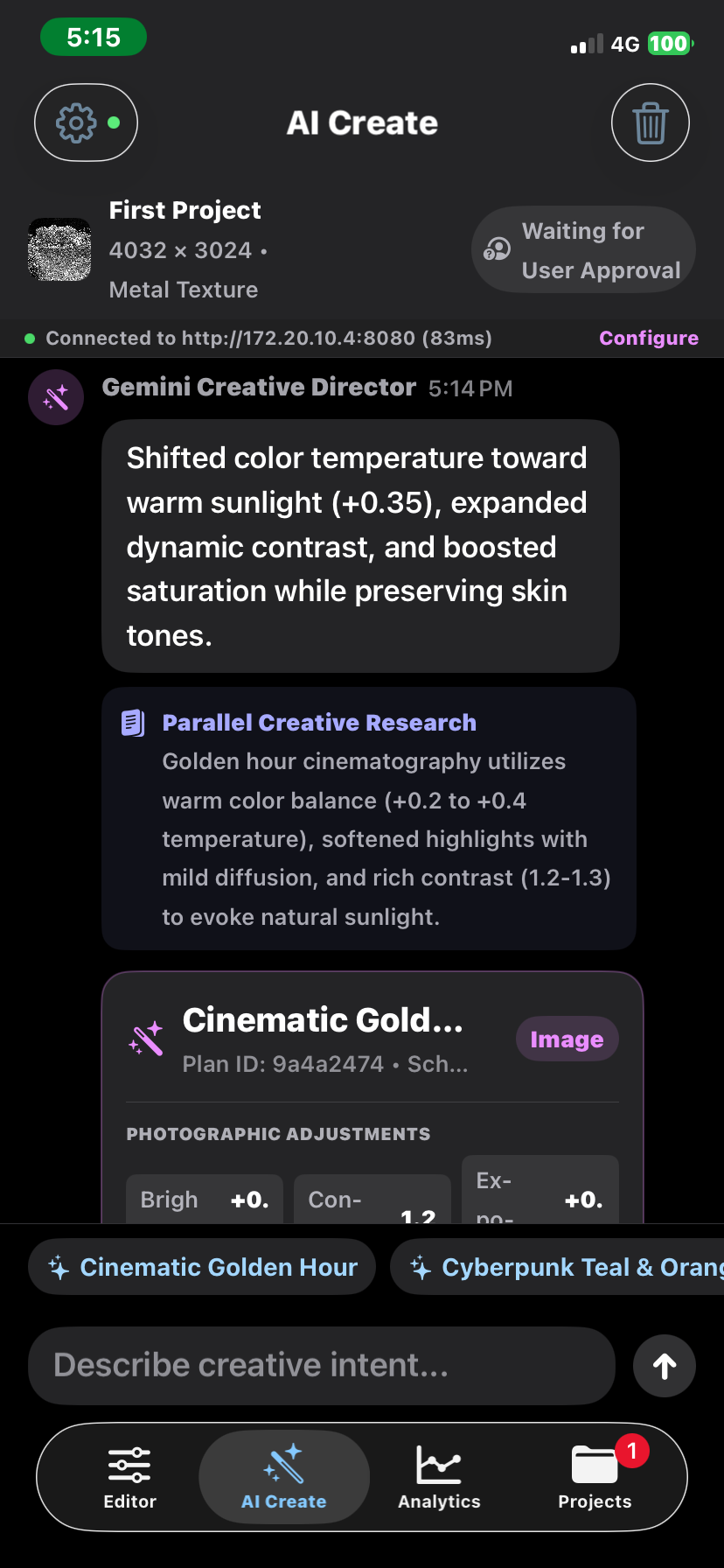
Gemini + Parallel gives EditPlan
-
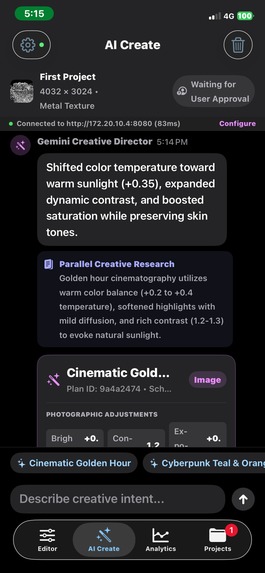
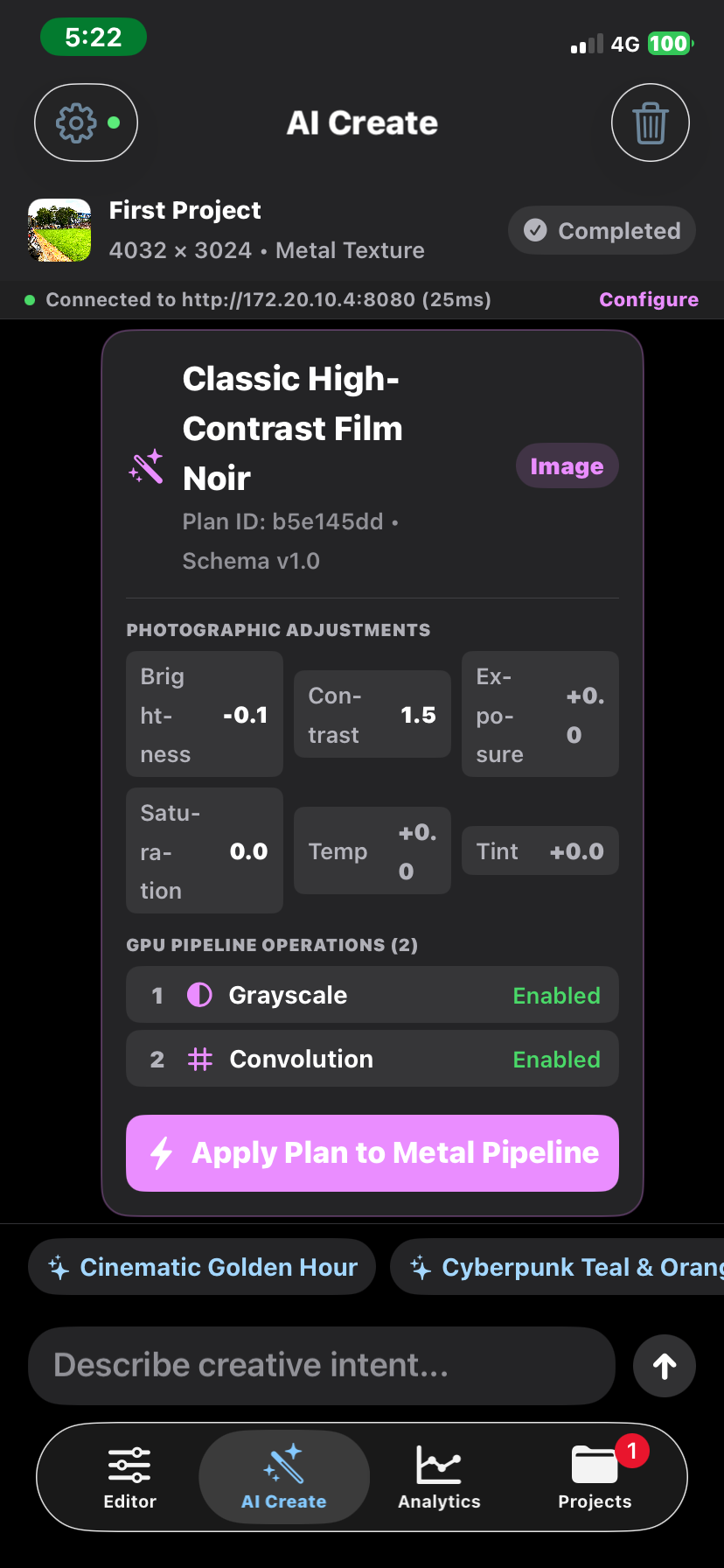
AI Edit Section
-
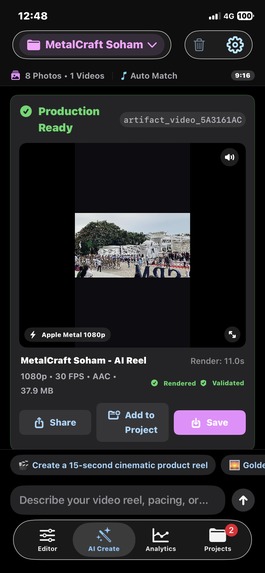
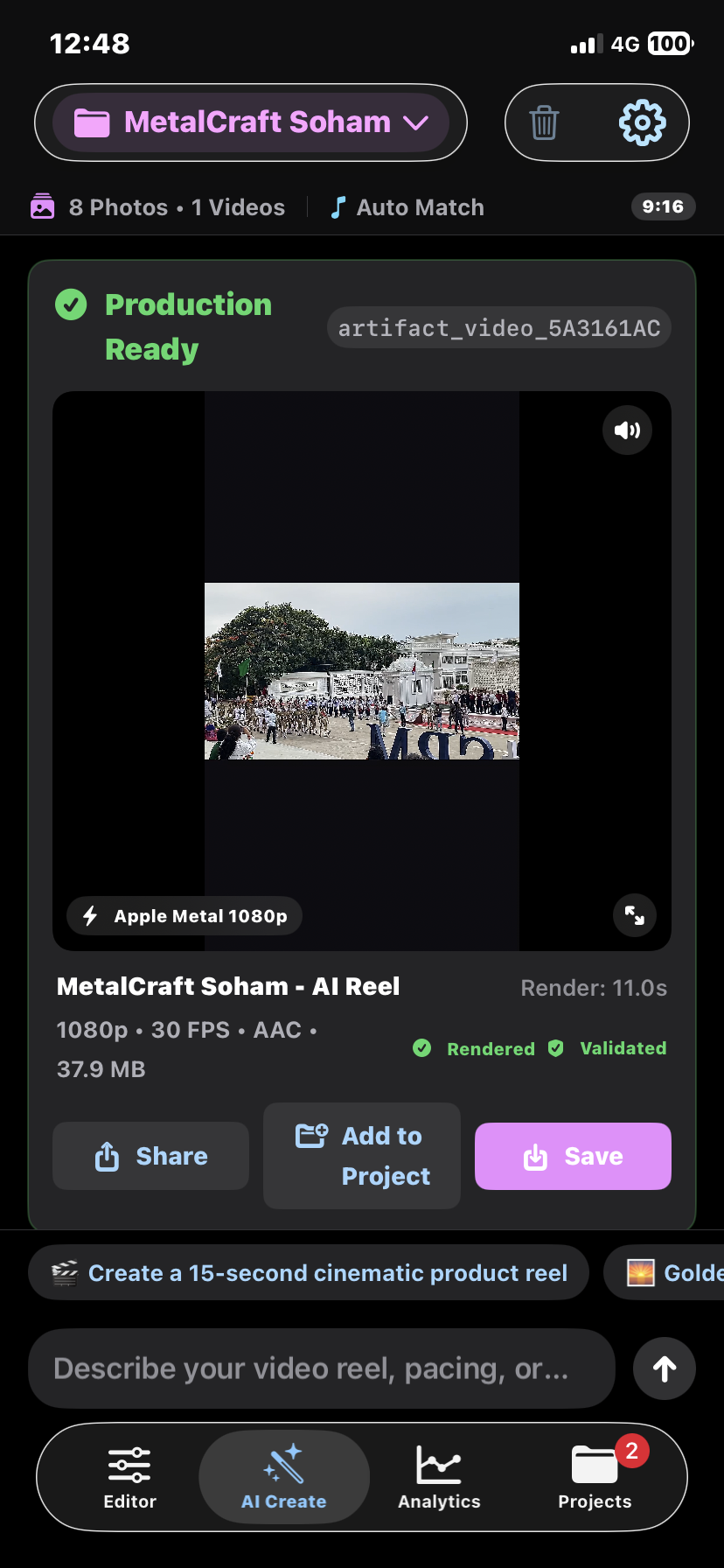
Video editor
-
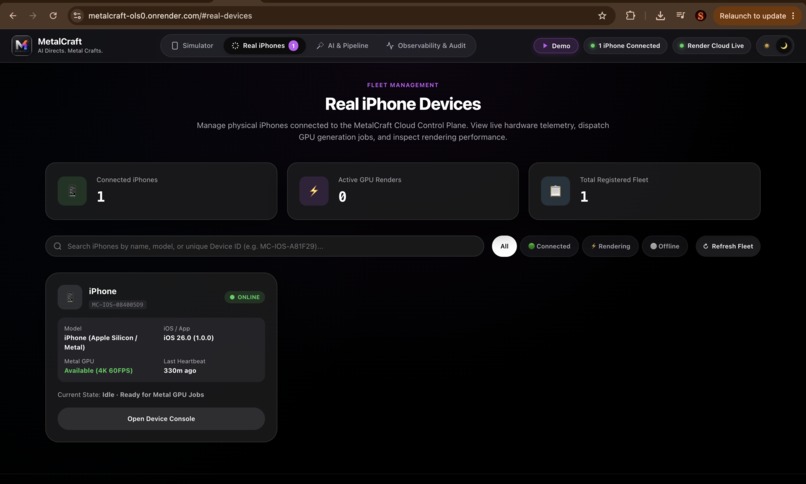
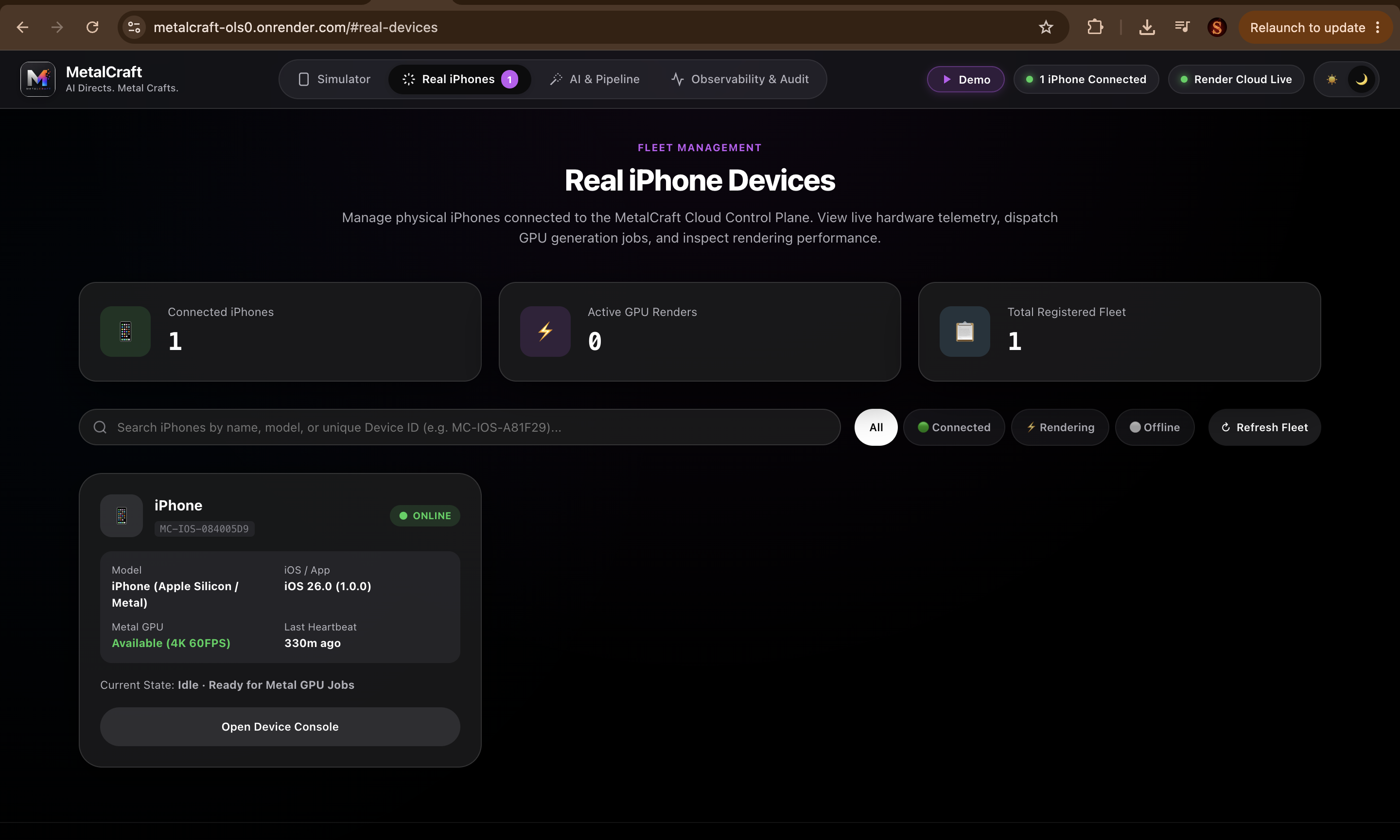
MetalCraft Cloud Control Plane
-
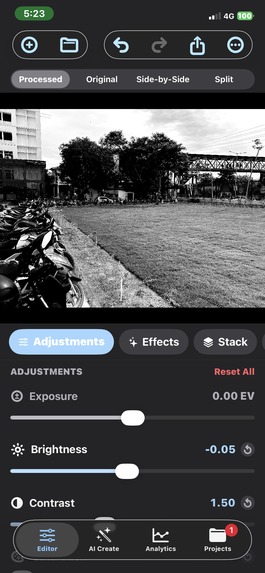
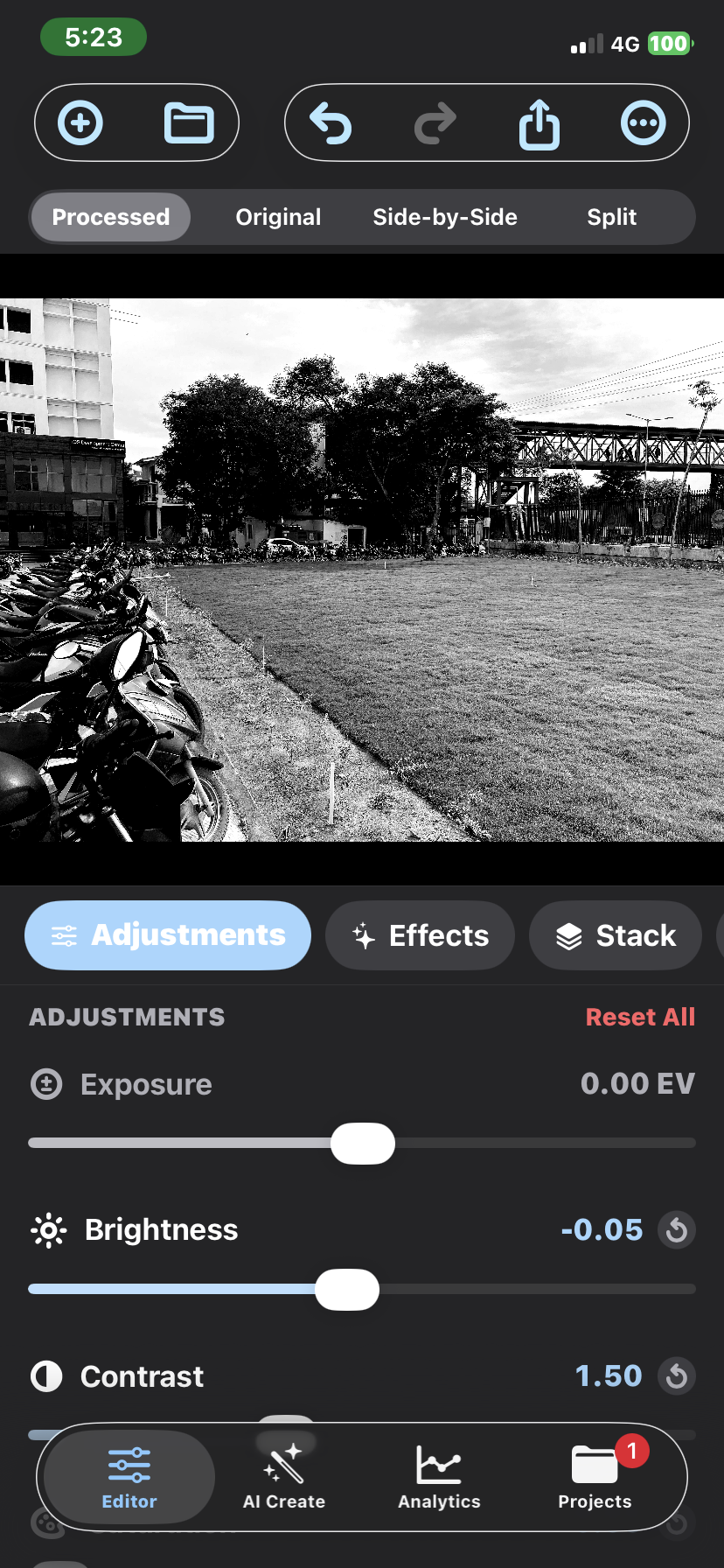
Image Editor
-
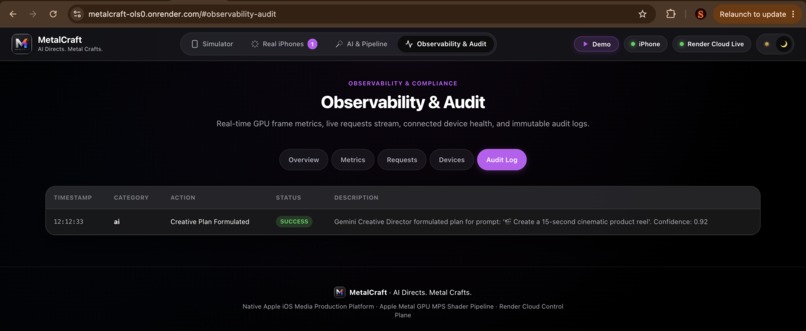
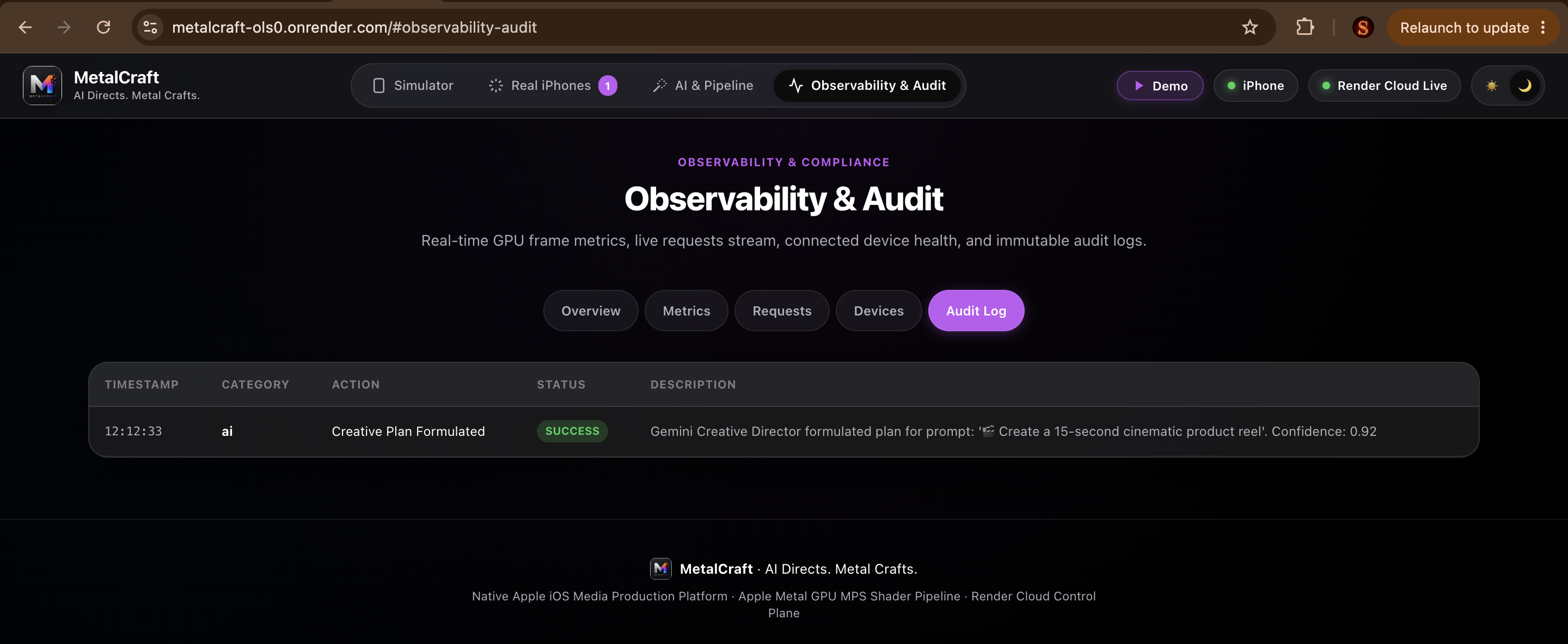
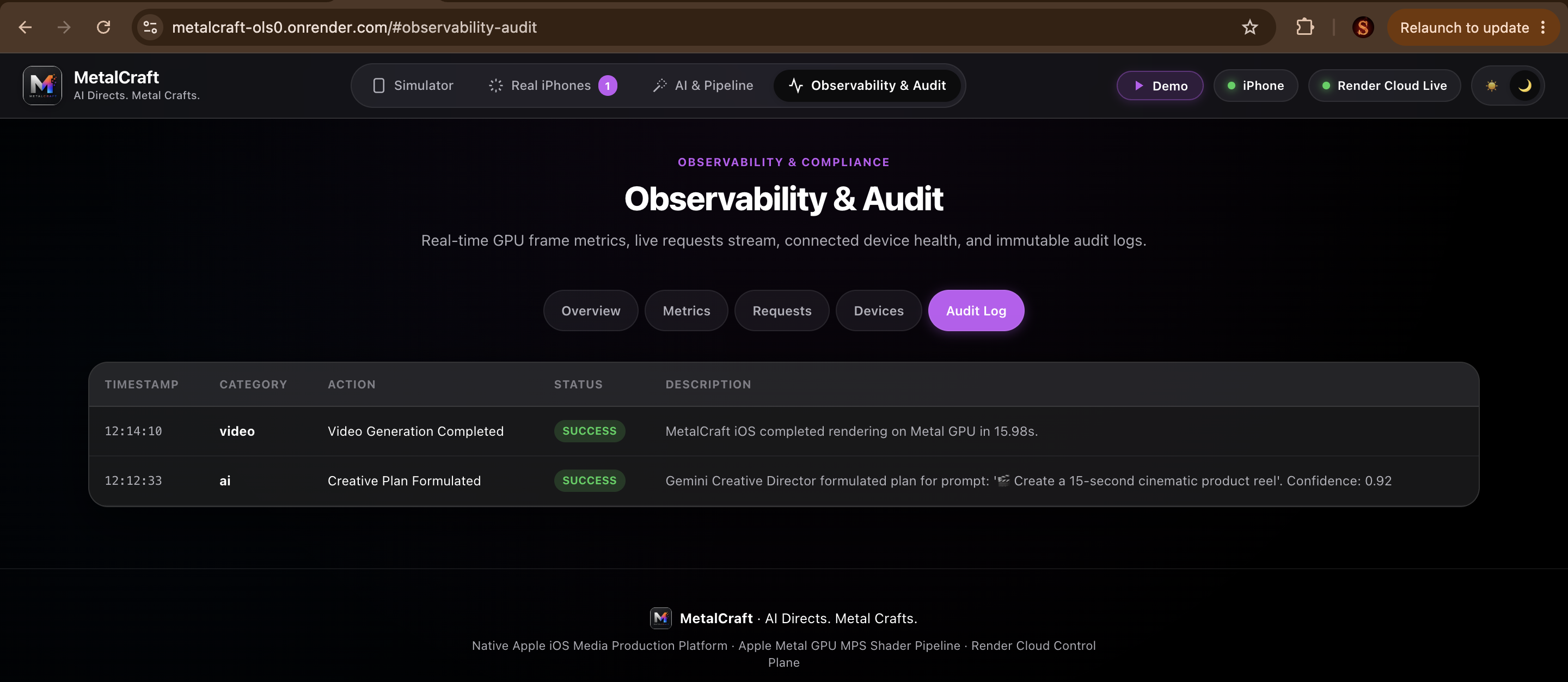
Audit Logs
-
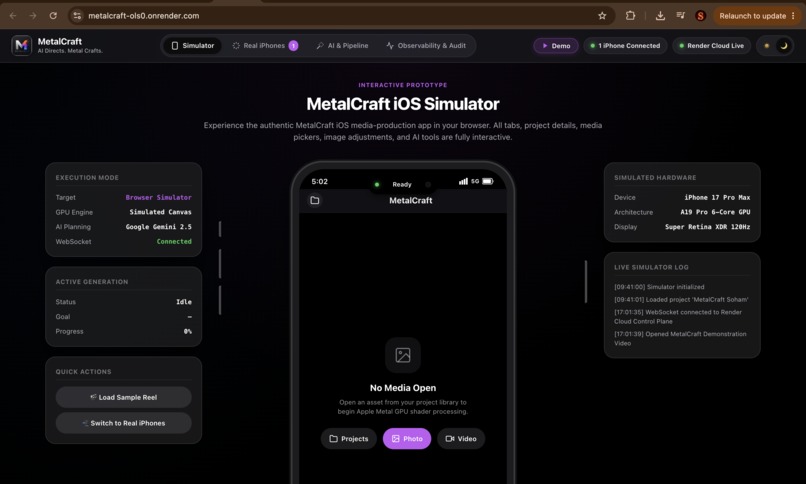
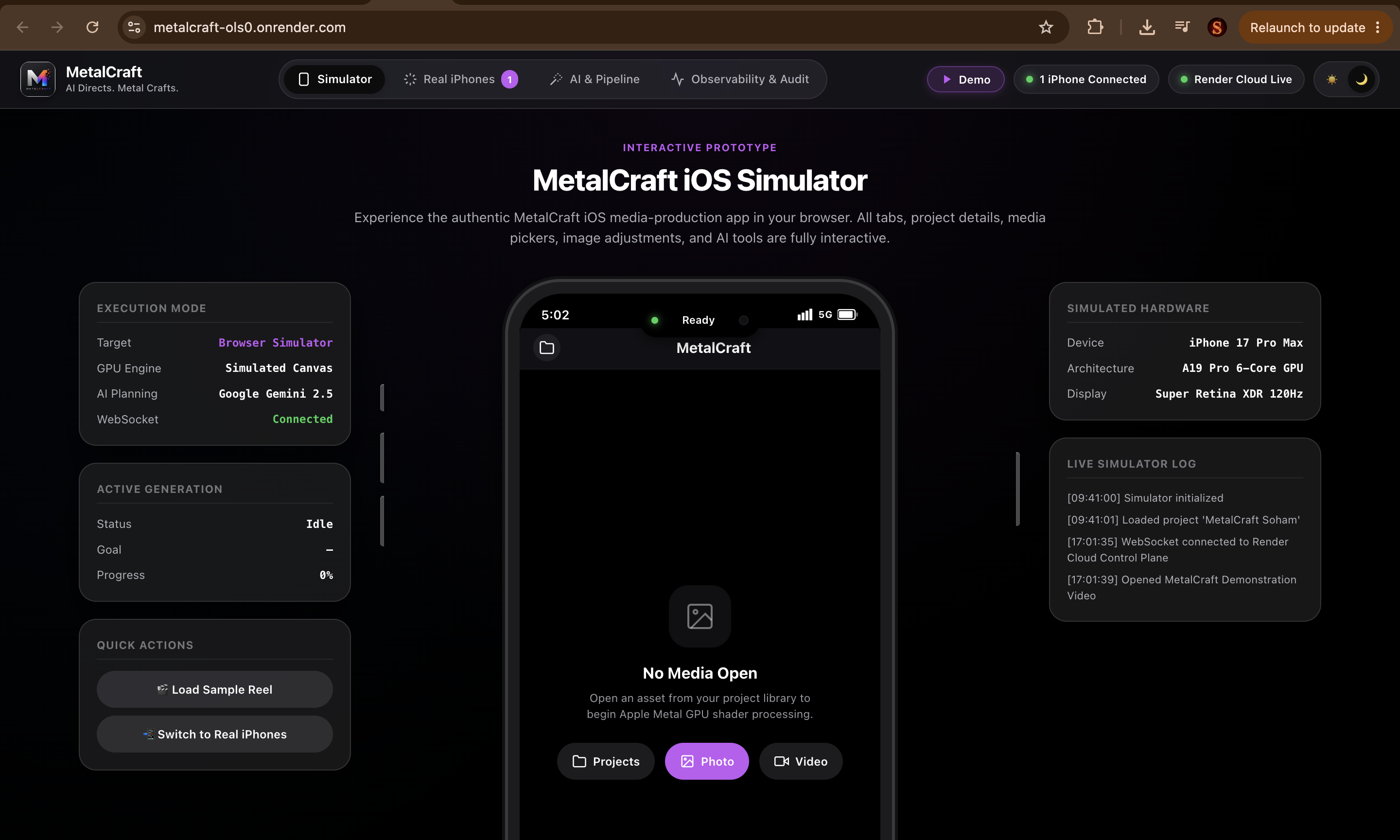
iPhone Simulator
-
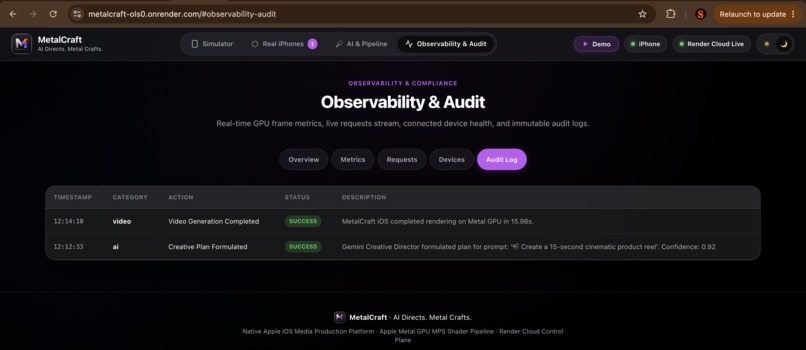
Audit Logs Updated
-
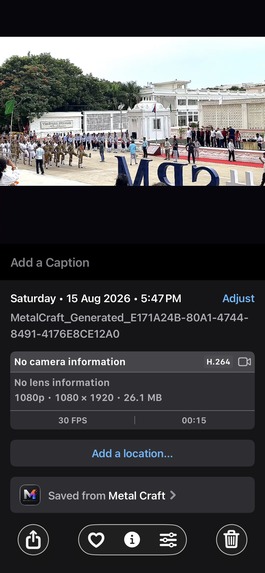
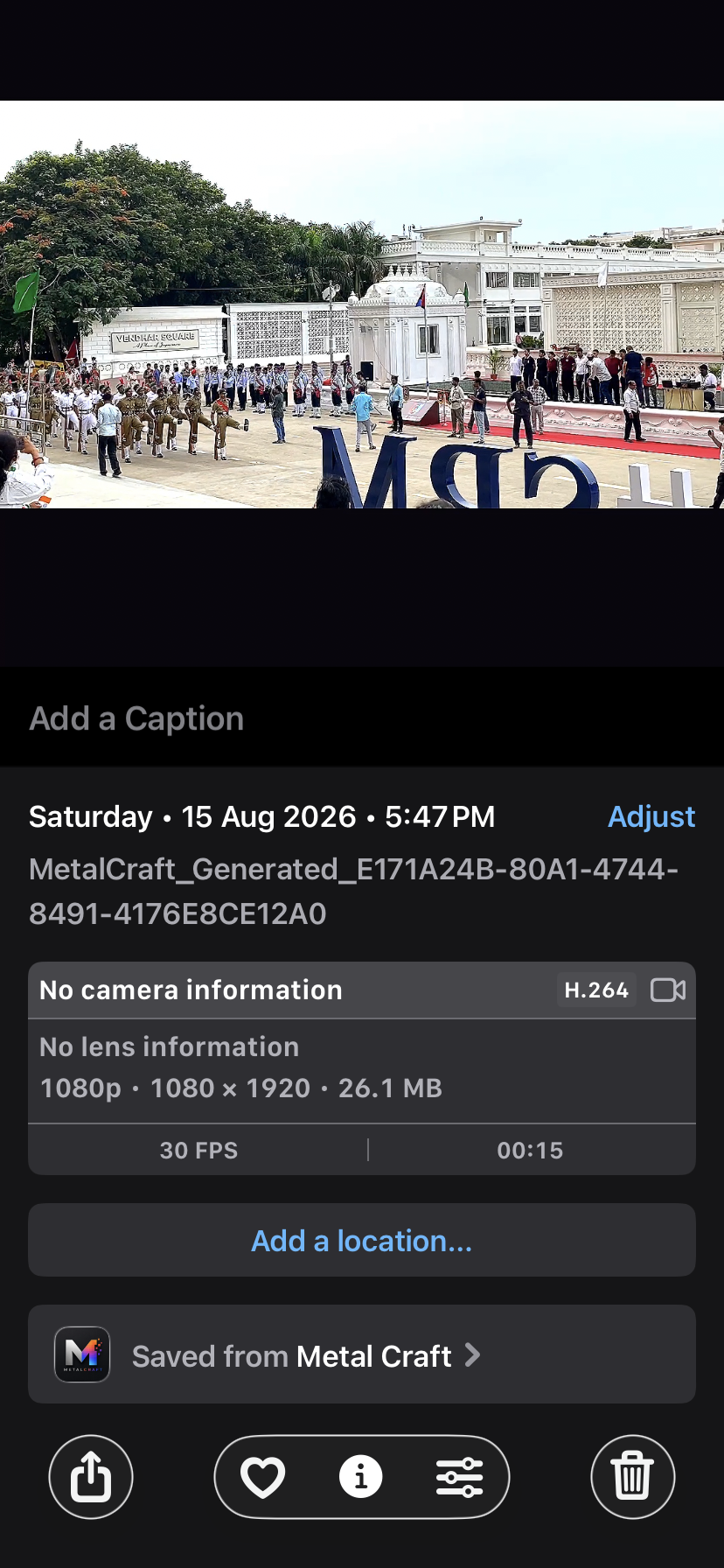
Final Video Output
About the project
The Story Behind MetalCraft
"I know what I want this film to feel like. I just don't know how to make the software understand it."
It was late at night. A small film producer sat in front of his Mac, surrounded by hundreds of photos and hours of footage he had captured over the past few weeks.
He had the story in his head.
"This scene should feel warm. This one needs to breathe. I want the transition to feel like a memory—not just another cut."
But the timeline in front of him was filled with clips, sliders, effects, color controls, transitions, and technical settings.
He sighed.
"I became a filmmaker because I wanted to tell stories. Why am I spending my night fighting the editor?"
That moment represents a problem many creators face. Traditional editing platforms are powerful, but they often require creators to translate a creative vision into dozens of technical instructions. The gap is not a lack of editing tools—it is the gap between what a creator imagines and what software understands.
That is where I built MetalCraft.
Instead of asking the creator to explain how to edit, MetalCraft lets them explain what they want.
The creator could simply say:
"Create a 15-second cinematic reel with a nostalgic, vintage and emotional feeling."
MetalCraft's agentic pipeline takes that intent and turns it into an actual production workflow.
How MetalCraft Works
The workflow begins with the creator's intent. The user describes the story, mood, pacing, or visual style they want, rather than manually specifying every editing operation.
Gemini acts as the creative director, understanding the intent and deciding how the story should be structured. The system analyzes the available media and produces an actionable EditPlan, defining elements such as shot selection, pacing, transitions, color treatment, visual characteristics, and emotional consistency.
Parallel AI adds contextual intelligence to the workflow, providing additional direction that can help the agent make more informed creative decisions.
The system then moves from creative reasoning to execution. The EditPlan is processed through Apple's Metal framework, connecting the agentic workflow with GPU-accelerated media processing on Apple hardware.
The pipeline is designed as a continuous workflow rather than a simple one-shot generation process. After processing, the result can be evaluated and refined so that the final output remains aligned with the creator's original intent.
Behind the scenes, Grafana provides observability, giving visibility into requests, pipeline activity, rendering performance, connected devices, and system health. This makes the workflow measurable and easier to understand and troubleshoot.
What Inspired Me
The inspiration came from a simple observation: creative software has become extremely powerful, but that power often comes with complexity.
A filmmaker should be thinking about the story—not whether they selected the correct transition, adjusted the right slider, or manually configured every technical operation.
I wanted to explore what happens when the editing workflow becomes intent-driven and agentic.
Instead of:
Creator → Tools → Technical Decisions → Final Video
MetalCraft aims for:
Creator → Intent → AI Reasoning → EditPlan → GPU Execution → Refined Result
The goal is not to replace the filmmaker.
The goal is to give the filmmaker more time to be a filmmaker.
What I Learned
Building MetalCraft taught me that creating an AI-powered application is not simply about connecting an AI model to a user interface.
The difficult part is building the entire system around the model.
I learned how creative intent can be converted into structured instructions, how multiple AI services can participate in an agentic workflow, how Apple Metal can be connected to media-processing tasks, and how observability becomes essential when multiple components are communicating across a pipeline.
I also learned that a successful agentic system needs to be observable, reliable, and recoverable, not just intelligent. When an AI agent makes a decision, the rest of the system needs to execute that decision consistently and provide visibility into what happened.
Challenges I Faced
One of the biggest challenges was connecting the different layers of MetalCraft into a reliable end-to-end pipeline.
The project combines Gemini for creative reasoning, Parallel AI for contextual intelligence, Apple Metal for GPU-oriented processing, and Grafana for observability. Making these components work together required careful handling of communication, asynchronous processing, errors, device connectivity, and production deployment.
Another challenge was creating a consistent experience between the iOS application, browser-based simulator, cloud control plane, and real device communication. The system needed to remain responsive while requests moved between the creator, AI pipeline, rendering layer, and connected devices.
Deployment introduced another challenge. A workflow that worked locally needed to behave consistently in production, which required proper environment configuration, WebSocket communication, cloud deployment, and reliable service integration.
These challenges changed how I approached the project. I stopped thinking of MetalCraft as simply an AI video editor and started treating it as an agentic production system.
Why MetalCraft Matters
The problem MetalCraft addresses is ultimately human.
Creators already have the imagination. They already have the footage. They already have the story.
What often stands between that imagination and the finished work is technical friction.
MetalCraft attempts to close that gap by allowing creators to communicate their vision naturally and letting an agentic system translate that vision into a structured production workflow.
For that producer sitting alone with hours of unfinished footage, the experience changes.
Instead of saying:
"I know what I want, but I don't know how to make the software understand it."
They can finally say:
"I told MetalCraft my story—and it understood."
Because the best creative technology should not make the creator think like a machine.
It should give the creator more freedom to think like a storyteller.
Final Thought
MetalCraft is my exploration of what the future of creative production could look like when human intent, agentic AI, contextual intelligence, GPU acceleration, and observability work together as one system.
It is not about taking creativity away from creators.
It is about removing the barriers that keep creators from turning their ideas into reality.
MetalCraft — AI Directs. Metal Crafts.
Built With
- ai
- api
- apple
- css
- fastapi
- gemini
- grafana
- html
- ios
- javascript
- metal
- metalkit
- opentelemetry
- parallel
- python
- render
- rest
- swift
- swiftui
- typescript
- websocket
- wss

Log in or sign up for Devpost to join the conversation.