Inspiration
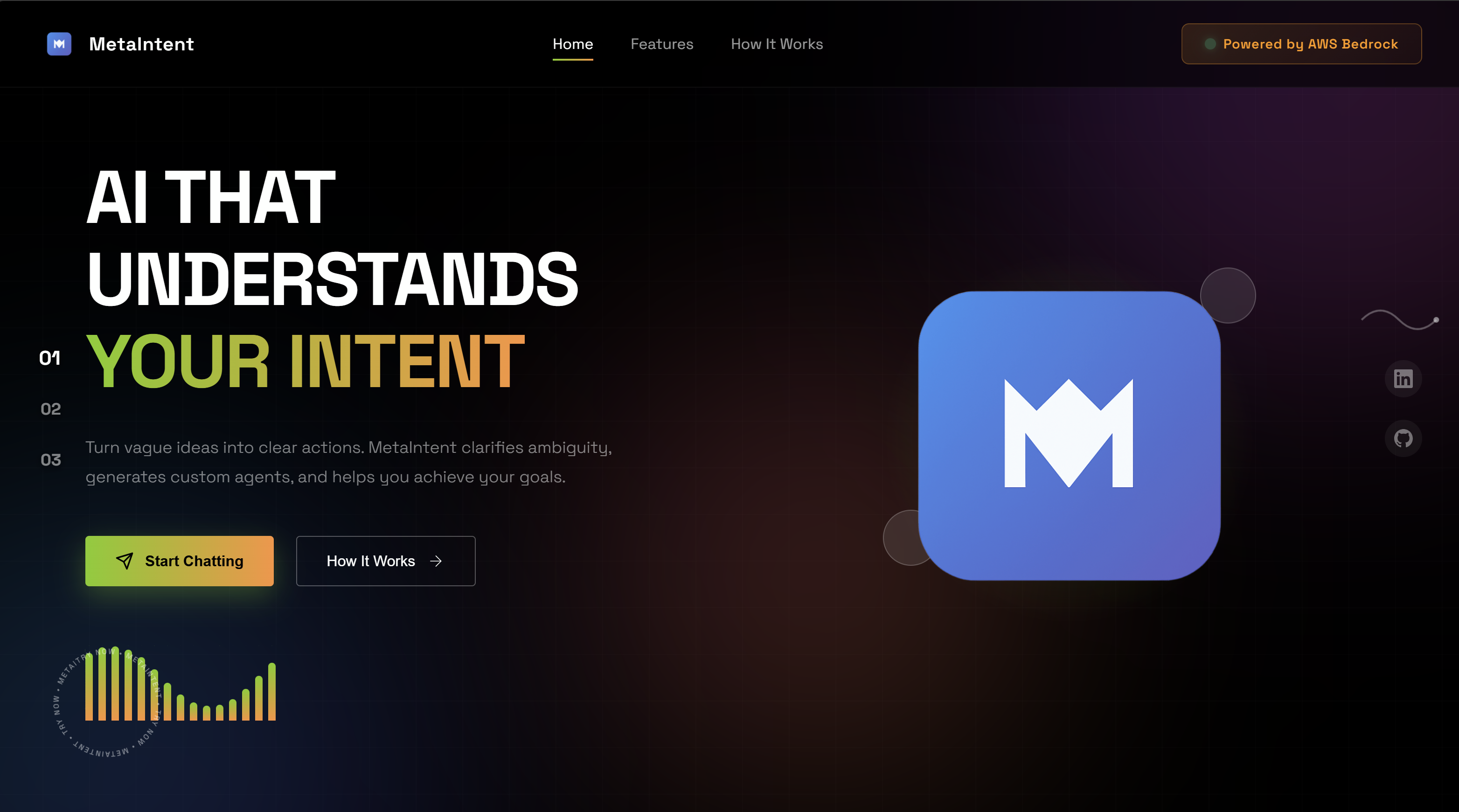
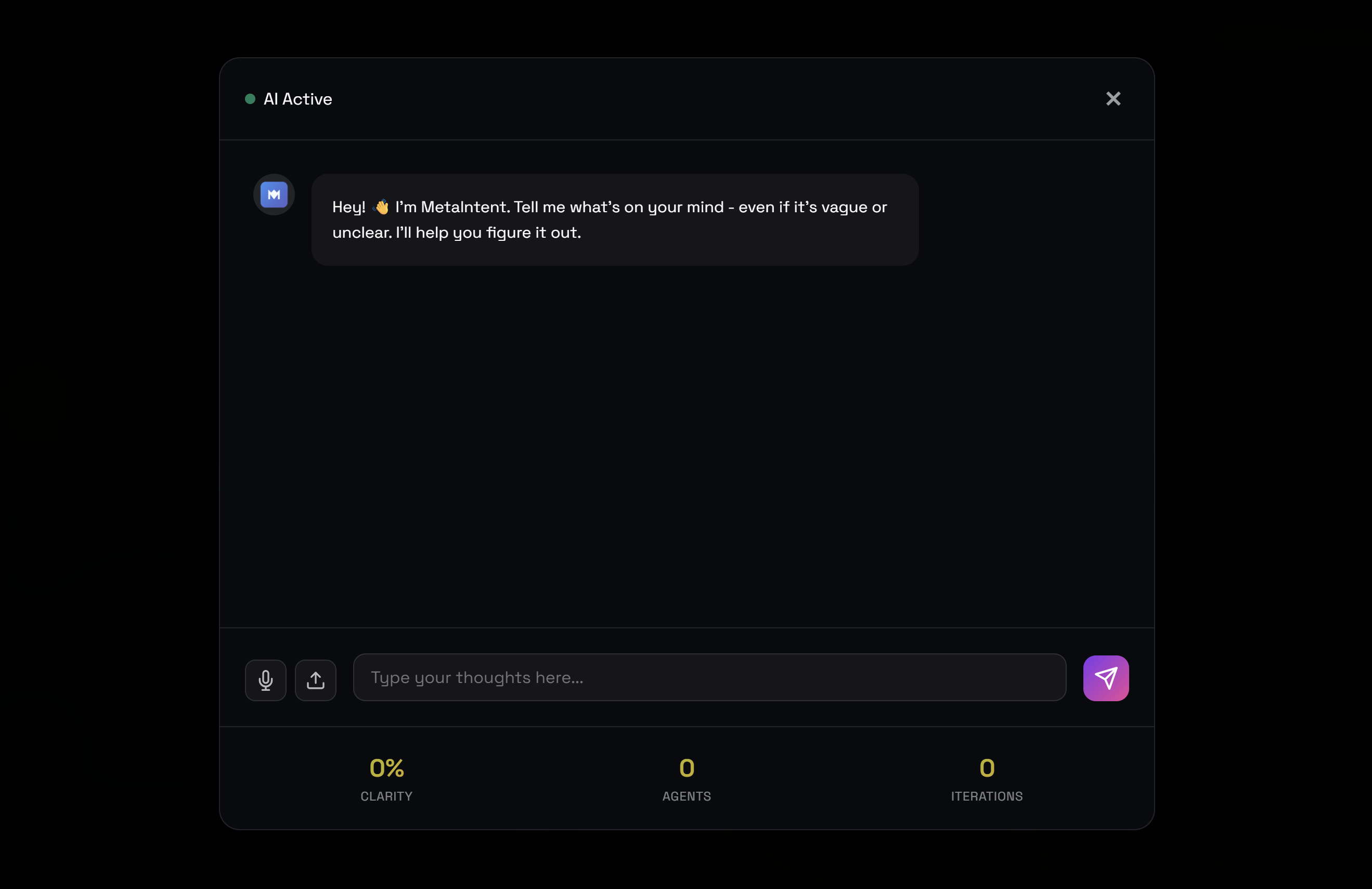
MetaIntent Agent was born from a simple question: What if AI could embrace human uncertainty instead of ignoring it? In creative, strategic, and emotional contexts, users often express vague or evolving goals. Traditional agents fail here MetaIntent doesn’t. It listens for ambiguity in tone, pacing, and phrasing, then guides users through a modular clarification loop. Once clarity is reached, it spawns a scoped agent tailored to the refined goal.
What it does
MetaIntent detects vague or fragmented intent and dynamically spawns sub agents to clarify it. These agents explore scope, constraints, emotional context, and success criteria. Once clarity is achieved, MetaIntent generates a final task agent and stores the entire evolution in SVG based intent maps. It supports creative brainstorming, strategic planning, emotional journaling, and agent design from vague prompts.
How I Built It
MetaIntent was built solo with a modular, cloud native architecture designed to handle ambiguity at scale. It uses Amazon Q to detect uncertainty in user input capturing vague phrasing, emotional tone, and pacing irregularities. Once ambiguity is identified, AgentCore orchestrates sub agents that guide users through a structured clarification loop. The core logic runs on AWS Lambda, with S3 storing evolving intent maps and replay logs, and DynamoDB managing session state. For reasoning and agent generation, MetaIntent integrates Claude 4.5 via Bedrock, enabling nuanced interpretation and scoped agent creation. Visualizations of intent drift and agent lineage are rendered using SVG, offering transparency into how goals evolve over time.
if (detectAmbiguity(userInput)) {
  spawnSubAgents(['ScopeClarifier', 'EmotionProcessor']);
}
Challenges we ran into
Some of the biggest challenges I faced included designing scalable sub agent logic that could adapt to evolving user goals, visualizing intent drift and lineage in a way that was both intuitive and traceable, balancing cost efficiency with real time responsiveness across AWS services, and building emotionally adaptive logic that responded to tone and pacing without overfitting to transient signals.
Accomplishments that we're proud of
I successfully deployed a fully functional API to AWS with multi modal support for text, voice, and document input. The system features a graceful 4 tier fallback strategy, a cost optimized architecture that stays well within budget, and production ready code with robust error handling. Every component is backed by comprehensive documentation and thorough test coverage to ensure reliability and scalability.
What we learned
I learned how to architect agents that evolve with the user by responding to shifting goals and emotional cues, how to turn hesitation into precision through modular clarification loops, how to build emotionally adaptive systems using AI primitives that interpret tone and pacing, and how to optimize for low bandwidth, high resilience deployments that remain responsive even under constrained conditions.
What's next for MetaIntent
Next, I plan to complete full identity verification, integrate cost tracking with budget alerts, and implement multi language support to expand accessibility. I’ll also add WebSocket for real time updates, build a mobile SDK alongside an A/B testing framework, and explore custom model fine tuning to enhance emotional nuance and adaptability across diverse user contexts.
Built With
- agentcore
- amazon-web-services
- amazonq
- awsbedrock(claude4.5)
- css
- git
- html
- javascript
- lambda+s3+dynamodb
- node.js
- storage
- svg
- typescript
- yaml

Log in or sign up for Devpost to join the conversation.