-
-
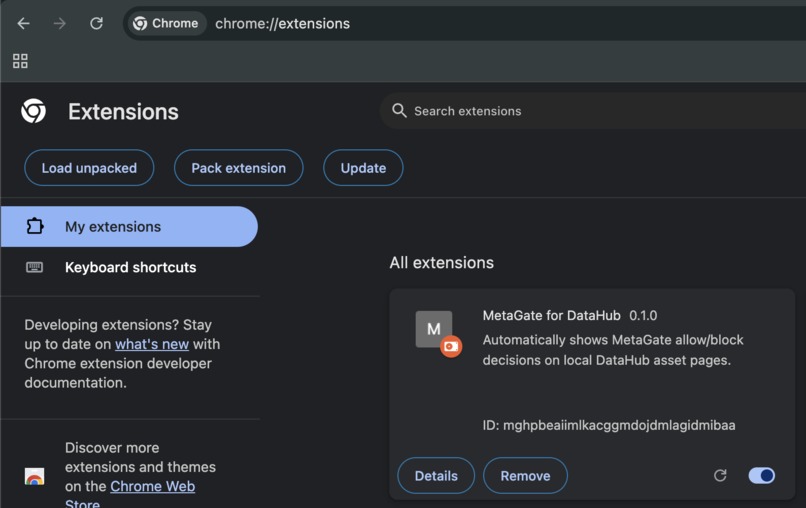
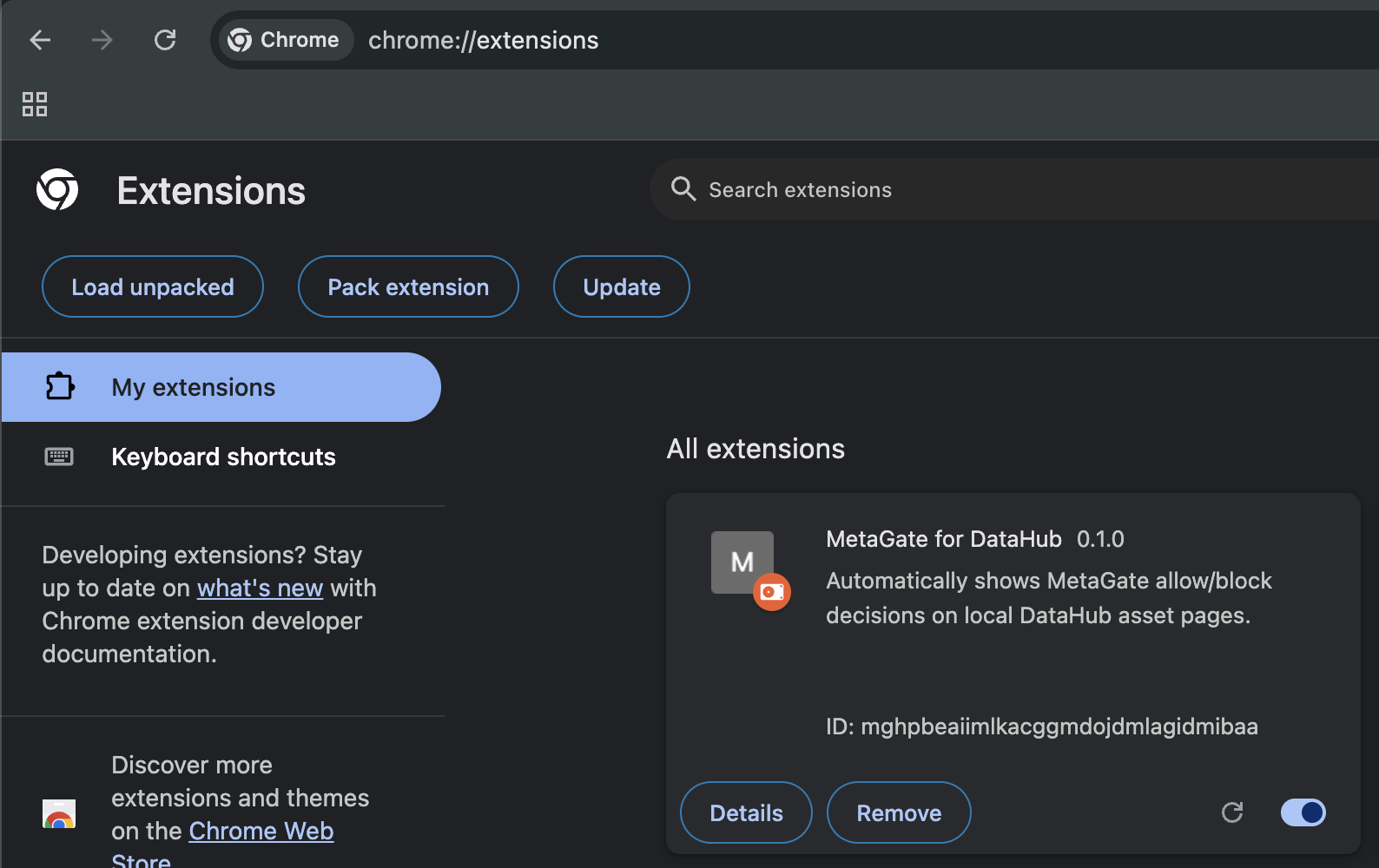
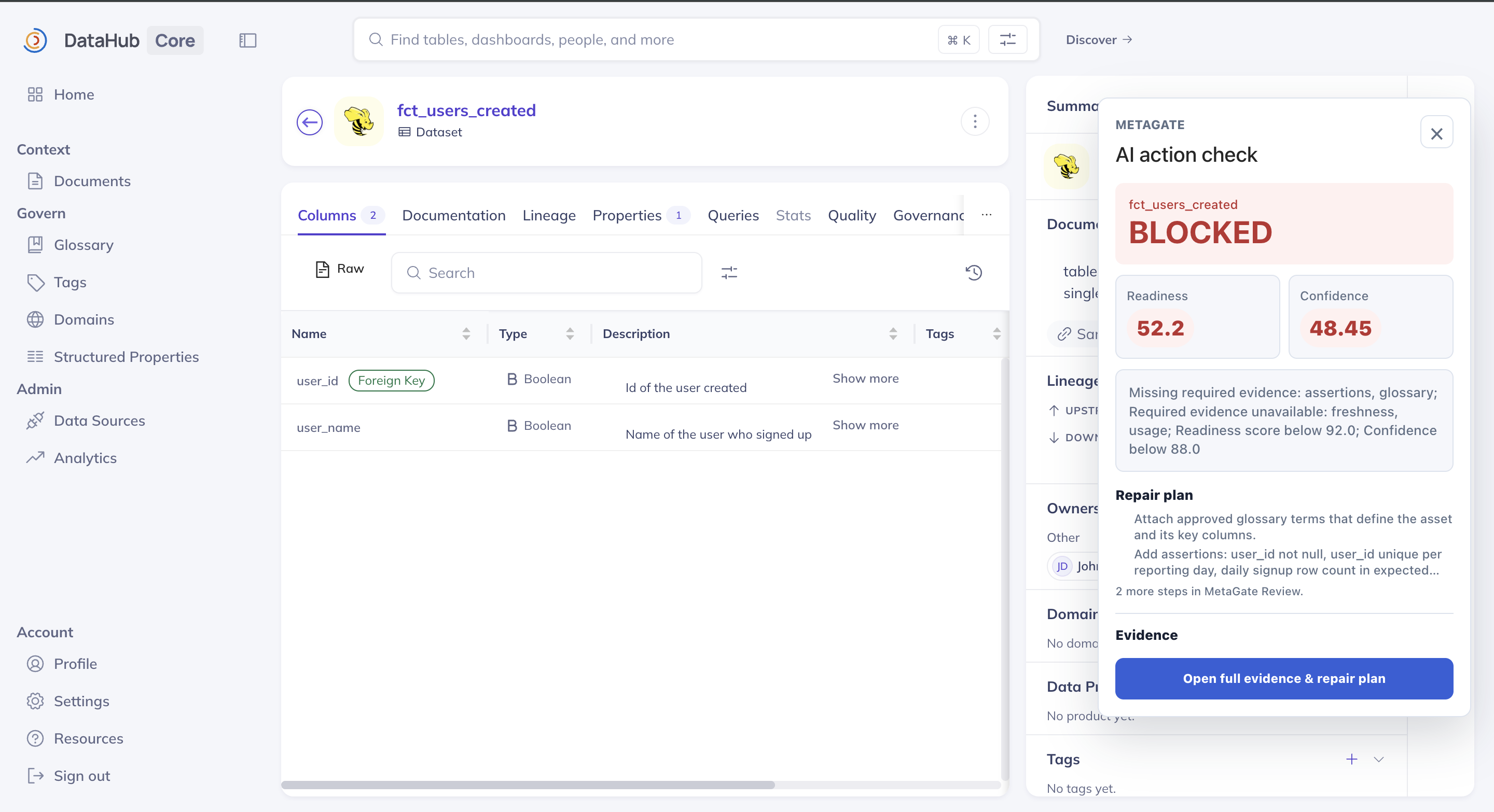
Chrome extension of MetaGate
-
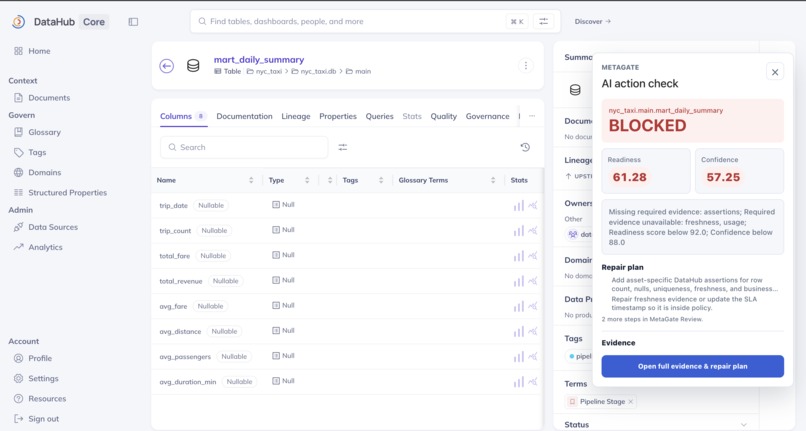
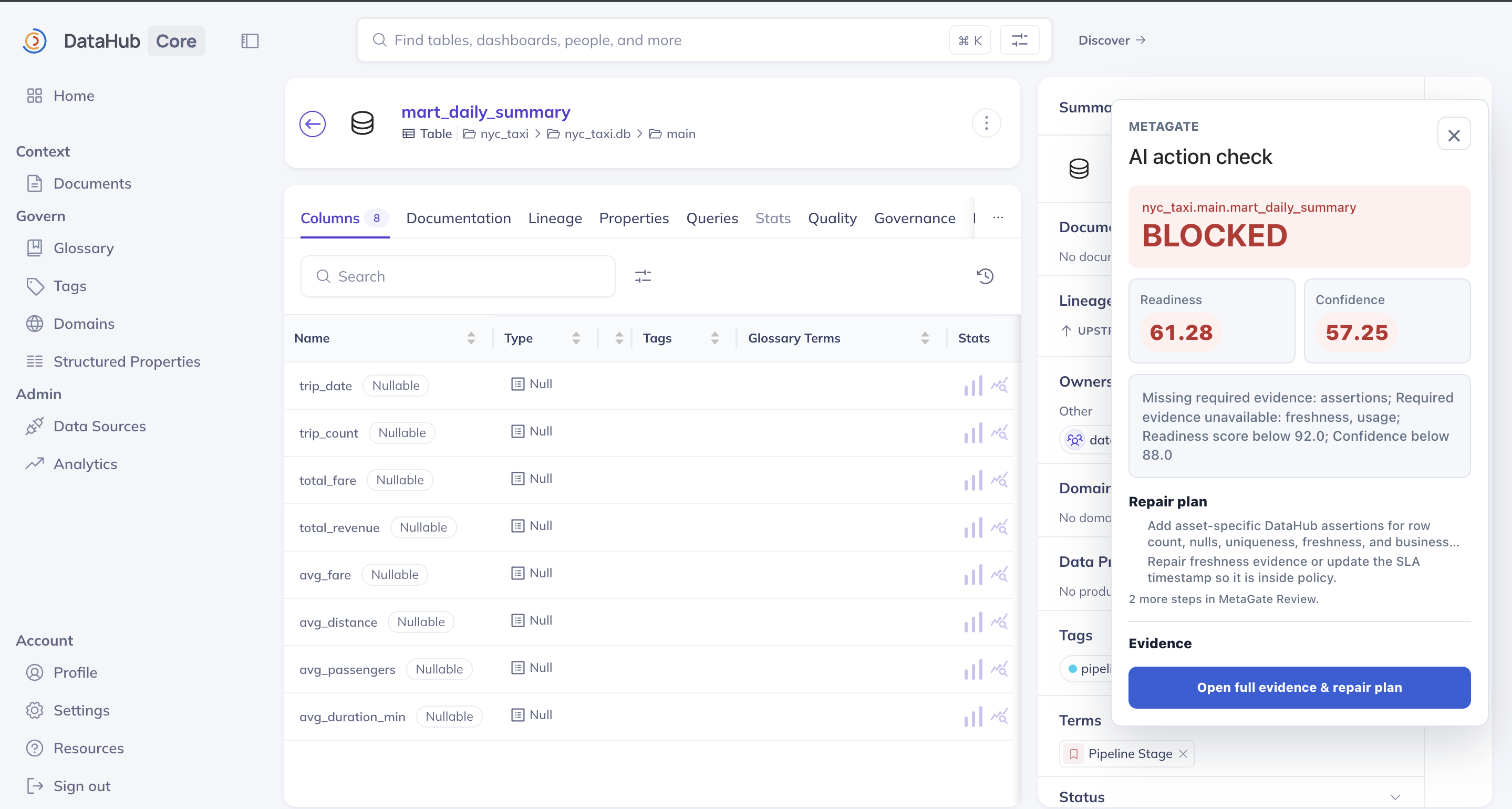
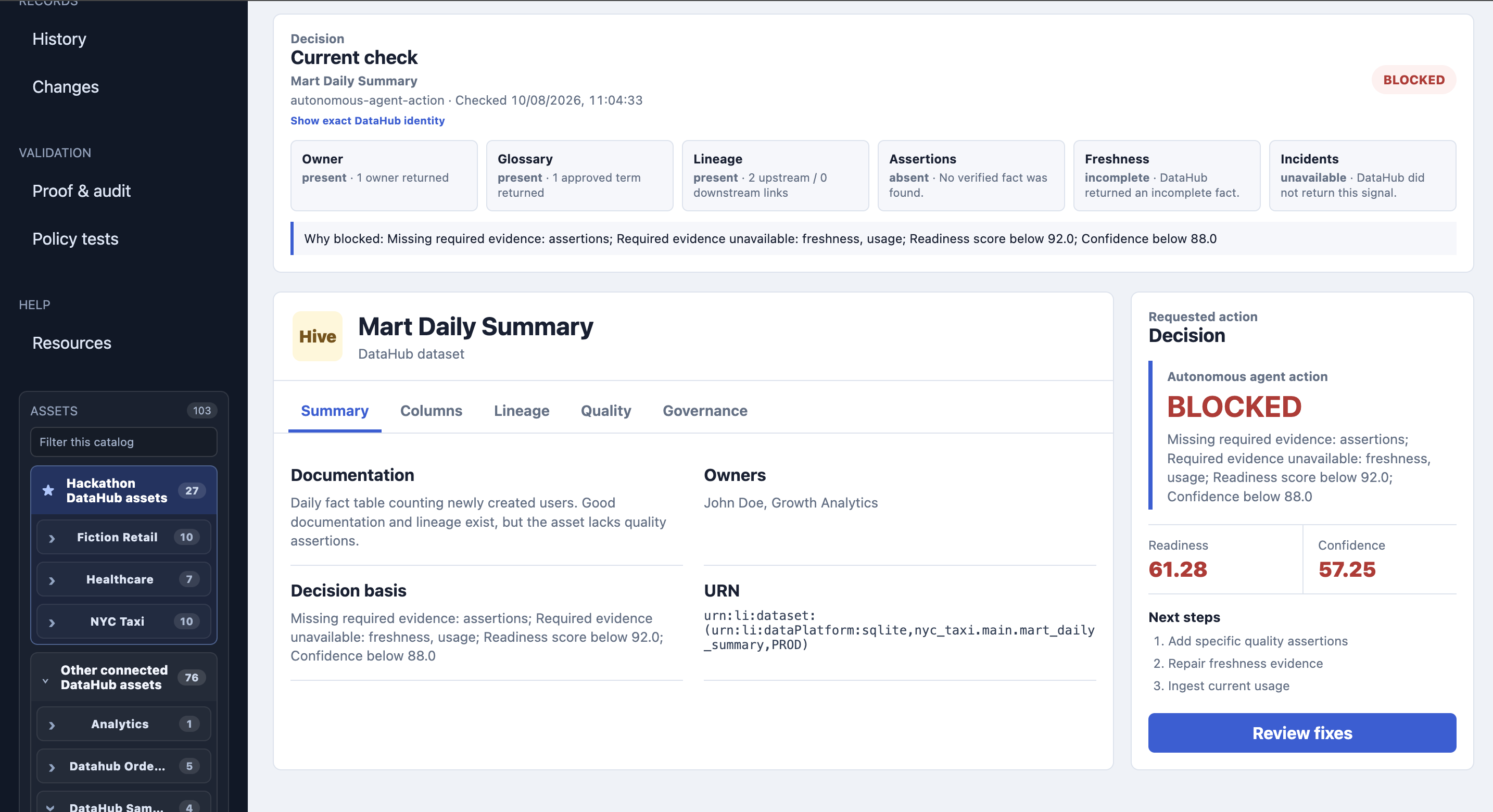
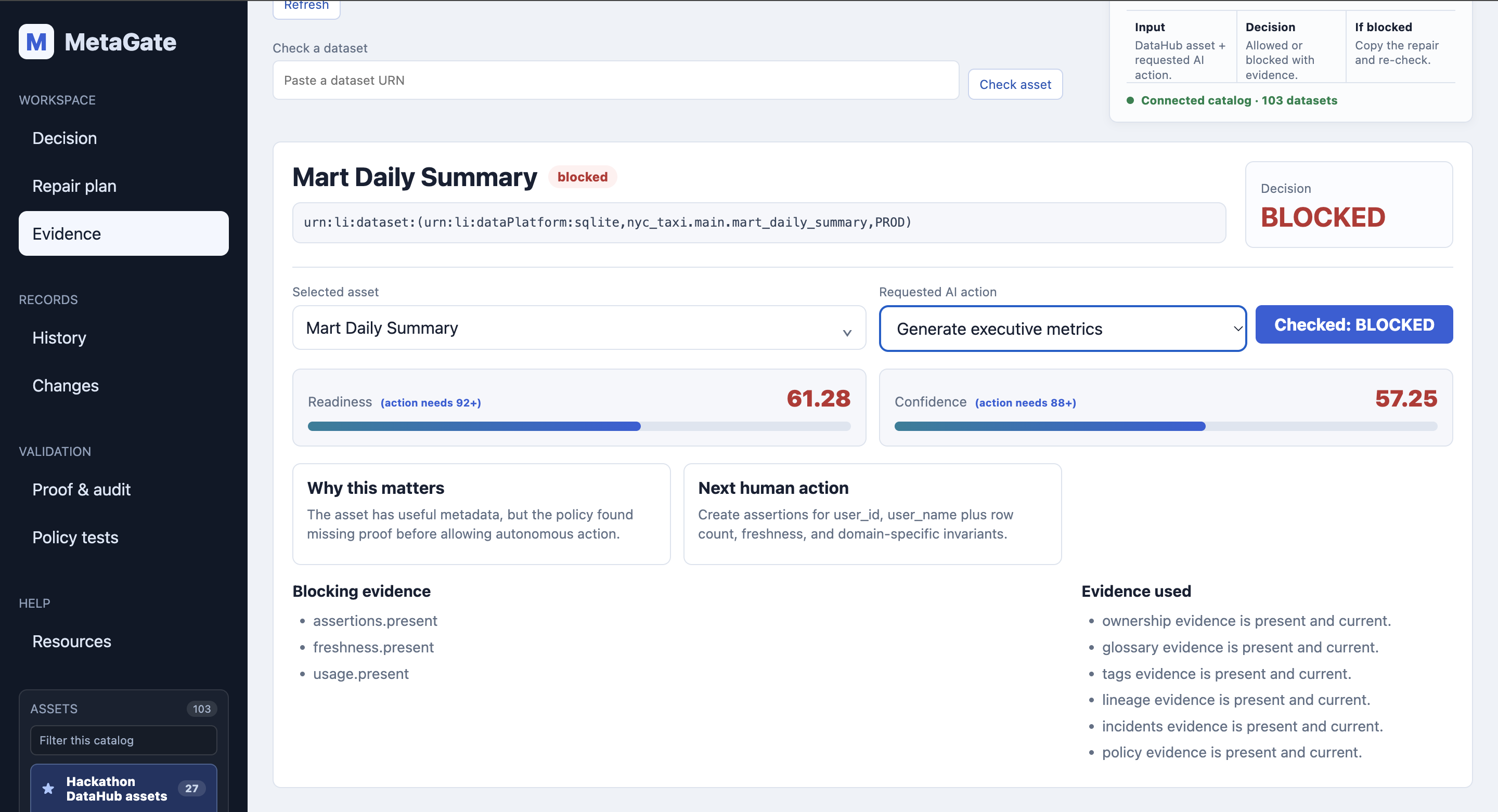
MetaGate review : BLOCKED for NYC Taxi — mart_daily_summary
-
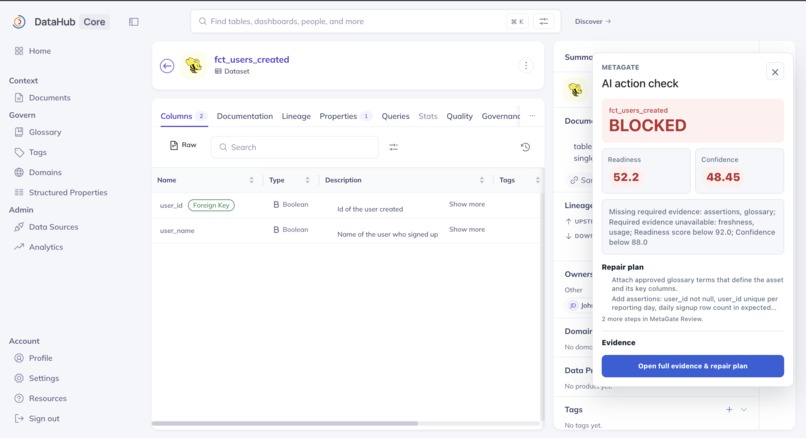
MetaGate review : BLOCKED for fct_users_created
-
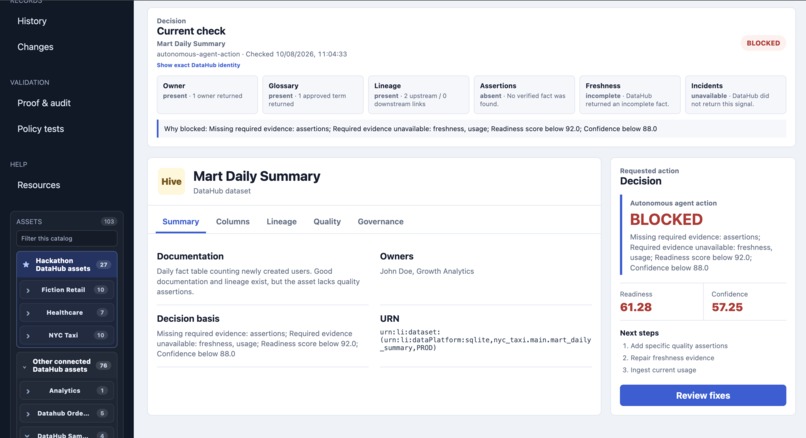
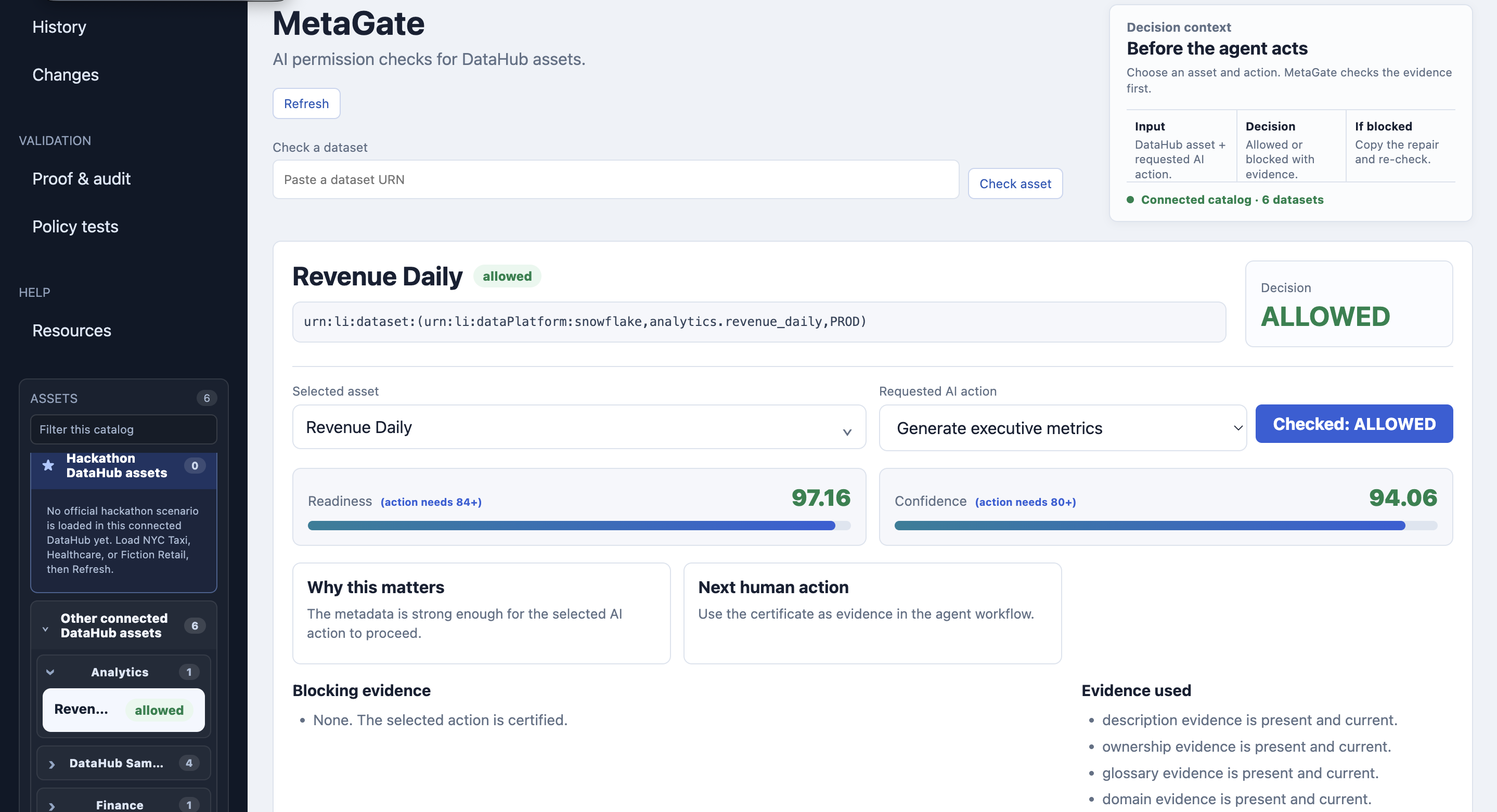
MetaGate Review Page
-
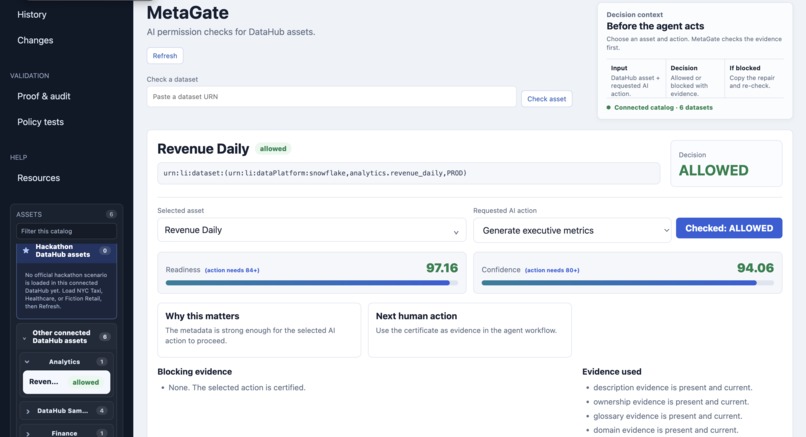
MetaGate review : ALLOWED for Revenue Daily
-
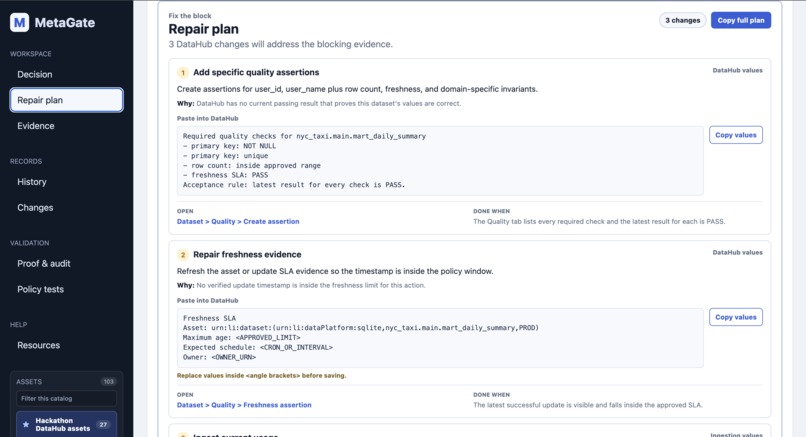
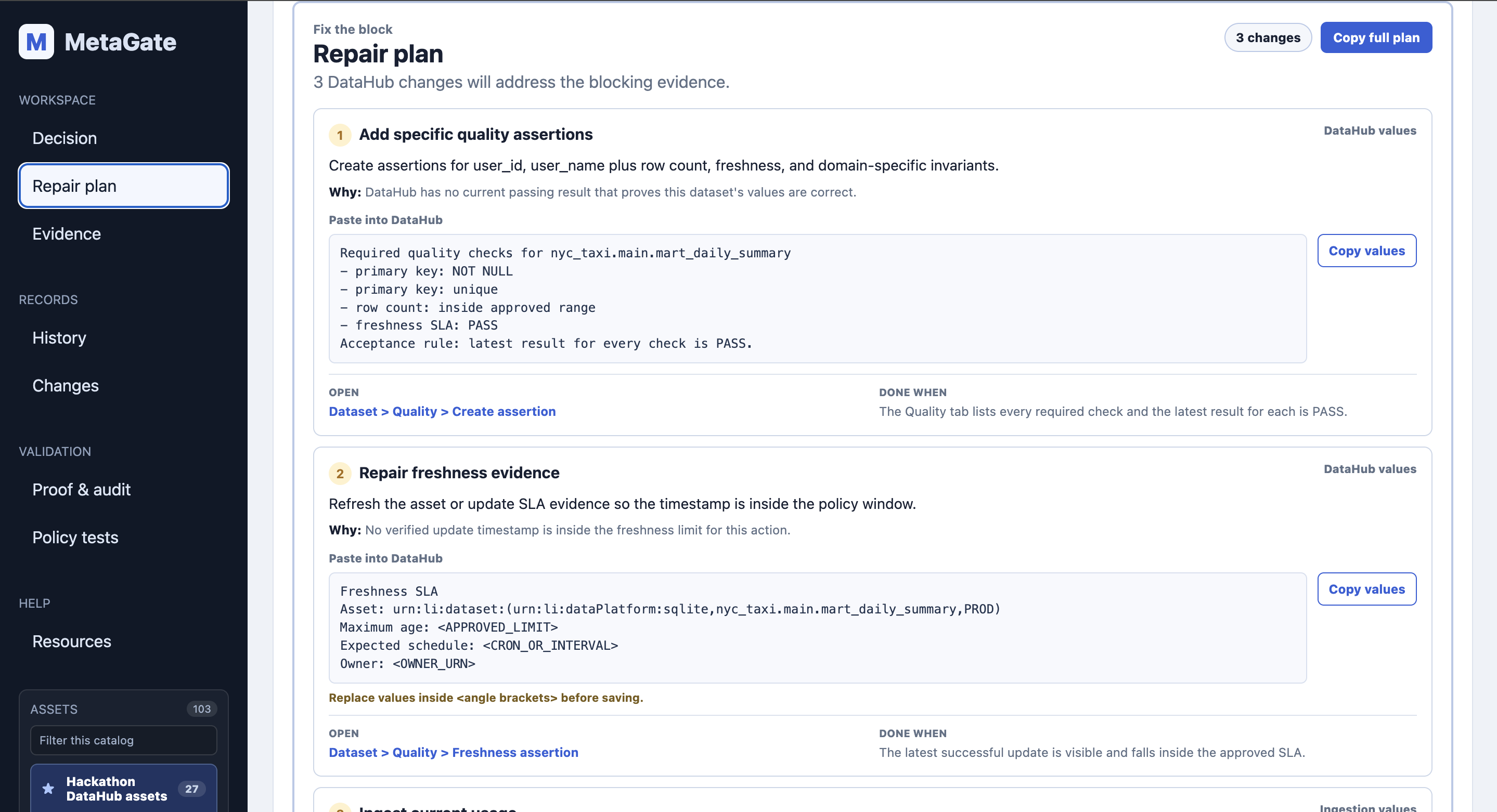
MetaGate Repair Plan
-
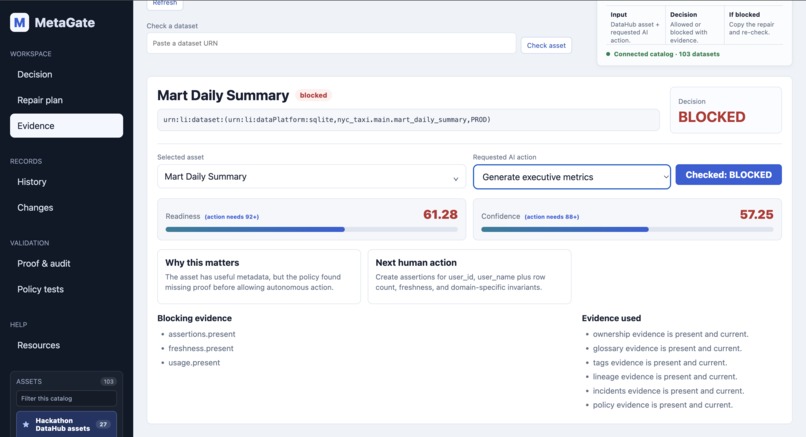
MetaGate Evidence
-
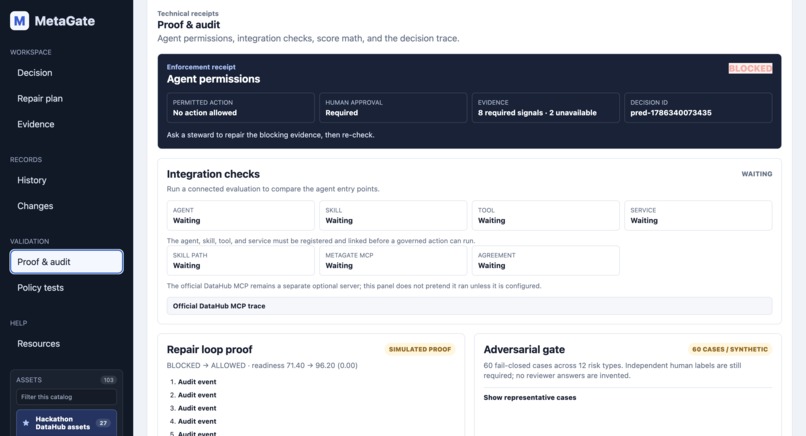
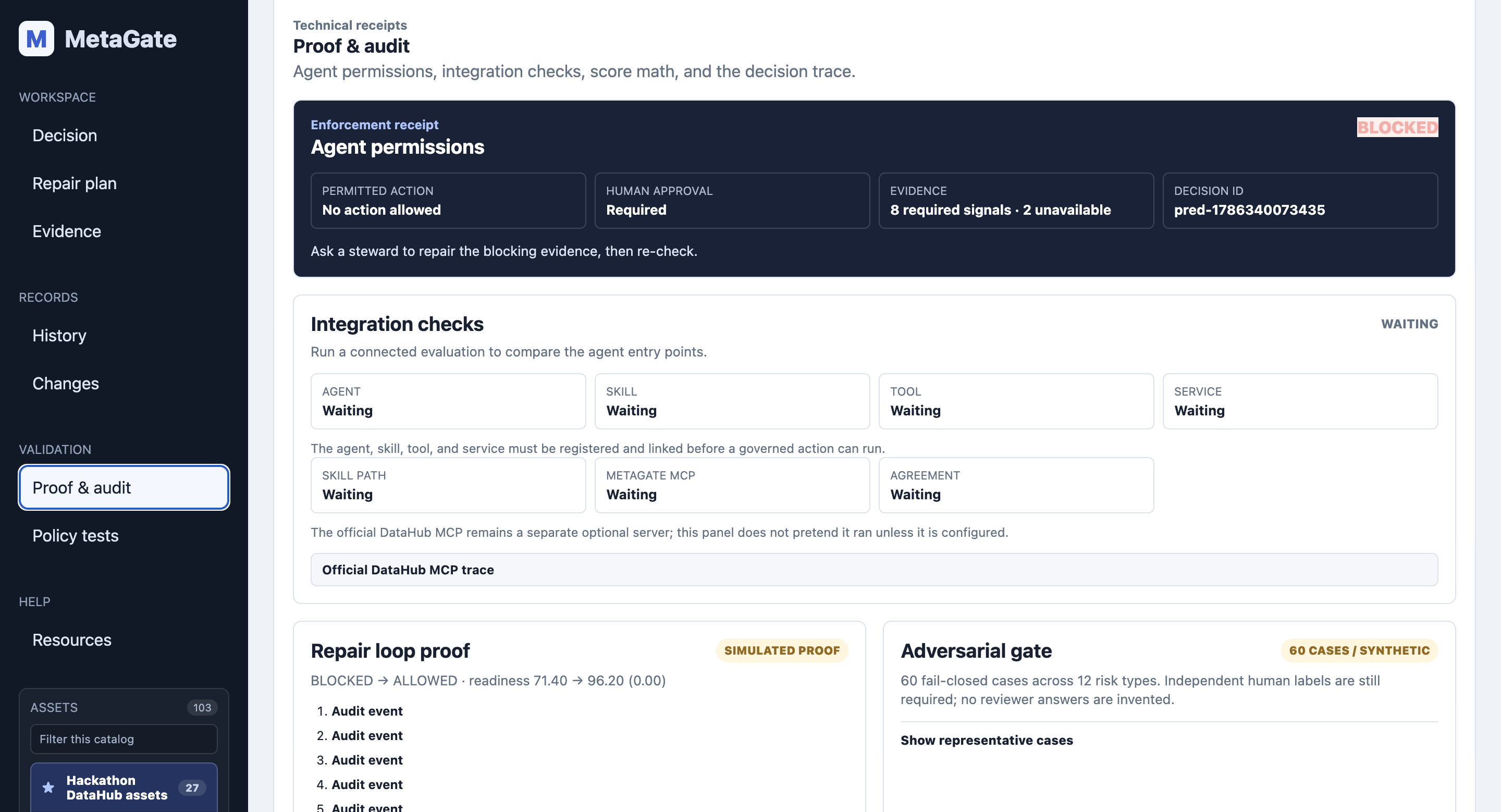
MetaGate Proof & Audit
-
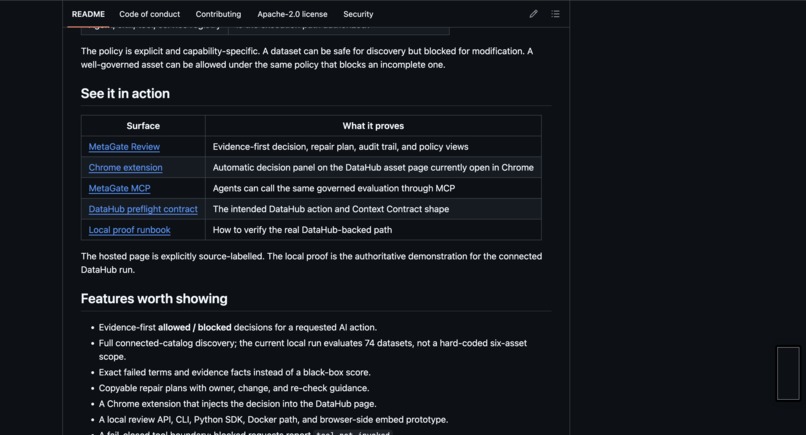
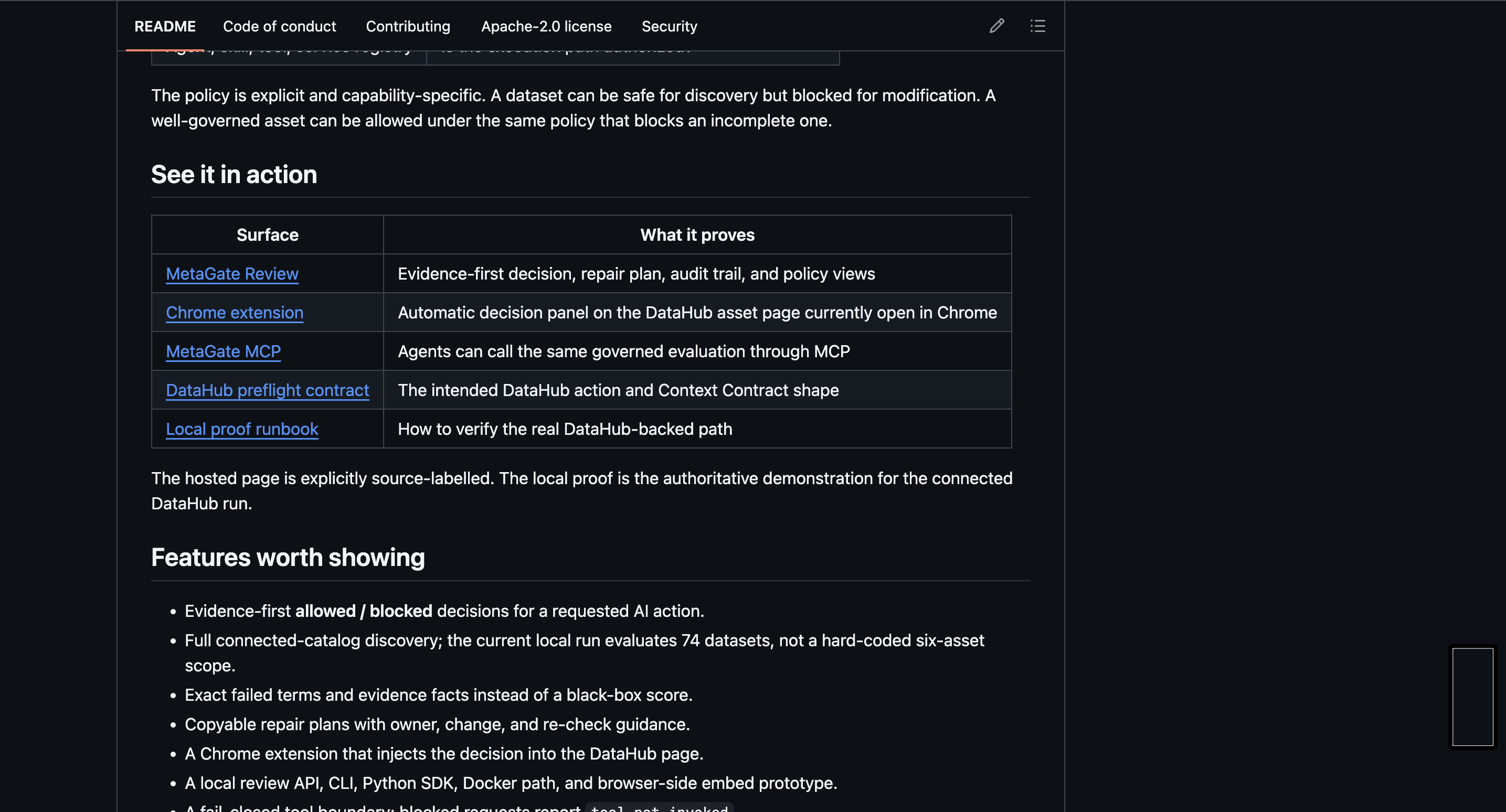
MetaGate Repository
-

Official DataHub MCP terminal proof
-
MetaGate Thumbnail

Inspiration
DataHub describes a dataset. MetaGate decides whether an AI agent may act on it.
I built MetaGate as the missing decision layer between DataHub context and AI action.
Its rule is simple:
No verified evidence. No autonomous action.
What MetaGate does
MetaGate checks whether a specific DataHub asset has enough evidence for a specific AI action. It evaluates ownership, glossary terms, lineage, assertions, freshness, incidents, usage, and policy metadata.
The result is not a vague risk score. It is an explainable allowed or blocked decision, with the evidence behind it.
When MetaGate blocks an action, it does not stop at “no.” It produces a practical repair plan that explains:
- What is missing
- Why it matters
- Where to repair it in DataHub
- How to verify the fix
The Chrome extension places this decision directly beside the dataset in DataHub. The full MetaGate Review page provides deeper evidence, readiness, confidence, repair guidance, and an audit trail.
How I built it
I built MetaGate with a Python review service, DataHub GraphQL, explicit YAML policies, a JavaScript Chrome extension, and a browser-based review interface.
I also verified the official DataHub MCP Server locally using a read-only entity and search/query probe. The result is saved as a machine-readable proof artifact in the repository.
The project supports both live DataHub evaluation and clearly labelled deterministic fixture data. The fixture includes a positive control to demonstrate that MetaGate does not block everything: complete evidence can pass.
Challenges and lessons
The hardest challenge was keeping live DataHub evidence separate from fixture evidence without confusing the two.
I also made the decisions capability-specific. An asset may be suitable for read-only analysis but still fail the requirements for autonomous action.
I learned that responsible AI access is not only about permissions. It is about making metadata quality measurable, decisions explainable, and repairs actionable.
MetaGate turns DataHub’s context graph into a permission boundary for AI.
Built With
- agent
- ai
- chrome
- data-quality
- datahub
- datahub-oss
- docker
- graphql
- javascript
- mcp
- mcp-server
- metadata
- metadata-governance
- python
- yaml

Log in or sign up for Devpost to join the conversation.