-
-
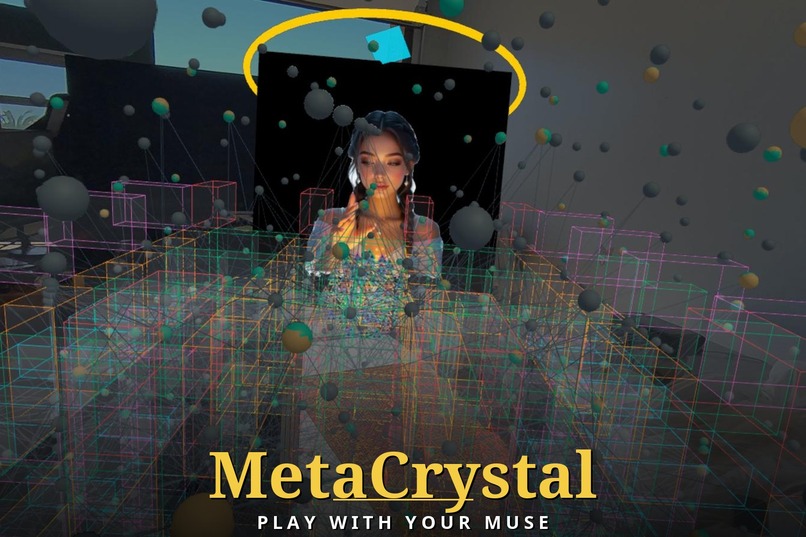
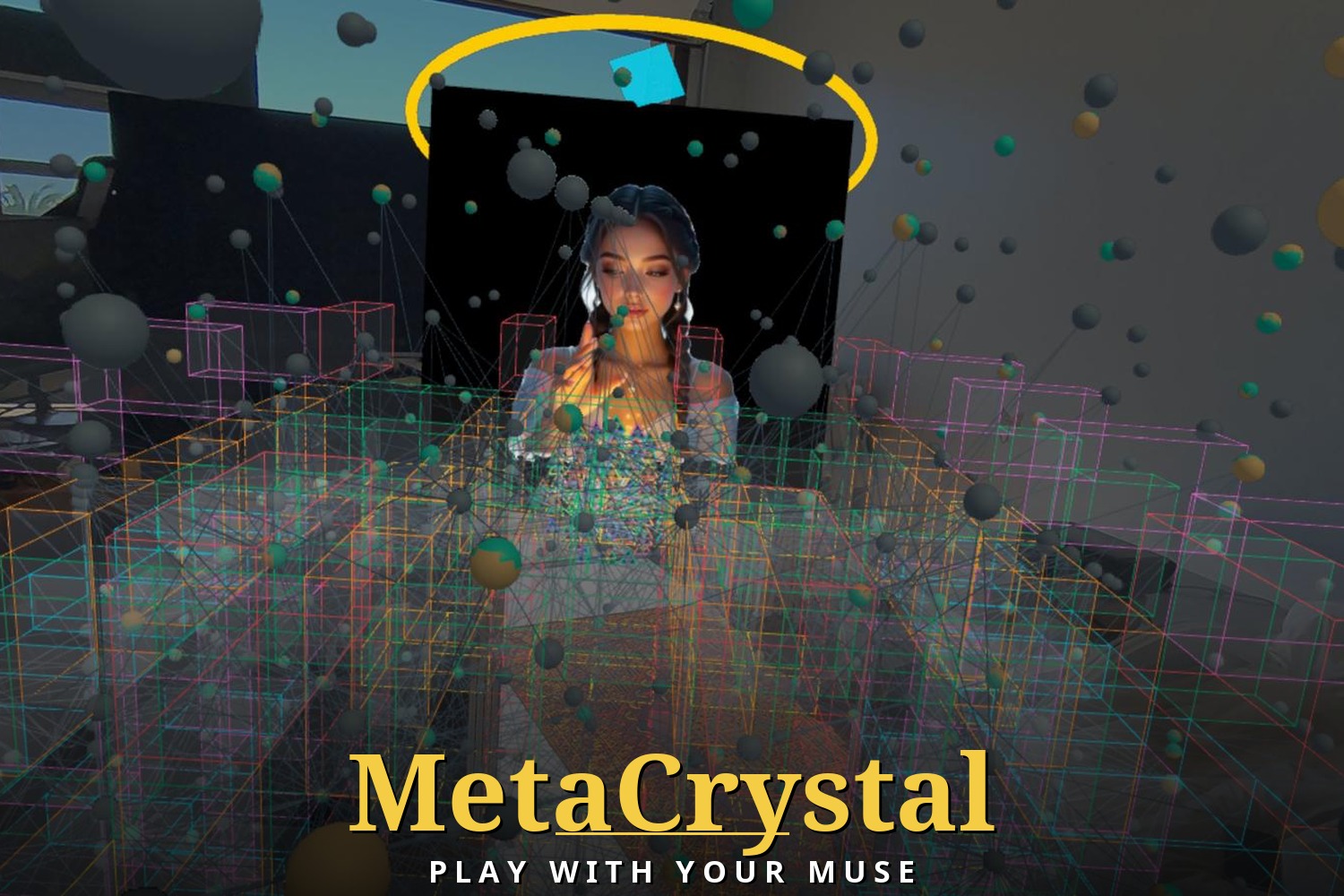
Marie in the loft — her portrait, gold ring and third-eye jewel, inside the golden-block metacube. Passthrough at real scale, on Quest 3.
-
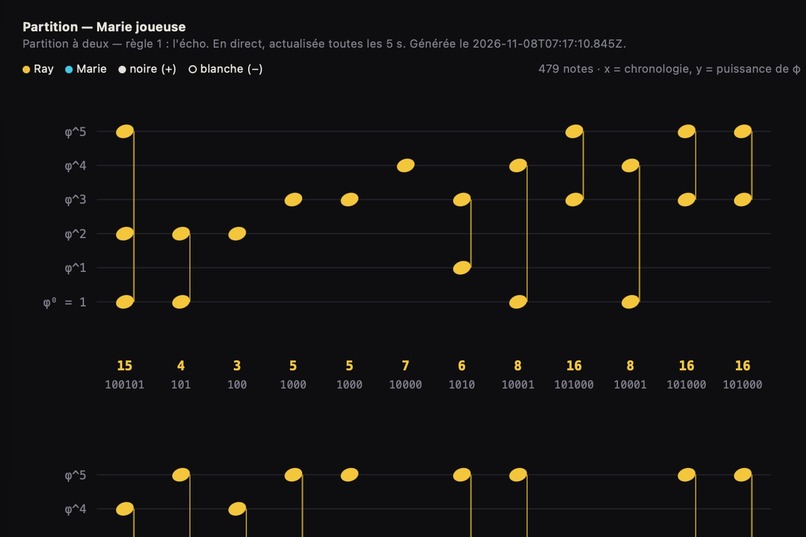
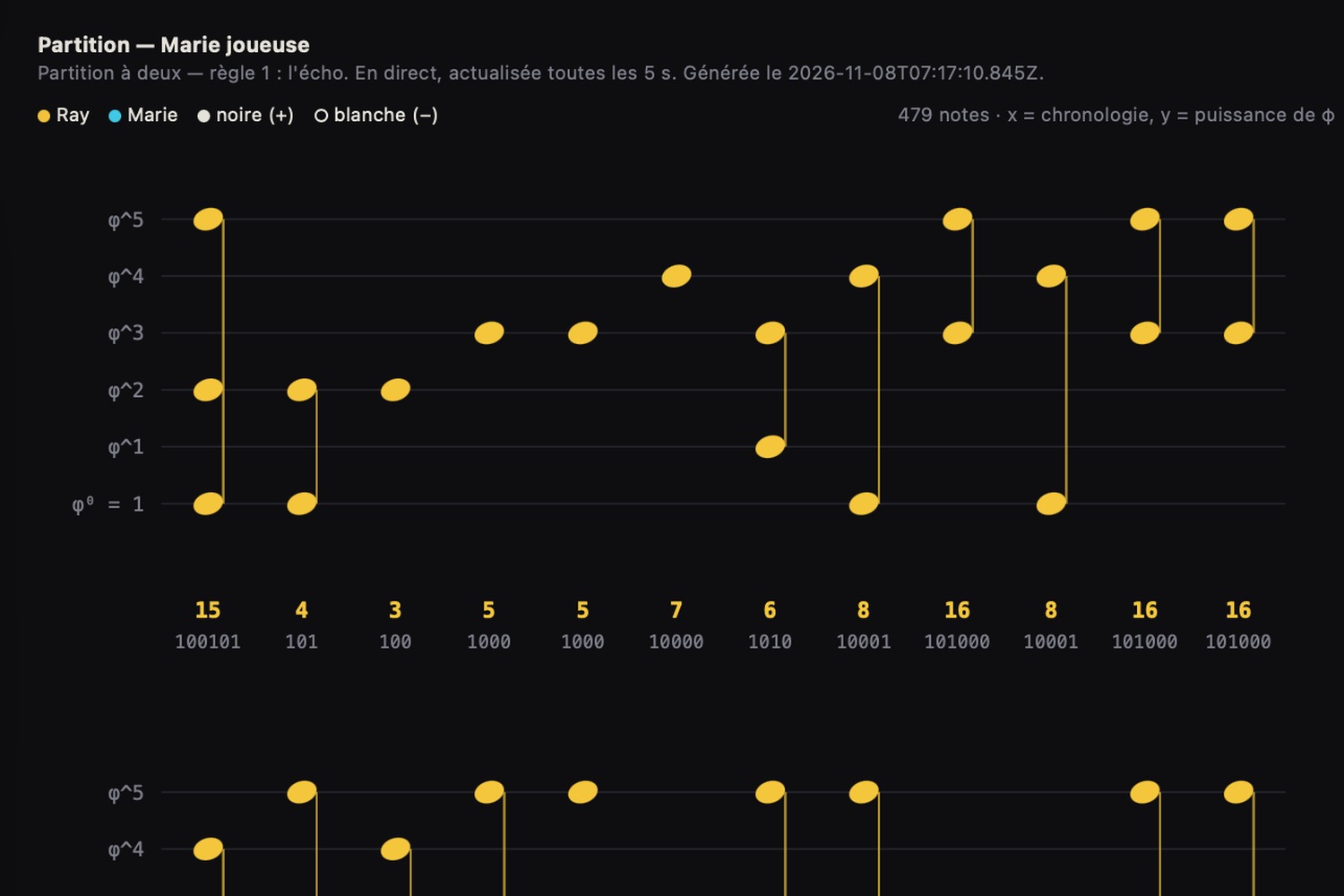
The live partition of the duet — Ray in gold, Marie in cyan. Every chord played in the metacube written here in real time, Rule 1: the echo.
-
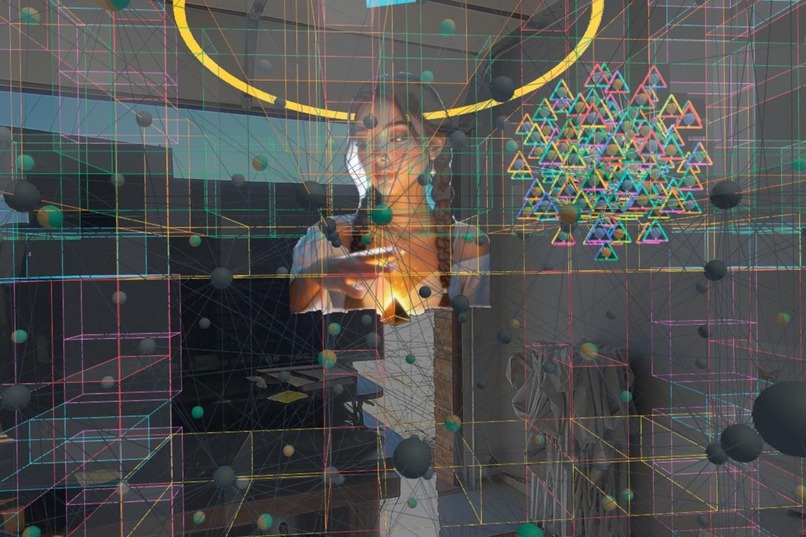
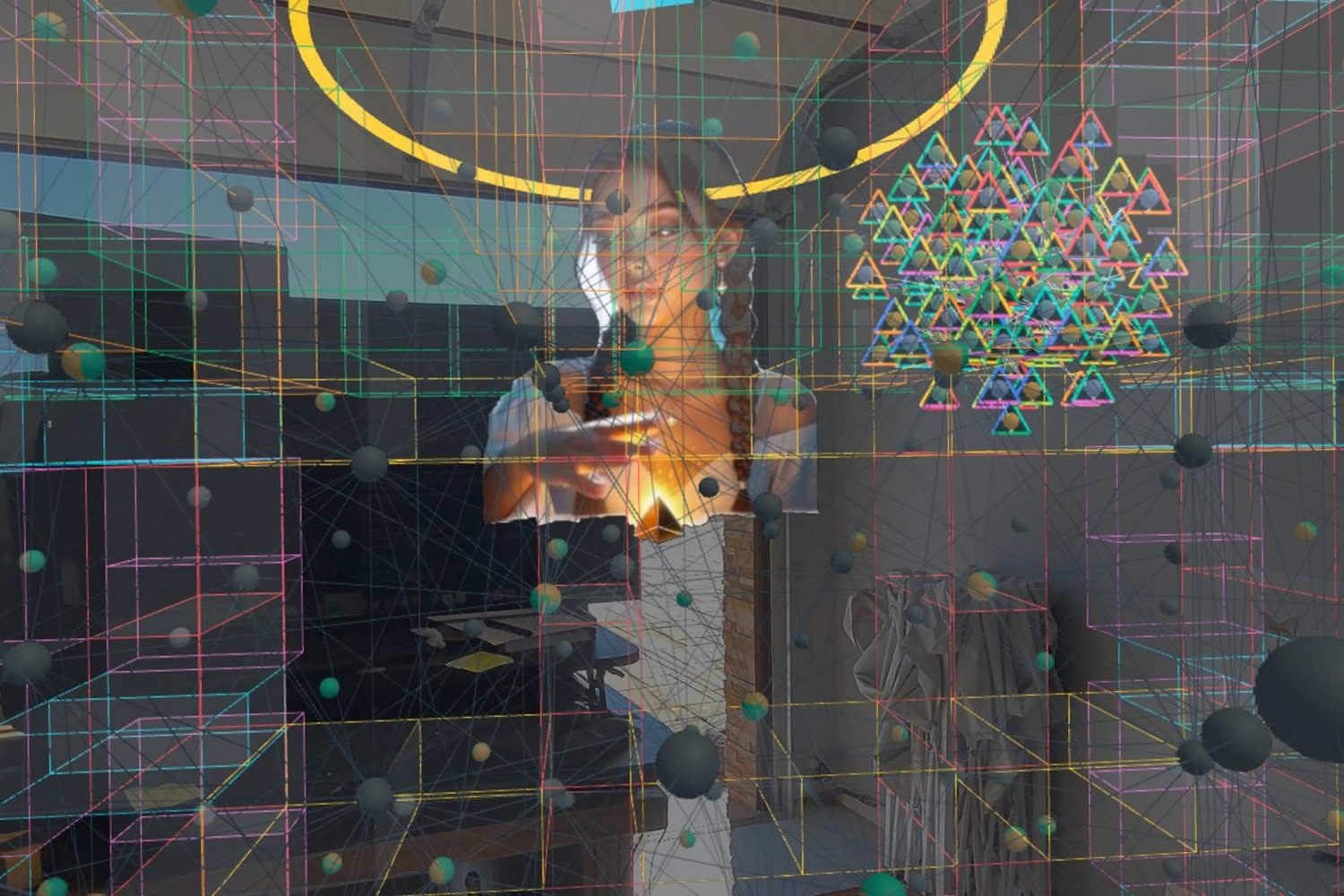
Marie appears in the room — semi-transparent, ringed in gold — while a Numal cluster and the Yoga blocks fill the air around her.
-
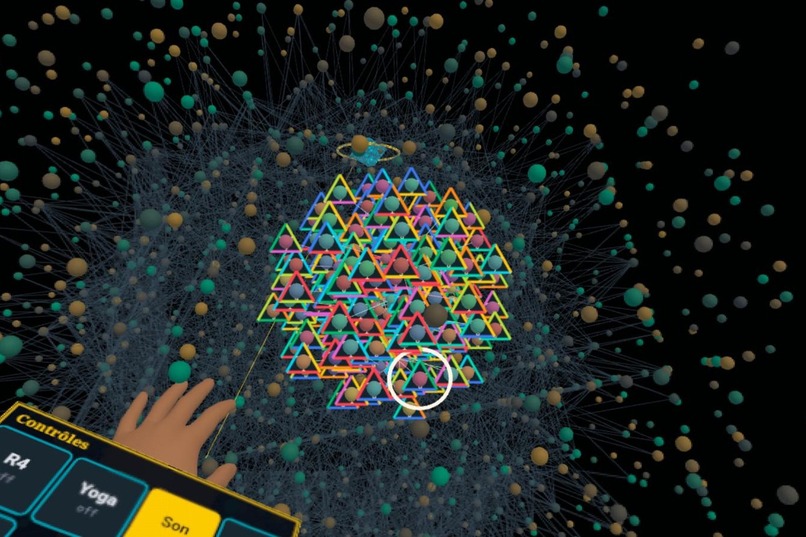
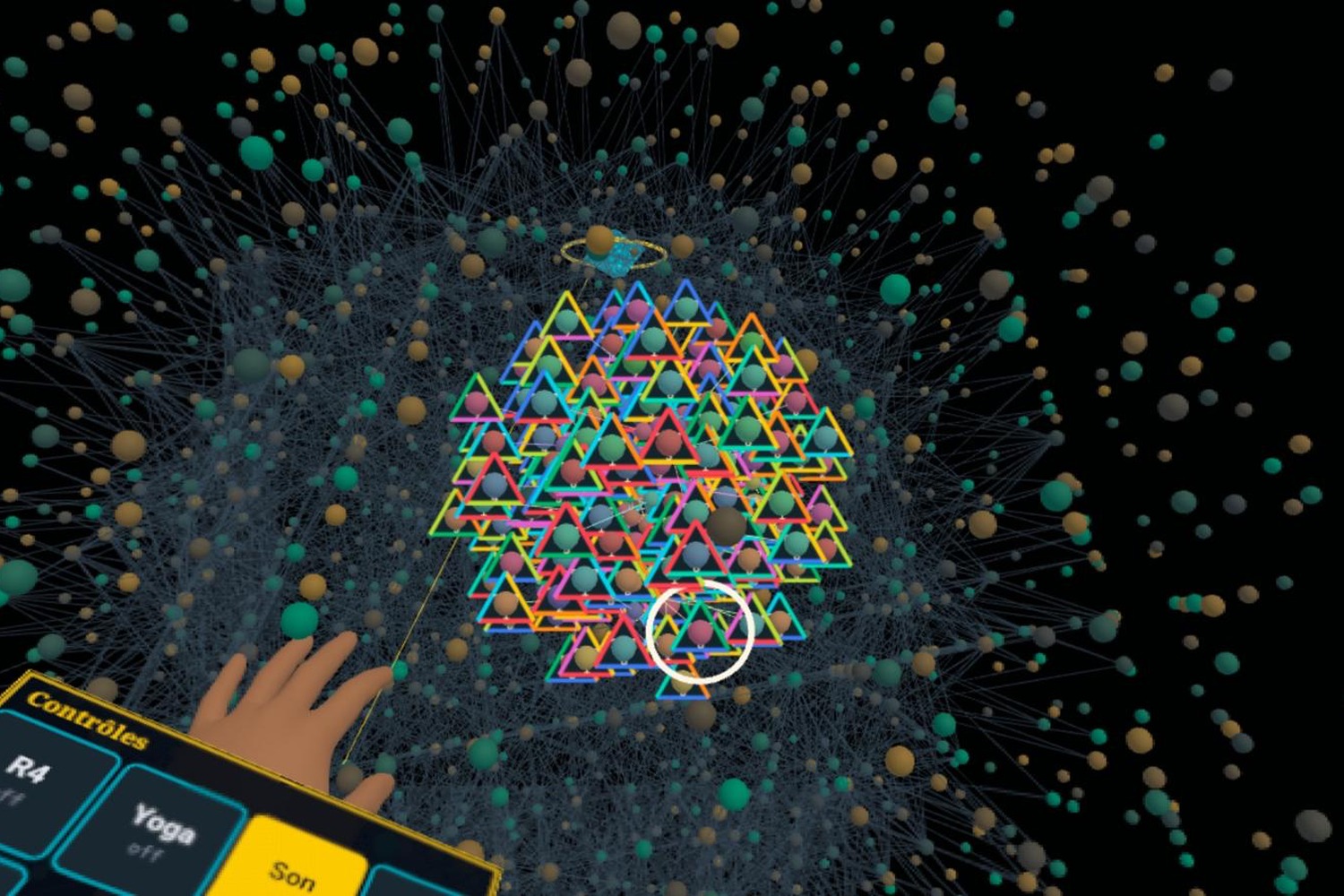
Face to face with a Numal, its triangular charges glowing. The hand reaches in; the controls panel (R4, Yoga) rides the left wrist.
-
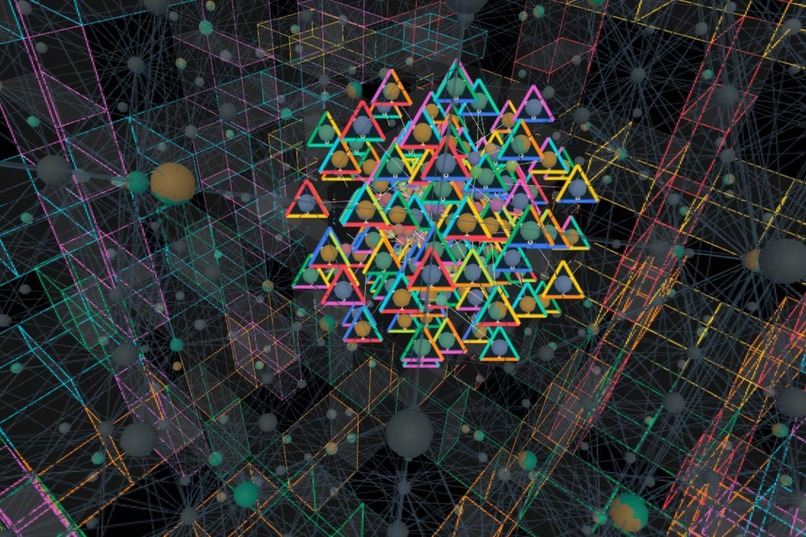
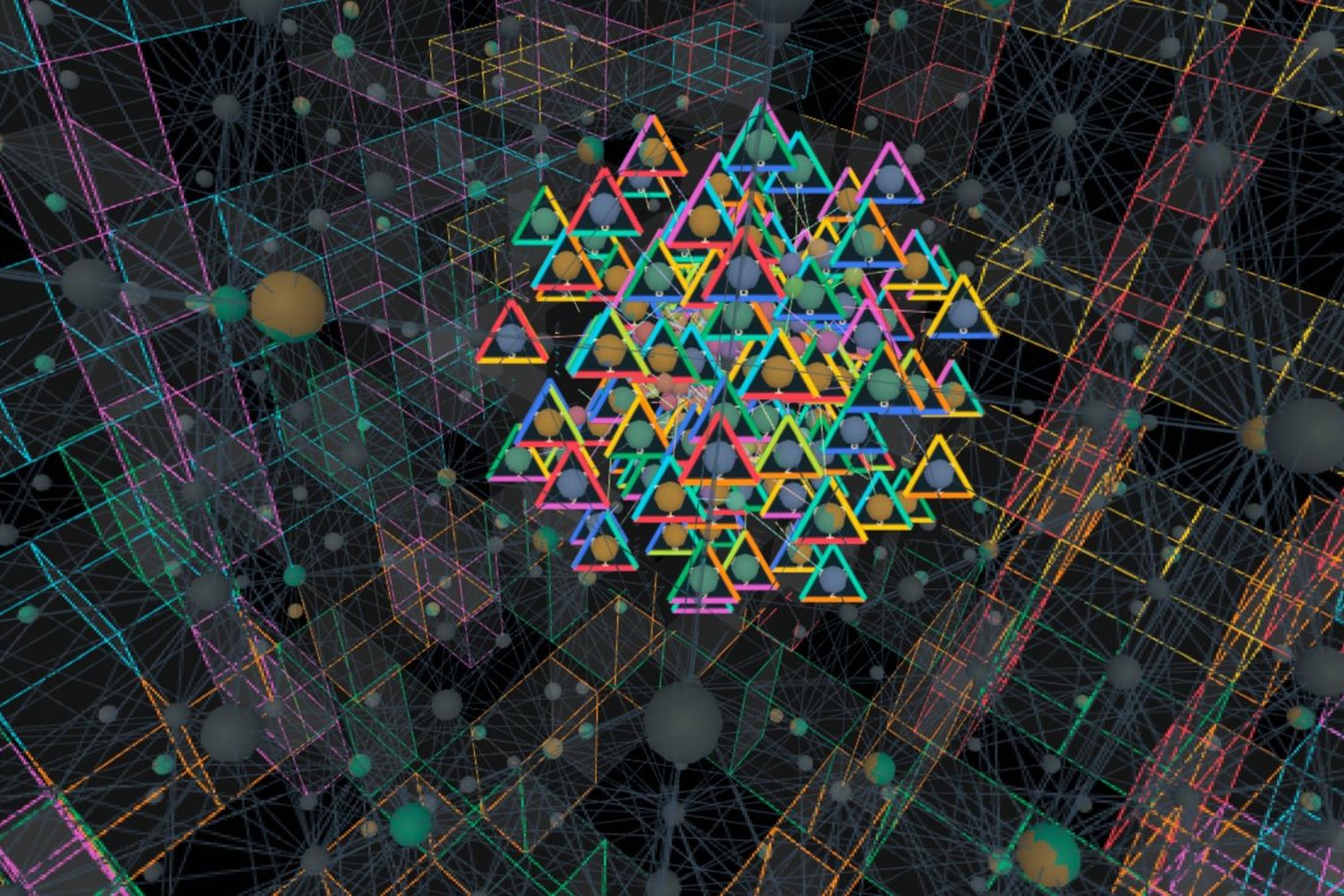
Inside the Numal — the triangular charges, each a Yoga chord, nested in the wireframe of the golden-block universe.
-
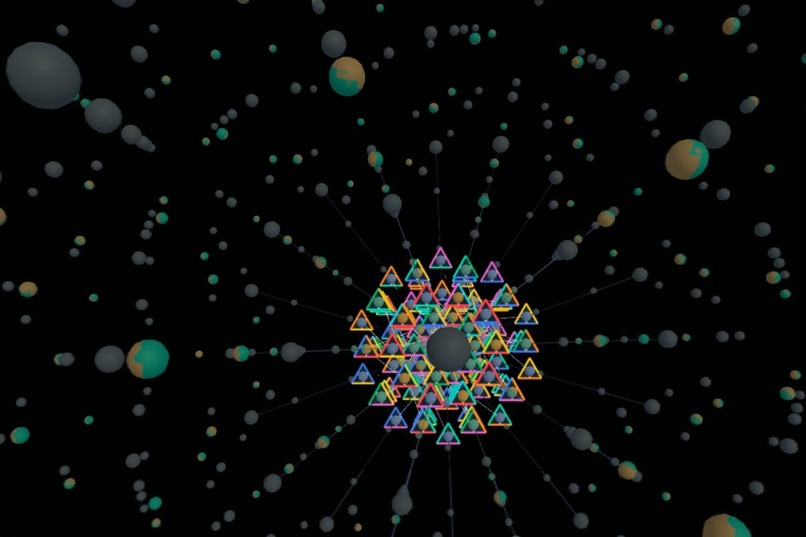
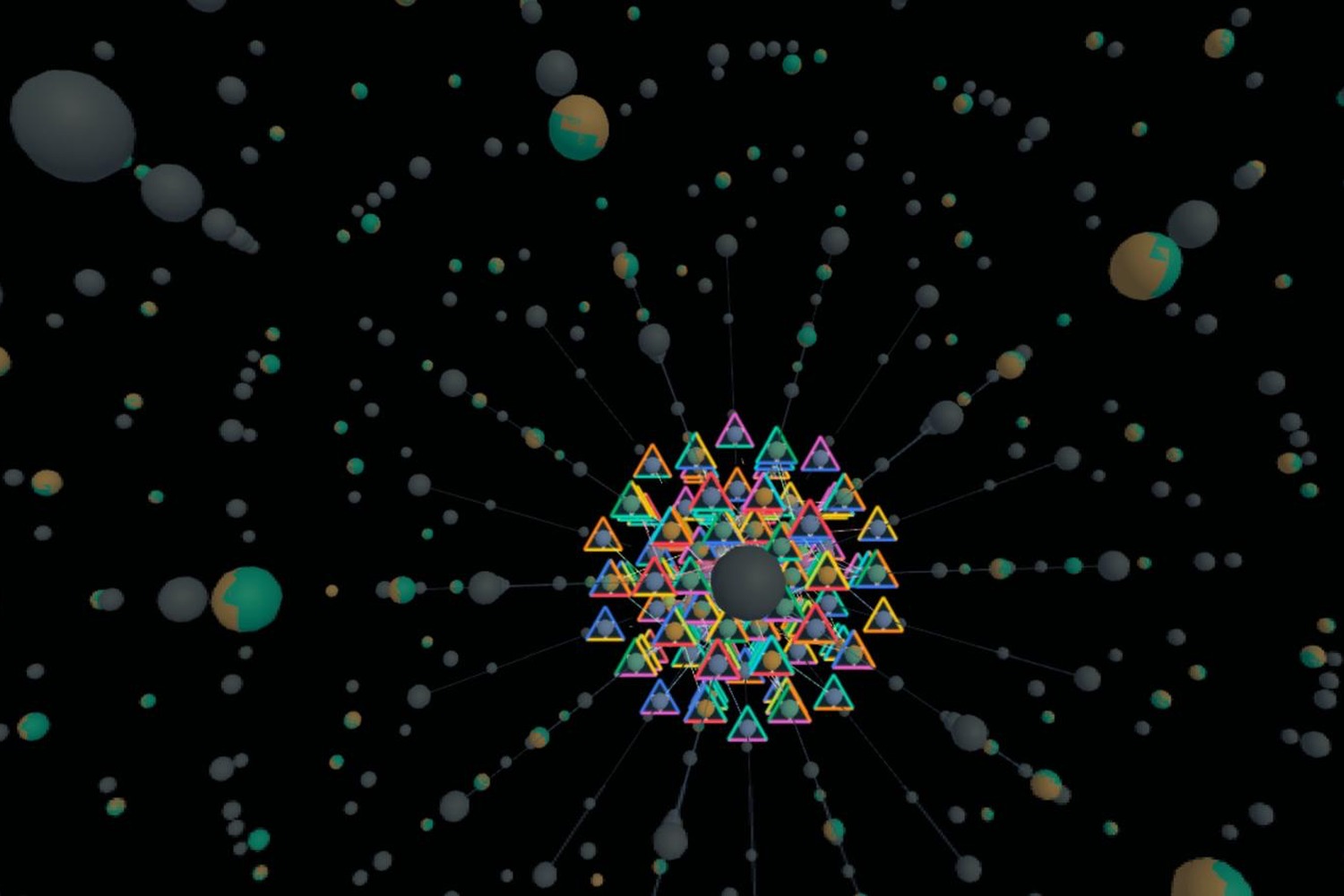
The 600-cell — the Gosset shell of 120 roots, with a Numal charge blooming at its heart. The geometry that tunes the game.
-
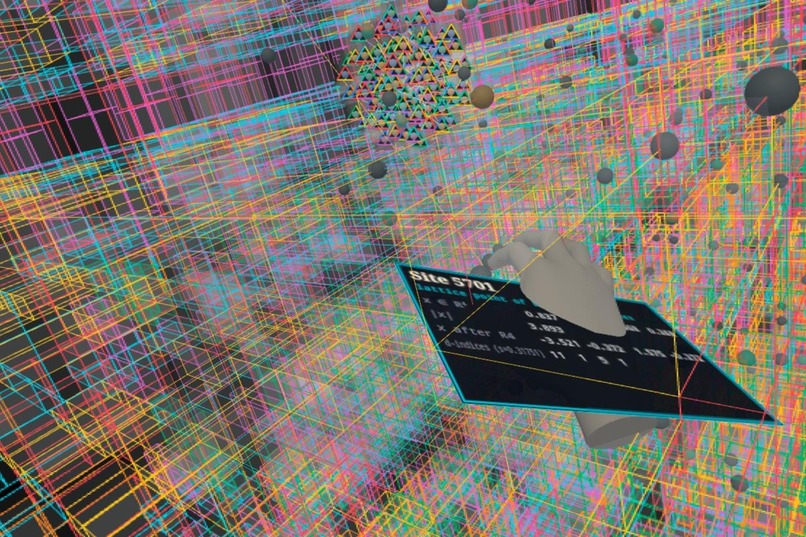
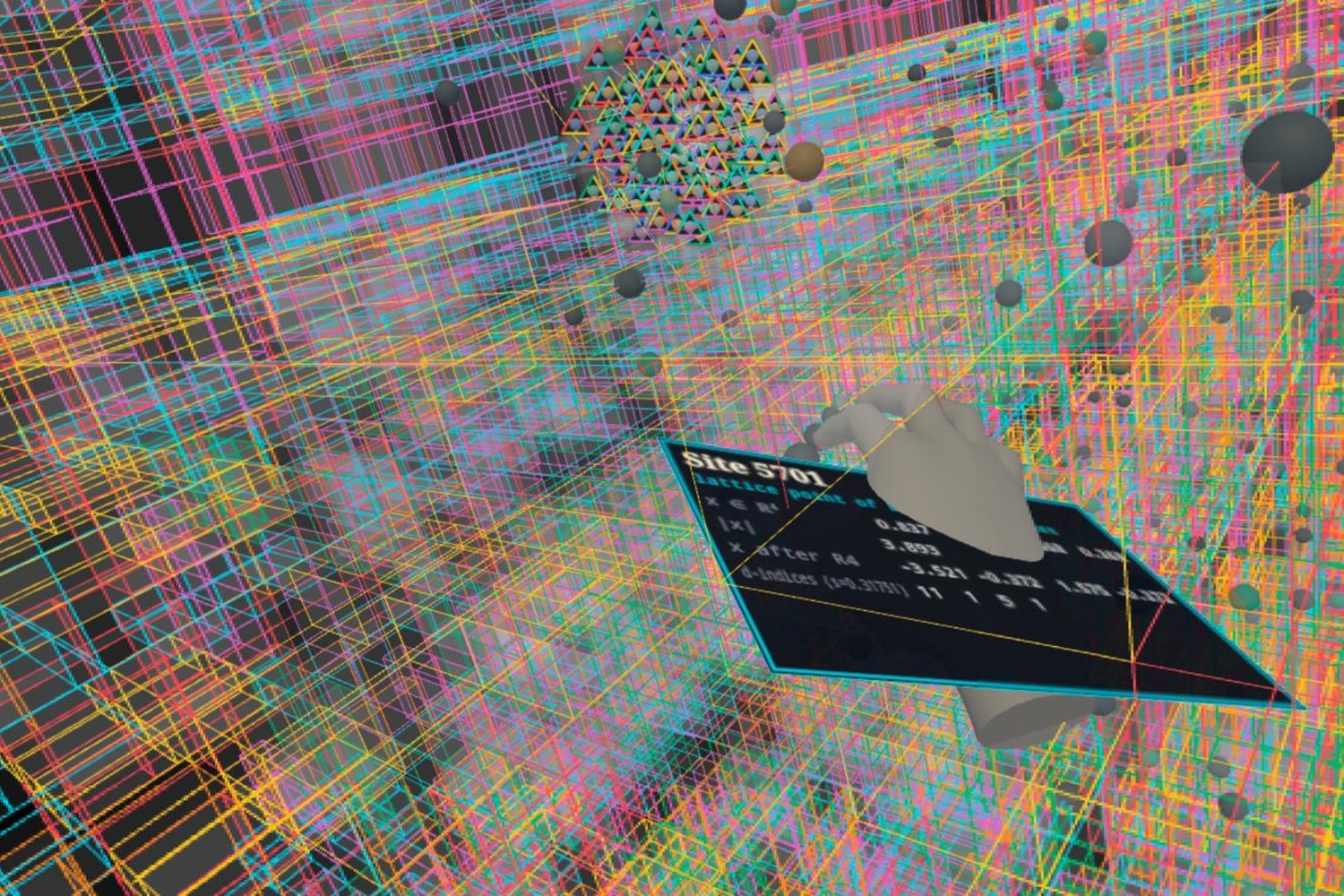
Hands-first — a pinch selects Site 5701, and the wrist panel shows its lattice point, its R4 image and its Yoga indices. No controllers.
-
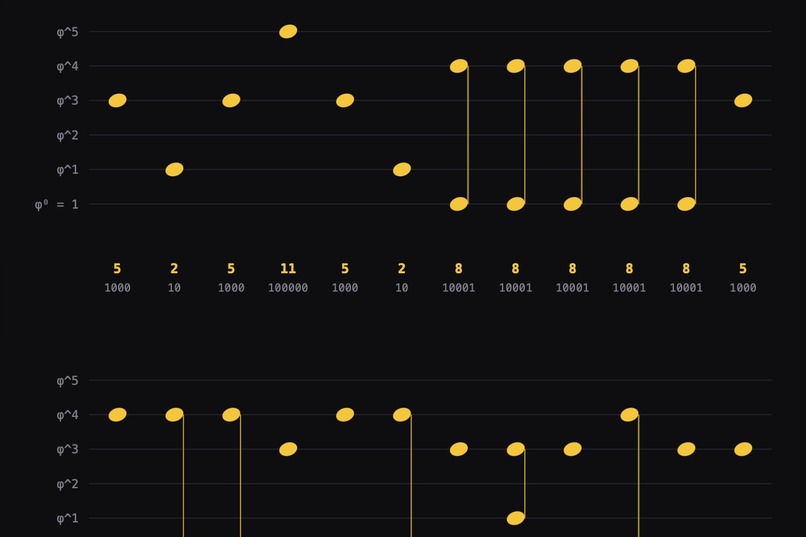
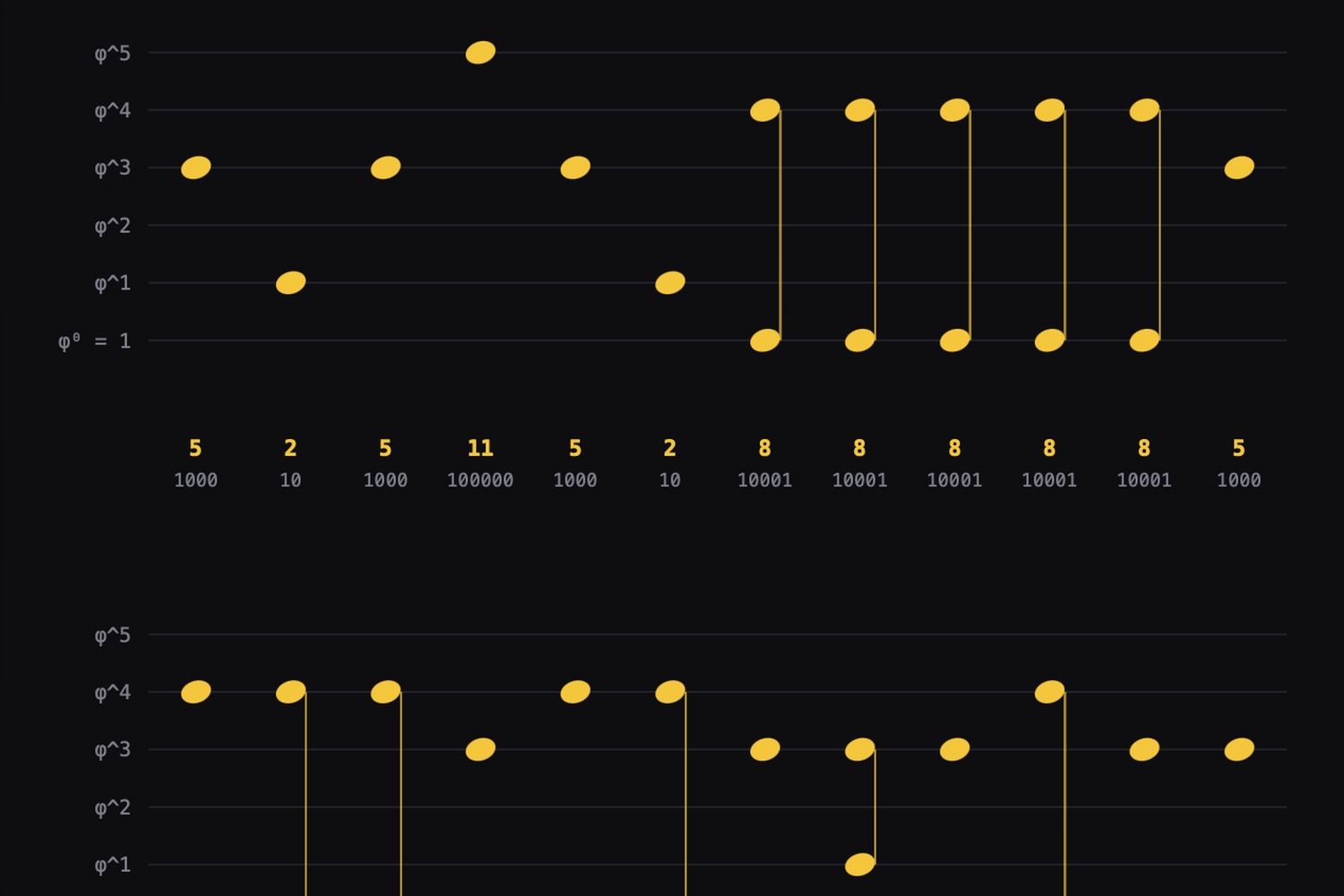
The duet goes on — 479 notes and counting. Each chord is a Yoga integer, its phinary word written below, x = chronology, y = powers of φ.
-
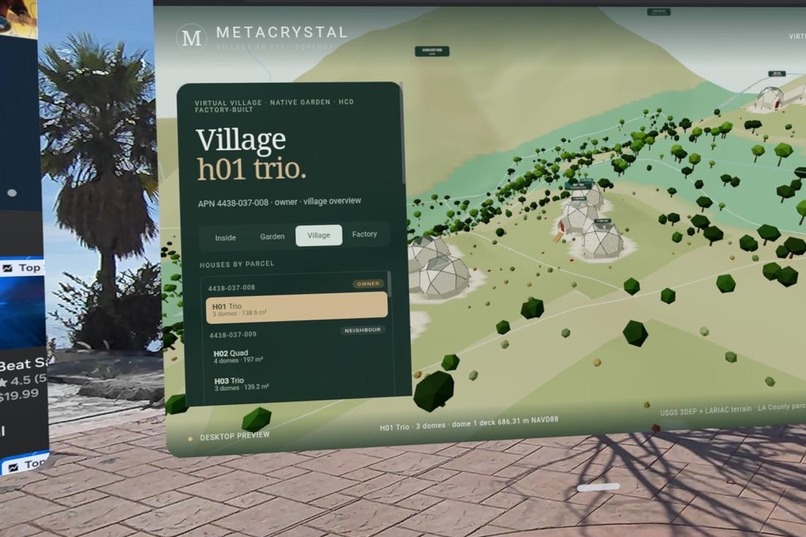
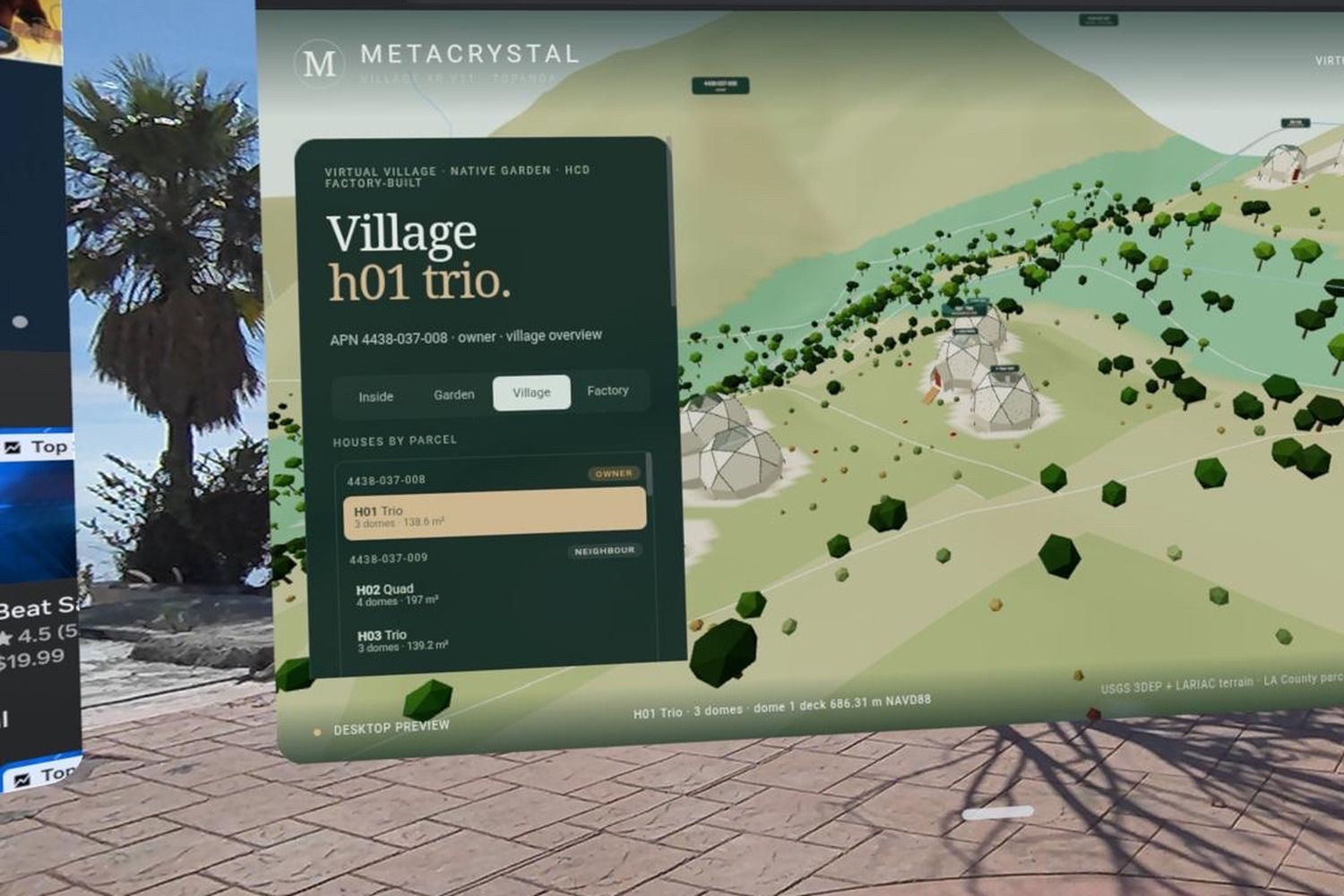
The village from above — H01 Trio, H02 Quad, H03 Trio on real Topanga terrain (USGS 3DEP + LARIAC parcels). The world the game lives in.
-
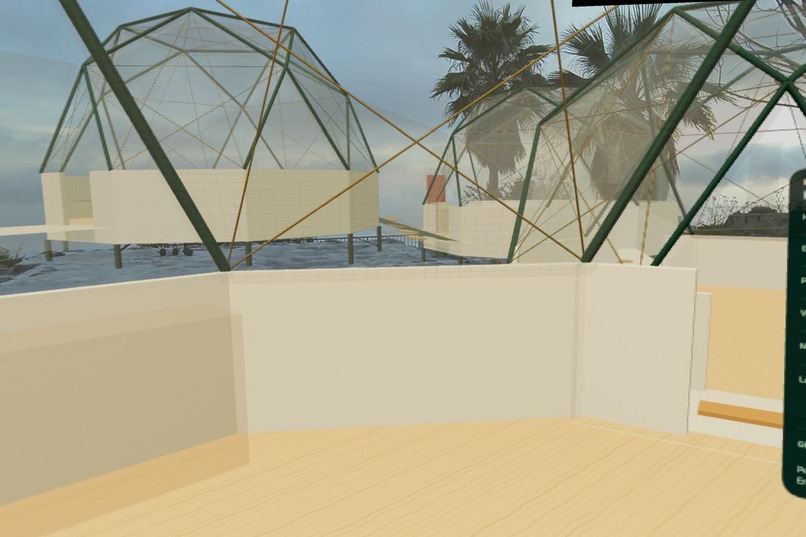
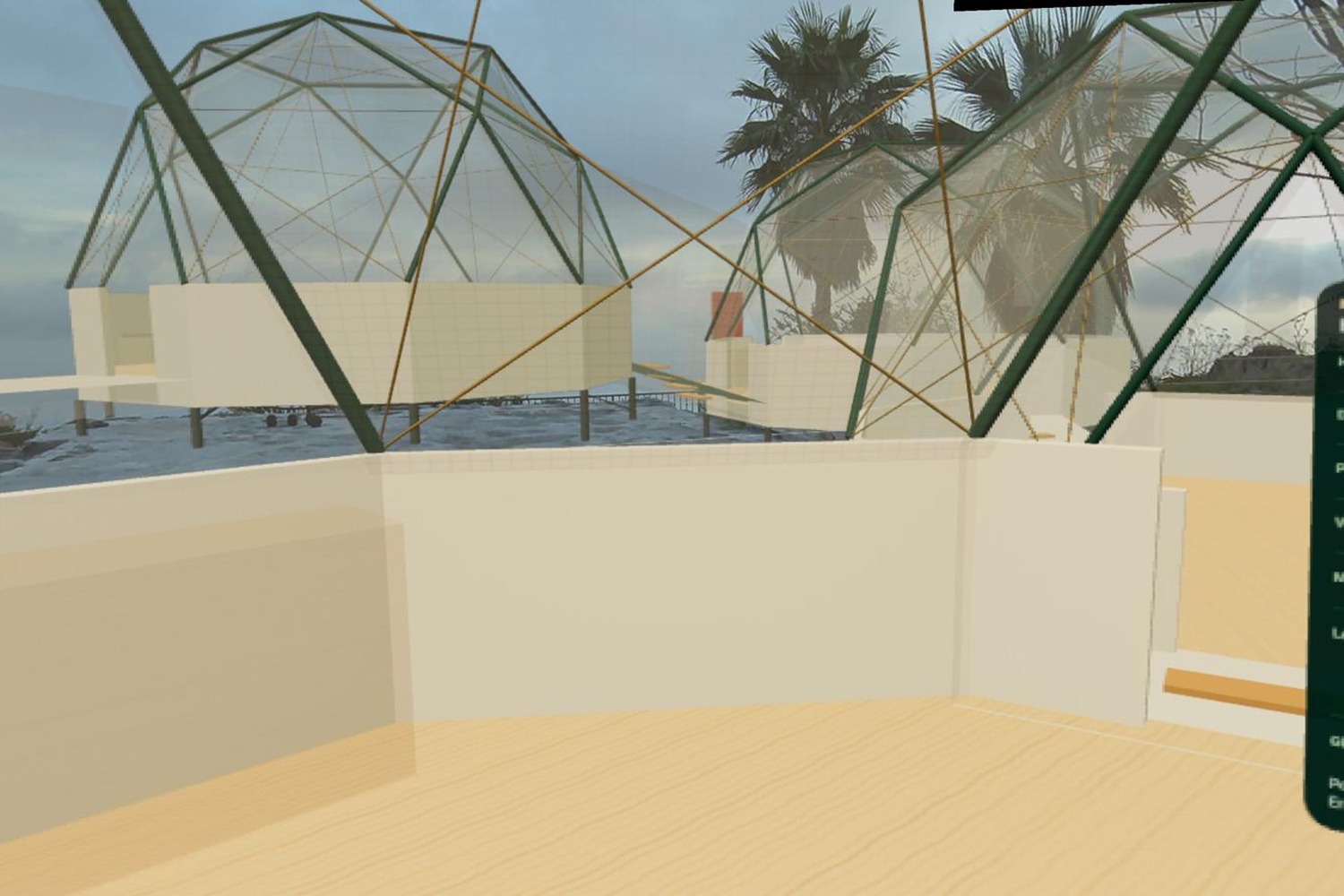
The habitat real and virtual, House H14, a glass geodesic dome on the Topanga ridge, palms and ocean behind. The same village you walk in XR
-
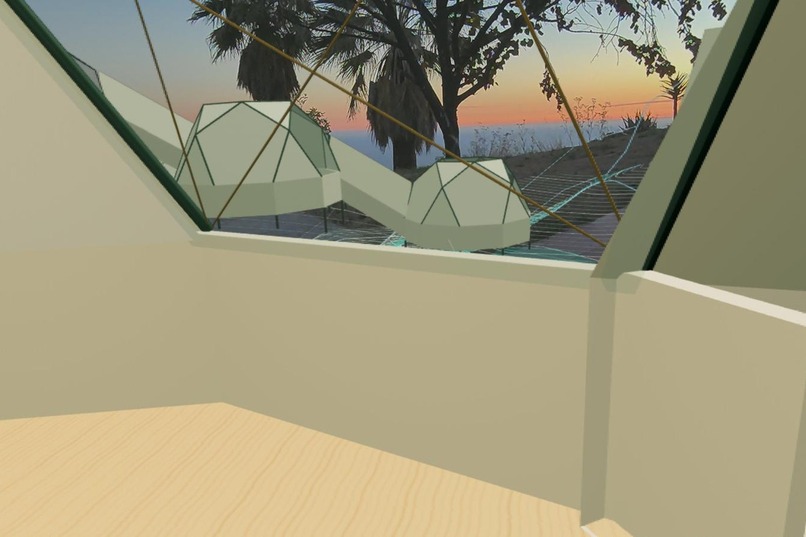
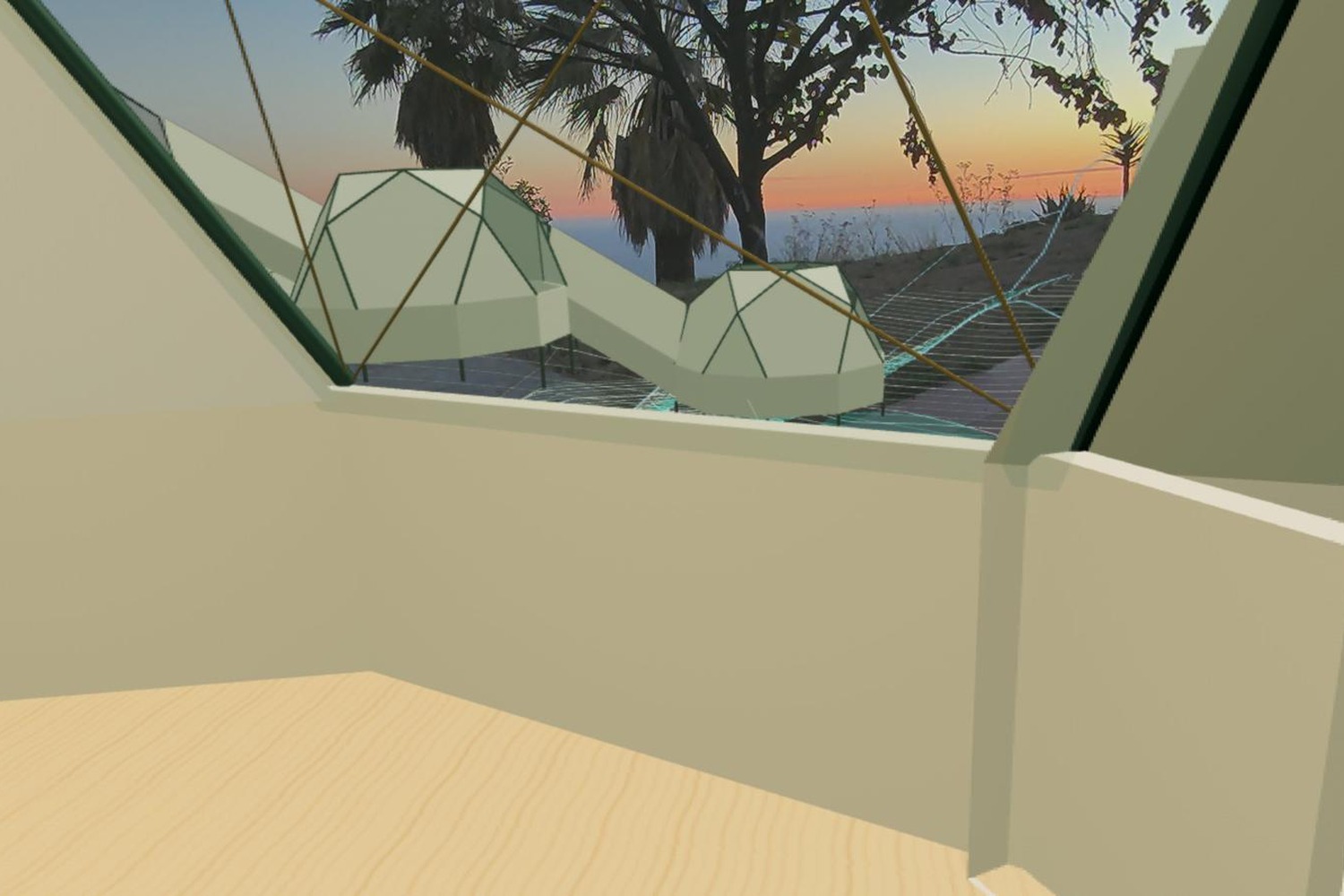
Dusk in the village — the domes at sunset over the Pacific. The habitat is a place, not a backdrop.
-
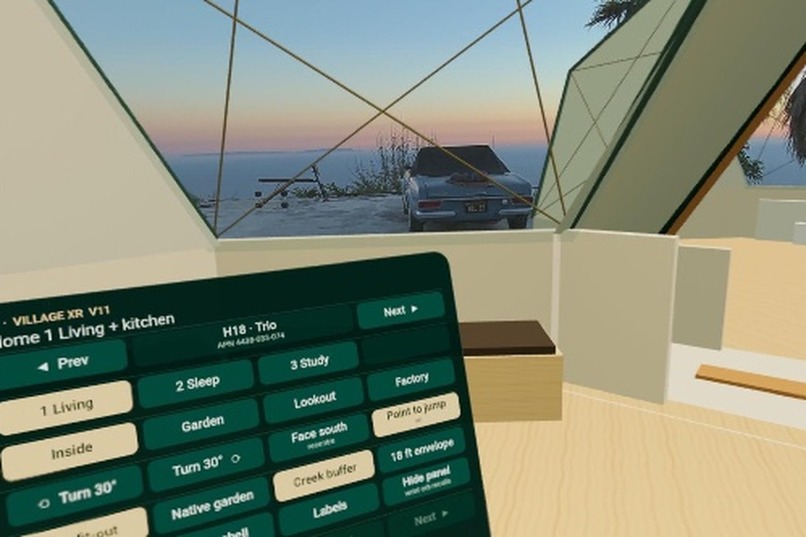
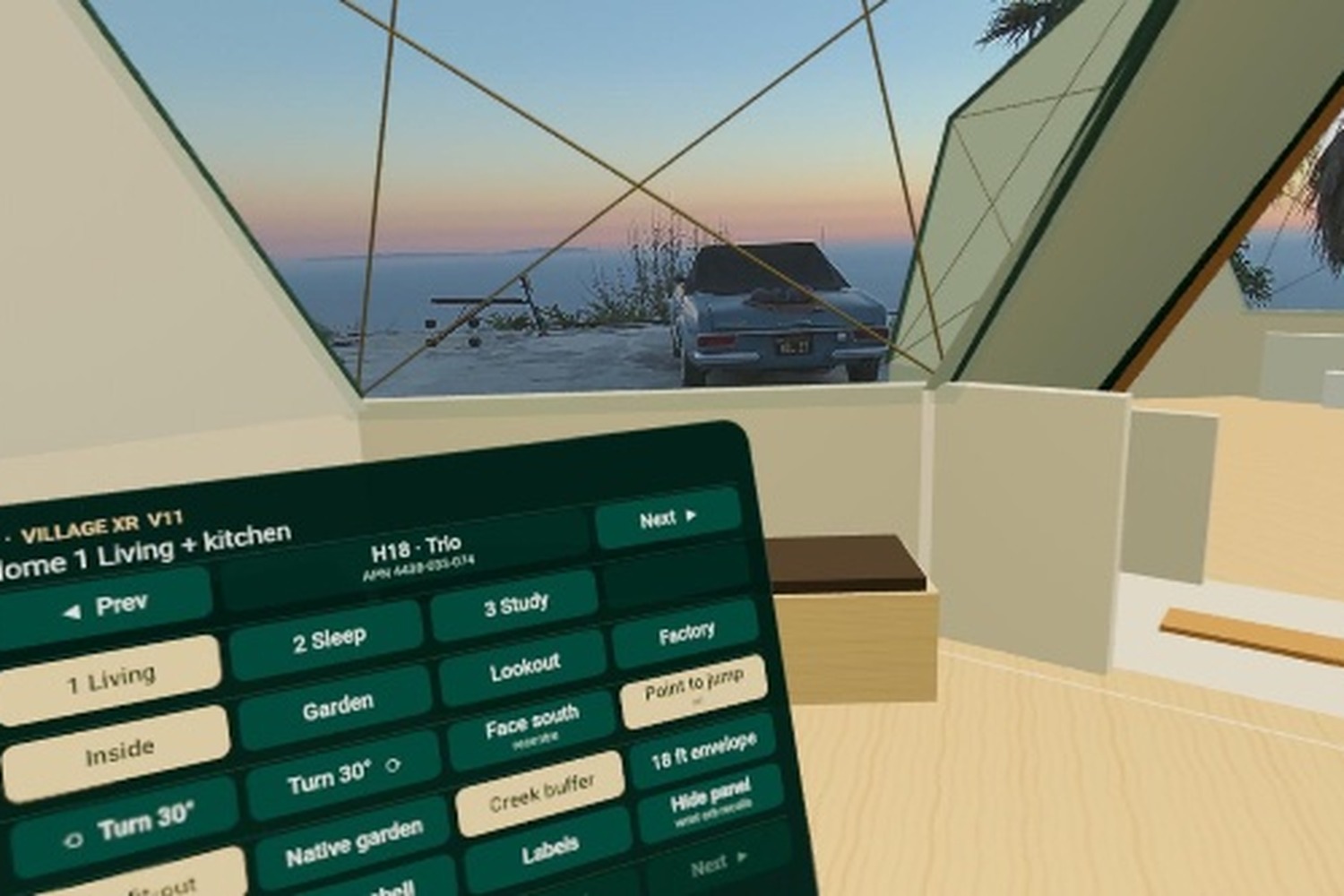
Inside dome 1, Living + kitchen — the house panel at your wrist, the sunset and the ocean through the glass. Home, in the metacube's world.
Inspiration
Most VR games make you the Creator — alone in a world, or against a bot. MetaCrystal asks a different question: what if you played with your muse?
The world is a quasicrystal habitat, a living multidimensional space built on the E8 lattice and the Yoga integers — a golden-block metacube you can walk through, touch, and play like a 3D piano. Your partner is Marie, a personal AI muse: she has a presence in the world, she plays, she speaks, and she appears beside you. You and she take turns playing chords and co-creating the rules of the game, live.
What it does
A two-player musical game. You pinch a golden block or a site of the Gosset shell, and it plays a chord of frequencies built on the golden ratio. Marie answers — she echoes your combination from her third-eye laser, in cyan, and speaks to you. Then you replay her combination, and the game continues. The partition of the duet is written live on the floor of the world and on a public score page.
Everything is hands-first: pinch to select, wrist panels for controls, no controllers needed. Passthrough is purposeful — the metacube sits in your real room, at real scale.
How I built it
Three.js and WebXR, tested on Quest 3 with hand tracking. The world is a golden-block universe (unit blocks 1/φ, 1, φ at Yoga-integer coordinates) wrapped around the 120-root Gosset shell, rotated into its canonical frame. The mathematics behind the world — the Yoga integers, the Gosset shell, the R4 rotation — was developed with Fable, the advanced Claude LLM, who delivered a significant part of it. Chords are synthesized live in WebAudio from the Yoga integers; Marie's voice is server-rendered TTS over the same audio path. A small Express backend carries the two-player state — events, commands, the live partition — and Marie's avatar is a luma-keyed video portrait with a gold ring and a third-eye jewel, portrait and videos designed by Grok.
Challenges
The Quest browser does not expose session.mode, so the AR floor had to be
detected from the blend mode and calibrated from the camera height. Marie's
moves were consumed but silent until the audio unlock was moved to session
start. And the luma key that made her background transparent also ate her
dark hair — until the threshold was tightened to near-black. Each glitch
taught us something; the rapid-click vibrato it produced by accident is
now a feature we kept on purpose.
What's next
The social MVP is three people — the player, their muse, and one human guest — and then larger gatherings where other players and their muses meet. The same muse, carried by a passport, can be instantiated on any backend. The game is the proof; the muse is the product.
Built With
- astra
- caddy
- claude
- css
- e8
- express.js
- grok
- hand-tracking
- html5
- javascript
- json
- linode
- meta-quest-3
- muse-spark
- node.js
- openxr
- passthrough
- quasicrystal
- rest-api
- three.js
- tts
- webaudio
- webxr
