Inspiration
Most city-building games focus on money, zoning, and traffic. Water, sewage, and pollution are often reduced to background meters. Metabolis began with a different question: what if the movement of matter through a city was the main design problem?
What it does
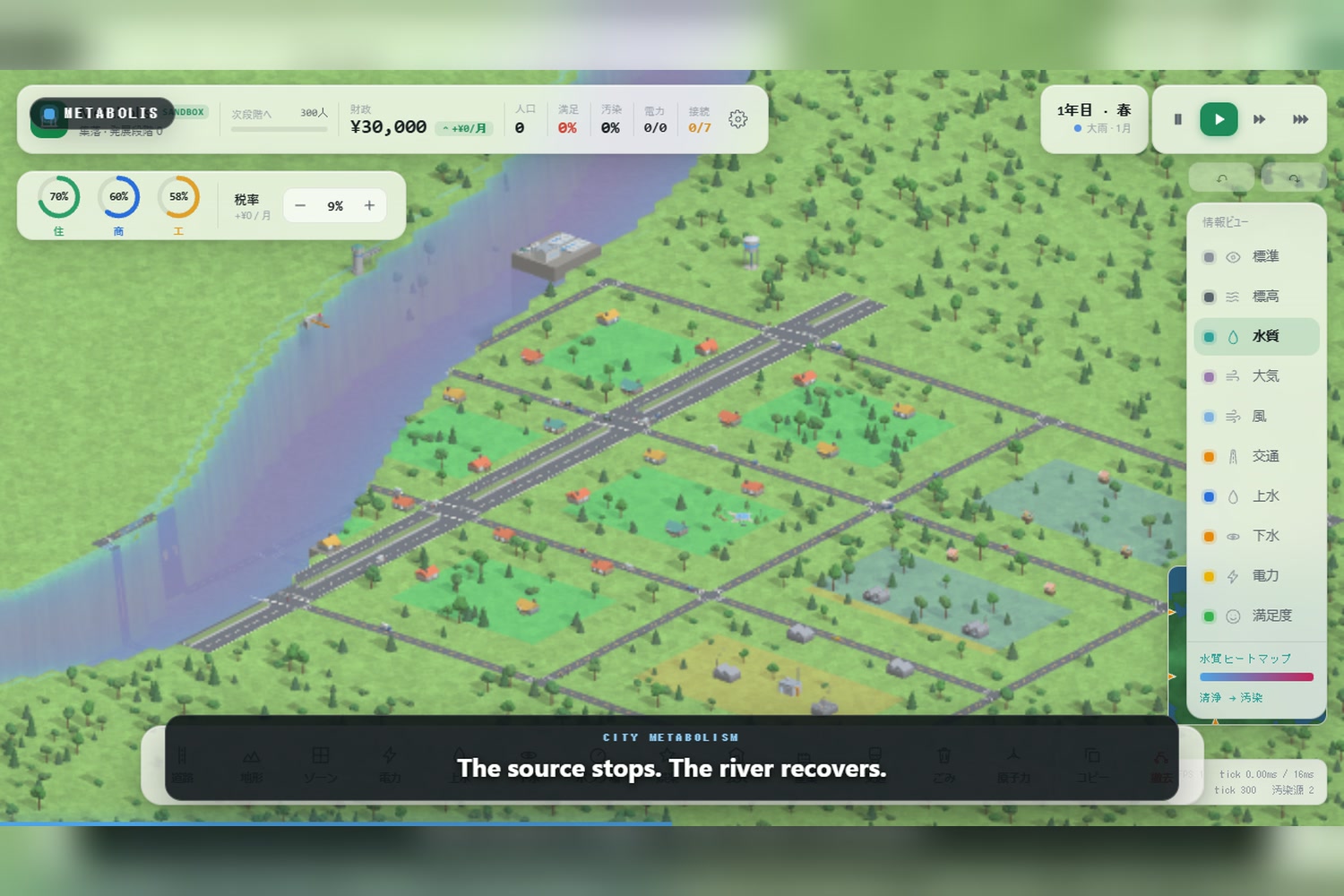
Metabolis is a deterministic, low-poly 3D city-building game about the hidden metabolism of a city.
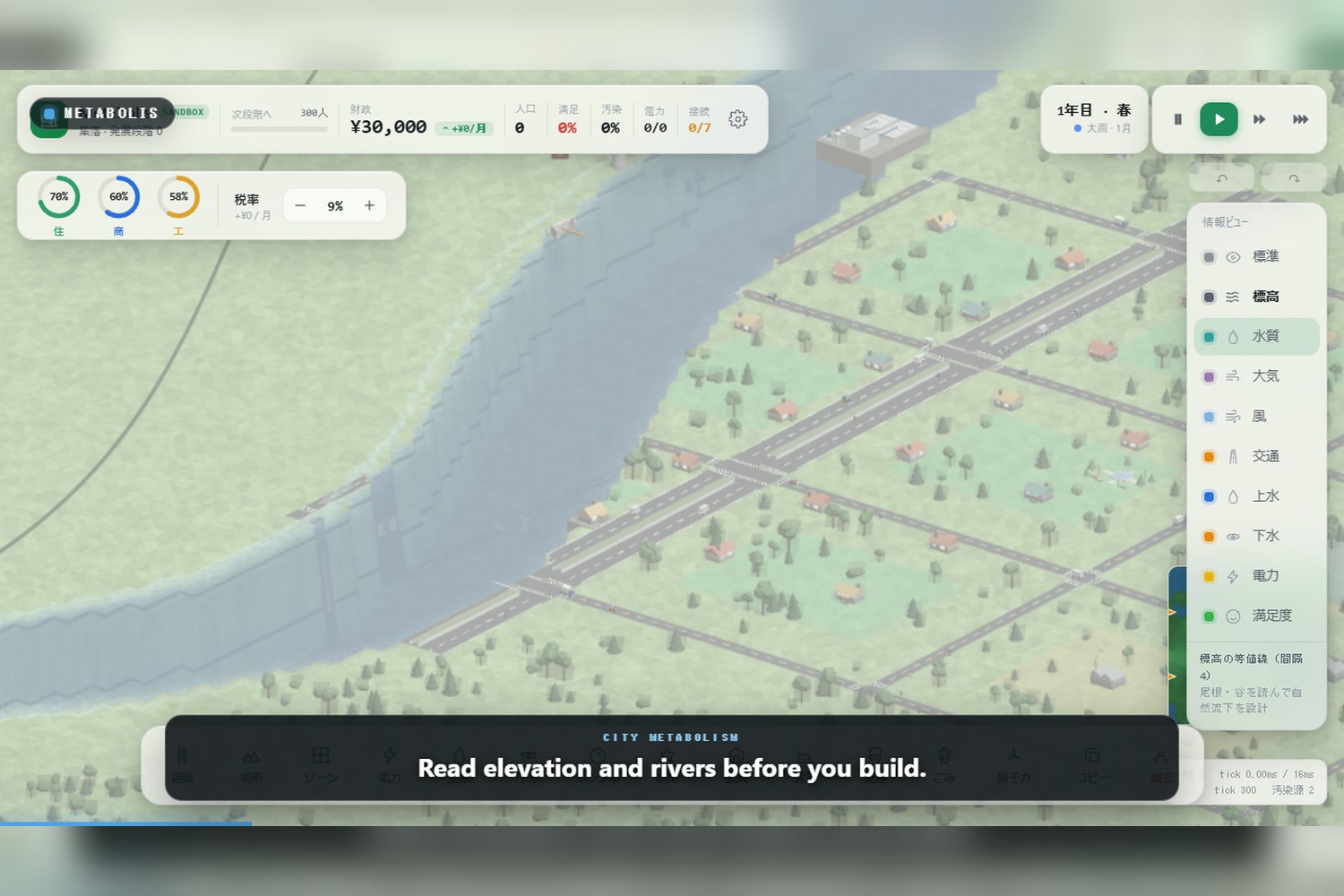
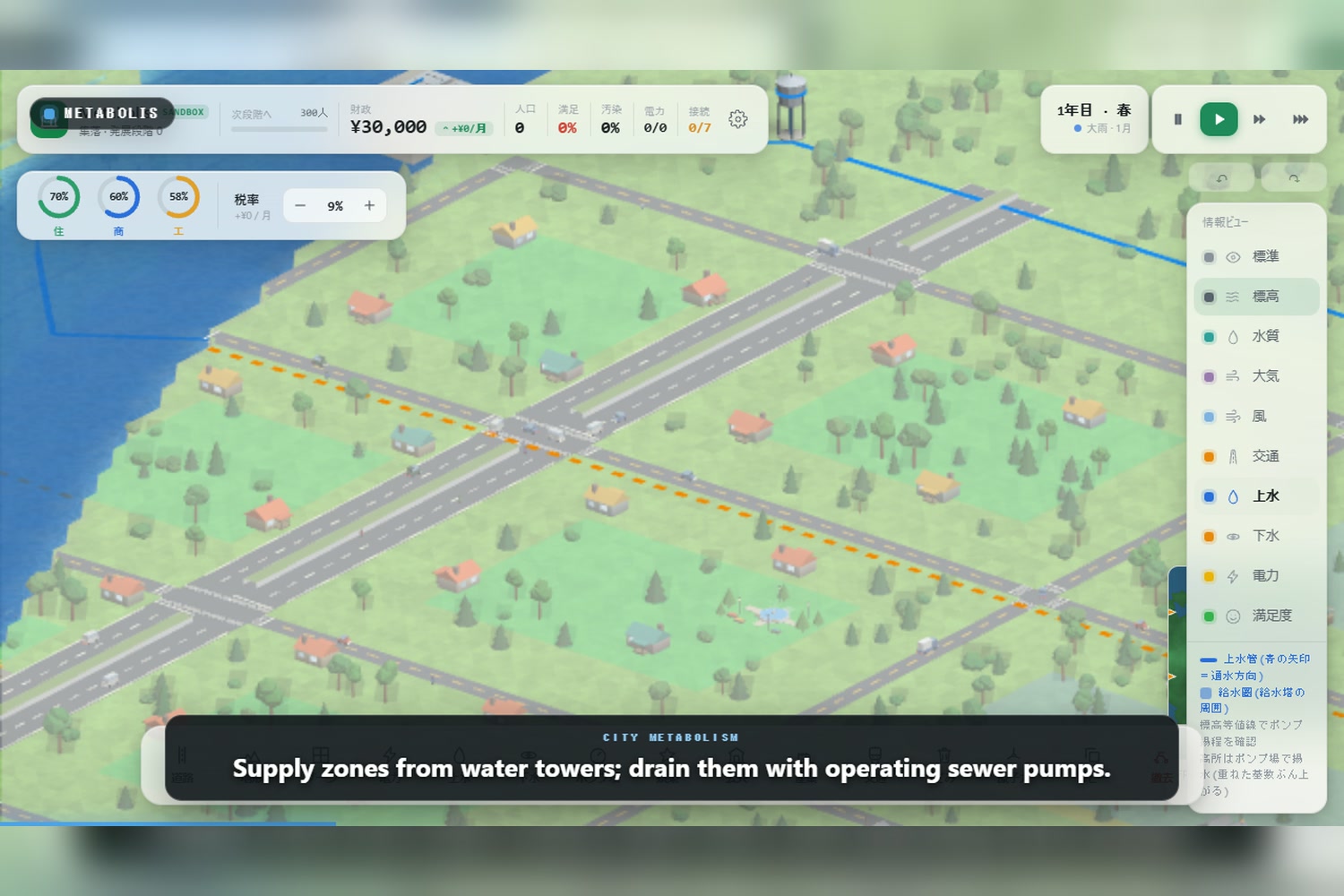
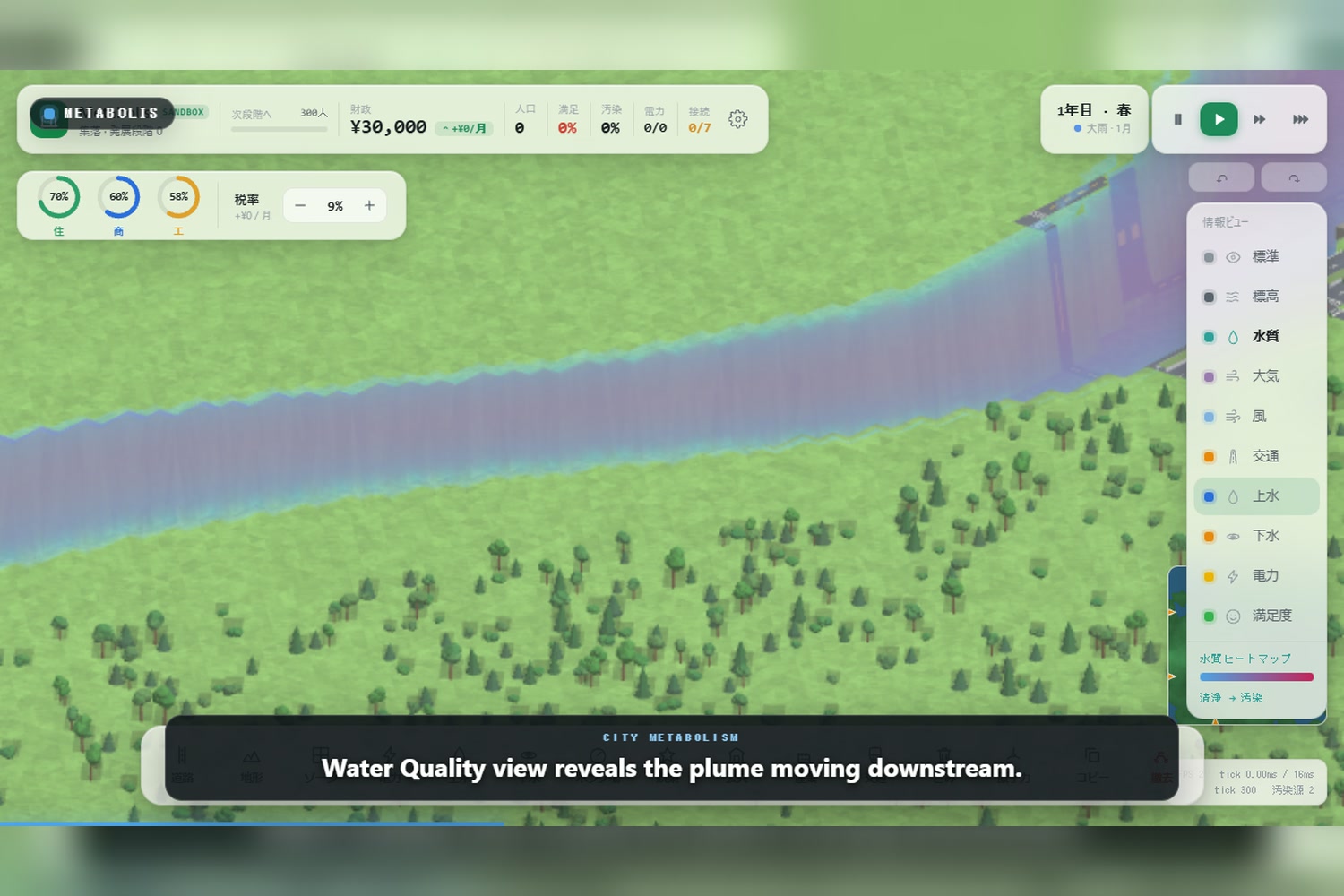
Players read terrain and rivers, build roads and zones, provide water and sewer coverage, and watch untreated discharge create a visible pollution plume downstream. Fixing the treatment and discharge chain stops the source and allows the river to recover.
Water, sewage, weather, wind, traffic, electricity, air quality, and satisfaction are presented as connected systems rather than isolated penalties.
How we built it
The game is written in TypeScript and rendered with Three.js and WebGL. Its simulation runs in a Web Worker and uses deterministic seed-and-tick updates, making failures and improvements reproducible.
Vite and vite-plugin-singlefile package the complete playable build—including code, UI, and audio—into one self-contained HTML file with no external runtime assets.
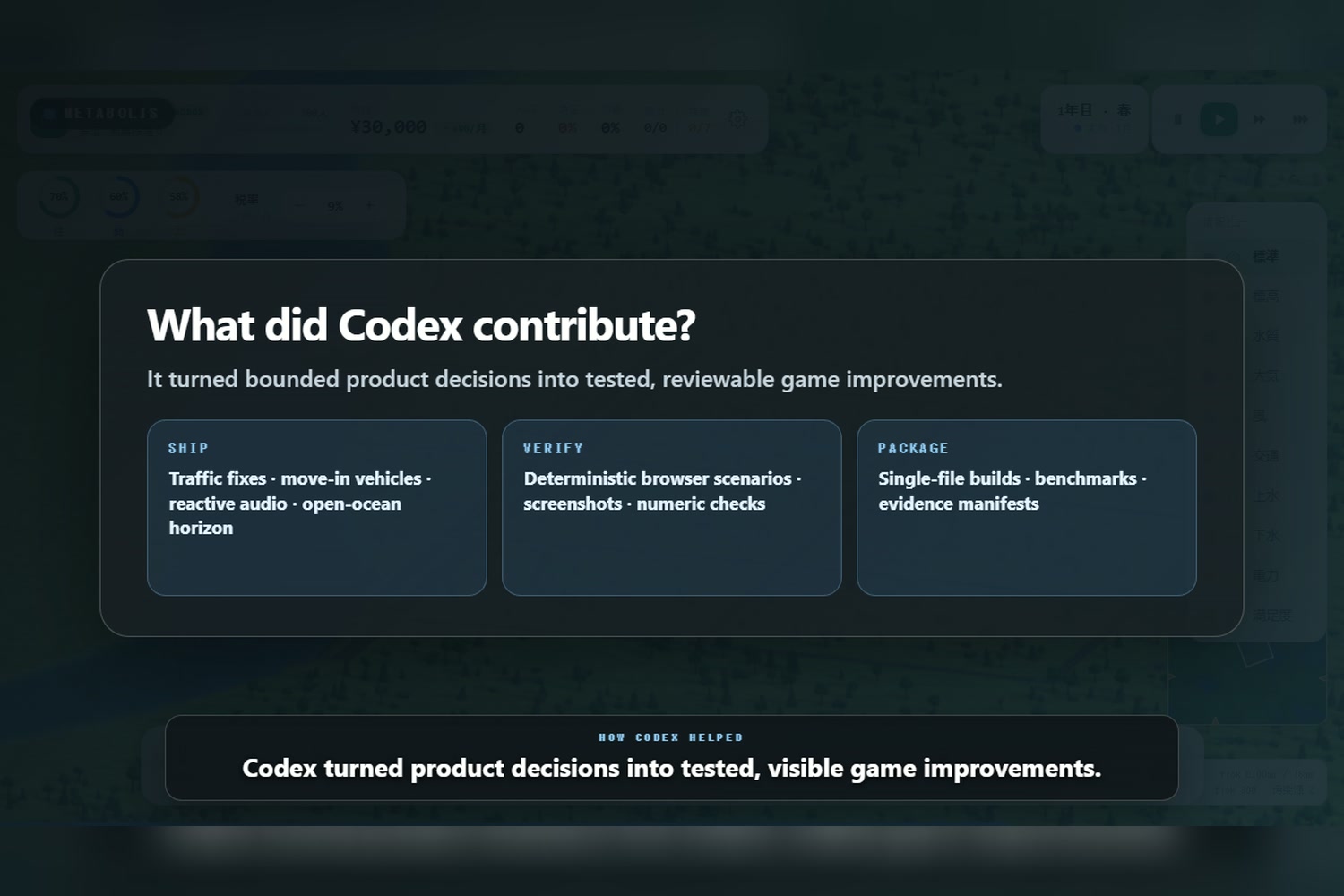
Metabolis existed as a prototype before Build Week. During the event period, we used Codex to turn it into a more complete and judgeable vertical slice, including traffic fixes, move-in vehicles, weather-reactive audio, the open-ocean presentation, deterministic browser scenarios, and the final evidence-backed demo package.
How Codex helped
Codex was used as an implementation and verification agent, not only as code completion.
Work was divided into bounded task specifications. Codex implemented each task on an isolated branch, reproduced failures, ran type checks and deterministic browser scenarios, measured performance, captured screenshots and numerical evidence, and rebuilt the single-file demo.
Results were packaged into machine-readable manifests and submitted for an independent lead audit. The implementation and audit roles never shared a branch. This let us move quickly while keeping every result reproducible and reviewable.
Challenges
The hardest challenge was making invisible systems understandable. Pollution had to follow the terrain and water flow while remaining visually readable to the player.
We also had to distinguish infrastructure from actual service: pipes alone do not provide water or sewer coverage. Connected and operating facilities do. Deterministic browser tests and visual evidence helped us find cases where the simulation was correct but the player feedback was unclear.
What we learned
Determinism is useful for more than simulation. It also creates a reliable collaboration contract between people and coding agents.
A task becomes much easier to review when it includes a fixed scenario, expected numerical results, screenshots, build hashes, and a clear stop condition.
We also learned that a small playable system with a visible cause-and-effect loop communicates more effectively than a larger collection of disconnected features.
What's next
Next steps include full English UI localization, deeper treatment and waste-processing chains, more scenarios, and a publicly hosted version of the single-file build.

Log in or sign up for Devpost to join the conversation.