-
-
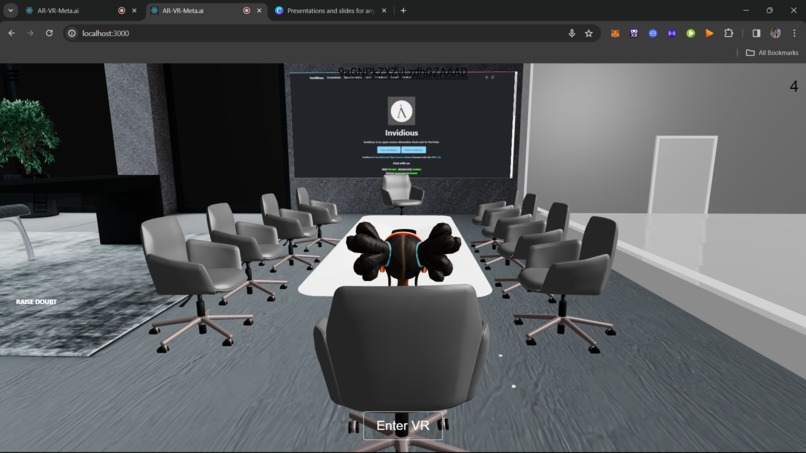
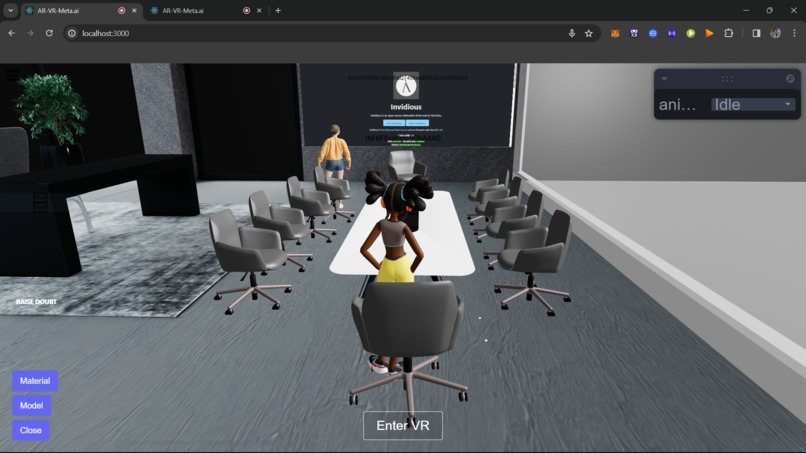
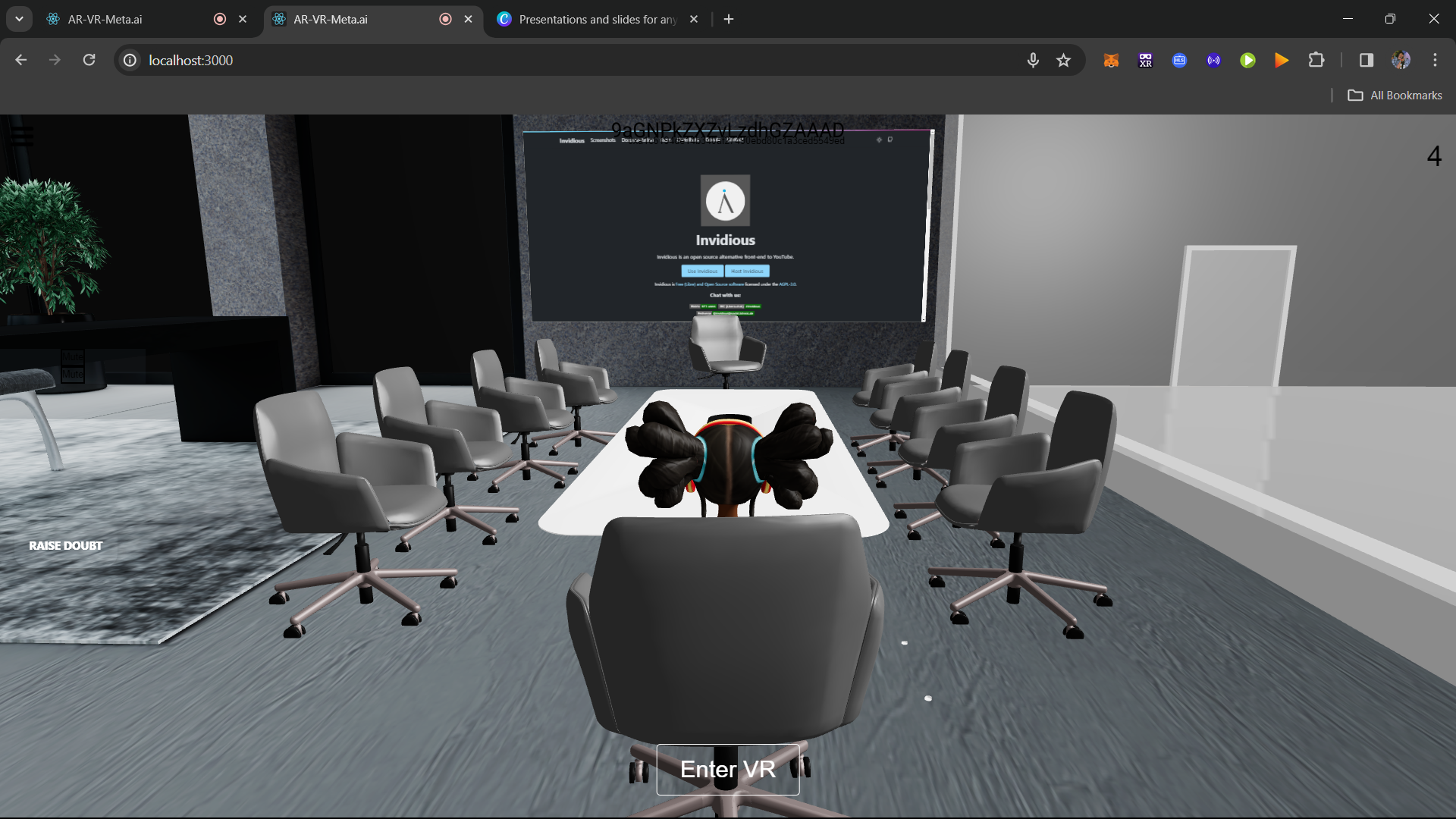
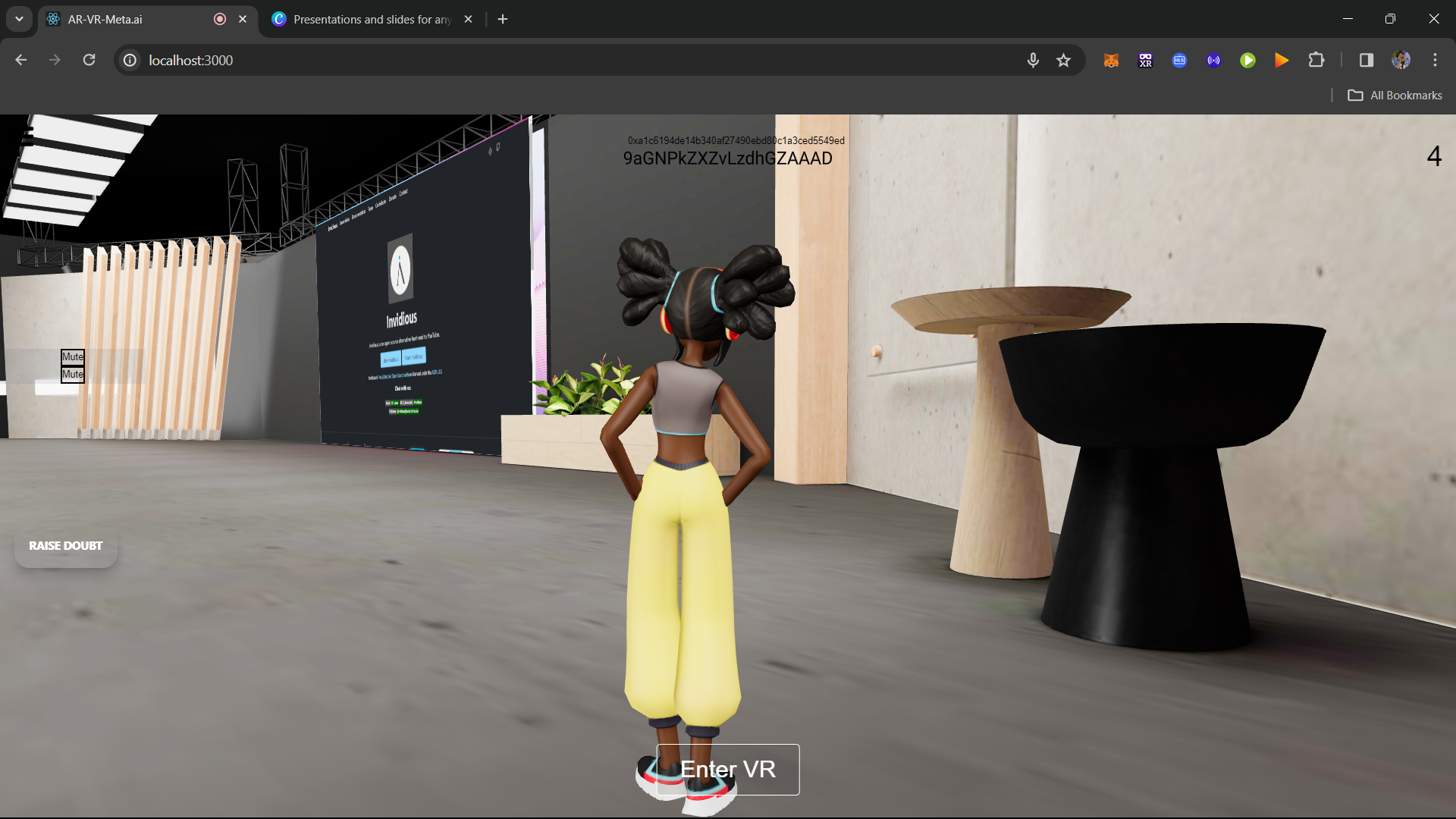
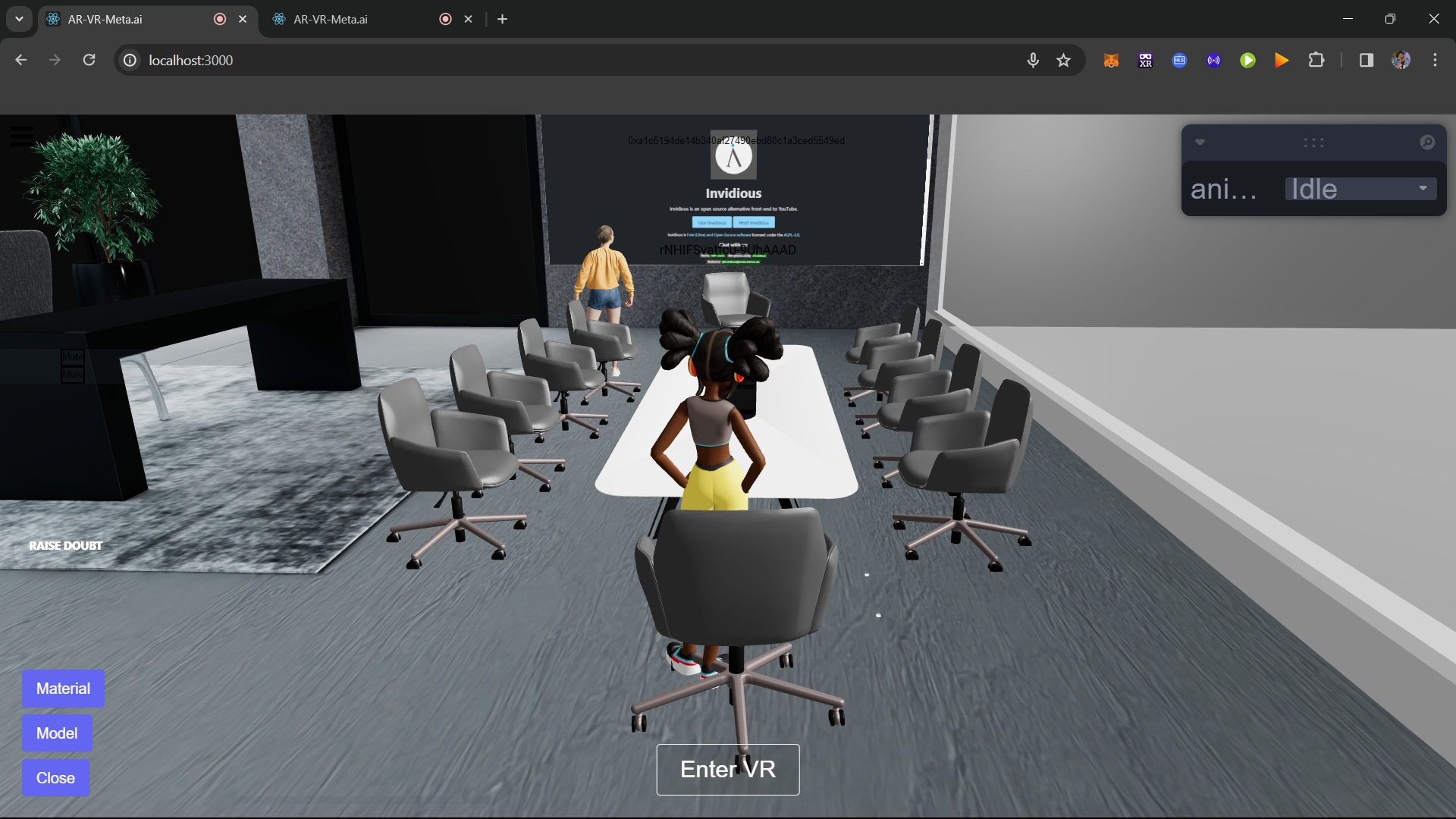
VR MEETING ROOM
-
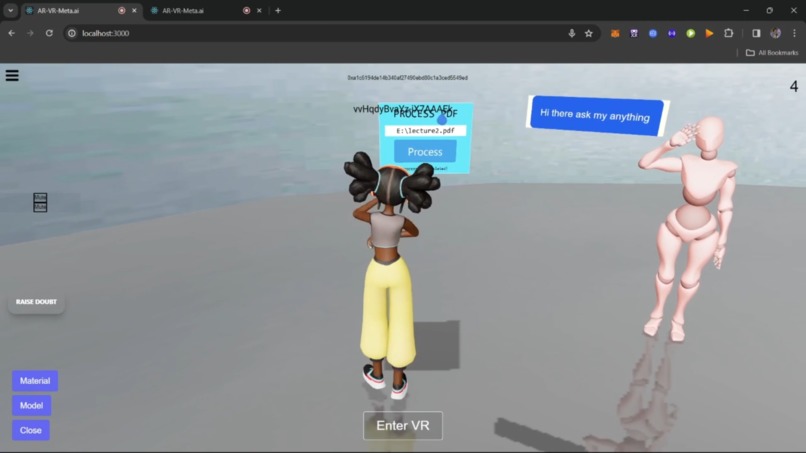
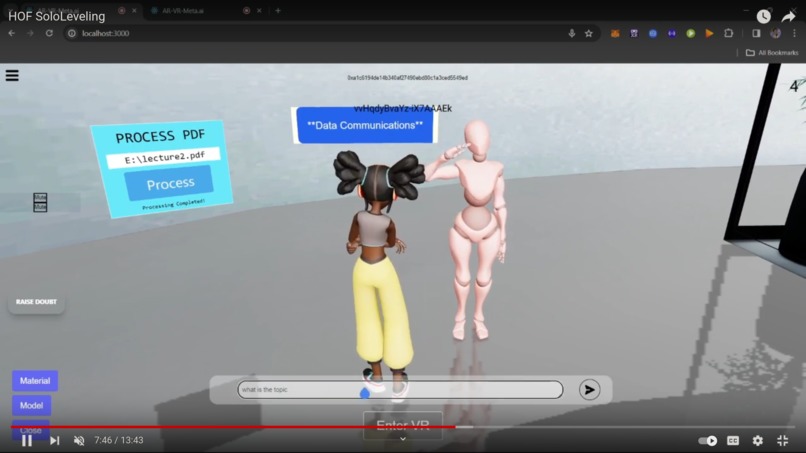
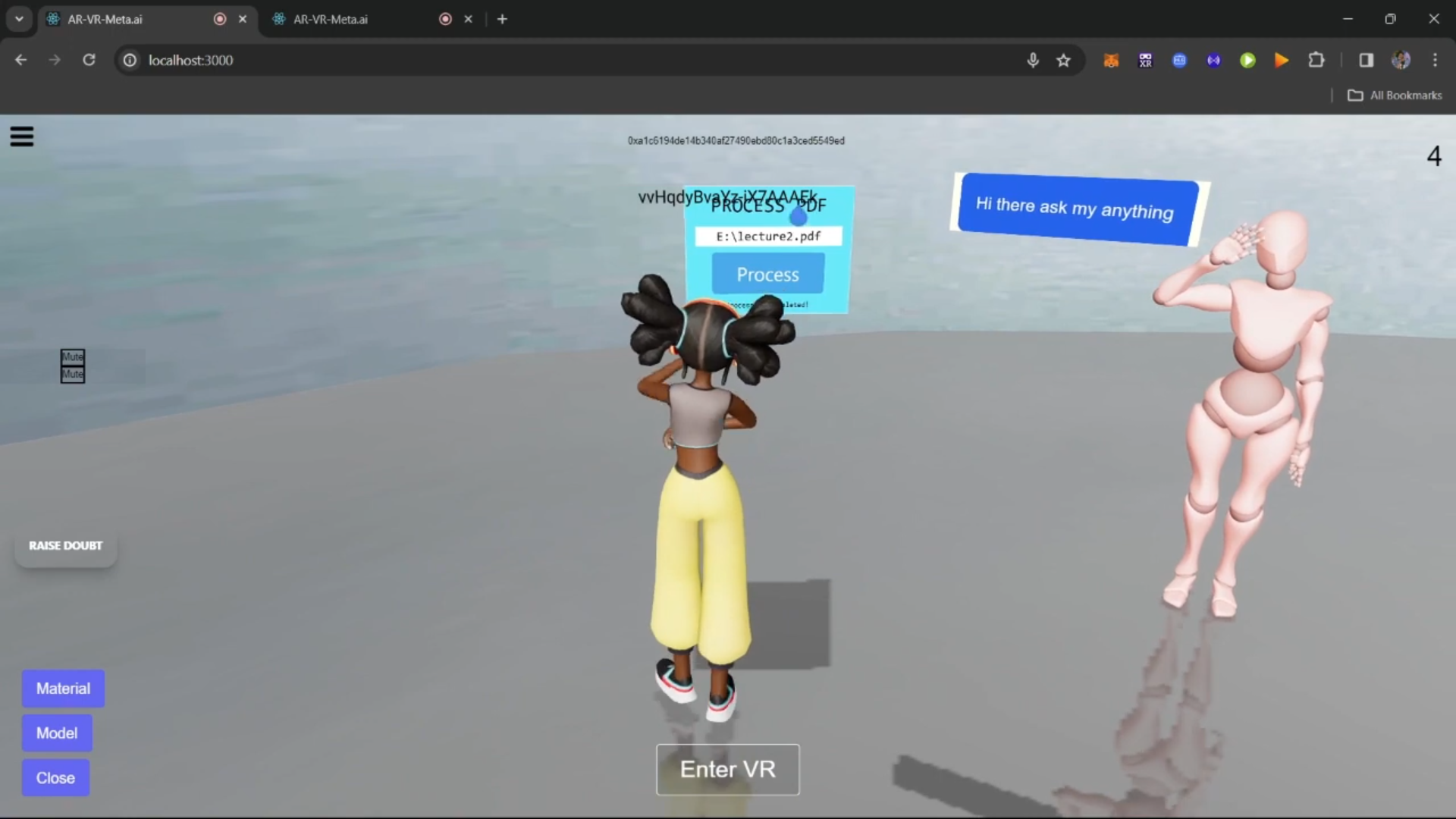
LLM BOT
-
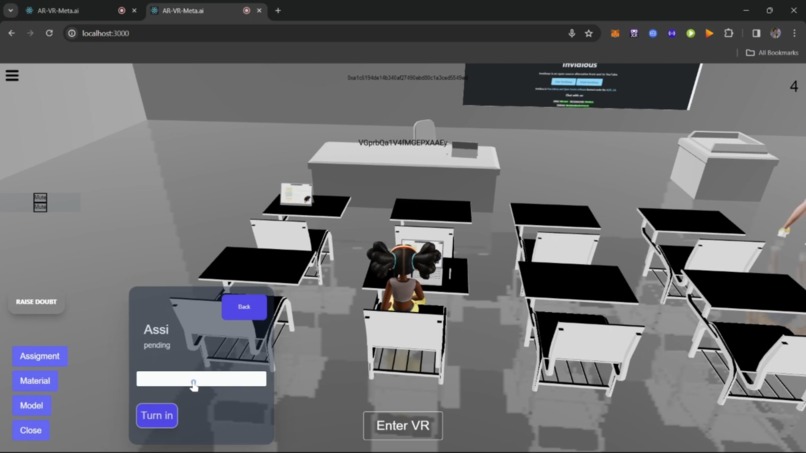
VR CLASSROOM
-
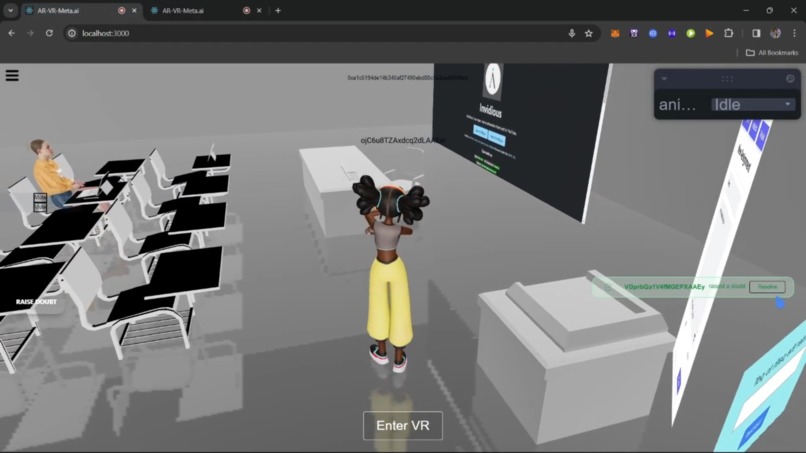
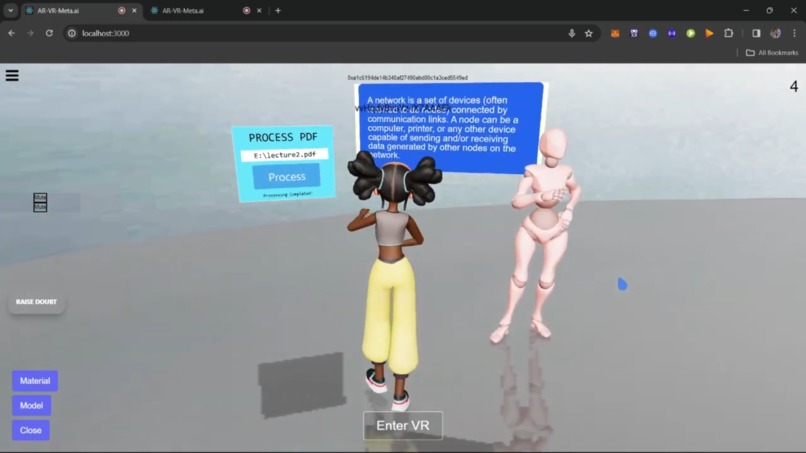
VR CLASSROOM
-
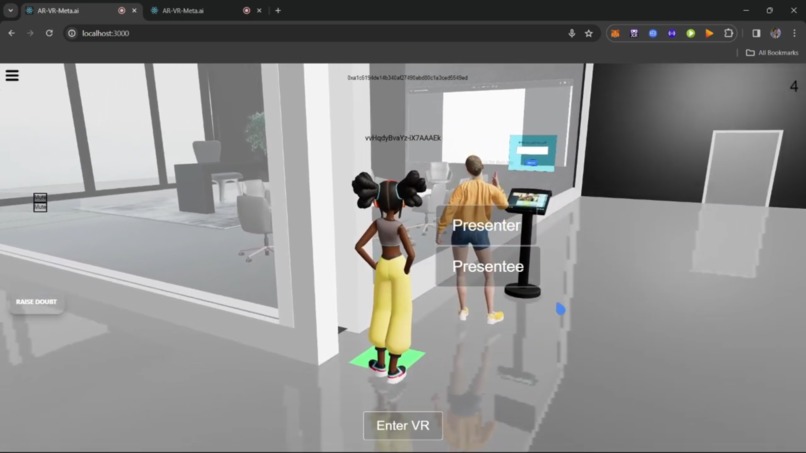
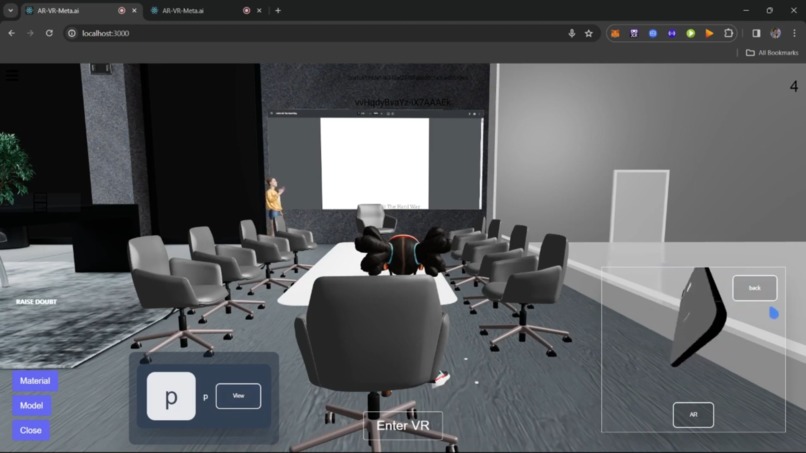
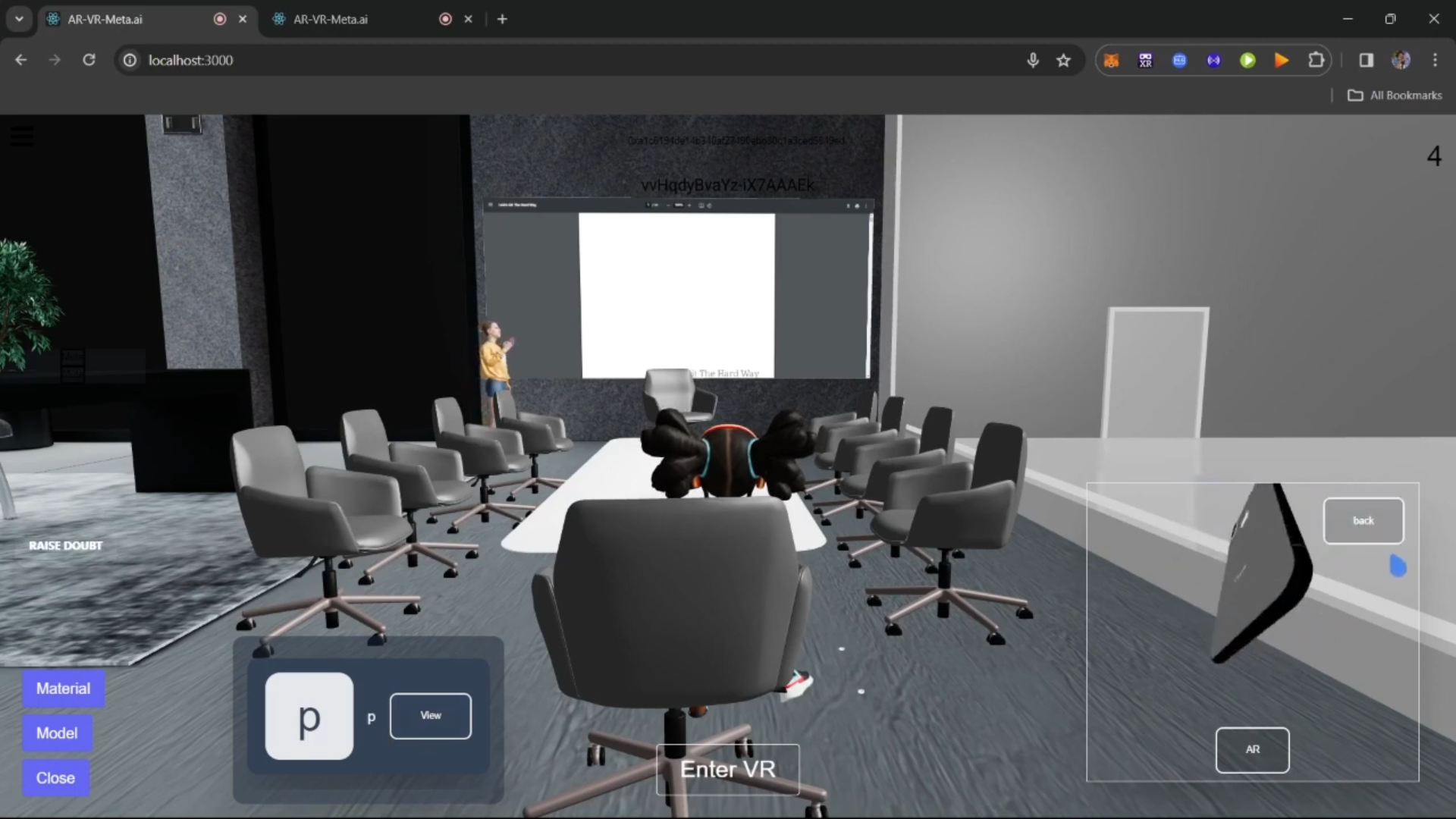
PPT upload
-
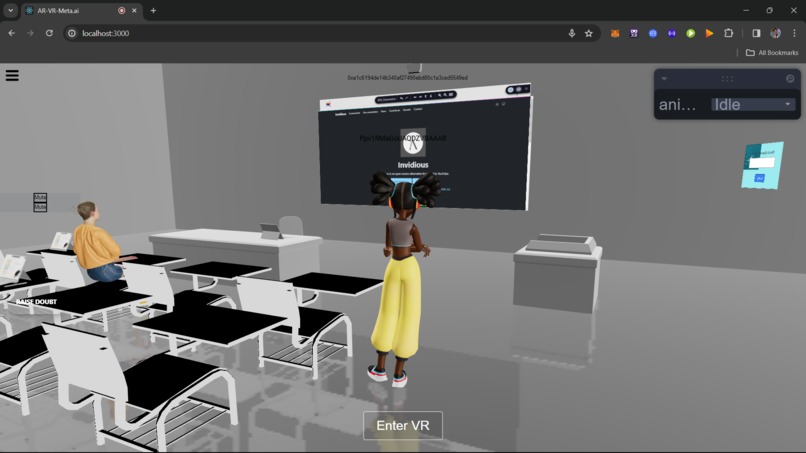
VR CLASSROOM
-
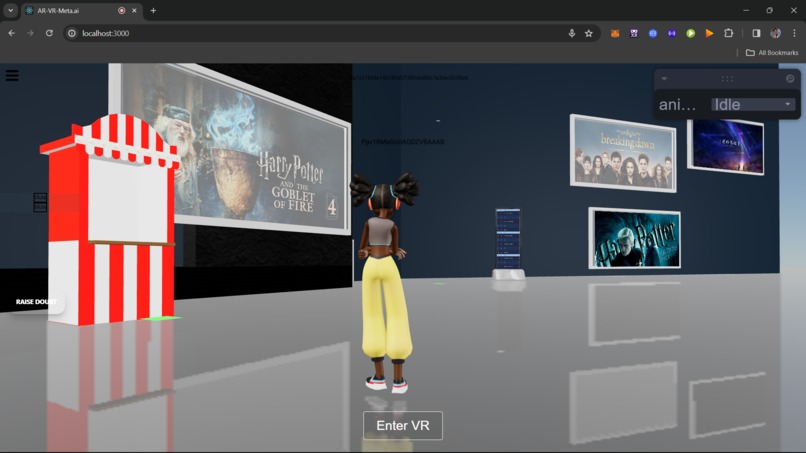
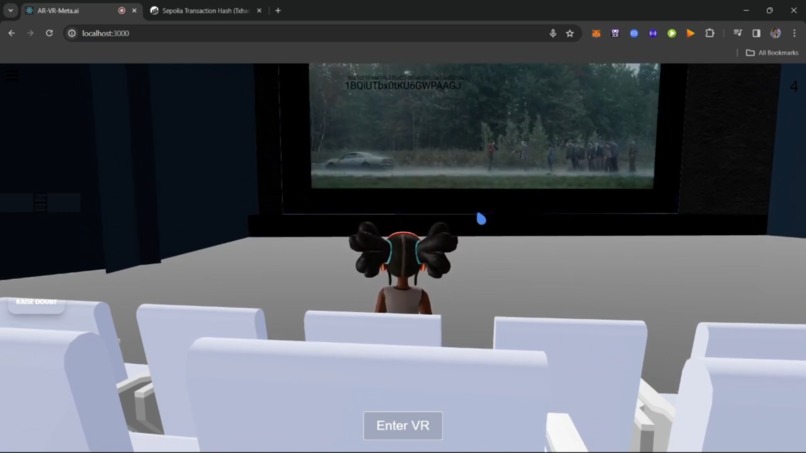
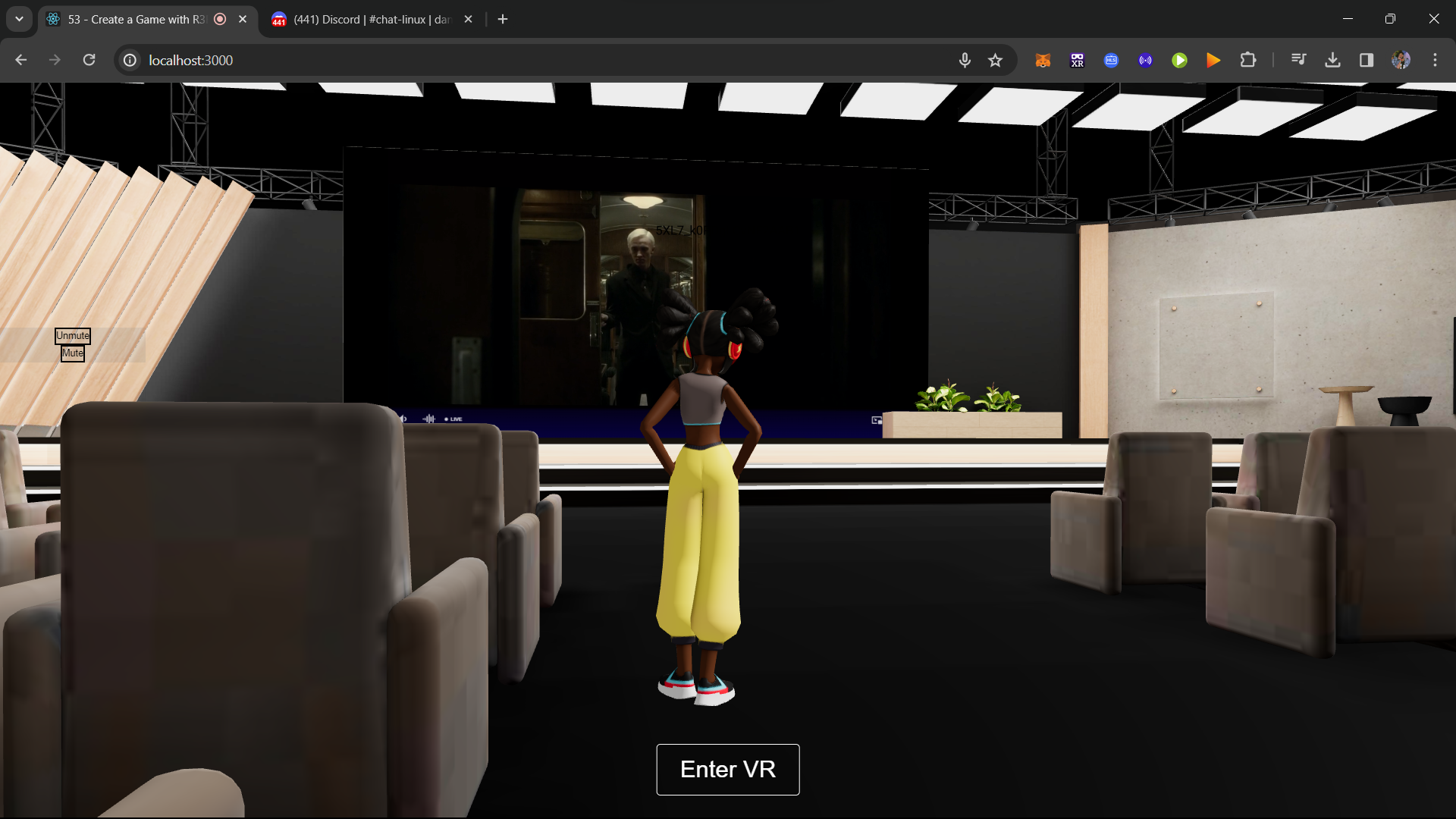
NFT VR THREATRE
-
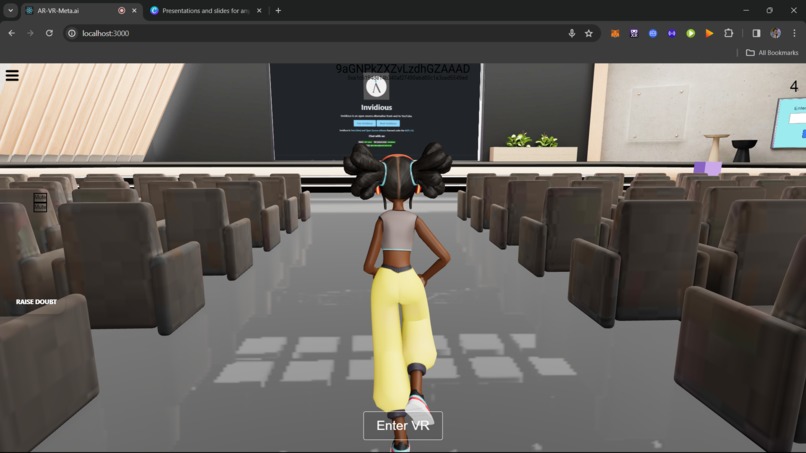
CONGFERENCE HALL
-
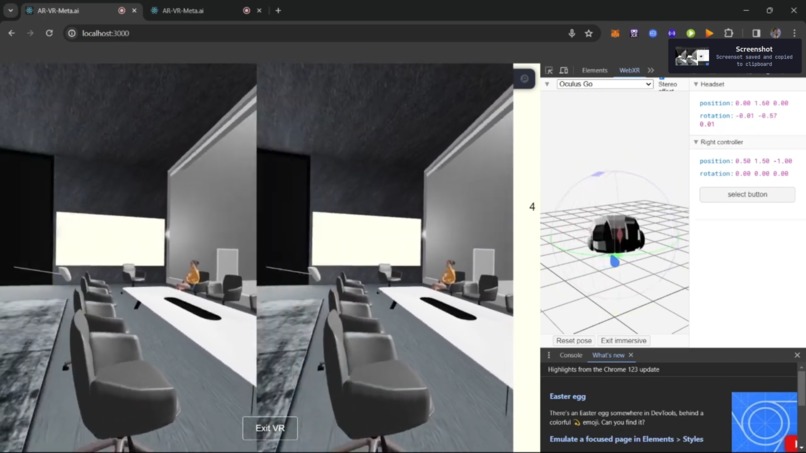
VR EXPERIANCE
-
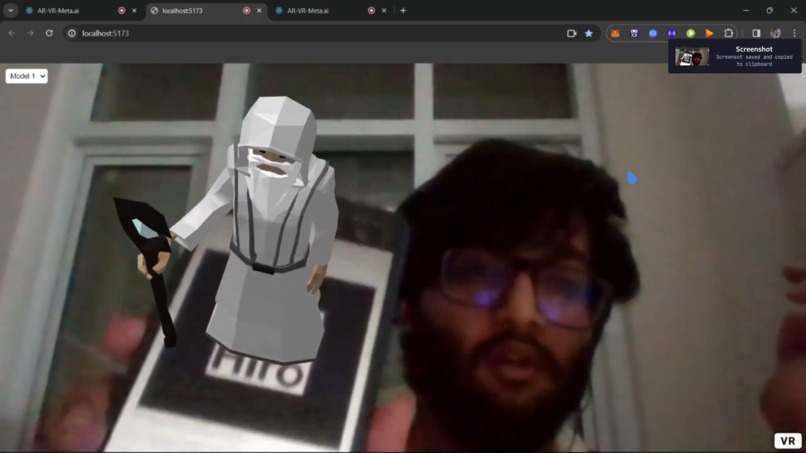
AR EXPERIANCE
-
-
-
-
-
-
-
-
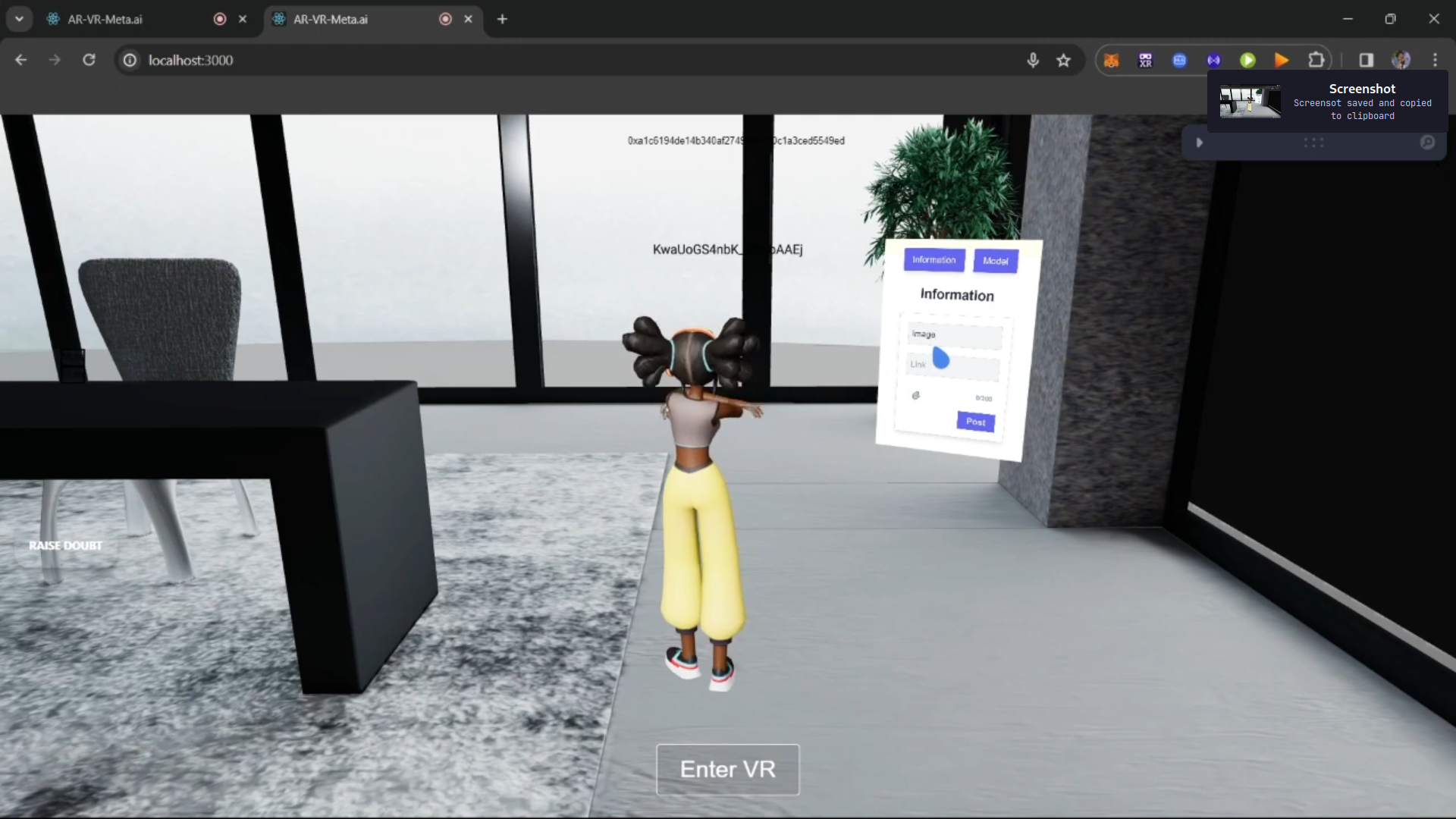
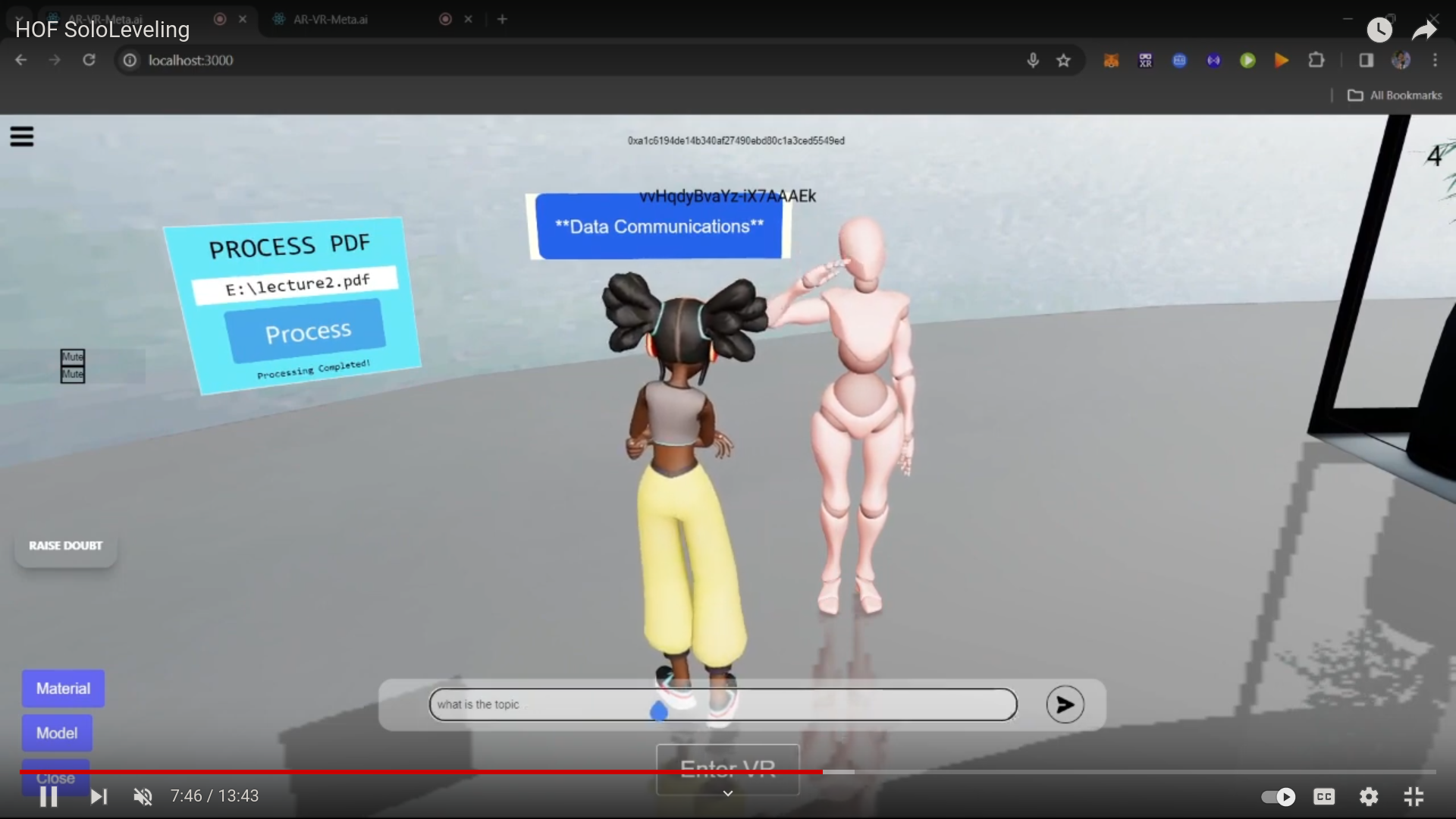
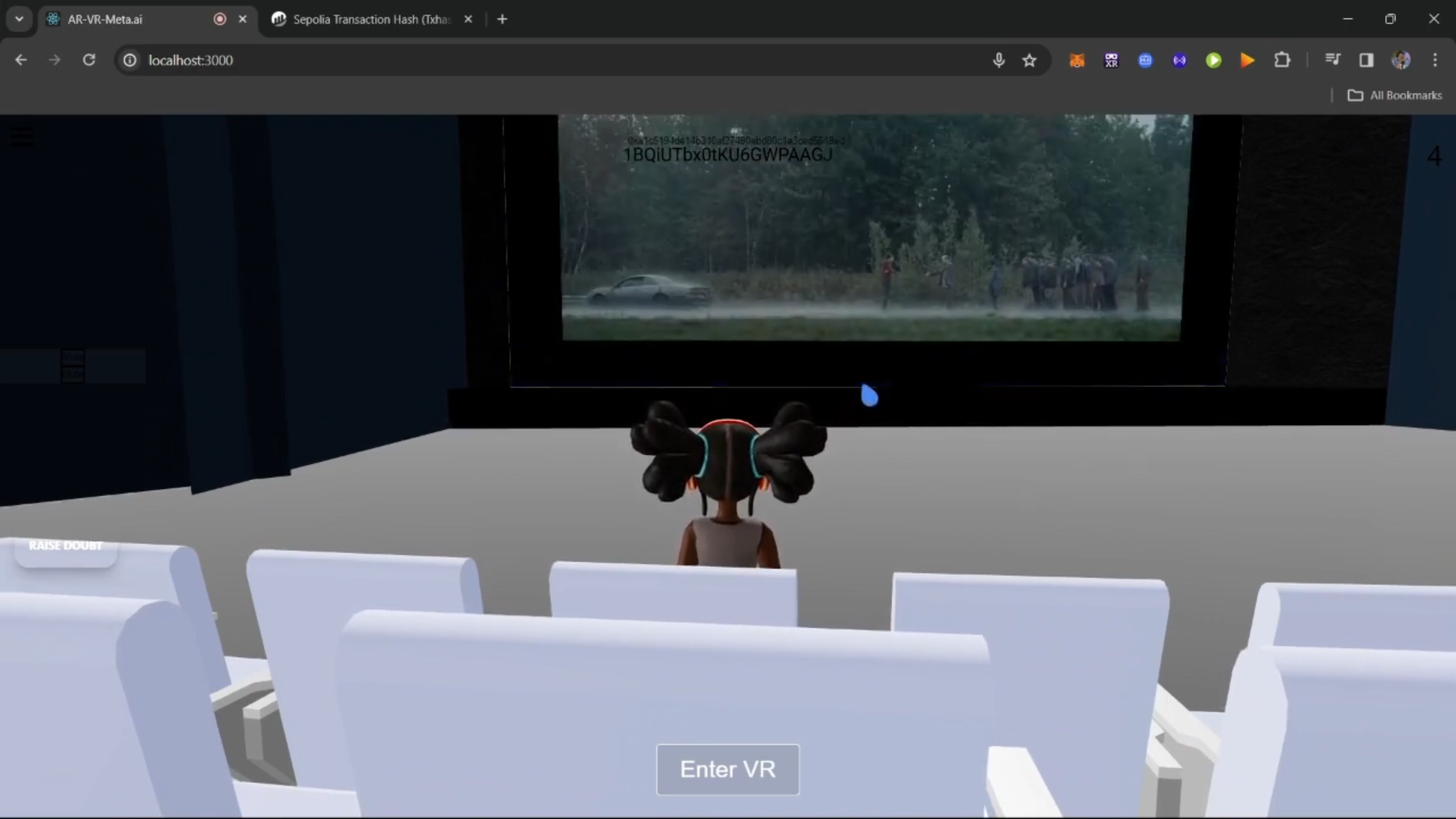
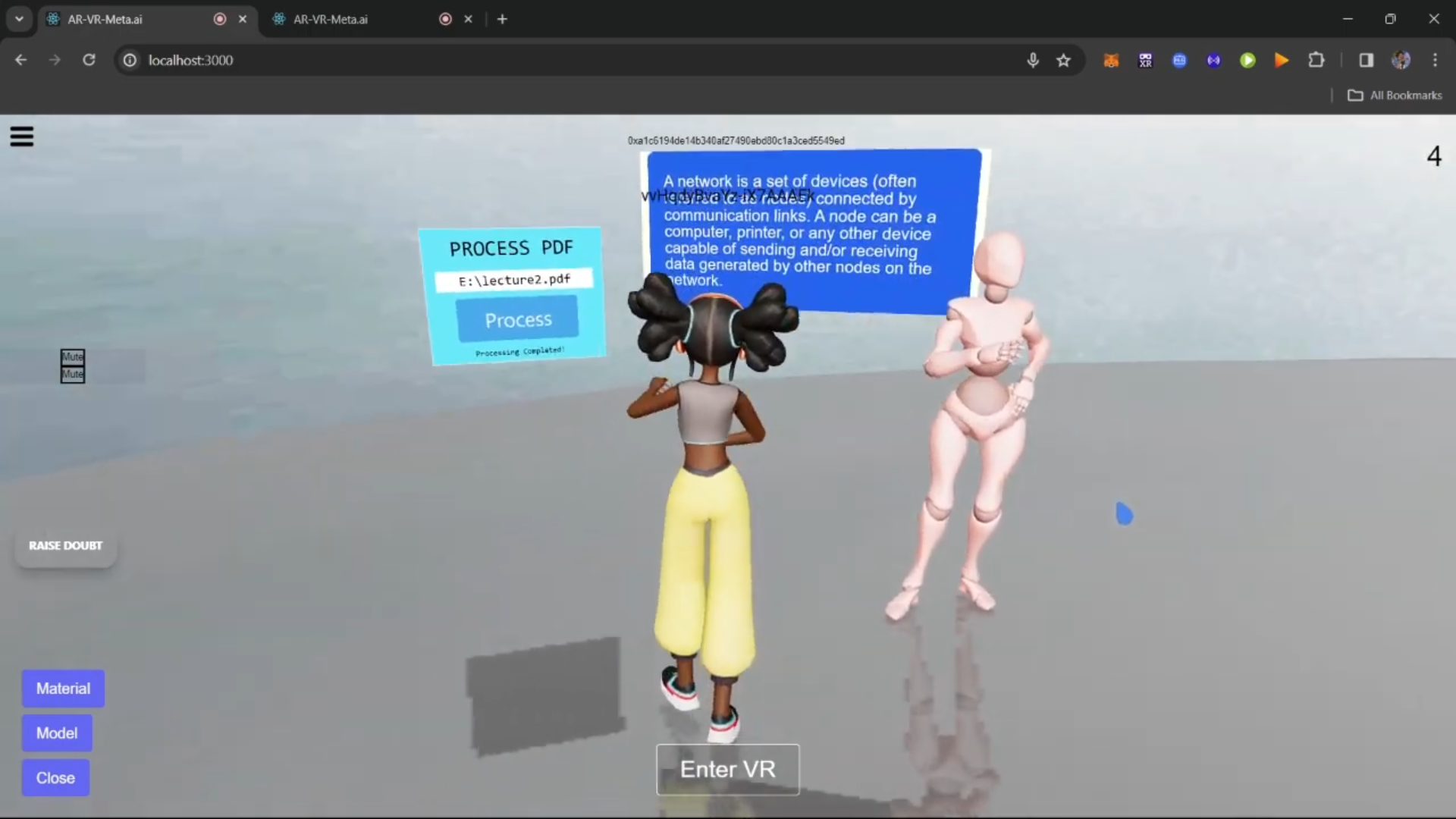
Inspiration
Meta-AR-VR.ai was born out of the necessity to innovate in the realm of education, especially in light of the challenges posed by physical distance, limited mobility, and the shift towards remote learning exacerbated by global events like the COVID-19 pandemic. Recognizing the potential of virtual environments to bridge gaps in education and foster meaningful connections, Meta-AR-VR.ai aims to create a globally accessible 3D Metaverse. This platform seeks to transform education by making learning fun, interactive, and accessible to all, regardless of geographical barriers.
What it does
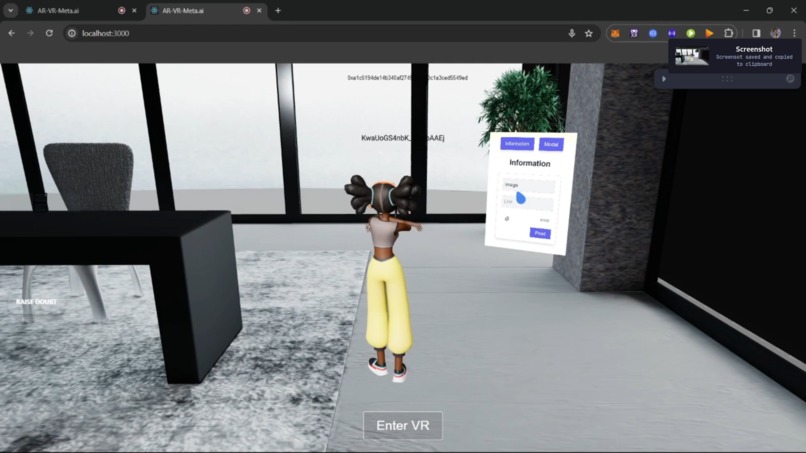
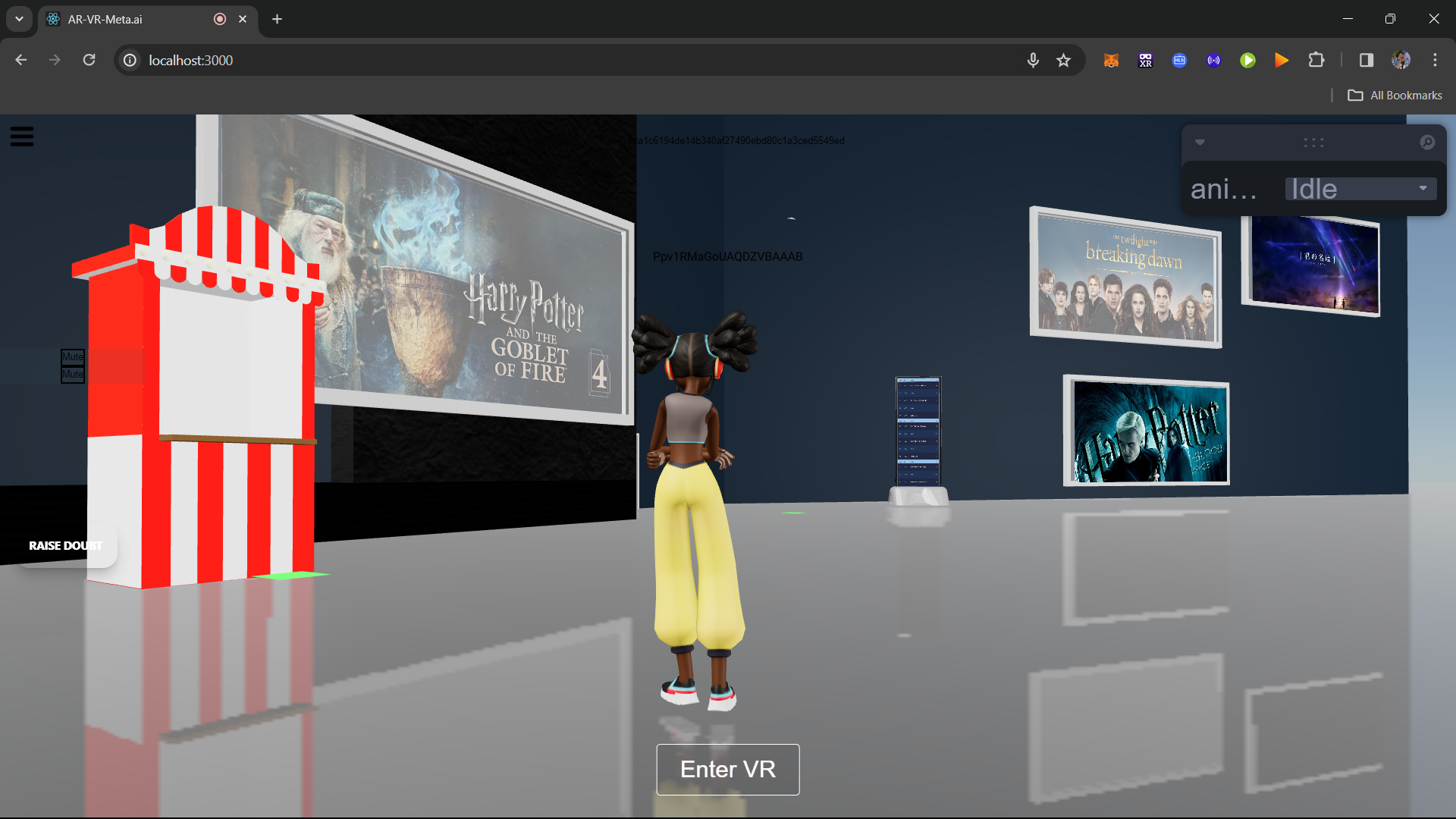
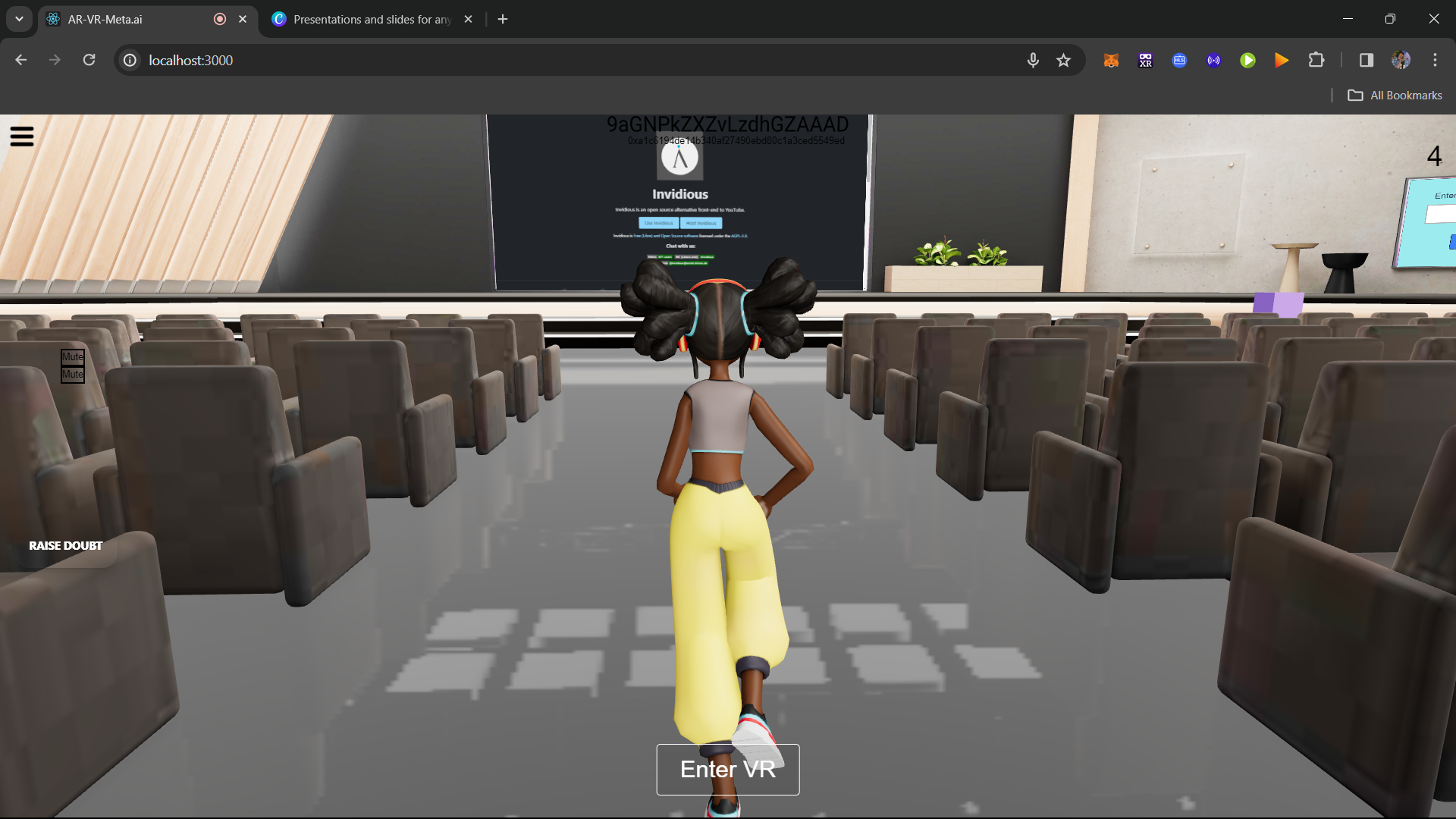
Meta-AR-VR.ai is a pioneering 3D Metaverse platform dedicated to revolutionizing education through immersive virtual classrooms , interactive learning environments, and collaborative spaces. It offers:
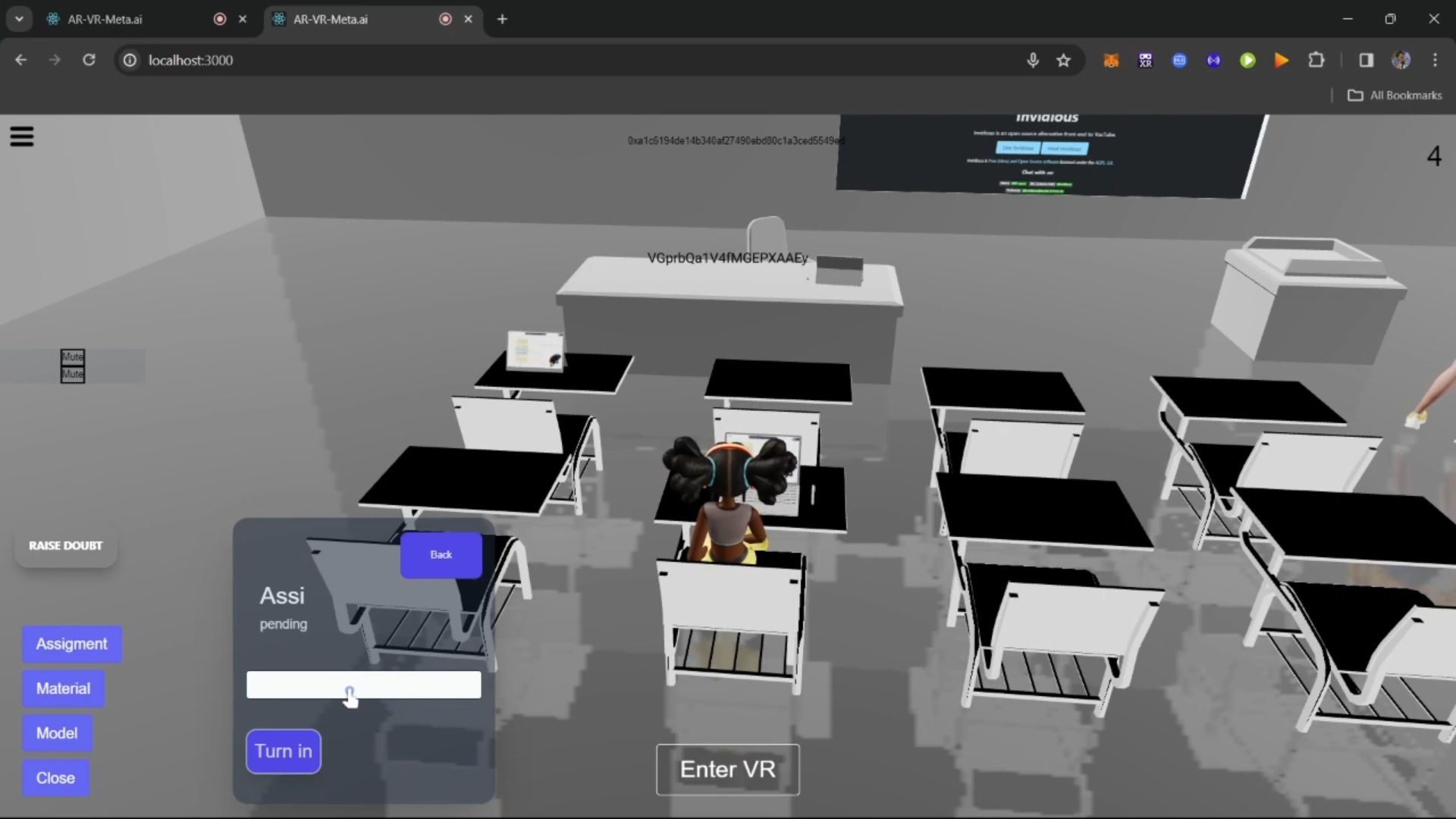
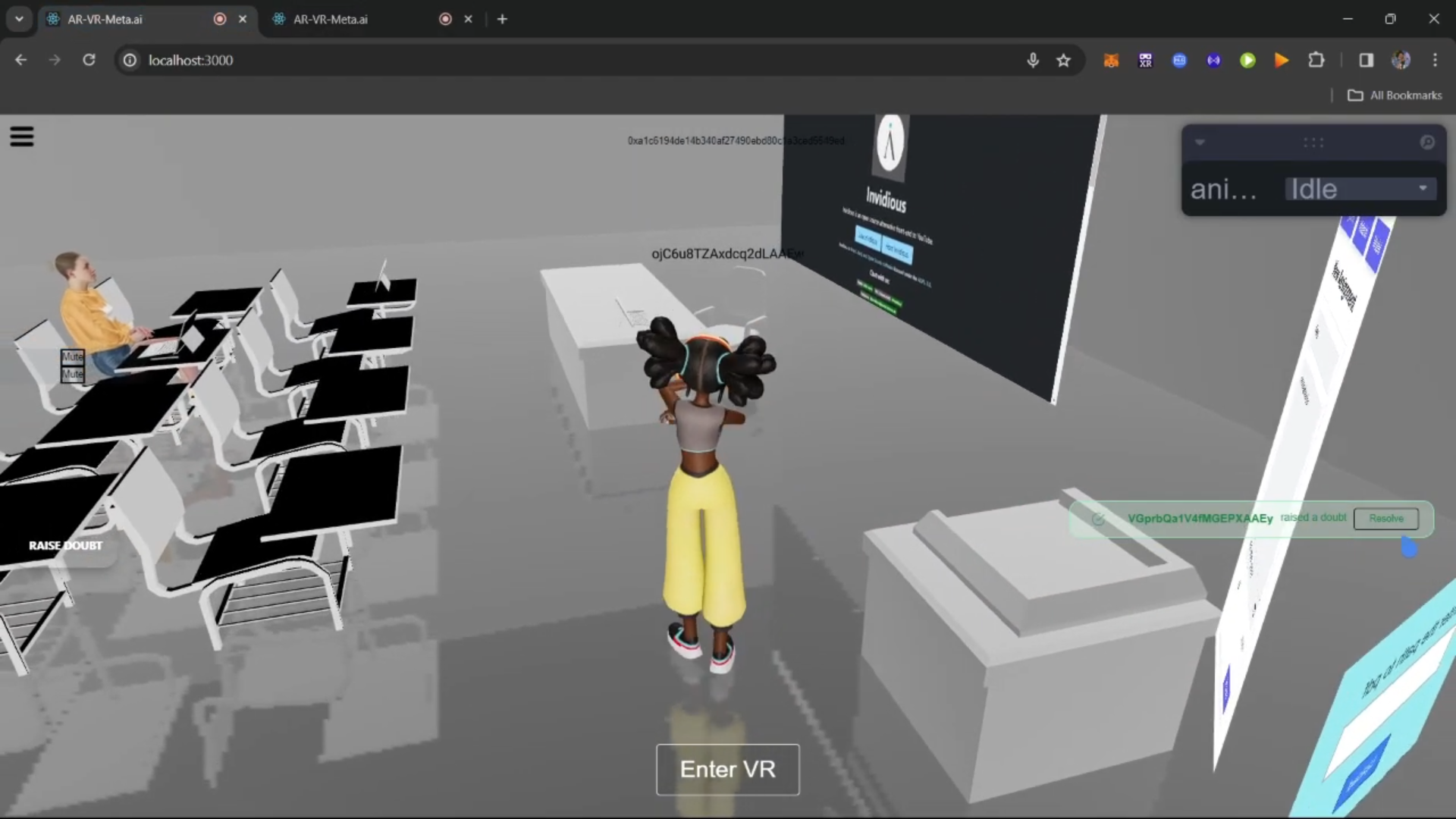
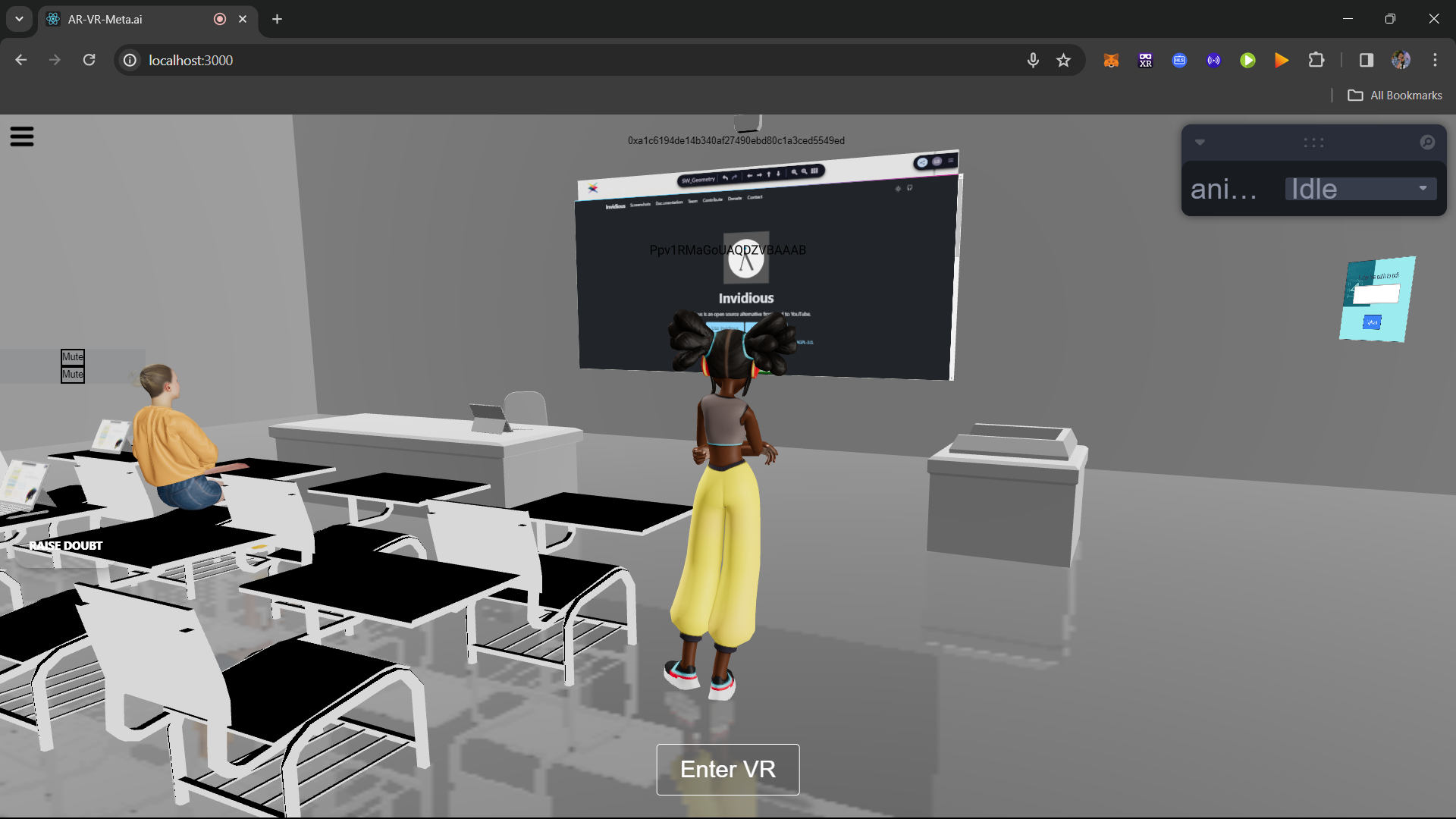
- Interactive Virtual Classrooms: Engaging 3D spaces equipped with course materials, real -time support, and gamified learning experiences to make education enjoyable and effective.
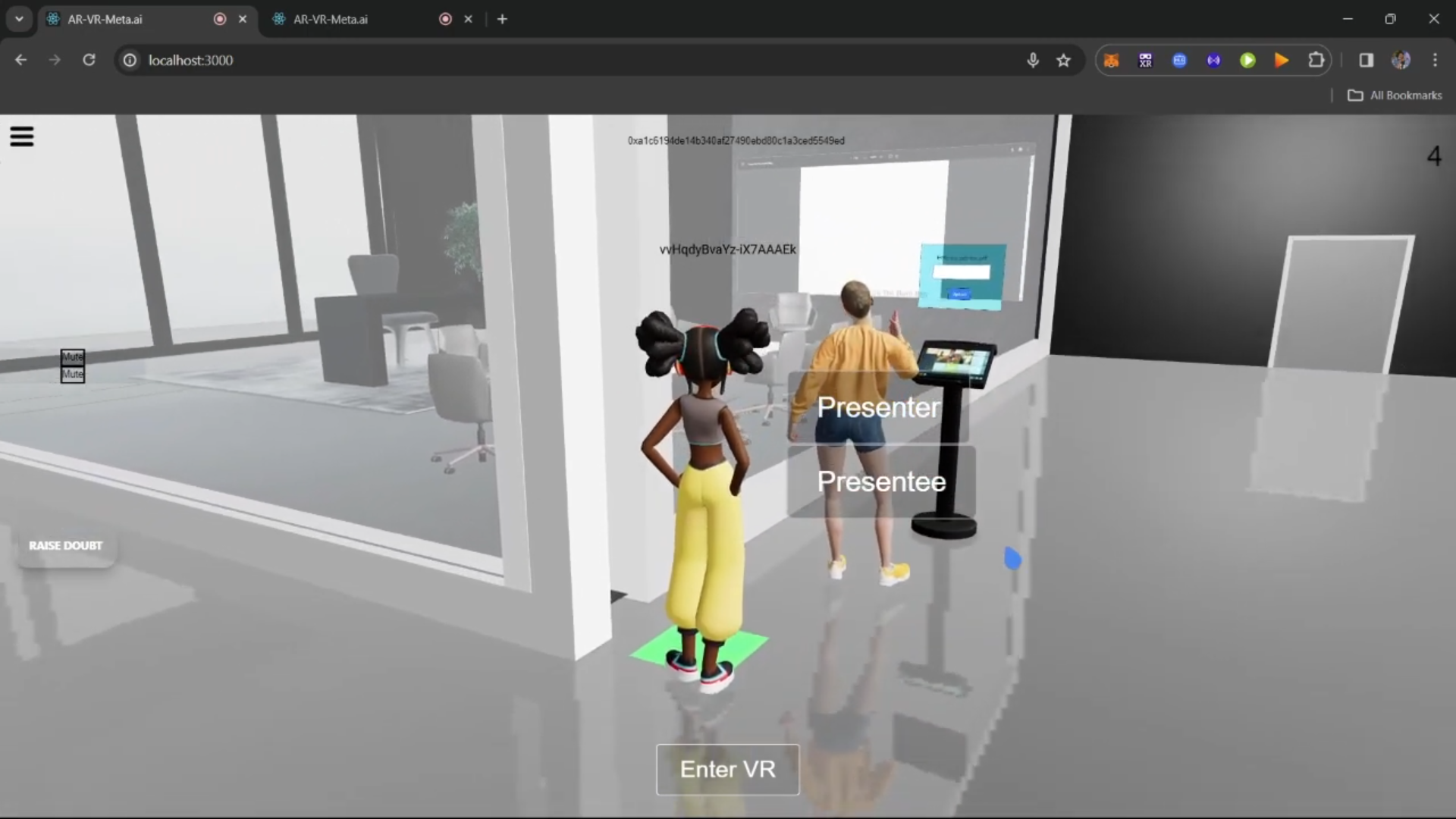
- Collaborative Study Hubs: Spaces designed for group projects, study sessions, and peer -to-peer learning, fostering a sense of community among learners worldwide.
- Blockchain-Powered Certificates: Secure issuance and verification of certificates using NFT technology, recognizing achievements in the digital space.
- AI-Powered Tutoring: Advanced chatbots leveraging LLM technology for personalized tutoring, instant question answering, and interactive learning support.
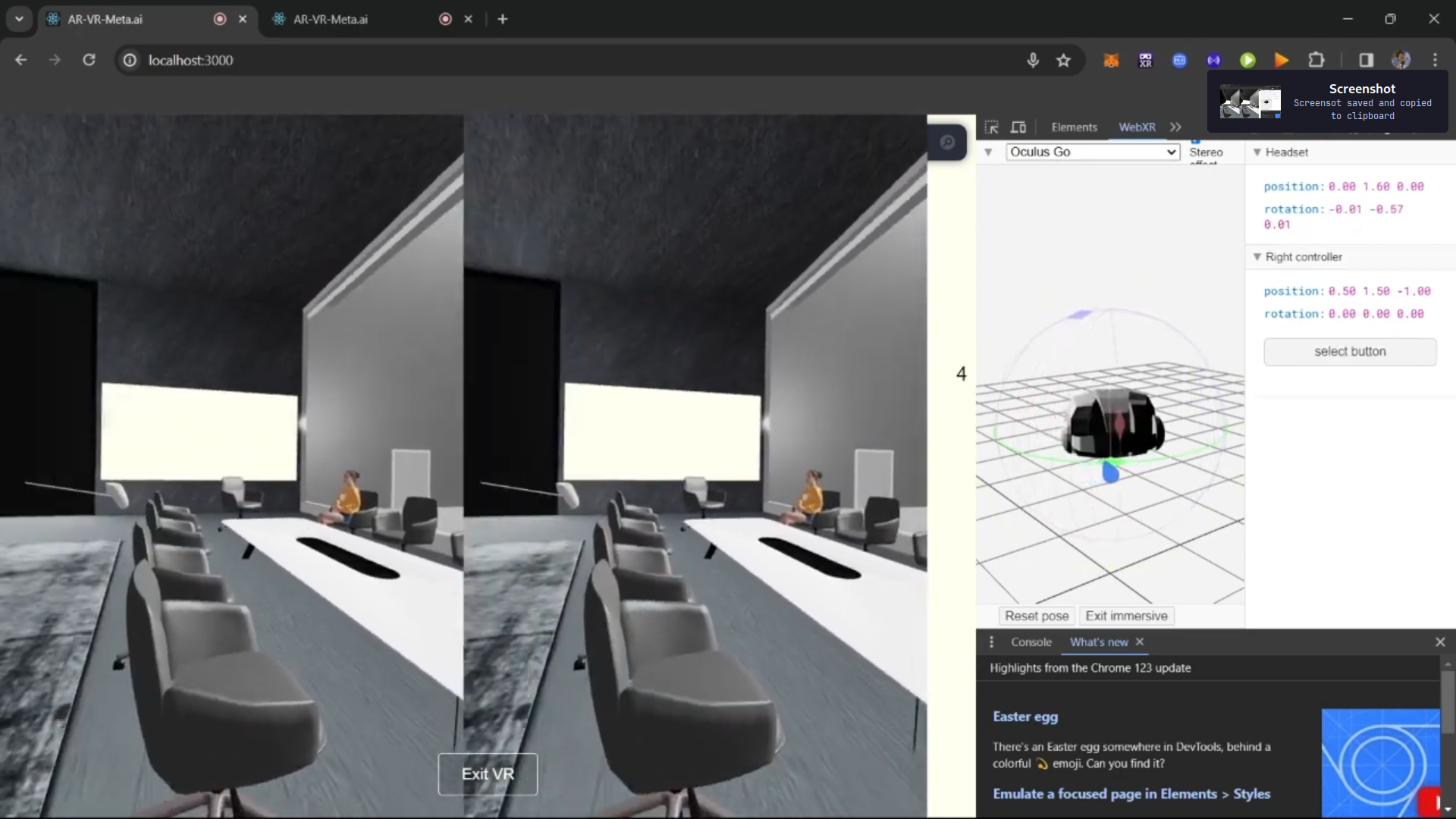
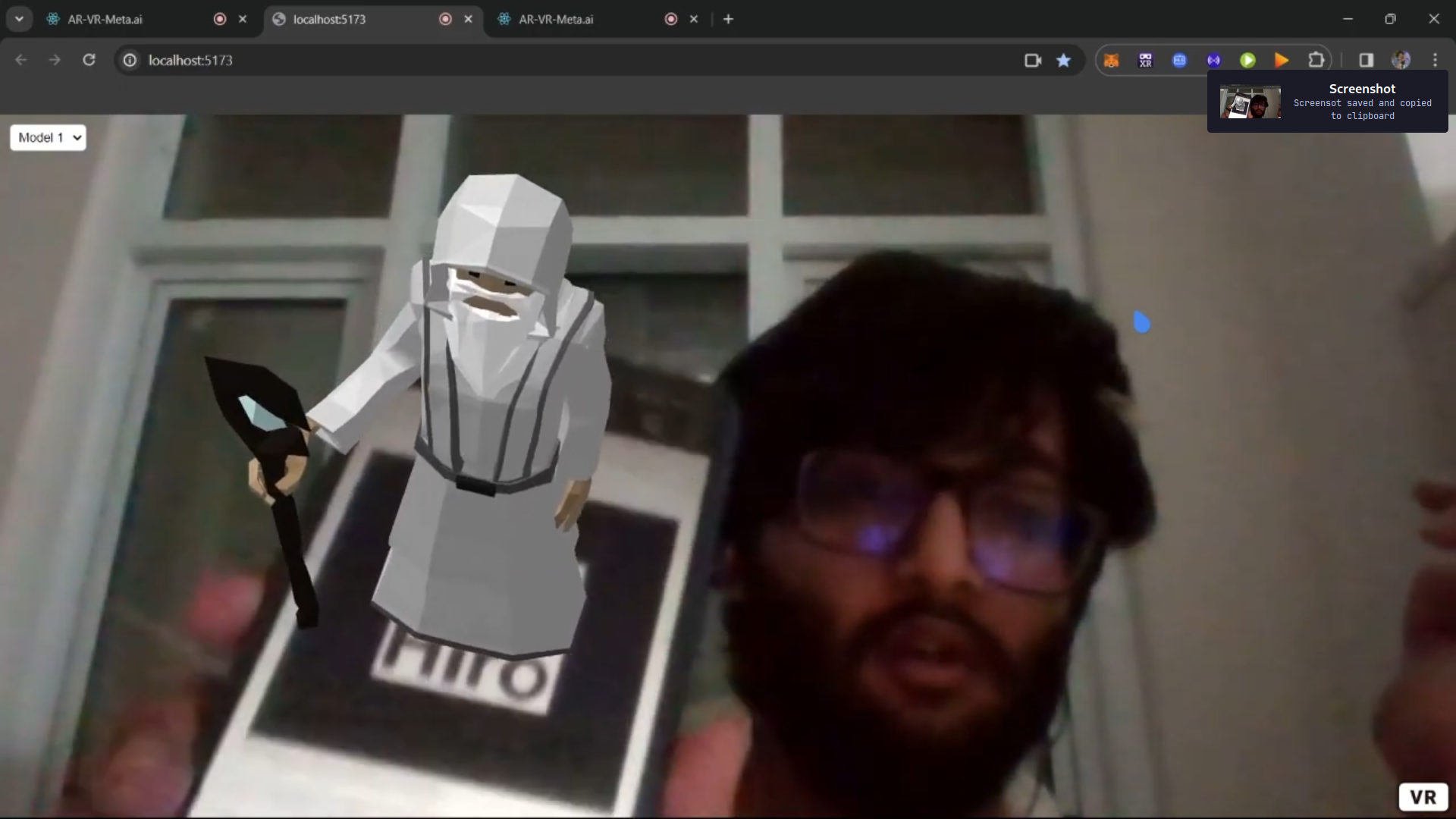
- Seamless Integration of AR/VR: Enhancing educational experiences with immersive technologies, allowing students to explore concepts in a virtual world.
How we built it
The development of Meta-AR-VR.ai was a collaborative endeavor, harnessing cutt-edge technologies such as Three.js, React, Python, Ethereum blockchain, GSAP, and WebRTC. Our approach emphasized iterative design, user feedback, and the application of machine learning technologies like LLM and RAG models to improve educational outcomes. The goal was to create a platform that is not only techn ologically advanced but also user-friendly and accessible to students around the globe.
Challenges we ran into
We faced significant challenges in developing Meta-AR-VR.ai, including integrating multiplayer systems, optimizing server-side physics and controls, ensuring scalability for large-scale educational events, and addressing device compatibility. These obstacles were overcome through innovative problem-solving, focusing on usability, and continuous testing .
Accomplishments that we're proud of
We are proud of our achievements, which include :
- Implementing state-of-the-art virtual classrooms and tutoring systems.
- Creating an intuitive interface that simpl ifies navigation and enhances the learning experience.
- Establishing a robust infrastructure for secure, real-time communication and content delivery.
- Developing a sophisticated AI tutoring system that provides personalized support to learners .
What we learned
This project has deepened our understanding of blockchain, machine learning, and virtual reality technologies and their potential in transforming education. We've gained valuable insights into the effectiveness of RAG and Langchain models and the power of Three.js and React Three Fiber for creating immersive educational experiences.
What's next for Meta-AR-VR.ai
Looking ahead, we aim to further integrate blockchain technology into the educational aspects of the Metaverse, refine existing features, and introduce new educational experiences such as virtual labs, interactive museums, and collaborative research spaces. We plan to expand our reach by partnering with educational institutions and exploring integr ations with emerging technologies to offer a richer, more inclusive educational environment

Log in or sign up for Devpost to join the conversation.