-
-
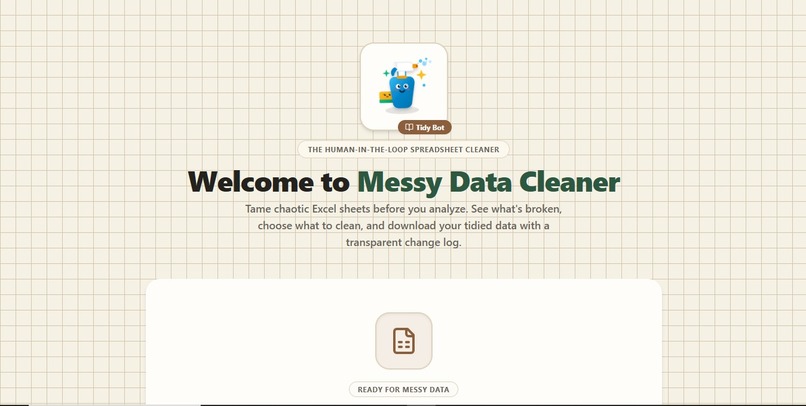
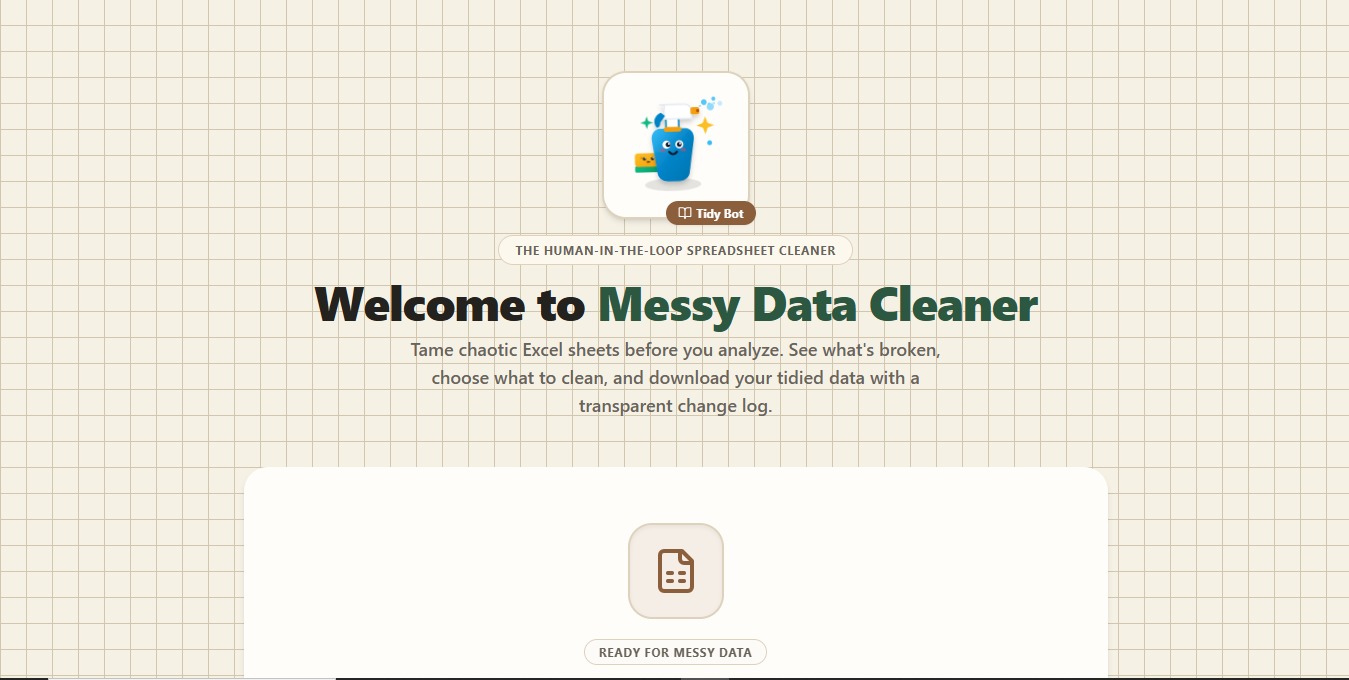
landing page of the web app
-
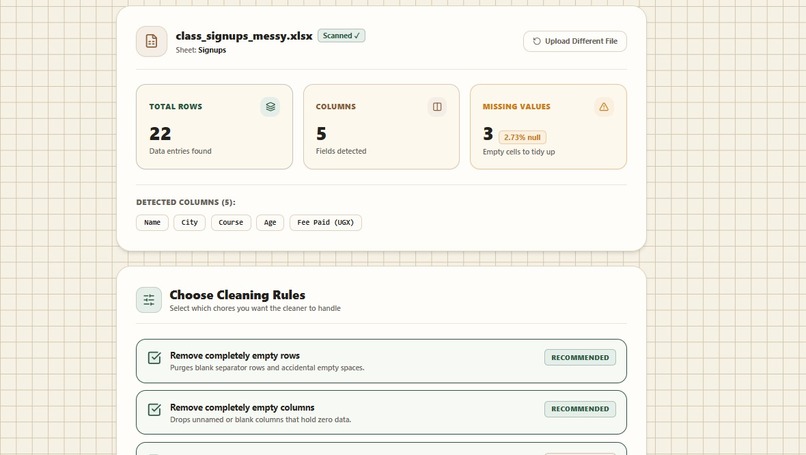
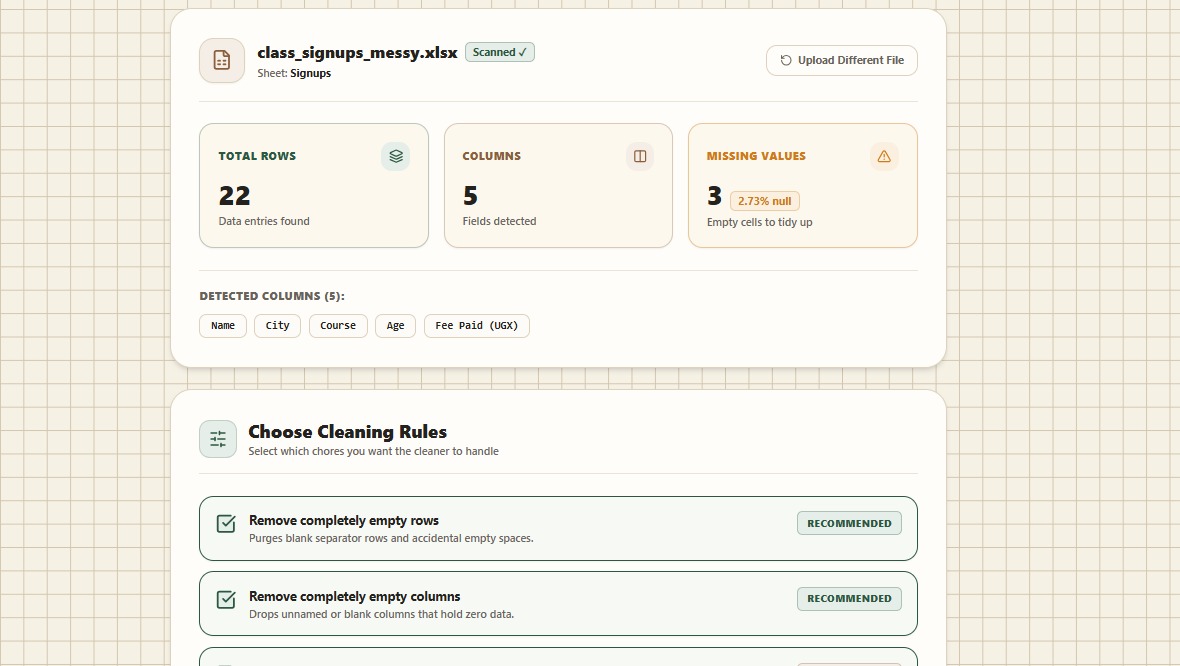
overview that appears after one has uploaded a file, and a prompt to select rules
-
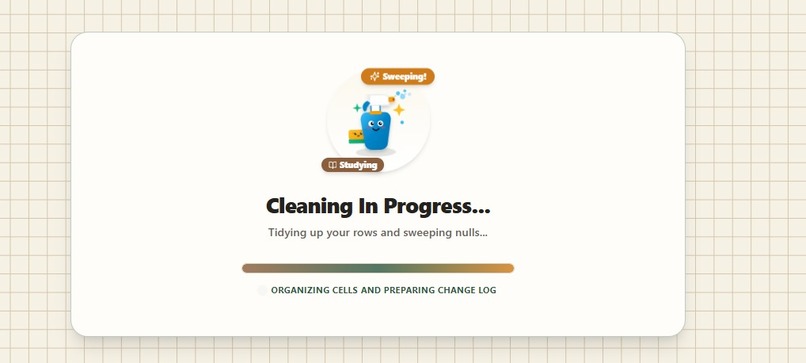
cleaning proccess screenshot
-
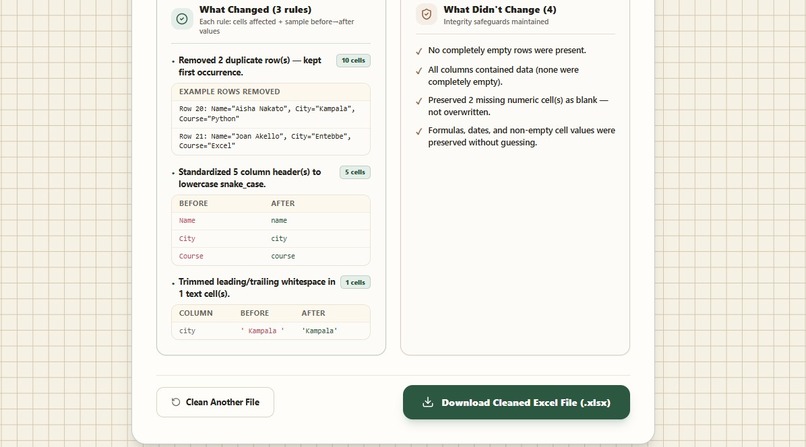
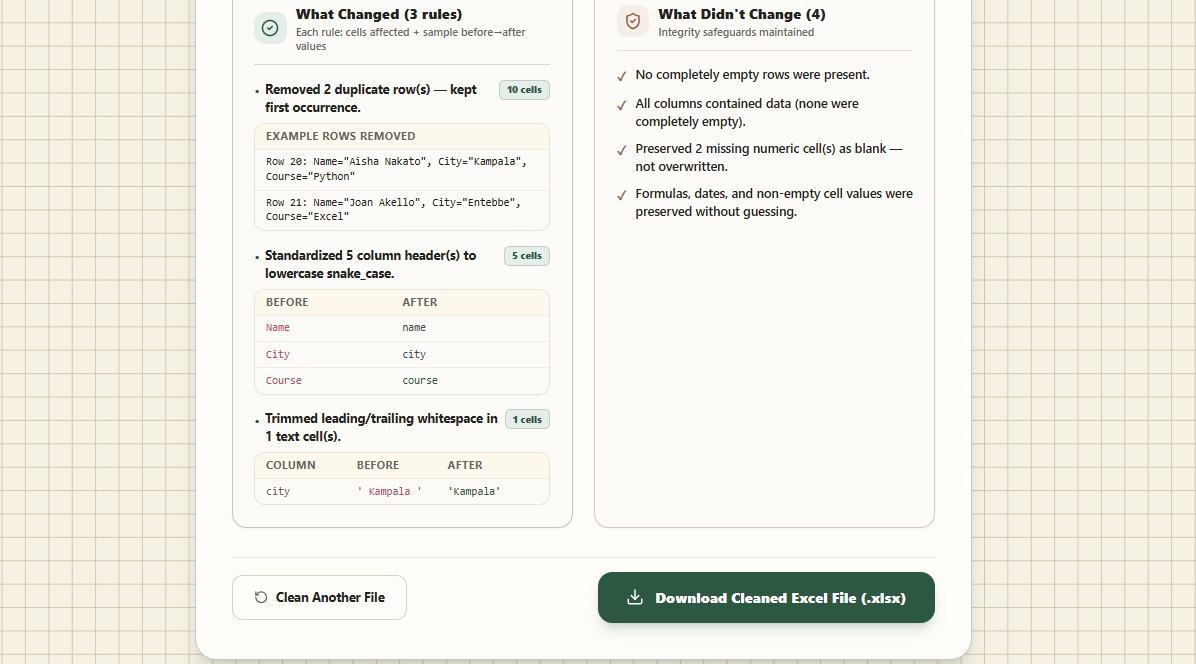
results, change logs and prompt to download the cleaned file

Inspiration
During my internship, I saw how much time data preparation could take before getting to the actual analysis. I also noticed that the people I worked with preferred using Excel to explore data and find insights, rather than working directly with code since most of them where not programmers but needed data to make decisions.
That got me thinking: what if cleaning data could be easier for people who are comfortable with spreadsheets but don't necessarily have the coding skills or confidence to work with code based tools?
That's what inspired Messy Data Cleaner I wanted to build a tool that makes spreadsheet cleaning more accessible while allowing users to see what's wrong, choose what to fix, and review the changes made to their data.
I was also drawn to Build With AI: Basics because I wanted to learn how AI agents could improve the way I build software, beyond simply prompting an LLM to generate code.
What it does
Messy Data Cleaner helps users identify common data quality issues in Excel files, choose which cleaning rules to apply, and download cleaned spreadsheets with a change log.
Instead of treating cleaning as a one click process, or requiring users to write code the app lets users inspect problems before deciding how to handle them. The goal is to make data cleaning more understandable and transparent.
How I built it
I built this project using an AI coding agent and the Devpost Learn Skill Pack. Rather than jumping straight into coding, I followed a plan first workflow, where the agent interviewed me and we ended up defining the project scope, developing the product requirements, and outlining the technical specifications before implementation all from my feedback.
The skills helped structure development into stages and maintain project context through planning documents and a more consistent workflow.
Challenges and what I learned
One of my biggest lessons was that prompting alone is not enough to build software effectively.
When I previously relied on LLM-assisted coding without a structured agent workflow, I experienced what I came to understand as cognitive debt: the mental overhead of tracking decisions, understanding generated code, remembering context, and managing changes across multiple interactions.
Working with the Devpost Learn Skill Pack introduced me to a different approach. I learned the value of planning before coding, using reusable skills, and preserving project context throughout development.
Another important lesson was the value of letting the AI ask questions at each stage rather than allowing it to make assumptions and build blindly. Clarifying requirements before implementation helped me think through what I actually wanted and make more deliberate decisions about the product.
I also found that explaining my ideas through voice could be more effective for me than typing. Speaking allowed me to describe my thoughts in greater detail and capture nuances I might otherwise leave out of a written prompt.
Overall, this experience changed how I think about building with AI. It is not simply about generating code faster, it is about creating a structured process in which both the developer and the AI have the context needed to work toward the right solution.
What's next
I'd like to extend Messy Data Cleaner with better detection of outliers, ambiguous dates, and potential spelling inconsistencies, while allowing users to review suggested corrections before applying them and later on turn it into a digital product other people can use.
Beyond this project, I want to continue exploring agentic workflows and how structured context, planning, and reusable skills can help me build useful, reliable software.

Log in or sign up for Devpost to join the conversation.