Inspiration
Every day on my own campus, I've watched the same broken guessing game play out in the hall dining room. Managers cook based on rough instinct — "usually around 300 students eat" — but that instinct falls apart constantly. Exam week thins the hall out. A sudden downpour keeps students in their rooms. A cricket match pulls half the hall away. When the guess is wrong, either food gets thrown away or students go hungry and end up paying extra to eat outside campus.
I looked at existing food-waste apps, including ShodaiGhor, and noticed they all solve this problem after the fact — redistributing food once it's already been overcooked. That's helpful, but the ingredients, labor, and cooking energy are already wasted by that point. I wanted to attack the problem one step earlier: before the rice even hits the pot.
What it does
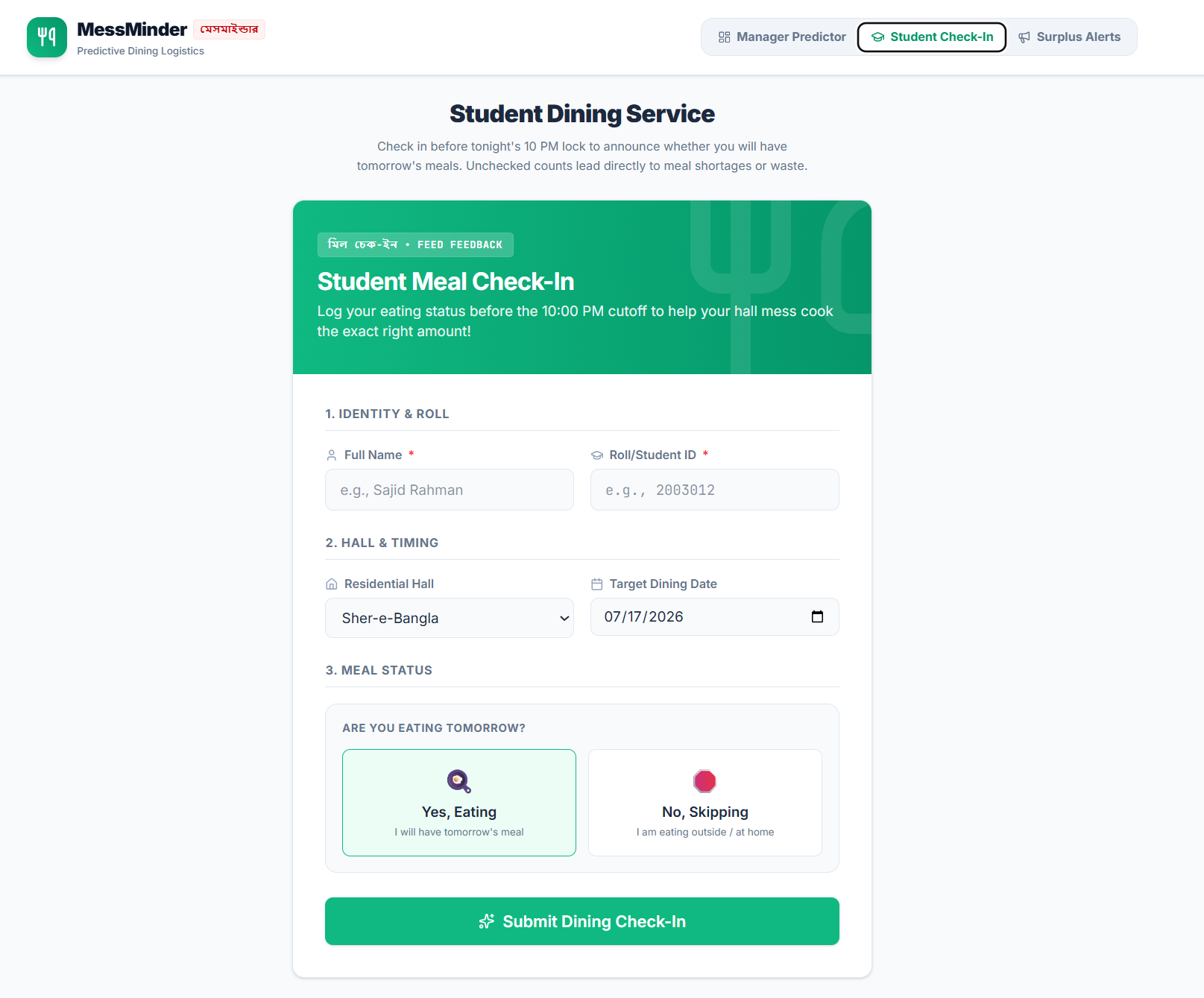
MessMinder lets students do a two-second daily check-in — "Eating today: Yes / No" — before a nightly cutoff. But a raw check-in count isn't the full picture, since plenty of students who plan to eat never bother to check in, and attendance shifts with context a simple headcount can't capture.
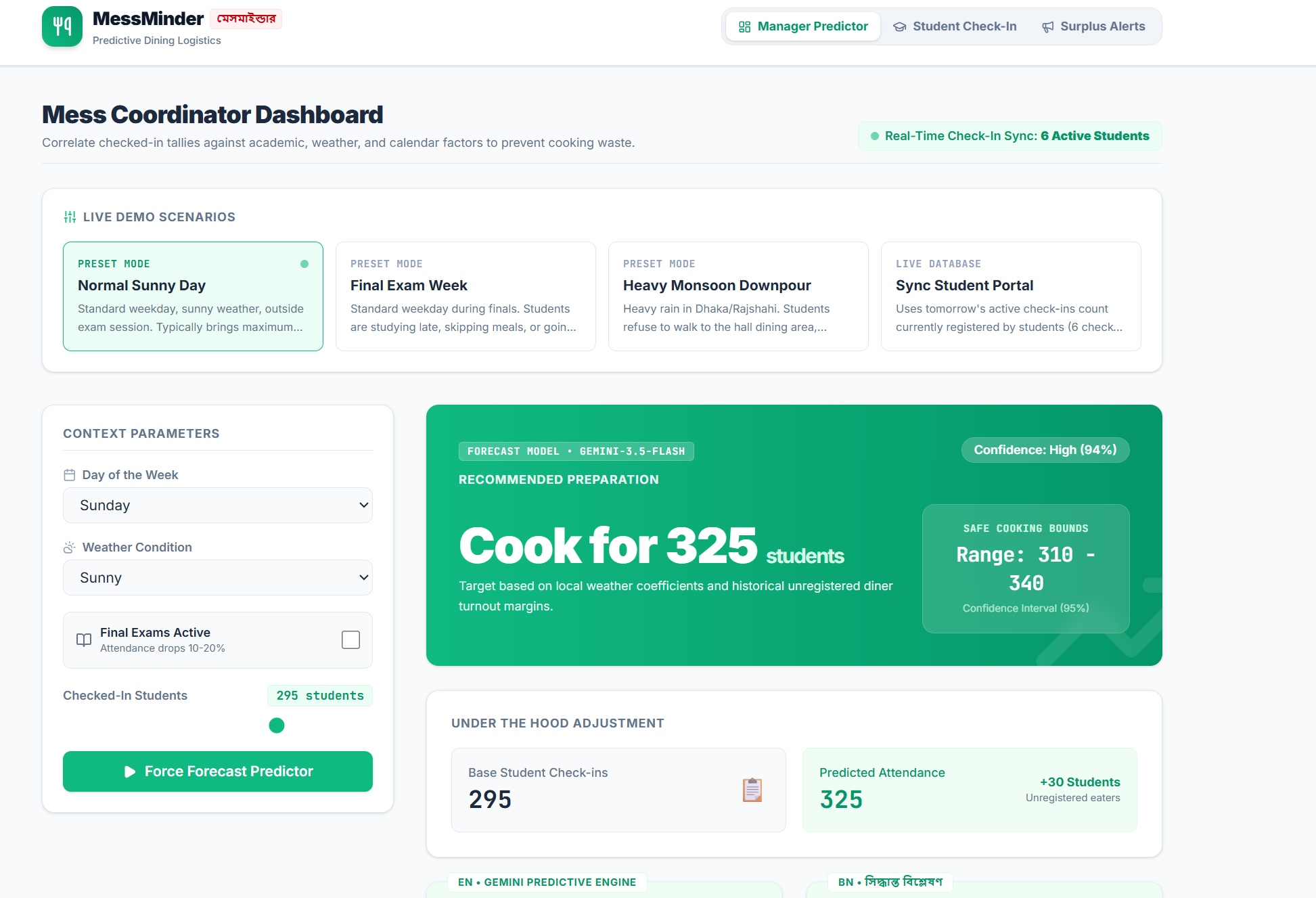
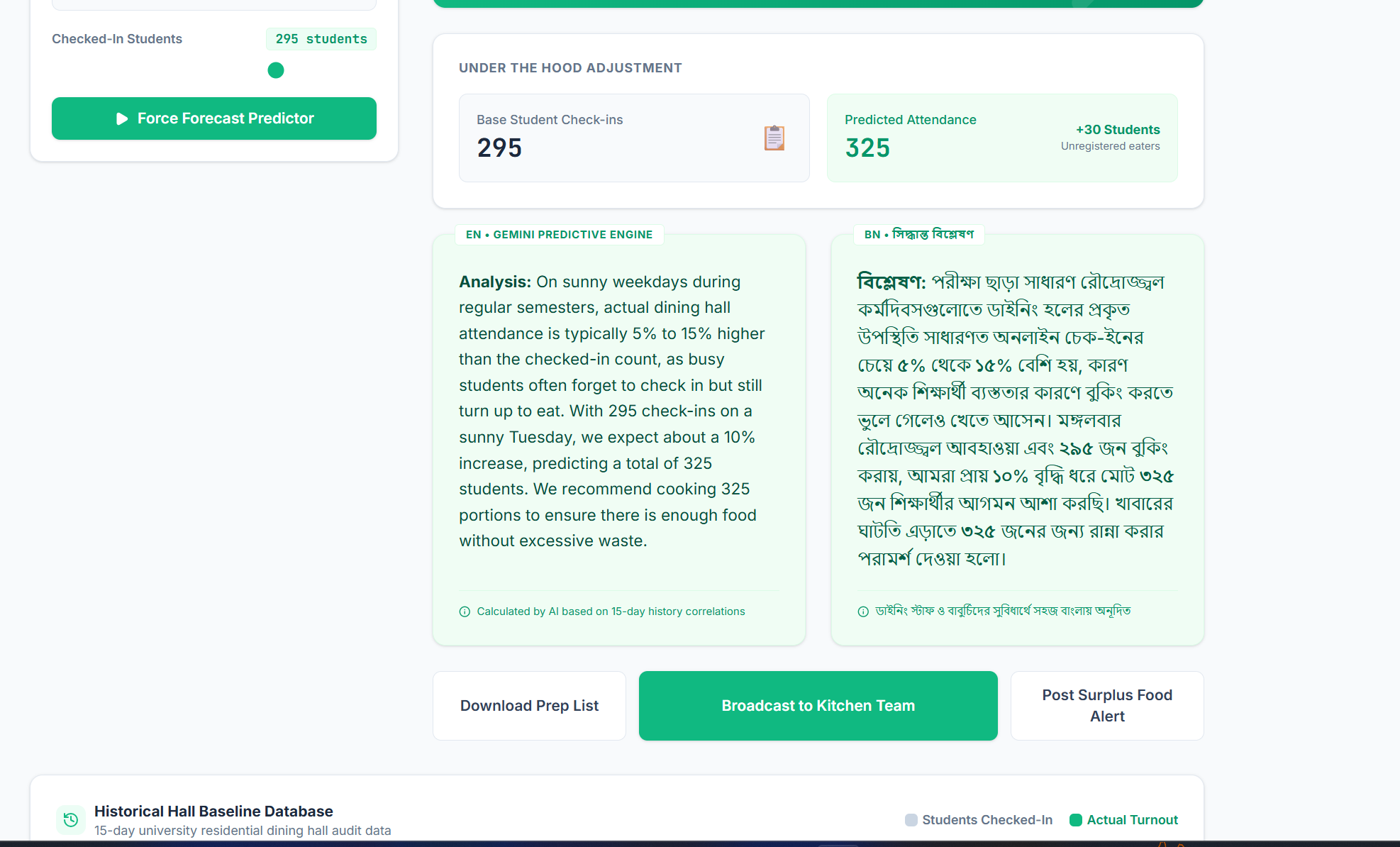
So MessMinder feeds the checked-in count alongside contextual signals — day of the week, exam period, weather, and historical attendance patterns — into Gemini, which reasons through the likely actual turnout. It returns a confidence-adjusted predicted headcount along with a plain-language explanation, like: "Predicted attendance is 15% lower than checked-in count — exam week typically sees late schedule changes."
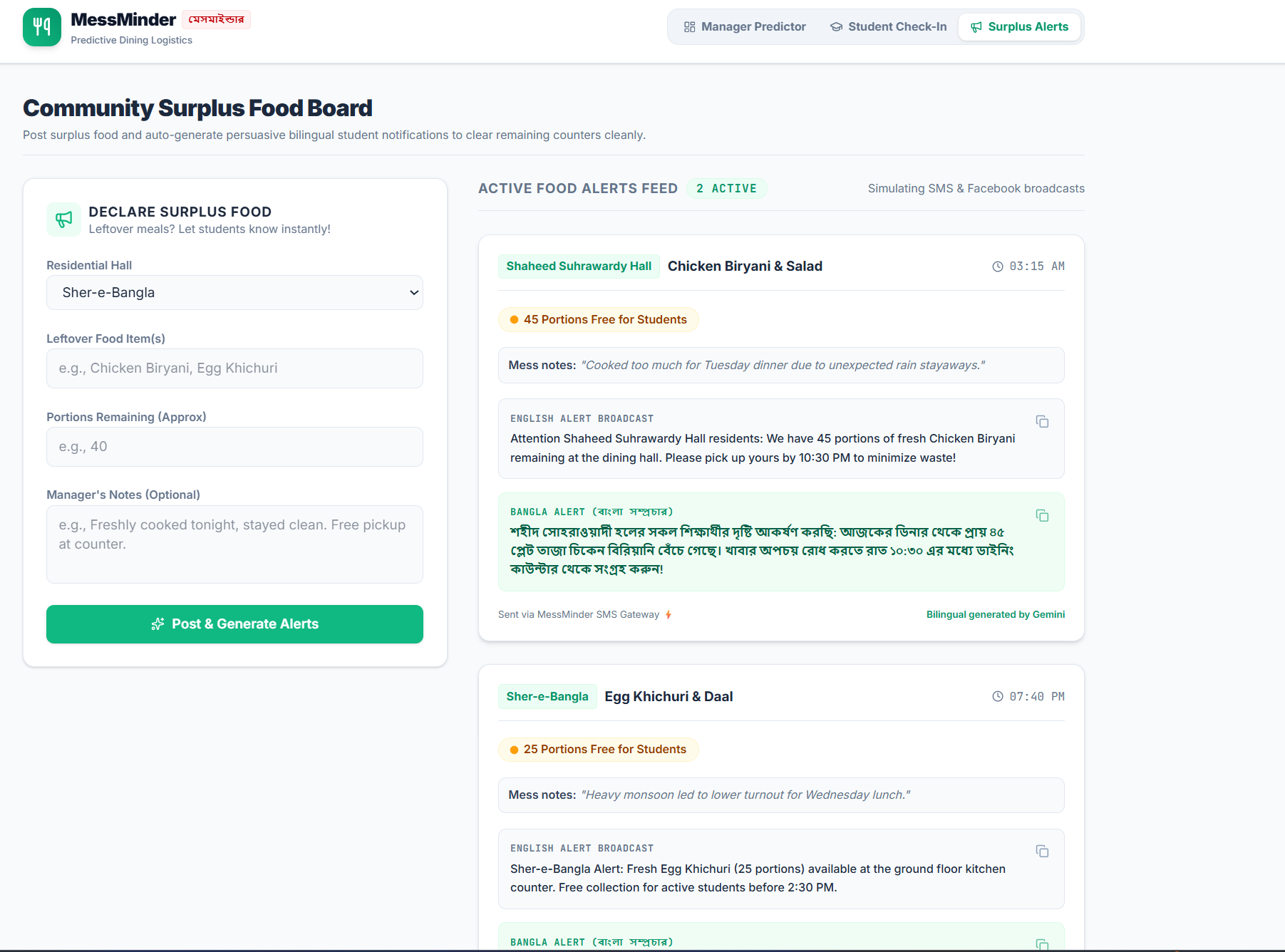
The hall dining manager doesn't just get a number — they get a reason, which is what makes the recommendation trustworthy enough to act on. For the rare day a genuine surplus still happens, MessMinder includes a lightweight surplus board where Gemini generates a short, appealing bilingual (Bangla + English) announcement to help it get claimed quickly.
How I built it
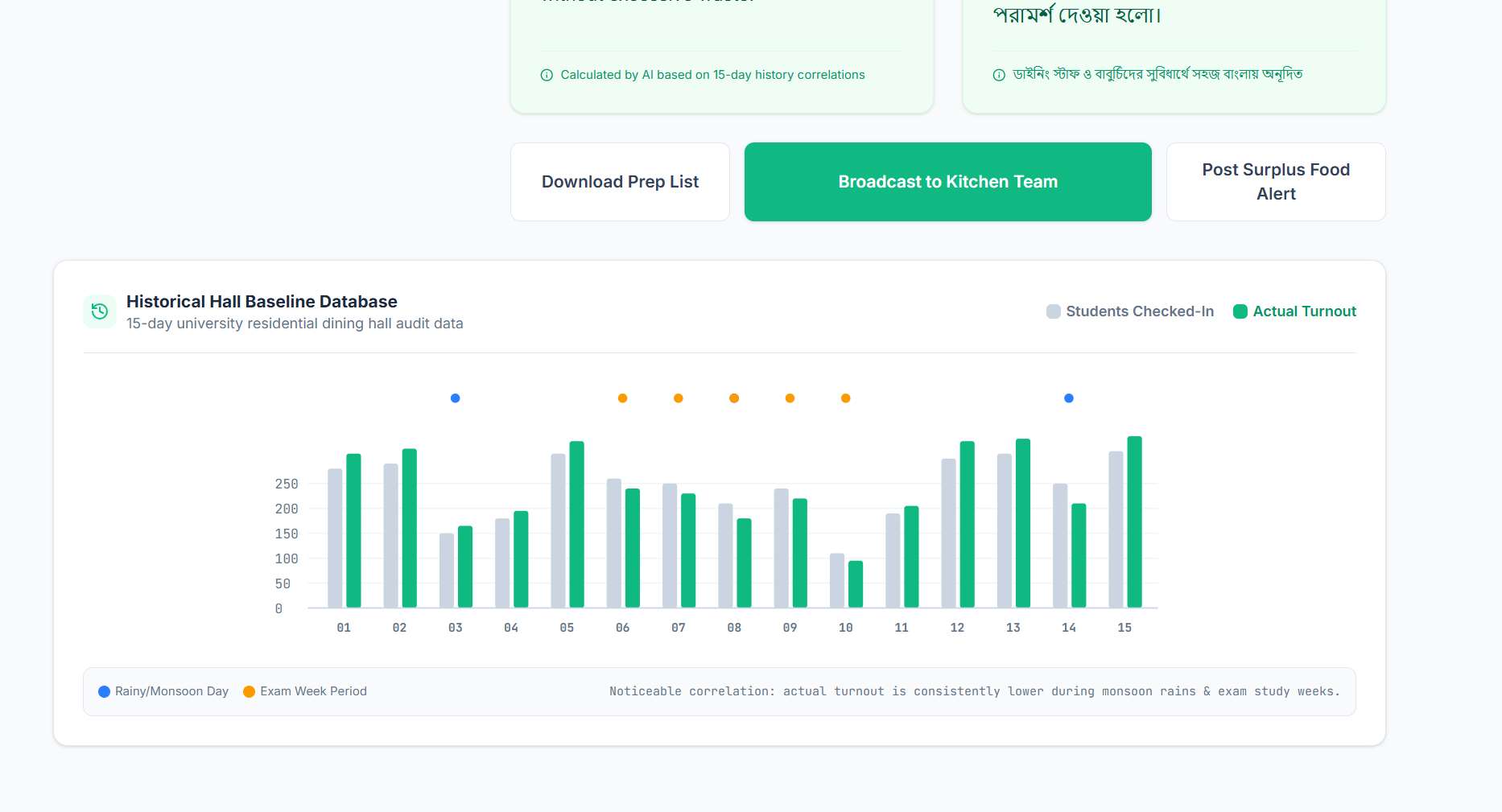
I built this as a full-stack web app — React and Tailwind on the frontend, a lightweight Node.js server on the backend, and the Gemini API powering the prediction and reasoning layer. I seeded a realistic set of historical attendance patterns (day of week, exam periods, weather, actual turnout) so Gemini's predictions would be grounded in believable context rather than reasoning blind.
The centerpiece is the hall dining manager dashboard: a scenario toggle lets me switch between a Normal Day, Exam Week, and a Rainy Day, and watch Gemini generate a different predicted headcount and explanation for each — proving the reasoning is real, not a static number dressed up to look smart.
Challenges I ran into
Building solo with a tight time window meant every hour counted. Getting the environment running correctly took longer than expected — sorting out local server access (localhost vs 0.0.0.0), confirming the right Gemini model name, and making sure the API key was properly wired in before I could even test the first prediction call.
Designing prompts that made Gemini's reasoning feel genuinely useful — rather than a generic AI-sounding explanation — took a few iterations. I wanted the manager-facing text to sound like something a real person would trust enough to act on, not just an impressive-sounding paragraph.
Accomplishments that I'm proud of
I'm proud that MessMinder doesn't just look like an AI feature bolted onto a form — the prediction engine is the actual product. Flipping between demo scenarios and watching the reasoning shift in real time, in language a non-technical hall dining manager could immediately understand, was the moment the project felt real rather than theoretical.
I'm also proud of the framing: instead of building another "share your extra food" app, I found and built the earlier, harder part of the problem — reducing the guesswork that causes the waste in the first place.
What I learned
I learned that solving a "smaller," less flashy part of a bigger problem can be more valuable than solving the visible, popular part of it everyone jumps to. It also reinforced how much good AI-powered reasoning depends on the context you feed it — the same headcount, framed with the right situational data, turns a static prediction into something a person can actually trust and act on.
What's next for MessMinder
The natural next step is integrating with real hall administration data instead of seeded historical patterns, and expanding the prediction model to account for more granular signals — specific exam schedules, hall events, hostel-wide announcements. Beyond university halls, the same core engine — predict before you produce — applies directly to corporate cafeterias, hospital kitchens, and any institutional food service still running on guesswork instead of data.
Built With
- css
- express.js
- gemini
- gemini-3.5-flash
- gemini-api
- generative-ai
- google-ai-studio
- google-gemini
- html
- javascript
- llm
- node.js
- prompt-engineering
- react
- rest-api
- tailwindcss
- tsx
- typescript
- vite
- web-app


Log in or sign up for Devpost to join the conversation.