-
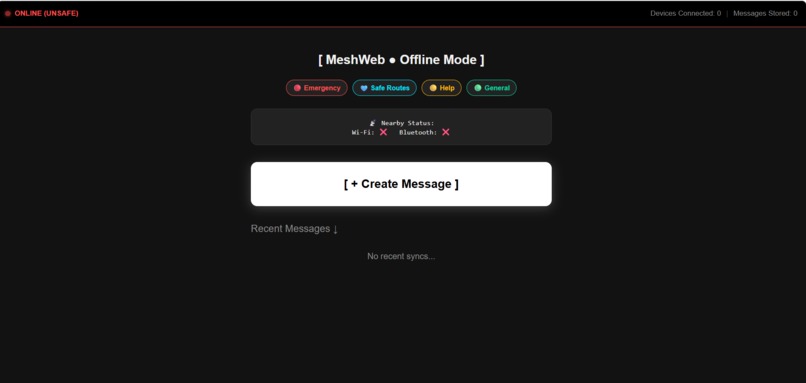
home page
-
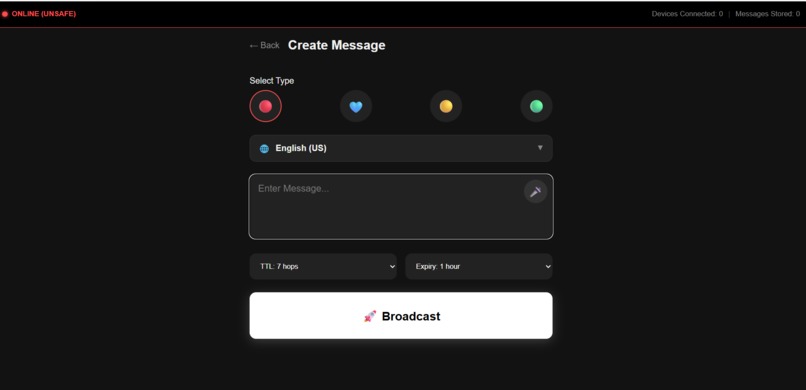
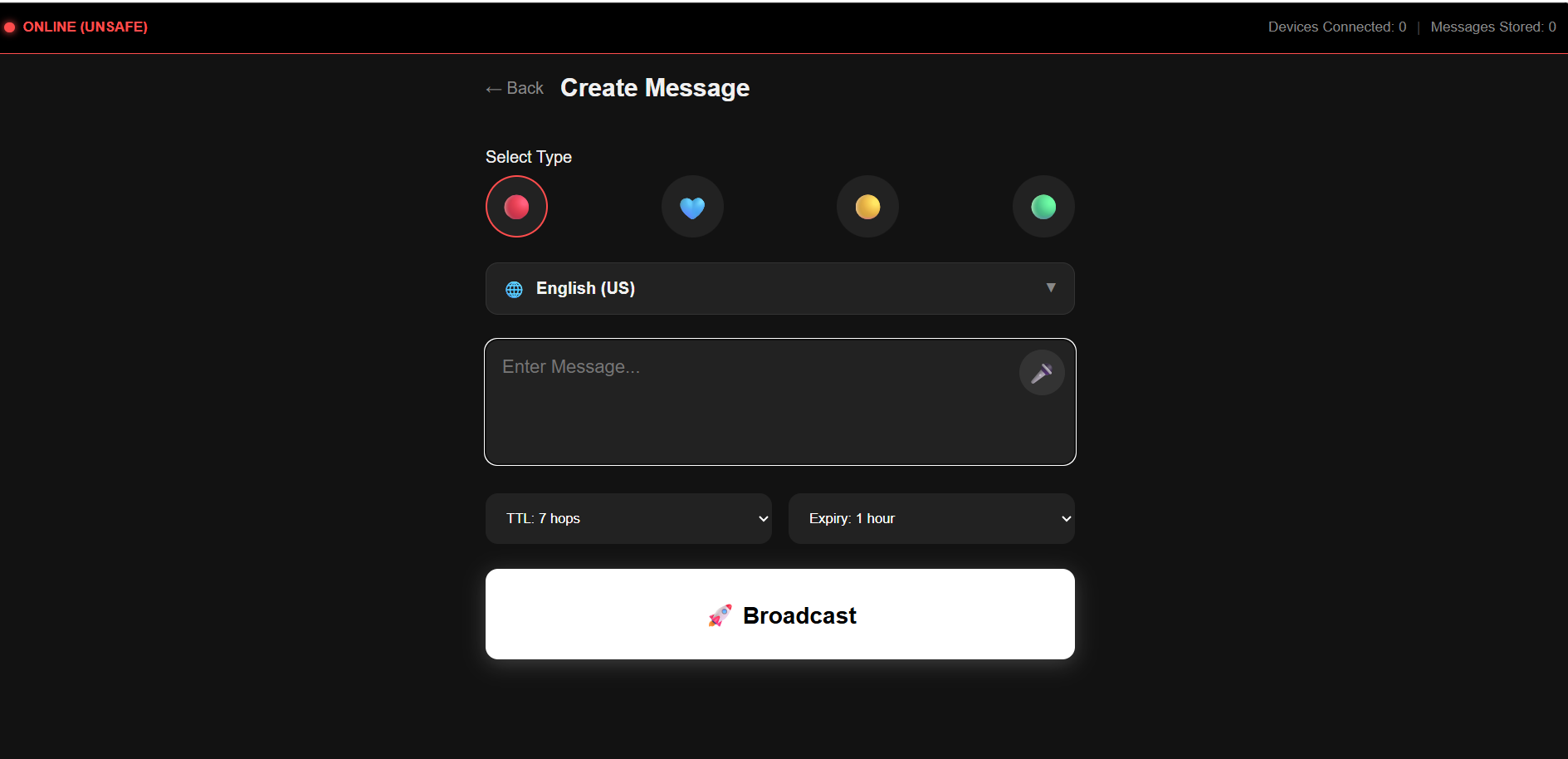
create message page
-
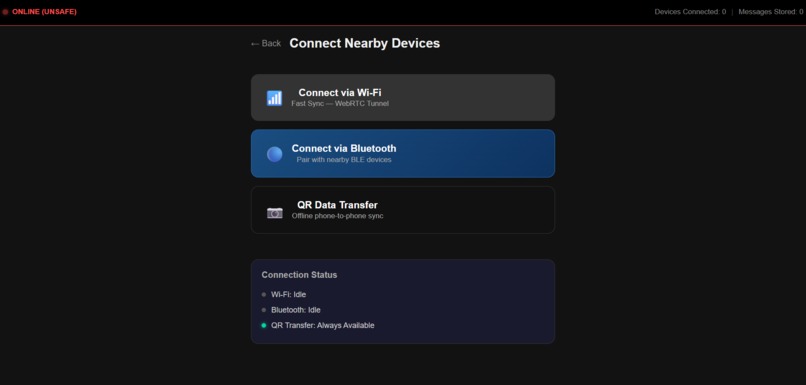
connection

The Story Behind MeshWeb The Problem That Haunted Us
In February 2023, a 7.8 magnitude earthquake struck Turkey and Syria. Over 50,000 people lost their lives. But here's what most people don't realize — in the first 72 hours, the deadliest hours, the cellular networks were completely destroyed. Millions of people trapped under rubble couldn't send a single text message to rescuers standing just 500 meters away. Not because they didn't have phones. Not because their batteries were dead. But because every cell tower in the region had collapsed.
This pattern repeats in every disaster. During the 2024 floods in Brazil, Hurricane Katrina, the Kashmir earthquake, the Chennai floods — the story is always the same: the internet dies first, and people die second.
The Question That Started Everything
We asked ourselves a simple question: "If two smartphones are sitting 10 meters apart, why do they need a cell tower 5 kilometers away to talk to each other?"
They shouldn't. And that's how MeshWeb was born.
What We Built
MeshWeb is a Progressive Web App that turns every ordinary smartphone into a mesh communication node — with absolutely zero internet required. No servers, no cloud, no cell towers, no SIM card. Just phones talking to phones.
A user creates a message — say, "🔴 Emergency: Road blocked near Sector 7" — and broadcasts it. Nearby devices receive it through one of three transport layers:
📷 QR Code — One phone generates a QR code containing compressed messages. Another phone scans it. Data transferred. Fully optical. Works even in airplane mode. 🔵 Bluetooth — Pairs with nearby devices and streams JSON messages over RFCOMM sockets for real-time relay. 📶 Wi-Fi Direct — High-speed bulk sync for transferring dozens of messages at once between phones. Each message carries a TTL (Time-to-Live) counter. When Phone A sends a message with TTL 7 to Phone B, Phone B stores it and decrements it to TTL 6. Phone B then walks to Phone C and relays it again — TTL 5. This creates a multi-hop mesh network where messages propagate outward like ripples in water, reaching people who were never in direct range of the original sender.
What Makes It Different
Most communication apps fail the moment Wi-Fi drops. MeshWeb does the opposite — it's designed for zero connectivity. The app is fully installable as a PWA, caches all assets locally, stores messages in IndexedDB, and requires no external API, no CDN, no authentication server. Once loaded, it works forever — even in complete internet blackouts.
We also built it for the world, not just English speakers. MeshWeb supports 150+ languages with a searchable language picker and live voice-to-text input using the Web Speech API. A rescue worker in rural India can speak in Tamil, and the message will be transcribed and broadcast to nearby devices instantly.
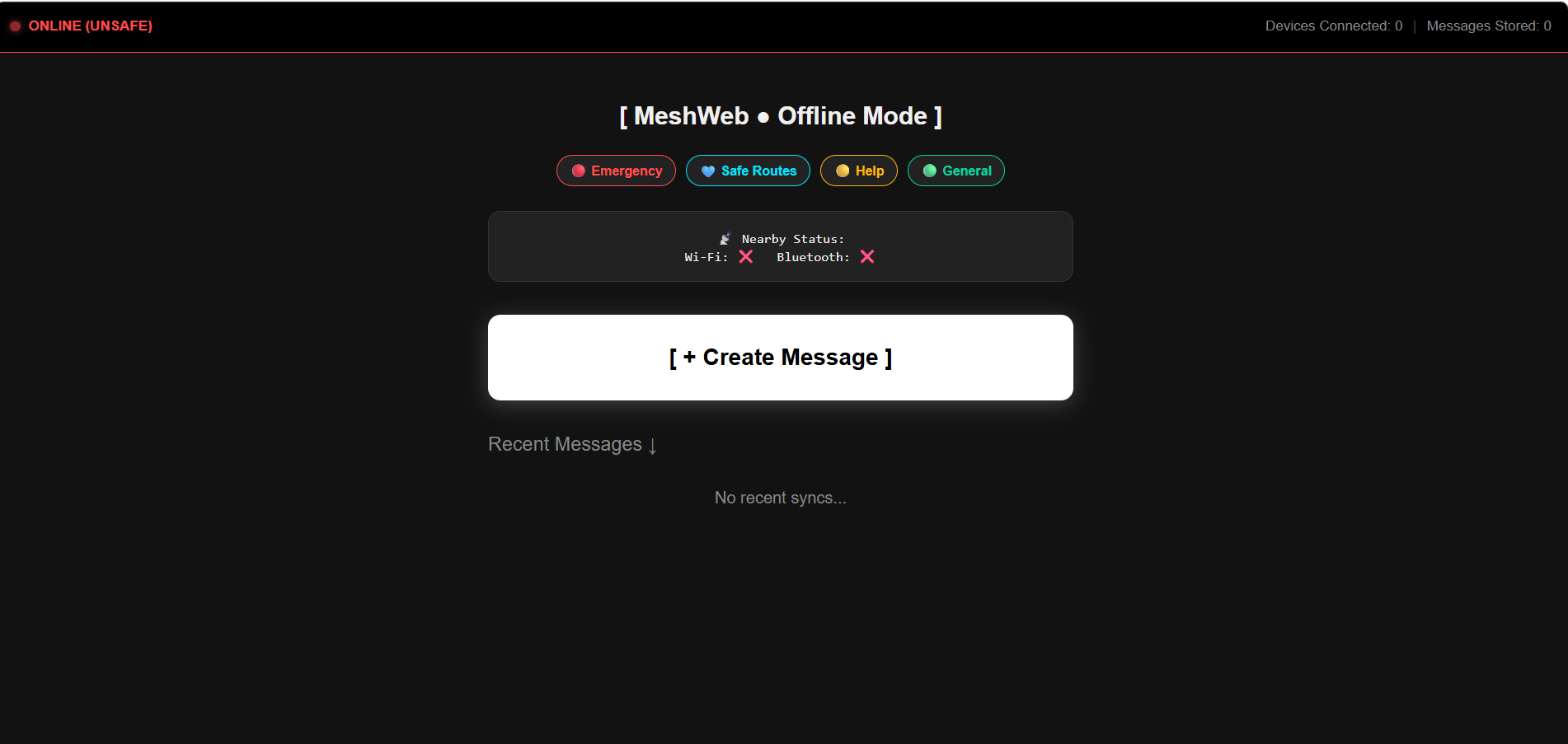
The UI follows a color-coded emergency taxonomy — 🔴 Emergency, 🩵 Safe Routes, 🟡 Help Needed, 🟢 General Info — so even in panic, users immediately understand message priority at a glance.
The Vision
We believe communication is a human right, not an infrastructure privilege. When the next earthquake, flood, or blackout hits, we want every person with a smartphone to become a relay node in a self-healing mesh network. No company controls it. No server can go down. No government can shut it off.
MeshWeb: When the grid goes dark, the mesh lights up.
Feel free to trim or adjust any section for your submission! 🚀

Log in or sign up for Devpost to join the conversation.