


How Meshful was Born
A study system should test your memory, not your patience. Spaced repetition works, but using it can feel like building the course before taking it. You start by deciding what matters and how to organize ideas you do not understand yet. Then you grade yourself. You might reveal the answer before trying to recall it, think “Oh, I knew that!” only after seeing it, or explain the right idea in different words and still doubt yourself. Meshful removes deck setup and self-grading, but you still do the work that makes learning stick. An agent prepares the material and evaluates your answers while you recall each idea, explain it in your own words, and learn from honest feedback. Meshful schedules every review, tracks your progress, shows what comes next, and brings each idea back when it is time to try again.
What Meshful does
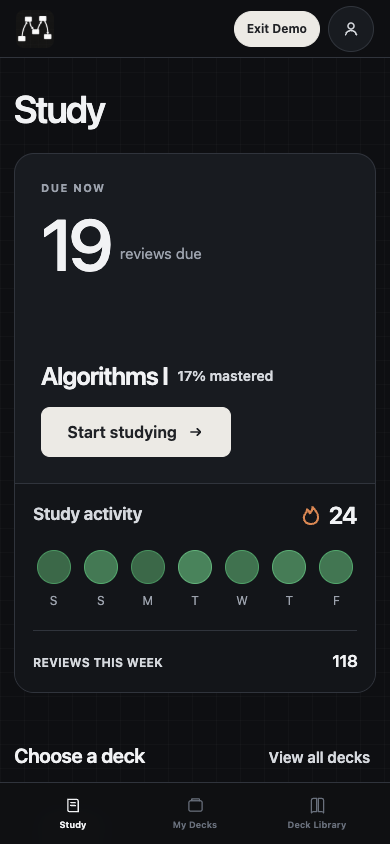
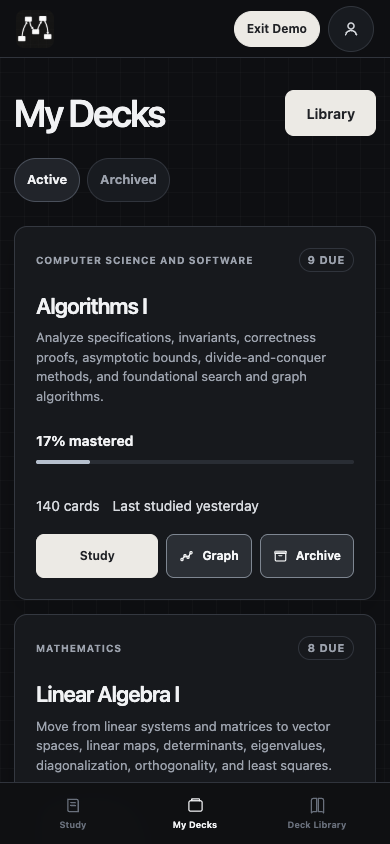
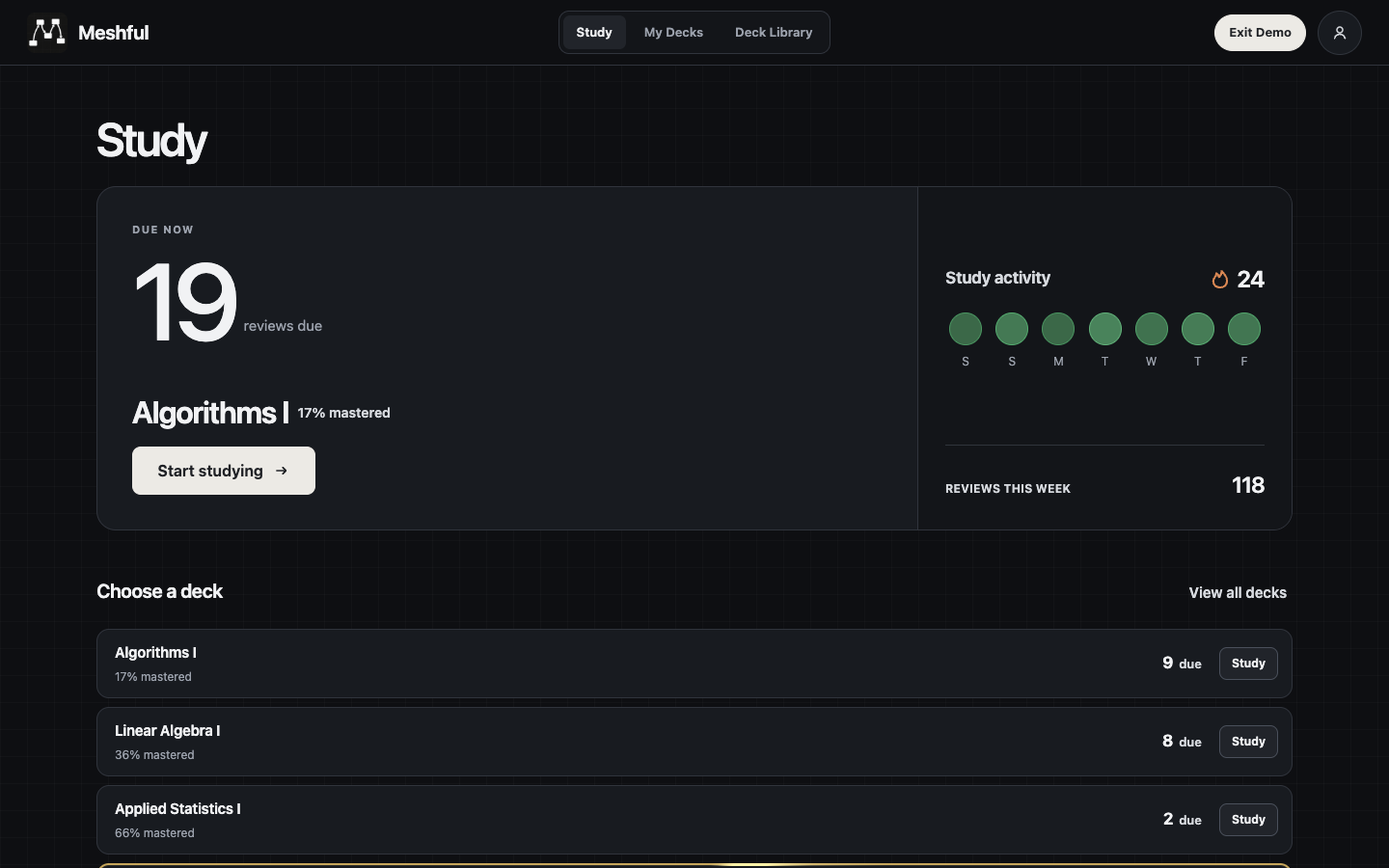
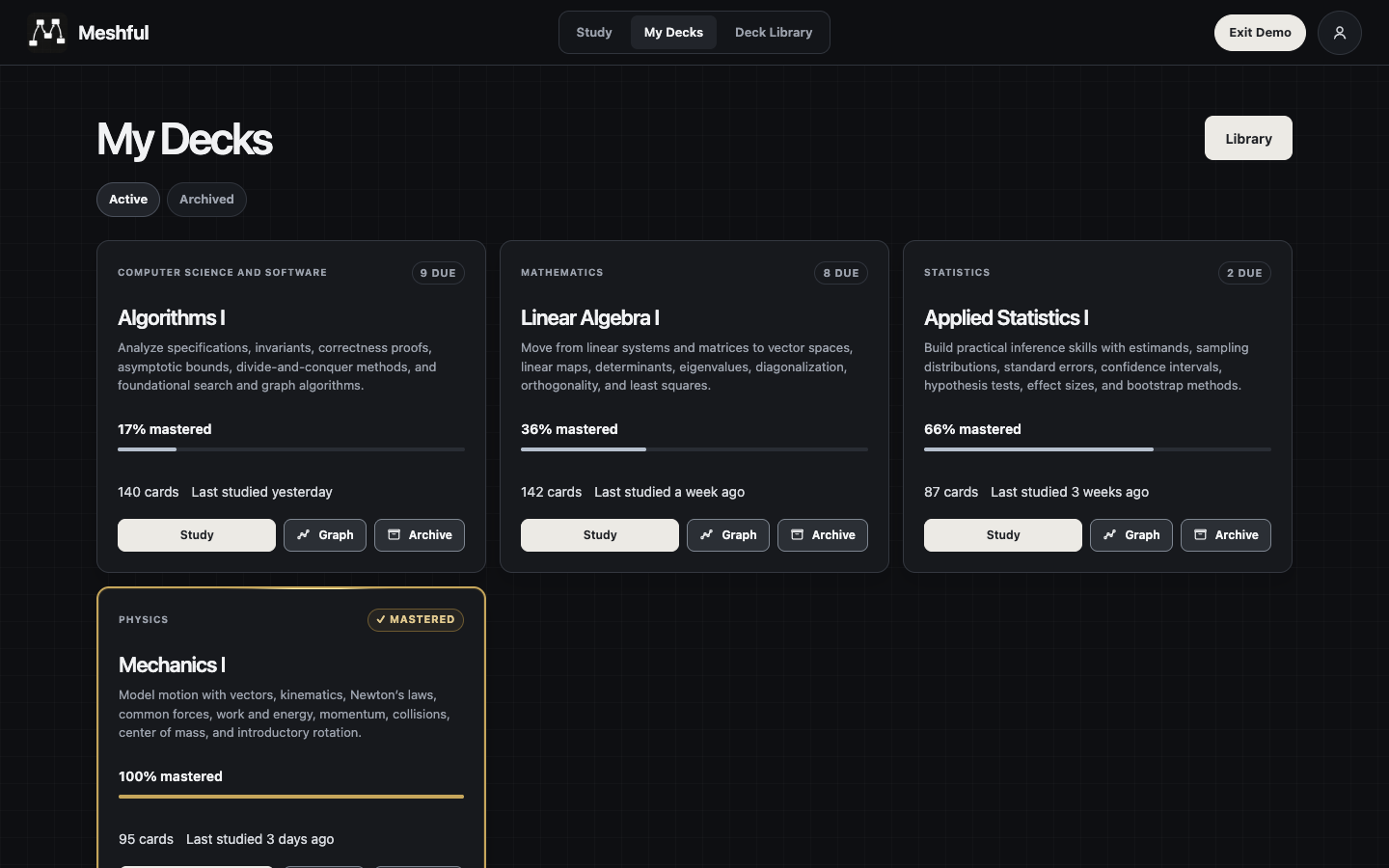
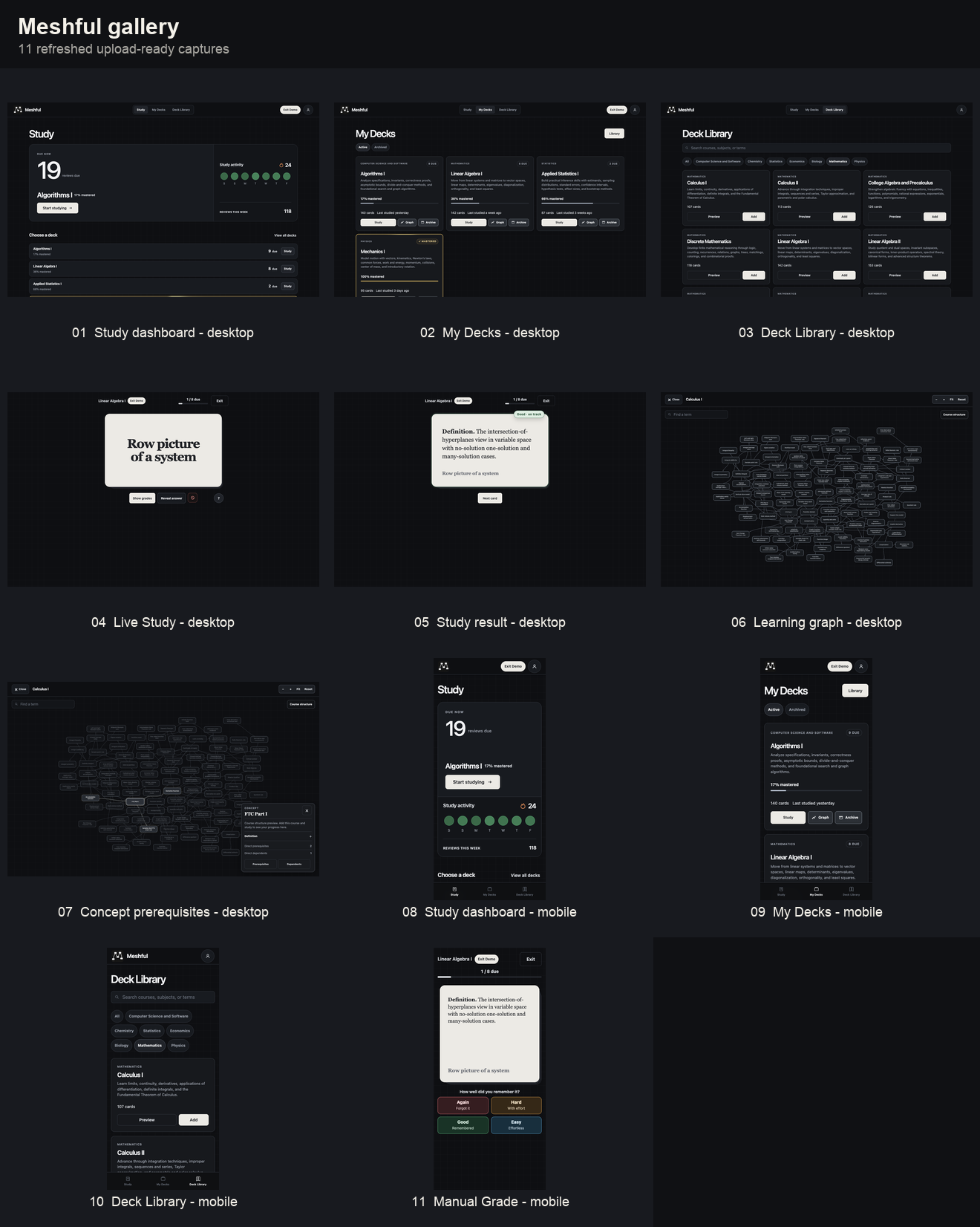
Meshful turns that burden into one clear study loop. Choose a course from the Deck Library or ask an agent to build a custom deck on your topic. For custom decks, the agent draws on its own knowledge and runs Meshful's validator to catch missing definitions, duplicate cards, and broken prerequisite links. The validator checks the deck's structure. It cannot verify every fact. Once the deck is ready, all you have to do is click Study and give each term your best attempt.
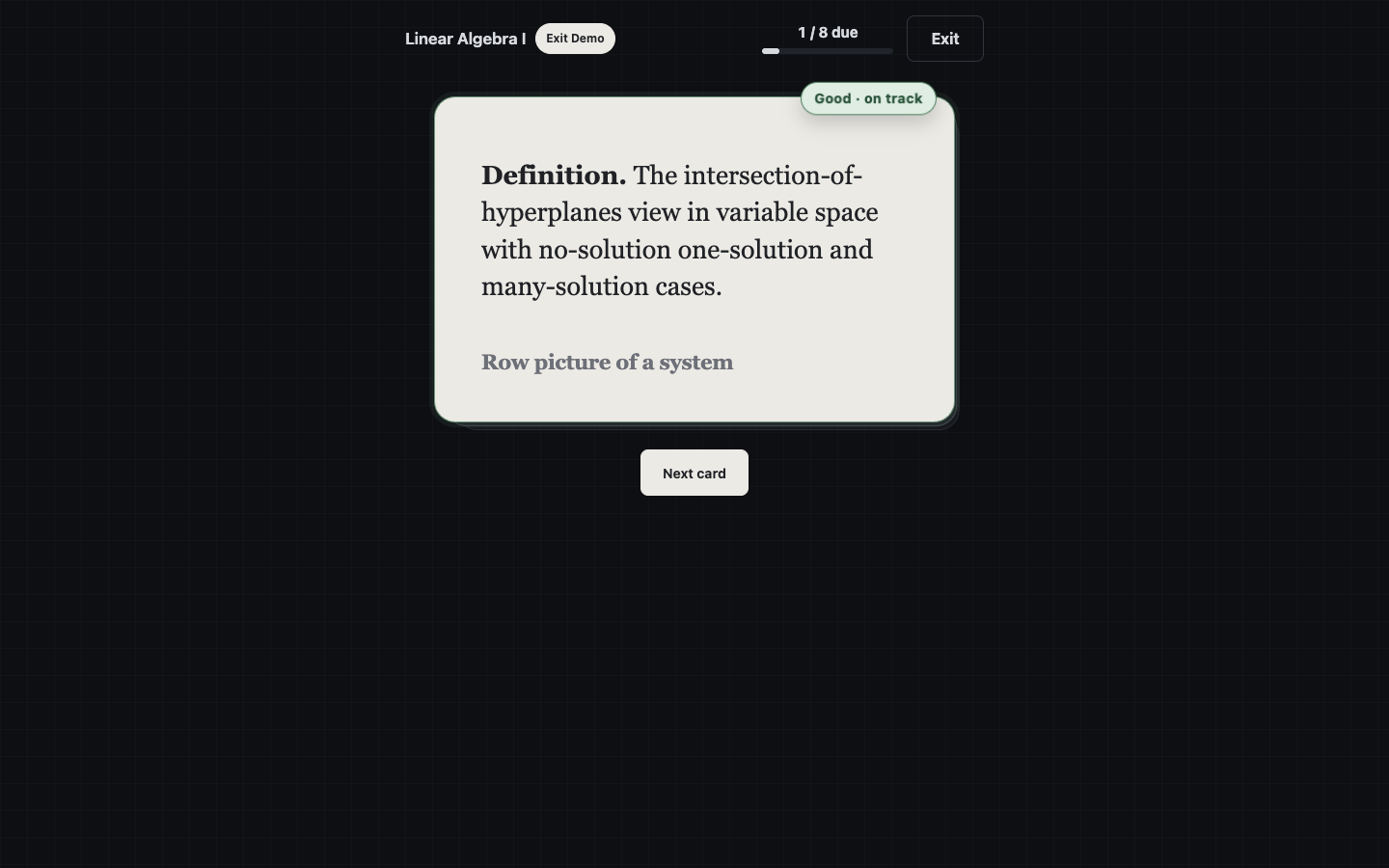
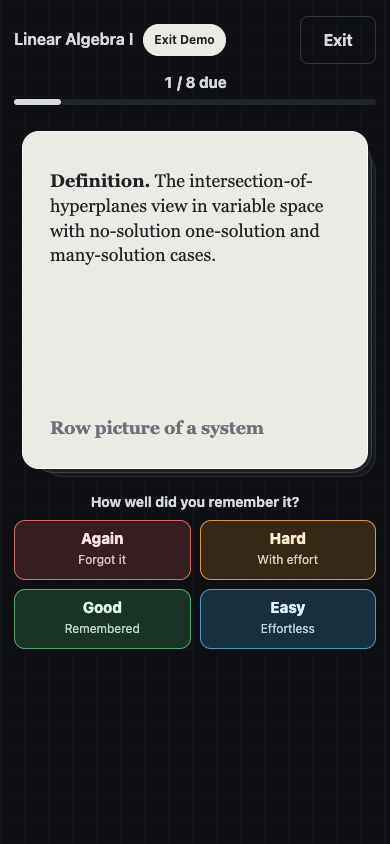
Study shows you one term without its definition. You explain it in your own words in chat. The agent checks your answer against the card's built-in rubric and rates your recall as Again, Hard, Good, or Easy. Through WebMCP, it sends the grade to Meshful, which saves it and updates your FSRS schedule. Meshful reveals the definition while the agent explains what you got right or missed. Then the next term appears.
The agent handles judgment and teaching, so the experience can improve as models improve. The site owns the decks, review history, schedule, progress, and interface.
Choose a Deck Library course or have an agent build a custom deck
↓
Click Study
↓
Give your best answer in your own words
↓
The agent grades your recall and sends the grade to Meshful
↓
Meshful saves the grade and updates your FSRS schedule
↓
See the definition and get feedback
↓
Move to the next useful idea
↺ Finish today's reviews or continue with eligible new material
Due reviews come first. When they are done, Meshful continues with eligible new material. Ideas you miss return sooner. Strong answers earn longer gaps. As you earn Good or Easy on prerequisite ideas, later ideas open. You move toward mastery without leaving older knowledge behind.
How I built Meshful
I started with the study loop and worked backward: what must the agent understand, and what must the site make exact?
One shared deck model. Every course uses the same structure, whether it comes from the Deck Library or an agent. Each card stores a term, a hidden definition, a grading rubric, and links to the ideas that should come first. This gives learners one consistent study experience instead of a different format for every subject.
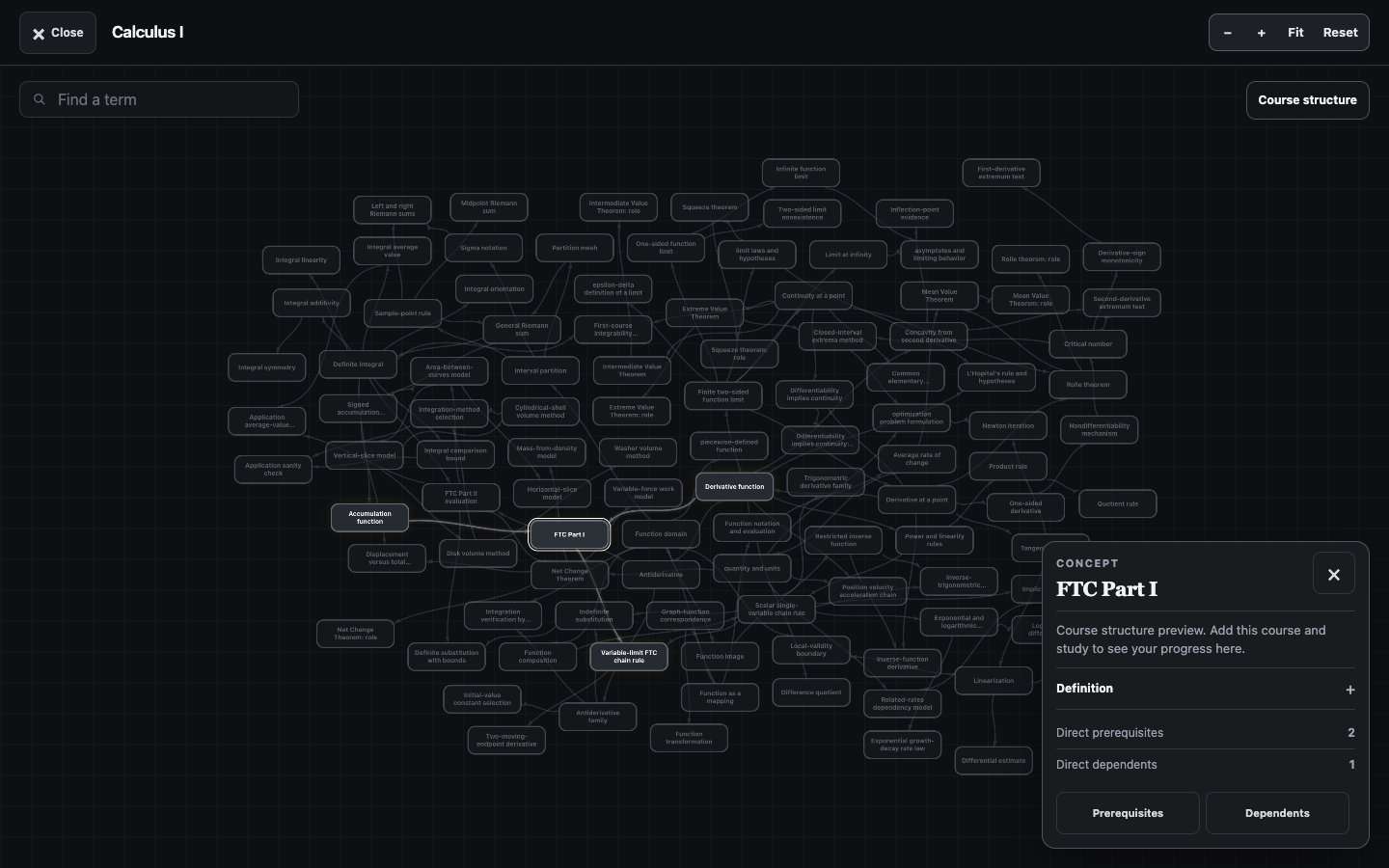
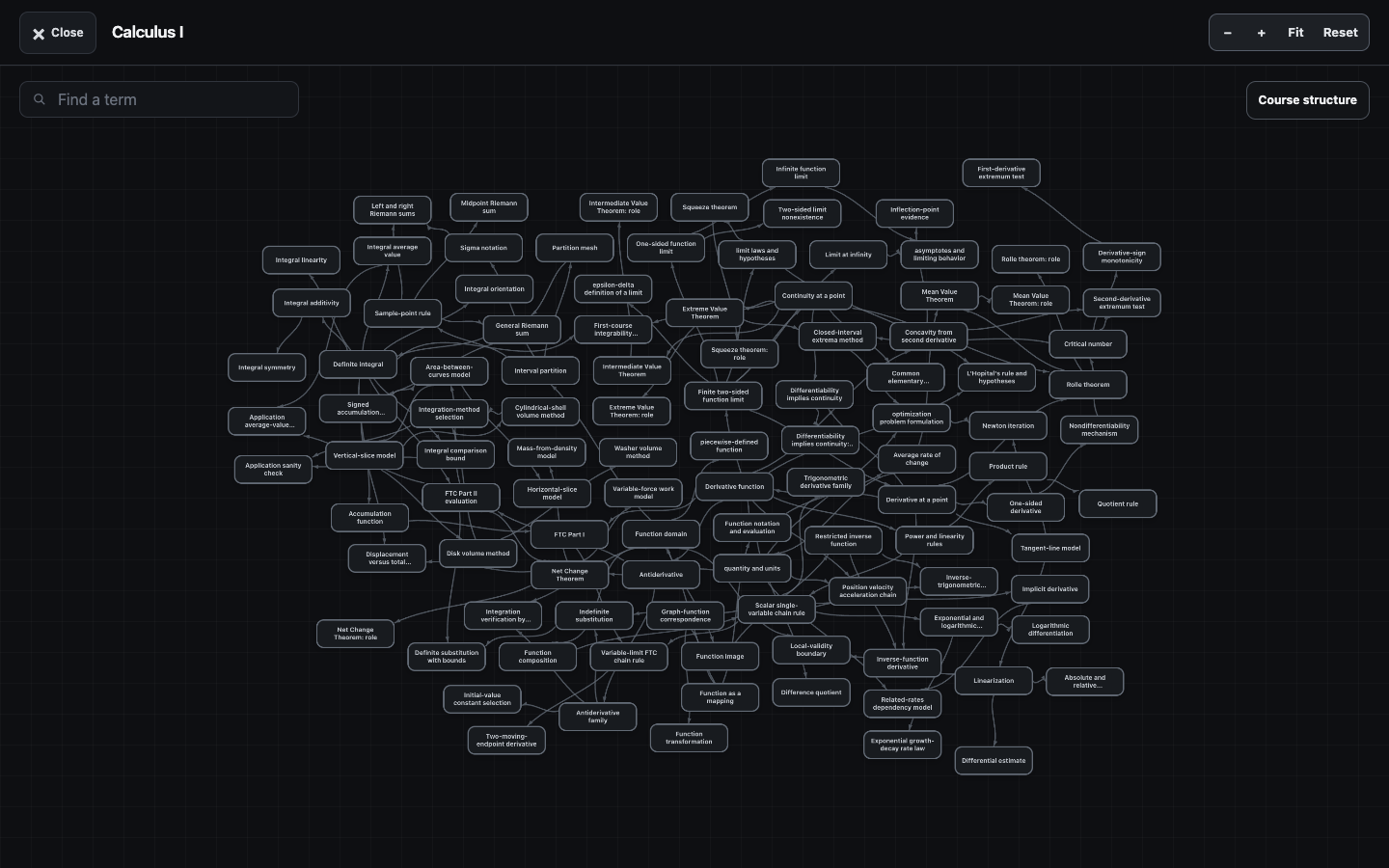
A learning map, not a pile. The prerequisite links form a map of how the ideas fit together. That map decides which new cards are ready to appear. It solves a different problem from the memory schedule: prerequisites control what you are ready to learn, while FSRS controls when you should review it.
FSRS sets the pace. Meshful gives each grade to FSRS, which updates when the card should return. Missed ideas come back sooner, strong answers earn longer gaps, and reviews that are due come before new material.
WebMCP closes the loop. The agent reads the active card and its rubric, understands the learner's own words, chooses a grade, and explains the gap. It sends one grade to Meshful through WebMCP. The site checks the active session and card, records one review, runs FSRS once, and moves forward once. WebMCP lets the agent work with the same study state the learner sees while Meshful remains the source of truth.
Challenges I ran into
1. Keeping the agent flexible without letting study state drift
The problem. Agents are good at understanding the different ways people explain an idea, and that judgment should improve as models improve. A study site has a different job. It must know exactly which card is active, save one grade, update the schedule once, and show the right next step. If those roles blur, a retry or model mistake could create duplicate reviews or conflicting progress.
The solution. I split the work at a clear boundary. The agent reads the learner's answer, applies the rubric, explains what was missing, and proposes a grade. Meshful validates and commits every exact change through WebMCP.
Why it works. The learning record stays deterministic while the intelligence can keep improving. The boundary leaves room to trade speed for deeper reasoning as agent models improve, without changing the rules of the deck, schedule, or progress.
2. Making generated decks and grading trustworthy
The problem. A deck can look complete while hiding a weak definition, a broken prerequisite, or a rubric that grades normal wording unfairly. Free-form grading is just as difficult. A correct answer may use different words, while a confident answer may still miss the key idea. Structural checks alone cannot prove that the content is right or that the grader is fair.
The solution. I used deterministic validation to catch missing fields, duplicate cards, and broken references. Then I built small benchmarks with synthetic learner answers that ranged from wrong to partly right to correct in different words. I compared each grade with a frozen reference judgment, reviewed the feedback for mistakes, changed the instructions, and ran the same cases again.
Why it works. The validator tests the deck's structure, while the benchmark tests the judgment built on top of it. The current benchmark is small, so it does not yet prove broad accuracy. It does give me a repeatable way to improve performance as I add more subjects, answer styles, and models.
Why Meshful matters
Meshful matters to me because it turns curiosity into a study system I can act on. A new subject can begin with an honest attempt, useful feedback, and a clear next review instead of hours of setup and uncertain self-grading. As the Deck Library grows and agents improve, the same trusted loop can support more subjects and stronger feedback. Meshful is more than a demo. It is a foundation for making serious study easier to begin, continue, and measure honestly.
What's next for Meshful
I see two main paths for Meshful.
A broader Deck Library. I want to add law, medicine, history, and more advanced courses in the subjects already covered. This would save more people from having to build every deck themselves. I also want to explore deck publishing, so people can easily share what they make while keeping the source and quality of each deck clear.
Practice beyond terms. I want to move from recall into questions and problems. Math and coding are learned by doing. The agent could review a solution, explain where the reasoning or code went wrong, and bring back focused practice later. The hard part is adapting an FSRS-like schedule to work with many valid paths and several skills at once. Rather than repeat one problem, Meshful could schedule a problem type and create a fresh version each time. This would bring the same loop of practice, feedback, and well-timed review to richer challenges.
Built With
- chatgpt
- cloudflare
- css
- fsrs
- javascript
- latex
- node.js
- openai-codex
- openai-sites
- react
- typescript
- vinext
- vite

Log in or sign up for Devpost to join the conversation.