-
-
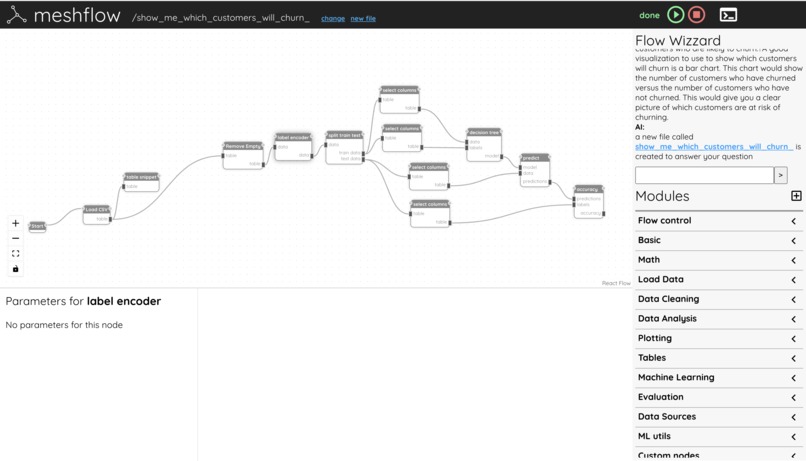
data science flow
-
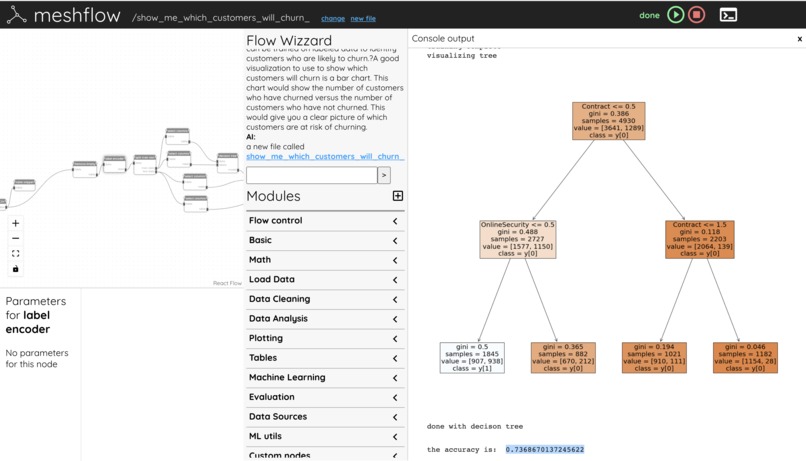
run results
-
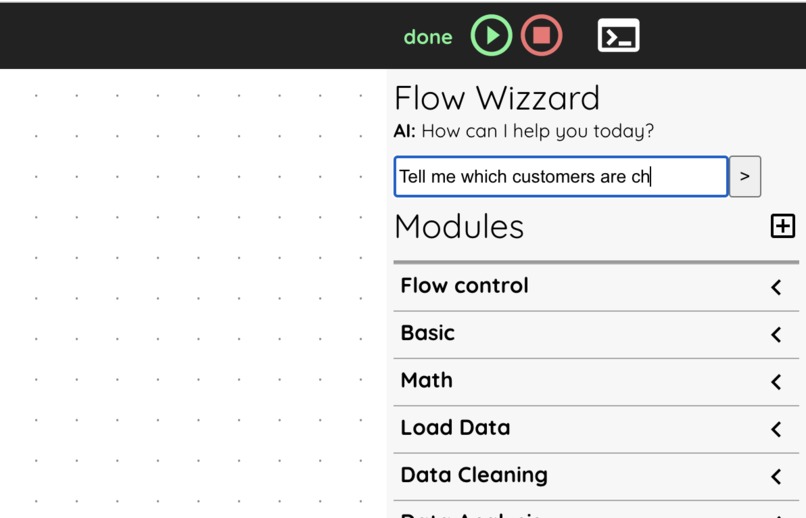
Asking Meshflow questions

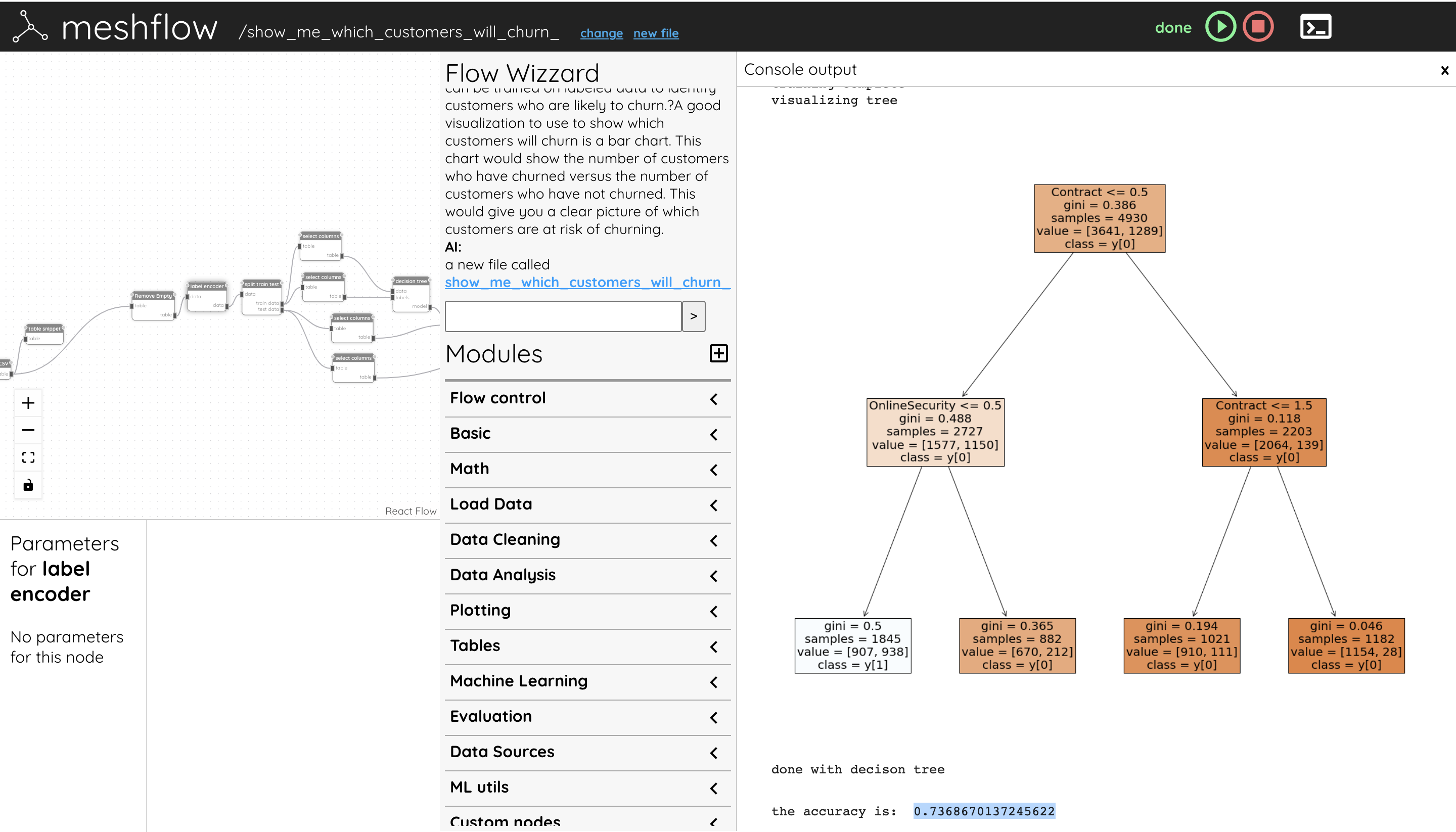
Inspiration
We want to automate data science so that anyone can harness its power. There are many low-code drag & drop data science platforms such as Alteryx, but you still need some data science knowledge to use it. We want to truly fully automate data science so that users can simply tell Meshflow what they are interested in (e.g. "why are my users leaving me?") and Meshflow will create the entire data science workflow and perform the analysis for you -- no code, and no drag & drop.
What it does
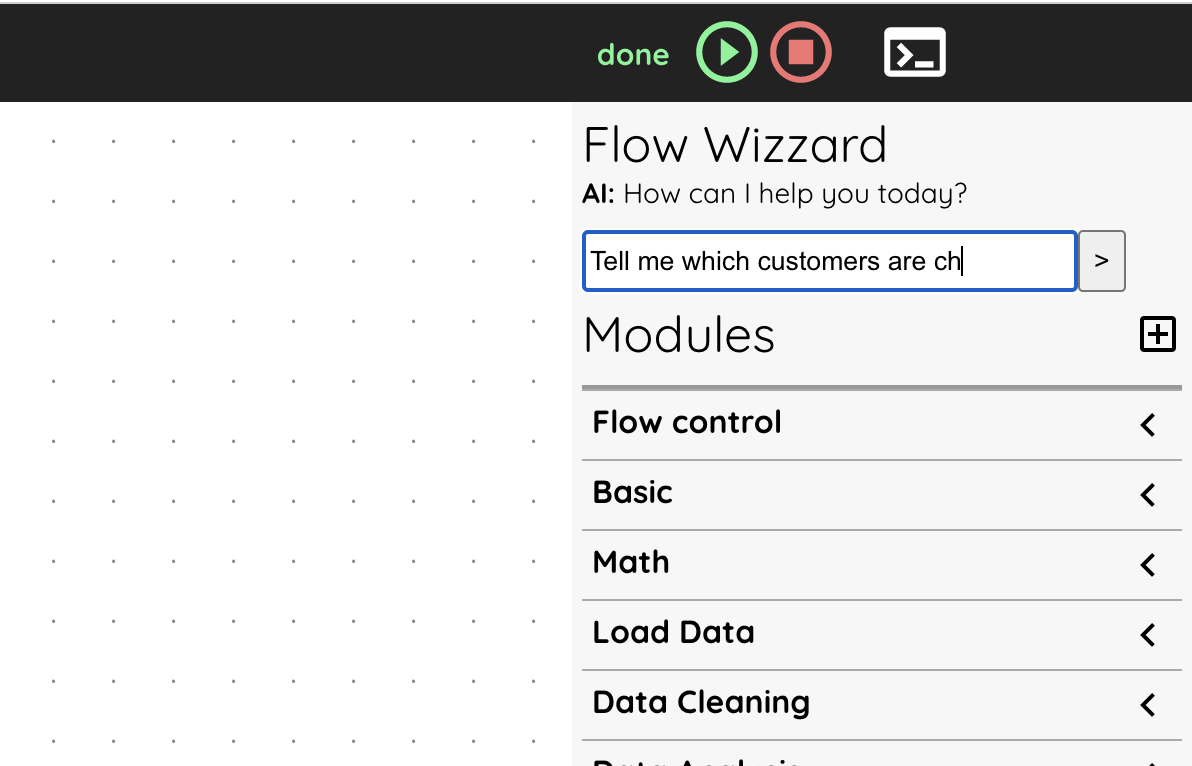
We built a platform that automates the entire data science workflow for you. Tell Meshflow "show me which customers are churning. " and Meshflow will train a decision tree on your data to predict which customers are churning (i.e. leaving your company's product). Ask Meshflow "What do you think the stock price of Apple will be in one year?", and meshflow will gather historical stock prices, train a time series model, and make predictions.
How we built it
We are not going to detail our exact algorithm, but on a high level, we allow large language models like GPT-3 to reason on a constrained framework so that it can produce robust data science flows. As for the frontend, we used react and in particular a library called react-flow that lets us create beautiful drag & drop flow charts. In the backend we use python and a bunch of large language models.
Challenges we ran into
One thing super difficult is balancing the robustness of our algorithm and its flexibility. At the end we find a balance that lets Meshflow generates useful flows almost all the time while allowing for significant flexibility.
Accomplishments that we're proud of
It works!
What we learned
Hacking is fun
What's next for Meshflow
Get users, test it, and launch it publicly. On the technical side, we will improve our algorithm by aggregating data and improving the framework.


Log in or sign up for Devpost to join the conversation.